



Erhalten Sie Zugang zu diesem und mehr als 300000 Büchern ab EUR 5,99 monatlich.
- Herausgeber: CLXBX
- Kategorie: Geisteswissenschaft
- Sprache: Englisch
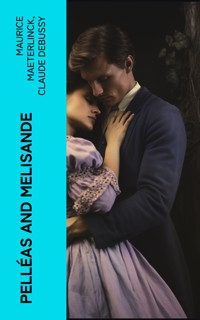
Pelléas and Mélisande by Maurice Maeterlinck is a haunting and poetic masterpiece of Symbolist drama that explores love, fate, and the mysterious forces that shape human lives. First published in 1892, the play stands as one of the most influential works of European theatre, known for its dreamlike atmosphere, emotional subtlety, and profound exploration of hidden desires and destiny. 🌙📖 The story begins when Prince Golaud discovers a mysterious young woman named Mélisande wandering alone in a forest. Enchanted by her beauty and quiet sadness, he marries her and brings her to the gloomy castle of Allemonde. Yet Mélisande's past remains unknown, and an aura of secrecy surrounds her presence. Within the castle walls, she forms a deep and tender bond with Pelléas, Golaud's younger half-brother. As their connection grows, an unspoken love emerges between Pelléas and Mélisande—one filled with innocence, longing, and emotional intensity. However, the oppressive atmosphere of the castle and Golaud's rising jealousy cast a shadow over their relationship. Suspicion, silence, and misunderstanding gradually lead the characters toward a tragic and inevitable fate. Maeterlinck's play is celebrated for its symbolic storytelling and lyrical dialogue. Rather than focusing on action, the drama emphasizes mood, suggestion, and the hidden emotions beneath everyday words. The mysterious setting, dimly lit castles, dark forests, and quiet fountains all contribute to a powerful sense of melancholy and destiny. Through its delicate and atmospheric narrative, Pelléas and Mélisande explores themes of forbidden love, innocence, jealousy, and the fragile nature of human happiness. The characters seem guided by forces beyond their control, reflecting the Symbolist belief that unseen powers and subconscious emotions shape human experience. The play's influence extended far beyond literature, inspiring artists, composers, and playwrights across Europe. Most notably, it served as the basis for Claude Debussy's famous opera of the same name, further cementing its place in cultural history. Today, Pelléas and Mélisande remains a timeless work of poetic drama, admired for its emotional depth, haunting beauty, and philosophical reflection on love and fate. 🌫️ Through its quiet intensity and symbolic richness, Maeterlinck's masterpiece continues to captivate readers and audiences around the world.
Sie lesen das E-Book in den Legimi-Apps auf:
Seitenzahl: 51
Veröffentlichungsjahr: 2026
Das E-Book (TTS) können Sie hören im Abo „Legimi Premium” in Legimi-Apps auf:
Ähnliche








Pelléas and Mélisande
Maurice Maeterlinck
Copyright © 2026 by Maurice Maeterlinck
All rights reserved.
No part of this book may be reproduced in any form or by any electronic or mechanical means, including information storage and retrieval systems, without written permission from the author, except for the use of brief quotations in a book review.
Contents
1. FIRST ACT.
2. SECOND ACT.
3. THIRD ACT.
4. FOURTH ACT.
5. FIFTH ACT.
FIRST ACT.
SCENE I.
Melisande discovered on the edge of a fountain.—Enter Golaud.
Golaud.
I shall not be able to leave this forest again.—God knows how far this beast has led me. Yet I thought I had wounded it unto death; and here are traces of blood. But now, I have lost sight of it. I fear that I am lost myself—and my dogs no longer find me.—I shall retrace my steps…—I hear weeping… Oh, oh, what is it there by the water?… A little girl who weeps near the water? (He coughs.)—She does not hear me. I do not see her face. (He goes near and touches Melisande on the shoulder.) Why dost thou ween? (Melisande rises, trembles and wants to fly.)—Do not fear. You have nothing to be afraid of. Why do you weep here all alone?
Melisande.
Do not touch me! do not touch me!
Golaud.
Have no fear… I will do you no… Oh, you are beautiful!
Melisande.
Do not touch me! Do not touch me! or I shall throw myself in the water…
Golaud.
I do not touch you… See, I'll stay here, against the tree. Have no fear. Has any one hurt you?
Melisande.
Oh, yes, yes, yes!
(She weeps profoundly).
Golaud.
Who has done you harm?
Melisande.
All, all!
Golaud.
What harm has been done to you?
Melisande.
I will not say it. I cannot say it.
Golaud.
Come; do not weep thus. Whence come you?
Melisande.
I escaped, escaped, escaped!
Golaud.
Yes; but from where did you escape?
Melisande.
I am lost… lost here. I am not from here… I was not born there…
Golaud.
Where are you from? Where were you born?
Melisande.
Oh, oh! far from here… far… far…
Golaud.
What sparkles thus at the bottom of the water?
Melisande.
Why, where?—Oh, it is the crown that he gave me. It fell through my weeping.
Golaud.
A crown? Who gave you a crown?—I will try to get it…
Melisande.
No, no; I do not want it any more. I do not want it. I prefer to die at once…
Golaud.
I could recover it easily. The water is not very deep.
Melisande.
I do not want it any more. If you recover it, I shall throw myself in its place!…
Golaud.
No, no; I shall leave it there. Yet one could get it very easily. It appears very handsome.—Is it long since you fled?
Melisande.
Yes, yes… who are you?
Golaud.
I am Prince Golaud—grandson of King Arkel, the old King of Allemond.
Melisande.
Oh! you already have grey hair.
Golaud.
Yes, a few, here, by the temples.
Melisande.
And the beard too… Why do you look at me in that way?
Golaud.
I look at your eyes.—You never close our eyes?
Melisande.
Yes, I do. I close them at night.
Golaud.
Why do you wear such a look of surprise?
Melisande.
You are a giant.
Golaud.
I am a man like any other…
Melisande.
Why did you come here?
Golaud.
I do not know, myself. I was hunting in the forest. I followed a boar. I missed my way.—You look very young. How old are you?
Melisande.
I begin to feel cold…
Golaud.
Will you come with me?
Melisande.
No, no: I remain here…
Golaud.
You cannot remain alone. You cannot remain here all night… What is your name?
Melisande.
Melisande.
Golaud.
You cannot remain here, Melisande Come with me…
Melisande.
I stay here…
Golaud.
You will be afraid, all alone. One does not know what there is here… all night… all alone, it is not possible. Melisande, come, give me your hand…
Melisande.
Oh! do not touch me…
Golaud.
Do not cry out… I will not touch you. But come with me. The night is very dark and very cold. Come with me…
Melisande.
Where are you going?
Golaud.
I do not know… I am lost also.
(They depart.)
SCENE II.
(A Room in the Castle. Arkel and Genevieve discovered).
Genevieve.
Here is what he has written to his brother, Pelléas: 'One evening, I found her all in tears on the rim of a fountain, in the forest where I had lost myself. I know not her age, nor whom she is, nor whence she comes and I do not dare question her, for she must have had a great fright, and when I ask her what had happened to her, she weeps all at once like a child and sobs so deeply that one is afraid. It is now six months that I married her and I know no more than the day of our meeting. In the meantime, my dear Pelléas, you that I love more than a brother, even though we were not born of the same father; in the meantime, prepare my return. I know that my mother will willingly forgive me. But I fear Arkel, spite of all his goodness, for I deceived, by this strange marriage, all his political projects, and I fear that the beauty of Mélisande will not excuse in his eyes, so wise, my folly. If, nevertheless, he consents to receive her as he would receive his own daughter, the third evening that follows this letter, light a lamp at the summit of the tower that looks on the sea. I shall perceive it from the bridge of our ship: if not, I shall go farther and shall never return'… What do vou say of it?
Arkel.




