


14,99 €
Mehr erfahren.
- Herausgeber: John Wiley & Sons
- Kategorie: Geisteswissenschaft
- Sprache: Englisch
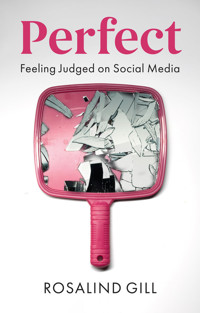
Social media is replete with images of 'perfection'. But many are unrealistic and contribute to a pervasive sense of never being good enough: not thin enough; not pretty enough; not cool enough. Try too hard and you risk being condemned for being 'attention-seeking', don't try hard enough and you're slacking. Rosalind Gill challenges polarized perspectives that see young women as either passive victims of social media or as savvy digital natives. She argues the real picture is far more ambivalent. Getting likes and followers and feeling connected to friends feels fantastic, but posting material and worrying about 'haters' causes significant anxieties. Gill uses young women's own words to show how they feel watched all the time; worry about getting things wrong; and struggle to live up to an ideal of being 'perfect' yet at the same time 'real'. It's the wake-up call we all need.
Sie lesen das E-Book in den Legimi-Apps auf:
Seitenzahl: 373
Veröffentlichungsjahr: 2023
Ähnliche



















CONTENTS
Cover
Dedication
Title Page
Copyright
Acknowledgements
Preface
Understanding social media lives
Polarized research
Perfect: Feeling Judged on Social Media
Notes
Introduction Perfect: Feeling judged on social media
Introduction
Themes and arguments
The context
Research principles
Overview of the book
Notes
Chapter 1 Life on my phone
The diversity of social media practices
Managing social media lives
Conclusion
Notes
Chapter 2 Picture perfect: The power of images
The power of the image
The perfect: an intersectional analysis
Critical takes
Conclusion: the costs of the perfect
Notes
Chapter 3 The beauty industry on my phone
Everywhere and all the time: contemporary beauty pressures
Pandemic paradoxes: aesthetic rest and investment
Beauty apps
New ways of seeing
Conclusion: the costs of the perfect
Notes
Chapter 4 Being watched, judged and harassed
Surveillance of women in public
Intimate intrusions
The girlfriend gaze and peer surveillance: circuits of competition, cruelty and care
Conclusion
Notes
Chapter 5 The work of being social
Posting a perfect life
The labour of posting
Conclusion
Notes
Chapter 6 Fear of getting it wrong
Being perfect but also being real
Likes, comments, screenshotting and trolling
The many other ways of getting it wrong
Conclusion
Notes
Conclusion Feeling judged
The themes and arguments of Perfect: Feeling Judged
Moving on and getting by: beyond perfect
Conclusion
Notes
References
Index
End User License Agreement
Guide
Cover
Table of Contents
Dedication
Title Page
Copyright
Acknowledgements
Preface
Introduction Perfect: Feeling judged on social media
Begin Reading
Conclusion: Feeling judged
References
Index
End User License Agreement
Pages
ii
iii
iv
vi
vii
viii
ix
x
xi
xii
xiii
xiv
xv
xvi
xvii
xviii
1
2
3
4
5
6
7
8
9
10
11
12
13
14
15
16
17
18
19
20
21
22
23
24
25
26
27
28
29
30
31
32
33
34
35
36
37
38
39
40
41
42
43
44
45
46
47
48
49
50
51
52
53
54
55
56
57
58
59
60
61
62
63
64
65
66
67
68
69
70
71
72
73
74
75
76
77
78
79
80
81
82
83
84
85
86
87
88
89
90
91
92
93
94
95
96
97
98
99
100
101
102
103
104
105
106
107
108
109
110
111
112
113
114
115
116
117
118
119
120
121
122
123
124
125
126
127
128
129
130
131
132
133
134
135
136
137
138
139
140
141
142
143
144
145
146
147
148
149
150
151
152
153
154
155
156
157
158
159
160
161
162
163
164
165
166
167
168
169
170
171
172
173
174
175
176
177
178
179
180
181
182
183
184
185
186
187
188
189
190
191
207
208
209
210
211
212
213
214
215
216
217
218
219
220
221
222
223
224
225
226
227
228
229
230
231
232
233
Dedication
This book is dedicated to Kat and Tom with love.
Perfect
Feeling Judged on Social Media
ROSALIND GILL
polity
Copyright © Rosalind Gill 2023The right of Rosalind Gill to be identified as Author of this Work has been asserted in accordance with the UK Copyright, Designs and Patents Act 1988.
First published in 2023 by Polity Press
Polity Press65 Bridge StreetCambridge CB2 1UR, UK
Polity Press111 River StreetHoboken, NJ 07030, USA
All rights reserved. Except for the quotation of short passages for the purpose of criticism and review, no part of this publication may be reproduced, stored in a retrieval system or transmitted, in any form or by any means, electronic, mechanical, photocopying, recording or otherwise, without the prior permission of the publisher.
ISBN-13: 978-1-5095-4972-6
A catalogue record for this book is available from the British Library.
Library of Congress Control Number: 2023933516
The publisher has used its best endeavours to ensure that the URLs for external websites referred to in this book are correct and active at the time of going to press. However, the publisher has no responsibility for the websites and can make no guarantee that a site will remain live or that the content is or will remain appropriate.
Every effort has been made to trace all copyright holders, but if any have been overlooked the publisher will be pleased to include any necessary credits in any subsequent reprint or edition.
For further information on Polity, visit our website:politybooks.com
Acknowledgements
First and foremost, I would like to thank all the young people who generously gave up time to take part in this research. I absolutely loved talking with you! It was a pleasure and a privilege to hear about your experiences and to be entrusted with your stories. I have tried to treat your words with care and respect, while also changing names and some details to protect your confidentiality.
The university where I work, City, University of London, gave me access to some funding to carry out this research, which was crucial in being able to offer a (very) small token of thanks to participants, and also to pay for transcription. I would like to express my personal appreciation to Miguel Mera and Cassie Sipos for this support.
I am also extremely grateful to Whitney Francois-Cull who worked with me on designing the survey that was carried out in May–June 2020, much of which was done under very tough lockdown conditions. Together we have co-authored a book chapter entitled ‘Media do not represent me’ that is published in another volume. It was great working with you, Whitney, and I look forward to collaborating on more research and writing in the future.
Polity was brilliant – as always – and I would like to express my sincere gratitude to Mary Savigar and Stephanie Homer for their care and attention every step of the way. Thank you also to the two anonymous reviewers who gave me feedback on the first draft of this book and to Ian Tuttle for his careful copyediting.
As I was writing Perfect: Feeling Judged on Social Media, I was lucky enough to have some invitations to present the work-in-progress in different places – many of them via video platforms – and I would like to thank the organizers of, and participants in, talks in Vienna, Rome, Essex and Sardinia for discussing the ideas with me. These spaces and conversations have become even more vital during the last few years. My special appreciation to Emma Gómez Nicolau for inviting me to UJI in Castellon, Spain, for a brilliant event on young people’s resistance. It has been a pleasure getting to know you, Emma, and your close colleagues, especially Maria-José Gámez Fuente and Sonia Nuñez Puente. An invitation to Athens in September 2022 was equally inspiring and another example of those precious moments when academic connections become friendships. Thank you to Liza Tsaliki and Despina Chronaki, and also to Sean Redmond. A big shout out also to the amazing women that make up the collective organizing ‘Algorithms for Her’: Sophie Bishop, Zoe Glatt, Zeena Feldman, Ysabel Gerrard, Kate Miltner and Rachel Wood – a vital space of intersectional critique, and the first place I will talk about my work after this manuscript is (finally) submitted!
The pandemic prevented travel further afield, and I have sorely missed colleagues and friends in Australia and New Zealand – especially Lisa Adkins, Ginny Braun, Julia Coffey, Bridget Conor, Amy Dobson, Ngaire Donaghue, Sue Jackson, Akane Kanai, George Morgan and Sarah Riley. I’m very grateful for our collaborations and connections, and I would like to express my especial thanks to Akane and Julia for reading a draft of this book, and for being such a pleasure to work with, think with and be with. Sue: I know you don’t need an acknowledgement to feel my love and care, but here it is anyway.
Other close friends and colleagues also generously read and commented on drafts. Warm, appreciative thanks to Sara de Benedictis, Hannah Curran-Troop, Rachel O’Neill, Annelot Prins and Christina Scharff for taking the time to engage so thoughtfully and for sharing your insights.
Thank you also to my friends Andy, Ann, Beverley, Chris, Elizabeth, Juliet, Lesley, Lia, Louise, Najiba, Róisín and Veronica. Thank you to darling Sylvia and Hazel who were with me at the start of this research but not at the end. Thank you to my Jude, with sadness and appreciation.
This book was written at a moment of multiple converging crises that made life very hard for many people. For me personally it has been a time of loss and grief. In this context, more than ever, friendships have been vital and precious, and, in addition to the friends mentioned already, I would like to say a huge thank you to four women who are not just brilliant scholars who each generously read a draft of this book, but are also the most extraordinary friends, without whose love, support and sense of humour this time would have been even tougher. Thank you Catherine, Jo, Sarah and my beloved Shani for everything.
Finally, my love and gratitude beyond words to Kat and Tom to whom this book is dedicated.
Preface
I just wanted to say that I feel very seen and recognized by this research. You have captured my life on social media exactly.I really wish my parents and teachers could have heard about research like this – then they would know what it’s like.
Oh. My. God. How did you know?! It’s like you’ve been living with me and my friends and you’ve somehow got access to all our deepest feelings about how it is. That is my life!
This is a book about young people’s lives on social media. It is a book about connection and community, but also about loneliness and exclusion. It is about the pleasure and affirmation of nice comments and shares, but also the worry and anxiety about ‘getting it wrong’. It is about wanting others to ‘like’ your photos, but feeling it is impossible to live up to current appearance standards. It is about care and friendship, but it is also about competition, harassment and microaggressions. It is about feeling you have to be perfect, but also having to be real. It is about wanting to share how you are feeling, but knowing you have to post only your ‘best life’ or your ‘highlights reel’. It is about longing to belong and be part of ‘what is happening’ but feeling watched and judged for absolutely everything.
These are some of the paradoxical and ambivalent feelings that I heard about between 2020 and 2022 during an intense period1 of listening to young people from all over the UK, via a combination of open surveys and in-depth interviews. More than 220 people aged between 18 and 28 took part in the research. I heard mainly from young women – and they are the primary focus of this book – but also from some young men, and from people who identified beyond or outside the gender binary. I heard from people of diverse heritages and backgrounds, whose parents or grandparents were born not only in the UK but also in Africa, the Caribbean, Bangladesh, India or Pakistan, in Ireland, Greece or in Eastern Europe, and in China, Iran and the Middle East. I heard from folk who identified as heterosexual, as bisexual, as lesbian, gay or pansexual; from people with disabilities and those living with mental or physical health challenges; from people with different religious backgrounds or no religious affiliation at all; from some whose families were comfortably off, to many people who were struggling to make ends meet. I spoke with a nail technician and a construction worker, a fashion assistant and a research scientist, a fitness instructor and a media worker, a primary school teacher and an animal welfare officer. I interviewed young people setting up their own micro-businesses, and those who worked in bars, shops or restaurants – and those who also did all or some of these jobs while also being students.
The young people who took part in this research were articulate, thoughtful and insightful. They spoke fluently and with passion about their lives on social media, about lives lived, increasingly, they said, ‘on my phone’. Their social media might not be the only thing going on at any one time, but there were alerts and notifications pinging in constantly while they worked, studied, watched TV, cooked or spent time with family or friends. Their favourite platforms were the first things they looked at each morning and the last thing they checked before they went to sleep, and many, many times in between. The vast majority got their news from social media, ran their social lives via the platforms, and pursued interests, work lives and activism on their socials too, as well as what most described as many hours each day of ‘random browsing’. This book is about their lives.
Understanding social media lives
It is a strange fact that while social media are rarely out of the headlines, and are also heavily researched by academics, marketers and others, it is nevertheless hard to find books that really capture the everyday experiences of young people as they manage social media lives. When I was finishing this book in late 2022, news about social media was everywhere: Elon Musk had just taken over Twitter, Meta had sacked 12,000 staff, and the Online Safety Bill was making its way through the UK Parliament. At the same time, TikTok was expanding rapidly in the social media sphere, with petitions circulating demanding that Instagram ‘stop trying to be TikTok’, and journalists were discussing the new popularity of BeReal. Yet amidst all the reporting and commentary it was still rare to get a glimpse of ordinary, quotidian, mundane experiences on social media.2 I wondered at first if I had just missed the books that did this, if I was somehow looking in the wrong places. In all honesty, I also experienced my own kind of ‘feeling judged’ moment, wondering if the reason I hadn’t come across a book like this one was because it was too trivial, too obvious or not important enough to write. But when I presented this research at different conferences and events, young people – including students of media – reassured me on both counts. They told me that I hadn’t missed the literature that engages with their experiences – or at least they hadn’t found it either. And they described the jolts of recognition they experienced hearing me talk about this research. ‘That’s me’, they told me, ‘That’s my life you are describing.’ I have included some examples of these kinds of comments at the start of this chapter; they not only offered the comfort that I was onto something worth writing about, but also, more importantly, an affirmation that I had listened, heard and represented young people’s experiences in a way that was meaningful to them.
Parents also wanted to talk with me after such presentations. ‘You have articulated exactly what my 20-year-old is going through’, said one senior academic after hearing me give a lecture about this research at a conference. During a coffee break she read out to me a WhatsApp message her daughter had sent her the previous evening. The message described feeling that she was never going to be pretty enough, popular enough or successful enough in her relationships, and said how alone with it all she felt, how everyone else seemed to be doing so much better. She sounded just like many of the young women I interviewed for this book, and her mother did not know how to help her. As media scholar Amy Shields Dobson has argued, parents are often anxious about their children’s social media lives, but their anxieties do not necessarily align with the scripts they have been given for what they ‘should’ feel anxious about: sexting, stalking, stranger danger. Instead, they worry about the ‘intensities and pressures of constant contact with peers in the digital era’,3 often feeling helpless to know how to offer support, especially as they have not themselves grown up at a time when so much of life was mediated through platforms like Instagram, Snapchat or TikTok.
Polarized research
Looking to the research may not offer much help with these quotidian experiences, with the everyday ‘texture’ of social media life. A lot of research about young people and social media polarizes around two contrasting accounts, linked to different academic disciplines. Research in Psychology centres on investigating the risks, dangers and harms of social media for young people, particularly young women.4 Frequently these studies get news coverage, with rarely a week going by without media reports of the negative effects that Instagram or TikTok are having on girls’ and young women’s mental health and wellbeing, and highlighting rapidly increasing rates of eating disorders, anxiety and depression.5 Against this, Media and Cultural Studies experts typically face down this sense of alarm. They warn against the tendency to create ‘moral panics’ about social media – reminding us that a similar sense of crisis has been associated with every new medium from film to video games to the internet. They caution against treating young people as passive cultural dupes who mindlessly imitate what they see online. In contrast to psychologists, such researchers tend to reassure the public and policy-makers that ‘the kids are alright’: they are savvy and sophisticated and highly media literate.6
To the new student or anyone else trying to find out ‘what the research tells us’ about young people’s experiences on social media, it is perplexing to encounter these opposed positions. Their different takes relate not only to academic discipline, but to the methods adopted and even the language used. For example, psychologists often use loaded terms like ‘exposure’ to refer to being on social media, which implicitly sets it up as something bad. Reading such research, I often feel uncomfortable about the way it sometimes blames or even criminalizes young people, with talk of their ‘risky behaviours’, and with the frequent references to social media ‘addiction’, a concept which seems to rob agency from young people and also works to pathologize them. Conversely, some Media and Cultural Studies scholars may take an emphasis upon agentic ‘active audiences’ so far that it is as if these giant corporate platforms simply offer a smorgasbord of options from which young people freely pick and choose, or against which they are ‘resistive, tactical or refusing digital media users’.7 In the understandable efforts of some media and communication experts to refute popular conceptions of the ‘homogeneity’, ‘unthinkingness’ or ‘gullibility’8 of audiences – a project which I wholeheartedly support – it sometimes feels as if a sense of struggle and vulnerability is lost. Yet what young people told me was that they are critical and highly social media literate, but they also feel caught or trapped in a set of relations not of their choosing.9
Perfect: Feeling Judged on Social Media
Perfect: Feeling Judged on Social Media intervenes to restore a sense of ambivalence and struggle to understandings of social media lives, and also to highlight the conditions of (im)possibility in which young people operate. It looks not at social media themselves but at young people’s experiences on their socials, using an approach that foregrounds their own words and stories. The book builds from Media and Cultural Studies traditions, including a commitment to respect, and to valuing how young people ‘make their ways’ through the complicated terrains they encounter both on- and offline. But it is rooted in a commitment to careful listening to young people’s own accounts, experiences and feelings in all their complexity, including the ethical responsibility to attend to expressions of pain and distress which form part of the picture of how young people experience their lives on and off social media. In this sense the book is also informed by psychosocial studies and especially by an interest in affect, emotions and feelings.10 This, then, is not an either/or but a both/and contribution – one that is attentive to power and to difference, to pleasure and despair, to connection and loneliness, and everything in between. It builds on my own research over three decades, and also on a growing body of feminist scholarship that is critical, intersectional, theoretically and methodologically creative, attentive to the complexities and intensities of feelings and lived experiences, and to understanding digital culture and everyday life.11
The young people whose words are quoted in this book were generous in what they shared with me. They talked about their diverse and evolving social media, the influencers they follow, what they watch on Netflix and YouTube, their passionate engagement with #BlackLivesMatter, their love of cooking videos, their anger at the media, the photos they take and how they edit and filter them before posting. They reflected on Instagram versus Reality trends, body positivity, their mental and physical health, on comparing themselves with others, and the ‘codes of honour’ of the night out photo. They discussed the pandemic, the lockdowns and isolation, and they also talked about the media they used to help get them through – from Zoom quizzes, to TikTok challenges, Drag Race and the latest series of Married at First Sight Australia (which was screening in the UK when I was carrying out the first half of the interviews).
As they talked about their lives, I was repeatedly impressed by how skilfully they navigated multiple demands, platforms and relationships. They were expert and adept, the archetypal ‘digital natives’ – to use the cliched phrase. Yet despite this sophistication, their experiences were far from straightforward, but instead were full of ambivalence, contradictions and struggle. Some of this originated in the material conditions of their lives – frightening amounts of student debt, precarious housing, worries about getting or keeping jobs – all of which had been exacerbated by the pandemic, and by the cost-of-living crisis. Yet there was also a huge array of dilemmas that related to other issues – to questions of how to ‘be’ in the world, how to relate to others, how to present themselves. These are not the trivial issues they are sometimes assumed to be – particularly when women are the subject – as if they are a matter of mere vanity or narcissism. Rather they go to the heart of what it means to be human – and they consumed much of young people’s energy and attention as they deliberated about their social media lives and how to manage them.
Perfect: Feeling Judged on Social Media is about their experiences, illustrated throughout with young people’s own words and stories. In making sense of these, I discuss their friendships and the contradictory dynamics of care, competition and sometimes cruelty that characterize them. I examine how young women in particular feel caught in webs of mutual surveillance, checking each other out and policing each other in subtle ways, and how they also feel watched by men, by advertisers and by the social media platforms themselves.
I also document the sheer energy, work and attention they put into running and managing their ‘always on’ social media lives alongside working, studying, relationships, etc. – and particularly the labour that goes into maintaining profiles on multiple platforms.
This book puts the notion of the perfect centre stage because it was something that absolutely everyone talked about and with great passion. Instagram-perfect-beauty made young women feel alternately angry, despairing, ashamed, and like they will never be good enough. The relentless circulation of picture-perfect photographs of women’s bodies indicates something of the power of the image at a moment in which unprecedented numbers of new images are created every day. This power is reinforced by a beauty industry that has moved from cosmetics counters and beauty clinics to the intimate space of the phone, promoting the requirement to look your best at all times – whether through editing and filtering apps like Facetune that will digitally enhance your photos, or via surgical procedures or ‘tweakments’ like fillers, Botox or cosmetic dentistry that young women told me are ‘pushed’ to them endlessly.
But the perfect is not only about physical appearance. Rather, as cultural theorist Angela McRobbie has argued, it operates as a ‘horizon of expectation’ for all women, and it operates across all aspects of life and experience.12 This book shows how imperatives to post a perfect life included every aspect of you: the right food, the right drinks, the right locations and venues, the right friends, and even the right attitudes and dispositions – with the mandate not just to be visible, but to present as happy, fun and sociable, no matter how you actually feel. These unwritten rules and expectations about perfection produced intense anxiety among many young women I interviewed, as they experienced the quite reasonable worry that they would in some way ‘get it wrong’. Young women told me that besides being watched all the time, they also felt constantly ‘judged’ and lived in fear of making a mistake that might be called out by others. These experiences exacerbate the broader struggles with mental health that many participants – like others of their generation – were experiencing.
It is often said by developmental psychologists that adolescence and youth should be periods for experimentation and for trying new ways of living and being. In critical cultural theory, too, there has been an emphasis on the productive possibilities of ‘failure’ to resist or subvert power structures or suffocating norms – for example, Judith Jack Halberstam’s Queer Art of Failure13 seeks to interrogate and dismantle the elevation of ‘success’ in neoliberal capitalism. What this book shows, however, is that young people, particularly young women, are operating in a context in which there is a prohibition on failing, and instead they are being called upon to live up to ever more restrictive norms of behaviour and self-presentation. The flipside of the emphasis on perfection, then, is the terror of ‘falling down’, the FGW (the ‘fear of getting it wrong’). There is no roadmap or guidebook to help young people navigate this fraught and contradictory territory. Little wonder, then, that so many young women described feeling so alone and so silenced. I hope this book will contribute to challenging that.
Notes
1.
The data for this project were collected over a two-year period, with most collected in Spring/Summer 2020. The survey was conducted in May 2020; the first 20 interviews were conducted in May–July 2020; five more interviews were conducted in March–April 2021; and the final interviews were conducted in April–June 2022. In addition, two more participants who did not undertake full interviews gave permission for their words to be used, after talking with me about the project and spontaneously offering accounts of their own experience.
2.
But see Baym (2015). By far the most poignant account that I heard came from the father of Molly Russell, a 14-year-old who took her own life after being directed to more and more content about self-harm and suicide by Instagram’s algorithm. This has been widely reported in the UK, including in a video made for the BBC:
https://www.bbc.co.uk/news/av/uk-46966009
. Other powerful accounts that speak to more everyday experiences can be found in former Facebook employee Frances Haugen’s ‘whistleblowing’ in 2021. Speaking to the
Wall Street Journal
for a series titled The Facebook Files, and later giving testimony to the US Congress and the European Parliament, Haugen documented Facebook’s knowledge of election-related misinformation, vaccine disinformation, the effects of the platforms on young people’s mental health, the company’s poor record in relation to drug cartels, human trafficking and hate speech, among other things. Of particular relevance to this research is the article by Georgia Wells, Jeff Horwitz and Deepa Seetharaman (2021) ‘Facebook knows Instagram is toxic for many teen girls, company documents show’, available at:
https://www.wsj.com/articles/facebook-knows-instagram-is-toxic-for-teen-girls-company-documents-show-11631620739?mod=article_inline
.
3.
Dobson, personal communication/unpublished draft 2022.
4.
Two useful overviews of research are Keles et al. (2020) and Valkenburg et al. (2022).
5.
For example,
https://www.theguardian.com/society/2023/jan/01/social-media-triggers-children-to-dislike-their-own-bodies-says-study
;
https://www.theguardian.com/society/2019/jan/04/depression-in-girls-linked-to-higher-use-of-social-media
6.
Livingstone (2019a).
7.
Burgess et al. (2022: 17).
8.
Livingstone (2019b: 174).
9.
To complicate things further, there is a growing set of highly critical accounts of the role that huge organizations like Google, Amazon, Meta and Apple (GAMA) are playing in developing entirely new forms of capitalism – such as Surveillance Capitalism (Zuboff, 2019), Data Colonialism (Couldry and Mejias, 2019) or Platform Capitalism (Srnicek, 2017). These accounts are important in drawing attention to issues such as the concentration of ownership of information and communication infrastructures in fewer and fewer hands, and the development of unprecedented forms of surveillance and datafication. However, this ‘Big Critique’ is far removed from the everyday experiences of people using social media, as Burgess et al. (2022) argue persuasively. This book is not focused upon ‘The Stack’ (the architecture of the internet); on processes of platformization or their economic, technological or legal implications; on state or corporate surveillance, redefinitions of privacy and the nature of social quantification or algorithmic power. Nor is it focused on the conditions of workers in the internet-fuelled ‘gig economy’ or the cultural industries more generally. Nor indeed is my concern the nexus or issues related to ‘fake news’, dis- and misinformation, and ‘post-truth’. All these issues are vitally important, to be sure, but they are not my focus here.
10.
For example, Wetherell (2012), Thelandersson (2023) Kanai (2018); Pedwell and Whitehead (2012); Kuntsman (2012); Ahmed (2004); and Calder-Dawe et al. (2021).
11.
I’m thinking here of bodies of work on digital culture by Moya Bailey, Ruha Benjamin, Julia Coffey, Amy Dobson, Adrienne Evans, Sue Jackson, Akane Kanai, Safiya Noble, Sarah Riley, Jessica Ringrose, Emma Renold, Francesca Sobande, as well as a wealth of scholarship by Crystal Abidin, Jean Burgess, danah boyd, Alice Marwick, Theresa Senft and others. In relation to ‘everyday’ and ‘ordinary’ (rather than micro-celebrity) practices, I have been inspired by papers such as Camacho-Miñano et al. (2019); Lavrence and Cambre (2020); Reade (2021); Toffoletti and Thorpe (2021); and Toll and Moss (2021).
12.
McRobbie (2015).
13.
Halberstam (2011).
IntroductionPerfect: Feeling judged on social media
I don’t want to see these perfect people. It just makes me feel rubbish. And I know if I see too many images, it makes me question myself … Yes it just feels like this image I’ve been fed into my head of what it is to be perfect. It’s probably the single biggest thing that makes me miserable. (Elizabeth, 23)
Introduction
Elizabeth was 23 at the time I interviewed her. She had just finished Medical School, and, like many other health professionals, had been asked to start work immediately, even before graduating, because of the crisis wrought by the pandemic. On the sunny afternoon when we spoke, she was preparing to start work as a junior doctor in the Accident and Emergency department of a large hospital in the north of England. Despite her understandable trepidation, she seemed happy, relaxed and pleased to be doing something that she hoped would ‘make a difference’. Our conversation ranged over many topics besides her imminent new job: she spoke of her love of cycling, her passion for cooking, her involvement in climate change activism – and of course her social media. Her socials had helped her during the pandemic, she said:
It is actually just so weird when I think of it, but it does make me feel better and it makes me feel nice at this time, during this lockdown period where I haven’t really seen my friends, just to be like, oh, people are still seeing me, like I’ve got a nice photo or whatever … I do find myself just looking and looking at it [social media].
Just a few minutes later, however, this positive evaluation seemed to have evaporated. Elizabeth had a catch in her voice as she told me how painful and difficult she finds things on social media – above all, the beauty standards, the conformity to stereotypes and the pressure to post a perfect life:
It has made me miserable for so long, and it makes me feel really angry because I haven’t chosen these stereotypes. I feel like they’ve been fed to me. And I think it’s, yes, because you’re just presented all the time with pretty much a replica of what it looks like to be perfect, and then variations of that perfect.
It made her feel ‘rubbish’, she said. She felt ‘upset’ and ‘like other people are going to judge me’. Elizabeth was choking back tears as she explained how trapped she feels, and also how complicit she believes she is in perpetuating images and values she herself rejects. ‘I haven’t chosen this’, she kept telling me, hitting the side of her head as if to dislodge something toxic, ‘but I feel like the damage is already done … it gets inside you … and … the worst thing is … I know that I judge other people too.’
Elizabeth’s experience is far from unique. This short extract from our interview vividly expresses many of the themes this book addresses: the profound ambivalence about social media that many young women described as a ‘love-hate relationship’; the painful tyranny of perfect images and how low and depressed they can make you feel; the pervasive anxiety about being judged by others, particularly friends and peers; the anger and eloquent criticism that many expressed about the beauty industry, and about the erasure and exclusion to which they are subject; and, despite this articulate analysis and critique, the sense of being caught or trapped in social media lives they have not chosen. In this introductory chapter, I set out briefly the themes and arguments of the book, already touched upon in the preface. Next, I discuss the particularities of the context in which I conducted this research. I then set out the principles on which this research is based which foreground listening to young people, valuing diversity, thinking intersectionally and writing accessibly. Finally, I outline the structure of the book.
Themes and arguments
Picture perfect: the power of images
Compared with previous generations, today’s young women live in a world where visual images of women’s bodies are ubiquitous in media, public space and especially online. With 3.2 billion photographs posted every single day, the power of images was something young women talked about a lot. The phrase ‘it’s all too perfect’ is one I heard repeatedly from participants in this research. Media of all kinds, but particularly social media platforms, were seen as trafficking in images of perfection that are ‘unrealistic’ and ‘unattainable’, and that contribute to a pervasive sense of never being good enough. ‘I don’t look like that, I’ll never look like that’, 27-year-old Letitia told me, capturing a widely held view. ‘I see all these perfect bodies in bikinis and it makes me feel really low’. Others said they feel ‘ashamed’, ‘overwhelmed’ and ‘like a failure’.
Young women are eloquent in their critiques of ‘perfect’ images, and their rage is palpable. As one woman wrote in the survey: ‘we are constantly being told we are not thin enough, not pretty enough, too many spots, not enough boob, not enough bum, too bigger thighs … it goes on and on’.1 They are skilful at deconstructing photographs, whether that is to question the authenticity of the picture (e.g. filtered, edited, botoxed) or to challenge the norms it represents (e.g. whiteness, slimness, upper-class aesthetics). But, as Elizabeth explained, they still feel ‘trapped’ by the pressure somehow to live up to these images: that is, their anger at the injustice of this pressure does not nullify its impact; they are struggling, they are critical but caught. Instead, in their posts, they strive to present their own version of the perfect, which many described (deceptively simply) as a ‘nice photo’ – one that is characterized by a beautiful yet natural and apparently effortless appearance, with pictures that should look ‘amazing’ but spontaneous, and not appear to have been (unduly) filtered or edited.
Posting your best (perfect) life
An ideal post is not only picture perfect, but should also display coolness, fun and popularity. It must be carefully curated but not look as if it is the result of any particular care or design. It means being in the right locations with the right people, with good-looking ‘instagrammable’ food and drinks, and an always ‘positive’ disposition – no matter how they actually feel. The perfect, then, is not only about appearance but also about displaying the ‘right’ kinds of feelings and attitudes, through pictures but also through humorous, self-deprecating and relatable2 captions and stories. Time and again young women told me that they struggle with what they experience as the impossible demands to be ‘perfect’ and yet also to be ‘real’.
Being watched
Paralleling the pressures to post images of a perfect life was the experience of being watched, which I heard about again and again from young women. They felt watched and evaluated in public space, both on- and offline, as well as in venues such as bars and clubs. This could occasionally be a pleasurable experience, but for many young women it was unpleasant and stressful – they talked about being ‘stared at’ and described feelings that ranged from embarrassment to fear. For those whose social media settings were public, this also meant regularly being subject to unwanted attention, lascivious or nasty comments, and unsolicited ‘dickpics’. Indeed, the routineness of this harassment – and the extent to which it was dismissed as ‘just creeps’, ‘weirdos’ or ‘some random guy’ – was shocking to me as a researcher, precisely because so many women took it to be such a mundane feature of their lives that it apparently hardly merited discussion.3 Being trolled and publicly put down or shamed was, by contrast, experienced as deeply distressing.
Feeling judged
A different form of being watched was that experienced among friends and peers. Young women repeatedly expressed the sense of being under surveillance in a way that was both evaluative and forensic. Most young people expected their photos to be subject to a critical scrutiny that could border on hostility. In fact, one of the experiences discussed most frequently in the interviews was that of feeling judged by others – perhaps especially by friends who might reasonably be expected to have warm and affectionate feelings towards them. They told me how easily comments could be misinterpreted on their socials, and friendships go awry. Being ‘talked about’ negatively was obviously an upsetting experience, and young women discussed the particular dynamics of this, which could involve an Instagram image being screenshotted and then viciously dissected in a private WhatsApp or Snapchat group. As 21-year-old, white, animal welfare officer India put it ‘Honestly, it’s awful. Every single thing anyone does is judged … Even if you’re just being yourself – and people are all for being yourself – they’re still going to judge you anyway.’
New ways of seeing
This sometimes hostile but always forensic scrutiny of others is facilitated by the affordances of smartphones – particularly their magnification features – as well as the platforms themselves which can ‘reveal’ if photos have been filtered. More generally, these critical forms of looking have been inculcated and tutored by a rapidly expanding beauty industry, which has trained young women to ‘see’, that is to practise forms of looking, that are quite new and historically unprecedented in their attention to micro-surveillance of the face and body. Perfect: Feeling Judged on Social Media builds on my previous research on beauty apps to argue that young women practise new ways of seeing that are markedly different from any that have gone before. Many were painfully aware of having been schooled by makeup videos, transformation challenges and adverts for myriad cosmetic procedures from tooth whitening to lip fillers – as well as by the aesthetics of the platforms themselves – in precisely the forms of critical and evaluative looking that they themselves experienced as painful and judgemental. This is an ‘upgraded’ form of what Susan Bordo called a ‘pedagogy of defect’4 – namely the way that women are repeatedly taught to see themselves through a lens that centres what is wrong – wrinkles, blemishes, large pores, cellulite, untidy eyebrows, etc.
This forensic gaze is also applied to their own appearance. Young women had a hypercritical approach to how they looked, and they told me that they actively sought to identify ‘flaws’ and ‘fails’ in photos they considered posting. Their worry that they might miss something meant that they checked in with others first – usually one or two close friends – who could be trusted to tell the truth, e.g. ‘I’ve seen you look better babe’ – which 23-year-old Bipasha told me was ‘friend code’ for ‘do not under any circumstances post this picture!’ This is one of the practices of care among friends that young women discussed most often. It stood out from other mentions of friends’ and peers’ competitiveness or even cruelty – once again highlighting the fraught, contradictory set of relations young women described navigating.
The work of being social
This book also draws attention to the intense work involved in this endeavour – how much thought, time and energy goes into preparing and posting images. This might involve careful planning of outfits and locations and timings, multiple attempts to get the right picture (selecting from tens or even hundreds of takes), considerable care in editing a photo using in-app tech or other editing software such as Facetune or VSCO, designing a caption, timing the post appropriately, and then checking back regularly to gauge reaction. An important body of research explores these practices in relation to social media influencers, examining the various forms of work that are required: emotional or affective labour, aesthetic labour, relational labour, authenticity work and intimacy labour. However, little current writing has devoted similar attention to the work of being social as it is practised by ‘ordinary’ social media users. Perfect: Feeling Judged on Social Media argues that there are significant continuities with influencers in the work expected of young women in a ubiquitous, always-on social media environment.
Fear of getting it wrong (FGW)
The fear of posting a ‘bad photo’ that is not attractive enough or good enough pulsed through young women’s talk. The fear of getting it wrong reflects the conditions of (im)possibility




