


8,55 €
Mehr erfahren.
- Herausgeber: WS
- Kategorie: Fachliteratur
- Sprache: Englisch
Passing the PHR exam doesn’t have to feel overwhelming.
This comprehensive study guide was created for busy HR professionals who want a clear, structured, and effective path to certification success—without wasting time on fluff or outdated information.
Inside, you’ll find everything you need to confidently walk into exam day prepared and empowered:
✔ A complete breakdown of PHR exam domains
✔ Clear explanations of key HR laws, compliance, and regulations
✔ Practical examples that make complex concepts easy to understand
✔ Proven test-taking strategies to maximize your score
✔ Practice questions designed to mirror real exam scenarios
✔ Study tips to help you retain information faster and longer
Whether you’re brand new to HR certification or retaking the exam, this guide walks you step-by-step through the material in a logical, easy-to-follow format—so you know exactly what to focus on and why it matters.
No fluff. No confusion. Just what you actually need to pass.
If you’re ready to:
• Advance your HR career
• Increase your earning potential
• Gain professional credibility
• Finally earn your PHR certification
This guide is your roadmap to success.
Start studying smarter today—and take control of your future in Human Resources.
Das E-Book können Sie in Legimi-Apps oder einer beliebigen App lesen, die das folgende Format unterstützen:
Seitenzahl: 235
Veröffentlichungsjahr: 2026
Ähnliche



















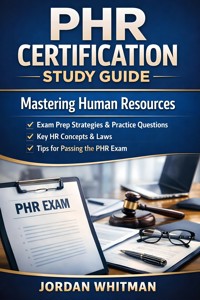
PHR Certification Study Guide
Mastering Human Resources
Jordan Whitman
Copyright © 2024 by Exam Master
All rights reserved.
No portion of this book may be reproduced in any form without written permission from the publisher or author, except as permitted by U.S. copyright law.
Contents
Introduction
Welcometothe"PHR Study Guide 2024-2025: 6 Practice Tests and PHR Exam Prep," a comprehensive resource designed to guide you through the journey of becoming a certified Professional in Human Resources (PHR). This guide is not just a pathway to exam success; it's a blueprint for a deeper understanding of the human resources field, where your expertise can make a tangible difference in any organization.
The PHR certification, established and awarded by the HR Certification Institute (HRCI), stands as a testament to your knowledge, skills, and commitment in the HR profession. It is more than just a credential; it's a career milestone that signifies your mastery of the technical and operational aspects of HR management, including U.S. laws and regulations. The certification is highly regarded across industries and is often a key differentiator in a competitive job market.
Our journey begins with an exploration of the structure of the PHR exam. The exam is meticulously crafted to assess your understanding and application of various knowledge areas essential to human resource management. These areas include Business Management, Talent Planning and Acquisition, Learning and Development, Total Rewards, Employee and Labor Relations, and Risk Management. Each of these areas plays a pivotal role in your day-to-day responsibilities as an HR professional and forms the core of what the PHR exam will evaluate.
This guide is structured to mirror the format of the PHR exam closely. Each chapter is dedicated to one of the knowledge areas, providing in-depth coverage of the essential concepts, laws, and best practices. Our goal is not just to prepare you for the exam but to enrich your understanding and skills in human resource management.
The highlight of this guide is the six full-length practice tests. These tests are carefully designed to reflect the style, format, and difficulty level of the actual PHR exam. They will not only gauge your preparedness but also build your test-taking confidence. After each test, you'll find detailed explanations and rationales for each question, deepening your understanding and helping you learn from any mistakes.
We recommend a systematic approach to using this guide. Begin with a thorough read of the content chapters to build your foundational knowledge. Then, progressively take the practice tests, reviewing your answers and referring back to the relevant chapters to fill in any knowledge gaps. This iterative process will reinforce your learning and improve your test-taking skills.
Remember, this journey is not just about passing an exam. It's about becoming a more competent, confident, and effective human resource professional. This guide is your companion in this transformative journey. Let's embark on this path together, with the shared goal of achieving PHR certification and advancing your career in human resources.
The Purpose and Importance of the PHR Certification
The Professional in Human Resources (PHR) certification, conferred by the HR Certification Institute (HRCI), transcends the notion of a mere professional badge. It stands as a pivotal landmark in the evolving journey of a human resources professional. This certification is not just an accolade; it's a formal recognition of mastery in both the technical and operational facets of HR management, a testament to a deep-seated expertise across a spectrum of areas crucial to human resource management.
Achieving the PHR certification is an affirmation of proficiency in areas such as talent acquisition, employee relations, compensation and benefits, and HR development. These core areas are where HR professionals are expected to excel, and the PHR certification is a validation of this expertise. Importantly, it encompasses a thorough understanding of U.S. laws and regulations related to human resources, equipping professionals with the knowledge to ensure legal compliance within their organizations.
In the dynamic and ever-changing field of Human Resources, the PHR certification consistently adapts to reflect new challenges and methodologies, ensuring its holders are well-equipped to adapt and thrive. This ever-evolving nature of the certification ensures its relevance and applicability in the modern HR landscape.
Possessing the PHR certification in the competitive world of HR serves as a significant differentiator. It is a mark that distinguishes its bearers as not just knowledgeable, but as committed professionals who have dedicated themselves to validate their expertise in the field. It goes beyond the basic qualifications, enhancing professional credibility and signaling to employers, colleagues, and clients a thorough understanding and practical ability in human resource management.
The impact of the PHR certification on career trajectories is substantial. It is often seen as a preferred qualification for senior HR roles, thus opening doors to advanced career opportunities and paving the way for significant professional growth and advancement. It signifies a commitment to continuous learning and professional development, a trait highly valued in the HR field.
The recognition of the PHR certification, though focused on U.S. laws and regulations, extends globally, making it a respected credential in the international HR community. This global recognition allows professionals to connect with a broader network, fostering a community that is a rich resource for knowledge sharing, experiences, and career growth.
On a personal level, achieving the PHR certification brings with it a sense of fulfillment and confidence. It instills a sense of pride and self-assurance in your professional capabilities, elevating your self-esteem as an HR expert.
The PHR certification is more than just a credential; it is a stepping stone to professional excellence in human resources. It reflects a dedication to your career, playing a crucial role in shaping your professional journey. It's an investment in yourself, marking your commitment to being at the forefront of the HR field.
Structure of the PHR Exam
The PHR exam, meticulously crafted by the HR Certification Institute (HRCI), serves as a comprehensive assessment tool, meticulously measuring both your knowledge and application skills across various pivotal domains of human resource management. This exam is not just a test of your memory; it's an evaluation of your ability to effectively apply HR principles in real-world scenarios.
At the heart of the PHR exam lie several critical knowledge areas that are essential to the practice of effective human resources. These areas encompass a wide range of topics, each holding significant importance in the daily function of an HR professional. The exam is designed to ensure that you have not only grasped the theoretical aspects of these areas but also are capable of applying this knowledge in practical, real-life HR situations.
Business Management forms a foundational component of the exam. This section dives deep into the strategic aspects of HR management, focusing on how HR policies and practices align with broader business strategies. It covers areas such as organizational development, change management, and the role of HR in formulating and executing business plans. This part of the exam assesses your ability to think strategically and align HR functions with the overall goals of the organization.
Talent Planning and Acquisition is another crucial area. This segment tests your knowledge and skills in sourcing, attracting, and selecting talent. It involves understanding the dynamics of the labor market, deploying effective recruitment strategies, and ensuring compliance with employment laws and regulations. This part of the exam requires you to demonstrate an understanding of how to build a workforce that meets the current and future needs of the organization.
Learning and Development is a key area that focuses on the growth and advancement of employees within an organization. This includes designing and implementing training programs, understanding various instructional methods, and developing initiatives that promote employee learning and development. This section of the exam evaluates your ability to foster a culture of continuous learning and improvement within an organization.
Total Rewards, encompassing compensation and benefits, is an area that examines your understanding of developing and implementing reward systems. This includes knowledge of compensation strategies, benefits offerings, pay equity regulations, and how these elements can be used to attract, motivate, and retain employees. This part of the exam assesses your skills in creating competitive, fair, and sustainable reward systems.
Employee and Labor Relations is a segment that delves into the dynamics between the organization and its employees, including union relationships. It covers aspects like employee engagement, dispute resolution, and collective bargaining. This section tests your ability to navigate and manage the complex relationships between employers and employees, ensuring a harmonious and productive work environment.
Risk Management, the final area, focuses on ensuring workplace safety, developing risk management policies, and maintaining compliance with various laws and regulations. This section evaluates your understanding of how to create a safe working environment and protect the organization from potential legal and operational risks.
In sum, understanding the structure and content of the PHR exam is crucial in your preparation journey. Each of these areas contributes to a comprehensive evaluation of your skills and knowledge as an HR professional. The exam not only tests your understanding of various HR practices but also your ability to apply this knowledge in a way that is effective, strategic, and compliant with legal standards. Preparing for the PHR exam means immersing yourself in these critical areas, ensuring you have the depth and breadth of knowledge required to excel in the field of human resources.
Overview of the Study Guide and Practice Tests This study guide is tailored to provide comprehensive coverage of all the key areas tested in the PHR exam. Each chapter in this guide aligns with one of the exam's knowledge areas, delving into critical concepts, laws, and best practices. The guide also includes six full-length practice tests, meticulously crafted to emulate the format and difficulty of the actual PHR exam. These tests serve as a practical tool to assess your readiness, helping to build your confidence and improve your test-taking skills. We recommend a structured approach to using this guide: start with a thorough review of the content chapters to build a strong foundation, then progressively work through the practice tests, using the detailed explanations and rationales provided to enhance your understanding and address any knowledge gaps. This systematic approach will reinforce your learning and optimize your preparation for the PHR exam.
Embarking on the journey to achieve the PHR certification requires not only determination but also the right tools and resources. This study guide has been meticulously designed as your essential companion through this journey. It offers comprehensive coverage of all the key areas tested in the PHR exam, ensuring that you are well-equipped with the knowledge needed to succeed.
Each chapter in this guide is a reflection of the PHR exam's structure, focusing on one specific knowledge area. These chapters delve deeply into critical concepts, laws, and best practices relevant to each area. By aligning the guide's structure with that of the exam, it provides a focused and efficient study experience, allowing you to understand and master each topic systematically.
Beyond the rich, informative content, a standout feature of this guide is the inclusion of six full-length practice tests. These tests have been carefully crafted to emulate both the format and difficulty level of the actual PHR exam. They are not just a means to test your knowledge but a powerful tool to gauge your exam readiness. By simulating the actual test environment, these practice tests help in building your confidence and honing your test-taking skills.
Using these practice tests effectively is key to maximizing the benefits they offer. After thoroughly reviewing the content chapters to build a strong foundational understanding, it is recommended to progressively work through the practice tests. As you complete each test, take the time to go through the detailed explanations and rationales provided for each question. This is where the true learning happens. These explanations will not only clarify doubts but also highlight areas where your understanding may be lacking.
This study guide is more than just a repository of information; it is a roadmap to success. The structured approach it recommends – starting with a solid review of the content and gradually progressing through practice tests – ensures that your study time is productive and focused. Each step in this approach is designed to reinforce your learning and address any gaps in your knowledge.
Moreover, as you advance through the guide, you will notice a steady improvement in your grasp of the material. The practice tests serve as checkpoints, giving you tangible evidence of your growing expertise and readiness for the exam. By the time you reach the final practice test, you should feel confident in your ability to tackle the PHR exam successfully.
This study guide is a comprehensive tool, meticulously designed to prepare you for the PHR exam. With its in-depth content, structured approach, and practical practice tests, it stands as a valuable resource in your journey towards achieving PHR certification. It is not just about passing an exam; it's about shaping you into a knowledgeable and capable HR professional, ready to face the challenges and opportunities of the ever-evolving field of human resources.
PHR Exam Overview
Welcometothefirst chapter of your journey towards mastering the Professional in Human Resources (PHR) certification. As you embark on this path, it is essential to understand not only what the PHR certification represents but also the detailed structure and content of the PHR exam. This chapter is designed to provide you with a clear and comprehensive overview, setting a solid foundation for your exam preparation.
The PHR certification is more than a testament to your HR knowledge—it's a recognition of your commitment to the profession and your expertise in managing the unique challenges of the human resources field. In today’s rapidly evolving business world, the role of HR professionals is increasingly pivotal. The PHR certification, therefore, becomes a mark of your ability to adapt, strategize, and lead effectively within this dynamic landscape.
In this chapter, we will delve into the significance of the PHR certification for HR professionals. We aim to provide you with a deep understanding of how this credential can impact your career, enhance your professional standing, and open new opportunities for growth and advancement. You will gain insights into how the PHR certification is perceived within the industry and how it can set you apart in a competitive job market.
Next, we explore the eligibility requirements and the application process for the PHR exam. Navigating these initial steps is crucial, and we provide you with all the necessary information and tips to ensure you are well-prepared for this aspect of your certification journey.
Furthermore, we break down the content of the PHR exam into its various section and topic areas. Understanding the exam’s structure is key to effective preparation. We will guide you through each section, explaining the types of questions you can expect and how they relate to real-world HR scenarios. This detailed breakdown will help you allocate your study time efficiently, focusing on areas that need the most attention.
Lastly, we discuss the format of the exam, including question types and time allocations. Familiarizing yourself with the exam format will not only help in managing your time during the exam but also in reducing anxiety and increasing your confidence.
By the end of this chapter, you will have a thorough understanding of what the PHR exam entails and why it is a crucial step in your HR career. Armed with this knowledge, you will be better prepared to tackle the chapters ahead, each focusing on specific knowledge areas of the PHR exam.
Let’s begin this exciting journey towards achieving your PHR certification, a significant milestone that will enrich your professional life and open new horizons in the field of Human Resources.
Understanding the PHR Certification
The Significance of the PHR Certification for HR Professionals
The Professional in Human Resources (PHR) certification is not just a career milestone; it's a symbol of excellence and dedication in the field of human resources. This esteemed credential serves as a robust testament to your comprehensive knowledge and proficiency in HR management. In a professional world where credentials speak volumes, the PHR certification loudly declares your commitment and expertise to all - employers, colleagues, and the industry at large.
Holding a PHR certification is a clear indication of your depth of understanding in the complexities and nuances of HR management. This certification signifies that you are not just familiar with the basic concepts of human resources but are deeply knowledgeable about how various HR practices interweave to contribute significantly to the success of an organization. It's a validation of your ability to comprehend and apply HR principles in a real-world setting, making you a valuable asset to any team.
In the ever-evolving realm of human resources, where regulations shift and best practices are continually updated, the PHR certification stands as a beacon of your commitment to staying current. It assures those around you that you are not just keeping pace with the changes but are ahead of the curve, equipped with the latest knowledge and skills. This aspect is crucial in an industry where staying updated is not just beneficial but essential.
The PHR certification also serves as a powerful tool for professional advancement. In a field as competitive as human resources, having this certification can distinguish you from your peers. It often opens doors to opportunities that might have been inaccessible otherwise, such as higher-level positions or roles that come with greater responsibility. For those aspiring to climb the career ladder in HR, the PHR certification can be a critical stepping stone.
Moreover, the PHR certification demonstrates your capability to operate strategically within the HR function. It's not just about knowing the HR policies and practices; it's about understanding how to implement these strategically to align with the overall business goals. This strategic aspect is increasingly sought after in HR professionals, as organizations recognize the value of HR in driving business success.
Furthermore, the respect and recognition that come with the PHR certification are unparalleled. It’s a credential that resonates within the HR community and beyond, often leading to greater professional respect and credibility. This increased recognition can lead to networking opportunities, mentorship roles, and a stronger influence within the field.
In summary, the PHR certification is more than just a credential; it’s a comprehensive affirmation of your skills, knowledge, and dedication to the field of human resources. It elevates your professional standing, opens new career pathways, and positions you as an expert and strategic thinker in the complex and dynamic world of HR. For any HR professional looking to make a significant impact in their career, achieving the PHR certification is a crucial and rewarding endeavor.
Eligibility Requirements for the PHR Exam
Embarking on the journey to obtain the Professional in Human Resources (PHR) certification is a decision that can significantly elevate your HR career. However, before setting off on this path, it's crucial to understand and meet the eligibility requirements set by the HR Certification Institute (HRCI). These criteria are not mere formalities; they are carefully designed to ensure that candidates possess a foundational level of HR work experience and knowledge, essential for tackling the comprehensive PHR exam.
The eligibility for the PHR exam is thoughtfully tiered, taking into account a candidate’s formal education in human resources or a related field. This tiered approach is reflective of the belief that educational background and practical experience together shape a well-rounded HR professional. For instance, those with a master’s degree in an HR-related field are generally expected to have less professional HR work experience than those holding a bachelor's degree or a lesser educational qualification. This structure acknowledges the depth of knowledge and understanding that higher education in HR imparts, allowing for a balanced consideration of education and practical experience.
To be specific, the eligibility criteria vary depending on the highest level of education achieved. For instance, candidates with a master's degree might need as little as one year of professional HR experience, whereas those with a bachelor's degree typically require two years, and those without a bachelor’s degree might need at least four years of experience. This sliding scale ensures that the PHR certification remains accessible to a wide range of professionals while maintaining a high standard of competence and knowledge.
It is of utmost importance for aspiring candidates to thoroughly review and understand the specific criteria as outlined by the HRCI. This is because the HRCI may update these requirements periodically to align with the evolving standards and demands of the HR profession. Staying informed about these requirements is crucial, as they form the gateway to the certification process.
Moreover, these eligibility criteria serve a dual purpose. Firstly, they set a standard ensuring that all candidates possess a certain level of professional maturity and experience. Secondly, they ensure that those taking the exam have a solid foundation upon which the advanced concepts and knowledge areas covered in the PHR exam can be built. This preparation is not just about passing the exam but about ensuring that certified professionals are truly equipped to handle the complexities of modern HR roles.
Understanding and meeting these eligibility requirements is the first crucial step in your journey towards PHR certification. It signifies your readiness to embark on an intensive learning and professional development path, one that will not only challenge but also enrich your understanding and practice of human resources.
In conclusion, the eligibility requirements for the PHR exam are an integral part of the certification process. They ensure that all candidates have a baseline level of experience and education, setting the stage for the advanced learning and professional development that the PHR certification entails. Meeting these requirements is your first milestone in the journey towards becoming a PHR-certified professional, a journey that promises growth, challenge, and a wealth of opportunities in the field of human resources.
The Application Process for the PHR Exam
Once you determine your eligibility, the next step is the application process. This process involves several key steps, beginning with creating an account on the HRCI website. Through this account, you'll be able to submit your application for the PHR exam and track its status.
The application process requires you to provide detailed information about your professional HR experience and education. It’s important to be thorough and accurate in this section, as HRCI may require additional documentation or verification. After submitting your application and the associated fee, HRCI will review your credentials. Upon approval, you'll receive authorization to test, allowing you to schedule your exam at an authorized testing center.
It's advisable to plan this process well in advance of when you intend to take the exam. Consider the time needed for the application review, the potential need for additional documentation, and your preferred testing dates. Creating an Account with HRCI: Your first step is to create an account on the HR Certification Institute (HRCI) website. This account is your portal to the PHR world, allowing you to submit your PHR exam application and enabling you to track its progress. This process is designed to be user-friendly, ensuring a seamless experience for applicants.
Submitting Your Application: Once your account is set up, the next step is to fill out and submit your application. This involves providing detailed information about your professional experience in HR and your educational background. Accuracy and thoroughness are crucial here, as this information lays the groundwork for your eligibility. The HRCI may request additional documentation to verify the details provided, so it’s important to have all your records organized and accessible.
Application Review and Fees: After your application and the associated fee are submitted, they go through a review process. During this review, HRCI assesses your eligibility based on the criteria they have set. This is a critical phase where the completeness and accuracy of your application are evaluated.
Receiving Authorization to Test: Once your application is approved, you will receive an 'Authorization to Test' notification. This authorization is your green light to proceed to the next stage – scheduling your exam. It signifies that you have met all the prerequisites and are ready to take on the challenge of the PHR exam.
Scheduling Your Exam: With the authorization in hand, you can now schedule your exam at an authorized testing center. The flexibility to choose your testing date allows you to align the exam with your preparation schedule. However, it’s important to be strategic about this choice, considering factors like your readiness, availability of testing slots, and personal commitments.
Planning Ahead: A crucial piece of advice is to start this application process well in advance of your intended exam date. Consider the time needed for the application review, the possibility of submitting additional documentation, and the availability of your preferred testing dates. This foresight will help avoid any last-minute hassles and ensure a smooth journey to your exam day.
Next Steps: With the application process completed, your focus will shift entirely to preparing for the PHR exam. In the next section of our guide, we will delve into the detailed structure and content areas of the PHR exam. This information will serve as your roadmap, guiding you through your study and preparation, and bringing you closer to achieving your goal of PHR certification.
The application process for the PHR exam is a structured yet straightforward pathway, designed to ensure that every candidate is suitably prepared and eligible. By following these steps diligently and planning ahead, you can ensure a smooth transition through this initial phase of your certification journey, setting a strong foundation for your success in the PHR exam and your future career in human resources.
In the next section, we will explore the detailed structure and content areas of the PHR exam, providing you with a roadmap for your study and preparation.
Exam Content and Structure
The Professional in Human Resources (PHR) exam stands as a cornerstone in the field of human resource management, offering a comprehensive evaluation of a professional's mastery of the essential aspects of HR. This exam encompasses a broad spectrum of topics, each selected for their relevance and impact on the modern HR landscape. Candidates are tested on their knowledge and practical application of various HR practices, from strategic planning and workforce development to regulatory compliance and employee relations. The depth and breadth of the exam's content reflect the evolving role of HR professionals in today's dynamic business environments, highlighting the importance of a multidimensional understanding of human resources.
The structure of the PHR exam is meticulously designed to gauge a candidate's proficiency across key HR domains. The exam is divided into distinct sections, each focusing on a critical area of human resources. These sections include Business Management, Talent Planning and Acquisition, Learning and Development, Total Rewards, Employee and Labor Relations, and Risk Management. This segmentation ensures that candidates are not only familiar with the theoretical underpinnings of HR practices but are also adept at applying this knowledge in practical, real-world scenarios. The comprehensive nature of the exam requires candidates to have a well-rounded understanding of how these diverse areas interconnect and contribute to the overall effectiveness of HR within an organization.
Preparing for the PHR exam demands a strategic and thorough approach, given its extensive scope and the level of detail it covers. The exam's format, predominantly consisting of scenario-based multiple-choice questions, is designed to test both the depth of theoretical knowledge and the ability to apply this knowledge in practical situations. This format challenges candidates to think critically and make informed decisions, mirroring the complexities they will encounter in their professional roles. To excel in the PHR exam, candidates must develop a deep, nuanced understanding of each topic area and be adept at navigating through various HR challenges and scenarios. This level of preparation not only paves the way for success in the exam but also lays a strong foundation for a flourishing career in human resources.
Content Breakdown by Sections and Topics: The PHR exam is divided into several distinct sections, each focusing on a critical area of HR practice. These include:




