


62,99 €
Mehr erfahren.
- Herausgeber: John Wiley & Sons
- Kategorie: Fachliteratur
- Sprache: Englisch
Despite the research effort put into controlling pathogens, pests and parasitic plants, crop losses are still a regular feature of agriculture worldwide. This makes it important to manage the crop appropriately in order to maximise yield. Understanding the relationship between the occurrence and severity of attack, and the resulting yield loss, is an important step towards improved crop protection. Linked to this, is the need to better understand the mechanisms responsible for reductions in growth and yield in affected crops.
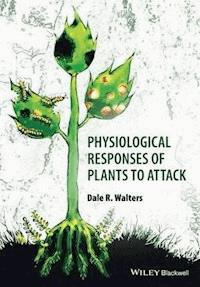
Physiological Responses of Plants to Attack is unique because it deals with the effects of different attackers – pathogens, herbivores, and parasitic plants, on host processes involved in growth, reproduction, and yield. Coverage includes effects on photosynthesis, partitioning of carbohydrates, water and nutrient relations, and changes in plant growth hormones. Far from being simply a consequence of attack, the alterations in primary metabolism reflect a more dynamic and complex interaction between plant and attacker, sometimes involving re-programming of plant metabolism by the attacker.
Physiological Responses of Plants to Attack is written and designed for use by senior undergraduates and postgraduates studying agricultural sciences, applied entomology, crop protection, plant pathology and plant sciences. Biological and agricultural research scientists in the agrochemical and crop protection industries, and in academia, will find much of use in this book. All libraries in universities and research establishments where biological and agricultural sciences are studied and taught should have copies of this exciting book on their shelves
Sie lesen das E-Book in den Legimi-Apps auf:
Seitenzahl: 478
Veröffentlichungsjahr: 2015
Ähnliche



















Table of Contents
Title Page
Copyright
Dedication
Preface
Chapter 1: The Interaction Between a Plant and Its Attacker
1.1 Introduction
1.2 Different types of attacker
1.3 Symptoms exhibited by plants following attack
1.4 Conclusions
Recommended reading
References
Chapter 2: Growth, Development and Yield of Infected and Infested Plants and Crops
2.1 Introduction
2.2 Effects of pathogens on growth, development and yield
2.3 Effects of nematodes on growth, development and yield
2.4 Effects of herbivores on growth, development and yield
2.5 Effects of parasitic plants on growth, development and yield
2.6 Conclusions
Recommended reading
References
Chapter 3: Photosynthesis in Attacked Plants and Crops
3.1 Introduction
3.2 Photosynthesis in diseased plants
3.3 Photosynthesis in plants infected with nematodes
3.4 Photosynthesis in plants infested with insects
3.5 Photosynthesis in plants infected with parasitic plants
3.6 The caring robber? hardly!
3.7 Conclusions
Recommended reading
References
Chapter 4: Respiration in Plants Interacting with Pathogens, Pests and Parasitic Plants
4.1 Introduction
4.2 Effects of attack on respiration
4.3 Photorespiration in attacked plants
4.4 Conclusion
Recommended reading
References
Chapter 5: Effects on Carbohydrate Partitioning and Metabolism
5.1 Introduction
5.2 Carbohydrate partitioning and metabolism in plants infected by pathogens
5.3 Carbohydrate metabolism and partitioning in plant–insect herbivore interactions
5.4 Carbohydrate metabolism and partitioning in interactions between plants and parasitic angiosperms
5.5 Conclusions
Recommended reading
References
Chapter 6: Water Relations of Plants Attacked by Pathogens, Insect Herbivores and Parasitic Plants
6.1 Introduction
6.2 Effects of pathogens on plant water relations
6.3 Effects of nematodes on plant water relations
6.4 Water relations in plants infested with insect herbivores
6.5 Effects of parasitic angiosperms
6.6 Conclusions
Recommended reading
References
Chapter 7: Mineral Nutrition in Attacked Plants
7.1 Introduction
7.2 Mineral nutrition in plant–pathogen interactions
7.3 Mineral nutrition in plant–nematode interactions
7.4 Mineral nutrition in plant–insect interactions
7.5 Mineral nutrition in interactions between plants and parasitic angiosperms
7.6 Conclusions
Recommended reading
References
Chapter 8: Hormonal Changes in Plants Under Attack
8.1 Introduction
8.2 Hormonal changes in plants responding to pathogens
8.3 Hormonal changes in plants responding to insect attack
8.4 Hormonal changes in plants infected with parasitic plants
8.5 Conclusions
Recommended reading
References
Chapter 9: Bringing It Together: Physiology and Metabolism of the Attacked Plant
9.1 Introduction
9.2 Metabolic reprogramming in plant–pathogen interactions
9.3 Metabolic reprogramming in interactions between plant and parasitic nematodes
9.4 Metabolic reprogramming in plant–insect interactions
9.5 Metabolic reprogramming in interactions between plants and parasitic angiosperms
9.6 Metabolic reprogramming – is the plant just a bystander in compatible interactions?
9.7 Plant responses to attack – a look to the future
Recommended reading
References
Index
End User License Agreement
Pages
xi
1
2
3
4
5
6
7
8
9
10
11
12
13
14
15
16
17
18
19
20
21
22
23
24
25
26
27
28
29
30
31
32
33
34
35
36
37
38
39
40
41
42
44
43
45
46
47
48
49
50
51
52
53
54
55
57
56
58
59
60
61
62
63
64
65
66
67
68
69
70
71
72
73
74
75
76
77
78
79
80
81
82
83
84
85
86
87
88
89
90
91
92
93
94
95
96
97
98
99
100
101
102
103
104
105
106
107
108
109
110
111
112
113
114
115
116
117
118
119
120
121
122
124
123
125
126
127
128
129
130
131
132
133
134
135
136
137
138
139
140
141
142
143
144
145
146
147
148
149
150
151
152
153
154
155
156
157
158
159
160
161
162
163
164
165
166
167
168
169
170
171
172
173
174
175
176
177
178
179
180
181
182
183
184
185
186
187
188
189
190
191
192
193
194
195
196
197
198
199
200
201
202
203
204
205
206
207
208
209
210
211
212
213
214
215
216
217
218
219
220
221
222
223
224
225
226
227
228
229
Guide
Cover
Table of Contents
Preface
Begin Reading
List of Illustrations
Figure 1.1
Figure 1.2
Figure 1.3
Figure 1.4
Figure 1A
Figure 1.5
Figure 1.6
Figure 1.7
Figure 1.8
Figure 1.9
Figure 1.10
Figure 1.11
Figure 1.12
Figure 2.1
Figure 2.2
Figure 2.3
Figure 2.4
Figure 2.5
Figure 2.6
Figure 2A
Figure 2.7
Figure 3.1
Figure 3.2
Figure 3.3
Figure 3.4
Figure 3.5
Figure 3.6
Figure 3.7
Figure 3.8
Figure 3.9
Figure 3.10
Figure 3.11
Figure 3.12
Figure 3.13
Figure 3.14
Figure 3.15
Figure 3.16
Figure 3.17
Figure 3.18
Figure 3.19
Figure 3.20
Figure 3.21
Figure 3.22
Figure 3.23
Figure 3.24
Figure 3.25
Figure 3.26
Figure 3.27
Figure 3.28
Figure 3.29
Figure 3.30
Figure 4.1
Figure 4.2
Figure 4.3
Figure 4.4
Figure 4.5
Figure 4.6
Figure 4.7
Figure 4.8
Figure 4.9
Figure 4.10
Figure 4.11
Figure 4A
Figure 4B
Figure 4.12
Figure 4.13
Figure 4.14
Figure 4.15
Figure 4.16
Figure 5.1
Figure 5.2
Figure 5.3
Figure 5.4
Figure 5.5
Figure 5.6
Figure 5.7
Figure 5.8
Figure 5.9
Figure 5.10
Figure 6.1
Figure 6.2
Figure 6.3
Figure 6.4
Figure 6.5
Figure 6.6
Figure 6.7
Figure 6.8
Figure 6.9
Figure 6.10
Figure 6.11
Figure 6.12
Figure 6.13
Figure 6.14
Figure 6.15
Figure 6.16
Figure 7.1
Figure 7.2
Figure 7.3
Figure 7.4
Figure 7.5
Figure 7.6
Figure 7.7
Figure 7.8
Figure 7.9
Figure 7.10
Figure 7.11
Figure 7.12
Figure 7.13
Figure 7.14
Figure 7.15
Figure 7.16
Figure 7.17
Figure 8.1
Figure 8.2
Figure 8.3
Figure 8.4
Figure 8.5
Figure 8.6
Figure 8.7
Figure 8.8
Figure 8.9
Figure 8.10
Figure 8.11
Figure 8.12
Figure 9.1
Figure 9.2
List of Tables
Table 1.1
Table 1.2
Table 1.3
Table 2.1
Table 3.1
Table 3.2
Physiological Responses of Plants to Attack
Dale R. Walters
Crop & Soil Systems Research Group
SRUC
Edinburgh, UK
This edition first published 2015 © 2015 by Dale R. Walters
Registered office: John Wiley & Sons, Ltd, The Atrium, Southern Gate, Chichester, West Sussex, PO19 8SQ, UK
Editorial offices: 9600 Garsington Road, Oxford, OX4 2DQ, UK The Atrium, Southern Gate, Chichester, West Sussex, PO19 8SQ, UK 111 River Street, Hoboken, NJ 07030-5774, USA
For details of our global editorial offices, for customer services and for information about how to apply for permission to reuse the copyright material in this book please see our website at www.wiley.com/wiley-blackwell.
The right of the author to be identified as the author of this work has been asserted in accordance with the UK Copyright, Designs and Patents Act 1988.
All rights reserved. No part of this publication may be reproduced, stored in a retrieval system, or transmitted, in any form or by any means, electronic, mechanical, photocopying, recording or otherwise, except as permitted by the UK Copyright, Designs and Patents Act 1988, without the prior permission of the publisher.
Designations used by companies to distinguish their products are often claimed as trademarks. All brand names and product names used in this book are trade names, service marks, trademarks or registered trademarks of their respective owners. The publisher is not associated with any product or vendor mentioned in this book.
Limit of Liability/Disclaimer of Warranty: While the publisher and author(s) have used their best efforts in preparing this book, they make no representations or warranties with respect to the accuracy or completeness of the contents of this book and specifically disclaim any implied warranties of merchantability or fitness for a particular purpose. It is sold on the understanding that the publisher is not engaged in rendering professional services and neither the publisher nor the author shall be liable for damages arising herefrom. If professional advice or other expert assistance is required, the services of a competent professional should be sought.
Library of Congress Cataloging-in-Publication Data
Walters, Dale, author.
Physiological responses of plants to attack / Dale R. Walters.
pages cm
Includes bibliographical references and index.
ISBN 978-1-4443-3329-9 (pbk.)
1. Plant-pathogen relationships. 2. Plant physiology. I. Title.
SB732.7.W35 2015
632—dc23
2014041920
A catalogue record for this book is available from the British Library.
Wiley also publishes its books in a variety of electronic formats. Some content that appears in print may not be available in electronic books.
Cover image by Archie Graham
To Beverley
Preface
The continued existence of plants is remarkable given the huge range of organisms that uses them as a source of nourishment. The fact that plants survive in the face of continual onslaught from attackers is testimony to their defensive abilities and their ability to cope with damage inflicted during attacks. Understanding the changes that occur in plants under attack is important in attempts to produce crops better able to withstand the ravages of pathogens and pests. Feeding an ever-increasing human population requires not only efficient crop production, but also the ability to protect crops, allowing them to realise their yield potential. In the study of crop protection, plant defence has attracted most attention from researchers. However, it is becoming increasingly clear that understanding the metabolism and physiology of interactions between plants and their attackers is important, not least because of the connections between plant defence and primary metabolism. The interaction between a plant and an attacker is dynamic, and, for example, in an incompatible interaction, host defence is financed by primary metabolism, and often, effective resistance is associated with a cost in terms of plant growth. In compatible interactions, despite the fact that attackers are able to manipulate host metabolism for their own benefit, the host plant is still able to alter metabolic processes to make life difficult for the invader.
We are beginning to understand interactions of plants with the biotic environment at a level of detail that was difficult to imagine when I was an undergraduate student at Wye College in the mid-1970s. My interest in what was then called ‘physiological plant pathology’ started at Wye, but it was my move to Lancaster for postgraduate work that cemented my interest in plant disease physiology. I was very fortunate to be supervised for my PhD by Peter Ayres whose gentle approach to supervision and enthusiasm for physiological plant pathology made my time at Lancaster very happy. Over the years, I have been very fortunate to be able to discuss ideas with various colleagues, especially Nigel Paul, Ian Bingham and Adrian Newton. I am most grateful to Nigel Balmforth, who has always been supportive of my ideas for books and has shown considerable patience when I've asked for deadline extensions. Finally, I owe a huge debt of gratitude to Beverley for not only encouraging me in my book-writing activities, but also putting up with my grumpiness when the writing is not going well.
I have taught modules on the physiological responses of plants to pathogens since 1982, and over the years, this has developed to include physiological responses to pests and parasitic plants. It appears logical to me to study plant responses to different attackers in the same module, and in the absence of a single text adopting this approach, I decided to write one. It took me longer than expected, and there were times I thought I'd taken on too big a task, but the more I delved into the literature, the more fascinated I became. I hope this fascination comes through in the following chapters.
Dale R. WaltersSRUCEdinburgh, UK
Chapter 1The Interaction Between a Plant and Its Attacker
1.1 Introduction
Plants are the only higher organisms on the planet capable of converting energy from the Sun into chemical forms of energy that can be stored or used (Agrios, 2005). Not surprisingly therefore, plants are a source of food for a great many organisms. Indeed, directly or indirectly, plants are a source of nourishment for all humans and animals. Although plants have evolved a bewildering array of defences with which to ward off attack (Walters, 2011), many plants succumb to attack and suffer damage and disease as a result. This, in turn, can affect the growth and reproductive output of the plant, which can exert a significant effect on competitive ability and survival. In terms of crop production, damage and disease can affect the yield and quality of produce, with economic consequences to the farmer or grower. In this book, we examine the mechanisms responsible for the changes in plant growth, development and yield following attack by various organisms. Such knowledge is important because it can be useful in our attempts to protect crops from attack, as well as helping them to cope with the consequences of attack.
Plants that are attacked are likely to show visible signs of the encounter and the resulting after effects. Symptoms can be useful, not only in identifying an affected plant, but also in hinting at the cause of the problem and even the nature of the attacker. We look at symptoms in some detail later in this chapter, but let us turn our attention first to the attackers, because the nature of the attacker and the way it obtains food from the plant can exert a profound influence on the way the plant responds and the symptoms we observe.
Lesen Sie weiter in der vollständigen Ausgabe!
Lesen Sie weiter in der vollständigen Ausgabe!
Lesen Sie weiter in der vollständigen Ausgabe!
Lesen Sie weiter in der vollständigen Ausgabe!
Lesen Sie weiter in der vollständigen Ausgabe!
Lesen Sie weiter in der vollständigen Ausgabe!
Lesen Sie weiter in der vollständigen Ausgabe!
Lesen Sie weiter in der vollständigen Ausgabe!
Lesen Sie weiter in der vollständigen Ausgabe!
Lesen Sie weiter in der vollständigen Ausgabe!




