


10,99 €
Mehr erfahren.
- Herausgeber: John Wiley & Sons
- Kategorie: Geisteswissenschaft
- Serie: Theory Redux
- Sprache: Englisch
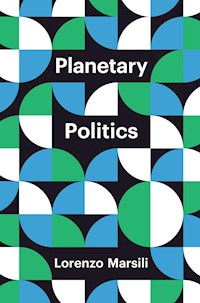
The global crisis of our time involves a complex of ecological, economic, technological and migratory challenges that no state is able to control. The result is a provincialisation of our democracies with respect to the new planetary powers confronting humanity. It is from this that our increasingly impotent and rabid politics stems. Paradoxical as it may seem, it is precisely the decline of the nation-state that is the source of the great nationalist uprising of our time. We need a new planetary vision that is able to reclaim and liberate our world, starting today and engaging each of us. This is the task of philosophy as much as it is of politics, of theory as it is of activism. Connecting with a new generation taking to the streets across the globe, this book tells the story of the ever-closer union of our world, from the age of empire to the climate crisis, and presents a plea and a roadmap to step beyond the mental and material boundaries of our nations.
Sie lesen das E-Book in den Legimi-Apps auf:
Seitenzahl: 128
Veröffentlichungsjahr: 2020
Ähnliche



















CONTENTS
Cover
Series Page
Title Page
Copyright
Introduction
1 The twilight of universal Europe
The mind in crisis
The first
ouroboros
Notes
2 The human zoo
Planning the world
The rest of the world
‘Ho Chi Minh, Mao Zedong’
Notes
3 The last ideology
The theory of two worlds
Discipline and punish
The rhizome
Notes
4 Before the revolution
The government of our psychosis
The Last Man
Notes
5 All under heaven
A trace
Notes
6 A glimpse into a politics for the planet
Planetary parties
A planetary people
Planetary institutions
Workers of the world . . .
An oracle for the world
A planetary class enemy
Notes
意味
End User License Agreement
Guide
Cover
Table of Contents
Series Page
Title Page
Copyright
Introduction
Begin Reading
意味
End User License Agreement
Pages
ii
iii
iv
1
2
3
4
5
6
7
8
9
10
11
12
13
14
15
16
17
18
19
20
21
22
23
24
25
26
27
28
29
30
31
32
33
34
35
36
37
38
39
40
41
42
43
44
45
46
47
48
49
50
51
52
53
54
55
56
57
58
59
60
61
62
63
64
65
66
67
68
69
70
71
72
73
74
75
76
77
78
79
80
81
82
83
84
85
86
87
88
89
90
91
92
93
94
95
96
97
98
99
100
101
102
103
104
105
106
107
108
109
110
111
112
113
114
115
116
117
118
119
120
121
122
123
124
125
126
127
128
129
130
131
132
137
Theory Redux seriesSeries editor: Laurent de Sutter
Mark Alizart, Cryptocommunism
Armen Avanessian, Future Metaphysics
Franco Berardi, The Second Coming
Alfie Bown, The Playstation Dreamworld
Laurent de Sutter, Narcocapitalism
Roberto Esposito, Persons and Things
Graham Harman, Immaterialism
Helen Hester, Xenofeminism
Srećko Horvat, The Radicality of Love
Lorenzo Marsili, Planetary Politics
Dominic Pettman, Infinite Distraction
Eloy Fernández Porta, Nomography
Nick Srnicek, Platform Capitalism
Planetary Politics
A Manifesto
Lorenzo Marsili
polity
Copyright © Lorenzo Marsili 2021
The right of Lorenzo Marsili to be identified as Author of this Work has been asserted in accordance with the UK Copyright, Designs and Patents Act 1988.
First published in 2021 by Polity Press
Polity Press65 Bridge StreetCambridge CB2 1UR, UK
Polity Press101 Station LandingSuite 300Medford, MA 02155, USA
All rights reserved. Except for the quotation of short passages for the purpose of criticism and review, no part of this publication may be reproduced, stored in a retrieval system or transmitted, in any form or by any means, electronic, mechanical, photocopying, recording or otherwise, without the prior permission of the publisher.
ISBN-13: 978-1-5095-4478-3
A catalogue record for this book is available from the British Library.
Library of Congress Cataloging-in-Publication DataNames: Marsili, Lorenzo, author.Title: Planetary politics : a manifesto / Lorenzo Marsili.Other titles: Tua patria è il mondo intero. EnglishDescription: Cambridge, UK ; Medford, MA : Polity Press, 2021. | Series: Theory redux | Includes bibliographical references. | Summary: “A manifesto for a new planetary vision that can address the great challenges of our time”-- Provided by publisher.Identifiers: LCCN 2020026068 (print) | LCCN 2020026069 (ebook) | ISBN 9781509544769 (hardback) | ISBN 9781509544776 (paperback) | ISBN 9781509544783 (epub)Subjects: LCSH: Political science. | World politics--20th century. | World politics--21st century.Classification: LCC JA71 .M124513 2021 (print) | LCC JA71 (ebook) | DDC 320--dc23LC record available at https://lccn.loc.gov/2020026068LC ebook record available at https://lccn.loc.gov/2020026069
The publisher has used its best endeavours to ensure that the URLs for external websites referred to in this book are correct and active at the time of going to press. However, the publisher has no responsibility for the websites and can make no guarantee that a site will remain live or that the content is or will remain appropriate.
Every effort has been made to trace all copyright holders, but if any have been overlooked the publisher will be pleased to include any necessary credits in any subsequent reprint or edition.
For further information on Polity, visit our website: politybooks.com
Introduction
In 1972 Henry Kissinger met Zhou Enlai in what would become the first step towards the great reconciliation between the United States and China.
‘How do you judge the French Revolution?’ the American Secretary of State asked. ‘It is still too early to tell’, replied the Chinese premier. The scene has become a classic illustration of the Chinese inclination for the long term, despite probably originating in a misunderstanding in translation: Kissinger actually referred to the revolution of 1789, while Zhou Enlai thought of the French uprisings of 1968. Nevertheless, the exchange still gets it right. It is only today that the parable inaugurated by the French Revolution, with the entry of the nation as the leading historical actor and unique reference point for citizenship and political agency, finally comes to a close.
The Constituent Assembly elected during the French Revolution of 1789 drafted the ‘Declaration of the Rights of Man and of the Citizen’. The title itself expresses the constitutive uncertainty of modern citizenship between the universal and the particular. In the Declaration we do not find a set of rights for all human beings and a set of rights reserved for citizens, but rather only those universal principles that unite the entire humanity. The universal aspect however goes hand-in-hand with the enshrining of particular rights in national law, which stands as their guarantee. The nation is both the guarantor of rights and the space for collective action by citizens to defend them. The nation, with its general will, is the instrument capable of establishing the universal in the particular and making the particular part of the universal.
We all know how much pain and destruction has emerged from such aspirations. The exclusionary character of the nation emerged immediately after the French Revolution, with the first great revolt in the French Caribbean led by the freed slave and black Jacobin Toussaint Louverture. Quoting the Declaration and singing the Marseillaise, Louverture found himself fighting that very same Republican army committed to extending across Europe new revolutionary principles that were apparently universal but actually denied to colonial peoples. We know the history of nations and we remember how often they turn against their own people in genocidal and persecutory acts. We know how arbitrary, and cruel, is often the choice of who really belongs to the nation.
But national aspirations fail today in another and deeper sense. The nation is no longer capable, even in its most ideal perspective, of guaranteeing human rights and the free exercise of popular sovereignty. Citizens’ rights are no longer superimposed on, they are no longer the particular of, universal rights, but only a part or a subset of them. The nation, provincialised and marginalised, no longer guarantees full exercise of political, social and civic agency in a human society that has now trampled every border.
Many would like to convince us that the recovery of control and sovereignty passes by an abandonment of the world and an entrenchment behind the material and mental borders of closed territories and indomitable, great-again nations. But this idea has never been as false as it is today. If we do not want our political agency and our powers of the imagination to become a mere footnote in a tragic history of impotence, we must rather recover the planet and recuperate the belief in our power of transforming it.
In the pages that follow we will briefly run through the short history of the becoming world of the world, leading up to our contemporary sense of loss and disorientation. We will then offer some cursory notes for a possible planetary politics to liberate our world and our common humanity.
1The twilight of universal Europe
The Avenida Central of Rio de Janeiro was built in 1904, following the latest European fashion: stone façades, domes and belle époque iron railings adorned a triumph of modernity. Photographers have left ample documentation of the elegant European architecture and of the people who frequented the street. Women are seen wearing outsized skirts and carrying black umbrellas, while men dress in dark tuxedos and top hats. We are at the equator: the temperature skyrockets and humidity causes the skin to sweat. These are not the right clothes to wear. But all climatic considerations are secondary, because il faut être absolument moderne. And being modern means disregarding distances, weather, and local customs, and thinking and acting as if we had all just left a café-concert on a Parisian boulevard.
It was in Brazil, in the hilltop village of Petrópolis, that Stefan Zweig took his own life in 1942. In his suicide note the great Austrian writer lamented the destruction of his ‘spiritual home’ – and, faced with the suicide of Europe, he committed his own. A continent in ruins lay on the other side of the ocean; a continent so dramatically different from the belle époque the planners of Avenida Central were out to imitate and so unlike that universal Europe that Zweig celebrated in 1916, in the middle of the First World War, with the following words of longing:
Thus it grew, the new Tower of Babel, and never had its summit reached so high as in our epoch. Never had nations had such ease of access to the spirits of their neighbours, never had their knowledge been so intimately linked, never had commercial relations been so close in forming a formidable network and never had Europeans loved both their homeland and the rest of the world . . . The monument was growing, the whole of humanity counted on assembling there for the consecration and music resounded around the edifice like a gathering storm.1
Here is all the inebriation of universalism that captured a European elite that had united the world in a single political, economic and cultural network. With a rhetoric that much recalls the apex of another and more recent phase of globalisation, the early twentieth century introduced the lexicon of the end of borders, of the overcoming of distances and of the political and economic interdependence of nations. Industry developed integrated supply chains on a global scale, trade and finance crossed every frontier, while telegraph lines, railways and steam ships connected the world, allowing the transmission of ideas, aspirations and fashions on a planetary scale as never before. Europe, with porous internal borders that could still be crossed without a passport, was swept by common political, artistic and cultural currents. The bourgeoisie of Buenos Aires adopted the latest Parisian vogue well before this reached the sleepy towns of the French countryside. And while four-fifths of the earth were under the control of a handful of Western powers, every corner of the world had its own Avenida Central.
Liberal capitalism and free trade embraced the globe, with an impenetrable and apparently indestructible web that gave rise to a thriving literature on European unity and world government. This was not, surely, a democratic and egalitarian universality. British supremacy stood as a guarantee of the stability of the system, a Janus-faced power that maintained order with the double gaze of its gunboats and its financial capital. A handful of European metropolises decided the fate of the world, while a large part of humanity experienced the squalor and crime of colonialism. The shadow of European domination and the global projection of its economy and trade transformed the life of every inhabitant, in every country, on every continent. From the Ottoman to the Persian Empire, from India to Japan, the whole world had to respond to and was transformed by the developments in one of its parts. It was something extraordinarily new.
Indeed, even in the colonised world, the other side of the coin of European sovereignty, a new feeling of transnational solidarity between oppressed peoples began to develop. When Japan annihilated the Russian fleet at Tsushima and defeated the Russian Empire in 1905 – marking the first victory of an Asian people against a European power – Turkish, Persian, Egyptian, Chinese and Vietnamese newspapers celebrated. Sixteen-year-old Jawaharlal Nehru, future Indian Prime Minister; Sun Yat-sen, the future leader of the Republic of China; Mustafa Kemal, who under the name Atatürk would become the father of modern Turkey; all cheered in unison. The Turkish writer Halide Edip named her son Tōgō in honour of the Japanese admiral who secured victory, while the future Indian Nobel laurate Rabindranāth Tagore improvised a triumphal march with his students in a small school of rural Bengal.2
The upheaval was total. ‘A new model of life’, wrote the economist Karl Polanyi, ‘unfolds on the world with a universal aspiration without parallels from the time when Christianity began its history.’3
The mind in crisis
The carnage of the First World War destroyed the illusion of having rebuilt the universality that Greek philosophy, Roman law and Christian religion had imprinted on the collective unconscious of European elites. The words with which Stefan Zweig continues his narration of the new Babel are those of a trauma: ‘And it was precisely this generation of ours, who believed in the unity of Europe as if it were a Gospel’, he writes, ‘that was inflicted the annihilation of all hope, the experience of the greatest war among all the nations of Europe; our spiritual Rome was once again destroyed, our Tower of Babel once again abandoned by the builders.’
A feeling of loss, of disorientation and of inexplicable anger became a key element of the literature of the time. Here is how guests woke up in a morning of 1914 in a Swiss sanatorium; a place that, with its cosmopolitan diversity, its neuroses, and its privilege, provided the perfect representation of old Europe: ‘What was this, then, that was in the air? A rising temper. Acute irritability. A nameless rancour. A universal tendency to envenomed exchange of words, to outbursts of rage – yes, even to fisticuffs. Embittered disputes, bouts of uncontrolled shrieking, by pairs and by groups, were of daily occurrence.’
Hysterica Passio is the title of the penultimate chapter of Thomas Mann’s masterpiece, The Magic Mountain. The next and necessarily last chapter is The Thunderbolt, referencing the shot that would bring all mountain guests back towards the valley, each behind his own border and with a bayonet at hand. Hannah Arendt, reflecting in 1951 on the consequences of the First World War, relied on almost identical words to Thomas Mann’s narration:




