


Erhalten Sie Zugang zu diesem und mehr als 300000 Büchern ab EUR 5,99 monatlich.
- Herausgeber: Ithaca Press
- Kategorie: Geisteswissenschaft
- Sprache: Englisch
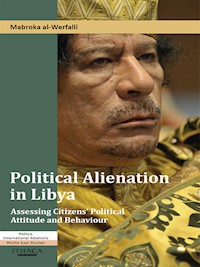
In this book, Mabroka al-Werfalli examines the extent and effects of political alienation in Libya. Using a variety of measures, the author highlights links between legitimacy and alienation and underlines certain types of political behaviour commonly associated with political alienation, in an attempt to draw attention to various causes of indifference and violent behaviour associated with political alienation in Libyan society. Al-Werfalli's findings reveal that alienation has led to widespread political apathy and low or non-existent levels of political participation among Libyans. Every year the percentage of eligible Libyans involved in political activities has declined. the Basic Popular Congresses (BPC's) which work as an essential vehicle for political participation within the Libyan political regime, have been treated as immature institutions by the revolutionary leadership, who have remained, in the eys of the people, the only actor of note. As a result, these trends are being increasingly interpreted as signs of the gradual exhaustion of a model for which there is no clear alternative in sight.
Sie lesen das E-Book in den Legimi-Apps auf:
Seitenzahl: 375
Veröffentlichungsjahr: 2011
Das E-Book (TTS) können Sie hören im Abo „Legimi Premium” in Legimi-Apps auf:
Ähnliche




















POLITICAL ALIENATION IN LIBYA
Assessing Citizens’ Political Attitude and Behaviour
MABROKA AL-WERFALLI
POLITICAL ALIENATION IN LIBYA
Assessing Citizens’ Political Attitude and Behaviour
Published by Ithaca Press 8 Southern Court South Street Reading RG1 4QS UK
www.ithacapress.co.ukwww.twitter.com/Garnetpubwww.facebook.com/Garnetpubthelevant.wordpress.com
Ithaca Press is an imprint of Garnet Publishing Ltd.
Copyright © Mabroka Al-Werfalli 2011
All rights reserved. No part of this book may be reproduced in any form or by any electronic or mechanical means, including information storage and retrieval systems, without permission in writing from the publisher, except by a reviewer who may quote brief passages in a review.
First Edition 2011
ISBN-13: 978-0-86372-444-2
British Library Cataloguing-in-Publication Data A catalogue record for this book is available from the British Library
Jacket design by Garnet PublishingTypeset by Samantha BardenCover photo by U.S. Navy photo by Mass Communication Specialist 2nd Class Jesse B. Awalt/Released (DefenseImagery.mil, VIRIN 090202-N-0506A-402) [Public domain], via Wikimedia Commons
To the memory of my mother Hodoud Al-Mansouri and my uncle Mohammed Abduljaleel Al-Mansouri and to the memory of the Libyan martyrs who offered themselves as a sacrifice for the good of Libya
Contents ____
List of Tables and Figures
Glossary
Preface and Acknowledgements
1 Surveying Opinion in a Suppressive Milieu
2 The Quest for Legitimacy
3 Aspects of Political Support
4 Sources of Political Alienation
5 Manifestations of Political Alienation
6 Political Behavioural Orientations: the Effects of Political Alienation
Conclusion
Afterword
Bibliography
Appendix
Index
Tables and Figures ____
TABLES
3.1 Perceptions of Participants of the State’s Performance in Different Policy Areas (%)
4.1 Consequences of Corruption (%)
4.2 Causes of Corruption (%)
4.3 Participation in Discussion by Gender
5.1 Cross-tabulation of Gender by Meaninglessness (%)
6.1 Political Change by Gender
6.2 Methods of Expressing Disapproval (%)
6.3 Cross-tabulation Analysis of the Most Frequently Used Methods in Expressing Dissatisfaction (%)
6.4 Cross-tabulation of Methods of Expressing Dissatisfaction with Attendance (%)
FIGURES
1.1 Distribution of Participants by Age
1.2 Distribution of Gender by Age
1.3 Distribution of Income of Participants by Gender
2.1 Relationship between Legitimacy and Effectiveness
2.2 The Direction of Political and Revolutionary Authority
3.1 Support Continuum
3.2 Attendance Rate from 1978 to 1997
3.3 Reasons for Participation
4.1 Involvement in System’s Institutions
4.2 Most Cited Reasons for the State Failure
4.3 General Trends in Political Trust 5.1 Reasons for not Participating Relevant to Inefficacy
6.1 Basic Orientations Towards Political Change
6.2 Cross-tabulation of Political Change/Participation
Glossary ____
Al: Arabic definite article “the”; also denotes names, family, tribe or group to which an individual belongs or region of origin.
Al-Aqsa: The Al-Aqsa Mosque (Arabic: Al-Masjid Al-Aqsa, literally “farthest mosque”) is part of the complex of religious buildings in Jerusalem known as Al-Haram al-Sharif (the Noble Sanctuary) to Muslims, and the Har Ha-Bayit (Temple Mount) to Jews and Christians.1
Al-Aqsa Intifada: The wave of violence and political conflict that began in September 2000 between Palestinian Arabs and Israelis; it is also called the Second Intifada. Palestinians and Arabs often consider it to be a war of national liberation against foreign occupation, whereas Israelis consider it to be a terrorist campaign.
Arab Socialist Union: ASU. The mass organization created by Colonel Qaddafi in 1971 in Libya (based on Nasser’s ASU party founded in 1962) to provide a framework for popular participation and representation within the political system.
Baraka: Quality of blessedness or grace found characteristically in divinely favoured persons. Also means charisma that endows the blessed with a special capacity to rule.
BPC: The Basic Popular Congresses which form the basic organizations for political participation in Libya.
Cultural Revolution: The basic component of the Popular Revolution proclaimed on 15 April 1973. Comprising five “points” or policies, it aimed to efface foreign cultural influence and revive Libya’s Arab and Islamic heritage.
Cyrenaica: The eastern coastal region of Libya. During the Islamic period, the area came to be known as Barqa. It comprises the entire eastern part of Libya.
General Popular Committee: Name given to the Cabinet (formerly the Council of Ministers) after Libya’s declaration of the people’s authority in March 1977.
GPC: General People’s Congress. Body combining executive and legislative functions that became Libya’s formal supreme organ of government in March 1977.
Haram: All that is forbidden by God (Allah). This can be an act of sin or evil or consumption or benefit from flesh or otherwise of certain animals.
Imam: In general, an Islamic leader who is a recognized authority on Islamic theology and law; also the collective prayer leader.
Intifada: An Arabic word for “uprising” (literally translated as “shaking off”).
Jamahiriyya: Recently coined Arabic word having no official translation but unofficially translated to mean “state of the masses”, “people’s authority”, or “people’s power”. Ayubi referred to it as mass-ocracy.2
Jihad: In Islam, a central doctrine that calls on believers to combat the enemies of their religion. According to the Qur’an and the Hadith, jihad is a duty that may be fulfilled in four ways: by the heart, the tongue, the hand, or the sword.
Juha: An imaginary legendary satirical figure, claimed as their own by many nations of the Near, Middle East and Central Asia. He is called Juha/Goha in Arabic, Mulla Nasreddin in Persian and Nasreddin Hoca in Turkish.
LYD: Libyan Dinar. The unit of currency issued on 1 September 1971, replacing the Libyan pound. The rate of exchange was changed after the devaluation of the Dinar in June 2001 to be valued at US$1.224. This rate remained in effect until December 2001. In January 2002 the value of the Libyan Dinar was adjusted to US$1.63. The Libyan Dinar is divided into 1,000 dirhams.
Marbou’a: Literally means the squared room. In Libya, it is the room (male lounge) where the men of the family receive and entertain male visitors and every house has to have such a room by the front door.
Mathaba: Meeting place or rendezvous for members of the revolutionary committees (RCs). After launching the Revolutionary Committees Movement, the word Mathaba was introduced to refer to the places where all RCs should seek to exercise and perform their revolutionary duties.
Mujahideen: Those who strive in the path of Allah.
RCC: The Revolutionary Command Council was the supreme organ of the revolutionary regime from September 1969 to 1977.
Shari‘a: Traditional code of Islamic law, both civil and criminal, based in part on the Qur’an (q.v.). Also, the consensus of Islamic belief (ijma; i.e., consensus of the authorities on a legal question); and analogy (qiyas; i.e., an elaboration of the intent of law).
Tarhuna: A mountainous region in south-eastern Libya, approximately 70 km south-east of Tripoli. The United States of America accused Libya of building a chemical plant in the Tarhuna capable of manufacturing chemical weapons.
Tripolitania: The most populous of Libya’s three historic regions, situated in the north-western part of the country.
Wasta: Intercession or mediation, or influence bordering on corruption.
NOTES ____
1http://en.wikipedia.org/wiki/Al-Aqsa_Mosque
2 Nazih N. Ayubi, Over-Stating the Arab State: Politics and Society in the Middle East (London, New York: I.B. Tauris, 1995), p. 397.
Preface and Acknowledgements ____
This book represented a challenge – how to gauge a link between legitimacy and alienation. How are legitimacy and alienation related? When citizens withdraw their loyalty from their political regime and leaders, they highlight their alienation from them. The link between legitimacy and political alienation is that the regime’s claim for legitimacy is in question when a state of political alienation prevails.
The main argument in this book is that the seeming stability and longevity of the political regime in Libya is not sufficient evidence for the existence of legitimacy. Stability and the absence of opposition for such a long period might indicate a lack of legitimacy – i.e., that the opposition might have been forcibly suppressed, and that the longevity of the regime might have been due to a constant application of force rather than to virtue of consent. The existence of the means of participation does not always indicate the existence of legitimacy when a state of abstentionism proliferates, since a regime’s legitimacy is affirmed by the political participation of the citizen.1
Over the years, the Libyan revolutionary leadership has kept hold of the so-called “revolutionary legitimacy” that has been its last resort when all other formulas of legitimation have failed. It has been the most-used mode since the charismatic leadership was perceived to have faded during the revolutionary transition era. The leader is now feared more than he was ever popular in the past. The eudaemonic2 legitimacy became valueless and insignificant as a result of the outbreak of corruption and the gradual failure of the regime to fulfil its commitment to granting a better future to its citizens.
Alienation mirrors the distance between citizens and the regime. The individual’s continuing struggle with bureaucratic regulations and the undemocratic type of system places him/her outside the sphere of the political system and reduces his/her role to one of total compliance.
The Libyan political system was founded on a certain form of political participation that is not encountered elsewhere; however, this did not obliterate its authoritarian character, nor did it give it a consistent stability. Instead it has been subject to growing instability and criticism, even though its democratic structure is based on direct participation by the public in the decision-making process. The Basic Popular Congresses (BPCs), which work as an essential vehicle for political participation, were dealt with as immature institutions by the revolutionary leadership, who remained, in the people’s view, as the only actor. Every year the percentage of eligible Libyans attending the meetings of the BPCs has declined from the previous year. These trends have been frequently interpreted as signs of the gradual exhaustion of a model for which there is no clear alternative in sight. Accordingly, the regime’s legitimacy has been severely tested over the past three decades by the people’s growing abstention from political participation.
Political alienation deepens itself by pushing the individual towards more and more self-estrangement and disconnection from the state. It also produces a kind of instability, resulting in more alienated political behaviour (i.e., rebellion and disobedience), and constantly undermines the regime’s worthiness to be obeyed and supported.
The post-revolution regime in Libya has, since its early years, incurred separation from various groups in the society. Separation from the regime has taken various forms, ranging from attempted coups d’état to uprisings among university students. Furthermore, people have resorted to silent resistance, i.e., desertion, false compliance, spontaneous apathy and taking advantage of the folkloristic and mythic in popular culture, as a disguised but safe method of expressing non-compliance, and as a way of expressing themselves politically outside the sphere of the regime.
This book is based on a survey that was conducted in the Al-Orouba quarter of the city of Benghazi in winter 2001 and that was the first of its kind to be carried out in Libya. It is hoped the study will help to draw the attention of Libyan citizens to their role in influencing the system and will promote a sense of civic membership and civic duty. It is also hoped that this work will fill a gap in the data within the domain of political science in Libya. Finally, it is intended that this study will be of assistance to future researchers, writers and readers.
The cultural and ethnic homogeneity of Libyan society enhances confidence and adds a good deal of credibility to the power and broad applicability of the findings, which can make the case of Benghazi relevant to the whole country. This homogeneity generates close perceptions among most Libyan citizens of the phenomenon of alienation. Furthermore, politics in Libya increasingly affects all social strata, and, therefore, perceptions of the political system are also powerful factors in generating alienation.
This study gave me a unique opportunity to investigate and examine important aspects of political behaviour associated with political alienation in my own society on an objective basis.
The first chapter of this book is an unembellished reflexive anecdote, which narrates the experiences of the long-suffering author in carrying out survey work in a closed society such as that of Libya.
Chapter 2 brings to light the attempts of the Libyan political regime to generate recognition of its right to rule, which in normal circumstances would secure acceptance of the regime’s decisions without it needing to resort to overt coercion. Attention is paid to the structure of the Libyan political and economic systems since the 1969 coup, outlining the major changes that shaped the current relations between Libyan citizens and their regime.
Chapter 3 explores the kinds of support the citizens are willing to offer to their regime. It focuses first on diffuse support, which can continue to shore up a regime when the state lacks good quality services or when it fails to respond to the demands emanating from the system. The analysis then moves to measuring specific support, focusing mainly on the type of support that would be generated by the eudaemonic formula.
Chapter 4 looks at the negative responses regarding political participation; approval of the state’s performance; trust in the system; and satisfaction with foreign policy. In this regard, the degeneration in the level of political trust and political support indicates that a state of persistent dissatisfaction and political alienation is the prevailing condition within the Libyan society.
Chapter 5 examines the different manifestations of political alienation detected in the Libyan society, stressing that the increased separation in the Libyan socio-political system makes withdrawal from the political community an easy choice.
Chapter 6 then unearths some connections between political alienation and certain political behaviours. These express contradictions with the values of the regime or dissatisfaction with undesired politics and decisions; they also involve an element of aggression.
I am immensely indebted to all the people who, in different ways, have been involved in this work. I acknowledge the effort of the entire team without whom the fieldwork would definitely have failed. I also thank all my brothers and sisters for their hard work, patience and encouragement during the fieldwork. I am particularly indebted to my sister, Nawal, whose sacrifice gave me the chance to go to university.
My respondents from Al-Orouba district who offered their help and answered the survey questions with tremendous enthusiasm, sympathy and understanding are greatly valued and appreciated. Many of them took risks by breaking their silence and spoke out bravely in spite of the difficult circumstances experienced by the people of Benghazi at the time of the survey. I thank all the participants who volunteered for interviews for their time, patience, trust and bravery.
A more general debt of gratitude is to Mr Yousuf Al-Mejreesi and colleagues at the Centre for Libyan Study in Oxford for their assistance, generosity and support. My thanks also go to Mr Stephen Mackins from Mackins Design Studio in Dundee for devoting his time to reading and advising on this work. I am particularly grateful to the General Authority for Endowments in the City of Benghazi for the great support they gave me. I received useful assistance from a number of people at the Libyan TV and Radio Broadcasting Authority; I am grateful to them all, and particularly to Miss Leila Tarakhan (who put me in touch with the Authority). My thanks also to Dr Salah Ibrahim for his support and encouragement.
My gratitude is also due to those who offered their help and support, but for their safety asked to remain anonymous.
I am greatly indebted to Professor Tim Niblock at the University of Exeter’s Institute of Arab and Islamic Studies, for his patience and encouragement, and for kindly giving up his precious time in helping me to bring this work into being. His comments and advice have been invaluable.
Finally, I dedicate this book to my father (Imhemmed Bobakr Al-Barghouthi) and to the memory of my mother (Hodoud Al-Mansouri), may she rest in peace, humbly offering it in the spirit of enlightenment which they inspired in me. I also offer this work to the one who taught me, as a teenager, how to think critically; how to praise free-thinking; and how to liberate myself from worshipping power idols.
This work is also for those who, day and night, criticize my father and my brothers for allowing me to go abroad on my own, in the hope that this achievement will inspire the spirit of tolerance with/and respect for women in the Libyan society. I hope that this book will cast some light on the political processes in Libya; and that this, in turn, will inspire enlightenment and free-thinking in future generations of Libyans.
Mabroka Al-Werfalli Dundee, December 2008
NOTES ____
1 D. Held, Models of Democracy (Stanford: Stanford University Press, 1987).
2 From the Greek word for happiness and prosperity.
1
Surveying Opinion in a Suppressive Milieu ____
Conducting a survey in a closed society such as that of Libya is likely to be a hazardous business when the country is controlled by intelligence and security agencies. Neither the researcher nor the participants felt secure in getting involved in the survey on which the research for this study was based.
Researchers always require an official authorization for opinion surveying in Libya. The problem was who should be contacted to get the permission? Although I was doing the research within my own society, it was difficult to identify who was in charge. Because institutions and individuals do not realize they are entitled to any sort of power, I was trapped for nearly four months in a revolving door of authorities, revolutionary committee offices and security agencies, none of which wanted to stick out their necks. It appeared that nobody wanted to shoulder the responsibility for giving the go-ahead for distributing such a daring questionnaire.
The first step I took was to meet the secretary of the Al-Orouba Basic Popular Congress to gather some basic information about the district and to ask about the possibility of distributing my questionnaire. He acknowledged that his was not the right organization to issue any permission, but did warn me not to start distributing a single form before I had obtained a permit from the security bodies to avoid getting into trouble with the authorities. Based on this advice, I arranged to see the Head of Internal Security, whom I duly met on the fifth day of Ramadan (i.e., 30 November 2000), at the office of his cousin who was a close friend of my oldest brother.
It was the fasting month of Ramadan, a time when a majority of civil servants make excuses for suspending their work and postponing the achievement of their duties. Having inspected a sample of my questionnaire, he wanted to know whether the Revolutionary Committee Liaison Bureau (RCLB) had yet approved it. His question in fact meant that he did not wish to take sole responsibility for issuing such a permit, and also confirmed that the RCLB possesses the right to revoke permissions, resolutions or decisions made by any of the security organizations. But he promised that after Ramadan I would find the permit on the desk at his relative’s office. When I called to see him some days after the end of Ramadan, I was told that he was in Cairo and would not be back for another three weeks. I then asked to see his deputy who evaded a meeting by saying I would do better to wait until his boss was back. I called again after another three weeks and again they avoided me. Indeed I did not see him (or the permit) again after that first meeting. I had, in fact, spent over two months of my time in a fruitless wait.
With the help of one of my friends I then met the governor of the city of Benghazi, who promised to help me to obtain the permit. When I met him again, he advised me to resort to the RCLB, stressing that it was the only body that could provide me with the obligatory permission because the RCLB had to approve such questionnaires. Next, I contacted the Benghazi Revolutionary Committee Headquarters (al-mathaba al-umm), where an official looked at the questionnaire and said, “I doubt whether the RCLB will allow you to go ahead; they won’t approve it in the first place.” However, to be on the safe side I went to Tripoli where I waited for two days before managing to meet the person in charge at the RCLB. He took a copy of the questionnaire and promised he would read it and come back to me. But he never did…
In a society like that of Libya, one needs no more than a network of sincere, enthusiastic friends and relatives who will involve themselves, heart and soul, in helping and supporting. Had I not resorted to using mediation (wasta), I would not have obtained the security permit at all. As it was, my uncle took me to meet a friend of his who was working in security. The friend was helpful and offered to give me the permit on the grounds that I was from the same tribe that he came from. Eventually, in February 2001, after three months and one week of waiting, I had the necessary permission to begin my survey safely in my own hands.
It was not possible to wander around knocking on people’s doors and requesting them to fill in forms. Libyans are not familiar with surveys of any kind apart from the population census that takes place every few years, so it is highly unusual for them to have individuals on their doorsteps asking them to answer unusual questions.
The problem was how to calm people and attain their trust. I wanted to show good will by presenting the security permission, but people then suspected me of being sponsored by the security agencies, and consequently were afraid of me. When I approached people without showing my permit, they were also nervous and would not co-operate with me, fearing that I might have been doing something against the regime and wishing to avoid any involvement in this. People expressed a great deal of hesitation and apprehension when they read the questions set in the questionnaire. A number of them just said sorry and slammed their doors in my face.
I formed a team comprising myself, my brothers and sisters and their close friends from the area of Al-Orouba, to help me convince people, and to distribute and then collect the forms. It was a requisite that those participating lived in the Al-Orouba district. The most important task was to convince people and get them involved in the survey so that they would convince others to do so too. The approach we used was to build up a bridge of friendship with people in order to gain their trust. We had to visit every targeted house (in which the householder had showed some flexibility) four or five times, and chat with any family members. Whenever we felt that a channel of confidence had been established, we ended the conversation by asking people to fill in the forms (two for each household), and to try to convince their neighbours to co-operate with us as well. Some seemed enthusiastic about the questionnaire forms and even joined us in reassuring their neighbours and getting them to agree to complete the forms, so eventually we got the ball rolling. The people who trusted the team and filled in the forms offered to help in persuading other individuals who trusted them to fill more forms…
In collecting the forms, we encouraged people to use whatever method they preferred for handing them over. They could contact me at home, or contact my two sisters at the schools where they worked, or contact any member of the team in the neighbourhood. Alternatively, they could place the forms in a box in my youngest brother’s little kiosk, or ask me to come myself to collect the forms from them in person. All these ways were used, and when people submitted their forms they wished me success, and hoped to be informed about the findings. Some women who were approached through schools did not want to complete the forms before getting family approval, and a number returned their forms unfilled, having had some criticism from their parents or older brothers for bringing home such a dangerous paper and risking the safety of their families.
While we were collecting the forms, we continued to request those who had completed them to volunteer for interviews. We succeeded in recruiting a good number of helpful and co-operative volunteers, most of whom offered to be interviewed as long as we avoided the use of tape-recorders. They were happy to answer as long as I only wrote down their answers and did not record them. I took into account the confidentiality of the interviews and tried to meet my interviewees privately, but to my surprise, men who were interviewed in the presence of any of my brothers were more open and brave in speaking their minds. Some respondents did not want to be interviewed in either their or my house, or in a public place, so the interviews sometimes had to take place in the car, which meant that on these occasions one of my brothers had to be there to drive.
It is worth mentioning that the security officer who had given me the official permit became rather scared of whatever consequences might result from the distribution process or from people’s responses. First he asked my late uncle to stop the process; then I was summoned to the headquarters where he worked and asked to make people write their names on the forms. I explained the irrationality of doing this, as it would jeopardize my entire project. They let me go but called me again about two weeks later and asked me to hand over all the completed forms I had by that time managed to collect. This was the most serious problem I faced while doing the survey. The decision to be made then was either to hand over the forms and lose all the months of work, or to run off with the forms in order to save them. I had to leave the country before all the forms had been collected.
After I had left the country, security patrols visited my family to ask if I had managed to collect all the forms so that they could take them away. My family told them that I had managed to collect only a few forms, and that I had left for Britain. Because the fieldwork had taken so long, I was running out of time, and I had to go back to England to pursue my study. So far, this excuse has protected my family, particularly those who were involved in the distribution and collection of the forms, from inevitable intimidation and detention.
The social problem I had faced was how to administer the interview process. To protect themselves, the majority of interviewees avoided being interviewed at their places, and asked to be interviewed at my home, which is the house of my family. It was quite difficult to do the interviewing in my home because 47 out of 76 interviewees were adult men, and because I had therefore to meet my interviewees either at the male-lounge (marbou’a) or on the roof above the flat. In Libya, men who are not from the family are not permitted in the house. There is always a room by the entrance of the house for receiving and entertaining men, and only men may sit with them. The roof was a good place when the weather was fine, but it was not convenient at all when it was raining or windy. The reason I resorted to the roof was that the male-lounge kept being occupied by guests coming for different purposes so I always had to leave immediately, not only because of violating the privacy of the interview but also because, as a female, I am not allowed to stay in the male-lounge if there is a male visitor.
Easing the fears of the respondents was a protracted process. As a team, we had to drop the idea of having a random sample. I had conversed informally with people before giving them the forms, and did my best to make them understand that they would remain anonymous and that the Libyan authorities would never know about their responses. I explained that I had obtained an official permit not because I was working with the security services, but because I knew it was impossible to begin the survey without the knowledge and approval of the authorities.
I must in all honesty say that being the daughter of an Imam helped me enormously, because people collaborated with me and trusted me for the Imam’s sake. As my father had been an Imam for mosques in two different areas of Al-Orouba district for about 28 years at the time of the survey, most people in these two areas knew him personally and trusted him as a religious, moral man; thus his daughter would never mean them any harm. However, none of this made the target sample confide in us sufficiently, and while a substantial number of people showed some sympathy they held back from completing the forms. Thankfully, however, some of them did return and offered to take the forms after they had heard from neighbours and friends that it was safe. People regarded my interest in their political life as a promise to change the circumstances surrounding them, while others regarded it as a confidential and safe way to speak out, since their voices would be heard while their identities would never be revealed.
In the course of collecting additional supporting information for the study, I contacted the Libyan Radio and TV Broadcasting Authority. I wanted to look at its library since I needed some audio and video records of previous meetings of the Basic Popular Congresses over the last twenty years. Thinking it would not be so complicated I waited at the gate for somebody let me in, but without having a friend or an acquaintance who worked there or knew somebody in this authority, it was impossible. I was turned away that day, but I later approached a female friend of a friend to put me in touch with somebody in the broadcasting authority. It was again a hectic mission since my friend and I had to wait at another gate, this time outside the education authority where her friend worked. After inspecting our identification, the doorkeeper let us in.
My friend’s friend talked to a friend of hers who was a head of department in the broadcasting station, and on the basis of my friend’s reference, I was allowed into the broadcasting building. I met the person in charge, to whom my friend spoke, and explained my desperate need to view the library collections, since I needed some recordings of BPC meetings from previous decades. He told me that nobody was allowed in the library apart from the staff but asked me to come and see him the following day. However, when I went the next day he was not there, and when I came the day after I could only speak to him by telephone from the porter lodge. Again he sent me away, telling me to come back in a week’s time. A week later I found a video tape waiting to be collected at the porter’s lodge. It contained several short clips of several meetings of the BPCs, copied randomly onto that tape, and was of such poor quality that it showed neither date nor place.
The Sample
The quarter of Al-Orouba occupies 800 hectares of land and comprises a population of approximately 85,000 people, according to the latest census survey. The significance of this area is that it is the biggest quarter in the city, and is made up of six main residential districts with slightly different social backgrounds. It includes one of the wealthiest, and one of the poorest zones in the city as a whole. This area is not one of the parts of the old city, but was densely inhabited from the late 1960s onwards.
The six localities are as shown opposite:
1. Ali Ben Abi Talib: public housing with a relatively high demographic density; its inhabitants are mostly very poor.
2. Ard El-Sherief: the oldest neighbourhood in the area, consisting of private accommodation.
3. Oqba Ben Naf’e: recent blocks of luxurious houses. The local people, referring to its wealthy residents, call it the “dollar neighbourhood” (H’aye Ad-Dolār).
4. Shebna C: the most recent residential area.
5. Shebna D: the smallest neighbourhood consisting of a few houses (some of them are parts of farms) scattered over some remaining grain fields and grazing lands.
6. Mousa Ben Nosair: a fairly new residential area including private housing and also with a somewhat higher demographic density.
The study sample included people of both genders from different age groups, starting from 18 to approximately 69 years of age (see Figure 1.1), and from a variety of backgrounds. The survey targeted a sample of 1,100 respondents, but at the end of the fifth month, only 887 forms had been successfully and safely collected.
Distribution of Respondents by Personal Characteristics
Place of Residence
The aim of using place of residence was to determine the socio-economic status of respondents. As stated above, the quarter of Al-Orouba encompasses one of the wealthiest and one of the poorest areas in Benghazi. Here the purpose is to verify similarities and differences between responses that came from respondents with different socio-economic backgrounds.
Ali Ben Abi-Talib included the largest proportion in the sample, with 26.6% of respondents coming from this area, the poorest in the quarter. The Oqba Ben Nafe’e neighbourhood, the wealthiest area, included 16.7% of respondents, and the smallest proportion was from Shebna D which had only 9.4% of participants. Shebna C produced 15.7% of respondents; and 15.3% of the participants were from Mousa Ben Nosair. Ard El-Sherief was home to 16.3% of respondents.
Age of Participants
The majority of participants were young people, with those aged between 18 and 37 forming more than half the sample (54.7%). Of these, 27.3% of respondents were between 18 and 27, and 27.4% were between 28 and 37. This was because the members of the team, who fell entirely in age groups one and two, found access to young people easier than approaching those in older age groups. People aged 57 and over formed the minority of the sample (see Figure 1.1).
FIGURE 1.1
Distribution of Participants by Age
Source: Field Survey, Benghazi, 2001
Gender
It was difficult to balance the sample in gender terms, but happily the team members managed, with extra effort, to obtain approximately the same number of participants from both genders. The sample consisted of 51% men and 49% women.
Women formed the majority of the youth in age groups one and two, while men were the majority of participants in age groups four and five. Proportions of men and women in age group three tended to be fairly equal (see Figure 1.2).
Occupation
Government sector employees accounted for 15.5% of participants, and formed the largest proportion; while people who worked in the education sector (teachers and workers in schools, colleges and the university) represented 11.1% of participants. Only 2% of participants were housewives; 3.5% were engineers in different specializations; 3.7% were in the armed forces; 4.2% were from the medical field (medical doctors, dentists, pharmacists, and nurses); 4.9% were retired; 8.4% were unemployed; 6.3% worked in the private sector; 7% were students; 8% worked in the Justice field (lawyers, judges, and police); 6% were self-employed; 9.1% were labourers; and 10.4% of participants fell in the “other” category. This category included certain other occupations not accounted for in the questionnaire, such as the occupation of the recently graduated who had to do their compulsory National Service with deferred payment of their wages until the end of the service period.
Income of Participants
Participants who did not receive income made up 22.5% of the main sample (No=199). They are mostly students, who made 30% of this sub-sample, the rest are unemployed (25%), housewives (9%), and those who fell into the “other” category (31.5%). Only 3.4% of participants earned less than LYD100. The majority (43.3%) of this 3.4% were private sector employees and 40% were government sector employees. Of those who earned less than LYD100, 3.3% ran their own business and thus fell into the “self-employment” category. Kiosk owners or renters formed the majority of this proportion. Only 2.3% of the participants earned over LYD600. All were self-employed, and 4.2% earned between LYD500–599. Only 2% were government employees, with 2% from the justice field and the rest self-employed. The majority earned between LYD100–199, and formed 23% of the sample.
Women made up the majority (68.9%) of those who did not earn any income (mostly housewives) and with income less than LYD100 (71.3%). Number of men seemed to correlate positively with income. The percentage of men increased with a high income while the percentage of females decreased (see Figure 1.3).
FIGURE 1.2
Distribution of Gender by Age
FIGURE 1.3
Distribution of Income of Participants by Gender
Source: Field Survey, Benghazi, 2001
2
The Quest for Legitimacy ____
Regimes in general, from authoritarian to democratic, seek to generate recognition of their right to rule (legitimacy), which in normal circumstances will secure acceptance of their decisions without resort to overt coercion.1
If legitimacy is a de facto matter that is based upon a shared acceptance of the system by the populace, how does this acceptance manifest itself? Does the absence of opposition signal this acceptance? Research on legitimacy in the Arab world has currently concentrated excessively on analysing system-level theories of legitimacy, to the neglect of measuring individual orientations of support for policies and politicians.
Perceived legitimacy of an existing system can generate positive and voluntary consent to, and acceptance of, political rule by the ruled: this enables a regime to sustain social and political stability with less coercion, which is costly in terms of the enforcement of compliance.2
For a relatively long period the state has been a strange entity for the individual in Libya. He or she has always dealt with it using extreme caution, or has avoided dealing with it altogether, believing that engaging with the state or with its authorities involves a high risk to personal safety.
The roots of alienation from the state can be traced back to the reign of the Ottoman Empire. At that time the alienated Libyans were neither immobile nor apathetic; instead they translated their sense of alienation into positive action against the Ottoman rulers, manifested in Ghouma Al-Mahmoudi’s rebellion in the Western Mountain (1835– 1858), Misrata rebellion (1836), Werfalla and Tarhuna tribes’ rebellion (1841), and Saif Al-Nasr’s rebellion in Fezzan (1842). In the eastern region of Cyrenaica, the founder of the Sanusi movement (Mohammad bin Ali Al-Sanusi) believed that the Caliph had to be descended from Prophet Muhammad’s tribe (Quraish), which emphasized denial of the legitimacy of the Ottoman Emperor. This faction managed to gain recognition by Istanbul as an independent movement, which succeeded in generating support and credibility among the tribes of Cyrenaica; later Istanbul granted recognition to Idris Al-Sanusi as a legitimate prince of Cyrenaica, and then a king of Libya. Likewise, during the Italian occupation, the declaration of jihad across the country was the major method to express Libyans’ denial of the legitimacy of the occupation and the right of Italy to rule. It was also manifested in the persistent struggle against the Italianization of the country.
The monarchy was held back by its ideology and politics which set it against its population. It claimed its legitimacy on bases that were losing their appeal at a time when new criteria for legitimacy were emerging in the Middle East. While the monarchical regime made little effort to pass on its values and ideology, the Libyans were being influenced by “external” values, i.e., the ideology and the politics of Gamal Abdul Nasser, the then Arab leader, which differed outstandingly from those of the monarch.
The elites in the Arab world, who held the reins of power grabbed through military coups during the Cold War era, faced the dilemma of how to legitimize this seizing of power and at the time gain public support. Hence, the highest priority for these new elites was to build the power base that would sustain the legitimacy of their regimes, and assure public support for a long term.
A regime such as that in Libya after the 1969 military coup lacked justification for holding power, and was legitimated neither by traditional authority nor by the rational legal base of legitimacy. Its right to rule and its justification for longevity had therefore to be established on other grounds, traditional or charismatic, but particularly upon a source of legitimacy to which Max Weber, for instance, gave no direct attention. This was revolutionary legitimacy, which justified the acts and politics taken by Colonel Qaddafi and rationalized his indefinite continuing in power. The other mode of legitimation was the socio-economic performance (eudaemonic legitimation) on which most authoritarian regimes relied. This mode is based upon the role of government in providing social and economic benefits for its citizens. For authoritarian systems, “socio-economic or performance grounds of this kind have typically been seen as the single most important basis upon which they may seek legitimation”.3
Focusing on the eudaemonic base happened at the expense of strengthening the bond between citizens and political life, and developing a sense of civic membership among the citizens.
Furthermore, the post-coup regime relied on foreign policy, especially inter-Arab relations, in winning support.4 Serving the principles of Pan-Arabism, i.e., achieving Arab unity and the liberation of Palestine, represented the top issues that justified the size of military power. Being unsuccessful in meeting these criteria resulted in a legitimacy crisis for most of the political regimes in the area at the time.
When they succeeded in keeping the state on a tight rein, the military arranged the circumstances to suit their interests, guarantee their survival, and lengthen their continuance in power. In justifying their military coup, the elite of Libya claimed the achieving of full independence for the country, defending its freedom and liberty and fulfilling national development. These objectives met the highest requests of most Libyans at the time, and gained the military further public support, legitimized their coup and established the credibility of the Leader. However, they failed to create politicized and mobilized citizens.
The newly emerged elites in Libya then continued to shift the focus from charismatic to ideological and eudaemonic types of legitimacy, though they clung to revolutionary legitimacy throughout the 41 years of their rule.
The concern of these new elites was to utilize what Easton called “specific support”,5 to create a widespread sense of satisfaction and contentment. At an early stage, they implemented the approach of buying support. They achieved this by focusing on developing the distributive apparatus of the state and adopting a policy of enlarging the public sector, and granting economic satisfaction to the citizens over political satisfaction, believing that specific support, which is generated through economic performances, is a sufficient condition for legitimacy. Realizing the importance of political citizenship has come rather late, and is surrounded and motivated by several events.
The nature of the rentier economy of the post-independence state of Libya had already created the economic citizen (who offers his loyalty in return for economic benefits). This delayed the creation of the political citizen who would have tied the bond that links the citizens with the political system, and resulted in an ever-increasing gap between citizens and the political community. It increased the citizens’ expectations in terms of economic outcomes at the expense of political outcomes.
The haste to adopt a materialistic approach to gaining support (eudaemonic legitimacy) and the hesitation in creating politicized citizens ended up with a severe trend towards political alienation and political apathy. The materialistic approach assisted the regime in winning a tentative level of support in the form of “specific support”, but failed to build the base for long-lasting “diffuse support”,6 which constitutes the soil that nourishes the seeds of political legitimacy.
Searching the Labyrinths of Legitimacy
In the first decade following the military coup of 1969, the claim for legitimacy was based mainly on charismatic leadership; however, the regime adopted other modes of legitimation in order to enhance the charismatic figure of Colonel Qaddafi and to transform the charismatic legitimacy into a legal-rational form. Yet the regime benefited from other formulas of legitimation by taking advantage of the de-legitimizing forces that had brought down the monarch.
Negative Legitimacy




