


44,99 €
Mehr erfahren.
- Herausgeber: John Wiley & Sons
- Kategorie: Geisteswissenschaft
- Serie: Philosophy, Politics and Society
- Sprache: Englisch
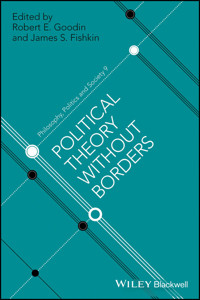
POLITICAL THEORY WITHOUT BORDERS
Political theory has traditionally focused on governance within the confines of a specific polity, but with the recent proliferation of environmental realities and national decisions that have global repercussions, political theory must now be re-imagined to confront globalization head-on. Political Theory Without Borders presents a collection scholarship that does just that. Each chapter focuses on answering specific questions that have arisen from issues of global spillover – like climate change and pollution – and the increasingly unrestricted flow of people, products, and financial capital across borders. With contributions from emerging scholars alongside key texts from some of the most well-known theorists of previous generations, this collection illustrates how the classic concerns of political theory – justice and equality, liberty and oppression – have re-emerged with a renewed significance at the global level.
Sie lesen das E-Book in den Legimi-Apps auf:
Seitenzahl: 721
Veröffentlichungsjahr: 2015
Ähnliche



















Table of Contents
Cover
Title Page
Acknowledgments
About the Contributors
1 Political Theory Without Borders
PART I: Global Spillovers
2 To Prevent a World Wasteland
II
III
IV
V
VI
VII
3 Two Kinds of Climate Justice
I. Two Kinds of Climate Justice
II. Prioritising Prevention 1—International Paretianism
III. Prioritising Prevention 2—Acting Without Sacrifice
IV. Prioritising Prevention 3—Taking the Institutional Context and the Political Challenges Seriously
V. The Power/Responsibility Principle
VI. Concluding Remarks
References
4 The Human Right to Water and Common Ownership of the Earth
I
II
III
IV
V
VI
VII
References
PART II: Global Flows
5 Tax Competition and Global Background Justice
I. How Tax Competition Undermines Fiscal Self-Determination
II. Two Principles of Global Background Tax Justice: Membership and Fiscal Policy Constraint
III. Institutionalizing the Two Principles
IV. Toward What Kind of Global Justice?
V. Conclusion
6 Sovereign Debt, Human Rights, and Policy Conditionality
I. Human Rights Concerns About Sovereign Debt
II. The Claims of Creditors
III. Debt Relief and Conditionality
IV. Objections to Conditionality in Debt Relief
V. Conclusion
7 Justice in the Diffusion of Innovation
I. Toward a Theory of Justice in Innovation
II. The Global Institute for Justice in Innovation
III. The Comparative Merits of the Global Institute for Justice in Innovation
IV. The Status of the Global Institute for Justice in Innovation Under International Law
V. Conclusion
8 From Migration in Geographic Space to Migration in Biographic Time
I. Types of Migrants and Their Legal Status
II. The Configuration of Interests
III. The Nature and Dynamics of Migration Regimes
IV. Dimensions of “Integration”
V. The Acquisition of Citizenship
VI. The Disanalogy Between Exit Rights and Entry Rights
VII. Conclusion
References
9 On Citizenship, States, and Markets
I. The Legal Framing of Talent Migration
II. Setting Human Capital Criteria for Selecting Whom to Admit
III. The Trouble with Cash-For-Passport Programs
IV. Conclusion
References
PART III: Global Interventions
10 Colonialism as Structural Injustice
I. Introduction
II. Legal Colonialism and International Structural Injustice
III. Domestic Structural Injustices under Colonial Rule: The Case of the Japanese Military Comfort System
IV. Responsibility for Structural Injustice and Reparations
V. Conclusion
11 The Judging of Nations
I
II
III
IV
V
12 From Humanitarian Intervention to the Responsibility to Protect
I. The Birth of a Doctrine
II. The Evolution of a Doctrine
III. The Implementation of a Doctrine
13 The Misuse of Power, Not Bad Representation
I. INGO Advocacy as Non-Electoral Representation
II. INGO Advocacy as Partnership
III. INGO Advocacy as the Exercise of Quasi-Governmental Power
IV. Conclusion
Index
End User License Agreement
List of Tables
Chapter 05
Table 5.1 A mixed constraint on fiscal policy
List of Illustrations
Chapter 13
Figure 13.1 Desiderata met by each of the four principles suggested by the power lens
Guide
Cover
Table of Contents
Begin Reading
Pages
ii
iii
iv
vii
viii
ix
1
2
5
7
8
9
10
11
12
13
14
15
16
17
18
19
20
21
22
23
24
25
26
27
28
29
30
31
32
33
34
35
36
37
38
39
40
41
42
43
44
45
46
47
48
49
50
51
52
53
54
55
56
57
58
59
60
61
62
63
64
65
66
67
68
69
70
71
72
73
75
77
78
79
80
81
82
83
84
85
86
87
88
89
90
91
92
93
94
95
96
97
98
99
100
101
102
103
104
105
106
107
108
109
110
111
112
113
114
115
116
117
118
119
120
121
122
123
124
125
126
127
128
129
130
131
132
133
134
135
136
137
138
139
140
141
142
143
144
145
146
147
148
149
150
151
152
153
154
155
156
157
158
159
160
161
162
163
164
165
166
167
168
169
170
171
172
173
174
175
176
177
178
179
180
181
182
183
184
185
186
187
188
189
190
191
192
193
194
195
196
197
198
199
200
201
202
203
204
205
206
207
208
209
210
211
212
213
214
215
216
217
218
219
220
221
222
223
224
225
226
227
228
229
230
231
232
233
235
237
238
239
240
241
242
243
244
245
246
247
248
249
250
251
252
253
254
255
256
257
258
259
260
261
262
263
264
265
266
267
268
269
270
271
272
273
274
275
276
277
278
279
280
281
282
283
284
285
286
287
288
289
290
291
292
293
294
295
296
297
298
299
300
301
302
303
304
305
306
307
308
309
310
311
312
313
314
315
316
318
320
321
317
319
322
323
324
325
326
327
Philosophy, Politics and Society
Philosophy, Politics and Society
Edited by Peter Laslett
Philosophy, Politics and Society, Second Series
Edited by Peter Laslett and W. G. Runciman
Philosophy, Politics and Society, Third Series
Edited by Peter Laslett and W. G. Runciman
Philosophy, Politics and Society, Fourth Series
Edited by Peter Laslett, W. G. Runciman and Quentin Skinner
Philosophy, Politics and Society, Fifth Series
Edited by Peter Laslett and James S. Fishkin
Justice Between Age Groups and Generations
Edited by Peter Laslett and James S. Fishkin
Debating Deliberative Democracy
Edited by James S. Fishkin and Peter Laslett
Population and Political Theory
Edited by James S. Fishkin and Robert E. Goodin
Political Theory Without Borders
Edited by Robert E. Goodin and James S. Fishkin
Edited by Robert E. Goodin and James S. Fishkin
This edition first published 2016© 2016 John Wiley & Sons, Inc
Registered OfficeJohn Wiley & Sons, Ltd, The Atrium, Southern Gate, Chichester, West Sussex, PO19 8SQ, UK
Editorial Offices350 Main Street, Malden, MA 02148-5020, USA9600 Garsington Road, Oxford, OX4 2DQ, UKThe Atrium, Southern Gate, Chichester, West Sussex, PO19 8SQ, UK
For details of our global editorial offices, for customer services, and for information about how to apply for permission to reuse the copyright material in this book please see our website at www.wiley.com/wiley-blackwell.
The right of Robert E. Goodin and James S. Fishkin to be identified as the authors of the editorial material in this work has been asserted in accordance with the UK Copyright, Designs and Patents Act 1988.
All rights reserved. No part of this publication may be reproduced, stored in a retrieval system, or transmitted, in any form or by any means, electronic, mechanical, photocopying, recording or otherwise, except as permitted by the UK Copyright, Designs and Patents Act 1988, without the prior permission of the publisher.
Wiley also publishes its books in a variety of electronic formats. Some content that appears in print may not be available in electronic books.
Designations used by companies to distinguish their products are often claimed as trademarks. All brand names and product names used in this book are trade names, service marks, trademarks or registered trademarks of their respective owners. The publisher is not associated with any product or vendor mentioned in this book.
Limit of Liability/Disclaimer of Warranty: While the publisher and authors have used their best efforts in preparing this book, they make no representations or warranties with respect to the accuracy or completeness of the contents of this book and specifically disclaim any implied warranties of merchantability or fitness for a particular purpose. It is sold on the understanding that the publisher is not engaged in rendering professional services and neither the publisher nor the author shall be liable for damages arising herefrom. If professional advice or other expert assistance is required, the services of a competent professional should be sought.
Library of Congress Cataloging-in-Publication data applied for
Cloth: 9781119110088
A catalogue record for this book is available from the British Library.
Acknowledgments
This is the ninth of the Philosophy, Politics and Society book series, launched by Peter Laslett in 1956. Our first debt, and the profession’s, is to Peter for keeping the subject of political theory alive when (in his own famous phrase) it seemed virtually dead.
Since 2002, Philosophy, Politics and Society has been a joint venture, with the Journal of Political Philosophy publishing two special issues devoted to its theme three years apart. Every sixth year, then, the contents of those two special issues – together with a few seminal papers originally published elsewhere – are collected together and reprinted as the next volume of the Philosophy, Politics and Society series. The bulk of the chapters in the present volume appeared in this way in the Journal of Political Philosophy volume 19 number 3 (September 2011) and volume 22 number 2 (June 2014). We are grateful to those authors for agreeing to have their work reprinted here.
We are also grateful to the copyright holders for permission to reprint here the following material previously published elsewhere:
Gareth Evans, “From Humanitarian Intervention to the Responsibility to Protect,”
Wisconsin International Law Journal
, 24 (3) (2006), 703–22. Reproduced by permission of the
Wisconsin International Law Journal
, the owner of the publishing rights.
Clifford Geertz, “The Judging of Nations,”
Archives Européenes de Sociologie
, 18 (1977), 245–61. Reproduced by permission of the
Archives Européenes de Sociologie
, the owner of the publishing rights.
George F. Kennan, “To Prevent a World Wasteland,”
Foreign Affairs
, 48 (1970), 401–13. Reproduced by permission of the Council on Foreign Relations, the owner of the publishing rights.
About the Contributors
Christian Barry is Associate Professor of Philosophy at Australian National University
Allen Buchanan is James B. Duke Distinguished Professor of Philosophy at Duke University.
Simon Caney is Professor of Political Theory and Fellow of Magdalen College at the University of Oxford.
Tony Cole is Senior Lecturer in Law at Brunel University.
Peter Dietsch is Professor of Philosophy at the Université de Montréal.
Gareth Evans is Chancellor of the Australian National University.
James S. Fishkin is Janet M. Peck Chair in International Communication at Stanford University where he is Professor of Communication and (by courtesy) Political Science.
Clifford Geertz was Professor of Social Science at the Institute for Advanced Study in Princeton.
Robert E. Goodin is Distinguished Professor of Philosophy at Australian National University.
Ran Hirschl is Professor of Political Science and Law and Canada Research Chair in Constitutionalism, Democracy and Development at the University of Toronto.
George F. Kennan was Professor in the School of Historical Studies at the Institute for Advanced Study in Princeton.
Robert O. Keohane is Professor of International Affairs in the Woodrow Wilson School of Public and International Affairs at Princeton University.
Catherine Lu is Associate Professor of Political Science at McGill University.
Claus Offe is Professor of Political Sociology at the Hertie School of Governance, Berlin.
Mathias Risse is Professor of Philosophy and Public Policy in the Kennedy School of Government at Harvard University.
Thomas Rixen is Professor of Political Science and Economics at Universität Bamberg.
Jennifer C. Rubenstein is Assistant Professor of Politics at the University of Virginia.
Ayelet Shachar is Professor of Law and Political Science and Canada Research Chair in Citizenship and Multiculturalism at the University of Toronto.
1Political Theory Without BordersAn Introduction
Robert E. Goodin and James S. Fishkin
Political theorists of old had much to say about war and peace, and issues arising from them. Those matters apart, however, political theory’s traditional focus was insistently internal – on relations among a people, and on relations between them and those ruling over them.
Those political theorists of universalist inclination have always insisted that the same principles should apply everywhere alike, of course. Virtually none of them, however, thought that literally one and the same set of institutions should rule over everyone everywhere alike.1 Political theory’s prescriptions were traditionally for the internal governance of principalities, taken one at a time.2
In political theory, as in political practice, proffered rules governing relations among and across principalities tended to be essentially Westphalian. They were designed to ensure that each self-contained community could get on with the business of perfecting its own institutions and practices in light of the theory’s prescriptions, with minimal interference from abroad.3 Of course there are always threats and opportunities arising from abroad – but that is the business of statesmen to manage well in the national interest. And of course there are always disasters and destitution abroad that tug at the heartstrings – but that is the business of charity and churches. Or so it had long been thought, within both political theory and political practice.
Yet the world has a way of intruding. And it did. First, with spillovers of a very literal sort – with industrial effluents threatening to poison the global biosphere upon which all life depends, including especially carbon emissions wrecking havoc with the global climate. Chapters in Part I by Kennan and Caney address those concerns, with Risse’s reminding us of what it really means to treat the earth as the common property of all of humankind.
With the latest wave of globalization,4 state borders also became increasingly porous – to the movement of people and products and financial capital. States have become sovereign over their domestic affairs largely in name only, in a great many respects. At the same time, and in consequence, the classical concerns of political theory – justice and equality, liberty and oppression – have reemerged powerfully at the global level. Global justice has grown into a veritable cottage industry, now displaying decreasing returns to scale.5 But over and above the question of whether the same principles of distributive justice are properly applied at the global as at the national level, there are a great many other more specific matters of principle raised by those global flows of people, products and financial capital. Those issues are here explored in chapters in Part II by Dietsch and Rixen, Barry, Buchanan, Cole and Keohane, Offe, and Shachar and Hirschl.
As a result of all of that, there has been a growing reluctance to regard what happens elsewhere as of concern to people in that jurisdiction alone, as shown in the chapters in Part III. Through colonialism, earlier waves of globalization had left an awful legacy, as Lu’s chapter reemphasizes; and suspending judgment for a time may have been an honorable stance in the backwash of it, as Geertz’s chapter nicely recalls. But in the wake of increasing numbers (or anyway awareness) of atrocities and disasters – many connected to the phenomena described above – there has been a growing sense of global responsibility for global problems. This expanding humanitarian sensibility has led to increasing intervention abroad, by both humanitarians with guns and those without.6 Those are the subjects of chapters by Evans and Rubenstein.
It would be wrong to claim that political theorists have fully theorized all these new developments. The critique contained in Marx’s Eleventh Thesis on Feuerbach remains valid: theorists mostly just interpret the world rather than change it. Still, political theorists have not been remiss in engaging with and responding critically and creatively to the new sociopolitical and intellectual landscape that is rapidly emerging as the old Westphalian borders are increasing drained of practical relevance – as we hope this set of chapters will show.
Notes
1
Perhaps the last to argue for a world government unitary in form was Dante, in his fourteenth-century
De Monarchia
, a defence of the Holy Roman Empire. Later political cosmopolitans argued instead for a world government, federal in form, with rules of subsidiarity allowing for substantial local variation. See Robert E. Goodin, “World government is here!,”
Varieties of Sovereignty and Citizenship
, ed. Sigal R. Ben-Porath and Rogers M. Smith (Philadelphia: University of Pennsylvania Press, 2013), pp. 149–65.
2
As one commentator puts it: “
A Theory of Justice
was published at a time when
globalization
was not yet a word in our everyday lexicon and few people described themselves as cosmopolitans. Virtually all political philosophers at the time assumed that the individual society was the default unit of analysis”; Samuel Scheffler, “Cosmopolitanism, justice and institutions”,
Equality and Traditions
(Oxford: Oxford University Press, 2010), pp. 160–73 at p. 162.
3
That way of thinking is bracketed, roughly, by Hugh Grotius’
Law of War and Peace
(1625) and John Rawls’s
Law of Peoples
(Cambridge, MA: Harvard University Press, 1999).
4
Hardly the first, as pointed out by John Quiggin, “Globalization and economic sovereignty,”
Journal of Political Philosophy,
9 (2001), 56–80.
5
The two-volume collection edited by Thomas Pogge and Darrel Mollendorf,
Global Justice: Seminal Essays
(St. Paul, MN: Paragon House, 2008) can be regarded as the capstone of this body of research.
6
Albeit in qualfied ways akin to earlier waves of humanitarian sentiment associated with the rise of capitalism; see Thomas L. Haskell, “Capitalism and the origins of humanitarian sensibility,”
American Historical Review,
90 (1985), 339–61, 547–66.
PART IGlobal Spillovers
2To Prevent a World WastelandA Proposal
George F. Kennan
NOT even the most casual reader of the public prints of recent months and years could be unaware of the growing chorus of warnings from qualified scientists as to what industrial man is now doing—by overpopulation, by plundering of the earth’s resources, and by a precipitate mechanization of many of life’s processes—to the intactness of the natural environment on which his survival depends. “For the first time in the history of mankind,” U.N. Secretary-General U Thant wrote, “there is arising a crisis of worldwide proportions involving developed and developing countries alike—the crisis of human environment…. It is becoming apparent that if current trends continue, the future of life on earth could be endangered.”
Study and debate of these problems, and sometimes even governmental action, have been developing with cumulative intensity. This response has naturally concentrated largely on environmental deterioration as a national problem. It is normally within national boundaries that the first painful effects of deterioration are felt. It is at the national level that the main burden of legislation and administrative effort will admittedly have to be borne, if certain kinds of pollution and destruction are to be halted.
But it is also clear that the national perspective is not the only one from which this problem needs to be approached. Polluted air does not hang forever over the country in which the pollution occurs. The contamination of coastal waters does not long remain solely the problem of the nation in whose waters it has its origin. Wildlife—fish, fowl and animal—is no respecter of national boundaries, either in its movements or in the sources from which it draws its being. Indeed, the entire ecology of the planet is not arranged in national compartments; and whoever interferes seriously with it anywhere is doing something that is almost invariably of serious concern to the international community at large.
II
There is today in existence a considerable body of international arrangements, including several of great value, dealing with or affecting in one way or another the environmental problem. A formidable number of international organizations, some intergovernmental, some privately organized, some connected with the United Nations, some independently based, conduct programs in this field. As a rule, these programs are of a research nature. In most instances the relevance to problems of environmental conservation is incidental rather than central. While most of them are universal in focus, there are a few that approach the problem—and in some instances very usefully—at the regional level. Underlying a portion of these activities, and providing in some instances the legal basis for it, are a number of multilateral agreements that have environmental objectives or implications.
Lesen Sie weiter in der vollständigen Ausgabe!
Lesen Sie weiter in der vollständigen Ausgabe!
Lesen Sie weiter in der vollständigen Ausgabe!
Lesen Sie weiter in der vollständigen Ausgabe!
Lesen Sie weiter in der vollständigen Ausgabe!
Lesen Sie weiter in der vollständigen Ausgabe!
Lesen Sie weiter in der vollständigen Ausgabe!
Lesen Sie weiter in der vollständigen Ausgabe!
Lesen Sie weiter in der vollständigen Ausgabe!
Lesen Sie weiter in der vollständigen Ausgabe!
Lesen Sie weiter in der vollständigen Ausgabe!
Lesen Sie weiter in der vollständigen Ausgabe!
Lesen Sie weiter in der vollständigen Ausgabe!
Lesen Sie weiter in der vollständigen Ausgabe!
Lesen Sie weiter in der vollständigen Ausgabe!




