


15,99 €
Mehr erfahren.
- Herausgeber: John Wiley & Sons
- Kategorie: Geisteswissenschaft
- Serie: Themes for the 21st Century Series
- Sprache: Englisch
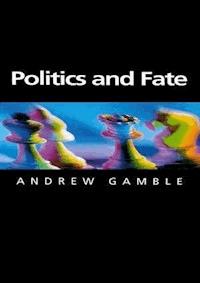
Politics was once regarded as an activity which could give human societies control over their fate. However, there is now a deep pessimism about the ability of human beings to control anything very much, least of all through politics. This new fatalism about the human condition claims that we are living in the iron cages erected by vast impersonal forces arising from globalization and technology: a society that is both anti-political and unpolitical, a society without hope or the means either to imagine or promote an alternative future. It reflects the disillusion of political hopes in liberal and socialist utopias in the twentieth century and a widespread disenchantment with the grand narratives of the Enlightenment about reason and progress, and with modernity itself.
The most characteristic expression of this disenchantment is the endless discourses on endism - the end of history, the end of ideology, the end of the nation-state, the end of authority, the end of government, the end of the public realm, the end of politics itself - all have been proclaimed in recent years.
Andrew Gamble's new book argues against the fatalism implicit in so many of these discourses, as well as against the fatalism that has always been present in many of the central discourses of modernity. It sets out a defence of politics and the political, explains why we cannot do without politics, and probes the complex relationship between politics and fate, and the continuing and necessary tension between them.
This book will be essential reading for students and scholars of politics, public affairs and political thought.
Sie lesen das E-Book in den Legimi-Apps auf:
Seitenzahl: 191
Veröffentlichungsjahr: 2013
Ähnliche


















THEMES FOR THE 21ST CENTURY
Titles in this series
Zygmunt Bauman, Globalization: The Human Consequences
Zygmunt Bauman, Community: Seeking Safety in an Insecure World
Norberto Bobbio, Left and Right: The Significance of a Political Distinction
Alex Callinicos, Equality
Diane Coyle, Governing the World Economy
Andrew Gamble, Politics and Fate
James Mayall, World Politics: Progress and its Limits
Ray Pahl, On Friendship
Politics and Fate
ANDREW GAMBLE
Polity
Copyright © Andrew Gamble 2000
The right of Andrew Gamble to be identified as author of this work has been asserted in accordance with the Copyright, Designs and Patents Act 1988.
First published in 2000 by Polity Press in association with Blackwell Publishers Ltd
Reprinted 2004 2007
Polity Press65 Bridge StreetCambridge CB2 1UR, UK
Polity Press350 Main StreetMalden, MA 02148, USA
All rights reserved. Except for the quotation of short passages for the purposes of criticism and review, no part of this publication may be reproduced, stored in a retrieval system, or transmitted, in any form or by any means, electronic, mechanical, photocopying, recording or otherwise, without the prior permission of the publisher.
Except in the United States of America, this book is sold subject to the condition that it shall not, by way of trade or otherwise, be lent, re-sold, hired out, or otherwise circulated without the publisher’s prior consent in any form of binding or cover other than that in which it is published and without a similar condition including this condition being imposed on the subsequent purchaser.
A catalogue record for this book is available from the British Library.
Library of Congress Cataloging-in-Publication Data
Gamble, Andrew.
Politics and fate / Andrew Gamble.
p. cm.—(Themes for the 21st century)
Includes bibliographical references and index.
ISBN: 978-0-7456-2167-8 — ISBN: 978-0-7456-2168-5 (pb) — ISBN: 978-0-7456-6637-2 (ebook)
1. Political science. 2. Authority. 3. State, The. 4. Fate and fatalism. I. Title. II. Series.
JA71.G25 2000
320—dc21
00-033613
Typeset in 10.5 on 12 pt Plantinby SetSystems Ltd, Saffron Walden, EssexPrinted and bound in Great Britain by Marston Book Services Limited, Oxford
This book is printed on acid-free paper.
For further information on Polity, visit our website: www.polity.co.uk
For Chrisa simple twist of fate
Real history is heavy with fate but free of laws.
Oswald Spengler
Few men seem to realise how many of the evils from which we suffer are wholly unnecessary, and that they could be abolished by a united effort within a few years. If a majority in every civilised country so desired, we could, within twenty years, abolish all abject poverty, quite half the illness in the world, the whole economic slavery which binds down nine tenths of our population; we could fill the world with beauty and joy, and secure the reign of universal peace. It is only because men are apathetic that this is not achieved, only because imagination is sluggish, and what always has been is regarded as what always must be. With goodwill, generosity, intelligence, these things could be brought about.
Bertrand Russell
A world in which the possibility of war is utterly eliminated, a completely pacified globe, would be a world without the distinction of friend and enemy and hence a world without politics.
Carl Schmitt
Politics represents at least some tolerance of differing truths, some recognition that government is possible, indeed best conducted, amid the open canvassing of rival interests. Politics are the public actions of free men.
Bernard Crick
Made weak by time and fate, but strong in will.
Tennyson
Contents
Preface
1 Fate
2 The End of History
3 The End of the Nation-State
4 The End of Authority
5 The End of the Public Domain
6 Politics
Bibliography
Index
Preface
This book explores the current disenchantment with politics in the West. Politics was once regarded as an activity which could give human societies control over their fate. There is now a deep pessimism about the ability of human beings to control anything very much, least of all through politics. This new fatalism about the human condition claims we are living through a major watershed in human affairs. It reflects the disillusion of political hopes in liberal and socialist utopias in the twentieth century and a widespread disenchantment with the grand narratives of the Enlightenment about reason and progress, and with modernity itself. Its most characteristic expression is the endless discourses on endism – the end of history, the end of ideology, the end of the nation-state, the end of authority, the end of the public domain, the end of politics itself – all have been proclaimed in recent years. Our contemporary fate is to live in the iron cages erected by vast impersonal forces arising from globalization and technology, a society which is both anti-political and unpolitical, a society without hope or the means either to imagine or promote an alternative future. I argue against the fatalism implicit in so many of these discourses, as well as against the fatalism that has always been present in many of the central discourses of modernity, and set out a defence of politics and the political, which explains why we cannot do without politics, and probes the complex relationship between politics and fate, and the continuing and necessary tension between them.
As it is in the form of an essay, I have dispensed with footnotes and sources so as not to clutter the text and interrupt the flow of the argument. A few authors are named where not to do so would be misleading, but my aim is not to provide an exposition of particular thinkers but to explore some of the general themes which are to be found in contemporary western writing on politics. I have provided a list of references at the end to indicate the kind of sources to which readers can turn if they wish to read further on some of the issues raised in the book.
One of the inspirations for this book was In Defence of Politics written by Bernard Crick, once Professor of Politics at Sheffield. It was one of the first books on politics I ever read, and although my argument and my understanding of politics is different from his, it stems from a similar appreciation of the importance of politics as an activity, and the need to defend it.
The Political Economy Research Centre has provided a very stimulating environment in which to think about the themes discussed in this book. I would like to thank all those associated with PERC over the last few years for their intellectual support and encouragement, but I owe special debts to Gavin Kelly, David Marquand, Ankie Hoogvelt, Jonathan Perraton, Michael Kenny and Tony Payne. The last two both read an earlier draft of the book and offered many helpful suggestions and criticisms, as did a reader for Polity Press. I fear I have failed to do justice to them all. I would also like to thank Duncan Kelly, Matthew Festenstein, James Meadowcroft, Carey Oppenheim, Nick Stevenson, Claire Annesley, Steve Ludlam, Tony Wright, Ben Clift, Ian Kearns, Daniel Drache, Bruce Pilbeam, Alexandre Guimaraes, Teruhisa Tse, Rajiv Prabhakar and Justin Bentham for many ideas and rewarding discussions.
I am also grateful to David Held, Gill Motley and Lynn Dunlop at Polity for their encouragement and patience throughout the writing of this book, and to Tom, Corinna and Sarah for not being too critical.
Andrew GambleSheffield
1
Fate
If politics were at an end, if this was our fate, what would this mean for us? In the modern era politics has promised to give human societies control over their fate, by creating a space, a political realm, in which to seek answers to the fundamental questions of politics – who we are, what we should get, how we should live. Politics understood in this way involves identity and allegiance, power and resources, order and rules. It signals the constant clash of interests, ideologies and values, generating rival parties and movements, alternative principles of social and economic order, and competition to realize them. It is about the formation of public will and public purpose, the determination of the public interest, what should be conserved and what reformed, what should be public and what private, and the rules by which societies should be governed. Underpinning all these notions, however, is the belief that what becomes of us and our societies is in our own hands.
Events in the twentieth century dented this optimism, and spread scepticism about the ability of human beings any longer to control anything very much, least of all through politics. Alternative views of politics as an activity have become prevalent. The first scorns politics as irretrievably conservative, riddled with corruption, waste, inefficiency and self-interest, a constant block to innovation and change and the least dynamic part of society. The other fears it as incipiently totalitarian, exacerbating conflict, fanning ideological commitment and encouraging a hubris about human abilities to shape their world that leads to vicious dictatorships.
Such anti-political sentiments have received a boost from the outbreak of ‘endism’. In recent years there has been an increasingly apocalyptic tone to much writing on politics and the media has been awash with books and articles proclaiming the end of just about everything, but particularly ideology, history, authority and the nation-state. All the attributes which once defined politics and the political realm are declared finished, exhausted, superseded. Some proponents of endism bemoan these changes, but many exult in them. They look forward to the end of politics itself.
A persistent theme in western thought has been the dream of a world without politics and without conflict. Is it possible to realize such a society, or is the political an irreplaceable aspect of what it is to be human? Many of the utopias which have infested the western imagination are indeed unpolitical places; all the tasks which were previously performed by politics are programmed by an invisible hand or by a supreme intelligence and require no further attention. But many of these utopias were envisaged as an outcome of politics, after which politics could be dispensed with. Today it has become commonplace to assert that politics is withering away, and this before any utopia, whether libertarian or collectivist, has been achieved. The present age has been declared anti-political and unpolitical; there is an urge to discredit and disparage politics, and as faith in politics declines, so concern with politics and involvement in politics decreases. The space for politics is shrinking, and with it the possibility to imagine or to realize any serious alternative to our present condition. This it seems is our fate.
The Idea of the Political
It need not be. Politics still has much to offer. But the meaning of politics and the political are currently rather poorly understood, partly because they do not have a single uncontested meaning. Politics is often used descriptively to refer to any aspect of government affairs and political life in general as well as to the science and art of government, which makes it an omnibus term. But it has also been used in more precise ways. These depend upon defining what is the nature of the political, and how it is to be distinguished from other ways of seeing the world. One of the characteristic features of political thinking is that its codes are binary – it employs fundamental oppositions between the public and the private, between friends and enemies, between the included and the excluded. These oppositions give rise to three distinct and at times rival conceptions of the political.
The major divide is between those who see politics as the activity within a settled polity that creates a public domain and a public discourse through which competing interests are conciliated and society governed, and those who see politics as the activity which first constitutes and then maintains the state as a sovereign political entity by identifying who belongs to it and who does not. The first is built upon the distinction between the public and the private, and the second on the distinction between friends and enemies. In the former the political only comes into existence if there is a public domain – a set of institutions which recognize diversity and allow space for deliberation, negotiation, the representation of interests and the expression of identities. Government is part of this public domain but not the whole of it, and is contrasted with politics. Government can exist while politics is suppressed, either because there are no channels through which the interests and opinions of civil society can be articulated as in authoritarian regimes, or because, even although they are articulated, the actual practice of government is insulated from them, as in some democracies.
For the second conception of the political, however, the determination of what is public and private through forms of deliberation and representation has much less significance than the determination of identity, the basis of every political entity. The state is regarded as the supreme association to which individuals belong, not just one among many, because ultimately it can require the sacrifice of the lives of its citizens in war, on behalf of the collective body, the nation. As in the first conception, the political depends upon the existence of diversity, but it is not the diversity of interest, opinion and identity within the state that is important, but the diversity which arises from the existence of many states, of many separate exclusive sovereignties, which potentially threaten each others’ existence. The state only exists as a political entity to the extent that this is true. If a universal state ever came into existence it would therefore not be a political entity, because there would be no other against which it could define itself.
Protagonists of these conceptions of the political often label the rival conception as anti-political. The argument is an old one which haunts the western tradition of political thought on the requirements of political order. But the disagreement is perhaps overdone. Both conceptions stress the importance of the political in understanding the modern state, and a full account of the political needs to incorporate both conceptions. The genuinely anti-political theories of our time treat the political not as something central to modern experience but as something which is parasitical upon deeper and more fundamental forces, and can therefore easily wither away. These anti-political arguments are to be found in much of the writing on endism. They claim that in both senses of politics as an activity, the political is waning. The public domain is shrinking and sovereignty is weakening, as technical administration expands and conflicts between states recede.
The third conception of the political is closer to the everyday sense in which the term politics is used. Here, to be political is to take a side, to be partisan. It ties politics to factions fighting for advantage, struggles for power and the advancement of individuals or groups who use principles and values as means to serve their interests but lack deeper attachment to them. Politics is all about manoeuvres, intrigues, conspiracies, cabals, lobbies, manipulation. For this reason it has often been regarded by authority as a destructive and divisive activity, associated with opposition. Politics is what those excluded from power engaged in: ‘Confound their politicks; frustrate their knavish tricks … God Save the King’, as the eighteenth-century British national anthem put it. But repressing this kind of politics has never been easy, and no regime is ever without it. It cannot be kept outside the tent. Its focus is on who has influence, who can set the agenda and who can obtain the decisions which favour their interests. It is the politics of position and place, the politics of patrons and clients, the politics of the court which always grows up around power.
Power, Identity and Order
Politics in this sense will never disappear, and no one really suggests it will. But is it possible that politics could so shrink until eventually only this meaning of the political was left? Are the notions of the political as the creation of sovereignty or a public domain, which have been at the heart of the modern conviction that human societies can shape their future, vanishing from our world? This book argues that they are not and will not. The political realm which is constituted by the three dimensions of the political – politics as power, politics as identity and politics as order – remains a crucial component of human experience and human capacity. A state – to be a state – needs all three. Politics as an activity sustains this realm, and to do so it must engage with all three dimensions of the political, but the actual substance of the political realm is not predetermined in any state. It has to be formed through the activity of politics itself.
Power is the instrumental dimension of the political, which asks the question who gets what, when and how? It is the space in which decisions are made as to who is to be included, and who excluded, who’s ‘in’ and who’s ‘out’. It determines the way in which resources are allocated, ranging from the distribution of public appointments to the distribution of taxes and benefits, as well as administrative and regulatory decisions which are controlled directly by officeholders. It therefore includes court politics, which is inseparable from every institutionalized system of power, but it is also broader than this, covering the organization of political parties and pressure groups, and the networks and policy communities which have grown up around the extended state. It is concerned with the tasks of seeking common ground, building consensus and coalitions, bringing adversaries together, finding solutions which command sufficient consent and legitimacy, gaining access to decision-makers. The role of politicians as brokers between the diverse interests which make up the polity is a crucial one in a democratic system, and conspicuous by its absence in an authoritarian system. But all systems need some mechanism for allocating public offices, public contracts, taxes and benefits. As such, it retains its perennial fascination, not least because of the enormous variations between different cultures and political systems.
Identity is the expressive dimension of the political, which asks the question ‘who are we?’. It is the space where choices have to be made between values and principles, where people define who they are, where they embrace or acknowledge an identity, and take on a particular set of commitments, loyalties, duties and obligations. Choosing or affirming an identity means seeing the world in particular ways, and such identities are necessarily defined in relation to other identities. Politics is here about understanding the world in terms of us and them, of friends and enemies. Political identities can be relatively unchanging, or they can be much more fluid, determined as they are by the contingencies of age, gender, class, nationality, religion, ideology and ethnicity. They can be relatively one-dimensional, or they can be complex and overlapping. The most significant identity of all is the state itself, because this creates the basis for other forms of politics. If everyone shared the same values, different political identities would not exist, but so long as experience is diverse, so will values be, and the space is created for the construction, elaboration and adaptation of many different identities which have political relevance. This space is a political space, and political parties may seek to colonize it and control it, but they cannot monopolize it. Much of the energy and emotional charge of politics comes from the unpredictable deep currents which determine political identities, a world away from the self-interested manoeuvrings of metropolitan elites.
Order is the regulative dimension of the political, which asks the question ‘how should we live?’. It is the space which determines the framework of all social activities, the creation and enforcement of binding rules. This includes what is understood as the constitution of the state, the rules determining the powers of the different branches of government, mechanisms of representation and election, rights and responsibilities, but it is also much broader. What is also constitutive of a polity and a society are the institutional arrangements which shape the patterns of social exchange and interaction within that society. These are the institutions of governance which are wider than government itself, and include such things as markets, networks and households, as well as communities and associations. All such modes of governance of a society and economy have ultimately to receive political sanction and be politically sustained. Many of these institutions may not be the subject of any political disagreement and may appear therefore as emanations of nature. But in any social crisis, the ultimate political foundation of social order is revealed.
These three dimensions of politics – power, identity and order – all involve conflict: conflict over who takes decisions as to how resources are allocated, and what those decisions are; conflict over identities of many different kinds and how these are expressed and represented; conflict over the constitutive principles of different political, economic and social orders. Out of them arises a distinctive, multilayered conception of the political, which believes in the contribution politics can make both to ordering and to changing the world. It is this conception which is being challenged by the contemporary resurgence of fatalism.
The Idea of Fate
Human beings have always been obsessed with fate. It hangs over them like a dark shadow. Fate implies finitude; the knowledge that life, whether of the individual or of the species, has natural limits. The fate of each person is their death, and the fate of the species is the extinction of life on the planet whether because of the finite span of existence of the sun, or some other natural cause. Fate in this sense has always been an important component of human culture, deriving its power as an idea from the fact that there are features of the human condition which are inevitable and unalterable. Life stands in opposition to it in a permanent creative tension.
Fate also implies destiny. Once these natural limits are understood they define our destiny. But fate can mean destiny in another sense also, the idea that we are predestined in very particular ways; not just because every life must end, but because every life has a predetermined pattern and content. The particular events which constitute that life and the particular circumstances which end it are all preordained; they have somehow been determined in advance, rendering any notion of free will or choice irrelevant. Our fate is something which exists outside ourselves, and which once revealed expresses the meaning of our lives. Apart, however, from soothsayers who claim to have a means of foretelling exactly what will befall us, this kind of fate is only normally revealed after a life has ended. Only then can the meaning of that life be understood.
Our notions of fate are therefore bound up with our




