


48,99 €
Mehr erfahren.
- Herausgeber: John Wiley & Sons
- Kategorie: Fachliteratur
- Sprache: Englisch
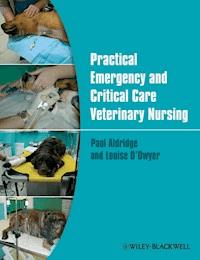
Your step-by-step guide to key emergency and critical care procedures and hands-on nursing care. Whether you need to know how to prioritise your response to a patient with multiple injuries, or you need a quick practical guide to fluid therapy, this is the go-to resource. Colour photographs of real life cases take you through the procedures and after-care, detailing essential skills. This book provides vital information for emergency and critical care situations, whether you’re looking for confidence in handling emergency cases in a first-opinion practice, or a relevant, succinct guide for an emergency clinic. Be inspired to become more confident in your clinical skills and abilities, and learn how to apply your existing skills to an emergency situation.
A companion website provides additional resources useful in the management of emergency and critical patients. Visit the website to find information charts and video clips of procedures.
Written by a veterinary nurse and a veterinary surgeon who work together in the largest UK emergency clinic, this book is a practical, how-to manual with a nursing focus.
Suitable as a complete reference for nurses studying towards qualifications, or as a practical guide for daily use by veterinary nurses working in veterinary emergency and critical care.
Sie lesen das E-Book in den Legimi-Apps auf:
Seitenzahl: 417
Veröffentlichungsjahr: 2012
Ähnliche



















Table of Contents
Cover
Dedication
Companion website
Title page
Copyright page
Preface
1 Triage and Assessment of the Emergency Patient
Introduction
Telephone triage
Hospital triage
Summary of triage
Secondary evaluation
2 Monitoring the Critical Patient
Introduction
Organ function
Central nervous system
Urinary system
Gastrointestinal system
Fluid balance
Body temperature
Clinical pathology
Pain scoring
Recumbency care
Practical techniques
3 Vascular Access
Introduction
Planning intravenous access
Techniques for difficult cases
Practical techniques
4 ‘Shock’ and Intravenous Fluid Therapy
Normal physiology
Abnormal losses from fluid compartments
Forming a fluid therapy plan
Treatment of hypovolaemic shock, acute fluid therapy
Chronic fluid therapy: patients with normal perfusion parameters
Duration of fluid therapy
Monitoring fluid therapy
5 Blood Gas, Acid–Base Analysis and Electrolyte Abnormalities
Introduction
Blood gas analysis
Treating acid–base disorders
Understanding electrolyte balance
6 Analgesia and Anaesthesia of the Emergency and Critical Patient
Introduction
Patient assessment
Anticipated problems and contingency plans
Sedatives
Opioids
Opioid agonists/antagonists and partial agonists
Local anaesthetics
General anaesthesia
7 Practical Laboratory Techniques
Introduction
Laboratory tests
Packed cell volume and total protein
Saline agglutination
Prepare and examine blood films
Examination of red blood cells
Cytology of effusions
Glucose monitoring in the critical patient
Lactate measurement in the critical patient
Urinalysis
8 Techniques for Oxygen Supplementation
Introduction
Oxygen supplementation techniques
Practical techniques
9 Nursing the Dyspnoeic Patient
Introduction
Initial presentation
Thoracic radiography
Practical techniques
10 Nursing the Cardiac Patient
Introduction
History
Clinical signs
Initial stabilisation of the cardiac patient
Assessment
Common emergency presentations
Rhythm disturbances
Pericardial effusion
Feline thromboembolism
Electrocardiography
11 Nursing the Acute Abdomen Patient
Introduction
Presentation and history
Clinical examination
Stabilisation
Diagnostic techniques
Indications for surgery
Surgical considerations
Postoperative management
Management of common presentations
Practical techniques
12 Nursing Urinary Tract Emergencies
Introduction
Stabilisation
Urinary tract obstruction
Urinary tract trauma
Urine diversion
Urine collection systems
Complications of urinary catheterisation
Acute renal failure
Practical techniques
13 Nursing the Poisoned Patient
Introduction
Treatment of the poisoned patient
Common toxicities
Practical techniques
14 Nursing the Trauma Patient
Introduction
Abdominal trauma
Thoracic trauma
Monitoring the head trauma patient
Wounds and fractures
15 Nursing the Reproductive Patient
Introduction
Female reproductive disorders
Male reproductive system emergencies
16 Small Animal Critical Care and Hospitalised Patient Nutrition
Introduction
Patient selection
How much food to give?
What food should we give?
Recommendations for avoiding complications of the re-feeding syndrome
How to feed?
Feeding via a tube
17 Nursing the Emergency Ophthalmology Patient
Introduction
Trauma
Corneal ulcers
Anterior uveitis
Glaucoma
Lens luxation
Practical procedures
18 Cardiopulmonary Arrest and Resuscitation
Introduction
Immediate recognition
Monitoring during basic life support and advanced life support
Effective advanced life support
Integrated post-cardiac arrest care
Drugs in CPR
19 Nursing Considerations in the Critical Patient
Introduction
Nursing considerations and planning
Fluid balance
Nutritional status
Care of indwelling catheters and tubes
Intravenous catheters
Chest drains
Tracheostomy tubes
Feeding tubes
Urinary catheters
Nursing the recumbent patient
Eye and oral care
Coupage
Embolus formation
Physiotherapy
Nursing the neurological patient
Pain management
Mental well-being
Client communication
Record keeping
Infection control
Index
I dedicate this book to my son Jacob, the brightest star in the sky
Louise O'Dwyer
For my daughters, Ella and Amber
Paul Aldridge
Companion website
This book is accompanied by a companion website:
www.wiley.com/go/aldridge/ecc_vet_nursing
The website includes:
information chartsvideo/slideshow demonstrationsThis edition first published 2013
© 2013 by John Wiley & Sons, Ltd
Wiley-Blackwell is an imprint of John Wiley & Sons, formed by the merger of Wiley’s global Scientific, Technical and Medical business with Blackwell Publishing.
Registered office: John Wiley & Sons, Ltd, The Atrium, Southern Gate, Chichester, West Sussex, PO19 8SQ, UK
Editorial offices: 9600 Garsington Road, Oxford, OX4 2DQ, UK
The Atrium, Southern Gate, Chichester, West Sussex, PO19 8SQ, UK
2121 State Avenue, Ames, Iowa 50014-8300, USA
For details of our global editorial offices, for customer services and for information about how to apply for permission to reuse the copyright material in this book please see our website at www.wiley.com/wiley-blackwell.
The right of the authors to be identified as the authors of this work has been asserted in accordance with the UK Copyright, Designs and Patents Act 1988.
All rights reserved. No part of this publication may be reproduced, stored in a retrieval system, or transmitted, in any form or by any means, electronic, mechanical, photocopying, recording or otherwise, except as permitted by the UK Copyright, Designs and Patents Act 1988, without the prior permission of the publisher.
Designations used by companies to distinguish their products are often claimed as trademarks. All brand names and product names used in this book are trade names, service marks, trademarks or registered trademarks of their respective owners. The publisher is not associated with any product or vendor mentioned in this book. This publication is designed to provide accurate and authoritative information in regard to the subject matter covered. It is sold on the understanding that the publisher is not engaged in rendering professional services. If professional advice or other expert assistance is required, the services of a competent professional should be sought.
Library of Congress Cataloging-in-Publication Data
Aldridge, Paul.
Practical emergency and critical care veterinary nursing / Paul Aldridge, Louise O’Dwyer.
p. ; cm.
Includes bibliographical references and index.
ISBN 978-0-470-65681-5 (pbk. : alk. paper) 1. Veterinary nursing. 2. Veterinary emergencies. 3. Veterinary critical care. I. O’Dwyer, Louise. II. Title.
[DNLM: 1. Animal Diseases–nursing. 2. Critical Care–methods. 3. Emergencies–veterinary. SF 774.5]
SF774.5.A43 2013
636.089'073–dc23
2012031333
A catalogue record for this book is available from the British Library.
Wiley also publishes its books in a variety of electronic formats. Some content that appears in print may not be available in electronic books.
Cover images: courtesy of Paul Aldridge and Louise O’Dwyer
Cover design by Steve Thompson
Preface
Emergency and critical patients are amongst the most challenging and rewarding of cases to treat. The role of the veterinary nurse and the close relationship with patients is never more important than when nursing these cases. Nurses have a vital role in the outcome of these patients as recovery is dependent on close monitoring and assessing the response to treatment, often noticing subtle changes in clinical signs.
During the 12 years that we have both been involved in emergency care, huge steps forward have been made in both diagnostic procedures and the treatment of patients, and emergency care has become a respected discipline in itself.
We hope this book conveys our enthusiasm for this fascinating area of veterinary medicine, and inspires nurses to become more confident in their clinical skills and abilities. We hope that reading the book will not only teach new skills, but also show how an existing skill set can be applied in an emergency situation.
The layout of the book is such that it could be read completely by nurses studying towards qualifications, or equally kept close at hand within the practice as a reference work, turning to the relevant chapters as the need arises. Each chapter contains a large number of photographs obtained from real life cases, to illustrate clearly the techniques described in the text. Depending on local legislation, some techniques described (e.g. tracheostomy) will be outside the scope of what nurses are permitted to perform; however, we feel their inclusion is essential to provide an understanding of why and how these procedures are performed, and to emphasise the areas of after care that must be closely attended to.
To accompany this book a companion website has been produced (visit www.wiley.com/go/aldridge/ecc_vet_nursing). Our aim was to provide access to additional resources, tables and charts that we find useful in the management of our emergency and critical patients. Where such a document exists then reference is made to it at the relevant point of the chapter.
Paul Aldridge and Louise O’DwyerJuly 2012
1
Triage and Assessment of the Emergency Patient
Introduction
Throughout the management of the emergency patient a successful outcome is more likely to be achieved where prompt, appropriate action is taken as dictated by the clinical findings of observation and examination. Nowhere is this more important than on initial presentation where the patient with a life-threatening condition must be identified and receive immediate attention; this process is triage.
Triage is a system of rapidly evaluating patients and allocating treatment to those patients that are in most urgent need, or in the case of one individual case, allocating treatment to the most serious problem first. To gain this information, a rapid, efficient, clinical examination of the major body systems is carried out: respiratory, cardiovascular and central nervous system (CNS). The initial examination of each body system should concentrate on a small number of clinical signs that provide the most important information.
In human medicine, triage is well established and used in busy accident and emergency departments or at the scene of major incidents. The same principles apply in veterinary medicine, whether in a dedicated emergency out-of-hours practice or when dealing with an urgent case in a first opinion practice.
Telephone Triage
In many cases the initial contact from the owner of the emergency case will be by telephone. The veterinary nurse is often involved in establishing the urgency of the problem, and vitally whether the animal needs to attend the clinic immediately. From conversation with some owners it will become immediately obvious from the clinical signs described that the case is an emergency and should be seen as soon as possible (see Table 1.1). In other cases the nurse will need to try to determine the nature of the problem, and give advice accordingly. It may be necessary to calm the owner to elicit a concise, relevant history, and caution should be used when assessing an owner’s perception of the patient’s problem. If there is any doubt about the need to see an animal, it is safest to advise the owner to attend or for a veterinary surgeon to discuss the case with the owner. It is advisable that all patients with a traumatic injury should attend the clinic immediately.
Table 1.1 Examples of owner-reported clinical signs that warrant immediate attendance at clinic
Respiratory distress
Severe coughing
Weakness or collapse
Neurological abnormalities
Ataxia
Non-weight-bearing lameness
Severe pain
Abdominal distension
Persistent vomiting or diarrhoea
Inability to urinate
Bleeding from body orifices
Profuse bleeding from wounds
Ingestion of toxins
Dystocia
The owner should be questioned as to the signalment of the patient (breed, age, sex and approximate weight) and given clear and concise directions as to where they are to attend (this is especially important where phone lines are diverted out of hours and owners maybe unaware their call has been diverted to another site or clinic) and an estimated time of arrival obtained.
Advice may need to be given on transportation of the animal, especially following trauma. If an animal is unable to walk it may need to be carried; it is preferable for a trauma victim to be carried on a board or something rigid, rather than a blanket (see Figure 1.1). In the case of active bleeding, direct pressure on to a clean cloth is safer than the owner applying a tourniquet. Always warn the owner that the animal may be aggressive due to pain.
Figure 1.1 Transport.
Knowing the nature of the problem, along with the signalment of the animal, allows a great deal of preparation to occur prior to the patient’s arrival (see Figure 1.2); this can save valuable time when initiating stabilisation. For example, equipment for supplementing oxygen or obtaining vascular access can be prepared, or advice can be sought regarding toxic levels, appropriate management and antidotes in cases of intoxication.
Figure 1.2 (a) Preparing for the arrival of a patient. Information gathered during telephone triage allows equipment to be prepared and so save time once the patient has arrived; in this case a dog with a pharyngeal foreign body. (b) Close-up of the trolley in (a). Equipment includes intravenous access, endotracheal tubes, laryngoscope, surgical kit, tracheostomy tubes, etc.
Hospital Triage
On arrival at the clinic the major body systems are assessed during the triage, and a brief ‘capsular’ history obtained from the owner (see Table 1.2). See website documents: Triage assessment sheet.
Table 1.2 Questions asked of owners to obtain a ‘capsular history’
Signalment (age, sex, neutered, breed)
Vaccination history
Duration of presenting complaint
Current medication
During assessment, any abnormality detected with a major body system is likely to be life-threatening; therefore measures are immediately taken to start stabilising that condition, prior to completing the rest of the examination. The aim is not to reach a definitive diagnosis, but to start treatment of life-threatening conditions. So, for example, if an animal is immediately noted to be in respiratory distress, oxygen is administered before any other part of the examination is carried out.
Patients with certain presentations should be taken to the treatment area immediately, regardless of major body system findings (see Table 1.3; Figure 1.3).
Table 1.3 Examples of presenting conditions that should be taken immediately to the treatment area on arrival
Seizures
Trauma
Prolapsed organs
Dystocia
Ingestion of toxins
Excessive bleeding
Open fractures
Burns (see
Figure 1.3
)
Figure 1.3 Severe burns on a puppy, an example of a patient that should be taken directly to the treatment area.
A useful path to follow in the initial assessment of major body systems is ABCD, where:
A and B: Respiratory System
Emergencies involving the respiratory system require rapid assessment, cautious restraint and prompt measures to start stabilisation. Assessment of the respiratory system should begin as the patient is approached by observing their posture, respiratory effort and pattern, and whether any airway sounds are clearly audible.
In the normal patient, both cats and dogs have a respiratory rate of approximately 10–20 breaths per minute (bpm), ventilation involves very little chest movement, and the chest wall and abdomen move out and in together. Whilst open mouth breathing and panting in a dog is considered normal, the same in a cat is always considered to indicate respiratory distress and oxygen supplementation is indicated.
The respiratory system of the patient is assessed by observation, auscultation and palpation.
Airway
In a collapsed patient, assess if the airway is patent by listening for breathing, and looking in the mouth for any obstruction (blood, vomit, foreign bodies). Facial injuries or cervical bite wounds can interfere with the airway by disrupting the larynx or trachea.
Breathing
Observation
The patient should be closely observed before moving on to auscultation with a stethoscope. Often, observation alone is enough to determine a respiratory problem exists and dictate the animal should be moved to the treatment area to start stabilisation. Observation should focus on:
Respiratory rate:
an increased respiratory rate is termed tachypnoea. If a patient is judged to be tachypnoeic, the focus should then move to whether there is increased respiratory effort. If there appears to be no increased effort, the tachypnoea may be caused by fear, stress, pyrexia or pain.
Respiratory effort:
animals with increased respiratory effort will often alter their body posture to assist them in their efforts to ventilate adequately. The typical picture is of flared nostrils, extended neck and abducted elbows as the animal struggles to draw air in. There will often also be exaggerated chest wall movement and abdominal effort, where the muscles of the abdominal wall are brought into play to assist with breathing. In severe respiratory effort there maybe ‘paradoxical’ movement of the abdominal wall; where the abdomen moves inwards on inspiration.
Respiratory pattern:
in the normal breathing cycle, the time taken for inspiration is similar in length to expiration. Where alterations in this ratio occur it may give clues to the level of the respiratory tract at which a problem is present (see Chapter 9).
Symmetrical movement of the chest wall:
rib fractures, and ‘flail chest’ segments may cause asymmetrical movement of the chest wall.
Auscultation
Listening to the patient before using a stethoscope may reveal abnormal respiratory noises such as stertor, or stridor. Stertor refers to ‘snoring’ types of noise, often caused by vibration of excessive soft tissue in the oropharynx. While this is normal in some breeds of dog, in other patients it may be a sign of inflammation. Stridor is a high-pitched whistling sound, usually associated with air moving rapidly through a narrowed opening.
Auscultation in association with a respiratory pattern is vital in helping to localise the region of the respiratory tract affected (see Chapter 9).
A stethoscope should then be used to ausculate the chest wall, comparing identical areas on the left side of the chest to the right side, and similarly comparing ventral lung fields to dorsal. This comparison allows abnormalities to be more easily detected. Breath sounds may be reduced or absent where pleural disease exists (pneumothorax, pleural effusion, diaphragm rupture), or increased sounds where airway disease is present. The presence of wheezes suggests airway narrowing, and ‘crackles’ suggest the presence of fluid in alveoli.
Palpation
Gentle palpation of the chest wall may be useful for detecting obvious trauma or subcutaneous emphysema. Subcutaneous emphysema is a build up of air below the skin, and can be associated chest wall defects or tracheal trauma (see Figure 1.4).
Figure 1.4 Pronounced subcutaneous emphysema in a cat following thoracic trauma from an airgun pellet.
Definitive treatment for the cause of respiratory compromise should be provided as soon as possible. Careful auscultation and observation of the breathing pattern will often determine the location of the cause of dyspnoea, be it upper or lower airway, or pleural space disease. This can be essential, as often dyspnoeic animals have little or no physiological reserve. The ability to establish a working diagnosis based on history and examination alone is often the difference between life and death in dyspnoeic animals.
C: Cardiovascular
During initial assessment of the cardiovascular system, the aim is to gauge the effectiveness of the heart in pumping blood to perfuse body tissues, and also whether that perfusion is delivering oxygen to the tissues. Poor perfusion leads to reduced oxygen delivery to tissues, known as ‘shock’. Left uncorrected, shock will lead to cell death, and greatly increased morbidity and mortality in emergency patients.
Decreased cardiac output may be due to reduced circulating volume (hypovolaemia), or be due to heart failure and arrhythmias.
There is no direct method of measuring the amount of oxygen delivered to tissues; examination concentrates indicators of cardiovascular performance, or perfusion parameters. Many of the signs used to detect reduced cardiac output and poor perfusion arise as a result of compensatory measures by the body; measures aimed at preserving blood flow to the heart and brain at the expense of other tissues such as skin, gastrointestinal tract, muscles and kidneys. Compensatory measures include increased heart rate and contractility, and vasoconstriction of arterioles leading to capillary beds in less ‘vital’ tissues.
Mucous Membranes
Mucous membranes are normally pink in colour; this is most commonly assessed on the gums. Cats’ mucous membranes tend to be lighter in colour than dogs’. Commonly seen changes in mucous membrane colour are outlined in Table 1.4 (see Figure 1.5).
Table 1.4 Commonly observed colour changes in mucous membranes and their possible causes (see Figure 1.5)
Colour observed
Possible cause
Pale, white or grey
Poor perfusion, or anaemia
‘Brick red’ or ‘injected’
Vasodilation, systemic inflammatory response
Blue or purple
Cyanosis: low oxygen saturation of haemoglobin
Yellow
Increased blood bilirubin levels
Brown
Formation of methaemoglobin, e.g. paracetamol poisoning
Cherry red
Carbon monoxide poisoning
Figure 1.5 (a) Pale mucous membranes in an anaemic animal. (b) Brick red mucous membranes in a patient with systemic inflammatory response. (c) Blue tinged mucous membranes in a cyanotic cat. (d) Icteric mucous membranes. The yellow colour is caused by raised levels of bilirubin.
Capillary Refill Time
Capillary refill time (CRT) is again assessed on the gums. Digital pressure is applied with a fingertip to blanche the mucous membrane, and then when the finger is removed, the time taken for colour to return is measured. A normal CRT is 1–1.75 s.
A prolonged refill time may be due to decreased cardiac output and vasoconstriction causing reduced peripheral perfusion.
A rapid capillary refill is likely due to increased perfusion of the mucous membrane caused by vasodilation, which can indicate systemic inflammation.
Pulse
Palpation of femoral and distal (metatarsal) pulses will reveal pulse rate and rhythm, and also gives an impression of stroke volume (the amount of blood pumped with each beat).
Pulses should be easily palpated (except in obese animals), and should feel ‘full’; terms such as these refer to the quality of the pulse, which may take some practice to appreciate. When judging the quality of the pulse the force and the duration of the pulse need to be assessed. The pulse is a wave of blood travelling down the artery that represents the output of the heart. If the duration of the wave, as well as its height is considered, a better idea of stroke volume is gained. As cardiac output drops, it becomes more difficult to palpate the metatarsal pulse.
Irregular pulses may be due to cardiac arrhythmias, or conditions such as pericardial effusion.
Heart
Auscultation of the heart should be carried out at the same time as palpating an artery, this allows any pulse deficits (an audible heart beat without an output) to be detected. The heart rate can be counted (see Table 1.5). A rapid heart rate (tachycardia) may be detected with cardiac disease, cardiac arrhythmias, sepsis or shock due to reduced blood volume. It must be remembered that whilst tachycardia is a normal finding in hypovolaemic dogs, cats often develop a slow heart rate (bradycardia) if hypovolaemic.
Table 1.5 Changes in heart rate and their possible causes
Normal heart rates
Dogs:
60–100 bpm (depending on size)
Cats:
160–200 bpm (higher if stressed)
Causes of tachycardia
Cardiac diseaseCardiac tachyarrhythmiasSepsisHypovolaemic shockFearStressPain
Causes of bradycardia
HyperkalaemiaIncreased intracranial pressureCardiac arrhythmiasHypovolaemic shock in cats
Heart sounds are often very quiet in severe hypovolaemia, and muffled where pericardial effusions are present. Any audible murmurs should be noted.
If indicators of poor tissue perfusion are detected on triage, stabilisation measures need to be taken immediately. Continued poor perfusion leads to cell death and release of free radicals and inflammatory mediators.
Most animals with abnormal perfusion have some degree of hypovolaemia. Recognising hypovolaemia based on the physical examination of perfusion parameters is an essential skill (see Table 1.6). With practice, the degree of hypovolaemia present can be estimated, and the same parameters used to measure response to treatment (see Chapter 3).
Table 1.6 Changes in perfusion parameters seen in hypovolaemia
D: Dysfunction of the Central Nervous System
The CNS should be briefly assessed through observation and palpation. Observation should begin as soon as the patient is approached: posture, level of consciousness, and interaction or response to their surroundings should be noted. The patient should be ambulatory with normal gait and proprioception. (Any patient that is in lateral recumbency, non-responsive or showing neurological abnormailities such as twitching or seizure activity should be triaged immediately and taken to the treatment area for further assessment.)
Depressed mentation can be due to poor oxygen delivery to the brain, but if this seems more severe than would be indicated by examination of the respiratory and circulatory system, then the suspicion of CNS involvement is increased.
The patient’s pupils should be assessed to ensure they are symmetrical and equal in size, that a pupillary light reflex (PLR) is present (see Chapter 15) and that there is no obvious dilation (mydriasis) or constriction (miosis).
Following assessment of the major body systems, a brief examination of the rest of the body should be performed.
Abdominal Palpation
After examination of the major body systems, the abdomen can be palpated. Palpation should reveal any abdominal distension or pain. Where distension is present it may be possible to differentiate between gaseous distension and fluid effusion. The caudal abdomen should be checked to ensure the urinary bladder is not distended.
Body Temperature
Core body temperature is usually assessed by a rectal thermometer reading. Readings taken may actually be lower than core temperature if the thermometer tip is within faeces or gas in the rectum.
High body temperatures are common in emergency presentations. Pyrexia is an increase in body temperature above the normal range (due to an increase in the body temperature regulatory set point, so the body is still controlling the body temperature) commonly seen with infection. Hyperthermia is an increase in temperature over and above the regulatory set-point. This occurs due to excessive heat production (e.g. from muscle activity in a seizuring animal) or an inability to thermoregulate (e.g. inability to pant in a dog with laryngeal paralysis). Body temperatures over 40°C (104°F) are of concern; temperatures of over 42°C (107°F) are life-threatening.
Low core body temperature can be associated with hypovolaemia. If a reading of 36°C or below is obtained, the patient should be assessed again to double check no other signs of poor perfusion are present.
Comparing the core body temperature with the temperature of the patient’s extremity can be another indicator of poor perfusion. The patient’s rectal temperature is compared with a reading obtained from the web of the toes. While the extremities are expected to be at a lower temperature, a difference of greater than 4°C often indicates reduced blood flow, and hence reduced transfer of heat to the extremities.
Summary of Triage
Triage aims to evaluate the major body systems quickly, allowing rapid intervention where hypoxia, poor perfusion and other life-threatening conditions are detected. The same skills can then be applied to ensuring the patient is responding to administered treatment.
Once admitted to the clinic, a standard protocol should be followed: oxygen supplementation where required, an intravenous catheter is placed and a ‘minimum database’ is usually obtained from the patient, the details of which will vary from practice to practice, but usually include rapid clinical pathology such as packed cell volume (PCV) and total solids by refractometry, blood glucose measurement, urine specific gravity and ‘dipstick’, and electrolyte analysis where available (see Figure 1.6). Blood lactate levels can be obtained; this is useful in assessing reduced oxygen delivery to tissues (see Chapter 3).
Figure 1.6 Placing an intravenous catheter prior to gathering a ‘minimum database’ from a patient admitted to the clinic.
Secondary Evaluation
Once any life-threatening conditions have been stabilised, a more thorough secondary examination can be carried out, systematically covering body systems (see Table 1.7). At this point a detailed history can be obtained from the owner.
Table 1.7 A mnemonic for areas covered by an emergency secondary evaluation
A CRASH PLAN!
A
Airway
C
CVS/Circulation
R
Respiratory
A
Abdomen
S
Spine
H
Head
P
Pelvis/rectal exam
L
Limbs
A
Arteries
N
Nerves
More in-depth diagnostic procedures can be performed, such as imaging, allowing an ongoing treatment and nursing plan to be formulated to deal with each specific problem in order of priority. A written hospital order sheet covering fluid therapy, feeding, medication, diagnostics and nursing requirements should be produced for each patient.
2
Monitoring the Critical Patient
Introduction
Close monitoring of the critical patient is essential to determine the effectiveness of any treatment, and to assess the degree of improvement in condition. Just as importantly, changes can be detected that indicate deterioration is imminent; this allows intervention to prevent a crisis before it occurs.
Lesen Sie weiter in der vollständigen Ausgabe!
Lesen Sie weiter in der vollständigen Ausgabe!
Lesen Sie weiter in der vollständigen Ausgabe!
Lesen Sie weiter in der vollständigen Ausgabe!
Lesen Sie weiter in der vollständigen Ausgabe!
Lesen Sie weiter in der vollständigen Ausgabe!
Lesen Sie weiter in der vollständigen Ausgabe!
Lesen Sie weiter in der vollständigen Ausgabe!
Lesen Sie weiter in der vollständigen Ausgabe!
Lesen Sie weiter in der vollständigen Ausgabe!
Lesen Sie weiter in der vollständigen Ausgabe!
Lesen Sie weiter in der vollständigen Ausgabe!
Lesen Sie weiter in der vollständigen Ausgabe!
Lesen Sie weiter in der vollständigen Ausgabe!
Lesen Sie weiter in der vollständigen Ausgabe!
Lesen Sie weiter in der vollständigen Ausgabe!
Lesen Sie weiter in der vollständigen Ausgabe!
Lesen Sie weiter in der vollständigen Ausgabe!




