


125,99 €
Mehr erfahren.
- Herausgeber: John Wiley & Sons
- Kategorie: Fachliteratur
- Sprache: Englisch
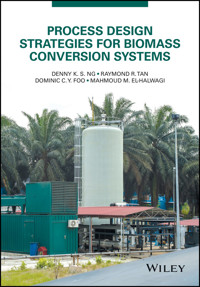
This book covers recent developments in process systems engineering (PSE) for efficient resource use in biomass conversion systems. It provides an overview of process development in biomass conversion systems with focus on biorefineries involving the production and coproduction of fuels, heating, cooling, and chemicals. The scope includes grassroots and retrofitting applications. In order to reach high levels of processing efficiency, it also covers techniques and applications of natural-resource (mass and energy) conservation. Technical, economic, environmental, and social aspects of biorefineries are discussed and reconciled. The assessment scales vary from unit- to process- and life-cycle or supply chain levels.
The chapters are written by leading experts from around the world, and present an integrated set of contributions. Providing a comprehensive, multi-dimensional analysis of various aspects of bioenergy systems, the book is suitable for both academic researchers and energy professionals in industry.
Sie lesen das E-Book in den Legimi-Apps auf:
Seitenzahl: 622
Veröffentlichungsjahr: 2016
Ähnliche



















Table of Contents
Cover
Title Page
List of Contributors
Preface
Acknowledgments
Part 1: Process Design Tools for Biomass Conversion Systems
1 Early-Stage Design and Analysis of Biorefinery Networks
1.1 Introduction
1.2 Framework
1.3 Application: Early-Stage Design and Analysis of a Lignocellulosic Biorefinery
1.4 Conclusion
Nomenclature
References
2 Application of a Hierarchical Approach for the Synthesis of Biorefineries
2.1 Introduction
2.2 Problem Statement
2.3 General Methodology
2.4 Simulation of Flowsheets
2.5 Results and Discussion
2.6 Conclusions
References
3 A Systematic Approach for Synthesis of an Integrated Palm Oil-Based Biorefinery
3.1 Introduction
3.2 Problem Statement
3.3 Problem Formulation
3.4 Case Study
3.5 Conclusions
References
4 Design Strategies for Integration of Biorefinery Concepts at Existing Industrial Process Sites: Case Study of a Biorefinery Producing Ethylene from Lignocellulosic Feedstock as an Intermediate Platform for a Chemical Cluster
4.1 Introduction
4.2 Methodology
4.3 Results
4.4 Conclusions and Discussion
Acknowledgements
Appendix
References
5 Synthesis of Biomass-BasedTri-generation Systems with Variations in Biomass Supply and Energy Demand
5.1 Introduction
5.2 Problem Statement
5.3 Multi-period Optimization Formulation
5.4 Case Study
5.5 Analysis of the Optimization Results
5.6 Conclusion and Future Work
Appendix A
Nomenclature
References
Part 2: Regional Biomass Supply Chains and Risk Management
6 Large-Scale Cultivation of Microalgae for Fuel
6.1 Introduction
6.2 Cultivation
6.3 Harvesting and Dewatering
6.4 Conversion to Products
6.5 Conclusions
Acknowledgments
References
7 Optimal Planning of Sustainable Supply Chains for the Production of
Ambrox
based on
Ageratina jocotepecana
in Mexico
7.1 Introduction
7.2
Ambrox
Supply Chain
7.3 Biomass Cultivation
7.4 Transportation System
7.5
Ambrox
Production
7.6 Bioethanol Production
7.7 Supply Chain Optimization Model
7.8 Case Study
7.9 Conclusions
Acknowledgments
Nomenclature
References
8 Inoperability Input–Output Modeling Approach to Risk Analysis in Biomass Supply Chains
8.1 Introduction
8.2 Input–Output Model
8.3 Inoperability Input–Output Modeling
8.4 Illustrative Example
8.5 Case Study 1
8.6 Case Study 2
8.7 Conclusions
8.8 Further Reading
Appendix A LINGO Code for Illustrative Example
Appendix B LINGO Code for Case Study 1
Appendix C Interval Arithmetic
Appendix D Analytic Hierarchy Process
Nomenclature
References
Part 3: Other Applications of Biomass Conversion Systems
9 Process Systems Engineering Tools for Biomass Polygeneration Systems with Carbon Capture and Reuse
9.1 Introduction
9.2 Production Using Carbon Dioxide
9.3 Process Systems Engineering Tools for Carbon Dioxide Capture and Reuse
9.4 CO
2
Pinch Analysis Tool for Carbon Dioxide Capture and Reuse in Integrated Flowsheet
9.5 Conclusions
References
10 Biomass-Fueled Organic Rankine Cycle-Based Cogeneration System
10.1 Introduction
10.2 Working Fluids for ORC
10.3 Expanders for ORC
10.4 Existing Biomass-Fueled ORC-Based Cogeneration Plants
10.5 Different Configurations of ORC
10.6 Process Description
10.7 Illustrative Example
10.8 Conclusions
References
11 Novel Methodologies for Optimal Product Design from Biomass
11.1 Introduction
11.2 CAMD
11.3 Two-Stage Optimisation Approach for Optimal Product Design from Biomass
11.4 Case Study
11.5 Conclusions
11.6 Future Opportunities
Nomenclature
Appendix
References
12 The Role of Process Integration in Reviewing and Comparing Biorefinery Processing Routes
12.1 Introduction
12.2 Motivating Example
12.3 The Three-Layer Approach
12.4 Production Paths to Xylitol
12.5 Scope for Process and Energy Integration
12.6 Conclusion
Acknowledgment
References
13 Determination of Optimum Condition for the Production of Rice Husk-Derived Bio-oil by Slow Pyrolysis Process
13.1 Introduction
13.2 Experimental Study
13.3 Results and Discussion
13.4 Conclusion
Acknowledgement
References
14 Overview of Safety and Health Assessment for Biofuel Production Technologies
14.1 Introduction
14.2 Inherent Safety in Process Design
14.3 Inherent Occupational Health in Process Design
14.4 Design Paradox
14.5 Introduction to Biofuel Technologies
14.6 Safety Assessment of Biofuel Production Technologies
14.7 Health Assessment of Biofuel Production Technologies
14.8 Proposed Ideas for Future Safety and Health Assessment in Biofuel Production Technologies
14.9 Conclusions
References
Index
End User License Agreement
List of Tables
Chapter 01
Table 1.1 The simplified explanation of each section in SustainPro
Table 1.2 The simplified explanation of each section in LCSoft
Table 1.3 The description of the process intervals presented in Figure 1.7
Table 1.4 The data collection example for Fischer–Tropsch reactor
Table 1.5 Example of the stream table of the Fischer–Tropsch reactor
Table 1.6 Summary table for the data collection (mixing, αi,kk, μi,kk reaction, γi,rr, θreact,rr, waste, SWi,kk, and product, spliti,kk , separation) for thermochemical processing networks (Cheali et al., 2014)
Table 1.7 Summary of the verification results for the Fischer–Tropsch reactor
Table 1.8 The optimization results and comparison. Highlighted in bold are the processing networks for each task
Table 1.9 The top five ranked solutions identified in scenario 2: max. FT-product sales, min. operating cost, and investment cost. Highlighted in bold are the processing networks for each task
Table 1.10 Identified process critical points for the first processing path, regarding the open and closed paths, respectively
Table 1.11 Path flow details on the critical points identified for the first processing path indicated in Table 1.10
Table 1.12 Identified process critical points for the second processing path, regarding the open and closed paths, respectively
Table 1.13 Path flow details on the critical points identified for the second processing path indicated in Table 1.12
Table 1.14 Sustainability metrics for the first and second processing path
Table 1.15 Total carbon footprint for first and second processing path
Table 1.16 Potential environmental impacts for first and second processing path
Chapter 02
Table 2.1 Content of cellulose, hemicellulose, and lignin for some LCM on dry basis (wt%)
Table 2.2 Abbreviations for pretreatments and conversion configurations
Table 2.3 Components for simulations in Aspen Plus
Table 2.4 Properties required for liquid and solid components in Aspen Plus
Table 2.5 Reactions and yield date used in the simulations
Table 2.6 Operating conditions specified into Aspen Plus units
Table 2.7 Specification for separation system used in Aspen Plus
Table 2.8 Effect of using direct recycle on water and ammonia consumption
Table 2.9 Solid content and furfural or acetic acid composition obtained from the simulations
Table 2.10 Comparison of the 16 combination alternatives
Table 2.11 Residence time and dilution rate
Table 2.12 Reactor size for the different configurations
Table 2.13 Annual costs and yearly production
Chapter 03
Table 3.1 Summary of palm-based biomass conversion technologies
Table 3.2 Price of palm-based biomass, product and energy
Table 3.3 Conversion factor for technology pathway
Table 3.4 Energy consumption of each technology
Table 3.5 Economic data of each technology
Table 3.6 Detailed economic analysis of case study
Chapter 04
Table 4.1 Main results of process simulation of the lignocellulosic ethanol production process
Table 4.2 Energy inputs and outputs and overall energy efficiencies at different levels of process integration
Table 4.A.1 Stream data for the lignocellulosic ethanol production plant
Table 4.A.2 Stream data of the ethylene dehydration plant
Table 4.A.3 Stream data with hot and cold utility of the combined ethylene production process
Chapter 05
Table 5.1 Lignocellulosic composition of palm-based biomass and price for Cases 1 and 2
Table 5.2 Cost of utilities
Table 5.3 Fraction of occurrence for low, mid- and high seasons
Table 5.4 Utility demand of a typical POM
Table 5.5 Palm-based biomass availability based on CPO production
Table 5.6 Lignocellulosic composition of palm-based biomass and price for Case 3
Table 5.7 Economic parameters for case study
Table 5.8 Optimization output for Cases 1–3
Table 5.9 Chosen technologies for Cases 1–3
Table 5.10 Available and consumed palm-based biomass for Cases 1–3
Table 5.11 Power distribution for Cases 1–3
Table 5.A.1 Capital costs for each technology based on available design capacity
Table 5.A.2 Conversions for technologies considered
Chapter 06
Table 6.1 Lipid content and productivities of various microalgae species
Table 6.2 Optimal dose and optimal pH range for inorganic and organic flocculants (Uduman et al., 2010 ; Pahl et al., 2013 )
Table 6.3 Fatty acid profiles of some microalgae
Table 6.4 Change in fatty acid profile of Isochrysis sp. as salinity and supply of N are varied
Table 6.5 Carbohydrate composition of selected microalgae
Chapter 07
Table 7.1 Uses of land in each municipality (INEGI, 2010)
Table 7.2 Job generation and cost associated with A. jocotepecana growing
Table 7.3 Transportation costs of raw material, products, and by-products (FIRA, 2007; INEGI, 2010)
Table 7.4 Variable costs of processing plants
Table 7.5 Variable costs associated with the processing plants (SENER, 2006)
Table 7.6 Fixed costs associated with the processing plants (SENER, 2006)
Table 7.7 Jobs generated for Ambrox production
Table 7.8 Production yield
Table 7.9 Values for damages associated with the agriculture of A. jocotepecana
Table 7.10 Values for damages associated with the bioethanol production
Table 7.11 Values for damages associated with the Ambrox production
Table 7.12 Cost comparison (USD)
Table 7.13 Comparison of jobs generated
Table 7.14 Comparison for environmental impact (EI-99/year)
Chapter 08
Table 8.1 Triplet of questions in risk assessment for biomass supply chains
Table 8.2 Triplet of questions in risk management for biomass supply chains
Table 8.3 Flows for a hypothetical two-sector economy (in USD)
Table 8.4 Coefficients of A in case study 1
Table 8.5 Total output (x) and final demand (c) case study 1 (in thousand RM)
Table 8.6 Coefficients of
A
* in case study
Table 8.7 Nomenclature of the 16 economic sectors considered
Table 8.8 Coefficients of A for case study 2
Table 8.9 Updated technical coefficients matrix A due to implementation of 5% biodiesel blend
Table 8.10 Total output and final demand using revised technical coefficients matrix (in thousand PhP)
Table 8.11 Coefficients of the matrix
A
* for a 5% biodiesel blend
Chapter 09
Table 9.1 Biomass ultimate analysis and primary pyrolysis product compositions
Table 9.2 Streams’ compositions and temperature in the flowsheet shown in Figure 9.3
Table 9.3 Basis streams in the key process units for mass and energy balance and capital cost evaluation
Table 9.4 Parameters and calculation of ISBL costs
Table 9.5 Annualised capital cost estimation
Table 9.6 Annualised operating cost estimation
Table 9.7 Product prices and netback
Table 9.8 Mass balance factors for the algae-based biorefinery
Table 9.9 Algae biomass composition (Illman et al. 2000 )
Table 9.10 CO
2
source and demand data extracted from biorefinery flowsheet
Chapter 10
Table 10.1 List of most widely used working fluids in ORC-based plants
Table 10.2 The comparison between various types of expanders used in the ORC-based system
Table 10.3 List of the ORC-based system manufacturers
Table 10.4 Data used for example
Table 10.5 Results, for example, pressure, temperature, and enthalpy for different state points of the ORC (cycle with regeneration)
Table 10.6 Results, for example, main performance parameters
Chapter 11
Table 11.1 Lower and upper bounds for regions with different uncertainty
Table 11.2 Target property ranges for design problem
Table 11.3 Fuzzy membership functions of properties of interest
Table 11.4 List of signatures
Table 11.5 Possible design of bio-based fuel
Table 11.6 Comparison of λ
p
between different designs of bio-based fuel
Table 11.7 Comparison of λ
p
between different designs of bio-based fuel
Table 11.8 Molecular structures for the possible designs of bio-based fuel
Table 11.9 Lignocellulosic composition of EFB
Table 11.10 List of conversion pathways and yield
Table 11.11 Price of products and raw materials
Table 11.12 Capital and operating cost for conversion pathways
Table 11.13 Comparison of results for scenario 1 and 2
Chapter 12
Table 12.1 Parameters imported by user for xylitol component
Table 12.2 Stream properties for the heat integration of the chemical process
Table 12.3 Additional stream for the heat integration
Table 12.4 Hot and cold streams of the biotechnological process
Table 12.5 Properties of stream M1
Table 12.6 Properties of stream M2
Table 12.7 Summarizing results regarding the heat integration in every scenario and case
Chapter 13
Table 13.1 Properties of petroleum fuel
Table 13.2 Properties of RH (wt%)
Table 13.3 Properties of bio-oil produced at different heating rates
Table 13.4 Comparison of bio-oil properties with literatures
Table 13.5 Conversion, gas yield, and residue yield
Chapter 14
Table 14.1 Information availability at different design stages
List of Illustrations
Chapter 01
Figure 1.1 A schematic representation of the development funnel for a project in the processing industries.
Figure 1.2 The integrated business and engineering framework adapted: the dashed boxes indicate the outcome of each step of the workflow
Figure 1.3 The generic process model block.
Figure 1.4 The framework of LCSoft (Kalakul et al., 2014)
Figure 1.5 The superstructure of the biochemical conversion platform of biomass
Figure 1.6 Combined superstructure of two biorefinery conversion platforms: thermochemical (top) and biochemical platform (bottom).
Figure 1.7 Combined superstructure of two biorefinery conversion platforms: thermochemical (top) and biochemical platform (bottom).
Figure 1.8 Process diagram showing mass inlet/outlet, the reaction, and its stoichiometry for the Fischer–Tropsch reactor
Figure 1.9 The simplified process flow diagram of the second best optimal processing path of scenario 2 (as presented in Table 1.9)
Figure 1.10 The simplified process flow diagram of the best optimal processing path of scenario 2 (as presented in Table 1.9)
Chapter 02
Figure 2.1 Case study: bioethanol production based on biochemical platform
Figure 2.2 General methodology
Figure 2.3 Pretreatment flowsheet
Figure 2.4 Pretreatment with direct recycle
Figure 2.5 Conversion configurations based on acid hydrolysis
Figure 2.6 Conversion configurations based on enzymatic hydrolysis
Figure 2.7 Integration between pretreatment and conversion steps
Figure 2.8 Conventional distillation scheme for hydrous ethanol production
Figure 2.9 A summary of results from the methodology application
Figure 2.10 Energy cost for pretreatment options
Figure 2.11 Energy cost for pretreatment with direct recycle
Figure 2.12 Combinations among pretreatment and conversion configurations
Figure 2.13 Energy cost including a conventional distillation step
Chapter 03
Figure 3.1 Global palm oil production 2008/2009 to 2012/2013 (USDA, 2014)
Figure 3.2 Schematic diagram of palm oil mill.
Figure 3.3 Generic superstructure
Figure 3.4 Superstructure of an integrated POB and POM with CHP
Figure 3.5 Optimal configuration of an integrated POB and POM with CHP
Chapter 04
Figure 4.1 Overview of biomass conversion processes and potential products.
Figure 4.2 Material and energy flows across the chemical cluster in Stenungsund (Jönsson et al., 2012 )
Figure 4.3 Overview of biomass-to-ethylene production routes: different biomass conversion technologies to produce ethylene from biomass.
Figure 4.4 Illustration of the heat integration approach. Upper left: base case with no integration between ethanol and ethylene process. Upper right: heat and material integration between the two processes. Lower: heat and material integration and design of a utility system to enable site-wide heat integration
Figure 4.5 Overview of bioethanol production process from lignocellulosic feedstock. Data included shows the process parameters used for process simulation (Stenberg et al., 1998 ; Wooley et al., 1999 ; Aden et al., 2002 ; Galbe & Zacchi, 2002 ; Söderström et al., 2003 ; National Renewable Energy Laboratory, 2004 ; Söderström et al., 2004 ; Sassner et al., 2008 ; Fornell & Berntsson, 2009 )
Figure 4.6 Overview of the ethanol dehydration to ethylene process configuration. Data included shows the process parameters used for process simulation (Stauffer & Kranich, 1962 ; Barrocas et al., 1980 ; Kochar et al., 1981 ; Chematur, 2010 ; Huang, 2010 )
Figure 4.7 GCC of the ethanol production process from lignocellulosic biomass; direct stream injection of 51 MW in the pretreatment steps is considered a process requirement and therefore not included
Figure 4.8 GCC of the ethanol dehydration process; direct steam injection of 25 MW steam to the ethylene reactor is considered a process requirement and therefore not included
Figure 4.9 Background/foreground analysis of the ethanol production and ethanol dehydration process; direct delivery of ethanol between the processes is accounted for in the stream data
Figure 4.10 Total site profile curves of the biorefinery, introducing a utility system with two steam levels (8.8 bar(g), 2 bar(g)): a hot water circuit and direct flue gas heating
Figure 4.11 Total site composite curves of the biomass-to-ethylene plant
Figure 4.12 GCC representing the transfer of heat from hot process streams to an improved utility system in the chemical cluster. Used to determine the amount of additional excess heat possible to deliver to the biorefinery (Hackl et al., 2011 )
Chapter 05
Figure 5.1 Generic representation of superstructure for scenarios.
Figure 5.2 Generic representation of scenarios.
Figure 5.3 Block diagram for case study.
Figure 5.4 Normalized production for POM.
Figure 5.5 Total CPO production in Malaysia for 2013 (Board, 2015).
Figure 5.6 Superstructure for palm BTS
Figure 5.7 Optimal configuration of palm BTS for Case 1 (of maximum economic performance)
Figure 5.8 Optimal configuration of palm BTS for Case 2 (with limit on capital investment)
Figure 5.9 Optimal configuration of palm BTS for Case 3 (with different biomass quality)
Chapter 06
Figure 6.1 An overall framework showing major operations for obtaining fuels from microalgae.
Figure 6.2 Examples of two aquatic microorganisms used for biomass growth: (a) prokaryotic cyanobacteria Spirulina (Simon, 1994) (Photo taken by Joan Simon / CC-BY-SA-2.5). and (b) eukaryotic microalgae Haematococcus (Taka, 2006) (Photo taken by Taka.)
Figure 6.3 Raceway pond
Figure 6.4 Tubular photobioreactor (IGV Biotech, 2013). Photo taken by IGV Biotech.
Figure 6.5 Dunaliella salina farms located in Hutt Lagoon, Australia (Orchard, 2009). The ponds are pink due to the beta-carotene produced by the microalgae. Photo taken by Samuel Orchard.
Figure 6.6 A simplified biodiesel production process.
Figure 6.7 Biodiesels from different sources vary greatly in clarity and color.
Figure 6.8 A possible process flow diagram for utilization of microalgal biomass.
Figure 6.9 A possible process flow diagram for the production of ammonia from cyanobacteria.
Chapter 07
Figure 7.1 (−)-8α-12-Epoxy-13,14,15,16-tetranorlabdane “Ambrox.”
Figure 7.2 Chemical cyclization to obtain Ambrox from tetranorlabdanodiol.
Figure 7.3 Proposed superstructure for the supply chain of Ambrox from A. jocotepecana.
Figure 7.4 Location of the considered municipalities in Michoacán, Mexico (INEGI, 2010)
Figure 7.5 Location of municipalities (preprocessing plants) and Morelia City (central processing plant) in the Michoacán state map (INEGI, 2010)
Figure 7.6 Steps for Ambrox processing.
Figure 7.7 Eco-indicator 99 methodology
Figure 7.8 Pareto curve between the profit and environmental impact.
Figure 7.9 Necessary land for A. jocotepecana cultivation in Quiroga.
Figure 7.10 Results for maximizing the net present value.
Chapter 08
Figure 8.1 Flow of goods, resources, and wastes in a hypothetical three-sector economy
Figure 8.2 Flow of goods in a hypothetical two-sector economy (in USD)
Figure 8.3 Sector inoperability levels in case study 1
Figure 8.4 Sector economic losses in case study 1
Figure 8.5 Sector inoperability levels in case study 2
Figure 8.6 Sector economic losses in case study 2
Chapter 09
Figure 9.1 Structure of bisphenol A polycarbonate
Figure 9.2 Synthesis of poly(propylene carbonate)
Figure 9.3 Conceptual process flowsheet for carbon dioxide capture in Sabatier’s reaction and by adsorbent. The shaded texts indicate products for export to the market
Figure 9.4 Potential CO
2
sources and demands in a biorefinery
Figure 9.5 Methodology for CO
2
integration in a biorefinery.
Figure 9.6 (a) CO
2
purity profile formed by source composite curve (SCC) and demand composite curve (DCC). The areas enclosed between the composite curves correspond to the net CO
2
flow rate shown as horizontal segments in the corresponding (b) CO
2
surplus diagram.
Figure 9.7 (a) The change in flow rate displaces the SCC producing a (b) shift in the surplus diagram until pinched with the y-axis.
Figure 9.8 Algae-based biorefinery process flowsheet. Mass flow rates are in kg h
−1
and energy in MJ h
−1
. The percentage CO
2
purity on mass basis is shown
Figure 9.9 (a) Purity profile showing the demand composite curve (DCC) and the source composite curve (SCC) and (b) surplus diagram for the case study
Figure 9.10 (a) Purity profile and (b) surplus diagram as in the initial network and pinched after the introduction of purification unit
Figure 9.11 (a) Purity profile and (b) surplus diagram pinched after the introduction of purification unit and after reducing the amount of imported flue gas
Figure 9.12 Integrated CO
2
exchange network design for the case study. Flow rates in kg h
−1
and purities in mass percentage
Chapter 10
Figure 10.1 Typical saturation curves on T–s diagram for (a) a dry fluid, (b) an isentropic fluid, and (c) a wet fluid.
Figure 10.2 Schematic diagram of an ORC: (a) flow diagram of a basic ORC and (b) T–s diagram of a basic ORC working with a dry fluid
Figure 10.3 Schematic diagram of an ORC: (a) flow diagram of an ORC incorporating regeneration and (b) flow diagram of an ORC incorporating turbine bleeding
Figure 10.4 Schematic diagram of an ORC: (a) flow diagram of an ORC incorporating turbine bleeding and regeneration and (b) T–s diagram of an ORC incorporating turbine bleeding and regeneration working with a dry fluid.
Figure 10.5 Typical flow diagram of a biomass-fueled organic Rankine cycle-based cogeneration system
Chapter 11
Figure 11.1 Property prediction by using QSPR model.
Figure 11.2 Two-stage optimisation approach to produce optimal product from biomass
Figure 11.3 Procedure for solving a multi-objective chemical product design problem
Figure 11.4 Fuzzy membership functions for (a) property superiority of property to be maximised, (b) property superiority of property to be minimised and (c) property robustness.
Figure 11.5 Explanation of handshaking dilemma
Figure 11.6 Superstructure for an integrated biorefinery.
Figure 11.7 Production of additives made from alkane and alcohol from lignocellulosic biomass
Figure 11.8 Flow diagram of synthesised integrated biorefinery (maximum product yield)
Figure 11.9 Flow diagram of synthesised integrated biorefinery (maximum economic potential)
Chapter 12
Figure 12.1 Organosolv value chain (CIMV technology)
Figure 12.2 Grand composite curve of CIMV Process
TM
Figure 12.3 The three-layer approach
Figure 12.4 Conceptual flows for the catalytic production
Figure 12.5 Conceptual flows for the biotechnological production
Figure 12.6 Process flow diagram of the catalytic process
Figure 12.7 Process flow diagram of the biotechnological process
Figure 12.8 Grand composite curve of the catalytic process
Figure 12.9 Cooling simulation of stream 28 in Aspen Plus 7.1
Figure 12.10 Grand composite curve of the catalytic process (steam recycling)
Figure 12.11 Grand composite curve of the biotechnological process
Figure 12.12 Simulation of the stream 29 recycle
Figure 12.13 Grand composite curve of the biotechnological process—0.8% steam recycling
Figure 12.14 Grand composite curve of the biotechnological process—90% steam recycling
Chapter 13
Figure 13.1 Semibatch reactor
Figure 13.2 Average values of liquid, gas, residue yield, and conversion
Figure 13.3 Field emission scanning electron microscope of raw rice husk
Figure 13.4 Field emission scanning electron microscope of residue
Figure 13.5 Chemical composition of bio-oil at different heating rates
Chapter 14
Figure 14.1 The design paradox and inherently safer design.
Guide
Cover
Table of Contents
Begin Reading
Pages
iii
iv
xiii
xiv
xv
xvi
xvii
xviii
xix
xxi
1
3
4
5
6
7
8
9
10
11
12
13
14
15
16
17
18
20
21
22
23
24
25
26
27
28
29
30
31
32
33
34
35
36
37
38
39
40
41
42
43
44
45
46
48
49
50
51
52
53
54
55
56
57
58
59
60
61
63
64
65
66
67
68
69
70
71
72
73
74
75
77
78
79
80
81
82
83
84
85
86
87
88
89
90
91
92
93
94
95
96
97
98
99
100
101
102
103
104
105
106
107
108
109
110
111
112
113
114
115
116
117
118
119
120
122
123
124
125
126
127
128
129
130
131
132
133
135
136
137
138
139
140
141
142
143
144
145
146
147
148
149
150
151
152
153
154
155
156
157
158
159
161
162
163
164
165
166
167
168
169
170
171
172
173
174
175
176
177
178
179
180
181
183
184
185
186
187
188
189
190
191
192
193
194
195
196
197
198
199
200
201
202
203
204
205
206
207
208
209
210
211
212
213
215
217
218
219
220
221
222
223
224
225
226
227
228
229
230
231
232
233
234
235
236
237
238
239
240
241
242
243
244
245
247
248
249
250
251
252
253
254
255
256
257
258
259
260
261
263
264
265
266
267
268
269
270
271
272
273
274
275
276
277
278
279
280
281
282
283
284
285
286
287
288
289
290
291
292
293
294
295
296
297
298
299
300
301
302
303
304
305
306
307
308
309
310
311
312
313
314
315
316
317
318
319
320
321
322
323
324
325
326
327
329
330
331
332
333
334
335
336
337
338
339
340
341
342
343
344
345
346
347
348
349
350
351
352
353
354
355
356
357
359
360
361
Process Design Strategies for Biomass Conversion Systems
Edited by
DENNY K. S. NG, RAYMOND R. TAN, DOMINIC C. Y. FOO, AND MAHMOUD M. EL-HALWAGI
Lesen Sie weiter in der vollständigen Ausgabe!
Lesen Sie weiter in der vollständigen Ausgabe!
Lesen Sie weiter in der vollständigen Ausgabe!
Lesen Sie weiter in der vollständigen Ausgabe!
Lesen Sie weiter in der vollständigen Ausgabe!
Lesen Sie weiter in der vollständigen Ausgabe!
Lesen Sie weiter in der vollständigen Ausgabe!
Lesen Sie weiter in der vollständigen Ausgabe!
Lesen Sie weiter in der vollständigen Ausgabe!
Lesen Sie weiter in der vollständigen Ausgabe!
Lesen Sie weiter in der vollständigen Ausgabe!
Lesen Sie weiter in der vollständigen Ausgabe!
Lesen Sie weiter in der vollständigen Ausgabe!
Lesen Sie weiter in der vollständigen Ausgabe!
Lesen Sie weiter in der vollständigen Ausgabe!
Lesen Sie weiter in der vollständigen Ausgabe!
Lesen Sie weiter in der vollständigen Ausgabe!
Lesen Sie weiter in der vollständigen Ausgabe!
Lesen Sie weiter in der vollständigen Ausgabe!
Lesen Sie weiter in der vollständigen Ausgabe!
Lesen Sie weiter in der vollständigen Ausgabe!
Lesen Sie weiter in der vollständigen Ausgabe!
Lesen Sie weiter in der vollständigen Ausgabe!




