


61,99 €
Mehr erfahren.
- Herausgeber: John Wiley & Sons
- Kategorie: Fachliteratur
- Sprache: Englisch
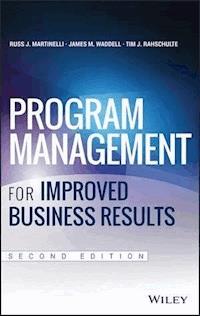
Superior program management begins with superior information and strategy Program Management for Improved Business Results, Second Edition is a practical guide to real-world program management, written to align with the rigorous PMI® PgMP® certification standards. The book explains the benchmarks and best practices that help shape a superior program manager, and provides case studies that illustrate the real-world application of management concepts. Written by a team composed of both industry professionals and academics, the book strikes a balance between theory and practice that facilitates understanding and better prepares candidates for the PgMP. Managers at all levels will learn the insights and techniques that are shaping modern management expectations. The Project Management Institute and the Product Development and Management Association both agree that program management is a critical element in the successful integration of business strategy and project management. The certification process is difficult, and few complete it - but demand for competent professionals is high. Program Management for Improved Business Results addresses this disconnect, preparing readers to fill the gaps and help businesses achieve the level of program management integration required by professional organizations. Topics include: * Aligning programs with business strategy * Program planning, execution, and processes * Management metrics and strategic and operational tools * Roles, responsibilities, and core competencies The book focuses on both the macro and the micro levels, explaining the successful integration of business strategy with project portfolios as well as the managing of a single program. Case studies present both issue-oriented and comprehensive perspectives, and guidance includes real, actionable steps. For professionals seeking improved program outcomes, Program Management for Improved Business Results is a roadmap to exceptional management skills. (PMI and PgMP are registered marks of the Project Management Institute, Inc.)
Sie lesen das E-Book in den Legimi-Apps auf:
Seitenzahl: 594
Veröffentlichungsjahr: 2014
Ähnliche


















Table of Contents
Title Page
Copyright
Dedication
Preface
Acknowledgments
Part I: It's About the Business
Chapter 1: Program Management
Definitions and Context
Program Management Characteristics
The Program Management Continuum
The Relationship among Portfolio, Program, and Project Management
Differentiating Program and Portfolio Management
Is Program Management a New Concept?
Endnotes
Chapter 2: Realizing Business Benefits
Realizing Business Value
Delivering Business Results
Endnotes
Chapter 3: Aligning Programs with Business Strategy
The Integrated Management System
The Business Engine
Program Management as Part of the Business Engine
The Execution Engine
Program Management as Part of the Execution Engine
Aligning Execution with Strategy
Endnotes
Part II: Delivering the Whole Solution
Chapter 4: The Whole Solution
Complexity Rising
Systems Thinking
The Whole Solution Concept
The Program Architecture
Endnotes
Chapter 5: The Integrated Program Team
Structuring an Integrated Program Team
Staffing the Integrated Program Team
Critical Factors for IPT Success
Impacts of Geographical Distribution
Endnotes
Chapter 6: Managing the Program
A Business Decision Framework
Decision Checkpoint: Program Strategy
Decision Checkpoint: Program Investment
Decision Checkpoint: Execution Readiness
Decision Checkpoint: Capability Release
Decision Checkpoint: Program Closure
Endnotes
Part III: Program Practices, Metrics, and Tools
Chapter 7: Program Management Practices
Benefits Management
Stakeholder Management
Risk Management
Financial Management
Change Management
Program-Level Governance
Endnotes
Chapter 8: Program Metrics
Making Sense of Metrics
A Systems Approach to Metrics
Measuring Business Benefit
Choosing Metrics That Matter
Endnotes
Chapter 9: Program Management Tools
The Benefits Map
Program-Level Work Breakdown Structure
The Program Map
Program Complexity Assessment
The P-I Matrix
The Program Strike Zone
Indicators and Dashboards
Using the Right Tool for the Job
Endnotes
Part IV: The Program Manager
Chapter 10: Program Manager Roles and Responsibilities
The Business Manager
The Master Integrator
Leading the Program Team
Endnotes
Chapter 11: Program Manager Competencies
The Program Management Competency Model
Customer and Market Competencies
Business and Financial Competencies
Process and Project Management Competencies
Leadership Competencies
Aligning Skills to Organizational Need
Professional Development
Organizational Enablers
Endnotes
Part V: Organizational Considerations
Chapter 12: Transitioning to Program Management
Understanding Change
Executing the Program Management Transition
Overcoming Challenges
Transitioning to a Program Management Office (PMO)
The Continuous Improvement Journey
Endnotes
Chapter 13: The Program Management Office
Characterizing and Defining the PMO
PMO Options
Adding Value to the Enterprise
Key Responsibilities of the PMO
The PMO Leader
Measuring PMO Effectiveness
The Future of the PMO
Endnotes
Appendices: Case Studies in Program Management
Appendix A: “I AM the PMO!”
A Competency Lost
“Welcome to the Company”
Understanding the Landscape
Establishing “Street Cred”
Creating a Transformation Plan
Generating Results
Keys to Success
Appendix B: LorryMer Information Technology
Overcoming Strategic Obstacles
Aligning IT Programs to Business Strategy
Alignment Begins at the Top
Learning through Practice
Appendix C: Bitten by a Rattlesnake
Defining Program Success
Hearing the Rattler's Warning
The Rattler Strikes
Applying Triage
There Is Always a Lesson
Final Thoughts on Program Management
More from Wiley
Index
End User License Agreement
Pages
ix
x
xi
3
4
5
6
7
8
9
10
11
12
13
14
15
16
17
19
18
20
21
22
23
24
25
26
27
28
29
30
31
32
33
34
35
36
37
38
39
40
41
43
44
45
46
47
48
49
50
51
52
53
54
55
56
57
58
59
60
61
62
63
64
65
66
67
68
69
70
71
72
75
76
77
78
79
80
81
82
83
84
85
86
87
88
89
90
91
92
93
94
95
96
97
98
99
100
101
102
103
104
105
106
107
108
109
111
112
113
114
115
116
117
118
119
120
121
122
123
124
125
126
127
128
129
130
131
132
133
134
135
136
137
138
139
140
141
142
143
144
145
146
147
148
149
150
151
155
156
157
158
159
160
161
162
163
164
165
166
167
168
169
170
171
172
173
174
175
176
177
178
179
180
181
182
183
184
185
186
187
188
189
191
192
193
194
195
196
197
198
199
200
201
202
203
204
205
206
207
208
209
210
211
212
213
214
215
216
217
218
219
220
221
222
223
224
225
226
227
228
229
230
231
232
233
234
235
236
237
238
239
240
241
242
243
244
245
249
250
251
252
253
254
255
256
257
258
259
260
261
262
263
264
265
266
267
268
269
270
271
272
273
274
275
276
277
278
279
280
281
282
283
284
285
286
287
288
289
290
291
292
293
294
295
296
297
298
299
300
301
305
306
307
308
309
310
311
312
313
314
315
316
317
318
319
320
321
322
323
324
325
326
327
329
330
331
332
333
334
335
336
337
338
339
340
341
342
343
344
345
346
347
348
349
383
384
385
386
387
388
389
390
Guide
Cover
Table of Contents
Preface
Part I: It's About the Business
Begin Reading
List of Illustrations
Figure 1.1
Figure 1.2
Figure 1.3
Figure 1.4
Figure 2.1
Figure 2.2
Figure 2.3
Figure 2.4
Figure 2.5
Figure 2.6
Figure 3.1
Figure 3.2
Figure 3.3
Figure 3.4
Figure 3.5
Figure 3.6
Figure 3.7
Figure 3.8
Figure 3.9
Figure 4.1
Figure 4.2
Figure 4.3
Figure 4.4
Figure 4.5
Figure 4.6
Figure 4.7
Figure 4.8
Figure 5.1
Figure 5.2
Figure 5.3
Figure 5.4
Figure 5.5
Figure 5.6
Figure 6.1
Figure 6.2
Figure 6.3
Figure 6.4
Figure 7.1
Figure 7.2
Figure 7.3
Figure 7.4
Figure 7.5
Figure 7.6
Figure 7.7
Figure 7.8
Figure 8.1
Figure 8.2
Figure 9.1
Figure 9.2
Figure 9.3
Figure 9.4
Figure 9.5
Figure 9.6
Figure 9.7
Figure 9.8
Figure 9.9
Figure 9.10
Figure 9.11
Figure 10.1
Figure 10.2
Figure 10.3
Figure 10.4
Figure 10.5
Figure 11.1
Figure 11.2
Figure 11.3
Figure 11.4
Figure 12.1
Figure 12.2
Figure 12.3
Figure 13.1
Figure 13.2
Figure 13.3
Figure A.1
Figure B.1
Figure C.1
Figure C.2
List of Tables
Table 1.1
Table 1.2
Table 3.1
Table 5.1
Table 6.1
Table 6.2
Table 8.1
Table 8.2
Table 8.3
Table 8.4
Table 8.5
Table 9.1
Table 9.2
Table 10.1
Table 12.1
Table 12.2
Table 13.1
Table 13.2
Table 13.3
Table A.1
Table B.1
PROGRAM MANAGEMENT FOR IMPROVED BUSINESS RESULTS
Second Edition
Russ J. Martinelli
James M. Waddell
Tim J. Rahschulte
Cover Design: Wiley
Cover Image: Background © iStock/LuminaStock
This book is printed on acid-free paper.
Copyright © 2014 by Russ J. Martinelli, James M. Waddell, and Tim J. Rahschulte. All rights reserved
Published by John Wiley & Sons, Inc., Hoboken, New Jersey
Published simultaneously in Canada
No part of this publication may be reproduced, stored in a retrieval system, or transmitted in any form or by any means, electronic, mechanical, photocopying, recording, scanning, or otherwise, except as permitted under Section 107 or 108 of the 1976 United States Copyright Act, without either the prior written permission of the Publisher, or authorization through payment of the appropriate per-copy fee to the Copyright Clearance Center, 222 Rosewood Drive, Danvers, MA 01923, (978) 750-8400, fax (978) 646-8600, or on the web at www.copyright.com. Requests to the Publisher for permission should be addressed to the Permissions Department, John Wiley & Sons, Inc., 111 River Street, Hoboken, NJ 07030, (201) 748-6011, fax (201) 748-6008, or online at www.wiley.com/go/permissions.
Limit of Liability/Disclaimer of Warranty: While the publisher and author have used their best efforts in preparing this book, they make no representations or warranties with the respect to the accuracy or completeness of the contents of this book and specifically disclaim any implied warranties of merchantability or fitness for a particular purpose. No warranty may be created or extended by sales representatives or written sales materials. The advice and strategies contained herein may not be suitable for your situation. You should consult with a professional where appropriate. Neither the publisher nor the author shall be liable for damages arising herefrom.
For general information about our other products and services, please contact our Customer Care Department within the United States at (800) 762-2974, outside the United States at (317) 572-3993 or fax (317) 572-4002.
Wiley publishes in a variety of print and electronic formats and by print-on-demand. Some material included with standard print versions of this book may not be included in e-books or in print-on-demand. If this book refers to media such as a CD or DVD that is not included in the version you purchased, you may download this material at http://booksupport.wiley.com. For more information about Wiley products, visit www.wiley.com.
Library of Congress Cataloging-in-Publication Data
Martinelli, Russ J., 1959-
Program management for improved business results / Russ J. Martinelli,
James M. Waddell, Tim J. Rahschulte. — Second edition.
1 online resource.
Revised edition of Program management for improved business results by
Dragan Z. Milosevic, Russ J. Martinelli, James M. Waddell, published in 2007.
Includes index.
Description based on print version record and CIP data provided by publisher; resource not viewed.
ISBN 978-1-118-90587-6 (ePub); ISBN 978-1-118-90589-0 (Adobe PDF);
ISBN 978-1-118-62792-1 (hardback); 978-1-118-90436-7 (O-book) 1. Project management. 2. Project management—Case studies. I. Waddell, James M., 1946- II. Rahschulte, Tim. III. Milosevic, Dragan Program management for improved business result. IV. Title.
HD69.P75
658.4′04—dc23
2014019692
To our dear friend Dragan Milosevic
Preface
Since the publication of the first edition of this book, many volumes of white papers, articles, and books on the subject of program management have emerged. The impact, as measured by increased knowledge about what program management is and why it is important, has been great. We feel fortunate to have been part of that change.
We also feel fortunate to have received some amazing feedback from the readers of the first edition, which was both complementary and constructive. The most rewarding feedback came from readers who felt the book helped them to become better program managers (or become first-time program managers in some cases), as well as from those who recognized that the book is “different”. This book is different by design. The differentiator is that its foundation is based upon a body of practice that focuses on how program management has been practiced historically within companies, and how it is practiced today.
Our personal understanding of how program management is being practiced has been greatly enhanced by opportunities to train many practitioners in a variety of industry sectors (both for-profit and non-profit), and by opportunities to work directly with companies that are engaged in the introduction of program management into their organizations or that are working to strengthen their existing program management capabilities. This new understanding, and the associated lessons learned, are shared throughout this second edition.
The most significant changes introduced in this edition are in four areas. First, we introduce the concept of the program management continuum, which we use as an anchor throughout the book to describe the variation of how program management is implemented within companies, and how we delineate between project-oriented and program-oriented organizations. Next, we provide a broader explanation of the relationship between systems thinking and program management, to include one of the primary roles of a program manager as the master integrator of cross-project work. Then, to strengthen one of the emerging themes of program management, we include additional information on benefits management, particularly in relation to the achievement of the business benefits that drive investment in programs. Finally, we worked to create tighter alignment and cross-reference to the program management standards and guides that have been developed to provide additional detail and depth to the program management principles.
To reinforce the practical nature of this book, we include seven new case studies. Four case studies, referred to as Program Management in Practice, are found at the end of each major section of the book, and three comprehensive case studies that focus on multiple dimensions of program management are included in the appendices. The case studies represent the application of program management in a variety of industries, including software services, automotive, academia, information technology, U.S. defense, and digital media display. We chose to use fictitious names for the companies and people presented in the case studies to ensure the good, the bad, and the ugly aspects of each case remained intact. The cases are real, however, as are the characters and the stories contained within. In our choice of tools to present, we cover those that we see utilized the most and those that provide the greatest utility. Additional tools and tool templates can be found on the Program Management Academy website: http://wiley.programmanagement-academy.com.
Finally, we maintained the modular design and flow of information contained in the first edition. This allows you, our readers, the option to read this book from cover to cover, or to focus upon the aspects of program management that are most pertinent to your needs. However you choose to read this book, we hope you enjoy your journey into the world of program management.
Acknowledgments
We would like to thank the many people who have helped in making this book a reality:
David Churchill, Richard Vander Meer, Roger Lundberg, Rick Nardizzi, Gary Rosen, Manny Mora, and Richard Cook for their invaluable viewpoints, opinions, and insights about program management as it is practiced in companies today
.
Ronald Forward for his significant contributions in sharing his knowledge, experience, and insights in regard to leading and managing a Program Management Office in a major corporation
.
Kathy Milhauser and Eddie Williams for contributing their experiences in the form of case studies
.
Steve Graykowski for inspiring the idea of the program management continuum and thought leadership involved with integrating program management and agile software practices
.
David Pells, who continues to provide the means to test our ideas with the readers of the PM World Journal.
Margaret Cummins, Amanda Shettleton, and the remainder of the team at John Wiley & Sons who continue to provide outstanding support and guidance
.
Our many colleagues and co-workers who have contributed to the concepts presented in this work in many ways
.
We are truly blessed to be associated with such a wonderful and supportive community of people!
Part I
It's About the Business
Part I begins by providing clarification of the program management discipline and then illustrating how program management can be implemented as a major part of an organization's business model.
The primary theme established in this first part, and then used throughout the entire book is it's about the business. The purpose of the introductory chapter, Program Management, is to establish the foundational elements of programs and program management as it is practiced in our organizations and many of our clients' organizations, and explain how it is used to achieve a firm's strategic business goals. The unique meaning of program management is identified and described, illuminating its raison d'être. It explains what program management is and what it is not and compares and contrasts program management with project management and portfolio management, dimension by dimension.
The foundational elements from Chapter 1 provide perspective for Chapter 2, Realizing Business Benefits. In our own careers, we have witnessed the power of program management to serve as a coalescing function that provides business benefits by delivering both business value and business results. In Chapter 2, we explore these two sides of business benefits realization through the implementation of program management within an enterprise.
Chapter 3, Aligning Programs with Business Strategy, completes Part I by detailing the systematic approach of program management through the use of an integrated management system. As we demonstrate in this chapter, the program management discipline plays a pivotal role in aligning the work output of multiple project teams to the corporate and business unit strategy of an enterprise.
Chapter 1Program Management
A lot has changed with respect to program management since we introduced the first edition of this book. Much of the literature that existed at that time consistently confused program management with project, portfolio, or operations management. Today, multiple standards exist and many volumes of white papers, articles, and books are readily available. As a result, the general knowledge about what program management is and why it is valuable has increased markedly.
While many different aspects and approaches to program management have emerged, we have been pleased to watch a convergence on what we believe is the single most important aspect of program management: it's about achieving business results.
Even the various standards, which by nature take a broad brushstroke at the subject of program management, state that program management is all about benefits realization, and benefits directly refer to achievement of the business goals of the enterprise and the organizations within the enterprise.
Lesen Sie weiter in der vollständigen Ausgabe!
Lesen Sie weiter in der vollständigen Ausgabe!
Lesen Sie weiter in der vollständigen Ausgabe!
Lesen Sie weiter in der vollständigen Ausgabe!
Lesen Sie weiter in der vollständigen Ausgabe!
Lesen Sie weiter in der vollständigen Ausgabe!
Lesen Sie weiter in der vollständigen Ausgabe!
Lesen Sie weiter in der vollständigen Ausgabe!
Lesen Sie weiter in der vollständigen Ausgabe!
Lesen Sie weiter in der vollständigen Ausgabe!
Lesen Sie weiter in der vollständigen Ausgabe!
Lesen Sie weiter in der vollständigen Ausgabe!
Lesen Sie weiter in der vollständigen Ausgabe!
Lesen Sie weiter in der vollständigen Ausgabe!
Lesen Sie weiter in der vollständigen Ausgabe!
Lesen Sie weiter in der vollständigen Ausgabe!
Lesen Sie weiter in der vollständigen Ausgabe!
Lesen Sie weiter in der vollständigen Ausgabe!
Lesen Sie weiter in der vollständigen Ausgabe!
Lesen Sie weiter in der vollständigen Ausgabe!
Lesen Sie weiter in der vollständigen Ausgabe!
Lesen Sie weiter in der vollständigen Ausgabe!
Lesen Sie weiter in der vollständigen Ausgabe!




