


Erhalten Sie Zugang zu diesem und mehr als 300000 Büchern ab EUR 5,99 monatlich.
- Herausgeber: Biteback Publishing
- Kategorie: Fachliteratur
- Sprache: Englisch
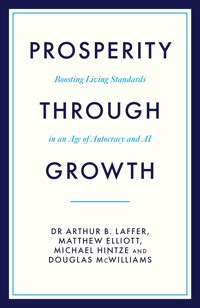
Prosperity Through Growth is a primer for reviving the UK economy, co-authored by some of our finest economic minds: celebrated US economist Dr Arthur B. Laffer, inventor of the Laffer curve; policy campaigner Matthew Elliott; businessman Michael Hintze; and founder of the Centre for Economics and Business Research Douglas McWilliams. It begins by setting out the principles of ideal economic policy – the 'North Star' of prosperity through growth – and applies them to the UK's current position. The thinking takes account of the age of autocracy and AI, in which political decisions in democracies are constrained and talented and entrepreneurial people are increasingly mobile, making economic incentives even more important. The final section draws on interviews with more than thirty economic decision-makers from the worlds of business, politics and the civil service, including five Prime Ministers and nine Chancellors. The interviews give insights into the economic and political causes of low growth and provide a strategy for implementing a pro-growth agenda. Specially commissioned research shows how the UK is forecast to slide down the league table of GDP per capita over the next twenty-five years. The book argues that such a slide is not inevitable and outlines a fully costed and modelled '24/7 Growth Plan' to show how the decline can be averted.
Sie lesen das E-Book in den Legimi-Apps auf:
Seitenzahl: 672
Veröffentlichungsjahr: 2025
Das E-Book (TTS) können Sie hören im Abo „Legimi Premium” in Legimi-Apps auf:
Ähnliche


















i
ii
iii
iv
For our children and future generations – may they enjoy growing prosperity, as previous generations have done.
Incentives matter.
v
vi
Contents
Preface by Lord Hintze
‘Knowledge is the basis of all good decision-making.’
This is not the Britain I came to from my home in Australia via Harvard Business School in 1984. That Britain was first and foremost a place of opportunity. It encouraged me to work hard and to become successful and to create wealth. I hope that the welcome it gave me has been repaid by the significant taxes I have contributed and the philanthropic donations I have made in the four decades I have been here.
It is nothing short of tragic that the young wealth creators of today – men and women like me all those years ago – are being driven to emigrate, not just to the obvious hubs such as the United Arab Emirates but also to destinations like Italy, Portugal and even France, which welcome them with open arms.
Innovators and employers are optimising their potential by moving offshore. It has been suggested that 10,800 millionaires quit the country in 2024 alone. We live in an age of remote working. Leaving the UK is an easy option. Looking back, I wonder if I would have chosen to build my career here if I had encountered the economic climate that exists now.
What do I see when I look at the UK in 2025?
The planning system for property and infrastructure development seems to have been designed deliberately to disincentivise – with poor pay-offs and minimal accountability. Recent inheritance tax changes have broken farms and family businesses and are contributing to the mass exodus of wealth creators. The recent increase in employers’ National Insurance and the prospect of the Employment Rights Bill are driving up joblessness.
It makes no sense to me. A growing economy comes about thanks to the thousands of small businesses and charities within local communities, all of which have struggled under increasing burdens in the past few xyears. These are the organs of growth that our recent governments seem determined to punish one way or another.
This book first took shape in November 2024, when I was talking to an old friend of mine, Dr Arthur B. Laffer, the renowned American economist and, of course, the originator of the Laffer curve. He suggested that we should work together to develop a ‘North Star’ for economic policy in the UK, a guide that would be both theoretical and practical, giving the country a blueprint for economic growth.
We were later joined by my fellow peer Matthew Elliott, co-founder of the TaxPayers’ Alliance and a well-known political strategist with a long track record executing complex policy research projects. The UK economist Douglas McWilliams then joined us, bringing an in-depth knowledge of the British economy and his editorial and writing skills, and the team was complete. He is the founder of the well-respected Centre for Economics and Business Research.
We believe that if we are to encourage growth and prosperity in the UK, then our economy requires a transformational reset structured around three essential tenets: principles, policy and politics.
For too long, the economy has been dominated by political ideology. In his essay, which opens the first section of this book, Arthur Laffer cuts through the dogma to produce a roadmap for growth.
This is followed by a section explaining how it might be applied to the UK – a ‘24/7 Growth Plan’ for the economy.
The final section looks at the political obstacles to growth, and how they might be overcome. This is based on a series of interviews conducted with some of the major influencers of our time. They come from different sectors and from across the political spectrum. I am enormously grateful to them for agreeing to share their views:
Former Prime Ministers: Sir Tony Blair, Lord Cameron of Chipping Norton, Rishi Sunak MP, Boris Johnson and Liz Truss.Former Chancellors: Lord Lamont of Lerwick, Lord Clarke of Nottingham, George Osborne, Lord Hammond of Runnymede, Sir Sajid Javid, Nadhim Zahawi, Kwasi Kwarteng and Sir Jeremy Hunt MP.Former ministers: Sir Vince Cable and Lord O’Neill of Gatley.xiFaith leaders: The Rt Rev. and the Rt Hon. Lord Chartres.Senior civil servants: Lord Macpherson of Earl’s Court, Lord O’Donnell, Sir Tom Scholar and Lord Stevens of Birmingham.Former Bank of England officials: Andrew Bailey, Clare Lombardelli and former chief economist Andy Haldane.Senior government advisers: Rupert Harrison, Lord Petitgas and Lord Walney.Senior business leaders: Jamie Dimon, David Giampaolo, Richard Gnodde, Sir John Rose and Lord Wolfson of Aspley Guise.Major business group leaders: Jonathan Geldart, Anna Leach, Stephen Phipson and Rupert Soames.The authors of this book have no intention of forcing a particular agenda on our readers, but it is true to say that we have found common ground in the belief that the effective pursuit of growth is beyond politics and benefits the whole of society. It is clear to us that without proper economic principles and a basic understanding of what they mean, growth and prosperity are choked from the very start.
We must understand what makes economies and therefore societies work and accept that incentives – both actual and aspirational – are critical. The policies and political practicalities that flow from them are crucial to achieving prosperity through growth. A bad structure with bad incentives makes it impossible to achieve value and create wealth and opportunity.
I hope the economic framework outlined in these pages will encourage people of all political persuasions to consider the basic principles – the North Star – that once fuelled our wealth and growth in the UK and can do so again.
This prosperity can and indeed should be used to support our whole society – but in a way that is focused on absolute value and not on the politics of envy, class war or any other ideology.
I am deeply proud to call the UK my home.
This is a country blessed with incredible assets in its education, law and language, as well as world-beating innovation in areas such as financial services, life sciences, artificial intelligence (AI) and film production. xiiIt is home to world-leading theatres, museums, fashion creatives and culture.
Britain is a truly great country with great opportunity for all: it is an inclusive society that has historically had room for immense diversity of thought and endeavour. But that endeavour needs to be nurtured, encouraged and rewarded if it is going to pay dividends to the country as a whole.
We need to restate the obvious. Incentives matter – and not just to those involved in tax policy. People respond to rewards and penalties and adjust their behaviours accordingly. The decisions that they make affect the success of the entire nation, and that is why this book has been written.
I sincerely hope it will help to refocus minds for the broader benefit of the country which will, in turn, lead us to enjoy prosperity through growth.
The Lord Hintze, Kt., AM, GCSG
September 2025
Introduction
This book represents not only the views of its authors but also ideas gleaned from an extensive series of interviews with a wide range of those with experience in politics, government and business about what is going wrong with the United Kingdom and especially the UK economy.
To many of our interviewees, especially those closest to the business sector, not only is the UK economy near a state of economic collapse but also the current state of politics is likely to be incapable of rescuing the country. Our interviewees referenced especially the flow of talented people, both of international and of British descent, deciding to leave the UK and operate elsewhere (Figure 1 shows a visualisation of data from Henley & Partners giving projections of net movements of millionaires) and the likely departure of many of the remaining manufacturing businesses if UK energy costs continue to be uncompetitive. Our analysis also suggested that with technology increasingly dependent on AI, data centres and big data, the location of this sector would more and more be driven by the cost of energy.
Forecasts specially commissioned for this study from world economic league table specialists the Centre for Economics and Business Research (Cebr)* show the UK on unchanged policies slipping down the league table of gross domestic product (GDP) per capita at purchasing power parity from its current position of thirtieth in 2024 to forty-sixth by 2050, being overtaken by Poland, Slovenia, Lithuania, the Czech Republic, Croatia, Bahrain, Hungary and Saudi Arabia by 2040 and by Turkey, Latvia, Serbia, Romania, Georgia, Moldova, Estonia, Panama, Israel and the Slovak Republic by 2050.xiv
FIGURE 1: HENLEY & PARTNERS’ PROJECTIONS OF NET MOVEMENT OF MILLIONAIRES 2025†
Source: Henley & Partners
xvAnd even such projections of a gentle decline down the league table may be too good to be true. Slips have an unhealthy tendency to turn into slides as the talented and entrepreneurial react to the relatively declining economy and look elsewhere, moving their resources with them.
The modern world has changed the relative importance of different policies. This is because of two major trends: what we used to call globalisation, the spread of wealth and knowledge around the world; and technology, especially AI.
What we used to call globalisation, probably now more appropriately called international levelling up, is the process of previously poor countries catching up in GDP per capita terms with the traditionally rich West. Cebr’s research for this book in Annex 2 shows how a country like Malaysia, where in the immediate post-war years starvation was rife, is now expected to have higher GDP per capita than France by 2050 and nearly to have caught up with the UK in the same year. China’s GDP per capita has risen even more quickly – in 1998, it was 8 per cent of that in the UK; by 2050, it is forecast to be 87 per cent of the UK’s GDP per capita. India’s is forecast to have risen slightly more slowly but even so is expected to have grown from 7 per cent of the UK’s in 1998 to a projected 52 per cent by 2050.
One of the aspects of this levelling up is that many of the countries that have been most successful at prioritising growth have adopted a fairly autocratic approach to government. This started with the beginnings of globalisation in south-east Asia in 1968,‡ where two of the shooting stars, Hong Kong and Singapore, happened to be run in an autocratic fashion. Hong Kong was a British colony that eventually was being kept ready for a handover to the Chinese, and Singapore was originally a democracy (with some anti-democratic laws inherited from the colonial British administration that had faced an armed uprising) that gradually became more autocratic under the remarkable personality of Lee Kuan Yew. By 2050, Singapore is forecast to be the richest non-energy-based economy in the world in GDP per capita terms, twice as rich as the United States and not far short of three times as rich as the UK (see Annex 2).xvi
Countries that are not autocratic themselves increasingly have to compete with other countries that are and which can therefore avoid the politics of envy, whereby they are forced to redistribute from those who work hard to those whose economic contributions are lower.
This results in movement of economic activity, people, talent and resources. In economic terms, it changes the elasticities of response to, for example, taxes or regulations. Countries that adopt business-unfriendly taxes or regulations are increasingly likely to lose their businesses much more quickly to those countries more insulated from pressures to be anti-business than in earlier years. In the UK, the Office for Budget Responsibility has admitted that it has had to revise up its elasticity of migration response to tax changes for the so-called non-doms,1 and private discussions indicate that the UK authorities have been surprised at the extent of the impact of the Autumn 2024 Budget on the movement of people.
Paradoxically, because such governments have been successful in achieving growth, many of the autocratic governments are not in fact unpopular – their populations in many cases have accepted the trade-off between lack of democratic accountability and the huge relative gains in economic growth. In Singapore, for example, the party that has ruled since independence in 1965 still won 65 per cent of the vote in 2025, in elections that independent observers have largely accepted as fair.2
Technology and especially AI, meanwhile, are also changing the rules of the game. The main reports on the economic implications of AI3 indicate: 1) a boost to productivity and GDP, though the estimates of the scale of this boost differ wildly; 2) a huge churn in jobs, with around 40 per cent of current jobs being changed or replaced as a result of AI; 3) a probable increase in inequality as more easily automated jobs which tend to be less skilled disappear while more senior jobs are enhanced; and 4) a probable boost to mobility as the world’s economic landscape realigns.
Most studies predict substantial job destruction, which is often presented as a negative. While it is true that job destruction without any compensating gains would not be a desirable outcome, since most Western economies are suffering from a productivity malaise, a development that has the potential to boost productivity should be seen in potentially a more positive light. Most past technological changes have created xviimore jobs than they have destroyed and no one has made a strong case that AI is in any way different except in scale and speed.
In many ways, the micro effects of AI may be very much more important than the macro effects, since looking at a macro level, many of the potential effects offset each other. At a micro level, these offsets do not exist. If, as seems likely, job content will be affected for as many as 40 per cent of existing jobs, new skills and possibly different people will be needed to do them. If a significant proportion of jobs will be done by different people, the churn will have to be encouraged to move people from one set of jobs to another. It is therefore important that incentives can perform their normal role of reallocating people in the labour market.
AI will increase the premium placed on skills. The seminal study by the UK Department for Education on the impact of AI4 showed that whereas much of the previous generations of technology and automation had affected manual jobs, AI is likely to affect most the more routine non-manual jobs most, while at the same time placing a premium on human intervention to guide the use of the AI. One consequence will be the need continuously to upgrade the UK educational system to help develop the skills most required by AI. Our plans for public expenditure take this into account.
In addition, the heavy data needs of AI (e.g. big data) will almost certainly place demands on UK infrastructure, both for communications and energy in addition to security. Again, ensuring that this infrastructure is fit for purpose will be critical in ensuring that the best AI-related jobs are located in the UK.
The redistribution of jobs that is likely to be associated with AI places a premium on incentives.
The UK has actually done relatively well with tech, mainly through its so-called Flat White Economy.§ The UK’s particular advantage has been in its strength in using tech, rather than producing tech. The UK’s e-commerce market is claimed to be $196 billion, the third largest in the world,5 while the government claims that it is also the world’s third largest AI economy.6xviii
The future of the UK tech economy will depend heavily on the extent to which AI develops. Worldwide, there appears to be a race to attract AI talent and skills. Clearly, the UK will need to focus on relevant skills but also will need to be attractive to entrepreneurs and to those with the relevant talents. This heightens the focus on incentives. The success of AI in the UK will also be dependent on the size of the market, so the issue becomes circular: make the economy successful and it will succeed in AI, which will make it more successful.
Since the end of the 1980s, governments in the Western world have shied away from the economic approach of promoting growth through incentives.
Yet both social and technological developments since then have greatly amplified the importance of incentives. One social development is massively increased mobility and especially international mobility. Many talented people now operate in a range of economies – often having more than one passport, they have a choice about where to do their business. Where they do their business generates substantial spin-off benefits for the local economy. Young people, too, see the opportunity of moving to get a better life. The British Council’s Next Generation 2024 report7 shows that 72 per cent of UK-based eighteen- to thirty-year-olds would consider moving to another country. We have used the analysis of the impact of local taxation on migration between different states and localities in the US to help understand the scale of the impact of tax differentials in a world where the obstacles to migration decline.
A second social development reflects the technological changes including AI – specific talented and entrepreneurial people have become relatively more important in driving growth, which has been reflected in increased inequality of incomes. Economist Thomas Piketty8 has highlighted the growth in inequality, though his explanations have been controversial; more recent authors have associated this growth with technology and to a lesser extent globalisation.9 Insofar as growth has been biased towards the talented and entrepreneurial, incentivising them to operate in their own economy rather than in someone else’s becomes increasingly important.xix
The technological development that has most increased the role of incentives as an economic policy is the increasing ability to become a digital nomad. In earlier periods, you potentially had to change your job and possibly your occupation if you wanted to move to a different location. This was a severe handicap and restrained mobility. Now, technology often makes it possible to do the same job from different locations. Yet the knock-on effects of your spending depend critically on where you have chosen to operate.
While incentives have become increasingly important in choice of location, competition between locations has also increased. At one point, the realistic range of options for someone who wanted to emigrate from the United Kingdom was mainly other English-speaking countries like the United States and the former dominions. But economic development around the world and increased language skills mean that there is a much wider range of alternative places to do business. Indeed, one of our interviewees claimed that ‘Dubai is now the nineteenth largest British city’.
The Cebr analysis shows that after taking account of purchasing power, UK GDP per capita had risen by a tiny 7.3 per cent, about 0.4 per cent per annum, between 2008 and 2024 compared with 24.4 per cent in the US. Not surprisingly, the weekly poll by pollsters More in Common shows the cost of living and, by implication, the standard of living as far and away the most important issue for British people in May and June 2025, with 61 per cent placing it at the top of their list (compared with 38 per cent for the NHS; 29 per cent for immigration and 28 per cent for asylum seekers crossing the Channel).
The growth of autocratic states is also relevant. While autocracy has many disadvantages and for most people these disadvantages will outweigh any economic advantages, for those who are especially financially motivated, the ability of autocratic states to pursue low-tax policies that promote growth without the democratic pressure to ‘soak the rich’ can be an important growth driver.
So, while promoting incentives might have become culturally less fashionable, especially in Europe, economically its importance has never been greater.xx
New research described in this book has shown how the post-communist ‘transition economies’ have performed since settling down after communism. The research has looked at all the states for which data is available and shows that those states that have kept taxes low have grown significantly faster than those that have adopted a high-tax policy. The book also contains research looking at different localities and states within the US and shows how much better low-tax states have performed in an economy with a high degree of labour mobility.
Some of our interviewees have commented that people in places like China now look down on the West as decadent societies, condemned to failure because of giving too much priority to the weak and the lazy and insufficient priority to the talented or entrepreneurial. Yet democracy also dislikes economic failure, as is shown in the increasing numbers shunning the traditional political parties that voters perceive to have failed.
We have devised here a programme to restore the UK economy, drive prosperity and hence grow living standards. We start by setting out the five grand kingdoms of the macro economy: taxation, government spending, monetary policy, regulation and free trade. For each of the grand kingdoms, there is an optimal policy which all point to the North Star of economic growth. We then use this North Star to devise a 24/7 Growth Plan (twenty-four proposals that will deliver 7 per cent additional GDP in five years – and 29 per cent additional GDP in twenty years).
The 24/7 Growth Plan has been carefully costed and the sums add up. We put this programme forward as an offering so that the UK political class can show leadership and hence bring the UK economy back to life rather than slipping down the world economic league table as implied by the Cebr forecasts commissioned for the book.
Such projections are not set in stone, but should be seen as a challenge. It is up to the UK’s politicians to show that democracy can work and that such predictions can be proved wrong. It is up to them to restore belief in the UK as a growing economy and encourage the most entrepreneurial and brightest in the world to come to this country.xxi
In our interviews, one of the most successful of all UK political leaders pointed out that the political difficulties in reviving the UK are not insurmountable. ‘All it takes is leadership,’ he commented. We think that there are other institutional changes that may need to be made to help revive the country. They are discussed in Part III.
Part I of this book describes the North Star, set out by one of the co-authors, Dr Arthur B. Laffer, by which those navigating economic policy can set their sextant. It then describes the five kingdoms of macroeconomic policy that comprise the North Star for achieving economic growth.
Part II applies these principles to specific economic policies for the UK, costs their impact on growth and their fiscal impact and sets out the 24/7 Growth Plan.
Part III describes the results of thirty-three interviews with political leaders and other opinion formers about what they believe needs to be done and especially how the measures could be implemented.
The country is running out of choices. The choice of muddling through, further slipping down the GDP per capita league table, may not even exist – failure tends to breed further failure, and a slip may turn into a slide. We are confident that changing UK policy to follow the North Star and the five kingdoms of economic growth and implementing the 24/7 Growth Plan will turn the economy round and will start to restore the UK to its rightful place. Now is the time for the political class to show leadership, so we can all enjoy prosperity through growth.xxii
* More details are provided in Annex 2.
† This data, provided by Henley & Partners, is controversial and includes estimates. The Tax Justice Network has criticised elements of the methodology and apparent inconsistencies in https://taxjustice.net/press/millionaire-exodus-did-not-occur-study-reveals/, though its own conclusions are also controversial. The Henley & Partners data is much more consistent with the impressions we received in our interviews and from our own research.
‡ The moving of electronics factories from the developed world to Asia is generally considered to have started with Fairchild’s investment in Hong Kong in 1968.
§ Named after the eponymous book The Flat White Economy by co-author Douglas McWilliams, Duckworth, 2015.
Part I
The Principles of Economic Growth: The Five Kingdoms2
Chapter 1
Dr Arthur B. Laffer’s North Star of Economic Growth
‘We’re in a situation of genteel decline – people just putting up with 1 per cent growth. We’re effectively getting poorer, but we’re pretending we aren’t, and we need to convince people it doesn’t have to be that way. But we need to convince people we’ve got a very clear plan.’
– Lord Cameron of Chipping Norton
The United Kingdom is but one country in a world of slightly fewer than 200 countries. But what a country it is. Its past history of economic prowess could well be the single best of the lot. The United Kingdom and the industrial revolution are synonymous. Its present state of economic affairs, however, is not as distinguished as we think it should be, and its future, if left unattended, is far from bright. To turn the country back to its exceptionalism, much needs to be done. If what the United Kingdom wants is what other countries don’t have, it must do things that other countries won’t do. This how-to template is based on my vision of macroeconomics, including salient facts which have convinced me of its efficacy.
Economics is about incentives and how people respond to incentives. People like doing things they find attractive and avoid things they find off-putting. Government actions affect both the attractiveness and repulsiveness of activities. And, as such, the messages sent by government to people and markets make activities more or less attractive. Just how government interacts with the world at large determines economic destiny.
By way of example, if you feed a dog, you know where the dog will be at feeding time. However, if you beat a dog, you know where the dog won’t be (anywhere near you), but you’ll have no idea where the dog will be. Positive incentives tell people what they should do while negative incentives tell people what not to do. The conceptual difference between 4the two incentives is of the essence, and the behavioural consequences are significant.
FIGURE 2: UK GDP AS A SHARE OF THE WORLD
Source: World Bank, Historical National Accounts
OVERVIEW
For the purpose of this template, I frame macroeconomics into five major categories, which I call grand kingdoms. My selection of ordering is not intended to reflect that kingdom’s degree of importance. The first grand kingdom is taxation. The second grand kingdom is government spending, followed by monetary policy. I list regulation as number four. And finally, we have international trade.
Organising macroeconomics, as I do, into these five kingdoms allows me to describe what I believe to be the ideal policy for each kingdom. Once optimal policies are defined, it’s easier to evaluate policies by determining whether they move us towards or away from the North Star of economic growth. What follows is my description of each kingdom and a powerful example or two of the evidence supporting my selection.5
We go into greater detail on each element of the five kingdoms in the chapters that make up Part I of this book.
I. TAXATION (SEE CHAPTER 3)
We fine speeding motorists to get them to slow down. We fine wrongdoers to discourage wrongdoing. We also tax cigarettes to deter people from smoking. All of this is done in the name of making life safer. But then we ask ourselves: why do we tax people who earn income, or people who hire other people, or businesses that make wonderful products at low costs and have lots of profits? The answer for these latter taxes, of course, is not to get people to earn or employ less, or even to make inferior products at high cost. We tax these entities to fund government.
But don’t think for a minute that just because our stated purpose for taxation is different that similar consequences won’t result. They will. Taxes on income reduce income, taxes on employment reduce employment and taxes on profits reduce profits, the quality of products and increase costs.
All taxes constitute negative incentives and damage the taxed activities – sometimes this is intentional, as in so-called ‘sin taxes’, where we want people to engage less in the taxed activities. Pound for pound of tax revenues, some taxed activities do more damage to the economy than others. The goal of taxation is to have a tax system that collects the requisite revenues to fund government while doing the least damage to the economy. James Mirrlees is a Nobel Prize-winning British economist who is famed for his work on optimal tax theory.1 His key insight was the case for a flat tax of about 20 per cent.* Mirrlees wrote, ‘I must confess that I had expected the rigorous analysis of income taxation in the utilitarian manner to provide arguments for high tax rates. It has not done so.’2 Mirrlees’s early work supports the general principle regarding the best structure of taxation, which is to have the lowest possible tax rate on the broadest possible tax base.†6
The lowest possible tax rate provides the least incentives for people and businesses to avoid, evade or otherwise not report taxable income. And the broadest possible tax base – eliminating as it should deductions, exemptions, exclusions, credits and other omissions and preferences – provides taxpayers with the least amount of opportunity to place income in tax-advantaged categories to avoid paying taxes. This is the golden rule for taxation – the key to achieving the North Star of economic growth.
EVIDENCE FROM THE DIFFERENT US STATES
One of the themes of this book is that a key change in the twenty-first century is the heightened mobility of labour and capital and especially that of talented and entrepreneurial people. Because of that, we have looked particularly closely at the relative performance of different parts of the US, to provide hard evidence of what happens in a highly mobile world. The results show how much better low-tax regimes perform; this backs up our analysis of the impact of different policies in the post-communist ‘transition’ economies.
The actual power of taxation and its consequences is demonstrated convincingly by looking at the different tax and spend policy regimes in the various states and localities of the United States.‡ This section summarises a more extended section in Chapter 3, which looks not only at local income taxes but also at local property and estate taxes.
The US Constitution prohibits any state from placing barriers on interstate commerce or movements of people. The US has one language, one set of federal laws, one federal tax system and one currency. When it comes to state and local policies, however, each entity is on its own to do what its voters and/or its government chooses. And, in many instances, there are wide gaps in just what these entities choose to do. There exists a vast comprehensive database over many, many years which allows us to assess what the actual consequences are from the data of this cauldron of experimentation. It is the best example of how tax policies actually affect behaviour.
And to extrapolate from these data points, we form a set of principles 7applicable to the modern British economy. I can only say policies should be designed from actual data and only the data. We use the past to infer the future.
From 1960 to the present, the United States has run a shockingly illuminating experiment in the effects of taxation on the economy. In 1960, nineteen of the fifty American states lacked a state income tax. The only income tax that residents of those states owed every year was to the federal government. The remaining thirty-one states taxed incomes on top of the federal income tax. At various points from 1961 to 1991, eleven of the income-tax-free states adopted an income tax. Eight states stayed the course and have remained zero-income-tax states to this day. One state, Alaska, had a long-standing income tax and dropped it, in 1980. All the states other than Alaska that had an income tax in 1960 still have one today.
The set-up of the experiment was serendipitously masterful: what happens over the two-generation period beginning with the time of each state’s adoption of an income tax, when an approximately equal number of states, scattered around the country, adopt an income tax? Rarely in economic policy and development are such natural experiments set up so well – as a laboratory researcher might do, controlling for size, duration, insertion and the policy variable, in this case the adoption of an income tax.
From this near-perfect natural experiment, we have the results – and they could not be clearer. The states that held firm in not adopting an income tax totally outperformed the states that added an income tax – in terms of all the major metrics of economic performance and well-being.
The ten states that adopted the income tax from 1961 to 1976 were a string of contiguous states in a geographical line running from east to west – New Jersey, Pennsylvania, West Virginia, Maine, Ohio, Indiana, Michigan, Illinois, plus Nebraska and Rhode Island. Connecticut was the eleventh and last of the adopting group, taking on an income tax in 1991. Since these states adopted an income tax, their share of the national economy has dropped rapidly, while that of the remaining thirty-nine states has risen. Not only have these states’ share of national GDP and population fallen but their total state and local tax revenue has also diminished sharply. Table 1 highlights this, comparing the shares for each of the eleven states with the share of the remaining thirty-nine states.8
TABLE 1 : PERFORMANCE METRICS OF THE ELEVEN STATES THAT ADOPTED AN INCOME TAX FROM 1961–1991
Source: US Census Bureau, Bureau of Economic Analysis, Laffer Associates
The ‘5 Years Before’ in the table refers to the yearly average in each case of five years before the adoption of the state’s income tax.9
TABLE 2: ECONOMIC PERFORMANCE OF THE ZERO-INCOME-TAX STATES AND THE HIGHEST INCOME TAX RATE STATES
As of 1/1/2023
Ten-Year Growth
2012–2022
2010–2020StateTopMarginal PIT Rate||PopulationEmploymentPersonal IncomeGross State ProductState & Local Tax Revenue**Alaska0%0.3%1.4%28.8%9.2%-10.3%Florida0%15.422.576.778.425.2Nevada0%16.021.478.167.049.1New Hampshire††0%5.16.753.553.931.2South Dakota0%9.28.558.253.941.7Tennessee0%9.113.661.566.124.7Texas0%15.319.561.565.858.6Washington0%12.819.380.481.154.9Wyoming0%1.0-2.032.922.122.7Nine Zero Earned Income Tax Rate States‡‡0.0%13.9%19.0%67.6%68.9%41.5%US§5.7%6.0%11.4%55.7%56.7%34.5%Nine Highest Earned Income Tax Rate States‡‡11.2%2.8%9.2%55.7%59.1%33.9%Delaware7.9%11.1%14.4%54.8%40.4%50.9%Vermont8.82.6-1.143.238.939.6Maryland9.04.25.639.741.436.2Minnesota9.96.17.651.249.738.3Hawaii11.02.56.643.136.644.9New Jersey11.83.710.149.544.119.6California13.32.811.565.270.343.8Oregon14.78.716.573.371.348.5New York14.8-0.44.946.554.619.9Source: Laffer Associates, US Census Bureau, Bureau of Labor Statistics, Bureau of Economic Analysis10
In stark contrast, the nine states that kept their zero-income-tax status (joined by Alaska in 1980) gained a share of the national economy in all the same metrics. States that have stayed out of the income tax game have become the unquestioned leaders in all the growth drivers of the American economy.
Their populations, employment rates, personal incomes and gross state products (GSP) have grown exceptionally as these states have confirmed their lack of interest in adopting an income tax. Table 2 shows their growth in several key metrics compared to that of the nine highest personal income tax rate states.
Perhaps the most piquant of the statistics from these tables concerns state- (and local-) level tax revenue. States that have added tax domains – namely the domain of the income tax – have underperformed in terms of tax collections. States that have not added tax domains – namely the domain of the income tax – have had exceptional tax revenue growth. The point is worth repeating, and the evidence is unambiguous. States that have not adopted income taxes have achieved gains in tax revenue at a much faster rate than states that have added this supposed workhorse of tax revenue generation.
There most certainly was a better way. Washington State – no income tax the whole while – attracted start-up entrepreneurialism that defined the new age (Microsoft, Amazon, Starbucks). Nevada inhaled population and income from California. Texas continues to menace California as the nation’s future most populous and productive state. Florida some time ago eclipsed New York as the most populous and productive state in the eastern section of the country. New Hampshire dominates the growth statistics of New England. And Tennessee is an island of super-productivity in the Midwest and Upper South.
The experiment could not have been better even if designed in a lab. Add an income tax, get killed in all areas and find yourself boxed into adding still more taxes in a futile effort at remission. Do not adopt an income tax and see your economy soar – and your government revenue accounts get fat.
Data confirmation of consequences that adhere to taxation is overwhelming and virtually without limit. A number of further examples are contained in the main body of this template.11
II. GOVERNMENT SPENDING (SEE CHAPTER 4)
To give perspective, in the US in 1910 (and earlier), federal government spending was approximately 3 per cent of GDP.3 Including state and local spending, total government spending was about 8 per cent of GDP (see Figure 3). With government spending at that level, the US economy evolved into being the envy of the modern world. Today, total government spending is nearly 40 per cent of US GDP,4 and its national debt is some 22 per cent of national wealth.5 Just how government spending got so far out of hand is far from obvious, but surely it is partially due to the fact that those in government who actually spend the money don’t bear the consequences resulting from the excess. Incentives have consequences. With these numbers in mind, spending restraint is highly recommended. Combining the appropriate policies for taxation and spending, the policy framework considers: i) how taxes are collected; ii) how government revenues are spent; and iii) how much government collects and spends. All three matter.
FIGURE 3: US GOVERNMENT CURRENT EXPENDITURES AS A SHARE OF GDP
Source: BEA, USgovernementspending.com
12Government spending should be limited, as best as is possible, to providing products and services that government alone produces more efficiently than the private sector. These categories frequently include the judiciary, military, police, highways, schools and some other highly specialised activities. The role government plays in how it spends its revenues is central to prosperity. A government that is too small will definitely hold back prosperity, as will a government that is too large. Government, like any other provider of goods and services, has an optimal size: for spending, the correct size of government should occur at that point where the benefits of the next pound spent is just above the damage done by the next pound collected in taxes. And in conjunction with spending restraint, government workers should be incentivised to act in the public interest. In other words, teachers who teach well should be paid more than teachers who don’t teach well. This is the key to ensuring government spending is aligned to the North Star of economic growth.
Government should produce as efficiently as possible what it does produce using the least number of resources as is feasible to get the job done. Thus, not only is the level of government spending well defined, but the specific incentives used by government to produce the correct amount of goods and services must also be optimised. This set of criteria should also be a central feature of all projects sponsored by government while subcontracted to the private sector. In as much as it is possible, government employees, politicians and others involved should be incentivised monetarily to do their jobs efficiently. To rely on altruism to achieve efficiency is a serious mistake.
When viewing government spending in conjunction with taxation, the transfer theorem is understood by few and yet it dominates the economic trajectory of nations. Increases and decreases in government spending are considered by many to be a stimulus to the overall economy. Unfortunately, this so-called stimulus spending actually hurts the economy. Everything the government spends above its ideal amount is a transfer and reduces total output.
A transfer, as used in this context, is basically when government takes resources from one group and gives those resources to another group. Most prominently, the transfer theorem applies when government takes 13from those who have a little bit more and gives to those who have a little bit less.
By taking from those who have a little bit more, their incentives to produce decline and they produce less. By giving to those who have a little bit less, they now have an alternative source of income other than working and they too will produce less. The result: whenever resources are transferred, total production falls, full stop. Intuitively, if the government taxes people who work and pays people who don’t work, you shouldn’t be surprised if there’s less work. This is a theorem, not opinion.
The lemma from this theorem should be obvious: the more that’s transferred, the greater the loss in production.
And finally, the limit function of the transfer theorem is the fact that if you were able to transfer resources in such a way that all after-tax, after-transfer incomes were equalised, there will be no income whatsoever. To equalise all net incomes, government would have to tax everyone who earns above the average income 100 per cent of the excess and subsidise everyone below the average income up to the average income. If government actually did this, we can stipulate that everyone will be equal at zero net income. This is economics. Attempts to redistribute income always reduce total income. That doesn’t mean we shouldn’t have safety nets and payments to those less fortunate. But what it does mean is that one needs to know what all the consequences will be. To be warm-hearted, you also need to be clear-eyed.
This theorem is in perfect sync with the data in I. Taxation on income redistribution, where we look at taxation on the rich (the top 1 per cent) in relation to i) economic performance, ii) tax revenues from the rich and iii) the impact of those on the lowest rungs of the economic ladder.
As for independent evidence confirming the role played by government spending as opposed to taxes, I find the following figure convincing. In Figure 4, I plot federal government spending as a share of GDP versus the real detrended (CPI-adjusted) S&P 500 on a quarterly basis. The important feature of stock prices in this figure is that stock prices reflect what people and markets believe will happen. When government spending rises, stock prices fall. When government spending falls, stock prices rise. This plot is about as good as could be imagined using macroeconomic data.14
FIGURE 4: FEDERAL CURRENT EXPENDITURES PERCENTAGE OF GDP VS S&P 500 INDEX/CPI DETRENDED
Source: BLS, OMB, Multpl
On an intuitive level, an economy cannot be taxed into prosperity, nor can a poor person spend themselves into wealth. On a formal level, the transfer theorem is as clear as a theorem can be: redistribution reduces production. And lastly, the evidence overwhelmingly confirms, demonstrates and corroborates the principle that more government, whether via taxation or spending, seriously damages overall prosperity.
III. MONETARY POLICY (SEE CHAPTER 5)
There is little that can bring an economy to its knees faster than unsound money, unhinged paper currencies and the accompanying inflation and high interest rates that invariably attend bad monetary policy. A key function of a sound numeraire, such as the UK pound or the US dollar, is to provide a stable valued medium of exchange where all participants know what that numeraire’s value is and also what its value will be. Secular inflation and excessively high interest rates destroy the information 15content of the unit of account and damage markets in the present and capital markets where future goods and services are exchanged. Unsound money is a major cause of poverty, despair and economic underachievement, while sound money is the antidote.
The best-known example of hyperinflation is post-First World War Germany. In August 1921, the German central bank began purchasing hard cash with paper money. Prices soared while the currency collapsed from 320 marks per US dollar in mid-1922 to 7,400 marks per US dollar by December 1922. This hyperinflation continued into 1923, and by November 1923, one US dollar was worth 4,210,500,000,000 marks. More recently, Zimbabwe experienced hyperinflation, peaking at an estimated 79.6 billion per cent in a MONTH in November 2008.6 After that, the government abandoned its own currency as worthless and encouraged the use of foreign currencies. Even more recently still, Venezuela’s own central bank estimated that the inflation rate increased to 53,798,500 per cent between 2016 and April 2019.7
In the past five years, Argentina has had the highest inflation in the world, peaking at 289.4 per cent in April 2024. Under the policies of the then newly elected President Milei, not only has inflation fallen back to an estimated 30 per cent for 20258 but real GDP growth has also recovered to 5.8 per cent for Q1 2025.
It is worth noting, however, that the appropriate objective of monetary policy is to stabilise the value or price of the numeraire, not the number of units of that numeraire. When it comes to money, we have a price objective pure and simple, and therefore the economy needs a price rule.
Prior to the founding of the US Federal Reserve, the federal government played three roles in the monetary system. First, it defined what a dollar was, i.e. 1/20.67th of a Troy ounce of gold or an ounce of silver. Second, the federal government, along with many other private mints, provided minting services where people could bring in gold or silver bullion and have coins minted. The government and private mints competed with each other and charged a commission for these services. Lastly, the government audited and certified the financial statements produced by private banks, which distributed their liabilities in the form 16of currency or bank notes as well as checking accounts to customers. This system – prior to 1913 – was a private money and banking system overseen by the federal government.
Starting with the Federal Reserve Act of 1913, the monetary system was increasingly nationalised, ostensibly to stabilise the real economy by preventing business cycles and inflation. In March 1933, Congress passed, and the President signed, the Bank Holiday Act, which prohibited Americans from owning gold and limited bank activities dramatically. This Bank Holiday Act of March 1933 was followed by an enormous wealth tax in September 1933. After confiscating all gold from US citizens at $20.67 an ounce, the President by executive order devalued the dollar in terms of gold from $20.67 per ounce to $35 per ounce. As time marched on, there was the Interest Equalization Tax, the Voluntary Foreign Credit Restraint Program, the Smithsonian Accord and on and on to the present. Today, the monetary system of the US is run 100 per cent by the government.
In the 139 years prior to 1913, responding to a series of changing market forces, prices and interest rates experienced fluctuations. There were panics and bank collapses. But the average rate of inflation over that period (1774–1913) was zero. Since 1913, US prices have risen 33-fold, or at an average rate of 3.2 per cent per annum with the value of the dollar now less than 1/3,400 of an ounce of gold, down about 165-fold from its 1913 value of $20.67 per ounce. And just to make it perfectly clear, the worst depression of all time came during the era of government control of money and lasted for more than a decade.
The tools available to re-establish a sound money price rule include, but are not limited to, exchange rates, bank reserves and price rules vis-à-vis commodities or other goods. Setting and changing interest rates and inflation targets, as is now practised in the global central bank community, don’t work on their own.
IV. REGULATION (SEE CHAPTER 6)
The subject matter of the fourth grand kingdom of macroeconomics 17contains a number of highly diverse policies which makes general principles far from clear. Regulations cover an enormous area of economic activities and take on a vast array of forms. But from a 60,000-foot perspective, the principles become a lot clearer. Regulations exist to minimise negative market externalities that would result from unregulated private activity and to maximise positive market externalities also resulting from private activity.
We all know we need government regulations over a wide range of activities. People can’t be free, for example, to choose to drive on the left side of the road one day and then change their minds and drive on the right side of the road the next. Transparency rules, traffic rules, judicial rules etc. are all critical to the well-functioning of a prosperous market economy. Also thrown into this vast heterogenous mixture would be all sorts of public–private partnerships, utility regulations, anti-trust regulations, and the list goes on and on. Properly thought-out and well-executed regulatory policies can be an enormously positive stimulus for an economy.
Excessive regulation can also be stifling to economic prosperity and growth, taking up business time, adding to costs and increasing risks. In all, regulations should be directed to the specific externalities at hand and avoid as much as possible unintended deleterious consequences and collateral damage. Given the lack of proper incentives, regulations have spun way out of control. As a general rule, regulations and oversight have been justified by overstating benefits and understating costs. As such, to align to the North Star of economic growth, oversight should be to optimise and simplify the amount, extent and timing of regulations. Enacting regulations should be difficult and require as much political oversight as possible. Independent boards, committees and agencies, unless legislatively authorised, should not be allowed to impose regulations on their own authority. Virtually every regulation should have a sunset provision where its effects can be evaluated before it is renewed, removed or reformed.
The existence of private market failures which cause economic harm is a necessary condition for, but not a sufficient condition to warrant, government oversight and control. If private markets are functioning 18well, there is no need for government control. In the words of Teddy Roosevelt back in 1905, ‘If the cards do not come to any man, or if they do come, and he has not got the power to play them, that is his affair. All I mean is that there shall not be any crookedness in the dealing.’9
For government control to make sense, it must also be true that the harm done by government actions in controlling the market are less harmful than existing private market failures. Never should we let the best be the enemy of the good. Regulatory costs should always be estimated before implementation, and regulations should not be imposed where the costs outweigh the benefits.
This is not to say that regulations never make sense. For example, in Los Angeles in the 1960s and 1970s, the air people breathed was often toxic. Today, LA is doing just fine. Also, in my hometown, Cleveland, Ohio, in the 1950s, the Cuyahoga River and Lake Erie were polluted beyond belief. Today, they are clean. Regulations can be an enormous benefit.
On the other side of the ledger, one of the most startling affirmations of the consequences of broad-based regulations that I was personally involved with occurred in January 1981.
On 28 January 1981, eight days into his presidency, Ronald Reagan removed price and allocation controls on the domestic oil industry. These decontrol measures included removing well-head price controls on oil production, retail gasoline price controls and an excess profits tax on oil companies among others. Since the Nixon price control era of the early 1970s, oil producers and distributors had to keep watch on governmental overseers who collected information and kept records and enforced guidelines on prices and distribution of product. When Nixon’s price controls were eliminated, they were eliminated everywhere except for oil.
President Reagan’s edict ended all of that. ‘The president’s action will allow oil companies to raise prices at will,’ a UPI story reported that day. The New York Times held that ‘as a result of the President’s executive order, the cost of gasoline and heating oil is expected to rise … Consumer groups put the likely increase at 10 to 12 cents by the end of the summer (of 1981)’, on top of the current ‘average of $1.22 a gallon 19nationally’. The report continued, ‘Analysts said that the price of heating oil … would rise by a larger amount than gasoline.’
On a personal note, I was an adviser for Occidental Petroleum president Robert Abboud at the time of President Reagan’s decontrol of oil. At a board meeting around that time, I stated to the assembled group that with Reagan’s oil decontrol, oil prices would fall sharply. There and then Armand Hammer, chairman of the board, fired me and had me escorted out of the building. Ouch!
In January 1981, the price of oil was at its highest, $38 per barrel, that it would see for the remainder of the millennium. West Texas intermediate crude (one of the industry’s bellwethers§§) was at that price from January to May 1981 and then fell, to a low of $28 the following May, up again briefly to $36, and then down and down, even below $12 in 1986. There was no increase at all, even in the short term, on Reagan’s announcement of decontrol in January 1981. The January 1981 price was the peak oil price for a multi-decade spell. Moreover, the fall in oil prices in the several years after oil decontrol was a true collapse. Peak to trough – January 1981 to July 1986 – oil fell by 68 per cent.
Regulations come in so many different forms, shapes and sizes that general evidence of a limited nature is extremely hard to come by. As an addendum to specific data analysis, I use the following testimonial by the well-known ex-senator and Democratic nominee for President in 1972, George McGovern:
In retrospect, I wish I had known more about the hazards and difficulties of such a business, especially during a recession of the kind that hit New England just as I was acquiring the inn’s 43-year leasehold. I also wish that during the years I was in public office, I had had this first-hand experience about the difficulties businesspeople face every day. That knowledge would have made me a better US senator and a more understanding presidential contender …20
Too often, however, public policy does not consider whether we are choking off those opportunities.
While I never have doubted the worthiness of any of these goals, the concept that most often eludes legislators is, ‘Can we make consumers pay the higher prices for the increased operating costs that accompany public regulation and government reporting requirements with reams of red tape?’
In short, ‘one-size-fits-all’ rules for business ignore the reality of the marketplace.
I also include a quote from former President Jimmy Carter exalting his efforts to deregulate the economy:
When I took office, I inherited a heavy load of serious economic problems besides energy, and we’ve met them all head-on. We’ve slashed government regulations and put free enterprise back into the airlines, the trucking and the financial systems of our country, and we’re now doing the same thing for the railroads. This is the greatest change in the relationship between government and business since the New Deal.
V. INTERNATIONAL TRADE (SEE CHAPTER 7)
Going back as far as records have been kept, trade has been as important as any factor in creating prosperity and economic growth. Intrinsically, international trade and the benefits derived therefrom are an extension of benefits from specialisation described so eloquently in Adam Smith’s Wealth of Nations. There are some things that one country produces better and more efficiently than other countries. And likewise, those other countries produce products and services more efficiently than the first country. Each country in its turn would be foolish in the extreme if it didn’t realign its production to export those products it makes more efficiently than its trading partners, while importing those products its trading partners produce more efficiently than it does. This is called ‘comparative advantage’ or ‘the Ricardian gains from trade’ and is a win-win-win for all participants.21




