


83,99 €
Mehr erfahren.
- Herausgeber: John Wiley & Sons
- Kategorie: Fachliteratur
- Sprache: Englisch
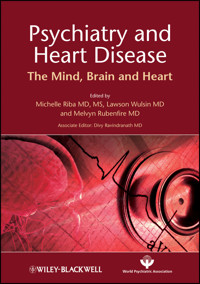
This unique book will help psychiatrists to understand better the risks of cardiovascular illness and cardiologists to appreciate possible pathophysiological links with psychiatric conditions. It describes the common psychiatric conditions, their key features and how they may influence cardiovascular disease, outcomes, and quality of life. It also considers the cardiovascular complications that may arise as a result of mental illness.
In an exciting, collaborative approach, psychiatrists and cardiologists combine their expertise throughout the book to provide guidance on the best way to manage such patients, considering the patient as a whole, not the individual conditions.
Sie lesen das E-Book in den Legimi-Apps auf:
Seitenzahl: 664
Veröffentlichungsjahr: 2012
Ähnliche



















Contents
Cover
Title Page
Copyright
List of Contributors
Foreword
Preface
References
Chapter 1: The Interaction Between Psychologic Distress and Biobehavioral Processes in Cardiovascular Disease
Introduction
Psychologic Distress and Cardiovascular Disease
Biologic Pathways Linking Psychologic Distress to Cardiovascular Risk
Conclusions and Future Directions
Summary Points
References
Chapter 2: Depression and Cardiovascular Diseases
Introduction
Review of Atherosclerosis and Coronary Disease
Epidemiology of Co-morbid Depression and Heart Disease
Possible Mechanisms to Explain the Connection Between Depression and CVD
Multiple Risk Factors in the Pathogenesis of Coronary Artery Disease
Summary Points
References
Chapter 3: Depression, Anxiety, Anger, and Heart Failure
Introduction
Diagnosis
Incidence and Prevalence
Course and Prognosis
Pathophysiology
Treatment
Conclusion
Summary Points
References
Chapter 4: Cardiac Surgery
Introduction
Pre-operative Period
Intra-operative Period
Postoperative Period
Heart Surgery for Congenital Heart Disease
Summary Points
References
Chapter 5: Cardiac Transplantation and Left Ventricular Assist Devices: Pre-Assessment and Post-Management
Introduction
Background
Pre-transplant Assessment
Ventricular Assist Devices
Post-transplant Psychiatric Care
Summary Points
References
Chapter 6: Psychiatric Aspects of Sudden Cardiac Arrest and Implantable Cardioverter-Defibrillators
Introduction
Sudden Cardiac Arrest
Psychiatric Contributions to SCA
Psychiatric Consequences of Resuscitation
ICD-Related Psychiatric Illness
Summary Points
References
Chapter 7: Pulmonary Arterial Hypertension: Psychosocial Implications and Treatment
Introduction
Biomedical Aspects
Emotional Adjustment of Adults with PAH
Psychiatric Treatment
Conclusion
Summary Points
References
Chapter 8: Distinguishing Cardiac from Psychologic Somatic Symptoms
Introduction
Interrelation with Psychiatric Disorders
Medically Unexplained Symptoms (MUS) – Models of Understanding
Conclusion
References
Chapter 9: Hypertrophic Cardiomopathy
Introduction
Brief review of Hypertrophic Cardiomyopathy
Psychiatric Morbidities
Quality of Life
Psychiatric Issues with Genetic Testing
Conclusion
References
Chapter 10: Bipolar Disorder and Reducing Risk for Cardiovascular Disease
Introduction
Descriptive overview of bipolar disorder
Common cardiovascular complications in persons with bipolar disorders
Underlying Mechanisms to Increased Cardiovascular Disease Risk
Medical Diagnosis
Pharmacologic Treatment
Non-pharmacologic and Behavioral Treatments
Acknowledgements
References
Chapter 11: Sleep and Cardiovascular Disease
Introduction
Prototypical Case of Insomnia
Prototypical Case of Sleep Disordered Breathing
Cardiovascular Hemodynamics During Normal Sleep
Disturbed Sleep Patterns: Insomnia
Diagnosis of Sleep-Related Breathing Disorders
IV. OSA and Coronary Risk Factors
OSA, Coronary Artery Disease, and Myocardial Infarction
OSA and Pulmonary Hypertension
OSA, CSA, and Heart Failure
Sleep Apnea and Arrhythmias
Summary Points
References
Chapter 12: Posttraumatic Stress Disorder and Heart Disease
Introduction
Description of Symptoms and Diagnostic Criteria
Prevalence and Course of PTSD in Cardiac Populations
Consequences of PTSD in Patients with Coronary Heart Disease
Predictors of PTSD in Cardiac Patients
Assessment of PTSD With Cardiac Catients
Pharmacologic Treatment of PTSD With Cardiac Patients
Psychologic Treatment of PTSD with Cardiac Patients
Summary points
References
Chapter 13: Cardiovascular Manifestations of Panic and Anxiety
Introduction
Pathophysiology of Emotion and Cardiac Function
Cardiac Symptoms and Cardiophobia
Co-morbidity and Differential Diagnosis
Treatment Considerations
The Implantable Cardioverter: Case Study of a Naturalistic Experiment
Summary
Summary Points
References
Chapter 14: Genetic Susceptibility and the Relationship between Cardiovascular Disease, Immunology, and Psychiatric Illness
Introduction
Review of Genetic Epidemiology
Evidence for Common Genetic Vulnerability to Depression and CAD
Potential Pathobiologic Pathways Predisposing to both Depression and Coronary Heart Disease
Serotonergic Pathway
The Genetics of Stress-Related Mechanisms as A Risk Factor for both Depression and CAD
Genetic Susceptibility and Molecular Relationships between Cardiovascular Disease, Immunology, and Psychiatric Illness
Summary Points
Acknowledgments
References
Chapter 15: Psychological Symptoms Associated with Cardiovascular Drugs; Cardiac Symptoms from Psychiatric Drugs; Drug Interactions,
Introduction
Cardiovascular Effects of Psychoactive Medications
Medication-Specific Concerns
Minimizing Cardiovascular Risks
Psychiatric Effects of Cardiovascular Medications
Drug Interactions Between Drugs Commonly Used in Psychiatry and Cardiology
Drug Interactions caused by Psychotropic Drugs
Drug Interactions caused by Cardiac Drugs
References
Chapter 16: Exercise and Depression
Introduction
Healthy and At-risk Populations
Pathophysiology of CVD in Individuals with Depression
Effects of Exercise and Depression on Cardiovascular Physiology
Structured Exercise for the Prevention and Treatment of Depression in Apparently Healthy Individuals
Patients with Cardiovascular Disease
Exercise Therapy in Cardiac Patients with Depression
Exercise Prescription for Depression
Salutary Effects of Exercise On Depression
Future directions
Conclusion
References
Chapter 17: Psychosocial Interventions: Meditation
Introduction
Conclusion
Summary Points
References
Chapter 18: Smoking Cessation and Substance Use Modification in Cardiovascular Disease
Co-occurrence of Smoking and Other Substance Use Disorders with CVD
Cigarette Smoking
Alcohol
Other Substances of Abuse
Treatment Interventions
Summary Points
References
Appendix A: Selected Screening Tools and Research Instruments
References
Appendix B: Berlin Questionnaire (for sleep apnea)
Index
This edition first published 2012 © 2012 by John Wiley & Sons, Ltd.
Wiley-Blackwell is an imprint of John Wiley & Sons, formed by the merger of Wiley's global Scientific, Technical and Medical business with Blackwell Publishing.
Registered office: John Wiley & Sons, Ltd, The Atrium, Southern Gate, Chichester, West Sussex, PO19 8SQ, UK
Editorial offices: 9600 Garsington Road, Oxford, OX4 2DQ, UK
The Atrium, Southern Gate, Chichester, West Sussex, PO19 8SQ, UK
111 River Street, Hoboken, NJ 07030-5774, USA
For details of our global editorial offices, for customer services and for information about how to apply for permission to reuse the copyright material in this book please see our website at www.wiley.com/wiley-blackwell.
The right of the author to be identified as the author of this work has been asserted in accordance with the UK Copyright, Designs and Patents Act 1988.
All rights reserved. No part of this publication may be reproduced, stored in a retrieval system, or transmitted, in any form or by any means, electronic, mechanical, photocopying, recording or otherwise, except as permitted by the UK Copyright, Designs and Patents Act 1988, without the prior permission of the publisher.
Designations used by companies to distinguish their products are often claimed as trademarks. All brand names and product names used in this book are trade names, service marks, trademarks or registered trademarks of their respective owners. The publisher is not associated with any product or vendor mentioned in this book. This publication is designed to provide accurate and authoritative information in regard to the subject matter covered. It is sold on the understanding that the publisher is not engaged in rendering professional services. If professional advice or other expert assistance is required, the services of a competent professional should be sought.
Library of Congress Cataloging-in-Publication Data
Psychiatry and heart disease: the mind, brain, and heart / [edited by] Michelle Riba, Lawson Wulsin, Melvyn Rubenfire.
p.; cm.
Includes index.
ISBN 978-0-470-68580-8 (cloth)
1. Cardiovascular system–Diseases–Psychological aspects. 2. Medicine and psychology. I. Riba, Michelle B. II. Wulsin, Lawson R. III. Rubenfire, Melvyn.
[DNLM: 1. Cardiovascular Diseases–etiology. 2. Cardiovascular Diseases–psychology.
3. Mental Disorders–complications. WG 120]
RC669.P75 2011
616.1′0651–dc23
2011022873
A catalogue record for this book is available from the British Library.
This book is published in the following electronic formats: ePDF 9780470975121; Wiley Online Library 9780470975138; ePub 9781119978480; Mobi 9781119978497
First Impression 2012
List of Contributors
J. Todd Arnedt, PhD
Assistant Professor of Psychiatry and Neurology
Departments of Psychiatry and Neurology
University of Michigan
Ann Arbor, MI USA
Linda Baty, BSN, RN
Division of Cardiovascular Medicine
University of Michigan
Ann Arbor, MI USA
Jolene R. Bostwick, PharmD
Assistant Clinical Professor of Pharmacy
College of Pharmacy
University of Michigan
Ann Arbor, MI USA
Oliver Cameron, MD, PhD
Professor Emeritus of Psychiatry
Department of Psychiatry
University of Michigan
Ann Arbor, MI USA
Gregory W. Dalack, MD
Associate Professor of Psychiatry
Department of Psychiatry
University of Michigan
Ann Arbor, MI USA
Sharlene Day, MD
Assistant Professor of Internal Medicine
Division of Cardiovascular Medicine
University of Michigan
Ann Arbor, MI USA
D. Edward Deneke, MD
House Officer, Psychiatry
Department of Psychiatry
University of Michigan
Ann Arbor, MI USA
Leonard A. Doerfler, PhD
Professor of Psychology
Department of Psychology
Assumption College and
Department of Psychiatry
University of Massachusetts Medical School
Worcester, MA USA
David Bradley S. Dyke, MD
Assistant Professor of Internal Medicine
Division of Cardiovascular Medicine
University of Michigan
Ann Arbor, MI USA
Kim Eagle, MD
Professor of Internal Medicine
Division of Cardiovascular Medicine
University of Michigan
Ann Arbor, MI USA
Daniel Ehrmann, BS
Medical Student
University of Michigan
Ann Arbor, MI USA
Steven R. Erickson, PharmD
Associate Professor of Pharmacy
College of Pharmacy
University of Michigan
Ann Arbor, MI USA
Christopher M. Feindel, MD
Professor
Division of Cardiovascular Surgery, Peter Munk Cardiovascular Centre
Toronto General Hospital and the University of Toronto
Toronto, Ontario, Canada
Sandra M. Finkel, M.P.H.
Division of Cardiovascular Medicine
University of Michigan
Ann Arbor, MI USA
Barry A. Franklin, PhD
Director, Preventive Cardiology and Rehabilitation
Division of Cardiology
William Beaumont Hospital
Royal Oak, MI USA
Tamara Gay MD
Assistant Professor of Psychiatry
Department of Psychiatry
University of Michigan
Ann Arbor, MI USA
Nicholas D. Giardino, PhD
Assistant Professor of Psychiatry
Department of Psychiatry
University of Michigan
Ann Arbor, MI USA
Rachel Lipson Glick, MD
Clinical Professor
Department of Psychiatry
University of Michigan
Ann Arbor, MI USA
David E. Goodrich, EdD
Research Health Science Specialist
Department of Psychiatry
University of Michigan and VA Ann Arbor National Serious Mental Illness Treatment Resource and Evaluation Center (SMITREC) and VA Health Services Research and Development Center for Clinical Management Research
Ann Arbor, MI USA
John S. Gottdiener, MD
Professor of Medicine
Division of Cardiology
University of Maryland School of Medicine
Baltimore, MD USA
Sanjaya Gupta, MD
Clinical Lecturer in Internal Medicine
Division of Cardiac Electrophysiology
University of Michigan
Ann Arbor, MI USA
Sally K. Guthrie, PharmD
Associate Professor of Pharmacy
College of Pharmacy
University of Michigan
Ann Arbor, MI USA
Elizabeth A. Jackson, M.D., M.P.H.
Assistant Professor of Internal Medicine
Division of Cardiovascular Medicine
University of Michigan
Ann Arbor, MI USA
Kevin B. Kerber, MD
Clinical Assistant Professor
Department of Psychiatry
University of Michigan
Ann Arbor, MI USA
Moira Kessler, MD
House Officer, Psychiatry
Northwestern McGaw/Feinberg School of Medicine
Chicago, IL USA
Amy M. Kilbourne, PhD, MPH
Department of Psychiatry
University of Michigan
and VA Ann Arbor National Serious Mental Illness Treatment Resource and Evaluation Center (SMITREC) and VA Health Services Research and Development Center for Clinical Management Research
Ann Arbor, MI USA
Willem J. Kop, PhD
Tilburg University
Tilburg, Netherlands
Division of Cardiology
University of Maryland School of Medicine
Baltimore, MD USA
Ziad Kronfol, MD
Assistant Professor Emeritus of Psychiatry
Department of Psychiatry University of Michigan
Ann Arbor, MI USA and
Professor of Psychiatry
Weill Cornell Medical College in Qatar
Qatar
Dayna J. LePlatte, MD
House Officer, Psychiatry
Department of Psychiatry
University of Michigan Ann Arbor, MI USA
Marion E. McRae RN, NP, MScN
Nurse Practitioner – Cardiovascular Surgery
Toronto General Hospital and
Lawrence S. Bloomberg Faculty of Nursing
University of Toronto
Toronto, Ontario, Canada
John A. Paraskos, MD
Director of Diagnostic Cardiology
Department of Cardiovascular Medicine
University of Massachusetts Medical School
Worcester, MA USA
Frank Pelosi, MD
Associate Professor of Internal Medicine
Division of Cardiovascular Medicine
University of Michigan
Ann Arbor, MI USA
Bertram Pitt, MD
Professor Emeritus of Internal Medicine
Division of Cardiovascular Medicine
University of Michigan
Ann Arbor, MI USA
Divy Ravindranath, MD, MS
Clinical Assistant Professor of Psychiatry
Department of Psychiatry
University of Michigan
Ann Arbor, MI USA
Michelle B. Riba, MD, MS
Clinical Professor of Psychiatry
Department of Psychiatry
University of Michigan
Ann Arbor, MI USA
Elizabeth A.R. Robinson, PhD, MSW, MPH
Research Assistant Professor
Department of Psychiatry
University of Michigan
Ann Arbor, MI USA
Melvyn Rubenfire, MD
Professor of Internal Medicine
Director of Preventive Cardiology
University of Michigan
Ann Arbor, MI USA
Sara Saberi, MD
Clinical Lecturer of Internal Medicine
Division of Cardiovascular Medicine
University of Michigan
Ann Arbor, MI USA
Steven M. Schwartz, PhD
Adjunct Research Investigator
Department of Psychiatry
University of Michigan
Ann Arbor, MI USA
Michael J. Shea, MD
Professor of Internal Medicine
Division of Cardiovascular Medicine
University of Michigan
Ann Arbor, MI USA
Rima Styra, MD, MEd, FRCPC
Associate Professor of Psychiatry
Department of Psychiatry
University Health Network, Toronto General Hospital
Toronto, Ontario, Canada
Justin E. Trivax, MD
Chief, Interventional Cardiovascular Fellow
Division of Cardiovascular
Millennium Cardiology
Bingham Farms, MI USA
Thomas E. Vanhecke, MD
Department of Internal Medicine
Director, Cardiovascular Noninvasive Imaging
Genesys Regional Medical Center/Ascension Health
Grand Blanc, MI USA
Sandra Villafuerte, PhD
Research Investigator
Molecular and Behavioral Neuroscience Institute and
Department of Psychiatry
University of Michigan
Ann Arbor, MI USA
John M. Wryobeck, PhD
Assistant Professor
Department of Psychiatry
University of Toledo
Toledo, OH USA
Lawson Wulsin, MD
Professor of Psychiatry
Department of Psychiatry
University of Cincinnati
Cincinnati, OH USA
Foreword
Psychiatry and Heart Disease: The Mind, Brain, and Heart is an outstanding up-to-date reference connecting the heart and brain, from basic science mechanisms and insights to clinical associations that affect literally millions of patients in the United States and around the world. The book is wonderfully crafted, beginning with the association between risk factors and psychological distress, the relationship between depression and cardiovascular disease, the connection between psychiatric problems and congestive heart failure and post operative patients, and followed by important psychiatric issues that take place in patients undergoing cardiac transplantation after cardiac arrest, those harboring internal defibrillators, cardioverters and patients with severe diseases such as pulmonary hypertension. The second half of the book is equally insightful, focusing on items such as teasing out the differences between true cardiovascular symptoms and those caused by psychosocial somatic disorders, the management of the patient with bipolar disorder, the relationship of sleep with cardiovascular disease, and post traumatic stress syndrome. In addition, a very common problem, cardiovascular manifestation, of patients with panic and anxiety syndromes is covered in exquisite detail. Lastly, the authors have offered interesting discussions on genetic susceptibility, psychosocial symptoms from medications and psychiatric drugs, and the relationship with exercise, fitness and smoking.
For too long, we have failed to come together as disciplines to properly explore mind-heart interactions and their underpinnings. This book goes a long way to helping us delineate those interfaces in the modern era and anticipate where we must go with our science, education and treatment as we move forward.
Kim A. Eagle, MD
Albion Walter Hewlett Professorof Internal Medicine
Director, University of MichiganCardiovascular Center
Preface
Lawson Wulsin, Michelle B. Riba, MD, MS, Melvyn Rubenfire, MD, and Divy Ravindranath, MD, MS
This book aims to help bridge the gap in modern medicine that divides those who care for disorders of the mind from those who care for disorders of the heart. The current need for this book, and for other efforts bridging psychiatry and cardiology, follows from the profusion of research over the past two decades showing us how the cardiovascular system and psychological distress are each intimately linked to the central, peripheral, and autonomic nervous systems, the immune system, and limbic-hypothalamic-pituitary-adrenal-gonadotropic axis Until this profusion of studies of many kinds—epidemiologic, mechanistic, observational, and interventional—spelled out what has now become a roughly coherent if incomplete picture, it was all too easy for psychiatry and cardiology to ignore each other in clinical practice, at considerable cost to our patients and to our health care system, a cost that went mostly unrecognized on both sides of the gap.
Three large cardinal epidemiologic studies outline the context for the timing of this book: The Global Burden of Disease Study, the INTERHEART Study, and the finding by Colton et al that mental health has a more significant impact on life expectancy than smoking and obesity [Colton 2006]. In the early 1990's the World Health Organization's Global Burden of Disease Study redefined the burden of illness as the combination of years of life lost and years of life disabled by an illness, with a broad influence on global healthcare policy (Murray & Lopez, 1996). By this definition five of the top 10 most burdensome illnesses worldwide turned out to be mental illnesses. Major depression was the most disabling condition worldwide and heart disease the most lethal. And major depression, the fourth most burdensome illness at the time, is expected to climb to the second most burdensome illness worldwide by 2020, second only to heart disease (Murray & Lopez, 1996). This set of findings established the epidemiologic parity of depression and coronary disease as related public health problems worldwide.
In 2004 the INTERHEART Study, the largest global case-control study of risk factors for heart atttack, reported that in a sample of 24,767 people across 52 countries psychosocial risk factors, measured by self-report of stress and depression, predicted risk for myocardial infarction as strongly as smoking and more strongly than hypertension or obesity (Rosengren et al., 2004; Yusuf et al., 2004). The population attributable risks were: smoking 35.7%, psychosocial stress 32.5%, obesity 20%, hypertension 17%. This finding expanded the reach of smaller studies which have found that depression is as strong a predictor for the onset or progression of coronary heart disease as traditional coronary risk factors (Barth, Schumacher, & Herrmann-Lingen, 2004; Rugulies, 2002; van Melle et al., 2004; Wulsin & Singal, 2003). The INTERHEART Study also showed that a simple measure of psychosocial risk predicted poor outcomes consistently across genders, ages, populations, cultures, and healthcare systems (Sheps, Frasure-Smith, Freedland, & Carney, 2004). The concept of psychosocial risk can be operationalized in a simple but potent measure that captures the importance of stress and depression for the prediction of cardiovascular risk around the world. The authors concluded: “if this effect (of psychosocial stress) is truly causal, the importance of psychosocial factors is much more important than commonly recognized, and might contribute to a substantial proportion of acute myocardial infarction.”
In 2006 one of the more eye popping facts about mortality in the American population surfaced in publications estimating the years of life lost to specific chronic illnesses (Colton & Manderscheid, 2006). The impressive fact reported in this study of death rates in the chronically mentally ill in eight states compared to the general population was that chronic mental illness accounted for 26 years of life lost, about double the effect of smoking or obesity. How could chronic mental illness so dramatically shorten life? Suicide accounts for a small proportion of early deaths in the mentally ill. For the most part, mental illness shortens life by accelerating the development of cardiovascular risk factors early in life and by interfering with adequate preventive care, overlooking or ignoring cardiac symptoms, and leading to early cardiovascular events and deaths (Newcomer & Hennekens, 2007). The extensive overlap between the risk factors for heart disease and the risk factors for chronic mental illnesses (smoking, physical inactivity, social isolation, diabetes, inflammation, obesity, hypertension, sleep disturbance) has led to searches for shared genetic vulnerabilities, notably between major depression and coronary disease (McCaffery et al., 2006; Xian et al.) (See Chapter 13).
The inescapable conclusion we draw from these milemarking studies and the growing literature on the comorbidity of psychiatric and cardiac illness, much of which is cited in the chapters that follow, is that effective treatment of the cardiovascular system requires attention to the nervous system and psychosocial distress, and effective treatment of chronic mental illness often requires recognition of and attention to cardiovascular risks. The influence of this body of psychosomatic research on new directions in basic as well as clinical research, on clinical practice along the interface of psychiatry and cardiology, and on health care policy is only beginning to flower. This book marks the progress and charts paths for further growth.
The first section of this book applies a psychiatric lens to various cardiac conditions. The second section turns cardiology's lens on various psychiatric disorders. The final two sections address selected assessment and treatment issues. We hope this collection will foster further conversations between psychiatrists and cardiologists to improve the treatment of their shared patients. And we hope to add to the momentum of this bridging of psychiatry and cardiology through suggestions for promoting creative translational research at the basic science and clinical research levels.
The chapters authors were allowed to express a reasonable degree of bias toward and against the posit that depression, anxiety, and hostility are causal in atherosclerosis, acute events, and recurrent events. And we as editors tried to assure that the book is balanced.
References
1. Barth, J., Schumacher, M., & Herrmann-Lingen, C. (2004). Depression as a risk factor for mortality in patients with coronary heart disease: a meta-analysis. Psychosom Med, 66(6), 802–813.
2. Colton, C. W., & Manderscheid, R. W. (2006). Congruencies in increased mortality rates, years of potential life lost, and causes of death among public mental health clients in eight states. Prev Chronic Dis, 3(2), A42.
3. McCaffery, J. M., Frasure-Smith, N., Dube, M. P., Theroux, P., Rouleau, G. A., Duan, Q., et al. (2006). Common genetic vulnerability to depressive symptoms and coronary artery disease: a review and development of candidate genes related to inflammation and serotonin. Psychosom Med, 68(2), 187–200.
4. Murray, C., & Lopez, A. (1996). The Global Burden of Disease: Summary (Vol. Summary). Cambridge, Massachusetts: Harvard School of Public Health.
5. Newcomer, J. W., & Hennekens, C. H. (2007). Severe mental illness and risk of cardiovascular disease. JAMA, 298(15), 1794–1796.
6. Rosengren, A., Hawken, S., Ounpuu, S., Sliwa, K., Zubaid, M., Almahmeed, W. A., et al. (2004). Association of psychosocial risk factors with risk of acute myocardial infarction in 11119 cases and 13648 controls from 52 countries (the INTERHEART study): case-control study. Lancet, 364(9438), 953–962.
7. Rugulies, R. (2002). Depression as a predictor of coronary heart disease. American Journal of Preventive Medicine, 23, 51–61.
8. Sheps, D. S., Frasure-Smith, N., Freedland, K. E., & Carney, R. M. (2004). The INTERHEART study: intersection between behavioral and general medicine. Psychosom Med, 66(6), 797–798.
9. van Melle, J. P., de Jonge, P., Spijkerman, T. A., Tijssen, J. G., Ormel, J., van Veldhuisen, D. J., et al. (2004). Prognostic association of depression following myocardial infarction with mortality and cardiovascular events: a meta-analysis. Psychosom Med, 66(6), 814–822.
10. Wulsin, L., & Singal, B. (2003). Do depressive symptoms increase the risk for the onset of coronary disease? A systematic quantitative review. Psychosomatic Medicine, 65, 201–210.
11. Xian, H., Scherrer, J. F., Franz, C. E., McCaffery, J., Stein, P. K., Lyons, M. J., et al. Genetic vulnerability and phenotypic expression of depression and risk for ischemic heart disease in the Vietnam era twin study of aging. Psychosom Med, 72(4), 370–375.
12. Yusuf, S., Hawken, S., Ounpuu, S., Dans, T., Avezum, A., Lanas, F., et al. (2004). Effect of potentially modifiable risk factors associated with myocardial infarction in 52 countries (the INTERHEART study): case-control study. Lancet, 364(9438), 937–952.
Chapter 1
The Interaction Between Psychologic Distress and Biobehavioral Processes in Cardiovascular Disease
Willem J. Kop1,2 and John S. Gottdiener2
1 Tilburg University, the Netherlands
2 University of Maryland School of Medicine, Baltimore, MD
Introduction
Myocardial infarction and sudden cardiac death can be triggered by emotional distress [1, 2]. The vulnerability for these acute coronary syndromes is primarily determined by the presence of coronary artery disease (CAD) and/or structural myocardial damage. Chronic psychiatric, psychologic and social conditions can influence the gradual progression of cardiovascular disease and may further enhance the likelihood or magnitude of emotion-related triggers of acute coronary syndromes, primarily in patients with underlying cardiovascular disease [3, 4].
The progression of early stages of cardiovascular disease to its clinical manifestation as acute coronary syndromes can in most cases be described in three phases: gradual subclinical disease progression, the vulnerable disease stage, and the presentation of acute coronary syndromes. Cardiac symptoms such as chest pain and other angina equivalents commonly, but not necessarily, emerge later in the disease process. We have previously proposed a three-category classification framework of cardiovascular psychologic risk factors based on the duration and temporal proximity to the occurrence of coronary syndromes (Fig. 1.1): (1) acute psychologic risk factors (e.g. outbursts of anger, mental activity, and acute distress) that may act as triggers of cardiac events within one hour; (2) episodic psychologic risk factors with a duration lasting from several weeks to two years (e.g. depression, exhaustion and episodes of distress related to job loss, divorce and exposure to extreme physical or mental adversity); and (3) chronic psychologic risk factors that promote the gradual progression of coronary artery disease (e.g. personality traits and adverse socioenvironmental circumstances). Chronic psychologic factors are associated with increased reactivity to acute stressors and also promote the risk of the development of episodic psychologic risk factors. Recent evidence also suggests that episodic risk factors such as depression are associated with an increased emotional and biologic response to acute stressors. As outlined in Fig. 1.1, these types of psychologic risk factors are associated with characteristic biologic and physiologic processes that play distinct roles at different disease stages. These psychologic risk factors often coincide and also need to be understood in the context of genetic background factors and traditional cardiovascular risk factors such as hypertension, dyslipidemia and diabetes mellitus.
Fig. 1.1 Conceptual model of the association between psychologic distress as related to acute coronary syndromes relative to underlying coronary artery disease severity
Lesen Sie weiter in der vollständigen Ausgabe!
Lesen Sie weiter in der vollständigen Ausgabe!
Lesen Sie weiter in der vollständigen Ausgabe!
Lesen Sie weiter in der vollständigen Ausgabe!
Lesen Sie weiter in der vollständigen Ausgabe!
Lesen Sie weiter in der vollständigen Ausgabe!
Lesen Sie weiter in der vollständigen Ausgabe!
Lesen Sie weiter in der vollständigen Ausgabe!
Lesen Sie weiter in der vollständigen Ausgabe!
Lesen Sie weiter in der vollständigen Ausgabe!
Lesen Sie weiter in der vollständigen Ausgabe!
Lesen Sie weiter in der vollständigen Ausgabe!
Lesen Sie weiter in der vollständigen Ausgabe!
Lesen Sie weiter in der vollständigen Ausgabe!
Lesen Sie weiter in der vollständigen Ausgabe!
Lesen Sie weiter in der vollständigen Ausgabe!
Lesen Sie weiter in der vollständigen Ausgabe!
Lesen Sie weiter in der vollständigen Ausgabe!
Lesen Sie weiter in der vollständigen Ausgabe!
Lesen Sie weiter in der vollständigen Ausgabe!




