


Erhalten Sie Zugang zu diesem und mehr als 300000 Büchern ab EUR 5,99 monatlich.
- Herausgeber: epubli
- Kategorie: Sachliteratur, Reportagen, Biografien
- Sprache: Englisch
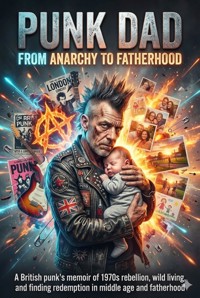
He was there when the Sex Pistols swore on television, when the Clash turned politics into three-chord fury, when punk meant not giving a damn about anything. For two decades, he lived the archetype: smashed guitars, smashed relationships, substance-fueled chaos, and the stubborn belief that dying young was preferable to selling out. This is the unflinching memoir of a British punk musician who survived the scene that consumed so many, only to face an enemy no amp could drown out: middle age. The hairline receded. The leather jacket no longer fit. The songs about anarchy rang hollow when he couldn't pay rent. Then fatherhood arrived—unplanned, terrifying, and the ultimate betrayal of everything he'd stood for. Or so he thought. Through raw anecdotes from squats and stadiums, recording studios and rehab clinics, the narrator traces punk's evolution from authentic rebellion to commercial nostalgia. He confronts the hypocrisy of his own mythology: the "anti-establishment" pose that masked profound immaturity, the "live fast die young" ethos that left survivors drowning in regret, the performative nihilism that couldn't survive the responsibility of a child looking up at him. Yet this memoir refuses simple redemption narrative. It's about learning that punk's core values—questioning authority, community solidarity, DIY resilience—aren't contradicted by fatherhood but deepened by it. He discovers that changing diapers requires more anarchy than smashing windows: true rebellion means showing up, being reliable, loving when it's inconvenient. For aging punks wondering if they sold out, parents who never imagined they'd raise kids, music fans seeking authentic voices from punk's golden age, and anyone questioning whether rebellion has an expiration date—this memoir offers both cautionary tale and unexpected hope.
Sie lesen das E-Book in den Legimi-Apps auf:
Seitenzahl: 310
Veröffentlichungsjahr: 2025
Das E-Book (TTS) können Sie hören im Abo „Legimi Premium” in Legimi-Apps auf:
Ähnliche


















Table of Contents
Chapter 1: Beginnings in the Noise
The Soundtrack of Rebellion
Squats and Soundchecks
Defiance in Style
The Substance of Rebellion
Chapter 2: The Sex Pistols & the Clash: Icons of Anarchy
The Moment That Changed Everything
The Clash: More Than Just Music
The Fashion of Rebellion
Anarchy and Its Discontents
Punk's Legacy: The Music That Lasts
The Reckoning: Dying Young vs. Growing Up
Chapter 3: Living Fast: The Wild Ride
The Thrill of the Night
Crashing and Burning
Friends or Foes?
The Music as Our Lifeline
Finding Clarity in the Chaos
The Legacy of Wild Living
Chapter 4: Relationships in Ruins
The Allure of Chaos
Love in a Dustbin
The Price of Freedom
Relationships as Sacrifices
The Echoes of Yesterday
Embracing Vulnerability
Chapter 5: The Highs and Lows of Substance Abuse
The Early Days of Escapism
The Slow Descent
Crippling Consequences
The Breaking Point
The Road to Recovery
Redemption Through Fatherhood
The Ongoing Journey
Chapter 6: Facing the Mirror: Midlife Crisis
The Weight of Expectations
The Chaos of Regret
The Mirror of Fatherhood
Anarchy at Home
Finding My Voice Again
Embracing Change
Chapter 7: The Shock of Fatherhood
The Unexpected Knock
Facing the Fears
Redefining Rebellion
The Bond of Love
Community of Parenting
From Chaos to Clarity
Chapter 8: Finding Redemption in Chaos
Embracing the Messiness of Life
The Legacy of Rebellion
Facing Regrets and Moving Forward
The Real Meaning of Rebellion
The Power of Community
Finding Balance in Chaos
Chapter 9: Punk Ideals & Parenting: A New Perspective
The Punk Community: Redefining Family
DIY Parenting: Embracing Resourcefulness
Anarchy at Home: Rebellious Love
Lessons from Chaos: Valuing Stability
Chapter 10: The Community That Saved Us
The Roots of Our Tribe
The Power of Collective Support
Lessons from Our Elders
The Anarchy of Parenthood
Honoring Our Community
Legacy of Punk in Fatherhood
Chapter 11: Music, Healing, and Resilience
The Soundtrack of My Life
Reconnecting with the Strings
The Anarchy of Parenting
Lessons from the Stage to Home
Community and Connection Through Music
The Future Sounds Bright
Chapter 12: Lessons from the Past
The Riot of Youth
Friendship and Community
The Price of Freedom
The Myth of the Punk Hero
The Transition to Adulthood
Fatherhood and Legacy
Moving Forward
Chapter 13: Next Generation: Raising a Punk
Punk Ideals in Parenting
Lessons from a Punk Past
The Role of Community
Empathy and Rebellion
Life's Unexpected Lessons
Legacy and the Next Generation
Chapter 14: The Legacy of Punk
The Roots of Rebellion
The Sound of Anarchy
Community and Solidarity
The Evolution of Punk
Questioning Authority
The Spirit of DIY
Finding Redemption
Chapter 15: Anarchy in a New Light
Redefining Anarchy
The Fragility of Connection
The DIY Spirit in Parenting
Anarchy and Tradition
The Anarchy of Vulnerability
Redemption Through Connection
Chapter 16: Conclusion: The Ongoing Journey
Reflections on the Past
The Challenges of Middle Age
The Impact of Fatherhood
Lessons Learned Along the Way
The Ongoing Journey
Inspiring the Next Generation
Conclusion: The Ongoing Journey
Chapter 1: Beginnings in the Noise
In the vibrant chaos of the 1970s, everything was louder—the music, the protests, and our defiance. This chapter revisits the raw energy of my youth: the punk clubs, the DIY scene, and how noise became our language. Here I reflect on the early influences that shaped my identity and my first experiences with rebellion that set the stage for an unforgettable journey.
The Soundtrack of Rebellion
The late 1970s were infused with revolutionary music that turned our anger into anthems. Punk was more than just a genre; it became a raucous soundtrack for our discontent. It was in the melodies of the Sex Pistols and the raw energy of The Clash that I found a voice that resonated with my own chaotic thoughts.
Music as a Form of Protest
In the tumultuous landscape of the late 1970s, music transcended mere entertainment; it emerged as a powerful form of protest against a society that felt increasingly oppressive. Punk rock wasn’t just a style; it was a battle cry for the disillusioned youth who sought to shatter the norms. The Sex Pistols and The Clash became the voices of our generation, articulating frustrations that many of us harbored but struggled to express.
Through electrifying guitar riffs and unapologetic lyrics, these bands ignited a fervor in us, transforming our anger into something tangible. Each chord struck resonated with a sense of rebellion, fueling our desire to challenge authority. Tracks like “Anarchy in the UK” weren’t merely songs; they were instigations to resist the status quo. It was in the raw energy of these performances that we found the courageous spirit to stand against societal expectations, igniting a cultural revolution that redefined our understanding of expression and individuality.
The Rise of DIY Culture
Punk's ethos was firmly rooted in the belief that anyone could make music, regardless of formal training or industry backing. This truth birthed the DIY culture, a movement that encouraged us to seize creative control. Venues were transformed from polished stages into gritty basements and squats, where the barriers to performance melted away. We learned to create our own opportunities, to promote shows, and to connect with fans without relying on record labels.
Fanzines emerged as vital tools for spreading our ideas and music, allowing us to share raw, unfiltered perspectives. The DIY approach taught us resilience and resourcefulness; we could shape our destinies without having to cater to commercial interests. This sense of empowerment was exhilarating. The spirit of making our own rules thrived in the underground, and it was here that I truly discovered the depths of my creativity, proving that rebellion could also be about craft, not just chaos.
Influences from Before Punk
Before punk captured my heart, a diverse range of music rattled my upbringing. My childhood was filled with the rebellious echoes of rock ’n’ roll legends like The Who and the anthems of folk singers who dared to challenge social norms. Artists such as Bob Dylan reminded us that music could be a means of storytelling, a way to reveal truths in an increasingly disenchanted world.
These early influences shaped my understanding of how music could voice discontent and foster solidarity among the oppressed. I absorbed the improvisational spirit of jazz and the raw power of early rock, which all laid the groundwork for my shift into a world where punk became the ultimate vehicle for rebellion. Each chord struck in these earlier styles fueled my upbringing in a way that ultimately prepared me for the revolutionary roar of the punk scene.
First Concert Experience
My first concert experience was a rite of passage that I would never forget. Crowded into a dimly lit venue, the air thick with anticipation, I could feel the energy thrumming in my veins. When the band took the stage, a wave of collective exhilaration washed over us. The fusion of sound, emotion, and rawness felt like nothing I had ever encountered.
Within moments, the mosh pit erupted, a swirling mass of bodies reflecting the frenetic energy that electrified the room. It was a transformative moment; I understood that this wasn’t just music—it was a communal experience of rebellion that ignited passion and connection. I left that night soaked in sweat and exhilaration, knowing I’d become part of something larger than myself. It was here, amidst the chaos of sound, that I tasted the freedom punk promised, a taste that would shape my life for years to come.
Finding Community in Sound
Punk was not just a musical genre—it was a community, a gathering of misfits and outcasts united by our shared discontent. In those smoky clubs and basement venues, we forged bonds that transcended backgrounds and individual struggles. Music became our safe space, where everyone was welcome as long as they shared the rhythm of rebellion.
We supported each other through personal battles, celebrating victories and grieving losses together. It was comforting to know that no one had to stand alone when the weight of the world felt unbearable. Through the connection formed in those walls, we developed a sense of solidarity that reminded us of the power of collaboration and the importance of lifting each other up. This community became the heartbeat of my punk journey, teaching me that true rebellion often lies in the support of those around you, reaffirming that we were stronger together.
Squats and Soundchecks
Living in squats and makeshift venues became a way of life, where chaos and creativity flourished hand in hand. These spaces were raw and electrifying, breeding grounds for years of rebellion and wild living.
The Reality of Squat Life
Squatting wasn't just a lifestyle; it was a defiance against the suffocating norms of society. In the 1970s, we transformed abandoned buildings into makeshift homes, filled with art, music, and chaotic energy. The walls of these derelict places echoed with the raw beats of our lives, a testament to our rebellion.
Yet, it wasn't all idealism; the reality of squat life was notoriously gritty. Heating from half-broken radiators, shared meals scrounged from bins, and the constant threat of eviction made every day a fight. Still, amidst the uncertainty, there was an intoxicating sense of freedom. We lived on our terms, rejecting the constraints of middle-class existence, finding beauty in the disorder.
Camaraderie Born of Necessity
In these cramped quarters, camaraderie flourished. We were a motley crew of misfits, artists, and dreamers, bonded by the shared experience of survival. Each night, we converged in the flickering light of candles, trading stories, music, and hopes for something better.
The friendships formed under such duress were fiercely loyal. We supported each other through the chaos—whether it was lending a hand during a late-night jam session, sharing a borrowed guitar, or simply providing a shoulder to cry on when the world outside felt overwhelming. Our communities weren’t just about rebellion; they were nurturing, fostering a spirit of mutual aid that echoed punk's ethos.
Performance as an Escape
For many of us, stepping on stage was a moment of transcendence. In front of a crowd, I became someone else: the angst, the chaos, the noise—it all fell away. Performance was my escape from the harsh realities that defined squat life.
The adrenaline rush of live shows was intoxicating. In those fleeting moments, the guitar screamed louder than our doubts, and the crowd became an extension of our defiance. Each chord was a cathartic release, a collective howl of rebellion. The stage wasn’t just a platform for music; it was a sanctuary where we could express our frustrations and dreams, reminding us we were alive, and we mattered.
Encountering the Law
Living outside the law was as exhilarating as it was dangerous. The constant presence of the police loomed over our squats, and run-ins became a part of our daily reality. Each encounter was a tense standoff, fraught with the fear of being kicked out or worse.
Despite the risks, our defiance only grew. When the cops stormed in, we stood our ground, an act of rebellion boiled down to sheer will. It wasn’t just about protecting our homes; it was about asserting our right to exist freely in a world that wanted to dictate terms. Each clash with authority only cemented our resolve, transforming fear into fierce determination.
Creating a Home in the Unlikeliest Places
Home is where you feel a sense of belonging, and in those squats, we carved out our identities. Every room became a reflection of our madness and creativity, adorned with posters of legends, and filled with the scent of day-old takeout and smoke.
We created pockets of beauty in the roughest of settings, turning discarded objects into art. Each corner of our chaotic abodes was steeped in stories. Living in these unlikely places taught us that home wasn't just a physical structure; it was a feeling, and we carried that feeling with us, even as we moved from one squat to another. In every chaotic evening, in every raucous gathering, we found a piece of ourselves.
Defiance in Style
The punk aesthetic was a badge of honor, a way to communicate our disdain for societal norms. From spiked hair to safety pins, this look was our armor in a world that rejected us.
Fashion as Identity
In the world of punk, fashion was never just about clothes; it was a radical declaration of identity. Each ripped shirt, torn jean, and leather jacket served as a badge of honor, a visual cue signaling rebellion against mainstream culture. We adorned ourselves with safety pins and spikes, creating a look that screamed defiance. Our style was a rejection of the polished bourgeois aesthetic that dominated late '70s Britain.
This bold fashion statement offered us a sense of belonging within the community. When I walked into a punk club wearing my patched denim and brightly colored hair, I felt at home among fellow misfits who understood the struggle against societal expectations. In a world that often sought to label and standardize, we found freedom in our chaotic self-expression.
Influence of Iconic Figures
The punk scene was teeming with figures whose influence stretched far beyond music; they dominated our wardrobes and inspired our looks. Icons like Siouxsie Sioux and Johnny Rotten became our fashion muses, pushing boundaries and redefining beauty. They taught us that we could reshape our identities, turning our bodies into canvases for artistic expression.
These personalities made it clear that punk was as much about attitude as it was about sound. It wasn't just the clothes but the unapologetic confidence in wearing them that mattered. Our rebellious spirit found a source of validation in these cultural leaders, and we were driven to emulate their fearless style. This act of imitation represented our desire to claim our own identities within a chaotic, confusing world.
Personal Style Choices
As I navigated my teenage years, my personal style began to evolve. I experimented with various looks, often shocking my parents and teachers. It was exhilarating to mix and match pieces that conveyed my discontent and individuality. Leather jackets became a staple, paired with vibrant band tees that expressed my musical preferences.
I remember the thrill of customizing my clothes, altering them with paint, patches, and the occasional graffiti. My wardrobe wasn't simply an extension of my taste; it was a story, a visual diary of my experiences and beliefs. Each outfit encapsulated my rejection of societal norms, my desire to be bold, and my unwavering commitment to an ideal of freedom that resonated deeply within me.
Creating a Visual Statement
Creating a visual statement as punks felt revolutionary; it was our art form, a performance that spoke volumes without uttering a single word. The process of assembling the perfect outfit became an act of creativity and defiance. Whether it was the deliberate choice to wear mismatched shoes or layering thrifted garments, every detail was meticulously crafted to shock and provoke thought.
Even hairstyles became a canvas of expression; mohawks and brightly colored spikes transformed our heads into living art. Each person’s look represented not just individuality but also a collective identity, demonstrating unity in our shared resistance against conformity. In a world that sought uniformity, our elaborate outfits celebrated chaos and difference.
The Reactions of Mainstream Society
As we strutted down city streets flaunting our punk attire, the reactions from mainstream society ranged from shocked to amused. Many viewed us as societal outcasts, often recoiling in disdain or fear as we passed. Newspapers labeled us as ‘angry youths’ and ‘delinquents,’ not understanding that our fashion was an expression of our frustrations and dreams.
While ridicule was common, it also fueled our resolve. Every sneer and disapproving glance only reinforced our belief that we were onto something powerful. We realized that to shock was to engage—a mutual understanding that our appearance challenged the status quo and invoked critical discussions about identity, rebellion, and societal norms.
The Substance of Rebellion
Amidst the music and chaos, drugs became a seductive escape. They offered fleeting moments of liberation while also threatening to consume our lives. This section addresses the double-edged sword of substance use in our lives.
The Allure of Drugs
The 1970s punk scene thrived on an electric mix of rebellion and chaos, and drugs became the undercurrent of that existence. For many of us, substance use was not merely a pastime; it was intertwined with our identity, a badge of honor in the face of a boring, repressive world. The allure of drugs lay in their ability to amplify our experiences, heighten the exhilaration of music, and enhance the sense of community forged in smoky clubs. They offered a tantalizing escape from the drudgery of everyday life, a promise of liberation wrapped in the warm embrace of oblivion.
From the first time I inhaled that heady cloud of smoke to the moments spent in blissful inebriation at concerts, drugs became synonymous with who I was. The reckless abandon they brought fed into our rebellious ethos, painting over the struggles of reality with vivid strokes of hedonistic dreams. Yet, beneath the surface was a creeping darkness, a duality that begged us to question the true cost of our chosen liberation.
Escapism vs. Reality
Drugs served as a powerful form of escapism, allowing us to disconnect from the harsh realities of life. In a world that felt suffocating and mundane, the high offered a temporary solution, a way to transcend feelings of inadequacy and despair. We believed we were living on the edge, even if that edge was paved with self-destructive choices. The music surged around us, echoing our internal struggles and giving voice to our collective discontent.
However, as euphoric as these experiences were, they masked the underlying issues we chose to ignore. Our reckless behavior carried consequences, often leading us down a path filled with regret, lost opportunities, and fractured relationships. We once took pride in our rebellion, yet that very rebellion was becoming a way to hide from life’s responsibilities. In the end, we had to confront the uncomfortable truth that the escape we craved was also trapping us in a cycle of despair.
First Experiences with Substance Use
My introduction to substance use was an initiation into a world I thought I understood. At first, it was thrilling; a carefree experimentation with friends that felt part of the rite of passage into adulthood. We gathered in dingy flats and raucous parties where the exhilarating highs blurred the lines between reality and fantasy, igniting a passion for life that I thought would never fade. Those first experiences with drugs felt like a celebration of freedom, an intense connection with my fellow punks.
Yet, what started as innocent exploration gradually morphed into reliance—a dependency that crept in unnoticed. The euphoria of the initial highs faded, replaced by an insatiable hunger for more. It was a slippery slope; one moment we were the joyful architects of our own chaos, and the next we became slaves to the very substances we once controlled. Reflecting back, it was an awakening that shaped my understanding of rebellion, but it also planted seeds of doubt about my choices.
Impact on Relationships
Drugs changed not just me, but the entire fabric of my relationships. In the beginning, shared experiences forged bonds with friends, binding us in our collective rebellion against a world we felt misunderstood us. Moments spent high together felt intimate, an unspoken agreement to support one another's escape. But as time passed, the camaraderie began to crumble under the weight of addiction. What once fostered connection turned into a source of conflict.
Trust eroded as lies took root; friendships became transactional, entwined with substances rather than authentic connection. I lost sight of the people who had once understood me, replaced by those who merely fed my addiction. Looking back, it's clear that my desire to escape not only separated me from my true self but also alienated me from those I cared about most. Ultimately, I learned that true rebellion lies not in chaos but in building meaningful connections that withstand even the fiercest storms.
Consequences We Ignored
In those wild years, we saw the consequences of our choices as mere collateral damage in our quest for rebellion. We believed we were invincible, untouchable by the fallout that plagued others. Stories of friends spiraling into addiction, losing their dreams, or even their lives were just tales that hinted at caution, yet we brushed them aside, convinced they wouldn’t happen to us. This ignorance was our greatest delusion.
But reality has a way of crashing in, doesn’t it? We learned the hard way that every choice carries a price. The chaos we celebrated became the harbinger of regret, leading to broken relationships, lost jobs, and a deep sense of disillusionment. As the highs diminished, we were left with the sobering truth of our situation—a reckoning that demanded we confront not just the choices we made, but the people we had become. Ignoring the consequences didn't erase them; they haunted us as reminders of the shadows behind our vibrant lives.
Chapter 2: The Sex Pistols & the Clash: Icons of Anarchy
When the Sex Pistols swore on live television and the Clash screamed political fury, we weren't just fans; we were witnesses to a revolution. This chapter dives deep into the moments that stirred our souls and defined punk’s ethos, revealing how these musical warriors acted as the soundtrack to our battles against conformity and expectations.
The Moment That Changed Everything
It was a cold evening, and the air crackled with tension. I was sitting in front of the TV when the Sex Pistols took the stage, and that moment would change how we saw music and ourselves. The rebellious energy radiated through the screen, capturing us all.
The infamous interview with Bill Grundy
On that fateful evening in December 1976, Bill Grundy conducted an interview with the Sex Pistols that would become legendary. Grundy, a seasoned broadcaster, was unprepared for the whirlwind of chaos that entered his studio. As the band members spat out irreverence and defiance, their raw energy was contagious, captivating a nation weary of conformity.
What was meant to be an innocuous chat about music quickly spiraled into a chaotic exchange when the band’s frontman, Johnny Rotten, unleashed a barrage of expletives, shocking Grundy and viewers alike. This moment encapsulated the essence of punk: refusing to adhere to social expectations, challenging authority, and using music as a weapon. It was that blend of spontaneity and subversion that made the Sex Pistols icons of rebellion.
This interview was more than just a few cursed words on television; it marked a definitive shift in British culture. The audacity displayed by the Pistols was a siren call to youth across the country, igniting a passion for self-expression that would spiral into a full-blown movement. It encouraged us to question the status quo in a way that was both exhilarating and terrifying.
The shock value of swearing on live TV
Swearing on live television was once an unspeakable taboo, but the Sex Pistols turned this convention into a radical act of defiance. The eruption of expletives wasn’t merely for shock value; it was a declaration of war against the sanitized culture that dominated the airwaves. It screamed, “We refuse to be polite!” and stripped away the mask of respectability that limited true expression.
A flurry of parental outrage and media condemnation quickly followed, further cementing their status as icons of rebellion. The cultural shockwaves reverberated throughout the country, igniting discussions at dinner tables and classrooms, as every teenager found themselves on one side or the other of the debate. This gritty honesty resonated with those who felt voiceless in a stifling society, proving that punk rock was the antidote to complacency.
In this singular moment, punk's ethos broke societal barriers, inviting young rebels to embrace their anger and dissatisfaction openly. Instead of being shamed, our reactions transformed into a collective celebration of freedom. The Pistols made swearing a form of art—an empowering statement that unraveled the fabric of conventional television.
The immediate impact on youth culture
The aftermath of the Grundy interview birthed a newfound sense of identity among British youth. Suddenly, it was not just acceptable but exhilarating to express dissent and rage against a system that felt repressive. The Sex Pistols, along with their contemporaries, gave voice to a generation that felt alienated, sparking a cultural revolution that influenced fashion, attitude, and self-perception.
Youths began to adopt punk fashion—ripped clothes, bold hairstyles, and DIY accessories—binding them together in a tight-knit community that thrived on rebellion and camaraderie. Punk became a lifestyle, a badge of honor worn with pride that signified a commitment to authenticity over conformity. It was an opportune time for young people to redefine not just who they supported musically but who they were as individuals.
This cultural explosion led us to rethink authority and tradition. The immediate impact created an environment ripe for change, inspiring countless bands to rise through the ranks and embrace punk principles. It empowered us to no longer be passive observers of our narratives but active participants, ready to carve our paths through societal expectations.
The rise of punk as a form of protest
As the punk movement gained momentum, it evolved into a powerful form of protest against the status quo. The raw, unfiltered music acted as a rallying cry for change, challenging not just musical norms but societal expectations. Bands like the Clash infused their songs with political messages, addressing issues like unemployment, class struggle, and war, further solidifying punk's role as a conduit for dissent.
This transformation was significant; punk was no longer just about shock value or rebellion for its own sake. It became a channel through which disillusioned youths could express their frustrations, voicing grievances that had long been ignored by mainstream society. The visceral energy of punk offered a platform upon which we not only expressed anger but proposed alternatives and questioned injustices.
Through loud guitars and anthemic choruses, we found solidarity. It was more than music; it was a movement fueled by authenticity and a deep-seated desire for change. Despite the chaos and the occasional missteps, this resurgence of rebellion reminded us that protest and artistic expression were inextricable, creating a legacy that resonated far beyond the stages and squats of the 1970s.
The Clash: More Than Just Music
The Clash came onto the scene with a message that resonated deeply. They infused their sound with politics and passion, making music that wasn’t just to be heard but to be felt. This was where punk met purpose.
Their fusion of punk and reggae
The Clash's unique sound was a groundbreaking fusion of punk rock and reggae, creating a genre-defying experience that resonated deeply with fans. This blend symbolized the band's desire to break barriers—not just musically but culturally as well. They took the raw energy and rebellious spirit of punk and infused it with the hypnotic rhythms and social consciousness of reggae.
This innovative approach allowed them to reach diverse audiences, making their music more inclusive and relatable. Tracks like "White Riot" and “London Calling” showcased how they could weave complex social narratives into catchy melodies. The incorporation of reggae's groove brought a fresh dynamic to their punk base, illustrating that rebellion could have rhythm.
In doing so, The Clash became trailblazers, showing that genres need not be confined. Their layered sound played a crucial role in uniting the voices of the marginalized, creating an anthem for those who felt sidelined by society. This musical experimentation was essential in defining punk's evolution, proving that it wasn't just about anger; it was also about connection.
Political lyrics that ignited a movement
The Clash emerged at a time when political disillusionment was rife, and their lyrics served as a powerful rallying cry for change. With their unapologetic stance on issues such as war, poverty, and systemic injustice, they transformed their songs into weapons of social critique. Tracks like "The Guns of Brixton" and "Should I Stay or Should I Go" addressed the struggles faced by the working class and immigrants alike.
Their fearless approach to storytelling made politics accessible, wrapping complex themes in catchy hooks. This resonated with disenchanted youth, spurring them to question societal norms and engage in activism. The Clash’s music amplified the voices of the oppressed and encouraged listeners to confront the status quo, driving a movement that intertwined rock and political discourse.
The band's ability to pair sharp wit with poignant observations not only enriched their music but galvanized a generation to fight for change. They proved that punk wasn't just about rebellion; it was about sparking awareness and inspiring action through the power of lyrics.
How they became voices for the unheard
The Clash positioned themselves as advocates for the unheard, becoming a beacon of hope for those feeling alienated by mainstream culture. They didn't just sing; they listened to the stories of the marginalized and reflected those experiences in their music. By incorporating themes of struggle, identity, and resilience, they gave a voice to the voiceless, paralleling the lives of working-class communities facing societal neglect.
Through their relentless touring and engagement with fans, The Clash cultivated a sense of community among their listeners, turning concerts into gatherings of solidarity. Songs like "Bankrobber" highlighted the realities of crime born from economic despair, while “The Call Up” addressed the horrors of military service, which painted a relatable picture for those navigating a tumultuous world.
This connection fostered an environment where fans felt empowered to express their discontent and share their own stories, further solidifying The Clash's role as cultural icons of resistance. They transformed punk into a platform for social justice, and their unyielding commitment to the unheard continues to resonate, inspiring new generations to stand up and speak out.
The Clash's influence on future generations
The legacy of The Clash extends far beyond their discography; their influence can be seen in countless punk and alternative bands that followed. Musicians like Green Day, Rancid, and even modern acts such as Idles have been inspired by The Clash's fusion of musical styles and their commitment to meaningful lyrics. Their pioneering spirit encouraged artists to blend genres and tackle sociopolitical issues head-on.
Their DIY ethos also played a crucial role in shaping the independent music scene. By rejecting corporate control, The Clash showed emerging musicians that autonomy could coexist with commercial success. This paved the way for a new generation that values artistic integrity over mainstream approval.
Todays’ artists often cite The Clash as a foundational influence, demonstrating that their impact is still felt in both the music and cultural landscapes. The Clash embodied a fearless pursuit of truth and individuality that challenges future artists to push boundaries, proving that punk’s rebellious heart is alive and well—igniting the fire in the spirit of fight for equality and justice in each new generation.
The Fashion of Rebellion
Punk was a lifestyle, from the ripped jeans to the safety pins. But it was more than fashion; it was a statement of intent. The way we dressed was our armor against the mainstream.
The significance of DIY fashion
DIY fashion was the heartbeat of the punk scene, brimming with creativity and rebellion. Instead of conforming to mass-produced trends, we transformed our own clothing into statements of individuality. Ripped jeans, patched jackets, and mismatched accessories were a declaration: we would not bow to commercialism.
This hands-on approach allowed punks to express their convictions visually. Each ripped seam and safety pin held stories of defiance against societal norms. We raided thrift stores and scavenged for materials, making our outfits personal and unique. This act of creation wasn’t just about appearance; it was about embracing the chaos of youth and ownership of our identity.
The DIY ethos extended beyond fashion. It encapsulated a lifestyle, a refusal to be dictated by corporate giants. In a world where conformity was the norm, crafting an outfit became a radical act of self-love and rebellion, echoing the very essence of punk culture.
How clothing choices reflected political views
Punk fashion was far more than aesthetic; it was a vivid expression of political beliefs. Many of us adorned our jackets with patches and slogans that proclaimed our disdain for the establishment. Anti-monarchist sentiments, anti-war cries, and anti-capitalist imagery adorned our attire, turning sidewalks into protest sites.
Clothing became a canvas for voicing resistance. The colors, the designs, and even the choice of materials were loaded with meaning. For us, a T-shirt emblazoned with "No Future" was a rallying cry against societal expectations, while wearing a band’s logo symbolized solidarity with shared struggles.
This bold expression of ideology shaped not only how we viewed the world but also how we perceived ourselves within it. Our clothing choices mirrored an inner rebellion, allowing us to stand tall amidst the pressures to conform, reminding everyone that punk was an ongoing fight, not just a phase.
The community aspect of punk fashion
Punk fashion fostered a unique community, uniting individuals through shared styles and mutual understanding. Gathering at shows, we quickly recognized one another, not just as fans but as warriors in the same battle against the mundane. This unspoken bond was often illustrated through our fashion choices, creating an instant connection.
As we exchanged tips on customizing gear or where to find the best thrift store treasures, a spirit of camaraderie thrived. This shared experience of rebellion, forged through DIY fashion, laid the groundwork for lifelong friendships and a sense of belonging within the chaotic punk landscape.
Moreover, punk fashion created a safe space to explore one’s identity. In a world where judgment loomed large, the ability to express uniqueness through style meant embracing our quirks and differences, further strengthening the community. We were all misfits together, proudly adorned in our battle armor, taking on the world as one fierce collective.
The evolution from underground to high fashion
Over the years, punk fashion's raw energy evolved into a powerful cultural force that infiltrated the mainstream, reaching high fashion runways. Designers began to adopt the edgy aesthetics of punk, seamlessly blending ripped fabrics and leather with haute couture. This transformation sparked debates about authenticity in a scene founded on rebellion.
Yet this evolution also revealed deep contradictions. As punk elements became commercialized, questions arose: Could a movement built on anti-establishment ideals thrive in a world of designer boutiques? For many of us, seeing punks adapted for high fashion was both exciting and disheartening, as it challenged our notions of what punk truly represented.
Ultimately, while mainstream acceptance could dilute the initial message, it also could inspire new generations to rediscover punk's underpinnings. The boldness of high fashion reintroduced those original values of rebellion and defiance, allowing punk's spirit to resonate even in unexpected venues, showing that true rebellion may be resilient after all.
Anarchy and Its Discontents
The idea of anarchy attracted many of us, offering freedom from societal norms. But as we felt the weight of the manifesto, we began to question what anarchy truly meant for us and our futures.
The initial allure of anarchy
The very concept of anarchy drew us in like moths to a flame. It was a heady promise of freedom from societal constraints, a tantalizing invitation to live life on our own terms. The Sex Pistols’ rebellious sound and raw energy ignited a spark within a generation yearning for change. Their audacity, particularly when they so brazenly swore on live television, felt like an affirmation of our frustrations. We witnessed a bold rebellion against the conventional, as they effectively gave the middle finger to authority and tradition.
For many of us, this allure was intoxicating. It wasn’t just music; it was a manifesto, a ritual of our identity. We embraced the fashion, the attitude, and the lifestyle that came with the rebellion. We became part of a tribe that shyed away from the mainstream and reveled in our outsider status. It was a liberation, albeit one tempered by the realities we would ultimately face as we navigated the chaos of life. However, at that moment, in the thrall of punk, we were fiercely alive, ready to break the chains of conformity that bound us.
The fine line between freedom and chaos
As we delved deeper into the punk scene, we began to grasp the fine line that divided freedom from chaos. The exhilarating feeling of liberation occasionally gave way to an unsettling recognition that true anarchy could lead to disorder. While smashing guitars and defying norms felt empowering, it quickly evolved into a lifestyle that often resulted in tangible consequences.
What initially seemed like unrestrained freedom often spiraled into chaos. Substance abuse, broken relationships, and moments of darkness began to overshadow our idealistic dreams. We wrestled with the realization that our actions, fueled by raw emotion and rebellion, often came with repercussions. The balance between freedom and chaos became a tightrope walk, with every step demanding careful consideration of where we stood on that precarious line.
How anarchy challenged our responsibilities
The allure of anarchy posed questions that would challenge our very foundation of responsibility. Our initial rebellion was exhilarating, questioning the fabric of society. Yet, as the years passed, we could no longer ignore the lurking consequences of this lifestyle. The carefree decisions we made began to clash with the demands of adulthood.
Suddenly, the idea of responsibility loomed larger than life. When relationships fell apart or we found ourselves with little means, we wrestled with the nagging thought: Was our anarchy merely a façade for our inability to grow up? The stark realization hit that while we raged against the machine, the 'real world' still awaited us. Balancing anarchy and the emerging responsibilities of life presented a formidable challenge that many of us were unequipped to handle.
The transformative nature of questioning authority




