


Erhalten Sie Zugang zu diesem und mehr als 300000 Büchern ab EUR 5,99 monatlich.
- Herausgeber: Nick Hern Books
- Kategorie: Geisteswissenschaft
- Sprache: Englisch
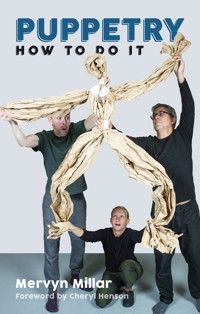
A practical, accessible and inspiring guide to using puppetry in theatre – the perfect entry point for anyone looking to use puppets in their productions, to explore what puppets can do, or to develop their puppetry skills. Written by an experienced theatre and puppetry director, Mervyn Millar's Puppetry: How to Do It focuses on the performer and the craft of bringing any puppet to life. No puppet-making is required to use this book: starting just with simple objects, it lays out the skills required to unlock a puppet's limitless potential for expression and connection with an audience. Inside you'll discover fifty practical, easy-to-follow exercises – for use in a group or on your own – to develop elements of the craft, build confidence and help you improve your puppetry through play and improvisation. Also included are sections on different types of puppet, thinking about how the puppeteer is presented on stage and how to direct and devise puppet performances. Ideal for actors and performers, for directors and designers, and for teachers and students of all ages and levels of experience, this book will demystify the art of puppetry, and help you become more confident and creative with all kinds of puppets and objects on stage. 'This is a superb guide to puppet manipulation by one of the world's most experienced puppetry directors and teachers at a time when many actors are seeing puppetry as the twenty-first century's evocative and powerful new performance medium' Basil Jones, Handspring Puppet Company 'This book captures Mervyn's playful and accessible process for working with actors to develop their puppetry skills – it's like having him in the room' Lucy Skilbeck, Director of Actor Training at RADA 'Mervyn Millar has a unique perspective on the meteoric rise of puppetry in British theatre having witnessed it from the inside. He was resident at the Puppet Centre Trust at BAC when Improbable Theatre were exploding theatrical form in 70 Hill Lane and Animo. He was studying with Handspring when they created the exquisite and game-changing giraffe puppet in Tall Horse. He was present from the earliest experiments at the National Theatre Studio in which puppetry and "poor theatre" were combined to create the performance language of War Horse. There is no one better placed to reveal the techniques of puppetry which made these changes and these shows possible.' Tom Morris, Artistic Director of Bristol Old Vic, and Co-director of War Horse 'More and more contemporary actors are adding puppetry to their arsenal of performance techniques. Here is a very timely guide to what is required from the actor to give life to the performed object as developed from Mervyn Millar's own deep practical experience' Adrian Kohler, Handspring Puppet Company 'Based on the workshops he developed for training performers for War Horse, Mervyn has written this book to share his craft… the exercises are clear and easily reproducible for many different types of participants… a wonderful gift to the field of puppetry. I hope that it will be used widely to introduce adventurous spirits to this dynamic art form' Cheryl Henson, President of the Jim Henson Foundation, from her Foreword
Sie lesen das E-Book in den Legimi-Apps auf:
Seitenzahl: 504
Veröffentlichungsjahr: 2018
Das E-Book (TTS) können Sie hören im Abo „Legimi Premium” in Legimi-Apps auf:
Ähnliche




















PUPPETRY
HOW TO DO IT
Mervyn Millar
Foreword by Cheryl Henson
NICK HERN BOOKS
London
www.nickhernbooks.co.uk
For Anna and Stanley, who know how to play
Contents
Foreword
Acknowledgements
Introduction
1. Bringing Things to Life
Hands
Sticks
The Audience
Objects
2. Exploring the Basics
More with Sticks, Things and Stuff
Key Principles
Adding Context
3. Working with Complex Objects
Forming Composite Puppets
The Brown Paper Puppet
Working as One
Developing Details with Brown Paper Puppets
Making Theatre with Brown Paper Puppets
4. The Puppeteer
5. Puppets
Different Types of Puppet
Directing Puppetry
Exploring Puppetry
Endnotes
Bibliography
Index of Games
About the Author
Copyright Information
Foreword
Cheryl Henson
The magic of bringing a puppet to life fascinates me. The precision of gesture that conveys a puppet’s inner life can be breathtaking, immediately taking me out of everyday reality and into a world where anything is possible.
As the President of the Jim Henson Foundation, a grant-making organisation that supports puppetry, I have had the opportunity to meet a wide range of artists. In addition to supporting American puppeteers, our foundation produced an International Festival of Puppet Theater for a decade, presenting more than 120 shows from over thirty countries in five festivals. We were the first in the United States to present Handspring Puppet Company, as well as many other extraordinary troupes.
A number of years later, I had the pleasure of meeting Mervyn Millar when he worked with Handspring on the National Theatre’s production of War Horse. The puppeteers in this show brought full-size horse puppets to life and interacted as real horses with human actors. The horses were extraordinarily lifelike. Although the puppeteers were in full view, the audience readily accepted the puppets as horses. With the success of War Horse, Mervyn travelled internationally to train new performers to do these roles. He worked with actors, dancers and movement performers to give them the skills they would need to be good puppeteers.
Puppetry is an ancient theatre form rooted in various cultures throughout the globe. Yet, it is also a contemporary art form embraced by innovative theatre artists creating new styles and techniques. That combination of old and new brings a particular dynamism to puppetry.
A simple puppet can be surprisingly appealing in today’s technologically complex culture. The prevalence of digital media and the easy manipulation of perceived reality is commonplace these days. When what is real in our everyday world becomes questionable, ‘realism’ can feel untrustworthy. In contrast, puppetry can be very straightforward. The magic feels real because you can see exactly how it is done and still choose to believe in it.
In this way, puppetry invites the audience to participate in the theatrical experience. The puppet is not alive. No matter how well it is manipulated, everyone knows that it is not alive. It is an object that appears to breathe, to see, to think, to react – to be an emotionally whole being with an unknowable inner life, just like us. But we understand that a puppet is doing none of these things. It is an illusion that the audience agrees to go along with. It is theatre in its purest form. The puppeteer cannot force the audience to believe. The puppeteer must cajole, convince and carry the audience into the shared illusion of believing in the life of the puppet. As Mervyn puts it:
Something is happening when the audience believes in the puppet, and invests in it emotionally, that they recognise as being close to religious or ritual action. But we should remember that it also has the opposite energy – of playfulness and irreverence. The puppet is like a little god, or a little miracle, but also “just” a toy. It reminds us of being a child – when we imagine our toys into vivid life. I hope that the emphasis in this book on the active part the audience play in imagining the character helps to reveal how it is they who are making this connection…
Of course, this connection to the audience does not happen if the puppet is not believably performed. The manipulation of the puppet is everything. How one trains to manipulate a puppet can vary immensely, but the fundamental principles remain the same.
I had the pleasure of observing Mervyn Millar teach puppet manipulation using the techniques in this book when he came to the National Puppetry Conference at the Eugene O’Neill Theater Center in Waterford, Connecticut, an annual gathering of international puppeteers that brings professionals and trainees together for an intense ten-day period of creative development. At this conference, I watched as Mervyn encouraged and inspired the participants to experiment with their choices, to pick up odd objects and combine them to create characters and give them movement: an old watering can and a wrench, a piece of hose and a bucket, a brass bell and some paper. All of them came to life before our eyes in new and unexpected ways. The atmosphere was calm and supportive, and the participants worked together to create unique characters.
Based on the workshops he developed for training performers for War Horse, as well as workshops like the one at the National Puppetry Conference, Mervyn has written this book to share his craft. With care and dexterity, he takes us through a basic training technique that uses simple materials like sticks and brown paper to focus attention on the movement that gives these objects the appearance of life. The exercises in this book are clear and easily reproducible for many different types of participants.
Although this book is aimed at training performers for live theatre, creating the illusion of life is a skill that can be used in the digital world as well. Digital media – video games, virtual reality, television, film, even social media – all contain manufactured reality in varying degrees. Creatures and characters within those realities can be brought to life by defined gesture and movement, just as puppets are. Whether through digital puppetry or motion capture, the human body and the human hand is still better at conveying movement that reads as life than any computer algorithm. Not only is the training outlined in this book beneficial for a range of performers, it could provide important skills for all sorts of jobs not yet invented in the creation of believable life in alternate realities.
By writing this book and sharing the teaching techniques that he has mastered over many years, Mervyn has offered a wonderful gift to the field of puppetry. I hope that it will be used widely to introduce adventurous spirits to this dynamic art form.
Cheryl Henson has been President of the Jim Henson Foundation since 1992.
Acknowledgements
The idea for this book and the first parts of the first draft were completed with the support of a Fellowship from the Arts Foundation. I am indebted to the foundation, who support artists in all disciplines, and am particularly grateful to have been the first puppeteer to be awarded a Fellowship, among some illustrious company.
I’m also indebted to the thoughts and ideas of many amazing puppeteers and directors with whom I have worked. Many of their thoughts will have gone straight into my head without me noticing. Some shared thoughts I will have come up with independently because I’ve been influenced by the way they have been talking, working and performing. Apologies to them if I have inadvertently not credited them.
I’ve spent a lot of time working with the inspirational Adrian Kohler and Basil Jones of Handspring Puppet Company, in whose care puppetry speaks a language of subtlety and sophistication. The same is true of Sue Buckmaster of Theatre-Rites: even though her puppets usually play to young audiences, there’s nothing simplified about how they behave. Her openness to abstraction and psychologically based puppetry was a key influence on me. The energy, wit and inventiveness of Improbable Theatre, and the intricate, surreal worlds of Faulty Optic each lit the way to a different idea of what puppets could do on stage. My work and career has developed alongside that of Blind Summit (Nick Barnes and Mark Down) – there’s considerable overlap between my work, theirs and Handspring’s in particular. The personalities of each designer and director pulls the energy of the technique in different directions. Rene Baker and Steve Tiplady have challenged what I thought puppetry was, and offered profound and original avenues to explore. Every group of puppeteers I meet offer new provocations and ideas – like the New York community I met through Matt Acheson, Tom Lee and Dan Hurlin, and later through Pam Arciero and the O’Neill Puppetry Conference.
The work in this book is based on all kinds of revelations. For example, more than fifteen years ago, I first met Handspring and they led a two-week workshop on making puppets breathe. I can’t remember whether I’d had puppets breathing before that, but it chimed with a desire I’d had to see how small and precise a puppet’s movement could be; I immediately felt at home with this kind of puppetry. When Rene Baker presented some sticks in a workshop, I was compelled – I have used sticks ever since. Rene – a fantastic puppetry teacher – has a wonderful repertoire of stick exercises, which have inspired mine.
My work has included collaborations with some incredible theatre directors beside whom I’ve been fortunate enough to work. I’ve benefited from observing their work and trying to deliver the challenges they have set me. These include Tom Morris, Marianne Elliott, Declan Donnellan, Nancy Meckler, David Farr, David McVicar, Will Tuckett, Anthony Neilson and Neil Bartlett among others, who have all offered radically different visions of what the puppet can do on their stages. And I’ve been lucky enough to enjoy workshops with all sorts of inspiring puppeteers, including Luis Z Boy, Julian Crouch, Phelim McDermott, Gavin Glover, Alice Gottschalk, Caroline Astell-Burt and Ronnie Le Drew, and Peter Ketturkat. Meeting Cheryl Henson and seeing how her workshop and Foundation work was another inspiration.
All puppeteers are different. We do the same thing in radically different ways for different reasons. If you are interested in puppetry and have the opportunity to meet them, try to meet as many as you can. My experience of workshops and teaching is that I always learnt as much from seeing the personality of the teacher as I did from what they thought they were trying to communicate.
I’ve always enjoyed support and friendship from the puppetry community, which is a cordial group. The Puppet Centre in London offered me particular help – including supporting my first trip to South Africa to work with Handspring. Teaching successive casts for War Horse, in different countries including the UK, US, Canada and Germany, and giving regular workshops with theatres, drama schools and colleges has allowed me to develop these exercises to the point where I am confident that they work.
Thanks to them, to Matt Applewhite at Nick Hern Books, to the writers on puppetry, particularly Penny Francis; to all of the puppeteers, actors and students with whom I’ve experimented, and all of the puppeteers I’ve watched.
Thanks also to the puppeteers who appear in the photos in this book: Laura Caldow, Sam Clark, Emily Essery, Haruka Kuroda, Chand Martinez, Lucia Tong and Teele Uustani. The photos are by Nick Arthur Daniel.
Introduction
Being a Puppeteer
This book is intended to allow you to feel comfortable making theatre with objects and puppets. It will teach you about what performers do when they’re working with puppets, and will show you a simple way in to doing it.
It’s a practical book. There are exercises in it. I use these exercises with both students and professional performers. I also use them (and similar ones) with playwrights, designers, businesspeople and whoever else is willing to ask me to work with them. They are (most of them) suitable for young people or vulnerable groups. The idea of these exercises is to allow people who know nothing about puppetry to do some. And to give those who are learning about puppetry the tools to find out more, as new and innovative ideas appear to them.
So you might use this book as a way of teaching a group about puppetry – your group might be children, adults, professional performers or committed amateurs. You might also use the book as a source of exercises to use in rehearsal when working towards a production. As with many teaching exercises, each one is designed to make the performer (or those watching) more conscious of an aspect of the craft – which can be a key part of the process of finding out what makes your show tick.
This book is about the puppeteer, or the actor, or whatever you want to call the person manipulating the puppet. It’s about how puppetry is similar to, and how it’s different from, acting. A lot of my work has been with professional actors who have a short time in which to learn a bit of puppetry for a show. This book is about how not to feel confused or nervous about bringing a puppet out on stage, and how to feel confident about directing puppets. It’s for actors and performers, and for directors and designers, for teachers and students and for groups who might want to explore puppetry in therapeutic contexts.1
It’s in the nature of most of the exercises that they are for a group. While there are rare occasions when I’ve had the chance to coach someone one on one, they are unusual, and adaptations of the principles behind the exercises can be made. More likely, you have a group who you’d like to introduce to puppetry. Perhaps you are a teacher or a director. Perhaps you are a group of actors working together and who can take it in turns to be the ‘leader’. Or maybe you want to use puppetry as a way to explore a bit of text or a play in an unusual way. Whichever way it is, most of the exercises require a leader, whose job is to say things: sometimes just to stop the room being too quiet; sometimes she will give instructions, sometimes encouragement. If you’re being the leader, make it your job to think about what it’s like for the participants. You’re not there to test or examine them, you’re there to give them nudges as they work something out for themselves.
I’m going to tend to write as if I’m addressing the group leader – although it may be that you are reading this as an individual and it’s you alone who are putting it together. Usually I’ll be giving suggestions on how to interpret or praise the outcomes of the exercises, and suggesting how ideas might fit together into an understanding of the practice. But even if you are the leader, please see if you can try out the exercises yourself – even if it’s on your own in your living room – because you will be able to relate much better to what the group are doing. Puppetry throws the focus of emotion into our physical proprioception; which is to say that we pay attention to the physical experience of emotional states, in order to then translate them into something for people to watch in the puppet. You need to feel it.
Rules
There aren’t really any rules. You will find that I believe certain things to be true – for example, I believe that the puppet’s life is more distinct (and the puppetry is easier) when the puppeteer is connected with his or her breath. But I am aware that there will be plenty of performance situations where this is not important and may even be counterproductive. The routes through these exercises will illustrate a personal, and inevitably biased, approach to puppetry – and you will discover and understand why I think certain things are a good idea. The ambition of this book is not to limit your idea of what puppetry is – it’s to enable you to explore what it can be. I might spend all day teaching a thorough, detailed and understated puppetry scene – and then go and see a show (and love it) which is filled with chaos and wild abandon, and the puppetry is rough, messy and wonderful. Once your puppeteers have control of their puppets, what you and they do with them is unbounded – so together we shall try and gain that control.
The job of the director and performer in the theatre will always be to question received wisdom, and I encourage you to find your own way if you see an opportunity for something more vital and extraordinary to happen in front of you. Your stage is more important than my memories.
Puppets and Objects
I’m not going to teach you how to make puppets. It’s possible that you’ll work it out from what’s in this book. But there are different books for that.2 A puppet is an object. There’s more to it (and there are academic books, too, in which we can discuss the detail of what defines a puppet) – but at the heart of it is this: a puppet is something that is not alive, that we pretend is alive. Puppets that you might have seen and enjoyed might have been beautifully designed and made, they may have had intricate and complex mechanisms or even animatronics – but at the most simple level, they were objects that were being manipulated to seem as if they were alive.
There is no type of performance a puppet can’t do. Puppets can be intensely moving or hilariously funny. It’s the puppeteer that makes them do it. If you can imagine it happening with the puppet, then it can happen. Don’t believe people who tell you that ‘Puppets can’t do text’ or ‘Puppets are only good for comedy’, or ‘Puppets are just for kids’. If you want to do it with a puppet, you can find (or make) the right puppet to do it.
For this reason I’m going to try to teach you how to do puppetry without using any puppets. You do not need to be able to make anything to use this book. We will get hold of things – inanimate objects – and we will learn how to play with them and animate them for an audience. After a while we’ll bend other things (like paper) into the shapes of people in order to explore puppeteering a human character. You and your puppeteers should come out of the experience with a healthy understanding of what would make a good puppet, and the knowledge that it’s their skill that makes the performance and the connection with the audience. This sort of confidence in their ability and technique should give them a clear respect for what a good puppet-maker can offer them – a tool that will bring their skills into focus for the audience and provide the perfect vehicle for the action.
Design in puppetry is, of course, an important thing. A welldesigned puppet is compelling to watch and magnifies the puppeteer’s work. A good puppet is a work of sculpture. A good design invites the audience to imagine a certain type of world and implies a whole lot of things about this character’s relationship to it; a good design tells you about the background and personality of the character; a good design makes the puppet move in certain ways which make that character distinct and helps the puppeteer with his work. But the design is made for action, and without the puppeteer, the sculpture is inert and incomplete. The puppet is the passive centre of the fundamental relationship in performance between the puppeteer and the audience.
The Exercises
The exercises throughout this book are usually exploratory ones: we’ll usually set up a character, and then invite the puppeteer to find out more about that character by exploring the room, a situation, or another character. Through this action, the puppeteer and the audience will discover what works and doesn’t work in puppetry. Sometimes (especially later) the puppet will have a clear challenge to execute – these exercises take the same approach to discovering technique.
There is a lot of improvisation in the exercises. If your puppeteers haven’t done much improvisation before, don’t panic. These guided exercises will be a good introduction – the stakes are low and your calming voice can help them get out of sticky situations. Trust each other and don’t let anyone lose heart (or lose face) if one impro doesn’t go as you expected – there will be another one along in a minute. If the group like improvising, these exercises should not be the end of the explorations – get a book on improvisation and start trying those exercises with your animated objects.
The Format of the Exercises
The exercises sometimes have a little introductory paragraph, but if they don’t need one I haven’t put one in for the sake of it. Read through the whole exercise before you start!
◦Then they are written in bullet points.
◦Most of the bullet points are there for the leader – it might be instructions on what you need to set up, for example, or something that you are looking out for. They’re in italics, like this one.
◦ Others are suggestions of what you might say. Use your own tone of voice, don’t necessarily read mine out word for word.
◦ They will be broken up to remind you to let the exercise carry on for a bit.
◦ Remember they are indications and not a script.
◦Things may happen when you do the exercise that you need to respond to.
◦ Know the exercise well and make it your own.
If you are a director or group leader, you might read the exercise instructions out at first, but once you have done them a few times, I hope you will deliver them in your own style.
They have no fixed length. You will be surprised sometimes how long you can let an instruction carry on for. Sometimes leaving the group without much information for a while can allow them to find a new relationship with the direction you’ve given them. You will probably find that some people in the group become bored (i.e. self-conscious) earlier than others. If their impatience starts to disrupt the concentration in the room, it’s usually easy to guide them back into the exercise by offering a new suggestion to everyone. The participants who feel less engaged will be more likely to leap on the new idea. Otherwise, I would suggest you let the exercises run a little longer than your instincts suggest.
Most people, performers and non-performers alike, will try something safe first – by which I mean something that they have done before, or that they know will ‘work’. Sometimes this thing will be very impressive, but it is likely to teach them nothing. It’s when they have exhausted the potential of that first idea that they will try something that might not work – but which has genuinely emerged from the exercise itself. I don’t think that there is a useful way to sidestep the first idea. It’s part of our confidence-building process to find security at first. And it’s good for you to know what your performers’ reflex character is, and see who can really open themselves up as the exercise goes on.
You might find that you need to talk while people work on the exercises. The room can seem oppressive when it’s silent. You might use music to help with this problem. If you are working towards a particular style of production, this might be very useful to unify and gently guide the group; although be aware that it can have the effect of steering the content of the improvisation. So you might find that it’s your voice that reassures them that they’re spending their time valuably.
It’s a common experience for the leader that they see participants who don’t seem to be ‘getting’ the exercise. Perhaps someone didn’t hear one of your instructions. Perhaps they are trying something other than what you suggested (and perhaps you should see what it is before steering them). Get used to repeating the guidance in different ways. Rephrasing the prompt without it sounding like a correction or criticism will also help you to understand what you really think is important in the exercise. And if you are relaxed about what happens, let people interpret your guidance loosely.
In many of the exercises, the ‘audience’ have a clearly defined role to offer feedback. The audience in this case is the rest of the group, where only one or two are performing. One of the themes of this book is that the performers and the audience are working together to make the performance. I hope this will become clearer as you work through doing the exercises. This will pay off the further you go – the informed and involved audience become brilliant guides for developing your work.
Patience is important. Really excellent puppetry requires rehearsal and painstaking problem-solving – and when puppeteers have a long-established security with their puppet, they can vary the action with extraordinary fluency. That patience in the puppeteer derives from patience in the director too. If you’re in rehearsals it can be a frustrating time for a director – the puppeteers are not in complete control of their characters, timings and actions are out, rhythms are stumbling. Playing in low-pressure sessions with these exercises should help you understand the process by which puppeteers get control first of the character, then of the scene and, through that process, of the puppetry technique. It’s not useful to rush this process. Your trust in your puppeteers, and your patient support as they put together what needs to be both an emotional and technical performance, is essential.
It’s actually not difficult to go from being a complete beginner to quite a good puppeteer. Getting really good takes time and experience. Good puppetry is much easier with confidence, but building confidence requires time, and benefits from repetition, support, and, in these exercises, a sense of not being scrutinised or assessed until you are ready. Early in Chapter One, the exercises are about working without an audience. It will be useful if you are able to give the participants the impression that they are free to make mistakes and do it wrong. The more things they try, the more likely they are to find something they enjoy. Later, when we put ideas in front of an audience, we’ll be able to see what works and what doesn’t – but it’s beneficial to have lots of ideas at that point. So make sure there’s time to play, and explore foolish and unlikely ideas.
The Theory
The theory should hopefully join up the thinking between the exercises. From the thinking comes a set of principles that hopefully fit together. I’ll stop and try to join the dots periodically, but you should be able to read through smoothly. The book is split into sections. Chapter One looks at simple ways to get started – using sticks and objects manipulated on a table. This miniature stage is a great place to make discoveries. It’s no coincidence that many theatre directors were formerly the impresarios of miniature tabletop theatres. You can judge scale and intention, storytelling and composition easily. It might be that you continue to work at this sort of scale – it’s suitable for a whole range of shows, from international touring to studio theatres and festivals. But I anticipate that some of you want to work on a larger scale and alongside actors.
The second set of exercises (in Chapter Two) will offer avenues to explore to investigate particular principles in more detail and set you more involving challenges.
Chapter Three is about complex puppets – by which I mean puppets using more than one manipulator. The complexity is to do with coordinating the puppeteers. We will use a very simple puppet made of paper to explore this technique. The principles can be extended and applied to other puppets, such as the War Horse horses or others that you will design. The development of your work will not be linear, though. You will hopefully find yourself then going back to the first two chapters to play with the simple things, which will illuminate and refine your work with the complex puppets. Likewise, if you are interested in working with ‘simpler’ or smaller puppets, the work with the larger figures will offer provocations about the level of subtlety and nuance you might try to get out of gloves, sticks or objects.
In Chapters Four and Five, where there are no exercises, I’ll talk about the puppeteer as a presence on stage, and about how to use this work as a springboard to make your own work – which will hopefully include things that I can’t imagine. There’s plenty of advice in here that I wish I had followed myself in shows that I have worked on. Some of it is hard-earned.
Warming Up
Puppetry is a physical activity. Even moving a small object on a tabletop might require the puppeteer to be stretching, bending, crouching and kneeling. It is important to have a good stretch and warm up before you get involved in these exercises.
It’s also useful for two other reasons. The approach to puppetry that we’re going to take here draws on a consciousness of the physical body. Because puppetry very often involves the expression of thoughts as posture or as actions, we need to be alert to the physical sensations of (for example) guilt or joy. This is much easier if the body has been woken up before the session begins. When working with a script, we would probably ‘read through’ before we get it up on its feet. With the puppet (and therefore the puppeteer), the read-through would involve connecting with all of the physical sensations relating to the emotional action (which might be the unwritten subtext) of the scene. The emotions and the nervous system’s brain-function express themselves throughout the body. A freshly warmed-up puppeteer finds it easier to connect.
In the same way, the warm-up serves as a psychological rinse, letting the performer feel in their body that any stresses of the outside world are to be set aside, and cleaning the slate of the body and mind for the exercises and scenes to be approached.
So do always do a warm-up before you begin work. I’d suggest starting with some breathing while the body settles into a neutral position, and extending the breath to fill the body – so that it swells and stretches it as the air rushes in. The outbreath brings us back down into contact with our weight, and allows the body to collapse down at the waist and hang. I use the breath cycle of inflation and collapse to explore these positions of straining extension (inflated) and of looseness (breath fully out). Then work through all the parts of the body from the toes to the neck. Make sure the hips and legs are free to move, that the spine is flexible and the shoulders relaxed, and pay some special attention to the fingers. Invent a little stretch to develop your fingers’ ability to move independently – balling and unrolling them, ‘typing’ or whatever suits. And work the face too – even though it’s not the focus of our work as puppeteers, lots of resistance can hide in the set muscles of the face.
My work recently has increasingly involved voice, and I can’t see how a good physical warm-up can exclude the breath and voice. Big emotional expression through the voice is a great analogue for what we are doing with the puppet. The voice takes your breath and makes it emotional (and enormous) in just the same way that we are going to do with objects. So clear the pipes as well, especially if you anticipate your characters speaking. By the end, the performer’s body should feel mobile and slightly floppy – you want them to be awakened to the pull of gravity on their body and their muscular control over it.
The Space
Some of the exercises involve working on the floor. If your group possibly can, I would strongly recommend it. So it helps if the floor is not cold, hard concrete. And expect to give it a sweep before you start. Most people are surprisingly willing to spend a few minutes sitting (and crawling) around on the floor, as long as it’s clean.
I really like starting with an exercise that involves working on the floor. It’s a great leveller – it’s mildly uncomfortable for everyone, but everyone participates.
Clothes
The group needs to be wearing clothes they can move comfortably in. We’re not concerned with hiding puppeteers in these games, so we will see the person moving the puppet. Puppeteers do not need to be in black all the time – but you will probably find that the further you get into your work, the more you appreciate your group wearing muted colours that don’t grab your attention. The technique of the puppeteer will help present the puppet away from them and give it more focus, but it doesn’t help you if you’re in bright orange. Similarly there’s no need for hoods or face coverings. However, if you are making a show and decide that you want to use black clothes and face coverings, then make sure you rehearse with them, as they will change the way you can behave!
One thing you might want to invest in is some kneepads. Many of these exercises require crawling around on the floor and kneepads can be really useful. I’d use soft ones, many of which are very discreet and lightweight.
Puppetry – the act of pretending that an object is alive – is natural and instinctive. We take an object, move it as if it’s alive, and provide it with thoughts and a voice. The object – behaving like a person, or an animal – lives through experiences that we don’t, and might respond in ways we never would. Everyone does it as a child (and every parent does it too). The puppet is a safe way for us to experience thrills, adventures, romances and deaths by proxy. What we do in theatre is a refined version, and targeted at an audience, but the desire to imagine life in an object, and to help someone else imagine life in that object, is not hard to find.
Part One
Hands
Let’s start out with an exercise.
This works well with a group – any size will do as long as there is enough space in the room. Everyone should do it, no one should be watching. (You can also do it alone.)
1a. Hand Animals
◦Do a little warm-up just to stretch out, wake up and get rid of tension.
◦ Sit on the floor with enough space around you that you can move your arms around without hitting the next person.
◦ Relax.
◦ Lay one hand on the floor.
◦ Ignoring what the other people around you are doing, play a little with moving different parts of your hands. One finger, two fingers… move them about. Rest.
◦ Stretch your hand out. Relax it again.
◦ Breathe. Just be aware of the breath in your back and ribs. Let your breath be slightly audible, so that someone next to you would be able to hear it.
◦ Let the hand ‘breathe’, so that it’s making a little movement in sympathy with your breath.
◦ The hands are asleep, and this is the sound of their breathing.
◦ The sleeping hands are a little bit restless. Maybe some of them are murmuring a bit. They are dreaming about… gloves? Other hands? Let your hand roll over and move a little in its sleep.
◦ The hands are waking up. Perhaps they yawn. Let your hand wake up. Keep the breathing. See if your hand can move a little in one direction or another. See what happens when your hand wants to move up onto your leg, and back down again. Feel how it moves a bit differently.
◦ Let your hand look around the room. It can’t see the other hands or the people, but it can see everything else: marks on the floor, things on the wall, plug sockets, chairs, bags, shoes. See what your hand is interested in. Let the hand mutter to itself. Keep your breath audible.
◦ Let the hand stay in contact with the ground – it has weight, which it has to push to lift itself or move itself.
◦ Let the hand try to move over to the thing it finds most interesting. See how it pulls or pushes itself along, so that it’s just muscles in the hand that are moving it. Try making the journey easier by jumping or sliding some of the way. When you get to the interesting thing, let the hand have a look at it. By now you will have found out where the hand’s ‘eyes’ are. Let the hand smell the interesting thing, or blow on it.
◦ Have another look around. Mutter. See something else interesting. Start to move over there.
This is a fun and useful warm-up that works with everyone from schoolchildren to very experienced puppeteers. I learnt it from Rachel Riggs of Dynamic New Animation. It introduces some of the key concepts we’ll be working with. The hands will have been moving in a whole variety of different ways – some dragging, some scampering, some stepping. It’s possible for them to fly, of course, but at this stage it’s probably more useful if you ask them to keep contact with the ground.
Breath is crucial. Breath relates thought and mood to the body. Breath affects every movement we make and is affected by what we think and feel. It’s very difficult for the puppeteer to remember to keep embodying breath, so it’s worth reminding them periodically. You will find yourself saying quite a lot: ‘Don’t forget to breathe.’ Almost all of the exercises will need the puppeteers to stay in touch with their breath.
Weight is important too. What you will find with the hand is that one needs to use effort to move the weight of the hand. The hand, when we pretend it is a little creature, needs to move itself. So the hand has weight, and it needs to push from within against its own weight to move. Because our hand has muscles inside it, it’s easy (and obvious) to use only those muscles to move it – rather than using your shoulder or arm to move the hand. If you go straight to animating an object, you have to imagine the energy coming from inside it – so having moved your hand first helps you understand what will be the key to object manipulation. Locating the breath inside the hand means that even the smallest of the movements originate there.
1a (variation). Weight
◦Try the exercise again (or while you are setting up 1b) and ask the participants to make the hand twice as heavy. Mention that moving something so heavy takes effort. You will hopefully find that the hands are breathing more heavily, huffing and puffing to shift themselves. Encourage it.
◦Invite the hands to be lighter than they really are too. Breath stays important here, too, but it’s a chance to concentrate on balance. Encourage the hands to move lightly and with perfect elegant balance. Then ask them to imagine a light breeze blowing through the space that sometimes affects them.
◦Bring the weight back to normal again. You might want to repeat these phases to reinforce the different ways of moving.
Most people naturally end up (whether the hand is light or heavy) breathing in – inhaling – as the hand lifts itself to take a ‘step’; and exhaling as the weight of the hand comes down onto the ground. This is a useful thing to connect with – even though it’s not a rule – for example, in a dash, you might take a number of steps in the space of a single exhalation. But you’d breathe in when you stopped.
Playing the hands as being heavy is quite satisfying. Playing them as light is much harder – and because you are so sensitive at the tips of your fingers, your puppeteers may become more conscious of playing some very precise physical impulses.
It’s good to refer to the hands as ‘animals’ or ‘creatures’. Lots of puppets are animals, and they are a great way to learn about puppetry. The animal is much less self-censored in how it relates its emotion to its movement. If the animal hears a threat, it tenses up, or runs. When it’s sleepy, it shows it all over its body. The attitude is completely physicalised. Socialised humans have learnt to suppress a lot of this – but as puppeteers, we want to be in touch with subconscious body language. What we get from starting with the breath is a way of locating whatever the impulse is, and a timing for delivering it to the body. By allowing our characters to be ‘animal’ we allow ourselves to explore this relationship simply and directly.
‘Keeping in touch with the animal’ (rather than imitating a specific animal) is useful in all sorts of ways. ‘Human’ characters look at things. ‘Animal’ characters stoop and stretch, sniff and blow to investigate. It’s immediately more interesting in terms of its movement. So, as this exercise is intended to get our minds into the simple act of animating a small body, it’s useful for you as the leader to congratulate the diversity and weirdness of the hand animals. Encourage the group to be different from each other – they will be more excited by seeing varied instincts brought to vivid life.
Is your hand a puppet? Well, it is alive already, but it’s not alive on its own in the way you just pretended it was. It’s not important to me to make a formal definition of a puppet at this point. What’s great about starting with the hands is that you can feel the transfer of weight when the fingers push or pull or reach to move the character around. And you are inside the sensation of how the breath animates the whole creature.
1b. Hand Animals and Moods
Get the hand animals going, as before. If you are working with the same group, some will revisit the same type of hand as last time and some will make a new one – either is fine. This is about enjoying themselves and loosening up the imagination.
◦ The hands are waking up. Make sure they have a big yawn.
◦ They feel terrible: they have a hangover, or they stayed up late watching films. Everything aches a little bit. See if they can get up.
◦ The hands have a little look around, and down at the floor. They still can’t see the other hands or people. They are starting to feel better. They’re breathing more clearly. Let the hands look around the room, and see what interests your hand.
◦ Start to investigate how your hand moves, and head over towards the interesting thing. Make sure the hand has weight, and make sure the hand is using breath to overcome it.
◦ The sun comes out and the hands are happy. Feel how that affects the way your hand is breathing and how it changes the way it moves. Let your hand enjoy its movement.
◦ Keep moving towards the interesting thing. When you’ve investigated it, have another look around for something else to move towards.
◦ Keep experimenting with the way you are moving. Try adding energy and turning a step into a hop.
◦ The hands are frightened. What are they frightened of? See what happens to your hand. Feel how this changes its breathing. But does this make your hand stay still and look around, or move quicker? See how it affects how it holds itself. See how it affects the movement and what it is thinking about. Where is a safe place?
◦ The hands are feeling more calm. Feel the shift in the breath rhythm and in the movement.
You’ll notice that the instructions shift between addressing the whole group, and the individual, quite freely. You’ll need to judge this – but you want to find a balance between focusing the puppeteers on their very personal experience (‘your hand…’) and remind them that they are part of a group and not being scrutinised too much (‘the hands…’). Especially if you are building confidence in a sceptical group, addressing ‘the hands’ can be a very useful mode.
The question ‘What are they frightened of?’ (or ‘What are they happy about?’, etc.) is the beginning of an important relationship with your group. Especially if they are not confident at improvisation, they may mistrust their instincts. Keep the improvisation moving without allowing time to think of a ‘good’ or ‘clever’ answer. Keep emphasising that the first thing they think of is a good instinct to follow.
Let your puppeteers know through these questions that they are free to make stuff up, secretly. They won’t need to say out loud what the answer is. As long as there is an answer, the thought will be detailed, and the resulting movement will be specific – and that’s what’s important. Vague ‘fear’ will lead to dramatic dead ends – a specific fear of sunlight, or chairs (or whatever leaps into the mind of the puppeteer in that moment) will lead to a definite action with a specific quality and direction – and will move the character into a new situation.
It feels odd to introduce emotion apparently arbitrarily (‘The hands are angry… what are they angry about?’) in a psychoanalytic world – but there is a point to the abruptness. The demand for an instant change in movement prompts an instinctive improvisation choice by the puppeteer.3
1c. Hand Animal Encounters
A messy, non-performed set of meetings. Usually I would continue directly from 1b without stopping. If you decide to break the exercise in two, you will need to give the group time to create hand animals again. Don’t be tempted to rush this step if you are starting again – the time exploring abstractly what the hand can do is what allows the most inventive and interesting characters and movements to emerge.
◦ Let the hands look around and see how big the room is. See what in the room the hand doesn’t want to be near, and think about the room’s geography for your hand. The wide-open spaces, the dangerous raised surfaces, the weird corners, the furniture and things in it.
◦ Your hand can see the other hands – but not the other people. Just take a moment to watch the other hands moving.
◦ Don’t rush to interact with the other hands. Take a look at one and see what you think it is going to do. Then go and see if it does.
◦ Be cautious with the other hands – you don’t know what they will do.
◦ You might find that your hand wants to make noises – you can make sounds… but don’t use words.
◦ Once you have met the other hand, don’t get stuck there. Move on and meet different hands. See if you can find a different interaction with each one.
◦ Remember to connect your breath with the movements.
Depending on the size of the group, this can make for a chaotic floor, with dozens of people crawling about, sometimes giggling or making strange noises. This is no bad thing as an ice-breaker, and the relief of being able to ‘see’ the other hands after spending a relatively long time focused on your own can relieve some tension. The two most important things here are that the encounters aren’t rushed; and that they keep moving on. Encourage the hands to keep meeting other hands – the moments of discovering a new character are the most rewarding here with these simple creatures. What we’re doing is warming up each puppeteer’s improvising muscles.
These simple, preverbal animalistic presences only have a few ways of interacting, and if you are watching you’ll see patterns repeat – but the characters will grow in definition as they meet more than one other hand. We’ll see later how important it is that the characters watch each other before interacting.
Throughout the hand animals session (which can be run together into one exercise, as a light exploratory warm-up) it’s important that the puppeteers don’t feel like they’re being watched. Don’t let anyone sit out, and be careful not to seem as if you are scrutinising what’s happening too closely. This is about playing, and feeling free to play, and you are there just to help give prompts and cues to keep it moving. With each participant concentrating mainly on his or her own hand, the atmosphere can be relaxed and pressure-free.
Part Two
Sticks
Quite a lot of the exercises in this chapter and later chapters are going to involve sticks. I carry a little bundle of sticks tied up in a piece of cloth to workshops. A walk on your nearest common or in the local park should yield a good selection of sticks. I give them a rinse in some soapy water before using them with a group as it gets rid of most of the loose dirt – but sticks are basically dirty so there’s only so much you can do.
Sticks.
The sticks want to be not longer than about 35cm (and they are not usually very useful shorter than about 12cm – but you will find exceptions). Make sure you have more sticks than people participating – that way every one can feel as if they have chosen their stick.
As you’ll see, the initial exercises with the sticks are very similar to the hand animals exercise. We’re teaching the puppeteers to move the focus out of their hand into an object. The exploration of the stick is longer – it’s a new thing. Once we’ve played a bit, we’ll use the stick to tease out the difference between playing and performance.
There are lots of questions in this one – make sure the participants know that they’re not expected to answer them out loud. It’s just a guide to exploration. You don’t need to use all the questions (or you might ask some of your own in the same vein). My version is often quite a bit longer than this one. For clarity, I’m splitting it into four sections – you might want to give your group a rest – but it is really one long exploration, best conducted in one go. I usually hold a stick myself to help me think of questions to ask.
Go as slowly as you dare when leading these explorations. The aim is to keep supplying the group with enough suggestions to keep them inventive: but the longer the gaps between instructions, the more space they will have, whether to find interesting responses or connect well with the movements they are making.
2a. Looking at Sticks
◦ Take a stick and find a little bit of space on the floor.
◦ Hold the stick. Have a look at it. Is it straight? What is not straight about it?
◦ Count the knots. Just get to know the stick a bit. Is it smooth or rough? Is it light or heavy? Has it still got bark on it? Did it used to have bark on it? How did the bark come off?
◦ Where’s the middle of the stick? Try balancing the stick on one finger and see if the centre of gravity of the stick is different from the middle of the stick.
◦ Is part of the stick more interesting than other parts? Just try to work out what makes this stick different from other sticks – what makes it ‘this stick’ and not just ‘a stick’…
◦ Try closing your eyes and feeling the surface of the stick. What can you feel that is different from what you could see?
◦ Think about where the stick has come from. Was it part of a bush or a tree? How old is the tree that this stick is from? Did it used to have leaves on it? How did it come to be separated from the tree? Was it part of a bigger stick? Has it been damaged? Is this an old stick? Or is it young?
◦ Does this stick remind you of anyone? You won’t have to say it out loud, so it can be someone no one here knows.
◦ Put the stick on the ground in front of you. If you were exhibiting this stick in an art gallery, how would you lay it out? Which way up shows the most of what you now know about this stick?
◦ Try it the other way up. Choose the one you like best. Turn it around as if you were showing it to someone else. Call this position one.
◦ Find a way of holding the stick where you have it in one hand and it looks great. It should be resting on the ground in at least one place and you should have one hand holding it. Try to find a grip that’s light but secure. Don’t be balancing the stick, but don’t be crushing it either. Let’s call that position two.
2b. Breathing with Sticks
◦ Keeping the stick still, just spend a moment thinking about your own body. Feel the breath in your back.
◦ Move the stick back to position one, but keep your hand on it.
◦ Let the stick breathe, in position one. You’re looking for the smallest movement you can make with the stick that is distinct and in your control. If you’re in danger of dropping the stick, then change your grip so that you have it. Make sure you are breathing out loud, so someone near you could hear it.
◦ Try the breath rhythm shallower and quicker.
◦ And now deepen the breath and make it slow and relaxed. Think about the stick again and what makes it special.
◦ The sticks are asleep. They are dreaming about… other sticks? Dogs? Leaves?
◦ Let the breathing show the stick moving in its sleep. Feel free to murmur or make little noises. Try not to use language. Maybe a sigh or a sniff or a cough. This part can run for a while.
◦ Let the sticks wake up. Include some yawning and stretching. Perhaps you’ll use this to move to position two as an ‘awake’ position. Or maybe it will feel more natural to move somewhere else and you can keep back position two for later. Take your time. Feel the weight and effort involved in getting the stick from lying down to being ready to move about. It might be that your stick stays basically flat. That’s okay.
◦ Let your stick look around the room – don’t move about but take a look. It can’t see the other sticks yet, and it can’t see the people. But it can see all the marks on the floor and everything else in the room. (List some of the things in the room.) What does your stick find interesting? Maybe it’s a mark on the floor, or something on the wall. A light fitting or a bag or a shoe, maybe.
◦ You will probably find that you now know what the ‘front’ of your stick is and where its eyes would be, if it had them. You might know what it has to do to turn around and look at things. Make sure your stick has weight.
◦ Let your stick decide to move towards the interesting part of the room. Find out how it moves.
◦ When you reach the interesting thing, let your stick take a look at it. Then let the stick look around the room again for another point of interest.
2c. Sticks and Moods
◦ As the sticks move towards the next place, the sun comes out and it starts to get hot. Moving becomes harder work. Let your breath get heavier; it takes more work to make the same movements. The sticks start to get frustrated. They need to stop for a rest every now and then. Use this as a chance to be clear and specific about how this stick moves – where is the push coming from? Where is the centre of weight?
◦ The sticks still want to get over there – but it’s such a long way. Their journey becomes epic, they soldier on in the heat.
◦ Whenever you reach your destination, inspect it, take a look, look around, and choose something else to investigate.
◦ Make sure you’re still breathing out loud.
◦ The heat fades. There’s a breeze and it smells fresh and pleasant. The stick is moving more easily now. Perhaps it stops for a moment to enjoy the view. The pushes are lighter, the breath is smoother, there’s more emphasis on the in-breaths. See how this changes the way the stick stands and moves.
◦ But as the sticks stand in the open air, they begin to become nervous. Let the anxiety affect your stick. Does it become more tense and freeze up? Or does it want to move quicker? The different sticks will respond differently – find out what yours wants to do.
Don’t be afraid to be technical in these exercises. One of the things we are developing in our puppeteers is a dual awareness – they are playing the character, but they are also being critical and technical about how effectively they are making the movement. It’s low-pressure here with no audience, but it’s important that the participants see immediately that it’s actually quite easy to flip in and out of these two ways of being with the stick.
And experiment with these as much as you like. The sequence of emotional prompts inevitably becomes a ‘story’ of sorts – so amuse yourself and help out the group out by making it involving and intense. In the version above, they move through the desert (for exhaustion), before finding a calming breeze and solid ground (for relief and lightness), before sensing danger (fear/anxiety). But they could just as easily start on a bright spring day before conquering a nagging uncertain feeling (has your stick left the gas on or forgotten something?) that develops into feeling quite cross with themselves – and then it starts to rain…
If you are working towards a production, you might have specific emotional areas you want these performers to relate to; otherwise, try some big, broad emotions first – happiness, anger, fear, disgust – and then see if you can lead them into some more nuanced moods – embarrassment, paranoia, pride. Each time, ask variations on the same set of follow-up thoughts:
How does this change the breath?
How does the movement change? (For which reason, try to keep the sticks on a journey all the time – they can ‘explore the space’ more or less indefinitely.)
And you might also ask: Where does the stick want to be in this mood; or Why does the stick feel like this?
There’s no ‘right’ answer to these questions – some sticks (like some people) scramble when they are frightened, some others freeze, or tremble, or dart. But as long as they do something, something physical and muscular and breath-affecting, then you know (and can see) that they are responding to the emotion. Because it’s easy to create these emotions, and there are almost limitless variations on this, it can be a good regular exercise – a sort of imaginative stretching. Improvised scenes are certainly more expressive after an exercise like this.
Sticks exploring on the floor.




