


Erhalten Sie Zugang zu diesem und mehr als 300000 Büchern ab EUR 5,99 monatlich.
- Herausgeber: IVP Academic
- Kategorie: Religion und Spiritualität
- Sprache: Englisch
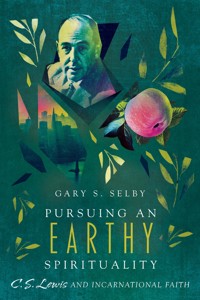
"Red beef and strong beer" was how C. S. Lewis described his education under one of his early tutors. It was, in other words, a substantial education that engaged deeply with the intellectual tradition and challenged him to grow.Gary Selby sees Lewis's expression as an indication of the kind of transformation that is both possible and necessary for the Christian faith, and he contends that spiritual formation comes about not by retreating from the physical world but through deeper engagement with it.By considering themes such as our human embodiment, our sense of awareness in our everyday experiences, and the role of our human agency—all while engaging with the writings of Lewis, who himself enjoyed food, drink, laughter, and good conversation—Selby demonstrates that an earthy spirituality can be a robust spirituality.
Sie lesen das E-Book in den Legimi-Apps auf:
Seitenzahl: 414
Veröffentlichungsjahr: 2019
Das E-Book (TTS) können Sie hören im Abo „Legimi Premium” in Legimi-Apps auf:
Ähnliche
















PURSUING ANEARTHY SPIRITUALITY
C. S. Lewis AND INCARNATIONAL FAITH
For my studentsNever give up on the longing
Contents
PREFACE
It was the kind of moment every teacher dreams of.
Earlier that day I had introduced my students, all college sophomores, to C. S. Lewis’s argument about how our decisions shape our character. Lewis emphasized that every day, a hundred times a day, we are making choices, and taken together those choices determine the kind of people we become and, indeed, our eternal destiny. I gave them lots of examples—the decision whether to share a juicy bit of gossip, say, or to put the phone down and really listen to a friend, or let our gaze rest on another person in a lustful way, or even to begin the day with gratitude or a complaint. The problem, I told them, is that these choices are usually so small, so “beneath the radar” of our consciousness that we don’t even realize we are choosing. But we are. And if we could just be aware of them and make decisions that point our lives in a good direction, we would be on our way toward becoming the people we aspire to be.
Now, hours later, here were two students from that same class approaching me on the sidewalk. When they saw me, they both lit up, as if they couldn’t wait to share some news. “We were just talking about what you said in class,” one said excitedly. “And it’s true! We really are making choices all the time.” The other nodded vigorously and chimed in, “I just never realized it before.”
More than anything else, that is the reaction I hope this book will bring. Of course, I want to shed light on Lewis’s thinking about the spiritual life, adding in some small way to the immense body of scholarship on Lewis that has been building almost since he first began to write for a Christian audience. But far greater is my hope that readers will see that what Lewis said makes sense. It’s true. And it works. Lewis’s understanding of the spiritual life resonates with Scripture and Christian theology, and also with our own deepest longings. It offers the possibility for flourishing in this life and a vibrant hope for the life to come. For those who actually practice the spiritual disciplines he offered, life will never be the same.
I wish to express my gratitude to those who have nurtured this project along the way: to Tammy, my wife, who has shared this journey from day one; to my sons, Joel and Tyler, and their wives, Ashley and Katie, who will soon be introducing my grandchildren to Aslan and the wonders of Narnia; to my friends in the Columbia Church of Christ who welcomed the references to Lewis that seemed to show up almost weekly in my sermons; and especially to Maggie Earles and Steve Koziol, who shared and fueled my enthusiasm for Lewis.
I am also grateful to those who have been instrumental in this project in a more immediate way, especially to David McNutt and the team at InterVarsity Press who got excited about this book with me. Thanks, also, to the two anonymous reviewers for their careful and gracious reading of the manuscript. Their insights and suggestions strengthened the book immensely. I also acknowledge my debt to a brief insight offered by Professor Janet Blumberg in a lecture titled “Plato and Augustine in the Writings of C. S. Lewis” given at a Lewis conference almost twenty years ago (which I stumbled upon in a podcast years later). That insight was the first seed of which this book is the fruition.
Finally, I express my deep gratitude and affection to the students throughout my career whose excitement at discovering Lewis kept me coming back to him again and again—the small group who gathered around The Great Divorce in a student apartment at George Washington University, the classes and small groups at Pepperdine University, and now my graduate students at Emmanuel Christian Seminary. But especially I am thankful to Ezra Plank and Mark Barneche, directors of Pepperdine’s Lausanne, Switzerland, Study Abroad Program, for inviting me to teach a course on Lewis, not once but twice, and for all the students of the Maison du Lac who embraced that exploration with such eagerness. The vision for this book and most of the original manuscript grew out of our conversations. The joy I saw in you was my inspiration.
ABBREVIATIONS
AM
Abolition of Man
FL
The Four Loves
GD
The Great Divorce
HB
The Horse and His Boy
LB
The Last Battle
LM
Letters to Malcolm, Chiefly on Prayer
LWW
The Lion, the Witch, and the Wardrobe
M
Miracles
MC
Mere Christianity
MN
The Magician’s Nephew
MP
“Membership”
OSP
Out of the Silent Planet
P
Perelandra
PC
Prince Caspian
PP
The Problem of Pain
PR
The Pilgrim’s Regress
RP
Reflections on the Psalms
SJ
Surprised by Joy
SL
The Screwtape Letters
T
“Transposition” (as it appears in Lewis, They Asked for a Paper)
THS
That Hideous Strength
TWHF
Till We Have Faces
VDT
The Voyage of the Dawn Treader
WG
“The Weight of Glory”
INTRODUCTION
“RED BEEF AND STRONG BEER”
Red beef and strong beer.” Those were the words C. S. Lewis used to describe life under the rigorous tutelage of his beloved mentor, William T. Kirkpatrick, “The Great Knock.” Lewis’s father had secured Kirkpatrick as a private tutor for his son in order to prepare him for the entrance examinations to Oxford University. Lewis gave a glimpse of Kirkpatrick’s character and teaching style in his endearing account of their first meeting. Kirkpatrick was an imposing figure over six feet tall, “very shabbily dressed (like a gardener, I thought), lean as a rake, and immensely muscular,” with a billowing mustache and side-whiskers that made him look like Emperor Franz Joseph. After introducing himself, Lewis nervously tried to make polite conversation by pointing out that Surrey, the region of England where Kirkpatrick lived, seemed “wilder” than he’d expected.1
Kirkpatrick’s response jarred him. “Stop!” he shouted, with a suddenness that made Lewis jump. “What do you mean by wildness and what grounds had you for not expecting it?” Lewis attempted several answers but found each subjected to further interrogation, until he was finally forced to admit that he’d had no clear rationale for applying the term wildness to that area whatsoever, a conclusion driven home by Kirkpatrick’s assertion that Lewis’s remark was completely “meaningless.”2
Lewis went on to describe his tutor as coming closer than anyone he ever knew to being a “purely logical entity” for whom “the most casual remark was taken as a summons to disputation.” Although he sometimes chafed under Kirkpatrick’s discipline, Lewis learned to think critically, and about things that really mattered. Looking back, he would say of his time there, “Some boys would not have liked it; but to me it was red beef and strong beer.”3
Lewis’s choice of words to describe the crucible of Kirkpatrick’s instruction clearly shows his gift for using language to stir our imagination. It also underscores his appreciation for the earthy, embodied stuff of life. Lewis loved food, drink, laughter, and good conversation. He relished an amble in the English countryside, a joy made all the more delightful by his anticipation of the cozy fire and pint of ale that awaited him in a pub at day’s end. But I also believe that this phrase gives us a clue to what, for Lewis, it meant to be spiritual. It points to the possibility that savoring the sensations of taste and touch, sight and smell and hearing, these experiences that are often the richest of our earthly lives, represented a doorway into the presence of God and the first step in the spiritual journey. This book explores that tantalizing possibility.
SPIRITUAL?
Unfortunately, for many people inside the church and out, becoming “spiritual” means moving in the opposite direction. Spirituality, they believe, takes us away from the earthy life of “red beef and strong beer.” That was certainly the view I grew up with. As a way of capturing that view of faith, here is a vivid memory from my life as a young adult, just out of high school, sitting around the dining room table of a family with whom I had been deeply connected for several years. The Mossmans were a fixture in our small community. Dr. Mossman was the town physician, his son was one of my best friends, and I’d dated his daughter, Hannah, in high school. They were lively and engaging and creative, and the times I spent in their farmhouse were always marked by rich conversation and laughter. One memory stands out for me. Dr. Mossman led a small brass ensemble that my brother and I were both part of, which played for various events in our town. One Saturday we had performed for a community function and were back at the Mossmans’ house sitting around their dinner table—Dr. Mossman, his son Andy, my brother, and I—talking and laughing together. I especially have an image in my mind of Dr. Mossman with his head thrown back and his mouth wide open, letting loose with a torrent of laughter. As I read back over this account, it all sounds mundane and inconsequential. But it is burned in my memory as a moment of intense pleasure, as witnessed by the fact that I remember it so vividly more than forty years later. In a period of my life riddled with uncertainty and anxiety, that moment around the Mossmans’ table gave me a fleeting sense of contentment and well-being, a time when I felt completely at home and filled with joy.
But what strikes me about that experience now is how disconnected it was from the life of faith that I had known for most of my upbringing. I grew up in a deeply religious setting, steeped in Scripture and immersed in the life of the church, all of which I am deeply grateful for. And we did have times of laughter and fun at church (usually after the worship service was over). But what we understood of God and the Christian life seemed to have nothing to do with the kind of pleasure and well-being I felt in that moment around the Mossmans’ table. We just didn’t have a place for that experience in our theology. It was as if the life of faith and the life of earthy joy were locked in separate rooms, cordoned off in opposite wings of our theological house. For us, as for so many Christians, a chasm existed between what we conceived the “spiritual life” to be and what I glimpsed in that moment of joy and laughter.
Like so many, we believed that the path of discipleship was a path toward emptiness and deprivation, where sacrifice was valued for its own sake and where Christian piety entailed detachment from our bodies and from experiences of physical sensation. When I have explored this popular conception with students, I have typically shown them two photographs side by side and asked the question, “Who’s more spiritual?” The first photograph is an iconic image of a Christian saint. He is depicted largely in two-dimensional space, which makes him look especially otherworldly. The corners of his mouth are turned slightly downward in a look of deep thought or detachment or perhaps disapproval. His face is pale, his cheeks are slightly drawn, and his eyes gaze upward to the heavens. Next to that photograph is one of an old guy who looks to be in his seventies, perched on a surfboard and riding a low, gentle wave rolling in at a diagonal to the shore. His face is plastered with a silly grin that beams joy and contentment. For most, it is obvious who is more spiritual. It’s the saint. Next, I show them a photograph of a woman sitting by herself on a pew in a large auditorium. It’s clearly a church. She is leaning forward in prayer with her head bowed, her forehead resting against the pew in front of her. Next to that photograph is one of a little boy, nine or ten years old, who has just taken a bite out of a juicy red apple. His mouth is full, and a little of the apple still hangs on the edge of his lip. With his whole face, his eyes, even the wrinkle of his nose, he is smiling broadly. That is some apple! Again, who is spiritual? Without a second thought my students answer, “Obviously, it’s the woman who is praying.”
While I don’t want to disparage the holiness of the saints or our need for prayer, I find it significant that when many of us Christians think about what it means to be “spiritual,” our minds immediately run in the direction of otherworldliness, of detachment from the physical. We have taken on what we might call a gnostic view of spirituality, according to which becoming spiritual means moving further and further away from the material, from our bodies, and more and more into our heads. When we gather as a community, in that moment when we believe ourselves to be most fully in the presence of God, we sometimes ask God to help us to remove from our minds the things of the world.
A number of contemporary thinkers have traced this tendency to draw back from the stuff of life to Enlightenment philosophy’s enduring influence on contemporary Western culture. As one example, Christian philosopher James K. A. Smith explored its roots in the thought of René Descartes, who famously declared cogito ergo sum, “I think, therefore I am.” Descartes’s axiom insinuated that our cognitive rationality functions independently of our bodies and our emotions, suggesting that we could be fully human only to the extent that we bracket out everything but our capacity for abstract reasoning. That paradigm of human existence, which splits mind from body, reaches into every area of our lives, shaping our assumptions about what we can know and leading us to be wary of emotions and distrustful of our bodies. Its influence reaches even to the way we have approached religion, as Smith trenchantly pointed out:
While the mall, Victoria’s Secret, and Jerry Bruckheimer are grabbing hold of our gut by means of our body and its senses—in stories and images, sights and sounds, and commercial versions of “smells and bells”—the church’s response is oddly rationalist. It plunks us down in a “worship” service, the culmination of which is a forty-five minute didactic sermon, a sort of holy lecture, trying to convince us of the dangers by implanting doctrines and beliefs. . . . The church still tends to see us as Cartesian minds. While secular liturgies are after our hearts, . . . the church thinks it only has to get into our heads.4
In a similar vein, psychologists Warren Brown and Brad Strawn’s fascinating exploration of contemporary neuroscience and Christian discipleship offered a parallel critique of the understanding many have of the spiritual life:
In the predominant modern view of spirituality, neither one’s physical body, nor other persons, nor church communities, are relevant. Spirituality is both disembodied (that is, manifest in the inner state of the soul, which we experience as emotions and feelings) and disembedded (an entirely individual state not directly relevant to any other person). Spirituality is an inner reality—one that is only distantly related to ourselves as physical/social beings, or to the nature of our relationships with other people or communities.5
When it comes to spirituality, our modern view of the self has sometimes led us to retreat into what philosopher Matthew Crawford called the world “within our heads.”6
LEWIS’S ALTERNATIVE
Lewis called this tendency to retreat from earthy life “negative spirituality,”7 and he devoted much of his writing to exposing and refuting it as an utter misunderstanding of God’s nature and purpose for humans. Although he addressed it explicitly in many places, his critique of negative spirituality also frequently shows up more indirectly in his works of fiction and fantasy, as the following brief example shows. In the second book of his science fiction trilogy, Perelandra, the story’s main character, Elwin Ransom, is miraculously transported to Venus at the dawn of that planet’s creation. Soon after his arrival, the evil scientist Dr. Weston, who has developed the technology of interplanetary travel, also arrives on the planet, which sets up Lewis’s captivating, imaginative account of Venus’s version of the temptation story of Genesis 3. As the plot unfolds, it dawns on Ransom that he has been brought there to prevent the planet’s first inhabitants from repeating Adam and Eve’s sin, a challenge that he is willing to accept until he realizes in a flash that thwarting Weston will mean engaging him in physical, hand-to-hand combat. He is instantly repulsed by that possibility, not only because he finds the prospect of touching Weston’s body unnerving and abhorrent but also because, as a religious person, he has always imagined the “spiritual” to be entirely a matter of the will and the mind, not the body, so that the battle against temptation takes place primarily in one’s head. The objection is immediately thrown back at him in the knowledge that the “unhappy division between soul and body” commonly assumed by Christians was never God’s original design. “Even on earth,” he admits, “the sacraments existed as a permanent reminder that the division was neither wholesome nor final. The Incarnation had been the beginning of its disappearance.”8 Thus, in what almost appears as an aside, Lewis reveals what he sees as the error of a spirituality cut off from the physical body.
Not only did Lewis view negative spirituality as a theological error, he also believed that it was the enemy of living joyfully here on earth now and a threat to our hope for the future. To be sure, Lewis unquestioningly embraced the centrality of the cross, and his writings persistently highlight how difficult, indeed how painful, it can sometimes be to embrace true repentance and discipleship. His vision of the joyful Christian life, far from being one of riotous dissipation, was actually marked by an exacting self-awareness and disciplined intentionality. But behind all of this was his insistence that we empty ourselves, not simply in order to be empty but so that God might fill us with the life that is truly life. His view reflected what the New Testament said about Jesus Christ himself, “who for the sake of the joy that was set before him endured the cross” (Heb 12:2, emphasis added). When we elevate the negative to a position of the highest value, we rob ourselves of joy and undermine the vibrancy of our message to the world.
Lewis also offered a rich alternative to negative spirituality, what we might call a spirituality of “red beef and strong beer.” His alternative was rooted in his understanding of the human self as rational, yet also as emotional and imaginative—deeply moved by beauty—and, finally, as embodied. To use his terms from The Abolition of Man, we are not just head. We are head, chest, and belly.9 His understanding of the human person in turn gave rise to an approach to Christian discipleship that involved cognitive functions but also emotions, imagination, and bodily sensations. We see that alternative played out in his own spiritual journey as he was drawn more and more to God through his experiences of beauty and longing, his glimpses of what he called “Joy.”10 Moreover, this earthy view of spirituality runs like a thread through his writings of fiction and fantasy. At the mere hint of the return of the Christ figure, Aslan, to Narnia, the bleak winter snow suddenly melts, primroses bloom, birds begin to sing, and the beauty of a luscious springtime breaks out in the land. When Ransom first finds himself on Venus at the dawn of that planet’s creation, he experiences tastes and smells and sights that are overwhelming in the intensity of pleasure they bring. After a mere taste of the juice from a gourd that grew wild on one of the planet’s floating islands, he muses that “for one draught of this on earth wars would be fought and nations betrayed.”11 When in The Great Divorce the shadowy characters from hell make a visit to the mere outskirts of heaven, what they encounter there is so beautiful and so real that it hurts.
In his nonfiction writing, Lewis similarly invited us to see God as the glad Creator. He pointed to concrete practices that embraced physical pleasure as a principle conduit through which God makes the glory of heaven known on earth. Lewis explained that the act of praise is a crucial dimension of enjoyment—enjoyment’s consummation—so that the praise of God is integrally connected to our enjoyment of God. He showed how, by being persistently attentive to our most mundane pleasures and by practicing the discipline of adoration, we might come to receive even the simplest of pleasures as a tiny theophany, in as instantaneous a way as when we hear a particular sound and automatically recognize it as the song of a bird, or when we see marks on a page and spontaneously recognize a word. Finally, Lewis gave us a way to receive these pleasures and beauties as glimpses of heaven so that, by constant practice, we cultivate the virtue of hope.
This book traces the theme of earthy spirituality through the writings of C. S. Lewis. It explores his alternative to negative spirituality by focusing on two core dimensions of true Christian spirituality, the elements of consciousness and choice. Lewis believed that becoming spiritual meant growing in self-awareness, expanding one’s consciousness of the world and others, and, most importantly, expanding one’s consciousness of the presence of God. And he believed that spirituality involved obeying God more and more out of free, uncoerced choice. This book also explores Lewis’s conviction that the natural, physical world was the handiwork of a joyful Creator and that it was infused with God’s glory so that physical pleasures could be welcomed as “‘patches of Godlight’ in the woods of our experience.”12 He believed that true spirituality involved exercising consciousness and choice in the realm of the physical so that when we bring the disciplines of consciousness and choice to our physical experience, the physical is “taken up” into, or united with, the spiritual, a view that was rooted in his understanding of the incarnation, resurrection, and ascension of Christ.13 Finally, this book unfolds the happy implications of his approach to spirituality for our pursuit of Christian discipleship and, especially, for the way that we might sanctify physical pleasures through practices of attention, gratitude and adoration, and self-control.
We begin in chapter one by examining the experience that he called “Joy,” the odd mingling of desire, beauty, sadness, and longing that all of us have felt and that, he eventually came to see, was a longing for God. We explore that experience in our own lives, and we trace the role it played in Lewis’s journey to faith. Especially, we note how, in Lewis’s early life, as for many Christians today, joy and religion seemed disconnected, almost as if they were in conflict with each other.
In chapter two, we explore the view of God that gave rise to the tension between joy and religion. In his early years, before he became an atheist, Lewis viewed God as distant, harsh, and territorial. As he grew older, he came to see God as the “transcendental Interferer.”14 But as he continued to pursue joy, that repeated experience brought him not simply to a conviction about the reality of God’s existence but much more to an understanding of God’s nature—to God as the “glad Creator,”15 the God of joy.
Chapter three focuses on the understanding of spirituality that Lewis believed grew out of the view of God he had known as a young person, what he called “negative spirituality.”16 As he understood it, negative spirituality tends to value sacrifice as an end in itself. It also tends to intellectualize faith and separate it from all that is physical, including sensory pleasure. We conclude by noting why Lewis saw negative spirituality as the enemy of vibrant Christian life and hope.
Chapter four examines Lewis’s alternative to negative spirituality, which was centered in the two essential qualities of consciousness and choice. First, Lewis held that we become spiritual as we become more and more aware—aware of ourselves, aware of others and of the world around us, and, most of all, aware of God. Second, we become spiritual as we grow in agency, that is, as we become ever more aware of our capacity to choose and as we obey the will of God increasingly out of free choice.
In chapter five, we show how these core elements of the spiritual life, consciousness and choice, play a central role in the development of character. Lewis challenged us to pay close attention to the cumulative effect of what often seem like our most insignificant choices and innermost passing thoughts since these micro-level decisions determine the kind of persons we are becoming. As examples of this principle, we explore the role of consciousness and choice in dealing with emotions, cultivating humility, confronting negative attitudes, and nurturing compassion toward others.
Chapter six applies these two dimensions of the spiritual life to our physical lives, especially to the earthy experience of eating. We explore the way Lewis invites us to bask in God’s joyful presence as it comes to us even in the humblest pleasures of our lives, by embracing the disciplines of attention, gratitude and adoration, and self-control.
Chapter seven focuses on the way that seeking community with others plays a crucial role in our personal spiritual growth. Against his natural inclinations, Lewis himself realized that rubbing shoulders with people who are different from us, those whom we might otherwise avoid, has an uncanny power to expand our self-awareness and our consciousness of God. We explore the way that in his writings and his life Lewis modeled curiosity, empathy, and humility as he challenged us to embrace what he came to see as the “fantastic variety of the saints.”17
Chapter eight explores the impact that Lewis’s understanding of “earthy spirituality” can have on the vibrancy of our hope for heaven. Especially, we explore the tantalizing question Lewis encouraged us to ask in our moments of joy, pleasure, and beauty: If these far-off, momentary glimpses of God’s presence are so rich and wonderful here, in a world marred by sin and cursed by suffering, what must the life be like that awaits us in heaven?
Finally, we conclude by returning to the theme with which we began, that of joy. We trace that theme through the Bible, exploring how the joy of the Lord runs like a golden thread through all of Scripture, and we show how it provides coherence to all that we understand of living a Christian life.
WHY C. S. LEWIS STILL MATTERS
Once, when asked where he wanted the royalties for his books to go after his death, C. S. Lewis predicted, “After I’ve been dead five years, no one will read anything I’ve written.”18 As one person quipped, “He would have made a lousy estate planner.”19 In the years since his death Lewis has become the “Elvis Presley of Christian publishing.”20 Within a decade of launching its C. S. Lewis Signature Classics in 2001, HarperOne reported sales approaching ten million.21 His Narnia series is now in its third film adaptation. When the Huffington Post asked its readers to name one religious book that had most changed their lives, the number one choice was The Screwtape Letters.22 And when Christianity Today asked contributors and church leaders to nominate the ten best religious books of the twentieth century, far and away the most popular author was Lewis, and the top choice was Mere Christianity. The editors said, “We could have included even more Lewis works, but finally we had to say: ‘Enough is enough; give some other authors a chance.’”23
What these sources demonstrate about Lewis’s enduring influence I have seen directly in the lives of students over the past twenty-five years of university teaching and ministry. More times than I can count I have found myself invited to explore Lewis’s writings with students at gatherings that range from late-night fraternity reading groups to campus ministry retreats to spiritual formation training workshops to undergraduate and graduate academic courses. For most, the experience has been life changing. As one student put it, “I will never see the world in the same way again.”
For these as for so many others, Lewis provides an intellectually defensible account of Christian faith, in marked contrast to the common view of faith as wishful fantasy (and nonbelief as the only intellectually honest response to the empirical data of the universe). Lewis also gives them theological coherence, by which the biblical narrative and their own personal experiences of joy and longing as well as suffering and pain seem to make sense. They find practical wisdom on topics ranging from prayer and temptation to relationships, emotions, and even good writing. Because he was so well read in historical theology—from Athanasius and Augustine to Anselm and Aquinas, just to name a few from the A section—Lewis provides access to a rich theological tradition that most would otherwise never encounter.
But most of all, Lewis gives us a way of living out the faith that is joyful and full of vitality—as God intended it to be. Lewis urges us to pay close attention to the rich, often mundane experiences of pleasure and delight that mark our days and to view these wonderful sensory experiences as glimmers, from an unimaginable distance, of the very glory of God. He bids us wonder at what the nature of God must be to have created this. And he invites us to imagine what it might mean to live eternally in the presence of this God. In offering all of this, he presents a way of living well, a way of living that embodies the Christian message as truly good news. And whatever else is true of our lives, we who claim to follow God, the glad Creator, ought to be known as people who live well.
CHAPTER ONE
AN INCONSOLABLE SECRET
OUR LONGING FOR JOY
Early in his spiritual memoir, Surprised by Joy, C. S. Lewis recounted a moment from childhood when he stood beside a flowering red currant bush on a summer day and was suddenly overcome by a feeling of overwhelming desire, a sensation of wistfulness and longing, “without warning, and as if from a depth not of years but of centuries.” He struggled to find words to describe what he felt, although later he would say that Milton’s phrase, “the enormous bliss of Eden,” came close. And then, just as quickly, the experience was gone. “The world turned commonplace again.” The sensation had lasted for just a brief instant and yet, he realized all other pleasures were nothing compared to this.1
Most of us have known that experience, that fleeting glimpse of paradise that steals over us unbidden, often when we are not looking. I remember sitting on a bus crowded with commuters one fall morning, quite early. I was looking over my notes for the class I would teach later that day when the bus passed a small lake at the base of a sloping hillside blanketed by oaks and maples ablaze in the full color of autumn. I looked up and instantly felt the sensation of sweet desire, the ache of beauty, the mixture of longing and sadness all flood over me. Lewis later called it “the scent of a flower we have not found, the echo of a tune we have not heard, news from a country we have never yet visited.”2
The oddest things can trigger these feelings: a particular view, a memory, certain smells or sounds. For the narrator of Marcel Proust’s famous novel, Remembrance of Things Past, a mere bite of a madeleine cookie dipped in a hot drink unleashed a stream of nostalgia:
No sooner had the warm liquid mixed with the crumbs touched my palate than a shudder ran through me and I stopped, intent upon the extraordinary thing that was happening to me. An exquisite pleasure had invaded my senses, something isolated, detached, with no suggestion of its origin. And at once the vicissitudes of life had become indifferent to me, its disasters innocuous, its brevity illusory—this new sensation having had on me the effect which love has of filling me with a precious essence; or rather this essence was not in me, it was me. . . . Whence did it come? What did it mean?3
In those moments we are lifted out of our anxiety and self-consciousness. The sensation of timelessness breaks into our experience, a sensation captured in Paul Tillich’s pregnant phrase, the “eternal Now.”4 But then, just as suddenly, the moment is gone and we are plunged back into the “reality” of our day-to-day lives.
What are we to make of those experiences? Do they have anything to do with God or with the life of faith? What would it mean for us if they did? In his famous sermon to the citizens of Athens, recorded in Acts 17, the apostle Paul explained that God, who had given humans “life and breath and all things” (Acts 17:25), had deliberately left traces of divine love all around us, in the hope that we would seek God and find life—although, he added, God is not far from each of us. Lewis came to see these moments of blissful longing as signs of God’s presence, traces of God’s love that captivated his heart. That sensation, which he called joy, fell upon him before he even had words to describe what it was. In his early years, it became alternatively an obsession and a haunting that sometimes made day-to-day life a challenge. But eventually those strands of joy formed the cord through which God drew Lewis to faith. They also became the foundation for one of his most compelling arguments for the existence of God and the basis for what he had to say about the spiritual life. For Lewis, joy held the secret of living with gladness in the moment and hope for the heavenly life to come, a realization that came out of a personal spiritual journey marked in its early years by a persistent tension between joy on the one hand and religion on the other. And so, although this book is not a biography, we begin with a brief account of his journey, tracing that tension between his religious life and these glimpses of what he called the “inconsolable secret.”5 First, however, let us consider our own glimpses of joy.
THE ENORMOUS BLISS OF EDEN
In a haunting episode from The Pilgrim’s Regress, which he published in 1933 soon after becoming a Christian, Lewis offered this image of joy. At the beginning of the story, the main character, John, who is languishing under the yoke of oppressive religion, has a glimpse of beauty that stabs his heart with desire. One day when he is out wandering along a road by a stone wall, he notices something odd up ahead—a window in the wall. He approaches the window, and when he looks through it, he sees trees and primroses.
He remembered suddenly how he had gone into another wood to pull primroses, as a child, very long ago—so long that even in the moment of remembering the memory seemed still out of reach. While he strained to grasp it, there came to him from beyond the wood a sweetness and a pang so piercing that instantly he forgot his father’s house, and his mother, and the fear of the Landlord, and the burden of the rules. . . . A moment later, he found that he was sobbing.6
Although our own experiences might differ in detail, most of us have known what it feels like to have that ache of longing fall upon us, to yearn deeply for that place, that possession or achievement, that relationship that will finally fulfill us, that will take us out of our loneliness, anxiety, and striving. We have all had experiences that we look forward to or remember or daydream about that make our hearts throb with desire. They are glimpses of Eden.
Mine often involve the memory of times away from the typical routines and demands of my life—a camping trip we once took to the Grand Canyon when my boys were small or the week we would spend each summer with dear college friends in Maine. In one especially vivid memory, my wife and I are in a tiny village in the Sierras, set in a small valley ringed by mountains crowded with tall pines that give way to soaring granite cliffs. It is early in the morning. The sky is a deep blue. The air is cold. I can see my breath. The snow on the ground, hardened during the night’s freeze, crunches under my boots. As I walk, I catch the scent of pine mixed with wood smoke.
As that last example shows, the sensation of desire often comes over me in the presence of nature’s beauty—the view of mountains covered with frost that I see from my office window when I look up from my desk or the scene I caught from the bus on that early morning commute. Being near the sea has that power over me. I hear the rhythm of the surf as waves break on the shore again and again. An ocean breeze caresses my cheek. The sun is warm on my face. The smell of the sea brings back a flood of memories from childhood vacations at the ocean. But I have also experienced it listening to music or at certain moments when I am watching a movie or reading a good book.
The feeling sometimes comes when I look ahead to some event in the future—a trip I hope to take, the approach of fall, or maybe the first snow of winter. I often experience it when I daydream about the coming of Thanksgiving or Christmas. In my vision, I am surrounded by my family. The house is filled with the sound of conversation and laughter and the smell of food.
Just thinking about these moments creates intense longing in me. It aches and stabs. I want to be there so badly. I know what it is to look forward to those moments—to have the kind of feeling, Lewis said, that comes over us when we first fall in love or we daydream about taking a journey to a distant country.7 When I know that one of those times is coming, the anticipation of being there is almost overwhelming; indeed, part of the richness of the experience is the anticipation itself. Because I know that when I am there, all will be well. I will be completely content; all of my worries and cares will fade away. I will be lifted out of insecurity and self-consciousness. All my fears about the future or my regrets from the past will melt away. I will be able to enjoy the people I am with completely. Finally, I will be There.
I also know what it is like to look back on those experiences in the past. I remember them as being perfect (not like my life at present). My mind re-creates of those times a memory of paradise.
But, if I am honest with myself, I know that when I’m actually in those moments, they are never quite as perfect as I thought they would be. I have been given the gift over the years of vacations in the mountains or by the seashore, as well as wonderful family gatherings. In so many ways they were magical, and they remain the source of many of my richest memories. But I know that, in the moment, they were not perfect. There were still stresses and worries, traces of tension. Running through all was the painful sense that the time was flying, like sand slipping through my fingers. When the long-awaited moment finally comes, it’s as if I’ve been eagerly awaiting Christmas morning and at last have opened my gifts, and then I look around with a sense of loss and disappointment and ask, “Is this all?”
More than any other author I have ever read, Lewis has helped me make sense of that experience. He invited us to consider the possibility that our own longing, this “inconsolable secret,”8 might be a window on the nature of God, a clue to the purpose for which we were made, and the key to living the good life. His conviction of that possibility grew out of a struggle to come to terms with his encounters with Joy, a struggle that lay at the heart of his own spiritual journey.
JOY VERSUS RELIGION: LEWIS’S SPIRITUAL JOURNEY
As Surprised by Joy makes clear, much of Lewis’s early spiritual journey was marked by a tug-of-war between the opposing forces of faith and religious observance on the one hand and these recurring glimpses of joy on the other. He described his earliest years, when he was a small child, as an idyllic time often spent in imaginative play with his older brother, Warnie. This was also the time when he had his first glimpses of joy. During these years, he was clearly exposed to religion, but it was a religion in which God was a distant figure and in which faith had nothing to do with joy. We get a hint of the nature of his view of God when his mother, Flora, became sick and eventually died. The year was 1908, and Lewis was just nine years old. He had been taught that God would grant his prayers if only he would pray with enough faith, so he set about trying to muster a sense of conviction within himself (which was what he thought it meant to have faith) in order to secure her healing, almost as if by sorcery. As he saw it, God was a magician who might, if conditions were right, grant his wish and then go away and leave him alone.
In the years of adolescence that followed, the battle lines between religion and joy seemed to move back and forth in Lewis’s life. At first religion seemed to gain the upper hand while joy retreated into the background. In the fall of 1908, his father, Albert Lewis, engulfed in his own grief over Flora’s death, sent his two sons to the Wynyard School, a boarding school that Lewis called “Belsen,” after the concentration camp in Nazi Germany.9 The school was ruled by a despotic, mentally ill headmaster the students called “Oldie.” There, Lewis became a believer in the sense that he attended church and tried to actually practice his religion, but it was a fearful faith dominated by what Lewis characterized as a persistent, oppressive “fear for my soul.”10 Almost at the same moment, the glimpses of joy he had known in his earliest years vanished from his life entirely.
The lines shifted, however, when at age thirteen he was sent to a second boarding school, the Cherbourg School, which he called “Chartres,” and where, by his own admission, he lost his faith. Although a number of influences hastened this process—among them dabbling in the occult and being exposed to parallels between Christianity and pagan mythology, all overlaid with the deep pessimism toward the universe that he had imbibed early in his life—what he most remembered about his loss of faith was simply how eager he was to be rid of it, so onerous had it been. It was a burden from which he “longed with soul and body to escape.”11 Ironically, this was also the moment of rebirth, when the rich experiences of joy returned to his life.
The two decades that followed represent the season of Lewis’s life when he was first an atheist and then an Idealist, holding to a philosophical position that admitted the possibility of some impersonal force or Spirit guiding history.12 Throughout this time, he arduously resisted the prospect that Christianity might be true. Yet it was also the period when the quest for joy became his master passion. In 1913, he transferred to a third boarding school, Wyvern College, which he attended for just one year. It was a year marked by the contrast between his “inner” and “outer” lives. The outer life was marked by the overwhelming drudgery of surviving the school culture’s ruthlessly competitive social hierarchy, which was centered on sports, and the school’s system of involuntary servitude known as “fagging.” Lewis’s inner life, by contrast, was suffused with glimpses of joy so extravagant and beautiful that they almost hurt. After one year in this purgatory, he found release in the person of William T. Kirkpatrick, who tutored Lewis over the next two years in his home in order to prepare him for Oxford. Lewis came away from his time with Kirkpatrick more deeply confirmed in his atheism but also with a sharpened intellect and a lifelong passion for logical argument—a facility that would play a crucial role in his coming to faith, by compelling him to make sense of the recurring experiences of joy. He would speak of Kirkpatrick with reverence and gratitude for the rest of his life.
Lewis successfully completed his scholarship examinations in the winter of 1916 and was admitted to Oxford the following summer, but before he could begin in earnest, he enlisted in the army and, in November 1917, found himself in the frontline trenches of northern France where he witnessed the carnage of the First World War and where he was wounded in April of the following year.13 Returning to Oxford in January 1919 at the end of the war, he spent the next four years studying Greek and Latin literature, philosophy and ancient history, and English literature, before being appointed as a tutor in philosophy at University College in 1924 and, the following year, a fellow and tutor in English literature at Magdalen College, where he served until his appointment to the chair of Medieval and Renaissance Literature at Cambridge University in 1954.
As Lewis recounted it, it was during this time, when he was a student and then a fellow at Oxford, that his quest to find joy reached its most fevered pitch. He became something of an expert in Norse mythology in the belief that it would lead him to joy, but once he had built the temple, he awakened only to discover that “the God had flown.”14 His earlier boarding school experience had already convinced him that ambition offered no answer, and over time he considered but finally eliminated both sex and the occult as possibilities. During this period he also found the defenses he had erected against God beginning to crumble. He came to realize that his favorite writers, if not all actual believers, were “dangerously tinged with something like religion, even at times, with Christianity.”15 He found himself surrounded by close friends whom he truly respected and enjoyed, who were either Christians or at least sympathetic to Christianity, among them Owen Barfield, J. R. R. Tolkien, Hugo Dyson, and others. And in a development we will consider in greater detail in the next chapter, he was forced to the logical conclusion that there had to be a source to which these experiences of joy were pointing, if not in the natural world then in a world beyond this one. From there, it was but a short distance to that point when, on a summer evening in 1929, with great reluctance, he surrendered to God.16 As we shall see, coming to terms with the experience of joy not only led him to admit that there was “another country” ruled by the God he had all his life avoided; it also hinted at the fundamental character of that God—the God of joy. In this way, what for most of Lewis’s early life had been completely separate, these experiences of longing and his faith in God, finally came together, a process driven by the haunting of our “inconsolable secret.”17
THE INCONSOLABLE SECRET IN LEWIS’S WRITINGS
In a number of his early writings, we find traces of Lewis’s haunting glimpses of joy. One compelling expression of that longing occurs in the first book he ever produced, an edition of poetry titled Spirits in Bondage: A Cycle of Lyrics.18 Lewis published the book in 1919, just after returning from World War I—and before he had returned to Christianity, or even theism. Published under the pseudonym Clive Hamilton (his first name and his mother’s maiden name), the slim volume contained poems he had been writing as early as his teen years, along with others that he wrote during the war. In some we hear anger at a God who, at this point, Lewis doesn’t even believe exists.19




