


Erhalten Sie Zugang zu diesem und mehr als 300000 Büchern ab EUR 5,99 monatlich.
- Herausgeber: IVP
- Kategorie: Religion und Spiritualität
- Sprache: Englisch
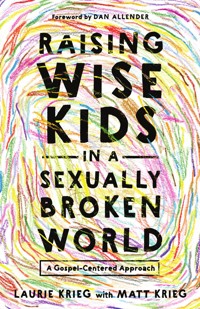
"This book is a gift to all parents trying to navigate the complexity of raising children in today's world. ... I wish I could make this book required reading for every parent." - Christine Caine, founder of A21 and Propel Women How can you raise your children to not just to survive but to thrive in a world filled with complex and confusing conversations about gender, sexuality, and relationships? Navigating the birds and bees is challenging enough for parents. Kids today are faced with all sorts of complex issues, and often at a very early age. When is it too early to talk about sex? How can we begin to view the gender conversation? How do we help our kids not to approach the world fearfully but to walk into it confidently--even in the world's most controversial spaces? Laurie and Matt Krieg believe that, as a Christian parent, you can approach sexual topics with confidence and grace by laying a solid gospel-centered foundation from early childhood onward. Raising Wise Kids in a Sexually Broken World offers you theological guidance, parenting principles, and age-appropriate insights for addressing complex issues in healthy ways: issues like marriage and singleness, God's design for sex, same-sex attraction and sexual orientation, gender identity, sexual abuse, and pornography. In Raising Wise Kids in a Sexually Broken World, you'll learn to: - Present God's purpose for both marriage and singleness - Explain God's design for sex with clarity - Discuss gender identity from a biblical perspective - Protect your children from sexual abuse - Prevent porn addiction - Promote online safeguards Raising Wise Kids in a Sexually Broken World is a timely and essential resource for today's Christian parents. Rather than retreating in fear, you can respond to the brokenness of the world with the goodness, truth, and beauty of the gospel and help your kids to do the same. Cast a gospel vision for your kids so that no matter how they experience sexual brokenness within them or around them, they have the tools they need to choose the way of Jesus no matter what.
Sie lesen das E-Book in den Legimi-Apps auf:
Seitenzahl: 384
Veröffentlichungsjahr: 2026
Das E-Book (TTS) können Sie hören im Abo „Legimi Premium” in Legimi-Apps auf:
Ähnliche



















THIS BOOK IS DEDICATED TO all of the moms, dads, grandparents, caregivers, and children’s pastors who are looking around at this wild world wondering,
“How do we equip the next generation with a gospel vision for sexuality?”
May the Holy Spirit work through these pages to empower you to do exactly that.
CONTENTS
FOREWORDDan Allender
MYWIFE, BECKY, AND I built one home together. We had heard it was an endeavor that often divided couples even to the point of divorce. We walked into the endeavor with some degree of wisdom but utterly unaware of what it would cost. If you have built a home or hired someone to do upgrades or repairs, you have heard the axiom: “Double the cost, double the time.” The cost may not be as severe as the axiom, but knowing that even the most experienced and honest builder can’t predict the exact outcome is essential.
In our case, we had not only an experienced and honest builder but one who was wise, talking to us often about the process, challenges, risks, and decision points that required our active involvement rather than making those decisions on his own. It took him more time and labor, and it would have been vastly more straightforward to execute our initial plans according to his desire.
I felt the same respect and appreciation while reading this holy, brilliant, and wise book. Laurie is a brilliant architect, builder, and reader of the human heart. She knows her craft. What she is building is infinitely more important than a house—she is inviting you to the holy enterprise of helping your children make sense of their bodies, desires, struggles, and sexuality in a Christian world that too often commands purity, ignores the inner war of desire, and hopes for the best.
That is similar to telling a child, “Here is the blueprint—let me know when you finish the house to my specifications.” Telling a child to be faithful and do what is right when the world constantly alters the plan and offers visions of better design is at least foolish if not passive and even cowardly.
But other than building a few bookshelves, I have no clue how to build a whole home. I need help in one of the most crucial building projects I will ever endeavor to form—the building of a holy, sensuous, God-honoring, playful sexuality that enters the reality of both brokenness and beauty. What I do for myself will lead to what I offer for my children.
Laurie understands that the good fruit we desire to give to our children must grow from the soil of our healing and redemption. Where there is ignorance or, worse, fear and shame, we cannot offer the goodness in word and deed that will help our children and grandchildren come to themselves and negotiate a world that seldom offers the glory and honor God has written into our bodies.
We need holy freedom, and we need keen wisdom. This glorious book offers both. Laurie tackles every hurdle that needs to be engaged to help you as a parent talk with your children about where babies come from; address issues of sexual orientation, gender dysphoria, and transgenderism; and navigate sexual abuse and sleepovers. Every knob, handle, light switch, and tile choice gets engaged to help you make good decisions.
She humbly offers a glimpse into the process she and Matt have created to give you a picture of what and how you might want to build. You may not agree with every choice, but the depth and breadth of her biblical foundation are substantial enough to help you shape your language and discern the next step when the moment’s challenges feel overwhelming.
Are you saving money for your children’s education? Do you regularly insist they brush their teeth and clean up their rooms? Do you parent to help your children know and desire God? If so, you need to step into some of the hardest and holiest discussions earlier and more profoundly than you likely received from your parents. It will lead to your children’s provision and build glory for yourself and your whole family.
INTRODUCTION
ONEOFTHEBESTPARTS of parenting is watching our kids grow: that first look into their open eyes, that first smile, that first word, the first bike ride, that first word read, that first day of school.
One of the hardest parts of parenting is there is no 24/7 human parenting coach to help us as our kids grow. That does not keep us from trying to find one. Those middle-of-the-night feedings when we don’t know if our baby is still hungry, has to burp, or just needs to go to sleep? We desperately text friends who may be awake or ask the internet to help us. Those moments where we don’t know if a fever is “just a fever” or something more serious that requires a visit to urgent care? We reach out to any nurses or doctors we may know while typing symptoms into Dr. Google (who always tells us those symptoms require emergency care and probably an amputation or two). Those years we are discerning what God might have for our kids’ education? We solicit a jury of our peers, pray, and research online.
Then we face questions about sex, gender, and sexuality. We ask our friends their opinions, and we can be surprised at what they say. Sometimes they believe something contrary to our views. Or they live it out differently. Or they were actually going to come to us with the same question! In desperation, we start to go to ask the internet but quickly see that the onslaught of opinions and statistics is overwhelming and unhelpful to our real lives right now.
So we close the laptop and leave our conversations with friends, but we realize we are still parents. We are responsible for raising our kids in this wild world with wisdom.
And it is wild.
Currently, 28 percent of Generation Z identify as LGBTQ, compared with 10 percent of all adults.1 At least one study found that 87 percent of Christian singles on religious dating sites believe it is okay to have sex outside of marriage,2 while Christians who do not regularly watch pornography are in the minority (54 percent sometimes watch it and 49 percent are “comfortable with how much they watch”).3 One in five teenagers see pornography by the time they are ten years old, and roughly three out of four see it by the time they are seventeen.4 There has also been a 2,400 percent increase in referrals for children wanting to gender-transition between 2010 and 2019 in the UK (75 percent of whom are natal girls),5 while one in four women and one in ten men experience unwanted sexual touch by the time they are eighteen.6
When we hear these statistics, questions pour out of our brains like:
“How do I talk to my kids about God’s design for marriage and singleness?”
“What do I say when my kid asks about the rainbow flags at the library?”
“How do I talk with my five-year-old about her aunt who now identifies as her uncle?”
“When are we supposed to talk to our kids about sex—and how?”
“How do I keep my children’s bodies safe?”
“How can I talk about the evils of pornography without scarring my children?”
We desperately look around for our personal parenting coach who can tell us what to say, but the coach never shows up. So our brains go straight to trauma responses. Some of us choose to fight. You see us show ourselves in rants on social media. Some of us choose flight. You can pick us out by how many jokes we make to avoid teaching our kids. Others of us fawn. We desperately try to people-please our way into peace with everyone in this conversation. And still others of us freeze. Picking up this very book was an absolute act of faith.
But then we take our fear to our kids and try to figure out how to bubble wrap them or fight the enemy of the day for them. Or we simply curl up in a fetal position while scrolling Instagram until the anxiety lessens.
Later, after our kids are in bed and the phone is tucked away, the tears start to fall. We come face-to-face with our helplessness and find ourselves begging Jesus to come back and make it all better.
Me too.
But he hasn’t come back yet. So what are we supposed to do?
This is why we wrote this book: to help parents discover and implement gospel wisdom in one of the most controversial spaces of our age.
I have professionally been in this conversation for ten years, and our oldest child is ten years old. Every person I have interviewed for our podcast, every book I have read, and every coaching conversation I have taken part in I have filtered through my mom lens to see how I can teach our own kids bite-sized biblical truth. Not only have I engaged these conversations in ministry, but my own story includes ongoing same-sex attractions and surrender of those attractions to Jesus. My husband, Matt, who offers his wisdom in this book as well, is a licensed mental health therapist who specializes in marriage, sex, and sexuality. He has his own story of pornography addiction and freedom from it. Further, when we went through marriage struggles, it was the theology of marriage that saved our marriage. (You can read more of our story in An Impossible Marriage: What Our Mixed-Orientation Marriage Has Taught Us About Love and the Gospel.7)
Matt and I perhaps have had more opportunities than most Christian parents to think about these topics, to talk with experts, and to practice what we learn in real time in our home. Do you know what we have discovered?
The gospel is the secret.
I’m not saying that because “the gospel” is some sort of code word to get us into Christian spaces. I truly believe it. Every time I start to think about teaching my kids about God’s design for marriage and sex or scramble for what to say when their male friend suddenly identifies as their female friend—and I feel my prefrontal cortex begin to shut down with anxiety—I remember the gospel. I remember how God created the world, and it excites me. I remember how God knows about the brokenness in this world, and it calms me. I remember how Jesus rescued and is rescuing the world, and it empowers me to teach my kids with peaceful courage.
It gives me confidence to teach because that’s how God taught us. The Bible does not begin with, “In the beginning sin distorted everything, so avoid sin.” It begins with, “In the beginning God created the heavens and the earth, and it was good.” God created the world good! He created gender, marriage, sex, and bodies good, and then sin distorted them. Breathe in his goodness. His beauty. And then respond in peaceful confidence when sin seeks to invade his beauty.
This beautiful, peaceful, gospel-saturated theology of “yes” is the anchoring lens with which I want my kids to view this broken world. An anchoring bias is a cognitive pattern in which the first piece of information we encounter on a topic is the one we compare every subsequent idea to when that topic comes up again.8 No matter what we hear afterward, it is extremely hard to shake that initial concept. What is the first anchoring piece I want my kids to hear about gender, marriage, sex, and sexuality? Is it the darkness? The evil? The fearful things that keep me up at night? Or is it the gorgeousness of God’s design and the knowledge that his will, plan, and sovereignty over the entire world—including over our sexuality—will not be thwarted?
Yes, that one. I’ll take that last one.
It’s interesting to me that when we focus on this theology of “yes,” it shapes our kids’ brains and personalities for the better. In Jonathan Haidt’s work on how to help kids thrive without debilitating anxiety, he talks about curbing “defend mode” in them. Defend mode is where kids grow up with a default to be suspicious of new things, always look for threats, and approach life defensively. This leads to anxiety, and long term it can inhibit learning and growth. “Discover mode,” on the other hand, is where kids’ default is to view the world with open eyes, look for new opportunities, and become eager for new experiences. These kids tend to be happier and more sociable, and such a viewpoint fosters learning and growth.9
How do we cultivate “discover mode” in our kids? How do we help them approach the world not fearfully but walk into it confidently—even in the world’s most controversial spaces? I’ll offer two ideas on which this book is written. First, kids need good soil. They need an anchoring gospel foundation that focuses on God’s beauty. We parents lay this foundation with the power of the Holy Spirit. Half of this book is going to be focused on laying that foundation in us as parents first so that when we parent our kids on topics related to marriage and sexuality, we are truly parenting, not parroting.
Second, as parents we need to know how to walk those foundations with our kids—that’s the other half of the book. Our kids need bite-sized, age-appropriate introductions to the brokenness in our world. They need wind to make their roots strong. To highlight this necessity, Haidt cites a 1980s experiment where scientists sought to create a closed artificial ecosystem. They gave it the ideal amount of air, water, and soil nutrients. This shrink-wrapped system failed for many reasons, but one of the most significant was that trees need wind to grow.10 Without wind, trees’ roots do not become strong enough, and the trees fall over from their own weight.
Trees are “antifragile.” And they are not the only antifragile things in the world. Our immune systems are antifragile, needing germs around them to grow stronger. So are our muscular systems. And so are our kids. “Children are intrinsically antifragile,” Haidt says, “which is why overprotected children are more likely to become adolescents who are stuck in defend mode. In defend mode, they’re likely to learn less, have fewer close friends, be more anxious, and experience more pain from ordinary conversations and conflicts.”11
Kids need to bump into the world in age-appropriate ways in order to thrive. They cannot be bubble-wrapped. They also should not be tossed to the world to be taught by its ideals. They should be planted in gospel soil and offered enough wind to strengthen their roots. I cannot even begin to count how many hyper-sheltered-kids-turned-adults are in my husband Matt’s mental health office because of a sexual addiction. The research says that when kids are not taught about sex, they turn to pornography—30 percent say they learned “a lot” to “everything they know” about sex from it.12 That is truly disturbing when we also know that anywhere from one in three to nine in ten pornography videos depict violence, and watching such violent content can lead to real-life violent actions in a person.13
The good news is kids want to talk and learn, and when they do, it is beneficial. In just one secular study, researchers found that when teens talked with their parents about pornography, almost three in four (71 percent) said the conversation “made [them] feel like there are helpful resources other than pornography to explore [their] sexuality.”14 Yes. There are helpful resources. We parents, through the power of the gospel, are that helpful resource.
That is the trajectory of this book: We are going to lay the foundation and then walk the foundation. To get more specific, the book is split up into six gospel foundations: the gospel, marriage and singleness, sex, gender, honoring God with our bodies (body safety), and honoring God with our minds (porn prevention). Each foundation is split into two chapters—what I call “Lay the Foundation” and “Walk the Foundation.” The “Lay the Foundation” chapters teach us as parents the beautiful gospel concepts God lays out for us in the Bible, and the “Walk the Foundation” chapters teach us how to practically teach it to our kids, not just so they avoid sin and harm, but so they live confidently and peacefully out of God’s gospel design for their bodies.
Each “Lay the Foundation” chapter begins with specific questions parents are asking in these spaces. Each “Walk the Foundation” chapter begins with a key teaching for parents to implement with their kids. When I get specific about how to implement, feel free to adopt my ideas completely, adjust them, or use the foundational wisdom and find a completely different way to use the gospel teaching. We will not be offended. The important thing is that our kids are being tenderly taught with God’s wisdom.
Let’s define what I mean when I say “kids.” This book is focused on helping Christian parents of kids aged twelve and under who hold to a historically biblical view of human sexuality. Why are we cutting it off at twelve? There are several great books out there that help parents talk about these topics with their teenagers, but they understandably tend to be written in reaction to culture as opposed to proactively laying foundations. As a mom of young kids and a leader in this space, I have often wondered, “Is there anything we can teach before they are thirteen that will help us have those conversation more easily?” I believe there is. Therefore, this book.
Saying that, having conversations about topics related to gender identity, marriage, and sexuality with adults is not easy. Explaining them to little kids is even more challenging. We have tried our best to take these complex, nuanced topics and explain them in a robust but simple way so parents not only understand them themselves but can teach them. If a reader wants to learn more or dive more deeply into each topic so they can walk with their kids through more specific questions, we have Next Step Resources listed at the end of this book. We have also included discussion questions at the end of each chapter for reflection alone, with our spouses, or with a small group of friends.
Additionally, because at times this book describes our own parenting decisions as we’ve tried to walk wisely in a sexually broken world, I want to say we have received permission from our kids for every story we share.
Well, here we are: I haven’t found a 24/7 human parenting coach for us, but I hope we can be fellow parents in the trenches walking through this book together.
And, truly, we do have a parenting coach. His name is the Holy Spirit, and he is our counselor, friend, and advocate. He is not only with us every minute of every day, but he goes before us and behind us, and he is within us. He cares more about these conversations than we do. He loves our kids more than we do.
And even when we are anxious, he is never biting his nails.
The goal of this book is to equip our kids so that no matter how they experience sexual brokenness within them and around them, they have the tools they need to walk in the way of Jesus no matter what.
It starts with us as parents learning it first.
By the power of the Holy Spirit, we will teach it to our kids in incremental ways.
Lay the foundation. Walk it.
Ready to dive in?
I am.
1. THE GOSPEL
Lay the Foundation
“How do I teach my kids about Jesus? I’m so overwhelmed. And how does telling my kids about the gospel relate to sexuality and gender? I’m sure I’ve heard a sermon about all of this at some point, but I’m just me. I don’t know how to teach this.”
SAYWEWERETOSITDOWN together with a cup of coffee and I asked, “What is your greatest hope for your kids?” What might you say? I’d wager most parents would say something along the lines of, “I want my kids to know and love Jesus for all of their days.” Or if they’re feeling extra spiritual, “I want them to glorify God and enjoy him forever.” I would agree.
Now, what if the apostle John rolled up with his own espresso? I’m thinking he would nod with us, talking about his spiritual children. “I could have no greater joy than to hear that my children are following the truth” (3 Jn 4). If we kept the conversation going (John can stay—I mean, he brought his own espresso), I wonder if we would start talking about less on-the-nose spiritual hopes for our kids like, “I hope they get good jobs. If God calls them to marriage, I hope they marry someone amazing. I hope they have sweet friends and that they have a joyful, long life.”
When would our coffee chat turn fearful? As parents, we are hyper-aware that we have no guarantees our kids will do any of these things. As we look at each other over our coffee, smiling anxiously now, we might start subtracting years in our heads. “What is eighteen minus how old they are?” Our eyes widen, and we realize we have only so many years to help them know all they need to know to navigate this wild world with wisdom. If we’re close friends, we might start praying fervently together. More likely, we pack up our cups and go home to sit in a corner terrified or quickly try to teach our kids some sort of lesson to make ourselves feel better.
Does that sound about right?
Recently, U.S. Surgeon General Vivek Murthy issued an advisory about the mental health and well-being of parents. His warning cites research stating that 48 percent of parents find daily life completely overwhelming compared with 26 percent of other adults, and 33 percent of parents report high levels of stress in the past month compared with 20 percent of other adults.1 That feels kind of affirming to hear, doesn’t it? The reasons given for our anxiety include financial strain (amen), economic instability (yep), time demands (we’re spending 40 percent more time with our children than we did in 1985, yet we’re also working more), our children’s health (in the United States, one in five children have a special healthcare need), their safety (shudder), parental isolation and loneliness (up to 77 percent of parents experience loneliness compared with 55 percent of nonparents), technology issues (don’t even get us started on screen time fights), and cultural pressures and fears about our children’s future (we know).2
Dr. Murthy adds commentary to these statistics, saying, “As technological and economic forces have reshaped the world at a dizzying pace, it has . . . become harder for parents to prepare children for a future that is difficult to understand or predict.” Thank you, Mr. Kindhearted Surgeon General. We should have invited you to coffee. “Parents across all backgrounds want to provide their kids with a foundation for happiness and success. Yet too many fear they won’t be able to provide what’s necessary or their kids won’t be able to access what they need in order to lead a fulfilling life.”3 In other words, we want to give our kids every possible advantage in life, but we are freaking out because we can’t.
Cool, we might be thinking. But what can we do about it? We hear these statistics and Dr. Murthy’s affirmations, but then our kids wake up, or they get home from school, or they turn off whatever screen we let them watch, and we are neck-deep back in the crazy. We cannot read these things and conclude, “Great! I think I’ll pass.”
This is the job. We cannot outsource it. We cannot walk away and, of course, we don’t want to. But is there a way to make it better? A way that doesn’t just make us feel better about managing the chaos of parenting but helps with the original conversation we were having about our hopes and goals for our kids? Yes. And the gospel is the key.
Let’s Go Back to the Coffee Question
If we roll back the tape on this chapter, back before the apostle John joined our coffee chat and I answered the question about my greatest hopes for my kids, I would probably answer, yes, “I want my kids to know and love Jesus all of their days.” But when I start looking at that countdown clock of eighteen years old and think about the insanity of sending these little treasures into the wild world at that point, I find another goal surfacing: I want my kids to be wise. I want them to know God’s wisdom so that no matter how they experience the effects of this sexually broken world within or around them, they have the tools they need to walk in the way of Jesus no matter what.
Why am I saying this? Because as much as we dislike it for them, our kids will encounter evil. Suffering. Brokenness. Sexual sin. Temptation. No matter how protective we are, we cannot protect our kids from their own flesh. “For I was born a sinner—yes, from the moment my mother conceived me” (Ps 51:5). We cannot keep them safe from relational, physical, or even sexual suffering. I hate this for us. And before anyone pipes in with, “God can transform suffering into good!” (a true statement, but unhelpful in this moment), I want to affirm that our desire for a suffering-free life for our kids is good. That’s God’s desire, too. He did not want evil when he created the world. There will be no more “death or sorrow or crying or pain” in the end (Rev 21:4). Our protective hearts resemble the heart of the Father for us. And yet . . . there is evil. Neither we nor our kids can avoid it. So we need wisdom.
What Is Wisdom?
For most of my life I thought wisdom was Jesus smarts. Not IQ smarts but, “I know how to answer WWJD—what would Jesus do—all the time! And then I do it!” The funny thing is, it almost is that. Theologian Daniel Ebert says biblical wisdom “invites people to a way of life that is in harmony with both the created order and God’s redemptive work.”4 In other words, God has a path of flourishing in this world, and following the way of Jesus is going to lead to a flourishing life. Douglas Moo adds that wisdom “refers to practical knowledge, the ability to understand reality from God’s perspective and to act on that understanding.”5 Wisdom is walking in the way of Jesus. His path is not a tightrope, but it’s also not a free-range chicken field. How do we know when we are running off God’s path and into barbed wire? We know where not to walk toward by reading his Word. “Your word is a lamp to guide my feet and a light for my path” (Ps 119:105). God put his law into the Bible not because he loves to be a cop but because he wants us to flourish. Following in the wisdom of God is how we flourish.
Let’s put this in the context of the gospel. It is important that we have the basic gospel narrative in our heads because it will be the main foundation for this book. It is the basis for why my husband and I hold to a traditional view of marriage, why we believe our sexed bodies determine whether we are male or female in God’s eyes, why we don’t look at pornography, why we want to keep kids’ bodies safe—all of it.
Specifically, there are two major gospel themes we will focus on as we talk about sexuality: God wants to be one with us, and God has a job for us. When I think about raising my kids in the wisdom of God in a sexually broken world, I think of these two gospel themes constantly. I never want to say to my kids, “This is the rule—because I said so”; I want to have the gospel behind everything I say, and these two themes are especially helpful as we talk about marriage, sexuality, sex, gender, body safety, and porn prevention.
With that in mind, let’s dive into the gospel.
What Is the Gospel?
The gospel is the story of King Jesus. It is the good news of what God has done through Christ to ensure our salvation and redeem the world unto King Jesus. The story of the Bible takes place in four acts. Act one: In the beginning there was union between God and his creation. Act two: The fall introduced a major fissure to that union called sin. Act three: Jesus made a path for union again when he came to earth. Act four: There will be eternal union between God and his bride, the church, when Jesus returns.
Let’s dive deeper into each part of the gospel and how it applies to teaching our kids about sexuality.
Act one—creation: Unity through difference. In the beginning, out of great love for the Father, Son, and Holy Spirit, God—three-in-one—created the world (Gen 1–2). Right away we see unity through difference, the triune God creating the world as one. This theme continues in his creating night and day—different but unified. Land and sea—different but unified. Male and female—different but unified.
Later in Scripture we directly hear God’s longing heart for unity through difference when Jesus (the fullness of God in human form) prays for it in John 17:20-23:
I am praying not only for these disciples but also for all who will ever believe in me through their message. I pray that they will all be one, just as you and I are one—as you are in me, Father, and I am in you. And may they be in us so that the world will believe you sent me.
I have given them the glory you gave me, so they may be one as we are one. I am in them and you are in me. May they experience such perfect unity that the world will know that you sent me and that you love them as much as you love me.
When we are unified with God, each other, and the world in and through our differences, “the world will believe you sent me.” Unity is so core to the heart of God and wired into our flourishing that it preaches “God loves you!” to all who see it.
This unity-through-difference theme is woven throughout the Bible in the form of a big metaphor of marriage. The Bible begins with a marriage between two different beings coming together (man and woman) and ends with a marriage between God and his creation (Rev 19:6-10).
The holistic biblical marriage theme that can be seen from Genesis to Revelation, especially throughout Hosea, Jeremiah, Isaiah, Ezekiel, and Song of Solomon and in the words of Jesus. Pastor and author Tim Keller says of this holistic Bible marriage theme, “If a book begins with something and ends with the same thing, the author is telling you, ‘That’s what the book is all about.’ The Bible is saying to you, in a marriage between a husband and a wife, you have a clue to the meaning of the universe and of history.”6 Theologian and author Christopher West adds, “Here is the whole Bible in five words: God wants to marry us.”7
In the newly created world, Adam and Eve were perfectly jiving with each other and God, and they were given jobs to do: “Be fruitful and increase in number; fill the earth and subdue it. Rule . . . ” (Gen 1:28 NIV). They were given jobs before the fall, which means work is a good part of our eternal role in the world. Their jobs were to serve as kings, priests, and prophets. Another way to say this is that they (and therefore all of humanity after them) were to be “vice-regents.” Besides sounding like a bad guy in Star Wars, a vice-regent is a person who acts in place of a ruler, governor, or sovereign. As image bearers of God, humans govern on his behalf, acting in alignment with God’s path of flourishing and toward his mission for the world.
What is God’s mission for the church? That in perfectly loving relationship to God and each other we rule as he would rule until everyone everywhere is living in joyful submission to King Jesus for God’s glory and our good. In the Great Commission found in Matthew 28:18-20, Jesus does not eliminate this original task for humanity; he reinforces and expands on it: “I have been given all authority in heaven and on earth. Therefore, go and make disciples of all the nations, baptizing them in the name of the Father and the Son and the Holy Spirit. Teach these new disciples to obey all the commands I have given you.” Jesus wants the whole world to know and love and be joyfully submitted to him. That was his design from the beginning, and that is still his design. This is for God’s glory and our good.
Although we cannot tangibly see this kingdom of God before Jesus returns (Luke 17:20-21), we can see the fruit of it when justice wins, when peace reigns, when there is union between parents and kids and between husbands and wives, and when churches shine light in the darkness. This is known as the shalom of God on earth as it is in heaven, or “the way things ought to be.”8 One day God will be king of his kingdom in the city of God—a real place. Heaven and earth will be unified, and we, the church, will be one with God (Rev 21:10-11). God wanted Adam and Eve and therefore all humanity after them to work together, empowered by the Spirit, to advance God’s kingdom until everyone everywhere is living in joyful submission to King Jesus.
This work, this advancing the rule and reign of King Jesus business, is how we can walk in the way of wisdom to the glory of God. To follow in God’s path of flourishing—including in our God-given tasks—is to walk in wisdom. The author of Proverbs repeatedly says something along the lines of, “The fear of the Lord is the foundation of wisdom” (Prov 1:7, 9:10, 15:33), and that’s not code for “Be scared straight into doing good stuff.” It means if we begin with proper awe and respect for God, we will want to follow God’s path of flourishing (wisdom). This is similar to how we might feel about standing at the edge of the Grand Canyon. Walking next to it with awe-filled fear leads to wanting to follow the rules (i.e., we won’t foolishly close our eyes and start running wherever we want). Foolishness is going wherever we think is best based on our own insight. Wisdom is following in alignment with how we were created based on God’s path of flourishing. Part of walking in God’s path of flourishing is to fulfill our eternal tasks to further God’s kingdom over all the earth.
Act two—the fall: Disunity. Continuing the gospel narrative, it’s time to sadly bump into the fall. Instead of working in perfect union with God and others to advance God’s kingdom, Adam and Eve stared at what they were told not to have: “The LORD God placed the man in the Garden of Eden to tend and watch over it. But the LORD God warned him, ‘You may freely eat the fruit of every tree in the garden—except the tree of the knowledge of good and evil. If you eat its fruit, you are sure to die’” (Gen 2:15-17).
But they do it, as we see in Genesis 3:1: “The serpent was the shrewdest of all the wild animals the LORD God had made. One day he asked the woman, ‘Did God really say you must not eat the fruit from any of the trees in the garden?’” (Note: God didn’t say that. He said not to eat from the tree of the knowledge of good and evil. Satan is sneaky, using half-truths to trick us.) Adam and Eve fall for it, and instead of taking their role as vice-regents seriously and bringing God’s rule and reign to the serpent, they try to take God’s place. Theologian Scot McKnight says, “Instead of mediating God to the serpent, instead of taking our assignment of ruling God’s good garden on God’s behalf, Adam and Eve tried to elevate themselves to God’s role. The issue is not just that we were sinners; we were usurpers in the garden.”9 Adam and Eve do not live into their calling, and everything gets cursed: work, relationships, childbearing, and the entire world (Gen 3:14-19).
But the fundamental human assignment does not change. The creation mandate to be fruitful, multiply, subdue, and rule transfers through covenants from Adam to Noah to Abraham to Israel. God gives Moses, the leader of the Israelites, the task of leading the rescue of God’s now-enslaved people. He gives the Torah to Israel and helps them find the Promised Land. “But it’s all the same task: in the heart of Exodus we find this assignment all over again: to be kings and priests—as a people,” McKnight says.10 Israel fails to rule and subdue as kings and priests, and so a literal king, Saul, takes up the mantle but fails. King David, his successor, does okay, but the subsequent kings lead mostly dismally.
Act three—redemption: Jesus makes a path for unity. Finally, God sends Jesus. He is the true Israelite, the rightful priest and king, and the only perfect image bearer of God. The task that began with Adam is fulfilled in the new Adam, Jesus. He lives, dies on the cross, and rises again, taking the evil of the world on himself always and forever. Through Christ we now have a path of redemption and a pathway to eternal unity with God. Believing on the Lord Jesus Christ (our salvation moment) is a part of this gospel whole: The story of King Jesus.
Jesus is king now, and his kingdom on earth has begun but not yet fully come. We live in the already-but-not-yet time. God did not leave us alone, however. He gave us the Holy Spirit and commissioned his people, the church, to show the world a glimpse of what eternity will be like when we live as brothers and sisters forever with Jesus as our king.
Act four—restoration: We will be unified. There is a real-life future restoration coming for us. One day the city of God will be on earth, where there will be a marriage between God and his people, the church. All evil will be gone. Justice will prevail. And there will be no more sorrow, mourning, tears, or relational pain. “Look, God’s home is now among his people! He will live with them, and they will be his people. God himself will be with them. He will wipe every tear from their eyes, and there will be no more death or sorrow or crying or pain. All these things are gone forever” (Rev 21:3-4). This is not theory. This is not merely a story. This is a future fact. The story.
A Cross-Shaped Pause
Before moving on to how the gospel informs how we speak about sexuality, I want to pause and look us parents in the eye to talk about how the gospel informs real life, imperfect, exhausting, 24/7 parenting. We need this if we are going to learn more together.
One night I got sick of cycling through my daily failures and began to implement a practice that curbs my perfectionism and toxic shame like nothing else: I picture hiding behind the cross. As condemnation, sin, and mistakes start to pile up in my mind, I picture them like arrows coming toward me. Instead of pummeling me, I hide behind Jesus on the cross. He dies for them. He takes the punishment. His blood covers everything.
All I have to do is receive the gift of that grace.
It feels oddly uncomfortable, but also like what I’ve needed my whole life. There is nothing so gloriously uncomfortable as being loved and given grace when we don’t deserve it.
So now, each night instead of meditating on my failures, I give each arrow to Jesus. Practically this means I confess sin, but I don’t wallow in shame. I receive the uncomfortable-wonderful gift of grace.
We can receive this gift, parents. Right now. As we are learning, as we are teaching, and as we stumble-parent in one of the most challenging parenting spaces of our age.
Let’s receive it. Let’s give it to our kids. Let’s teach them to share it with the world.
Two Foundations
This book speaks in the language of foundations and wisdom, and Matthew 7 brings both together. After giving his most famous teaching, the Sermon on the Mount, which describes how disciples of God should live, Jesus concludes with four warnings about applying the sermon. The final warning describes foundations:
Anyone who listens to my teaching and follows it is wise, like a person who builds a house on solid rock. Though the rain comes in torrents and the floodwaters rise and the winds beat against that house, it won’t collapse because it is built on bedrock. But anyone who hears my teaching and doesn’t obey it is foolish, like a person who builds a house on sand. When the rains and floods come and the winds beat against that house, it will collapse with a mighty crash. (Mt 7:24-27)
What do we notice in this passage? What immediately stands out to me is that “the rain comes in torrents and floodwaters beat against” both houses. There is no escaping the suffering storms. The wind our kids will experience is to be expected. The question is not whether we can avoid the world’s evil but whether we can help them build a foundation of wisdom—a foundation of walking in the way of Jesus—so that when they endure the world’s evil, they “won’t collapse because [they] are built on bedrock.”
We are going to try, aren’t we? But this is a no-guarantee system I am offering here. I can make zero promises to myself that my kids will follow Jesus in areas of marriage and sexuality, and I am the one writing this book! I can make zero promises that our kids will do like we hoped over coffee together and “know and love Jesus all of their days.” But we can pour foundations of wisdom underneath their feet. We can pray our heads off. And at the end of the day, we can hide behind the cross. Because it truly is enough for all of us.
QUESTIONS TO CONSIDER
1. How would you answer the question, What is your greatest hope for your kids? What is your greatest fear?
2. Which gospel theme stood out to you more today: God wants to be one with us or God has a job for us?
3. How might knowing the gospel change how you think about talking with your kids about marriage, sexuality, sex, and so on?
4. What fears do you need to bring to God today? What lies do you need to let him take onto himself on the cross? With what truth can you replace those fears and lies?
2. THE GOSPEL
Walk the Foundation
Key teaching: “Our purpose is to push back the darkness and usher in the light.”
EXPLORINGALLOFTHEWAYS we can teach the gospel to our kids could fill the rest of the book and probably ten more. Instead of reading ten books, let’s focus on the two main gospel themes and how they can be applied to current and future conversations with our kids about marriage, sex, and sexuality. The two themes are: God wants to be one with us, and God has a job for us.
God Wants to Be One with Us
Parents are the first picture of God for their children. No pressure. If out of God’s great love he created male and female, then as his image bearers, we bear his image to the world around us—including to our children. As their mom and dad, we are to reflect to them how God loves them as the best Mom and Dad. I often say to my kids, “I love you so much, but in my best moments of my best days, I am the smallest reflection of how much God loves you.”
I am glad I say this because, good grief, I fail to represent God many times a day. And they tell me so—energetically. Recently I




