


0,99 €
Mehr erfahren.
- Herausgeber: Full Well Ventures
- Kategorie: Geisteswissenschaft
- Sprache: Englisch
This article, "Rambles in Bulgaria," by Dr. J.O. Noyes, published in the July 1856 issue of The Knickerbocker magazine, tells of the doctor's travels in Eastern Europe and the Ottoman Empire, where he served some time as a surgeon for the Ottoman army.
Das E-Book können Sie in Legimi-Apps oder einer beliebigen App lesen, die das folgende Format unterstützen:
Veröffentlichungsjahr: 2020
Ähnliche




















Rambles in Bulgaria
© 2020 Full Well Ventures
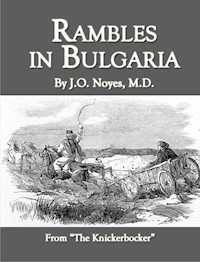
On the cover: An arabá, which is a type of carriage or wagon used in Turkey in neighboring Middle Eastern countries, pictured in Wallachia.
Originally published in July 1856 issue of “The Knickerbocker” magazine
KNICKERBOCKER
Rambles in Bulgaria
By j.O. Noyes, M.D., Late Surgeon in the Ottoman Army
‘Danubio, rio divino Que por fieras naciones, Vas con tus claras ondas discurriendo.’
—Lope de Vega.
AN OLD TURKISH boatman, the very picture of Charon, ferried me across the Danube, for a few paras, and set me down on the narrow strand of Silistria. A half-dozen houses were scattered along the sandy shore, but the city appeared to be sunk below the level of its wall, a few minarets alone being visible above the latter. Colonel Bent hastened on in the first arabá his dragoman could obtain. The latter informed me that Silistria contained neither a hotel nor lodgings of any kind kept by a Christian. At the promise of a couple of piasters, a greasy Cawas shouldered my carpetbags, and led the way to a Turkish khan. A few Ottoman soldiers were leaning idly on their muskets at the gate through which we passed. It seemed as if the genius of death reigned within these solitary walls. Nothing save the desert, the wilderness, and the calm ocean, is so silent as a Turkish city. There is no rattling of carriages or tramp of hurried feet; there are no brawling voices: men, silent men, in the grave costume of the Orientals, and women veiled from the sight of the most inquiring eye, glide along the narrow streets and stony lanes, more like ghosts than human beings. The impression is one of solitude and death.




