


25,99 €
Mehr erfahren.
- Herausgeber: John Wiley & Sons
- Kategorie: Fachliteratur
- Serie: Rapid
- Sprache: Englisch
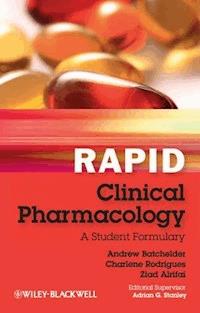
This pocket reference guide is a must for all medical students and junior doctors preparing for exams in pharmacology or needing a rapid reminder during a clinical attachment.
In light of the growing pressures on those who prescribe drugs to patients, increasing emphasis has been placed on the importance of pharmacology in the undergraduate medical curriculum. Rapid Clinical Pharmacology, with its concise, easy-to-use approach, offers an appealing format for students to use in both clinical practice and exam preparation and its ‘one-page per drug/class' layout easily facilitates the generation of a personal student formulary.
Each chapter of the book mirrors each section of the BNF to allow easy cross-referencing and then each chapter is divided into consistent sections as per other books in the Rapid series.
Rapid Clinical Pharmacology will also be available as a mobile application for iPhone, iPod Touch, iPad and Blackberry. See wiley.com/go/mededapps for further details.
Sie lesen das E-Book in den Legimi-Apps auf:
Seitenzahl: 160
Veröffentlichungsjahr: 2011
Ähnliche



















Contents
Preface
List of abbreviations
BASIC PHARMACOKINETIC CONCEPTS
Basic pharmacokinetic concepts
GASTROINTESTINAL SYSTEM
Histamine type 2 receptor antagonists
Laxatives
Proton pump inhibitors (PPIs)
CARDIOVASCULAR SYSTEM
α-adrenoceptor antagonists (α blockers)
Adenosine
Aldosterone antagonists
Amiodarone
Angiotensin-converting enzyme inhibitors (ACEIs)
Angiotensin II receptor blockers (ARBs)
Antimuscarinics
Aspirin
(β-adrenoceptor antagonists (β blockers)
Calcium channel blockers (CCBs)
Cardiac glycosides
Clopidogrel
Dipyridamole
Fibrates
Fibrinolytics
Flecainide
Glycoprotein IIb/IIIa inhibitors
Inotropic sympathomimetics
Loop diuretics
Low molecular weight heparins (LMWH)
Nitrates
Potassium channel activators
Statins
Thiazide diuretics
Tranexamic acid
Vasoconstrictor sympathomimetics
Warfarin
RESPIRATORY SYSTEM
ß2 adrenoceptor agonists
Histamine type 1 receptor antagonists
Inhaled antimuscarinics
Leukotriene receptor antagonists
Oxygen
Theophylline
CENTRAL NERVOUS SYSTEM
5-HT1 agonists (triptans)
5-HT3 antagonists
Antihistamine anti-emetics
Antipsychotics – atypical
Antipsychotics – typical
Benzodiazepines
Carbamazepine
Dopamine antagonist anti-emetics
Drugs for dementia
Gabapentin and pregabalin
Levodopa (L-dopa)
Lithium
Monoamine oxidase inhibitors (MAOIs)
Non-steroidal anti-inflammatory drugs (NSAIDs)
Opioid analgesia
Other antiepileptics
Other antiparkinsonian drugs
Paracetamol
Phenothiazine anti-emetics
Phenytoin
Selective serotonin reuptake inhibitors (SSRIs)
Sodium valproate
Tricyclic antidepressants (TCAs)
INFECTIONS
Aciclovir
Aminoglycosides
Antifungals
Antiretroviral agents
Antituberculosis drugs
Cephalosporins and other β lactams
Penicillins
Glycopeptide antibiotics
Macrolides
Metronidazole
Nitrofurantoin
Quinolones
Tetracyclines
Trimethoprim
ENDOCRINE SYSTEM
5α-reductase inhibitors
Antidiuretic hormone (ADH) analogues
Biguanides
Bisphosphonates
Carbimazole
Corticosteroids
Dipeptidylpeptidase-4 (DDP-4) inhibitors
Gonadotrophin-releasing hormone (GnRH) agonists
Hormone replacement therapy (HRT)
Incretin mimetics
Insulins
Levothyroxine
Propylthiouracil
Sulfonylureas
Thiazolidinediones
OBSTETRICS, GYNAECOLOGY AND URINARY
Contraceptives
Mifepristone
Oxybutynin
Oxytocin
Phosphodiesterase type 5 inhibitors
MALIGNANT DISEASE AND IMMUNOSUPPRESSION
Alkylating agents
Anthracyclines
Anti-androgens
Antimetabolites
Antiproliferative immunosuppressants
Calcineurin inhibitors
Other antineoplastic drugs
Selective oestrogen receptor modulators (SERMs)
Trastuzumab (Herceptin®)
Vinca alkaloids
MUSCULOSKELETAL AND JOINT DISEASES
Allopurinol
Aminosalicylic acid compounds (ASAs)
Colchicine
Methotrexate
EYE
Antiglaucoma drugs
ANAESTHESIA
Depolarising neuromuscular blocking agents
Etomidate
Inhalational anaesthetics
Lidocaine
Non-depolarising blocking agents
Propofol
Thiopental sodium
INTRAVENOUS FLUIDS
Intravenous fluids
BLOOD AND TRANSFUSION MEDICINE
Blood and transfusion medicine
Index of drugs
This edition first published 2011 © 2011 by John Wiley and Sons, Ltd
Wiley-Blackwell is an imprint of John Wiley & Sons, formed by the merger of Wileys global Scientific, Technical and Medical business with Blackwell Publishing.
Registered office: John Wiley & Sons, Ltd, The Atrium, Southern Gate, Chichester, West Sussex, PO19 8SQ, UK
Editorial offices: 9600 Garsington Road, Oxford, OX4 2DQ, UK
The Atrium, Southern Gate, Chichester, West Sussex, PO19 8SQ, UK111 River Street, Hoboken, NJ 07030-5774, USA
For details of our global editorial offices, for customer services and for information about how to apply for permission to reuse the copyright material in this book please see our website at www.wiley.com/wiley-blackwell
The right of the author to be identified as the author of this work has been asserted in accordance with the UK Copyright, Designs and Patents Act 1988.
All rights reserved. No part of this publication may be reproduced, stored in a retrieval system, or transmitted, in any form or by any means, electronic, mechanical, photocopying, recording or otherwise, except as permitted by the UK Copyright, Designs and Patents Act 1988, without the prior permission of the publisher.
Designations used by companies to distinguish their products are often claimed as trademarks. All brand names and product names used in this book are trade names, service marks, trademarks or registered trademarks of their respective owners. The publisher is not associated with any product or vendor mentioned in this book. This publication is designed to provide accurate and authoritative information in regard to the subject matter covered. It is sold on the understanding that the publisher is not engaged in rendering professional services. If professional advice or other expert assistance is required, the services of a competent professional should be sought.
The contents of this work are intended to further general scientific research, understanding, and discussion only and are not intended and should not be relied upon as recommending or promoting a specific method, diagnosis, or treatment by physicians for any particular patient. The publisher and the author make no representations or warranties with respect to the accuracy or completeness of the contents of this work and specifically disclaim all warranties, including without limitation any implied warranties of fitness for a particular purpose. In view of ongoing research, equipment modifications, changes in governmental regulations, and the constant flow of information relating to the use of medicines, equipment, and devices, the reader is urged to review and evaluate the information provided in the package insert or instructions for each medicine, equipment, or device for, among other things, any changes in the instructions or indication of usage and for added warnings and precautions. Readers should consult with a specialist where appropriate. The fact that an organization or Website is referred to in this work as a citation and/or a potential source of further information does not mean that the author or the publisher endorses the information the organization or Website may provide or recommendations it may make. Further, readers should be aware that Internet Websites listed in this work may have changed or disappeared between when this work was written and when it is read. No warranty may be created or extended by any promotional statements for this work. Neither the publisher nor the author shall be liable for any damages arising herefrom.
Library of Congress Cataloging-in-Publication Data
Rapid clinical pharmacology : a student formulary / Andrew Batchelder... [et al.]. – 1st ed.p. ; cm. – (Rapid series)Includes index.
ISBN 978-0-470-65441-5 (pbk. : alk. paper)
1. Clinical pharmacology-Handbooks, manuals, etc. I. Batchelder, Andrew. II. Series: Rapid series.
[DNLM: 1. Pharmacology, Clinical-methods-Handbooks. 2. Pharmaceutical Preparations-administration & dosage-Handbooks. QV 39]RM301.28.R37 2011615’.1-dc22
2011007199
Preface
In light of the growing pressures on prescribers, increasing emphasis has been placed on the importance of pharmacology in the undergraduate medical curriculum. Clinical pharmacology is a topic with which many students and clinicians struggle because of the large volumes of factual information that they are required to assimilate. In addition, medical students frequently have difficulty identifying the core learning material.
The British Pharmacological Society has recommended that learning be focused on a core list of commonly used drugs and suggests that students create a personal formulary. Rapid Clinical Pharmacology provides a concise structured approach for readers, be they students preparing for pharmacology examinations, junior doctors starting out in clinical practice or members of allied health professions involved in prescribing and dispensing medications. The familiar format of the Rapid series emphasises the key headings for each drug class, directing readers to the main points. Special considerations are also given under the ‘Important points’ heading to highlight features unique to certain drugs or classes.
Good prescribing practice requires knowing which drug to use and why; however, it also requires consideration of comorbidities, potential adverse effects and polypharmacy. Emphasising clinically relevant information about the most commonly used medications, this book provides a good foundation of pharmacological knowledge upon which to build. Additionally, it includes useful tips on prescribing in the context of intravenous fluids and blood components.
We would like to thank Dr Adrian Stanley for the wealth of time and effort he has dedicated to editing this text; without his invaluable assistance this book would not have been possible.
Andrew BatchelderCharlene RodriguesZiad Alrifai
List of abbreviations
5-HT5-hydroxytryptamine (serotonin)ACEIsAngiotensin-converting enzyme inhibitorsAChAcetylcholineACSAcute coronary syndromeADHAntidiuretic hormoneADPAdenosine diphosphateAFAtrial fibrillationAIDSAcquired immunodeficiency syndromeAPTTActivated partial thromboplastin timeARBsAngiotensin receptor blockersASAAminosalicylic acidATPAdenosine triphosphateAVAtrioventricularAVNRTAV nodal re-entry tachycardiaBMBoehringer Mannheim (finger-prick blood glucose)BPBlood pressureBTSBritish Thoracic SocietyCa2+Calcium ioncAMPCyclic adenosine monophosphateCCBsCalcium channel blockersCCFCongestive cardiac failureCD4+Cluster of differentiation 4cGMPCyclic guanosine monophosphateCl-Chloride ionCMVCytomegalovirusCNSCentral nervous systemCO2Carbon dioxideCOCPCombined oral contraceptive pillCOMTCatechol-O-methyl transferaseCOPDChronic obstructive pulmonary diseaseCOXCyclo-oxygenaseCSFCerebrospinal fluidCTComputed tomographyCTGCardiotocographyCTZChemoreceptor trigger zoneCVPCentral venous pressureDICDisseminated intravascular coagulationDKADiabetic ketoacidosisDNADeoxyribonucleic acidDVTDeep vein thrombosisEBVEpstein Barr virusECGElectrocardiographyESRErythrocyte sedimentation rateFBCFull blood countFFPFresh frozen plasmaFSHFollicule-stimulating hormoneG6PDGlucose-6-phosphate dehydrogenase deficiencyGABAGamma aminobutyric acidGFRGlomerular filtration rateGIGastrointestinalGLUTGlucose transportersGnRHGonadotrophin-releasing hormoneGPIIb/IIIaGlycoprotein IIb/IIIaGTNGlyceryl trinitratGTPGuanosine triphosphateGUGenito-urinaryH+Hydrogen ionH1Histamine type 1 receptorH2Histamine type 2 receptorHDLHigh density lipoproteinsHER2Human epidermal growth factor receptor 2HIVHuman immunodeficiency virusHMG CoA3-hydroxy-3-methylglutaryl coenzyme AHONKHyperosmolar non-ketotic stateHRTHormone replacement therapyIHDIschaemic heart diseaseINIntranasalINRInternational normalised ratioISMNIsosorbide mononitrateJVPJugular venous pressureK+Potassium ionL-dopaLevodopaLDLLow-density lipoproteinsLFTsLiver function testsLHLuteinising hormoneLMWHLow molecular weight heparinLRTILower respiratory tract infectionLVLeft ventricularLVFLeft ventricular failureM2Muscarinic type 2 receptorsM3Muscarinic type 3 receptorsMAOMonoamine oxidaseMAOIsMonoamine oxidase inhibitorsMIMyocardial infarctionMMSEMini-mental state examinationmRNAMessenger ribonucleic acidN2ONitrous oxideNa+Sodium ionNICENational Institute for Health and Clinical ExcellenceNMDAN-methyl-D-aspartic acidNNRTIsNon-nucleoside reverse transcriptase inhibitorsNRTIsNucleoside reverse transcriptase inhibitorsNSAIDNon-steroidal anti-inflammatory drugsO2OxygenOCPOral contraceptive pillPCAPatient-controlled analgesiaPCOSPolycystic ovarian syndromePEPulmonary embolismPGsProstaglandinsPIsProtease inhibitorsPOBy mouth (per os)POPProgesterone-only pillPONVPost-operative nausea and vomitingPPARPeroxisome proliferator-activated receptorsPPIProton pump inhibitorPRPer rectumPSAProstate-specific antigenQTcCorrected QT intervalRNARibonucleic acidSASino-atrialSERMSelective oestrogen receptor modulatorSLESystemic lupus erythematosusSNRIsSerotonin and noradrenaline reuptake inhibitorsSSRIsSelective serotonin reuptake inhibitorsSVTSupraventricular tachycardiat½Half-lifeT3Tri-iodothyronineT4Tetra-iodothyronineTCAsTricyclic antidepressantsTFTsThyroid function testsTIATransient ischaemic attackTPRTotal peripheral resistancetRNATransfer ribonucleic acidTSHThyroid-stimulating hormoneU&EsUrea and electrolytesUTIUrinary tract infectionVFVentricular fibrillationVLDLVery low-density lipoproteinsVTVentricular tachycardiaVTEVenous thromboembolismAbbreviations of routes of administration
IMIntramuscularINIntranasalINHInhaledIVIntravenousNEBNebulisedPOOralPRPer rectumPVPer vaginaSCSubcutaneousSLSublingualTOPTopicalAbbreviations of dosing
ODOnce dailyOMOnce in the morningONOnce at nightBDTwice dailyTDSThree times a dayQDSFour times a dayPRNAs requiredBASIC PHARMACOKINETIC CONCEPTS
Basic pharmacokinetic concepts
PHARMACOKINETICS The study of the movement of drugs into, within and out of the body. The key pharmacokinetic parameters from a dosing point of view are bioavailability (F), clearance (Cl), volume of distribution (Vd) and elimination half-life (t½).
PHARMACODYNAMICS The study of the effect of a drug on the body.
BIOAVAILABILITY (F)
F is defined as the percentage of an administered dose that reaches the systemic circulation unchanged. Bioavailability is 100% for the intravenous route.
Oral bioavailability varies and is dependent on the degree of absorption, formulation of some drugs (e.g. nitrates) and the degree of first-pass hepatic metabolism. If plasma concentration is plotted against time, bioavailability is represented as the area under the curve.
VOLUME OF DISTRIBUTION (Vd)
Vd represents the theoretical volume into which a given drug dose must be distributed in the body to achieve a concentration equal to that of plasma. Drugs that are highly lipid soluble, such as digoxin, have a high Vd. Drugs that are lipid insoluble, such as neuromuscular blockers, remain predominantly in the plasma and will have a low Vd.
Clinically, the larger the volume of distribution the longer it will take to reach a therapeutic level and, therefore, a loading dose may be necessary. The volume of distribution can be calculated as:
LOADING DOSE
Defined as the initial dose of a drug required to rapidly achieve a desired plasma concentration. The time required to achieve a steady state plasma concentration will be long if a drug has a long t½ (time taken to reach steady state is approximately 4 ½ half-lives). Therefore it is desirable to administer a loading dose to attain a therapeutic plasma concentration immediately. Examples of drugs requiring a loading dose regime include amiodarone, digoxin and warfarin.
The main factor determining a loading dose is the volume of distribution (Vd). In order for a drug to reach a steady state plasma concentration (Cp), the tissues into which the drug distributes must be saturated first. The relationship between loading dose and volume of distribution is defined below:
elimiation half-life(t1/2)
t½ is the time taken for the plasma concentration of a drug to fall by 50%. The elimination rate constant (K) is the fraction of the total amount of drug in the body removed per unit time. K is represented by the slope of the line of the log plasma concentration versus time.
Elimination rate constant and t½ can be used clinically to estimate the time to reach steady state concentrations after drug initiation or a change in maintenance dose.
FIRST-ORDER KINETICS
In first-order kinetics a constant fraction of the drug is eliminated per unit time. The rate of elimination is, therefore, proportional to the amount of drug in the body. The majority of drugs follow first-order kinetics.
ZERO-ORDER KINETICS
In zero-order kinetics the rate of drug elimination is linear and independent of drug concentration. Many important drugs, such as phenytoin and theophylline, follow zero- order kinetics at higher doses. Alcohol also follows zero-order kinetics with a decline in plasma levels at a constant rate of approximately 15 mg/100 ml/h.
CLEARANCE
Clearance is the theoretical volume of plasma from which the drug is completely removed per unit time. It is not the amount of drug removed from the body. Some of the factors that alter clearance include: degree of protein binding, body surface area, cardiac output, hepatic function and renal function.
Clearance can be calculated from the elimination rate constant and the volume of distribution:
GASTROINTESTINAL SYSTEM
Histamine type 2 receptor antagonists
EXAMPLES Ranitidine, cimetidine
MECHANISM OF ACTION Competitive inhibitors of all histamine type 2 receptors. Inhibit histamine- and gastrin-stimulated gastric acid secretion by their action on parietal cells in the stomach.
INDICATIONS
Gastric and duodenal ulcersGastro-oesophageal refluxTreatment and prophylaxis of NSAID-associated ulcersCAUTIONS AND CONTRA-INDICATIONS
HypersensitivityIf red flag features of malignancy, need to investigate prior to initiating treatmentSIDE-EFFECTS
GI disturbance, especially diarrhoeaGynaecomastia (cimetidine)METABOLISM AND HALF-LIFE These drugs are excreted largely unchanged in urine. t½ is 2–3 h.
MONITORING No specific drug monitoring required.
DRUG INTERACTIONS
Cimetidine inhibits Cytochrome P450 activity in the liver and therefore potentiates the action of drugs such as warfarin, phenytoin and theophyllineIMPORTANT POINTS
Ranitidine can be used prior to general anaesthesia in patients at high risk of aspiration particularly in obstetric practice (Mendelson’s syndrome)Laxatives
MECHANISM OF ACTION
Bulk laxatives (e.g. ispaghula husk) – polysaccharide polymers that are not broken down by digestion and thereby increase stool volume. This stimulates intestinal peristalsis (via the stretch reflex) as well as softening faeces.
Osmotic laxatives (e.g. lactulose, Movicol®) – these poorly absorbed solutes increase the volume of water in the bowel lumen by osmosis hence increasing transit.
Stimulant laxatives (e.g. senna, docusate sodium) – the primary effect is via direct stimulation of myenteric plexus resulting in smooth muscle contraction and increased peristalsis.
Faecal softeners (e.g. arachis oil) – these are surfactants that reduce surface tension and allow water to penetrate and soften faeces.
INDICATIONS
ConstipationHepatic encephalopathy (lactulose)CAUTIONS AND CONTRA-INDICATIONS
Bowel obstructionGalactosaemia (lactulose only)Acute inflammatory bowel diseaseSevere dehydrationSIDE-EFFECTS
FlatulenceDiarrhoeaAbdominal crampsElectrolyte disturbancesMETABOLISM ANDHALF-LIFE Variable – most are broken down locally in the GI tract with minimal absorption.
MONITORING No specific drug monitoring required.
DRUG INTERACTIONS
Lactulose may enhance warfarin effects in severe liver diseaseIMPORTANT POINTS
Before prescribing a laxative ensure constipation is not secondary to an underlying pathology such as bowel cancerIt requires at least 2–3 days for osmotic or bulking laxatives to take full effectAvoid laxatives if bowel obstruction is suspected due to risk of perforationLactulose reduces ammonia-producing organisms and is used in the treatment of hepatic encephalopathyChronic laxative use can cause tolerance (stimulant laxatives)Proton pump inhibitors (PPIs)
EXAMPLES Omeprazole, lansoprazole, esomeprazole, pantoprazole
MECHANISM OF ACTION Inhibit H+/K+ ATPase on luminal surface of gastric parietal cells and thereby reduce gastric acid secretion.
INDICATIONS
Gastric/duodenal ulcerationAs part of triple therapy for eradication of Helicobacter pyloriGastro-oesophageal reflux diseaseAcid-related dyspepsiaHyper-secretory conditions, including Zollinger-Ellison syndromePrevention and treatment of NSAID-associated ulcersCAUTIONS AND CONTRA-INDICATIONS
HypersensitivityIf red flag features of malignancy need to investigate prior to initiating treatmentSIDE-EFFECTS
GI disturbance (e.g. abdominal pain, nausea, vomiting, diarrhoea)Increased risk of gastric infections due to hypochlorhydriaMETABOLISM AND HALF-LIFE Extensively metabolised by liver and excreted by both renal and biliary routes. t½ varies from 40 min to 2 h.
MONITORING No specific drug monitoring required.
DRUG INTERACTIONS
PPIs are inducers of Cytochrome P450 with some variation in potency between the individual drugs and, therefore, may enhance effects of drugs metabolised by the liver (e.g. phenytoin, carbamazepine, warfarin)IMPORTANT POINTS
PPIs reduce acid secretion by >90% and are therefore more effective at healing peptic ulcers than H2 receptor antagonists (which reduce acid secretion by 50–60%)IV PPIs can be used in the management of acute upper GI bleeds under specialist supervisionCARDIOVASCULAR SYSTEM
α-adrenoceptor antagonists (α blockers)
EXAMPLES Doxazosin, prazosin, tamsulosin, alfuzosin
MECHANISM OF ACTION Inhibit α1-adrenoceptors in arterioles, thereby reducing tone of vascular smooth muscle and reducing total peripheral resistance. Inhibition of α1-adrenoceptors in periurethral prostatic stroma results in relaxation of internal urethral sphincter and some relief of obstructive urinary symptoms in males.
INDICATIONS
Hypertension (i.e. doxazosin, particularly in resistant cases as part of polytherapy)Benign prostatic hyperplasiaCAUTIONS AND CONTRA-INDICATIONS
Caution in patients with a susceptibility to heart failureSIDE-EFFECTS
Postural hypotensionDizzinessWeakness and fatigueReflex tachycardiaHeadacheDry mouthEjaculatory failure




