


Erhalten Sie Zugang zu diesem und mehr als 300000 Büchern ab EUR 5,99 monatlich.
- Herausgeber: The Lilliput Press
- Kategorie: Fachliteratur
- Sprache: Englisch
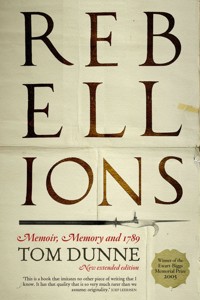
This is a new, extended edition of an unusual book, which generated considerable interest and controversy when it was first published in 2004, and won the Ewart Biggs Memorial Prize the following year. In its original form it had three elements, a memoir giving the author's intellectual and political formation and his family connection to 1798 in Wexford, a critique of the bicentenary of the rebellion and of writing about it, and a detailed account of the pivotal battle of New Ross and the massacre nearby at Scullabogue. The new edition adds a fourth layer of exploration, analysing the reception of the book, by historians, by those involved in the bicentenary, and by the many individuals who wrote to the author. The most unusual response came from the Ryan Commission on child abuse, which explored with the author his experiences as a junior member of the Irish Christian Brothers, and quoted him extensively in its report. The new chapter focuses on the theme common to all of these responses, the conflict between emotional identification with a community's history and the evidence for contrary realities.
Sie lesen das E-Book in den Legimi-Apps auf:
Seitenzahl: 815
Veröffentlichungsjahr: 2010
Das E-Book (TTS) können Sie hören im Abo „Legimi Premium” in Legimi-Apps auf:
Ähnliche



















For
Clare,Fiona,Deirdre,Oisín,Fergus,Seán
CONTENTS
Title Page
Dedication
List of Illustrations
Preface to the Second Edition
Prologue
PART I The Historian: An Intellectual Memoir
CHAPTER 1 The Child
CHAPTER 2 The Christian Brother
CHAPTER 3 University College Dublin
CHAPTER 4 University College Cork and Cambridge
CHAPTER 5 The Academic
PART II Understanding 1798: Historiography, Commemoration
CHAPTER 6 Histories of 1798: from Musgrave to Cullen
CHAPTER 7 Commemoration: Comóradh ’98
CHAPTER 8 Commemorationist History?
PART III 5 June 1798
CHAPTER 9 Sources
CHAPTER 10 Background: Old Quarrels and New Politics
CHAPTER 11 Rebellion: The Background to the Battle of New Ross
CHAPTER 12 5 June 1798: The Battle
CHAPTER 13 The Killings at Scullabogue
CHAPTER 14 New Ross: The Aftermath of the Battle
CHAPTER 15 Envoi (end of text of first edition)
CHAPTER 16 Responses: Evidence, Emotion and the Past
APPENDIX A: The Gaelic Poetry of Micheál Óg Ó Longáin: A Case-Study in Politicization
APPENDIX B: The Ballads of Thomas Dunne
Notes
Bibliography
Acknowledgments
Index
Copyright
ILLUSTRATIONS
My parents’ wedding photograph, January 1942
Courtdale, with the remains of the Norman tower
South Street, New Ross, with our house and shop
My first Communion, by Annie Brophy, Waterford 1949
A family photograph, again by Annie Brophy, 1955
The Novice, August 1959
Desmond Williams with Taoiseach Garret FitzGerald, Belfield
Maureen Wall
Oliver MacDonagh
John A. Murphy
Planning The Irish Review, Belfast 1986
Making last-minute changes to my paper on Wolfe Tone, 1981
The Heritage Industry
The Wexford Echo, 11 June 1998
The significance of Scullabogue for Comóradh ’98
John Rice’s gravestone, St Stephen’s Cemetery
New Ross in 1796, drawn by G. Holmes, engraved by J. Walker
New Ross by W.H. Bartlett
Musgrave’s map of the area around New Ross
Edward Foran’s statue of Michael Furlong and his flag of truce
Early eighteenth-century map of the town, used by Musgrave
George Cruikshank’s version of The Wig Cannon
General Henry Johnson
The Tholsel, New Ross: in 1798 the ground floor was an open arcade
George Cruikshank’s notorious drawing of the Scullabogue massacre
John Rice’s house, Irishtown, still occupied by the family
The author, July 2010
PREFACE TO THE SECOND EDITION
Rebellions was first published in February 2004 and met with an interesting range of responses. For this new edition I have added a chapter on the reception of the book, not only by historians, but also in the media generally, and by the many individuals who wrote to me, some of them with family histories or experiences similar to my own. The book was particularly controversial in Wexford, especially for its treatment of the Scullabogue massacre. More unexpectedly, the chapter on my early years as a member of the Christian Brothers led to an invitation to give evidence to the Commission to Inquire into Child Abuse, chaired by Mr Justice Seán Ryan. Together with reading the subsequent Commission Report, this has led me to re-assess my time in religious life, and much else about my childhood and the society in which I grew up. Analysing all of these responses, I came to focus on a theme common to many of them, the conflict between emotional attachment to self-affirming community narratives and the evidence of contrary realities – or between tradition and history. This was clear, for example, in the response of the Christian Brothers to the Ryan Commission, as well as in the inability of many in Wexford to face the facts of what happened at Scullabogue.
The new chapter also adds a final layer to this experiment in writing history framed in a series of contexts. The core of the book is still the detailed account of the pivotal and extraordinarily violent battle of New Ross on 5 June 1798, and the massacre at Scullabogue nearby. It is introduced by this historian’s attempt to understand his own history and his family and personal relationships to those events. This is followed by his response to the official bicentenary of the Rebellion, including interpretations by historians particularly associated with it. Now, in this edition, my account of the bloodiest day of the Rebellion is followed by an attempt to understand the reactions to the book and to use them to reflect further on my life and my work as an historian.
The new chapter has been particularly difficult to write and I am immensely grateful to those who read and commented on drafts: Ian d’Alton, Stefan Collini, Louis Cullen, Roy Foster, John-Paul McCarthy, John Maguire, Celestine Rafferty, and especially Clare O’Halloran, whose advice and support were, as ever, indispensable. Antony Farrell, my publisher, has been a great champion of unconventional writing, and I am very grateful to him that, having taken a risk with the first edition, he is prepared to do so again with a second. This time I have a new editor, who also happens to be my daughter, Fiona. I have long admired her acuity and her sensitivity to language, and it has been a great pleasure, as well as privilege, to work with her.
TOM DUNNE, CORK, SEPTEMBER 2010
PROLOGUE
‘OnVinegarHill,o’erthepleasantSlaney’:PrivateGriefandthePublicSphere
On a cold bright winter’s day, early in 1995, I stood for the first time on Vinegar Hill overlooking the town of Enniscorthy, Co. Wexford, and the solitary hour I spent there affected me deeply. I was surprised at how small the area was and tried to imagine it thronged with people when the hill served as a major rebel camp for three hot summer weeks in 1798. Harder still to imagine were the scenes that marked the last bloody battle for the hill, when ‘terraced thousands died, shaking scythes at cannon’. This striking image of Seamus Heaney’s1 portrayed the rebels as country people, like my paternal ancestors, farming just south-west of the town in that panorama of rich agricultural land visible from the summit. My own initial sense of 1798, however, was an urban one, from beyond the southern horizon in my home town of New Ross. It came above all from my mother, Joanna, the first historian I knew. Her mental map of the county, where she spent her whole life, consisted of generations of complex interfamily connections, radiating out from her own family, the Rices. She had a particular pride and interest in her great-great-grandfather, John Rice of the Irishtown in New Ross, killed in the aftermath of the horrific battle for the town on 5 June 1798, and in his cousin, Edmund Ignatius Rice, who founded the Irish Christian Brothers four years later in nearby Waterford.
I had climbed the hill that day not out of historical curiosity, but to recover from an unsettling visit with my mother in a nearby nursing home. She had suffered a series of strokes four years earlier at the age of eighty-two, and had borne confinement to a wheelchair with her usual fortitude and good humour. That day, the gradual deterioration in her speech and slow fading of her memory reached some kind of crisis for her, and she became distressed at her inability to communicate with me. That in itself was a shock. She had always kept from her children, and particularly from me, the eldest, the true extent of her suffering. When my father died sixteen years earlier, for example, she hid her intense and constant fear of living alone, admitting it fully only in the security of the nursing home she had chosen to move to before it seemed necessary. She had a fierce independence, and would not be a burden on any of her six children, scattered widely in Ireland and overseas. Now she could not conceal her condition, and this was part of her distress.
The inability to communicate properly involved the diminution of her greatest resource for coping with her environment and making sense of her world. An ease with language had long been at the core of her remarkable charm, partly natural, partly the product of her many years in business. ‘She could sell sand to an Arab,’ was my father’s regular and not altogether admiring comment. For her, business often seemed less about profit than conversation; her customers were for the most part neighbours, friends or lifelong acquaintances. She sold them footwear almost as a postscript to leisurely discussion of family and relationships, often involving stories of childhood about which she had an intense nostalgia.
Now that flood of talk had dried to a trickle and instead, when I visited I retold the stories as I remembered them, she would smile or say the odd word. Gradually I became aware of other aspects of the loss involved in her enforced silence; I remembered so few of her stories, and could trace family connections only to a limited degree. As we went through her old photograph album, it was already too late to fill the gaps in my knowledge. Also, we were at cross purposes – mine concerned fact and meaning, hers the shards of memory. More separated us than age. While, like her, I make sense of my life through stories, I am trained to interrogate other people’s stories in the light of the knowledge and understanding of the past that academic history has developed. For her the ‘historical’ 1798 – the Catholic nationalist account encapsulated in the ballads and statues of the centenary of the Rebellion, a decade before my mother’s birth – and the family story of the death of her great-great-grandfather were seamlessly joined. He died for Ireland and in defence of the weak, a heroic death comparable to the heroic life of his cousin Edmund, as she saw it.
Standing on the rocky summit of Vinegar Hill that day, and seeking distraction from the sadness of her enforced silence by imagining the bustle of the rebel camp, I was struck by the conflict between the popular or communal memory of 1798 and how historians like myself write about it. It is not simply that we are impelled to historicize that memory, explaining it as a product of historical developments, but that we are also constrained and limited by the surviving evidence and by the debates to which we contribute. History has little to say about the ordinary people caught up in that cataclysm, whether as rebels or as innocent bystanders. The record, and the debates, put the focus instead on the leadership and their ideology. Thus, for example, while I had written about the contemporary ballads surviving from the Rebellion, my focus had been on contrasting them with the genteel versions used by the bourgeois United Irishmen in their attempts to politicize the poor.2 It now struck me, with some unease, that my criticism of the United Irish failure to understand popular culture could be applied to myself, and indeed to modern historians in general. Academic history all too often lacks empathy with the individual stories that both constitute and reflect communal memory. The nature and even existence of such memory is contested and problematic, not least because of politically inspired attempts to shape or manipulate it.
Before I left the hill, I read the text of the monument erected in 1989 by Comóradh ’98, the official body set up by local politicians to manage the celebration of the upcoming bicentenary. While the monument in the town centre depicts a priest leading a peasant rebel and requires no text other than ‘1798’, this one stresses the importance of the largely Protestant and secular-minded United Irishmen, and, linking the Rebellion to the bicentenary of the French Revolution, claims that ‘the ’98 insurrection established a revolutionary spirit and that the republican ideology of Tone and the United Irishmen inspired a new form of patriotism. This ultimately led to a democratic system of government in Ireland.’ This version is, in essence, as traditional as the other, but I recognized the echo of a new emphasis in the historiography of the Rebellion also. One of its main proponents was later to write that 1798 ‘never passed into history because it never passed out of politics’,3 and certainly previous commemorations, especially in 1898 and 1948, produced versions that had more to do with the politics of those times than with the actual events of 1798. The bicentenary clearly would be no different, but in 1995 I could not anticipate that the interaction of a new political context with emerging trends in history-writing would give new life to an old-fashioned nationalist account.
Nor did I realize folly then that my hour on Vinegar Hill made new connections for me between a number of related interests and concerns, and between my private and professional lives. It led me to question the kind of history I had been writing, and to wonder if I could accommodate the family story I had heard from my mother, and other stories like it, in an attempt to understand the Rebellion in more human terms as a sum of the individual experiences of ordinary people. What motivated the rebels to such acts of both courage and cruelty as this hill witnessed? Given how little evidence they left behind them, can we ever know? How were they viewed by the tens of thousands of Wexford people whose lives were changed irrevocably by the violence of those weeks? What was their experience of the chaos and confusion that historians, from the beginning, have reduced to the false neat categories of military engagements?
In the months that followed I developed my own small project for the bicentenary, initially to please my mother. Beginning with the family tradition of how my great-great-great-grandfather died, it focused also on the world of the country men who had attacked New Ross with extraordinary courage, and massive fatalities. They came mainly from the area north of the town, from the barony of Bantry, where my father’s family had farmed since the mid-seventeenth century.
I next climbed Vinegar Hill three years later, in January 1998. Once again the sun shone and it was bitterly cold on the summit. It was the morning of my mother’s funeral and soon the cortège would leave, bringing her home to New Ross for the funeral mass, following the characteristic detailed instructions she had written out years before. For a week her six children had gathered around her bed as her body closed down with a slow, dignified finality. We talked to her and about her, retelling her stories, reminding one another of episodes in our childhood, hearing from one another memories unique to each. It was a week of much laughter as well as sadness, and if she was conscious of it, that would have pleased her. Her death, when it came, ended years of pain and distress and had been long anticipated, even longed for by her, ever since her beloved Art had died nearly twenty years before. Acknowledging this helped us to accept her passing, but did little to prepare us for the void that it left in our lives. This is something we all have had to learn for ourselves.
Now that the voice that had been my first guide in the world was finally silenced, there would be no more stories: so much folklore was lost with her, the last of her family. More than ever it was to seem important to me that I try to fit her story to mine. I had already published an article that tried to give a context and explanation for John Rice’s death, and to understand the background of the Bantry rebels. It also took issue with Comóradh ’98 for ‘presenting a sanitized and politically correct version of the rebellion that is in tune with the common nationalist perception of the current “peace process”, a lost dream of “United Irishmen”, which we can still make a reality’.4
I knew my mother was pleased that I had written about John Rice and had used some ballads written by my paternal grandfather. I also knew, of course, that her view of ’98 had been closer to that of Comóradh than to mine, and that this highlighted an interesting tension for me. By now, professional concern (and indeed some anger) at the crudities of the official line began to loom larger than the sense of family pietas with which I had begun my research. Even that day of private grief offered several reminders of the willingness of a diverse range of interests to exploit (as I saw it) the dead of two hundred years before. Vinegar Hill was daubed with Sinn Féin, IRA, and INLA graffiti, including crude anti-British sentiments. A mass rally was soon to be addressed there by Gerry Adams, and Comóradh ’98 was already distancing itself from the anticipated identification of the IRA’s thirty-year war with ‘the United Irish Revolution’. The whole point of the bicentenary, after all, was to distance revolutionary ideology from its real consequences. Others saw a business opportunity. That evening, after a meal in the town, I was given an advertisement for ‘Cream of ’98: Irish cream liqueur’ as a souvenir. It carried the Comóradh ’98 logo, and featured Edward Foran’s romantic painting, for the centenary, of the battle of Oulart Hill. Thus, art and advertising combined to package and sell the Rebellion, with official approval.
Making my way to Vinegar Hill the morning of the funeral, I bought the IrishTimes and read it on the summit. It carried a report of the launch by the Taoiseach of the official programme for the bicentenary. Mr Ahern declared: ‘We are commemorating the most sustained effort in Irish history to reconcile and unite what were the three communities with different religious beliefs and ethnic backgrounds – Protestants, Catholics and Dissenters.’ He spoke on behalf of ‘a sovereign Irish government’ that, he claimed, ‘can trace its political lineage back to 1798 when the first republics in Wexford and Connaught were declared’. Linking the commemoration to ‘the peace process’, he put forward the achievement of ‘a new lasting and peaceful end’ to the Northern Ireland conflict as the best way to crown the bicentenary and ‘fulfil some of the ideals of the United Irishmen’. A feature article in the same issue of the IrishTimes quoted the historian Kevin Whelan on the unprecedented involvement by successive Irish governments in the commemoration of historical events during the previous four years, in contrast to its failure in 1991 to support efforts by prominent republicans to highlight the seventy-fifth anniversary of the 1916 Rising (which attracted little public support). However, the remarkably popular (and politically less contentious) commemoration of the Great Famine, starting in 1995 and lasting several years, was orchestrated and funded by the government, who ‘did a pretty good job on it’, according to Whelan. (Modestly, he made no mention of his own prominent role.) Now, as part of ‘a maturing process’, in his view, ‘the state is taking responsibility for this’ (i.e. the 1798 bicentenary). He added: ‘After all, the State that doesn’t respect its own history is a bankrupt one.’ He was identified as a member of the ‘National Commemoration Committee’.
Both press conference and interview raised interesting questions. How does the state know ‘its own history’? Given that history is a matter of interpretation rather than some agreed objective reality, how did the state come up with the version of 1798 articulated by the Taoiseach? Assuming that Mr Ahern was not emulating his predecessor, Dr FitzGerald, and finding solace from the burdens of office in historical research, did that version come from the ‘National Commemoration Committee’? And if so, where did they get it? What is the proper role of the academic historian involved in official commemoration and its inescapably political agendas? Recognizing that interpretation involves ideological bias, academic history aspires to correct this by immersion in the full range of the surviving evidence. Some contributions to the bicentenary, however, had already raised the question whether ideology had not more bearing on their interpretation than the witness of the historical record. It is impossible to read that record and not be reminded endlessly that the Rebellion in Wexford was an event soaked in blood, and marked more by cruelty and fanaticism on both sides than by the ideals of the United Irishmen. In its brief course, many thousands of people died in this relatively prosperous corner of Ireland, the vast majority of them ordinary Wexford people – whether rebels, their followers or innocent bystanders.
This overwhelming fact had already led me to disagree publicly with Kevin Whelan’s view that, in commemorating the Rebellion, ‘we must relinquish our obsession … with pikes and deaths, murder, mayhem and martyrdom. We should instead stress the living principles of democracy and pluralism which the United Irishmen formulated.’5 To demur at this emphasis, of course, is to invite the criticism that one is against ‘democracy and pluralism’, just as to call attention to the sectarian dimension of the Wexford outbreak is to run the risk of accusations of being sectarian. Thus, a week after the funeral, on a national radio programme, I was to be accused by a fellow historian of ‘playing the Orange card’ when I took up the presenter’s request that I talk about the rebel atrocity at Scullabogue. This was a defining moment for me, and led ultimately to the present work. It also encouraged me into further public controversy, mainly in the pages of the IrishTimes.6 Now, after the high tide of the commemoration has receded, the basic questions remain, and the only answers that should count, at least for historians, are those that relate to the evidence, whatever their implications for contemporary politics.
My contribution involves a focus on the most bloody and the most decisive day of the Rebellion, Tuesday, 5 June 1798, when the remarkable run of rebel successes ended at New Ross, leaving perhaps 1500 dead in its narrow streets (roughly half the population of the town) in one horrific day. Nearby on that same day occurred the most infamous rebel atrocity, the burning of over a hundred men, women and children, almost all Protestant, in a barn at Scullabogue, a half-mile from where I was born. My starting-point was one of my mother’s stories – indeed, perhaps the master story of her linked narratives. A piece of oral history, handed down through five generations of her family, it described the death of her ancestor, John Rice, of the Irishtown in New Ross, in the bloody aftermath of the battle. The version written down by my cousin, Bride Roe, in a marginal note to her excellent layout of the Rice family tree, corresponds to what I remember hearing from my mother:
He was executed by a group of English soldiers because he had sheltered some women and children in a loft behind his house during the battle of Ross. The hiding place was discovered and all were killed. Finally John Rice was dragged outside his door and a Hessian officer drew his sword to cut off his head. However, John Rice caught the sword in his teeth and would not let go. Then, he was dragged down the street and shot at the cross of the Irishtown.
What began as an attempt to contextualize this vivid story historically, and to understand its basic folk motifs, led me to an analysis of the accounts we have of the battle for the town and of the linked atrocity outside it. My initial window into the motivation and world view of the rebels, for which so little evidence survives, came through the notebooks of my paternal grandfather, after whom I was named: Thomas Dunne, a farmer of Courtnacuddy, near Enniscorthy, part of the old barony of Bantry. The rebels who attacked New Ross came mainly from this area, as did their leaders, John Kelly ‘the boy from Killanne’ and Thomas Cloney of Moneyhore, who wrote the only account of the battle from the rebel side. They did not, it appears, include my great-great-great-grandfather, Arthur Dunne, and trying to understand why he stayed at home highlighted some aspects of his community and its culture, just as the ballads written seventy-five years later by my grandfather highlighted others.
While my starting-point thus involves the faint and problematic records of two unimportant non-combatants, and while my focus is on one day, the questions I am raising and seeking to answer are major ones for the Rebellion as a whole. The attempt to provide a historical context for my mother’s story (and for others that have survived in the local folklore) also highlights some of the problems of dealing with memory historically. Most sources used by historians involve memory, and all memory is itself shaped by historical conditioning. First-hand accounts, even when written almost immediately – like the depositions, or evidence at trials, which are crucial here – all reflect that conditioning. They have to be checked against one another and probabilities established, but the historian is always aware of being short-changed or manipulated, and of needing to find the truth often in the cracks rather than the surfaces, in the silences rather than by separating or harmonizing the voices. Of course, the idea that the historian is a dispassionate, detached observer, a scientist weighing the evidence, while a useful ambition, and perhaps a necessary pose, cannot be taken too far. The historian is also part of history and describes the past in terms of the perceptions and the needs of the present. Simultaneously looking forwards and backwards, the historian is inextricably political and fundamentally compromised. Like Walter Benjamin’s image of ‘the angel of history’: ‘His face is turned towards the past … But a storm is blowing from Paradise … This storm irresistibly propels him into the future to which his back is turned, while the pile of débris before him grows skywards. This storm is what we call progress.’7
In searching through the débris, the historian must be aware that what survives by way of evidence comes mainly from those that ‘progress’ has favoured. The old Marxist cliché that history is a record of barbarism, written by and for the winners, has a particular resonance in a colonial context like that of Ireland, in which the voices of the losers are not only difficult to find, but are difficult to understand when heard, because they speak in a different language, and one to which most historians are deaf. The voices of the Irish poor are buried not only in the accounts, but also in the language of the colonial power. They are also inaudible for the most part in nationalist accounts, which mimic colonial culture and use its language. This is particularly true of the late eighteenth century, when English was replacing Irish at all social levels, and when a complex web of bilingualism effectively disguised the process and the trauma involved. The record is almost entirely in English, and the Irish-language element of that complex culture remains largely invisible and inaudible, although it is crucial in any understanding of the politics of the poor.
I found that the sources even for the official side in the Wexford Rebellion are remarkably thin and incomplete; the state archive on the battle of New Ross would fit comfortably into one of my mother’s shoeboxes. Those on the rebel side are dominated by the proclamations of the bourgeois or gentry leadership; the voices of the rank and file have to be excavated from the unsympathetic records of courts-martial, the depositions of ‘suffering loyalists’, and the accounts of loyalist prisoners and other victims of the Rebellion; they echo in contemporary ballads in English, more clearly in poetry in Irish, and both invoke a particular communal memory as a basis for practical or political concerns. In this book I use such sources to reconstitute, to the very limited degree possible, the mentalité of the ordinary rebel, and to test the current orthodoxy that this had been transformed by politicization from above by the United Irishmen.
A different kind of invisibility obscures the conformist, assimilationist middle-class Catholics of the period like John Rice. Their business was carried on largely outside the Protestant monopolies of corporation and guilds, especially in an old Norman town like New Ross; their leases, often short term, and sublettings usually went unrecorded; the records of their Church in this era are few; even the records of Catholic political associations normally include only the socially prominent. Thus a small-town ‘rising’ Catholic like John Rice left little mark on the official record, and we can only project onto him what we know of his class and infer what we can from his relationship to the much wealthier Rices downstream in Waterford.
Two other elements, apart from the problematic surviving evidence, profoundly shaped my search for meaning behind the family and communal memories of a traumatic time, and their recasting in narrative form. It demanded intense engagement with previous writing about 1798, from contemporary accounts to the latest historical findings, and particularly with the political basis of these interpretations. This in turn led me to confront my own social, cultural and political formation, and I decided to discuss this openly here, rather than allow silently for it as my training dictated. My life has not been extraordinary, nor my work of any great significance, but a brief account of both may help to illuminate a period of profound change in Irish society and culture. This experiment of linking together elements of autobiography, historiography and history, while not initially planned as such, may also have value as a case-study of how our understanding of the past is formed. Thus, it may be seen as part of the current trend of what French historians have called ego-histoire, but it was written without specific reference to such writing.8 It may be regarded instead as a further example of a new awareness among historians worldwide of the linkages between autobiography and history-writing, and of the ideological and literary dimensions of their professional enterprise. But it all began with my mother’s stories. Some of these, as I was to discover, were not only celebrations of family and place, but offered ways of coping with a threatening world.
Notes
1. S. Heaney, DoorintotheDark (London 1969).
2. T. Dunne, ‘Popular Ballads, Revolutionary Rhetoric and Politicisation’ in H. Gough and D. Dickson (eds), IrelandandtheFrenchRevolution (Dublin 1993), pp. 139–55.
3. K. Whelan, TheTreeofLiberty:Radicalism,CatholicismandtheConstructionofIrishIdentity1760–1830 (Cork 1996), p. 133.
4. T. Dunne, ‘1798: Memory, History, Commemoration’, JournaloftheWexfordHistoricalSociety, no. 16, 1996–7, pp. 5–39.
5. K. Whelan, ‘Reinterpreting the 1798 Rebellion in County Wexford’ in D. Keogh and N. Furlong (eds), TheMightyWave:The1798RebellioninWexford (Dublin 1996), p. 35; T. Dunne, ‘Dangers Lie in the Romanticising of 1798’, TheIrishTimes, 6/1/98.
6. e.g. TheIrishTimes, 24/ 3/ 98, 14/ 4/ 98, 4/ 5/ 98.
7. W Benjamin, ‘Theses on the Philosophy of History’ in Illuminations (London 1970), pp. 259–60.
8. For an overview, see J.D. Popkin, ‘Historians on the Autobiographical Frontier’, TheAmericanHistoricalReview, 104, no. 3, June 1999, pp. 725–48.
PART I
TheHistorian:AnIntellectualMemoir
‘Before you study the history, study the historian … Before you study the historian, study his historical and social environment.’
E. H. CARR, WhatisHistory?
… This is the use of memory:
For liberation – not less of love but expanding
Of love beyond desire, and so liberation
From the future as well as the past. Thus, love of a country
Begins as attachment to our own field of action
And comes to find that action of little importance
Though never indifferent. History may be servitude,
History may be freedom. See, now they vanish,
The faces and places, with the self which, as it could, loved them,
To become renewed, transfigured, in another pattern.
T. S. ELIOT, ‘Little Gidding’
CHAPTER 1
The Child
My mother was a romantic, at least in relation to the story of her family and her childhood. She had an intense nostalgia for ‘the old days’, when people were happy even though poor, when neighbours constantly visited, doors weren’t locked, and life was simple. When her own children moved away and settled elsewhere she warned that the friendships formed in these new surroundings could never be as important or as lasting as the ties of family. Her stories of her own family were vivid and exciting. Leaving aside the ancestor killed in 1798, and his relationship to Edmund Rice, these focused mainly on her father, John. Born in Melbourne, Australia, in 1850, shortly after his parents emigrated there from New Ross, he was brought back to Ireland, aged eight, by his mother, on the death of his father. The rest of his long life, he told stories of kangaroos and Chinamen, of the six-month voyage back, and of gold nuggets his father had acquired in the goldfields and which his mother is said to have used later to set him up on an independent basis. His parents hardly emigrated, as my mother believed, ‘for an adventure’, but because his father was the third son and had to make his own way. The widow returned with her three sons, aged eight, four and two, to a family dominated by their grandfather, who lived for another five years and who had himself been eight years old when his father was killed in 1798. The longevity of her father and his grandfather brought the Rebellion very close to my mother – who was, in effect, at just one remove from the boy who had seen his father killed.
I remember no stories of her father’s life after his return to Ireland until he married at fifty, nor is it clear how they lived. His mother (formerly Margaret Murphy, with her own connections to 1798, being a grandniece of the famous Father John Murphy) had, seemingly, bought house property in the Irishtown of New Ross and elsewhere, and it was, perhaps, because this ensured the future of her eldest son that his younger brother Michael inherited the family’s share of the grandfather’s property and business. In any case, when my grandfather married in 1900, he lived first on the farm at Ballymacar, just outside the town, which, according to family tradition, his mother had purchased with gold, and which also had 1798 associations, having been then the house of the parish priest of Cushinstown; there is a tradition of rebels getting Communion there before the battle of New Ross. When my grandfather’s unmarried brother Michael died fourteen years later and added heroically to a family reputation for charity by leaving a considerable part of his property in trust for the poor of the town, my grandfather was able to purchase part of it back. It was to be his last positive contribution to the family’s fortune. Shortly before that, he had inherited his mother’s property, and then the portion of his brother’s not left to charity.
In his mid-fifties, therefore, he was a man of considerable wealth, owning three farms and (according to my mother) thirteen houses. When he died, forty years later, most of it was gone. A man of great charm, he kept open house, did no work, and, it was said, drank a bottle of whiskey a day. My mother, always protective of him, was open about his alcoholism, but stressed that he ‘never got drunk’, was foolish but always kind and good-humoured. Only in her final years did she hint at the grimmer reality of his occasional violence and the fear in which they all lived of this lovable patriarch turning suddenly and unpredictably into a monster. This was the untold story that shaped her life, and still shapes mine. I believe that it was this that led to such a powerful emphasis on family and to such insistence on a romantic memory of childhood, and that made her so determined to achieve independence and control in her own life. Only in recent years, as her children became more aware of the hurt, vulnerable child she had been, did we come to terms properly with the complex way she had related to us: immensely supportive of our ambitions and independence, and at the same time finding it hard to accept that this would give us different attitudes and values from her own. In particular, the religious faith that had been the main consolation of her life took the form of a dogmatic orthodoxy. She was the most literal-minded and traditional Catholic I’ve ever known; her moral universe was black and white, and shaped by pre-Vatican II certainties. Yet, while often shocked at the criticisms we voiced, she was respectful of the choices we made and very supportive, for example, when I, my brother John and my sister Rosaleen in turn left the various religious orders we had joined. But we also felt strongly that there were limits to her tolerance, and a number of us concealed from her our break with Catholicism. The greatest legacy of her father’s alcoholism may have been some stunting of the ability to express negative emotions, and most of us found it impossible to confront her on any emotive issue. Challenged, she became hurt and withdrawn in a way I found devastating. My family thus lacked the emotional safety valve of the usual rows and conflicts, and it was to take me many years to realize that it is better in one’s personal life to express anger and explore difference than to suppress such feelings.
Perhaps I also inherit from my mother not only a fascination with the past, but the urge to redefine it. She reinvented a father who was a benign presence and much-loved local character (perhaps after he had reinvented himself). His old age became the second romantic period of his life and the other subject of her stories, featuring his dapper, youthful appearance and his remarkable health up to his death at ninety-five. ‘If he hadn’t gone out into the yard on a frosty night and caught pneumonia, he’d be alive to this day,’ she once told me, waving aside my calculation that that would have made him 130 years old. What I didn’t then understand was that he never died in her mind; up to the time she herself died, his memory and his legacy shaped her view of the world.
By comparison, her mother was a shadowy, saintly figure, whose father, James Gantley, a member of the Royal Irish Constabulary, seemed more vivid to me as a child. His story features another heroic legend: his death, also from pneumonia, being ascribed by my mother to his attempts to help a poor woman who had run away in the depths of winter to escape an abusive husband. Why this story may have appealed so strongly to her only strikes me now. She was very pleased when I told her that a discussion at a conference of Irish historians I had attended had revealed that virtually everyone present had an RIC ancestor. ‘They were very go-ahead,’ was her astute comment.
Her father’s legacy made her successfully independent, from an unpromising start, when she left school early to ‘serve her time’ in a shoe shop. Twelve years later, aged twenty-seven, she opened her own shop with a £100 bank loan guaranteed by an uncle. This was an unusual step for a young woman at that time, even one who was already, though secretly, engaged to a ‘strong’ farmer. After she married and my father joined her in the business, it continued to operate under her name, J. Rice. ‘We didn’t want to confuse the customers,’ was her explanation, but that name over the door was always a matter of pride to her, a sign not only of her own success, but of continuity with the family tradition of business in the town since the late eighteenth century. Remaining so publicly a Rice linked her also to Ballymacar, her childhood home, which we visited regularly and heard about daily. So powerful was its meaning for her that when her brother in his old age sold it to a neighbour, and not to another family member as she had wished, she didn’t speak to him for years. By then she was not only retired from business but had sold the shop, after accepting stoically that none of her six children wanted to take it over.
My father’s story seemed less glamorous, rooted as it was in a rural community where his ancestors had farmed for over three hundred years. He had little interest in the family history and no nostalgia for his childhood. Indeed, as it appeared in the stories told by himself and his brothers, it was a life of physical hardship and dour duty, presided over by an authoritarian and remote father. I am named after him as tradition dictated. When my father was sixteen his mother died, and with a father who seemed unable to communicate except to give orders he came to rely on his older sisters, May and Peg, and to form an intense friendship with his brothers, Jim, John and Nick, which was to last all of their lives. Their father, Thomas Dunne, also had other resources. He had always been bookish and will appear later in this account as the author of romantic nationalist verse, celebrating the 1798 heroes that came from his district. Up to his death, he spent every Sunday in a back room, drawing and writing in a series of notebooks, only two of which survive. He was, his sons agreed, a hopeless farmer, despite his meticulous field maps and his records of crop rotation. In the wider community, however, he was different: gregarious, and prominent in local politics, he was secretary of the local Land League and ultimately a Poor Law Guardian. Even in his old age, he was known to his sons, as well as his neighbours, as ‘the Guardian’, a name that suited their image of him.
He in turn was ruled by his brother John, a formidable cleric, ultimately parish priest of Castlebridge and known to all, including his brother, as ‘the Canon’. He still lives in the folklore of Curracloe as a blackthorn-wielding guardian of public morality, beating courting couples from the sinful shadows and warning against the depraved habits of summer visitors from Dublin. But he was also a founder of the Gaelic League in the county, and, more surprisingly perhaps, one of the group that started the Enniscorthy paper, TheEcho.1 He was the real head of the family, seemingly following a tradition going back several clerical generations. By his nephews’ accounts, he decided what they should do with their lives, and their father informed each in turn of his fate.
My father was told on a Friday, when he was sixteen, that he was to leave the Christian Brothers School he was attending in nearby Enniscorthy and start to serve his time in Burke-Roche’s Drapery on the following Monday. He obeyed, lived over the shop in an attic with other apprentices, and was fed scraps by a sanctimonious employer, whose parade every Sunday with family and large prayer book to a front pew in the cathedral he could recall to the end of his days, always with a flash of anger. The only fellow-employee he talked about was a man from Clare, sacked for trying to organize the staff in a trade union. A similar sense of social injustice featured in his stories of the Carews of Castleboro. His family had been tenants on the Castleboro estate since the seventeenth century and had bought out their farm under the Wyndham Act in 1906, the year my father was born. Yet he recalled the annual visit of Lady Carew to his primary school as an experience of being patronized, and he would wax indignant every time he told of farmers who still did occasional work at the Great House being given rubber shoes for their horses lest they spoil the lawn.
It was an anger felt even more keenly by his older brother Jim, bringing him into the IRA and into conflict with his Redmondite father. In 1921, he was one of those who burnt the great Palladian mansion of the Carews, despite their long record as liberal landlords and the sale of the land to their former tenants.
While my father thus grew up in an intensely nationalist environment, he had little time for such politics, always mocking gently the die-hard republicanism of his elder brother. His one political story summed it all up. He was fourteen and forking corn on the threshing-mill at home when two RIC men arrived, looking for Jim, who was on the run. My father shouted ‘up the IRA’ (‘just acting the eejit’) and was instantly hauled down and frogmarched toward New Ross, fifteen miles away. Coming near the town, they stopped at a little pub at Ballyanne, where his captors had a few pints and bought him a lemonade. Then, as they left the pub, they turned him towards home, booted him in the backside and told him to behave himself. A different outcome might have made him, and me, a nationalist.
My father spent ten years as a shop assistant in Enniscorthy, the last few in a shoe shop on the Square. That, together with his farming background, must have been part of the initial attraction of this quiet humorous man for my mother. For them to meet, however, a dramatic change in his fortunes had to occur: Enniscorthy, though only eighteen miles away, was remote from her world. In 1931 his Aunt Biddy died, at Courtdale, under the shadow of Carrigbyrne Rock and eight miles from New Ross. It was a farm she had married into, and in her will the bulk of her estate was left to the Maynooth Mission to China, and the farm was put up for sale. The Canon as executor facilitated the sale to his brother on behalf of my father – presumably to keep it in the family. And so my father, thrilled to escape the town and his menial position, suddenly found himself the proud possessor of ninety acres and of an undreamed-of independence. Not that he got things too easy. The Canon, in order to raise money to compensate the family who had previously owned the farm had sold off every animal, every piece of farm machinery, and all seed and fertilizer leaving only the farm buildings and the land. He also insisted that he keep on his aunt’s ancient maid, who slept in the house, and this meant that propriety (and the Canon) dictated that my father should sleep in the stables! With the Canon’s death in 1932, he gained the house as well as the farm. I was born there ten years later.
According to his brothers, my father was a very good farmer – not that they ever said so to his face, but instead teased him for opting eventually for a soft life in the town. The only thing I ever heard him take pride in was coming through the ‘economic war’ with no debts, and never failing to sell the butter he made himself during times when it was impossible to sell animals. ‘I made the best butter in County Wexford,’ he told me shortly before he died, and such an uncharacteristic boast commanded instant assent. In fact, his time in farming was dominated by de Valera’s ‘economic war’ with Britain over the land annuities, which massively depressed an already sluggish agricultural economy and made most relatively prosperous farmers, like my father, intensely anti-Dev. Unlike most of them, however, this did not make him a supporter of Fine Gael (though he did regard James Dillon as the best-ever Minister for Agriculture); instead, as far as I know, he was a Labour supporter, perhaps from his earlier urban experiences. His stories of farming were of hardship overcome; of leaving home at 3 a.m. to walk his animals to the fair at New Ross in order to get a good ‘stand’, and of walking them home unsold twelve hours later, having failed on one occasion even to give calves away; of being refused a loan of £100 from the bank that had financed my mother, despite his much greater equity. But there were funny stories also, of ‘characters’ and encounters in pubs, of waking up wet and hungover in his trap outside his front door, his pony waiting patiently, having got him home unguided.
He met my mother during his trips to the town shortly after he settled in Courtdale, and several years before she started her own business. They were engaged secretly for nearly ten years before marrying in 1942, my mother wearing her engagement ring out of sight on a chain. I never learned the reason for the secrecy, but the delay was to allow each of them to become better established economically. Their wedding was also mysterious, taking place not in New Ross, but in Newman’s University Church in Dublin. My father’s brother, John, officiated; his brother Nick and my mother’s sister Nancy were the only witnesses. Afterwards they all walked across Stephen’s Green and had breakfast in the Wicklow Hotel. It was the first time in Dublin for both of them and neither had any connection with the university. My mother next visited the University Church after my graduation twenty-five years later and we walked across Stephen’s Green to the soon-to-be-demolished Wicklow Hotel for lunch. I asked her why they had got married in that way. ‘Well’, she said with uncharacteristic vagueness, ‘you know how your father hates fuss, and your Uncle John arranged it.’
Myparents’weddingphotograph,January 1942.
He was thirty-six and she was thirty-three. Before driving back to Wexford in his brother’s Ford (John was a regular traveller to Dublin to see the latest films, a lifelong passion), they had a studio photograph taken by J.E. Stanley Ltd. My mother sits demurely in an ornate chair (its plush arm badly frayed); my father stands leaning against a table. Neither looks at the camera and neither is smiling, but both seem quietly pleased with life. Or so I read it, inevitably seeing it in the light of my experience of their relationship and searching it for clues or confirmation. To me, now, their lack of any overt sign of affection or intimacy seems appropriate; they were rarely demonstrative, at least in front of their children. What my siblings remember about my leaving home at fourteen to join the Christian Brothers is the remarkable sight of them sitting for a long time on the settee silently holding hands. The reluctance to express emotion was doubtless common enough in their generation, and may explain why mine has taken so enthusiastically to continental habits of embracing and kissing. Yet the sensitive antennae of childhood registered no sense of tension between them, and they were affectionate, supportive parents who succeeded in creating the kind of stable, happy environment neither had experienced as children.
While my mother appeared the dominant personality – the buyer for the shop, the authority figure for her children – she still deferred to my father on the rare occasions he expressed a strong or contrary preference. To us he seemed more indulgent, less demanding, and above all less dogmatic, particularly on religious matters. A daily Mass-goer, he took Communion only once a year and then to obey a basic requirement of the Church. There seemed to be a theological basis for this: typical of his generation, he had Jansenist views of a basic unworthiness to partake. More fundamentally, perhaps, he was too modest to make such regular public demonstration of piety. He sat always at the back of the ‘men’s’ side-aisle; unlike his early employer, he seemed determined not to make his church-going an occasion for social display. She, on the other hand, had a more orthodox, unselfconscious religious sense; she taught us to take Communion always as part of Mass, and sit well up in the centre of the church.
The memory of her unaffected piety that stays with me most is of her warbling hymns as she baked bread in the evenings, while we did homework or listened to the radio. A lifelong member of the Children of Mary, she favoured Marian hymns: ‘I’ll sing a hymn to Mary’, ‘Bring flowers of the rarest’, ‘Oh, Mother I could weep for mirth’ and many more. (Her secular repertoire was also highly sentimental, featuring the Melodies of Moore and the drawing-room songs performed by John McCormack.) For her, faith remained central, simple and certain, and included reverence for the official Church. He shared the anti-hierarchical instincts of his priest brother, John, who at the end of his days got permission to continue saying Mass in Latin, according to the old rite, in a gesture that combined his conservative theology with a robust individualism. My parents were united, however, in viewing Father John as the possessor of great spiritual and healing powers. It was this and his remarkable charm, rather more than his status, which made him the authority and source of comfort when problems arose.
With their marriage, my parents’ stories combined, and the construction of their story, as well as the basis of their shared life, began to take shape. As an adult and an aspiring historian, I became fascinated by the differences in their accounts of key aspects of that life, and in particular of the major decision they made in the early years of their marriage to move from the country to the town and, within a decade, to sell the farm, Courtdale.
Her account betrayed a sense of impatience with his basic quietness or shyness. The decision to move and later to sell was his, she maintained, and was due to a deep-seated unease about owning a farm that had, in a sense, come to him though the marriage into it of his aunt. He was, she believed, oversensitive to the views of neighbours, ascribing to them a lack of acceptance of him as an outsider. (Given the circumstances of the original sale, however, it may well have been resented locally.)
His version, never so explicitly stated, or elaborated, was that she wanted to move to give their children greater opportunities. Being closer to him, and intensely aware of how much he disliked shopkeeping and urban life, I had long been of the view that his version was the ‘true’ one and had imagined the move as a source of conflict between them that had endured, though unstated and normally invisible. But, after her death and listening for the first time to a tape of her reminiscing to my sister shortly before her stroke, I heard a version that made sense and combined elements of their antagonistic versions, as I’d regarded them for many years. It was wartime, and petrol was unobtainable. Lacking confidence in their flighty young mare, my mother cycled the eight miles to and from the shop every day rather than take the pony-trap. She did that journey in all weathers while carrying me, and was back in the shop a few days after my birth. Six months later, with another child coming, simple convenience and practicality determined the move. Added to which, as she often told me, the shop was making far more than the farm, and life on the land was hard. Thus the move suited my father also; his nostalgia for farming only came later. What she regarded as his oversensitivity to the views of neighbours in the late, taped version only related to his difficulties years later in letting the land; ‘his neighbours formed a ring and wouldn’t bid against each other’. Once again, it was a practical decision to sell: ‘He never regretted it until land got dear.’ Before he died in 1978, land in that area was getting £3000 an acre – more than he got for his ninety acres in 1952.
The move to the town was momentous for all of us, but particularly for my future. As the eldest son, brought up with a strong sense of duty, I would never otherwise have envisaged any life for myself other than farming. Some years ago, I sat in my car outside the garage in Ballinaboola, the nearest village to the farm; a crossroads rather, containing only Sutton’s grocery-cum-pub and Davy Byrne’s garage. Davy, like so many of his old neighbours, remained a good customer of my father’s until he retired from business, and I was waiting to make myself known to him. He was talking to a man about my own age, who sat high in his tractor, and as I envied the leisurely, neighbourly lifestyle their chat epitomized, it struck me with sudden force that, in an alternative life, I might have been the man on the tractor, with a very different experience behind me – essentially a different person. Later, seeing photographs of the Carrigbyrne Pikemen, one of the best known of the local groups who dressed up in period costume and added greatly to the pageantry of the ’98 bicentenary, I had the same thought, and resolved (not altogether successfully, as will become clear) to be more sympathetic to the sense of local pride to which ‘Comóradh ’98’ appealed.
Courtdale, with the remains of the Norman tower-house just visible.
Although we moved to the town within a year of my birth, I went regularly to the farm with my father until he sold it, and my memories of it are of my mother’s brother James and his wife Cathy living in the house, and my father and James involved together in the farmwork. I remember standing on a bank and watching him plough with a horse so huge that my legs could not encompass his wide back when my father swung me on to him. I had long treasured a story of my first year, told by my mother, which involved an eagle swooping down from the high rock behind the farmhouse and carrying off a chicken only feet from where I lay on a rug on the lawn. When I reminded my mother of this during a visit to the nursing home at a time when her problems with speech had not yet become acute, she denied all memory of it. ‘Perhaps it was a barn-owl,’ she offered, to mollify me. ‘There was a very large one in the old castle beside the house.’ How did the owl become an eagle? Did she embroider the story to please a small boy, or did I do so in turning my life into something more interesting? Or was there in fact an eagle whose image, like so many others, was wiped out by the stroke?
South Street, New Ross, with our house and shop in left foreground.
It was a relief to discover in 1998, on my first visit to Courtdale since I was ten, that there really was an old castle beside the house where I was born, though its present owners had reduced its height to a little below that of the house for safety reasons. An early Norman tower-house, it is one of many in south Wexford, and possibly the Castle of ‘Hoel of Karrathobren’ first mentioned in Earl Marshall’s charter of the forest of Ross (1231–4), which gave the name Courhoyle (Cúirt Hoel) or Courtdale to the immediate area and, colloquially, to the farm.2 There was, therefore, a very old connection between Courtdale and New Ross, itself founded by Earl Marshall in 1190. I was also gratified to find from Seamus De Vál’s informative article on Wexford place-names that ‘Cúirt Óil’ was also mentioned in the sixteenth-century Bardic compilation, the LeabharBranach, or BookoftheO’Byrnes – the subject, in part, of my first scholarly publication.3 Too much should not be made of such coincidences




