


Erhalten Sie Zugang zu diesem und mehr als 300000 Büchern ab EUR 5,99 monatlich.
- Herausgeber: New Island
- Kategorie: Geisteswissenschaft
- Sprache: Englisch
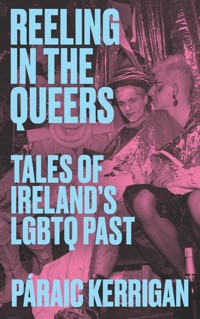
Marking fifty years of the founding of an LGBTQ rights movement in Ireland, Reeling in the Queers explores the lesser-known stories of the fight for LGBTQ rights since 1974, beyond decriminalisation and Marriage Equality. From 1990s boy bands to the AIDS priest, Fr Bernárd Lynch, from the Belfast Lesbian Line to proud parenting, from the earliest Pride events to the last days of Alternative Miss Ireland, fourteen distinct moments map the changing social and cultural landscape of Ireland. These stories, from across the island of Ireland – and further afield – celebrate a strong community and its allies, and speak across the generations. Together, they tell a new story of the gains, losses, devastation and community rising from the ashes of defeat. It is a hugely enjoyable and insightful read for both those who lived through this movement and for those who enjoy its benefits today. Drawing from oral history as well as archives, Reeling in the Queers brings even more to life the great big queer tapestry in Ireland. Queer history in Ireland is Irish history and acknowledging and celebrating the light and the dark of it protects all of our futures as much as our pasts.
Sie lesen das E-Book in den Legimi-Apps auf:
Seitenzahl: 293
Veröffentlichungsjahr: 2024
Das E-Book (TTS) können Sie hören im Abo „Legimi Premium” in Legimi-Apps auf:
Ähnliche




















REELING IN THE QUEERS
First published in 2024 by
New Island Books
Glenshesk House
10 Richview Office Park
Clonskeagh
Dublin D14 V8C4
Republic of Ireland
www.newisland.ie
Copyright © Páraic Kerrigan, 2024
The right of Páraic Kerrigan to be identified as the author of this work has been asserted in accordance with the provisions of the Copyright and Related Rights Act, 2000.
Print ISBN: 978-1-84840-922-4
eBook ISBN: 978-1-84840-923-1
All rights reserved. The material in this publication is protected by copyright law. Except as may be permitted by law, no part of the material may be reproduced (including by storage in a retrieval system) or transmitted in any form or by any means; adapted; rented or lent without the written permission of the copyright owners.
British Library Cataloguing in Publication Data. A CIP catalogue record for this book is available from the British Library.
‘Two Young Men’ by Pearse Hutchinson from Collected Poems (2002) is reproduced by kind permission of the author’s Estate and The Gallery Press. www.gallerypress.com
The extract from ‘A Noise from the Woodshed’ by Mary Dorcey is taken from A Noise from the Woodshed: Short Stories (Onlywomen, 1989) and is reproduced by kind permission of the author.
Copyedited by Emma Dunne
Indexed by Eileen O’Neill
Cover design by Emer Brennan, emerbrennan.com
New Island Books is a member of Publishing Ireland.
To the memories of Edmund Lynch and Terri Blanche
We should have known, she said, I mean, recognised it, knowing you were coming back. And of course you should have too and now that she said it you did – recognise the sound. It wasn’t, after all, for the want of hearing it. But then other people are different, especially if you haven’t heard them speaking or weeping or singing, and anyone can make a mistake about these things, and you had. But now you knew.
—‘A Noise from the Woodshed’, Mary Dorcey
Two young men in Belfast fell in love,
hands reaching out in real peace
across the dangerous peace-line.
They gave each other pleasure –
maybe even happiness, who knows? –
and one day the protestant lad
gave his catholic lover
a plant for his window-sill,
a warm geranium.
—‘Two Young Men’ (2000), Pearse Hutchinson
Also by Páraic Kerrigan
LGBTQ Visibility, Media and Sexuality in Ireland
Contents
Timeline of Queer Irish History, 1971–2024
Introduction
1. ‘The Two Mothers Got Together and Sorted It Out’: Phil Moore, Parents Enquiry and Gay Law Reform
2. Out of the Closet and into a Boy Band: 4Guyz and the Pursuit of 1990s Pop Stardom
3. ‘Bent Politicians’: Gay and Lesbian Candidates in 1980s Electoral Politics
4. ‘The Dowager Queen of the Transvestites’: Judith Storm and Gender Diversity in Late- Twentieth-Century Ireland
5. A Private Matter? Gay Soldiers in the Irish Army
6. Pink Carnations and Pink Triangles: The Emergence of Pride in Ireland (1974–1982)
7. The AIDS Priest and His Ministry: The Story of Fr Bernárd Lynch
8. Close Encounters of a Hollywood Kind: Rock Hudson and the Early Irish Gay Scene
9. Defiance and Defence: The Gay Defence Committee, Police Harassment and the Murders of 1982
10. ‘Am I a Qualified-Enough Lesbian?’ The Belfast Lesbian Line and Cross-Border Lesbian Solidarity
11. Pride in Parenting: Toni Burgess and the Story of Lesbian and Gay Parenting Rights
12. Out at Work? Louise Hannon, Transgender Rights and Employment Equality
13. Indecent and Most Obscene: Censorship and Suppression in Queer Irish Culture
14. Beyond Convention: Alternative Miss Ireland’s Trailblazing Odyssey (1987–2012)
Afterword
Acknowledgements
Select Bibliography
Notes
Timeline of Queer Irish History, 1971–2024
1971–72
Gay Liberation Society is founded at Queen’s University Belfast.
1973
Establishment of conference on Human Sexuality at the New University of Coleraine in Northern Ireland; Sexual Liberation Movement (SLM) is formed at Trinity College Dublin.
1974
SLM organises the first symposium on homosexuality in the Republic of Ireland at Trinity College Dublin; the Irish Gay Rights Movement (IGRM) is founded; Ireland’s first-ever Pride march takes place between the British embassy and the Department of Justice; Cara-Friend helpline is founded to help Northern Ireland’s LGBTQ community; the National Gay & Bisexual Helpline (Tel-A-Friend) is set up in the Republic.
1975
Northern Irish Gay Rights Association (NIGRA) is formed; the Phoenix Centre, Dublin’s first lesbian and gay community resource, opens at Parnell Square; David Norris is interviewed on RTÉ’s
Last House
– the first appearance of an openly gay man in Irish media; Jan Morris, a transgender author, becomes the first transgender person on Irish television, appearing on
The Late Late Show
.
1978
Liberation for Irish Lesbians is formed; Ireland’s first trans group, Friends of Eon, is founded by Claire Farrell and Lola; co-founder of the Gate Theatre Micheál Mac Liammóir dies – his funeral is attended by President Éamon de Valera and government ministers and marked a historic moment as they publicly acknowledged and sympathised with Hilton Edwards, Mac Liammóir’s life partner, signalling a notable recognition of same-sex relationships.
1978–79
National Gay Federation (NGF) is formed and the Hirschfeld Centre is established on 10 Fownes Street in Temple Bar; the IGRM regroups following collapse in 1977 and opens its own venue, the Phoenix Club, at 18 North Lotts, Bachelors Walk; the first Gay Pride Week celebrations take place in Dublin; secretariat for the International Gay Association is established within the Hirschfeld Centre.
1980
Cork Gay Collective is established; Joni Crone is interviewed by Gay Byrne on RTÉ’s
The Late Late Show
– the first appearance of an openly lesbian woman on Irish media; David Norris loses his High Court case to decriminalise homosexuality; Galway Gay Collective is set up; Laurie Steele and Arthur Leahy become the first gay couple interviewed on Irish television.
1981
Jeff Dudgeon wins his case at the European Court of Human Rights (ECHR) in
Dudgeon v the United Kingdom
, leading to the decriminalisation of homosexuality in Northern Ireland; the first National Gay Conference is held in Cork; Liz Noonan becomes the first open and out lesbian to stand for election in Dáil Éireann; UCC refuses recognition to the college’s Gay Soc; Ireland’s first queer literary journal,
Identity
, is launched by the NGF and edited by independent filmmaker Kieran Hickey; Galway IGRM is established.
1982
Gays Against Imperialism is formed; Gay Defence Committee is founded; gay men Charles Self, John Roche and Declan Flynn are murdered; Dublin Lesbian and Gay Collective is founded; Dublin Lesbian Line is formally named as a dedicated service, having previously been part of Tel-A-Friend; Irish Congress of Trade Unions adopts a motion in support of decriminalisation of homosexuality; Quay Co-Op is established in Cork.
1983
Cork Lesbian Collective is formed; Stop Violence Against Gays and Women (Fairview Park March) takes place following the suspended sentences of Declan Flynn’s murderers; Ireland’s first large-scale Pride march takes place through the main streets of Dublin; Judith Storm founds the National Transvestite Group and National Transvestite Line;
Women’s Community Press
is established, which champions LGBTQ issues; Loafer’s Bar opens in Cork;
OUT
magazine is established, the lesbian and gay community’s first attempt at a glossy commercial magazine; the Supreme Court upholds the High Court ruling in the Norris case, forcing him to take his case to the ECHR.
1984
RTÉ broadcasts
Access Television
, the first television programme scripted and produced by lesbians and gay men; Cathal Black’s
Pigs
becomes one of the first Irish films to include gay representation; Mark Ashton, from Portrush, County Antrim, establishes Lesbians and Gays Support the Miners (LGSM) in London, who supported the National Union Mineworkers Strike in the UK.
1985
Gay Health Action is founded in response to the AIDS crisis; Tonie Walsh becomes the first gay person to stand for election for Dublin City Council; seventy participants attend the world’s Second International Gay Youth Congress in Dublin, funded by the Council of Europe; The George opens and is Dublin’s first openly gay bar.
1986
Sides dance club is opened on Dame Lane, Dublin, by Kerry man John Nolan, becoming Ireland’s first commercial gay venue;
Out for Ourselves: The Lives of Irish Lesbian and Gay Men
is published by the Dublin Lesbian and Gay Men’s Collective – the book constitutes Ireland’s first collection of coming out stories.
1987
Gay Community News
is founded by Tonie Walsh and Catherine Glendon; the very first Alternative Miss Ireland takes place; David Norris is elected to Seanad Éireann, becoming the first openly gay member of the Oireachtas; the Hirschfeld Centre burns down and is irrevocably damaged; DJ and major TV personality Vincent Hanley becomes the first high-profile death from an AIDS-related illness in Ireland; Dublin AIDS Alliance (now HIV Ireland) is set up; national AIDS Action Alliance is founded; the GUIDE clinic is established at St James’s Hospital, Dublin.
1988
Norris v Ireland
succeeds at the ECHR, where Ireland’s legislation on sex between men is declared unlawful; the Gay and Lesbian Equality Network (GLEN) is founded.
1989
The Prohibition of Incitement to Hatred Act is introduced, one of the first of its kind in the European Union; fifteen people participate in Galway’s first Pride parade; UCC finally recognises the university’s Gay Soc.
1990
Gay Health Action ceases to operate; lesbian author Mary Dorcey wins the Rooney Prize for Irish Literature; New York’s Irish Lesbian and Gay Organisation (ILGO) ask to march in the upcoming St Patrick’s Day Parade, but are denied by the Ancient Order of Hibernians.
1991
Lesbians Organising Together (LOT) is founded; Ger Philpott sets up the lobby group AIDSWISE; the first Irish Lesbian and Gay Film Festival takes place in Cork; the first Pride parade takes place in Belfast.
1992
The Gay Men’s Health Project (today Gay Men’s Health Service) is launched by the Eastern Health Board; Dublin Gay Pride re-emerges following an absence of a number of years; in one of her first public engagements as president, Mary Robinson makes a symbolic gesture and invites lesbian and gay activists to Áras an Uachtaráin; the first LGBTQ float participates in Cork’s St Patrick’s Day parade, winning a prize; GAZE Film Festival is founded in Dublin; the first known Irish passport is issued to recognise a change of gender.
1993
The Sexual Offences Act introduces a common age of consent of 17, decriminalising sex between men; the Unfair Dismissals Act is amended to include sexual orientation; Dr Lydia Foy writes to the Registrar of Births requesting a birth certificate to recognise her gender as female.
1994
The Gay Health Network is established.
1995
LinC (Lesbians in Cork) is set up.
1996
Lesbian and Gay Visions of Ireland, Towards the Twenty-First Century
, edited by Eoin Collins and Íde O’Carroll, is launched by President Mary Robinson in Áras an Uachtaráin; GLEN’s
HIV Prevention Strategies and the Gay Community
report is submitted to the Minister for Health and launched by President Robinson in Áras an Uachtaráin, leading to official funding for subsequent initiatives; the Bi Activism group is founded; the first gay kiss on Irish television is broadcast on Irish language soap opera
Ros na Rún
;the Gemini Club is founded, which provided a premises for the trans community; Gerard Stembridge’s play
The Gay Detective
premieres.
1997
Dr Lydia Foy begins legal proceedings, having been refused a new birth certificate and legal recognition of her identity as a woman, a process that would take almost two decades.
1998
The Employment Equality Act introduces anti-discrimination measures in employment, meaning that lesbians and gay men cannot be fired on the basis of their sexual identity.
1999
Boyzone star Stephen Gately comes out as gay after
The Sun
newspaper threatens to out him; Sí and the Gemini Club become the first transgender organisations to participate in the Dublin Pride parade; Colm Tóibín’s
The Blackwater Lightship
is published, featuring a gay man living with AIDS.
1999-
Brendan Courtney and Alan Hughes become
2000
Ireland’s first openly gay television presenters.
2000
The gay male age of consent in Northern Ireland is lowered to 17, bringing it in line with the Republic.
2001
Lesbian Anna Nolan enters the
Big Brother UK
house in the show’s first series, eventually coming second.
2002
Brian Dowling, a gay man from Rathangan, County Kildare, wins the second series of
Big Brother UK
; the Equality Authority publishes a significant report on the ‘partnership rights’ of same-sex couples; Dr Lydia Foy loses her legal case in the High Court.
2003
David Norris attempts to introduce a Civil Partnership Bill, which, although unsuccessful, would spur government parties to finally introduce their own bill seven years later; Belong To Youth Services is founded; the Emerald Warriors is established, becoming Ireland’s first gay rugby team.
2004
Katherine Zappone and Ann Louise Gilligan start the KAL Case, which spurs on the marriage-equality movement in Ireland; Transgender Equality Network of Ireland (TENI) is founded in Cork; the International Dublin Gay Theatre Festival is founded.
2005
Dublin Devils F.C. is formed, becoming Ireland’s first gay soccer team.
2006
Taoiseach Bertie Ahern launches the GLEN Strategic Plan; TENI is reformed in Dublin; the LGBTQ community centre Outhouse is founded in Dublin; the first Northwest Pride takes place in County Leitrim; Richard O’Leary and his partner Mervyn Kingston take a legal case against the Department of Social and Family Affairs after the department initially refuses to pay an adult dependent allowance to O'Leary, who was caring for Kingston. After an appeal to the Equality Tribunal, this is overturned.
2007
In the Dr Lydia Foy case in the High Court, Justice Liam McKechnie finds that the Irish State is in contravention of the European Convention of Human Rights on the rights of transgender people. He advises the government to legislate immediately – the government appeals the decision; Limerick hosts its first Pride parade after some years of momentum; LGBT Noise is founded by a small group of volunteers, becoming an independent non-party-political group campaigning for LGBTQ issues, in particular through their annual March for Marriage.
2008
The Immigration, Residence and Protection Bill recognises same-sex couples; the eleven-year-old Irish Queer Archive is transferred to the National Library of Ireland, and the State finally takes ownership of LGBTQ heritage; a High Court judgment holds that a lesbian couple living together in a ‘long-term committed relationship of mutual support’ should be considered a de facto family under Article 8 of the European Convention of Human Rights.
2009
Marriage Equality is set up to campaign for a referendum on same-sex marriage; GAA player Dónal Óg Cusack comes out as gay, becoming the first high-profile Irish sportsperson to do so.
2010
The Civil Partnership and Cohabitants Act is introduced, granting civil partnership to same-sex couples; the government sets up an inter-departmental committee on the legal recognition of transgender people on foot of a High Court recommendation in Dr Lydia Foy’s case; LGBT Ireland is established by seven local LGBT helplines.
2011
Jerry Buttimer, Dominic Hannigan and John Lyons become the first openly gay elected TDs in Dáil Éireann; the Gay Health Network and the Health Services Executive (HSE) launch Ireland’s first-ever National HIV Prevention and Sexual Health Awareness Programme for men who have sex with men (MSM); Louise Hannon becomes the first transgender person to use the Employment Equality Act to win a case against an employer on the grounds of gender discrimination; Senator David Norris makes a bid for the Irish presidency.
2012
The final Alternative Miss Ireland contest takes place; Belong To Youth Services unveil LGBT Youth Mental Health Ireland, supporting LGBTQ youths around the country to develop positive mental health; Bi+ Ireland network is founded.
2013
The government-established Constitutional Convention overwhelmingly recommends a referendum on same-sex marriage; Yes Equality is established by GLEN, Marriage Equality and the Irish Council for Civil Liberties (ICCL).
2014
‘Pantigate’ emerges as a national scandal, resulting in Panti Bliss’s viral noble call speech in the Abbey Theatre; Maria Walsh comes out as a lesbian after being crowned the Rose of Tralee.
2015
An overwhelming ‘yes’ vote in the Marriage Equality Referendum; during the referendum campaign, then Minister for Health Leo Varadkar comes out; the Gender Recognition Act is passed – Ireland becomes only the fourth country in the world to pass and enact gender recognition based on self-determination; Equality Minister Aodhán Ó Ríordáin introduces a bill to remove Section 37 of the Employment Equality Act, 1998, which had a ‘religious ethos’ exemption allowing employers to fire or refuse to hire LGBTQ people; iconic queer venue The Dragon closes; Tomás Heneghan brings a High Court challenge against Ireland’s lifetime ban on blood donation by MSM; high-profile GAA player Valerie Mulcahy comes out as gay.
2016
Katherine Zappone is the first open and out lesbian to become a government minister; Belfast youth worker Ellen Murray is the first transgender person to bid for a seat in the Northern Ireland Assembly; Teach Solais is launched in Galway, becoming the west’s first LGBTQ centre; David Parris takes a case against Trinity College Dublin to the Court of Justice of the European Union regarding survivor’s pension eligibility for his partner and not being able to avail of it. The European Court rules that Parris was not treated unfairly and that Ireland was not mandated to apply retrospective measures.
2017
Leo Varadkar becomes the first openly gay Taoiseach and only the fifth openly gay head of government in the world.
2018
The world’s first National LGBTI+ Youth Strategy is published by the Irish government; the government review of the Gender Recognition Act 2015 recommends access for non-binary people under 18 with parental consent; Ryan O’Shaughnessy’s Eurovision Song Contest entry ‘Together’ is Ireland’s first Eurovision entry to depict a same-sex couple during a live performance, becoming censored in China; Leo Varadkar issues an apology to the Irish LGBTQI+ people who had faced discrimination and suffering at the hands of the Irish State prior to the decriminalisation of homosexuality in 1993; Sporting Pride is founded, becoming Ireland’s national body to get LGBTQ people more active in sport.
2019
The National LGBTI+ Inclusion Strategy 2019–2021 is published; Equality for Children is founded to fight for the rights of a child in a same-sex family to have a legally recognised relationship with both of their parents.
2020
Same-sex marriage is legalised in Northern Ireland; Na Gaeil Aeracha is founded, becoming the world’s first LGBTQ+ GAA team.
2021
The government establishes the Working Group to Examine the Disregard of Convictions for Certain Qualifying Offences Related to Consensual Sexual Activity between Men in Ireland.
2023
The Working Group on Disregard’s final report is submitted to the government; Taoiseach Leo Varadkar unveils Ireland’s first AIDS memorial in the People’s Park in the Phoenix Park.
2024
Rebecca Tallon de Havilland becomes Ireland’s first transgender television presenter; non-binary artist Bambi Thug becomes Ireland’s entrant for the Eurovision Song Contest; Senator David Norris retires – he holds the record for the longest continuous period of service in the Seanad; Andrew Muir becomes the first openly gay minister in Northern Ireland’s Assembly as Minister for Agriculture, Environment and Rural Affairs, while Kenneth Blair becomes the first gay Deputy Speaker in Northern Ireland’s Assembly; Taoiseach Leo Varadkar resigns from office and as leader of Fine Gael.
Introduction
The story of LGBTQ liberation in Ireland has, arguably, been one of progress, with significant milestones such as the success of the ‘yes’ vote in the same-sex marriage referendum and the passing of the Gender Recognition Act in 2015. Two years later in 2017, Ireland saw the ascension of a biracial, openly gay son of an immigrant, Leo Varadkar, as the country’s Taoiseach. These events positioned Ireland as a bastion of progressive social change, cementing its status as ‘an island at the centre of the world’ and demonstrating a huge change of heart for what was once a staunchly Catholic country.1 Significantly, this progress has been considered a culmination of transformative social change catalysed and nurtured by an array of LGBTQ activism and events since the founding of varying Irish gay civil rights movements across 1973 and 1974.
Within the grand and emerging narrative of LGBTQ Ireland, however, are woven intricate threads of ordinary people’s extraordinary stories. This book aims to tell the lesser-told tales of Ireland’s LGBTQ community: stories of those who believed in change and stories of those who simply wanted to have fun. Within LGBTQ archives across Ireland, in the warm kitchens of people’s homes, via Zoom grids and across shared coffees in city cafés are an array of vibrant tales. This book attempts to reel some of them in.
In the summer of 2022 I was speaking with a friend, Rita Wild, who had spent some years as an activist and volunteer with the Belfast lesbian community. I had mentioned to her that I was writing a history of lesser-told stories in Irish LGBTQ life. With a raised eyebrow, she mentioned once being on a bus ‘full of lesbians’ driving from Belfast all the way to Cork and Galway, as part of a Lesbian Line exchange. This piqued my interest, and Rita told me she would see if her old Belfast ‘comrades’ would be interested in talking to me. A number of days later Rita contacted me to share their details, giving me the go-ahead to reach out. She sent a follow-up voice note on WhatsApp to tell me ‘they’re very happy, but really amused’ that someone was interested in this story so many years on. I reached out, hoping to hear about their experiences, stories and memories of their work with the Belfast Lesbian Line and their exchanges with the lesbian community across the island of Ireland. One person in particular, Claire Hackett, was very enlivened by my request. She responded to my email confirming she would participate, but noting, ‘if we realised we were making history, we might have kept better records’.2
This exchange with the former activists of the Belfast lesbian community and the Lesbian Line speaks to the core of Reeling in the Queers, its focus on the significance of ordinary LGBTQ people who did extraordinary things. While many in Ireland’s LGBTQ community may not have changed laws, their actions provided hope, relief, support and, crucially, created enclaves of fun and queer joy.
The imagination and political and cultural consciousness of Irish queer life has, to varying degrees, been captured within the various LGBTQ archives held across the island – their very existence demonstrating a growing conscientiousness around documenting queer life in Ireland. From Edmund Lynch’s newspaper cuttings of any mention of ‘homosexuality’ in the 1970s to the consolidation of the community’s activities in what would become the Irish Queer Archive, the Irish LGBTQ community has always tried to make queer life in Ireland intelligible. While the Irish Queer Archive served as a significant repository, the Cork LGBT Archive, the Irish Trans Archive, the GCN Archive, the LGBT History Northern Ireland Archive and the Irish LGBT Oral History Archive have together allowed me to connect with previous generations and pluck at the finer threads of cultural, political and social life in LGBTQ Ireland. In saying that, the stories of some of the people in this book cannot be found in archives, but rather are waiting to be told in personal documents and memory.
While Reeling in the Queers harnesses queer archives, oral history interviews trace the contours of diverse queer life. Being connected with these individuals, who, like me, faced various forms of discrimination due to their LGBTQ identity, underscored the shared experiences that span generations. The intergenerational dialogue of the oral histories not only serves as a bridge between the past and the present but also provides a conduit through which previously unknown lives and stories can be heard and understood.
I use the term ‘queer’ in a broad sense, encompassing various sexual orientations and gender identities that differ from the heterosexual norm and those identifying with the gender they were assigned at birth. ‘Queer’ is particularly useful when discussing a wide array of cultural practices, as well as when addressing same-sex attraction or gender diversity in historical periods and locations where these practices and identities were not defined as they are today. ‘Queer’ enables us to explore the lives and relationships of people in the past without imposing our contemporary experiences or frames of reference onto theirs. I am also conscious of how ‘queer’ originated as a derogatory insult. My own experience of growing up and going to school in the late 1990s and 2000s saw this evolve to the term ‘gay’ being harnessed and deployed to insult and taunt. The 1980s and 1990s saw activists reclaiming ‘queer’, often used to abuse and humiliate, and turning it towards empowerment and radicalisation against something that was once associated with stigma and shame.
In 1861 the Victorian morality legislation, the Offences Against the Persons Act, while abolishing the death penalty for ‘buggery’, retained its illegality around sex between men and would remain on the statute books until the last decade of the twentieth century. This legislation is significant, as the criminality that emerged from it resulted in a climate of homophobia for many years after. The 1970s later witnessed the emergence of gay civil rights movements, notably the Sexual Liberation Movement in 1973, the Northern Ireland Gay Rights Association (NIGRA) in 1975 and the Irish Gay Rights Movement (IGRM) in 1974, the latter of which established forms of queer socialisation and Ireland’s first designated queer space in the form of the Phoenix Club. While the IGRM later imploded as a result of in-fighting and personality clashes, the National Gay Federation, formed in 1979, founded the Hirschfeld Centre at 10 Fownes Street in Dublin’s Temple Bar, which would bring queer nightlife to a whole new level through the dance club Flikkers while providing a raft of other social services and resources.
In 1982 Jeff Dudgeon, a Belfast shipping clerk, successfully petitioned the European Court of Human Rights to extend the partial decriminalisation of male homosexuality to Northern Ireland. But the 1980s would also see the vulnerability of queer life exposed through the murders of Charles Self in his home in 1982 and Declan Flynn later that year, followed by John Porter in Cork in 1983. The Charles Self murder investigation saw a campaign mounted by the gardaí to collect information and details around Dublin’s gay community. The five perpetrators of Declan Flynn’s murder received suspended sentences, sparking outrage within the queer community and a notable public protest in the form of the Fairview Park March and the Pride Protest March.
The 1980s witnessed the emergence of the AIDS crisis, which was confronted by a number of groups such as Gay Health Action (GHA) in 1985, ACT UP in 1990 and AIDSWISE in 1991. Simultaneously, the Campaign for Homosexual Law Reform, established in 1977 took a challenge to the laws criminalising gay sex acts between men. Led by Irish gay rights pioneer David Norris, the case failed at the Irish High Court in 1977 and Supreme Court in 1983, until eventually it succeeded at the European Court of Human Rights in 1988. Now that Ireland was mandated by Europe to decriminalise, gay law reform became a key issue and saw groups such as the Gay and Lesbian Equality Network (GLEN) emerge in 1988 to campaign for it, eventually finding success when homosexuality was decriminalised in 1993. Transgender activism also burgeoned during the decade: in April 1997 Dr Lydia Foy began legal proceedings having been refused a new birth certificate and legal recognition of her female gender in 1993.
The year 2024 marks half a century since the founding of the IGRM, along with Ireland’s first Gay Pride event, all the way back in 1974. This serves as the perfect juncture to look back at the impact of Ireland’s LGBTQ community on politics, society and culture. The stories, times and topics that this book traverses are by no means a complete history of Ireland’s LGBTQ community, but they do present a window into different aspects of queer Irish culture. While emphasis is often placed on the political aspects of LGBTQ life, in terms of legislative progress and successes, this book also points towards how forms of queer cultural production, socialisation and fun were as crucial to LGBTQ life as political legitimation.
Reeling in the Queers takes inspiration from RTÉ’s beloved television series Reeling in the Years. Just as each episode of that show revisits the events of a specific year through archival footage, reflecting on their contemporary relevance in shaping Ireland, this book aims to do the same by reeling in the stories of LGBTQ individuals, events and figures: stories that have left an indelible mark not just on the queer community but also on modern-day Ireland; stories that bear witness to the resilience of queer culture, a testament to how it emerged and thrived against all odds and the people who made it happen.
1
‘The Two Mothers Got Together and Sorted It Out’
Phil Moore, Parents Enquiry and Gay Law Reform
In April 1989 Phil Moore, a mother of two from Dartry Park in South Dublin, is sitting among the audience of The Late Late Show, then Ireland’s most popular television programme. The evening of joyous candour, with prompted laughter from the studio manager and the potential to interact with one of Ireland’s biggest stars, Gay Byrne, as he interviews a host of celebrities, is wasted on Phil. Instead, she is anxious, then becomes frustrated and is finally furious.
Tonight’s special edition of The Late Late Show features a debate around homosexuality and whether Ireland should decriminalise homosexual acts. The Irish government had just been mandated to do so after David Norris’s Campaign for Homosexual Law Reform was successful in the European Court of Human Rights (ECHR) a year earlier, in 1988. On the panel, Paddy Monaghan, from the conservative reactionary group Christians Concerned, explains to the studio audience that it isn’t ‘normal for a man to be preoccupied with another man’s back passage’.1 This anti-gay, anti-decriminalisation discourse gains traction when another member of the panel, Máire Kirrane of the Irish conservative advocacy group Family Solidarity, speaks from her position as a mother, stating that she is concerned about how impressionable children are to being influenced by gay people, before claiming that there are in fact ‘very few actual homosexuals’ and that they are an ‘aberration’ to the ‘law of God’.2
Phil at this point has heard enough. She is the mother of a gay son herself and can no longer stand to hear members of the panel referring to her child as an aberration. Feeling enraged, she intervenes in the debate, declaring to the studio audience and those watching at home that ‘when you are talking about my child, he is wonderful and perfectly normal. It is nothing that he can grow out of, because if a mother says that to a child, that means you’re not accepting him.’3 And it was the love of a mother for her gay son that would lead to one of the most significant shifts in the rights for LGBTQ people in Ireland. Phil Moore was to become an important proponent in implementing gay law reform in 1993 – yet her contribution has not always received the credit that it deserves. This is the story of how a mother changed the course of gay liberation in Ireland, not to mention helping many Irish families along the way.
Born in Dublin in 1933 – only a year after the 31st International Eucharistic Congress, a landmark event demonstrating the powerful influence of the Catholic Church in the State – Phil Moore was of a generation that grew up in an Ireland that was staunchly conservative, entrenched in the moral habitus and ethos of the Church. Having married Harry, a stereo salesman who worked on Dawson Street, the couple carved out a life for themselves and their family in Dartry Park. Phil describes her politics throughout her life as feminist and relatively liberal, but the question of gay identities had never crossed her mind.
That remained the case until, one lunchtime, her sixteen-year-old son Dermod walked into the kitchen. As Phil was sitting at the kitchen table eating a bowl of lentil soup, Dermod said, ‘Ma, I’ve something to tell you that I don’t think you’ll like. I’m gay.’ Phil was taken aback – this she had not been expecting. Relieved that her teenage son hadn’t got himself into trouble, she replied, ‘Oh, you’re only 16! You’ll grow out of it. You couldn’t possibly know.’4
Following that initial conversation, as her lentil soup cooled in the bowl, and in the weeks thereafter, Phil’s mind raced with endless possibilities. She was frightened for her son’s future. Would he be lonely? Would he ever be happy? Would he be bullied? Would he be beaten up? Would he have secret love affairs? Phil describes ‘drowning in a huge wave of misery and fear … not realising that there were so many horrible myths and prejudices in my mind concerning gay people’.5 Phil began to understand that what she was feeling was a manifestation of institutionalised homophobia, growing up in conservative Catholic Ireland, as she described it, ‘a compound of all the music hall jokes imbibed in a lifetime’.6 With her son’s brave disclosure, his choosing to reveal a crucial part of his identity, Phil says that, ‘out on the ground and then out of my pores came prejudices that I didn’t even think I had’.7 This served as a turning point for Phil, who realised that ‘you have to take out all these myths and prejudices till you suddenly find out that if there’s a problem with being gay, it’s the parents’ problem’.8 Dermod was still the same boy she had raised, and being gay was just part of who he was. So from there on in, together with her husband, she set out to understand what life was like for young gay people in Ireland.
By this stage Dermod was active in the National Gay Federation’s Youth Group, Ireland’s first gay youth organisation, which operated out of the Hirschfeld Centre on 10 Fownes Street in Dublin’s Temple Bar every Sunday from 3 p.m. to 6 p.m. For many young people, the youth group was a lifeline, and simply meeting other lesbian and gay people of the same age, who understood the complexity of living as a young gay person in Ireland, was extremely rewarding.9 One of the Sundays when Dermod was going to the youth group, Phil and Harry asked if they could join, with the aim of understanding a little bit more about his new world and to get a sense of the community he had built for himself at the Hirschfeld. The young gay and lesbian people there began to confide in this warm, sympathetic older couple: ‘Now, the stories we heard from some of these




