


55,99 €
Mehr erfahren.
- Herausgeber: John Wiley & Sons
- Kategorie: Fachliteratur
- Sprache: Englisch
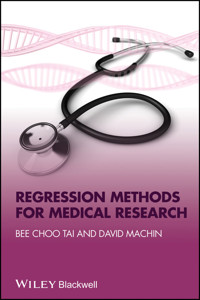
Regression Methods for Medical Research provides medical researchers with the skills they need to critically read and interpret research using more advanced statistical methods. The statistical requirements of interpreting and publishing in medical journals, together with rapid changes in science and technology, increasingly demands an understanding of more complex and sophisticated analytic procedures.
The text explains the application of statistical models to a wide variety of practical medical investigative studies and clinical trials. Regression methods are used to appropriately answer the key design questions posed and in so doing take due account of any effects of potentially influencing co-variables. It begins with a revision of basic statistical concepts, followed by a gentle introduction to the principles of statistical modelling. The various methods of modelling are covered in a non-technical manner so that the principles can be more easily applied in everyday practice. A chapter contrasting regression modelling with a regression tree approach is included. The emphasis is on the understanding and the application of concepts and methods. Data drawn from published studies are used to exemplify statistical concepts throughout.
Regression Methods for Medical Research is especially designed for clinicians, public health and environmental health professionals, para-medical research professionals, scientists, laboratory-based researchers and students.
Sie lesen das E-Book in den Legimi-Apps auf:
Seitenzahl: 516
Veröffentlichungsjahr: 2013
Ähnliche



















Contents
Preface
1 Introduction
INTRODUCTION
STATISTICAL MODELS
SOME COMPLETED STUDIES
Further reading
TECHNICAL DETAILS
2 Linear Regression: Practical Issues
TYPES OF COVARIATES (INDEPENDENT VARIABLES)
VERIFYING THE ASSUMPTIONS
PRECAUTIONS
STUDY DESIGN
CLINICAL AND STATISTICAL SIGNIFICANCE
REPORTING
TECHNICAL DETAILS
3 Multiple Linear Regression
LINEAR REGRESSION: TWO COVARIATES
HOW GOOD IS THE FITTED MODEL?
QUADRATIC MODELS
MULTIPLE LINEAR REGRESSION
PRECAUTIONS
PARSIMONIOUS MODELS
VERIFYING ASSUMPTIONS
TECHNICAL DETAILS
4 Logistic Regression
THE LOGIT TRANSFORMATION
CATEGORICAL AND CONTINUOUS COVARIATES
MULTIPLE LOGISTIC REGRESSION
MODEL CHECKING
CONDITIONAL LOGISTIC REGRESSION
ORDERED LOGISTIC REGRESSION
TECHNICAL DETAILS
5 Poisson Regression
INTRODUCTION
POISSON OR BINOMIAL MODELS
UNKNOWN POPULATION SIZE AT RISK
OVER-DISPERSION AND ROBUST ESTIMATES
KNOWN POPULATION SIZE AT RISK
KNOWN CUMULATIVE EXPOSURE
ZERO-INFLATED MODELS
RESIDUALS
TECHNICAL DETAILS
6 Time-to-Event Regression
TIME-TO-EVENT DATA
KAPLAN-MEIER SURVIVAL CURVE
THE HAZARD RATE AND HAZARD RATIO
THE COX REGRESSION MODEL
VERIFYING PROPORTIONAL HAZARDS
TECHNICAL DETAILS
7 Model Building
INTRODUCTION
TYPES OF COVARIATES
CASE STUDY
SELECTION PROCEDURES
DERIVING A PROGNOSTIC INDEX
PRACTICAL CONSIDERATIONS
TECHNICAL DETAILS
8 Repeated Measures
LONGITUDINAL STUDIES
AUTO- OR SERIAL-CORRELATION
FIXED-EFFECTS MODELS
MIXED-EFFECTS MODELS
SUBJECT-SPECIFIC VERSUS POPULATION-AVERAGED MODELS
TECHNICAL DETAILS
9 Regression Trees
INTRODUCTION
ILLUSTRATIVE EXAMPLE
TREE BUILDING
TREE PRUNING
PRACTICAL CONSIDERATIONS
STATISTICAL SOFTWARE
10 Further Time-to-Event Models
COMPETING RISKS
PARAMETRIC MODELS
TIME-VARYING COVARIATES
TECHNICAL DETAILS
11 Further Topics
MODEL STRUCTURE
MULTI-LEVEL MODELS
FRACTIONAL POLYNOMIALS
Statistical Tables
References
Index
This edition first published 2014 © 2014 by Bee Choo Tai and David Machin. Published 2014 by John Wiley & Sons, Ltd
Registered OfficeJohn Wiley & Sons, Ltd, The Atrium, Southern Gate, Chichester, West Sussex, PO19 8SQ, UK
Editorial Offices9600 Garsington Road, Oxford, OX4 2DQ, UKThe Atrium, Southern Gate, Chichester, West Sussex, PO19 8SQ, UK111 River Street, Hoboken, NJ 07030-5774, USA
For details of our global editorial offices, for customer services and for information about how to apply for permission to reuse the copyright material in this book please see our website at www.wiley.com/wiley-blackwell
The right of the author to be identified as the author of this work has been asserted in accordance with the UK Copyright, Designs and Patents Act 1988.
All rights reserved. No part of this publication may be reproduced, stored in a retrieval system, or transmitted, in any form or by any means, electronic, mechanical, photocopying, recording or otherwise, except as permitted by the UK Copyright, Designs and Patents Act 1988, without the prior permission of the publisher.
Designations used by companies to distinguish their products are often claimed as trademarks. All brand names and product names used in this book are trade names, service marks, trademarks or registered trademarks of their respective owners. The publisher is not associated with any product or vendor mentioned in this book. It is sold on the understanding that the publisher is not engaged in rendering professional services. If professional advice or other expert assistance is required, the services of a competent professional should be sought.
The contents of this work are intended to further general scientific research, understanding, and discussion only and are not intended and should not be relied upon as recommending or promoting a specific method, diagnosis, or treatment by health science practitioners for any particular patient. The publisher and the author make no representations or warranties with respect to the accuracy or completeness of the contents of this work and specifically disclaim all warranties, including without limitation any implied warranties of fitness for a particular purpose. In view of ongoing research, equipment modifications, changes in governmental regulations, and the constant flow of information relating to the use of medicines, equipment, and devices, the reader is urged to review and evaluate the information provided in the package insert or instructions for each medicine, equipment, or device for, among other things, any changes in the instructions or indication of usage and for added warnings and precautions. Readers should consult with a specialist where appropriate. The fact that an organization or Website is referred to in this work as a citation and/or a potential source of further information does not mean that the author or the publisher endorses the information the organization or Website may provide or recommendations it may make. Further, readers should be aware that Internet Websites listed in this work may have changed or disappeared between when this work was written and when it is read. No warranty may be created or extended by any promotional statements for this work. Neither the publisher nor the author shall be liable for any damages arising herefrom.
Library of Congress Cataloging-in-Publication Data
Tai, Bee Choo, author. Regression methods for medical research / Bee Choo Tai, David Machin. p. ; cm. Includes bibliographical references and index.
ISBN 978-1-4443-3144-8 (pbk. : alk. paper) – ISBN 978-1-118-72198-8 – ISBN 978-1-118-72197-1 (Mobi) – ISBN 978-1-118-72196-4 – ISBN 978-1-118-72195-7I. Machin, David, 1939– author. II. Title.[DNLM: 1. Regression Analysis. 2. Biomedical Research. 3. Models, Statistical. WA 950] R853.S7 610.72′4–dc23
2013018953
A catalogue record for this book is available from the British Library.
Wiley also publishes its books in a variety of electronic formats. Some content that appears in print may not be available in electronic books.
Cover image: Stethoscope - iStock file #13368468 © LevKing. DNA - iStock file#1643638 © Andrey ProkhorovCover design by Meaden Creative
ToIsaac Xu-En Koh and Kheng-Chuan KohandLorna Christine Machin
Preface
In the course of planning a new clinical study, key questions that require answering have to be determined and once this is done the purpose of the study will be to answer the questions posed. Once posed, the next stage of the process is to design the study in detail and this will entail more formally stating the hypotheses of concern and considering how these may be tested. These considerations lead to establishing the statistical models underpinning the research process. Models, once established, will ultimately be fitted to the experimental data collated and the associated statistical techniques will help to establish whether or not the research questions have been answered with the desired reliability. Thus, the chosen statistical models encapsulate the design structure and form the basis for the subsequent analysis, reporting and interpretation. In general terms, such models are termed regression models, of which there are several major types, and the fitting of these to experimental data forms the basis of this text.
Our aim is not to describe regression methods in all their technical detail but more to illustrate the situations in which each is suitable and hence to guide medical researchers of all disciplines to use the methods appropriately. Fortunately, several user-friendly statistical computer packages are available to assist in the model fitting processes. We have used Stata statistical software in the majority of our calculations, and to illustrate the types of commands that may be needed, but this is only one example of packages that can be used for this purpose. Statistical software is continually evolving so that, for example, several and improving versions of Stata have appeared during the time span in which this book has been written. We strongly advise use of the most up-to-date software available and, as we mention within the text itself, one that has excellent graphical facilities. We caution that, although we use real data extensively, our analyses are selective and are for illustration only. They should not be used to draw conclusions from the studies concerned.
We would like to give a general thank you to colleagues and students of the Saw Swee Hock School of Public Health, National University of Singapore and National University Health System, and a specific one for the permission to use the data from the Singapore Cardiovascular Cohort Study 2. Thanks are also due to colleagues at the Skaraborg Institute, Skövde, Sweden. In addition, we would like to thank the following for allowing us to use their studies for illustration: Tin Aung, Singapore Eye Research Institute; Michael J Campbell, University of Sheffield, UK; Boon-Hock Chia, Chia Clinic, Singapore; Siow-Ann Chong, Institute of Mental Health, Singapore; Richard G Grundy, University of Nottingham, UK; James H-P Hui, National University Health System, Singapore; Ronald C-H Lee, National University of Singapore; Daniel P-K Ng, National University of Singapore; R Paul Symonds, University of Leicester, UK; Veronique Viardot-Foucault, KK Women’s and Children’s Hospital, Singapore; Joseph T-S Wee, National Cancer Centre, Singapore; Chinnaiya Anandakumar, Camden Medical Centre, Singapore; and Annapoorna Venkat, National University Health System, Singapore. Finally, we thank Haleh G Maralani for her help with some of the statistical programming.
George EP Box (1979): ‘All models are wrong, but some are useful.’
Bee Choo TaiDavid Machin
1 Introduction
INTRODUCTION
The aim of this book is to introduce those who are involved with medical studies whether laboratory, clinic, or population based, to the wide range of regression techniques which are pertinent to the design, analysis, and reporting of the studies concerned. Thus our intended readership is expected to range from health care professionals of all disciplines who are concerned with patient care, to those more involved with the non-clinical aspects such as medical support and research in the laboratory and beyond.
Even in the simplest of medical studies in which, for example, recording of a single feature from a series of samples taken from individual patients is made, one may ask questions as to why the resulting values differ from each other. It may be that they differ between the genders and/or between the different ages of the patients concerned, or because of the severity of their illnesses. In more formal terms we examine whether or not the value of the observed variable, y, depends on one or more of the (covariate) variables, often termed the x’s. Although the term covariate is used here in a generic sense, we will emphasize that individually they may play different roles in the design and hence analysis of the study of which they are a part. If one or more covariates does influence the outcome, then we are essentially claiming that part of the variation in y is a result of individual patients having different values of the x’s concerned. In which case, any variation remaining after taking into consideration these covariates is termed the residual or random variation. If the covariates do not have influence, then we have not explained (strictly not explained an important part of) the variation in y by the x’s. Nevertheless, there may be other covariates of which we are not aware that would.
Measurements made on human subjects rarely give exactly the same results from one occasion to the next. Even in adults, height varies a little during the course of the day. If one measures the cholesterol levels of an individual on one particular day and then again the following day, under exactly the same conditions, greater variation in this than that of height would be expected. Any variation that we cannot ascribe to one or more covariates is usually termed random variation, although, as we have indicated, it may be that an unknown covariate may account for some of this. The levels of inherent variability may be very high so that, perhaps in the circumstances where a subject has an illness, the oscillations in these measurements may disguise, at least in the early stages of treatment, the beneficial effect of treatment given to improve the condition.
Lesen Sie weiter in der vollständigen Ausgabe!
Lesen Sie weiter in der vollständigen Ausgabe!
Lesen Sie weiter in der vollständigen Ausgabe!
Lesen Sie weiter in der vollständigen Ausgabe!
Lesen Sie weiter in der vollständigen Ausgabe!
Lesen Sie weiter in der vollständigen Ausgabe!
Lesen Sie weiter in der vollständigen Ausgabe!
Lesen Sie weiter in der vollständigen Ausgabe!
Lesen Sie weiter in der vollständigen Ausgabe!
Lesen Sie weiter in der vollständigen Ausgabe!
Lesen Sie weiter in der vollständigen Ausgabe!
Lesen Sie weiter in der vollständigen Ausgabe!
Lesen Sie weiter in der vollständigen Ausgabe!




