


16,99 €
Mehr erfahren.
- Herausgeber: John Wiley & Sons
- Kategorie: Fachliteratur
- Sprache: Englisch
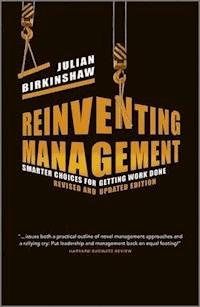
The economic crisis was not just caused by a failure of regulation or economic policy; it was a story of the failure of management in a fundamental sense—a deeply flawed approach to management that encouraged bankers to pursue opportunities without regard for their long-term consequences, and to put their own interests ahead of those of their employers and their shareholders.
The revised edition of this best-selling book shows convincingly that many of today’s major economic problems in the west can be traced to a failure of management. In this updated edition the author draws our attention to new examples of failed management, from Rupert Murdoch’s News Corp, and the disaster at BP, to the ongoing problems in financial services companies such as UBS and RBS. Throughout the book the references and statistics have been updated, to make this a current, highly relevant analysis of the problems besetting modern business and how managers need to tackle them.
Sie lesen das E-Book in den Legimi-Apps auf:
Seitenzahl: 447
Veröffentlichungsjahr: 2012
Ähnliche
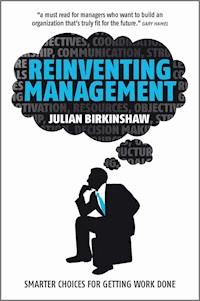

















Table of Contents
Cover
Endorsements
Title page
Copyright page
Dedication
Preface
Acknowledgements
About the Author
1 WHY MANAGEMENT FAILED
Lehman Brothers
General Motors
Disenchantment with Management
The Corruption of Management
Management in a Changing World
Reinventing Management
The Key Messages in this Book
Lehman Brothers and GM Revisited
2 WHAT’S YOUR MANAGEMENT MODEL?
Building Competitive Advantage through Management Model Innovation
Defining What a Management Model Is
Organizing Framework: Four Dimensions, Eight Principles
Same As It Ever Was?
Follow the Trend or Stick to the Knitting?
Your Turn
3 COORDINATING ACTIVITIES: FROM BUREAUCRACY TO EMERGENCE
Bureaucracy is not a Four-letter Word
Emergence
Bureaucracy and Emergence—a Never-ending Dance
Flexible Bureaucracy
Internal Market Model
Network Model
Some Final Points
4 MAKING AND COMMUNICATING DECISIONS: FROM HIERARCHY TO COLLECTIVE WISDOM
What is Hierarchy?
Collective Wisdom
Communicating with Subordinates
Gaining Input from Subordinates on Decisions
Using Subordinates to Solve Problems and Innovate
Making Use of External Input to Improve Decision-making
Some Final Points
5 SETTING OBJECTIVES: FROM ALIGNMENT TO OBLIQUITY
The Tyranny of Alignment
The Value of Obliquity
Three Approaches to Obliquity
Some Final Points
6 MOTIVATING EMPLOYEES: FROM EXTRINSIC TO INTRINSIC MOTIVATION
Some Historical Background
Material Drivers
Social Drivers
Personal Drivers
Some Final Points
7 FOUR MODELS OF MANAGEMENT
Diagnosing Your Company’s Management Model
The Discovery Model: Google
The Planning Model: McDonald’s Corporation
The Quest Model: Investment Banking
The Science Model: Arup
Some Final Points
8 THE CHANGE AGENT’S AGENDA
Microsoft and the 42Projects Experiment
Christian Doll and the Service Sourcing Project
Five Lessons for Change Agents
9 THE LEADER’S AGENDA
Four Steps to Innovating Your Management Model
Some Final Points
EPILOGUE: BROADENING THE DEBATE ON REINVENTING MANAGEMENT
A Broader Discussion
The Business Community Agenda
The Policy Agenda
The Education Agenda
Index
Praise forReinventing Management
“Change isn’t just for the rank-and-file anymore; it’s coming for you. Instant access to information and global resources have changed the world we live and work in. Julian Birkinshaw shows that 19th century industrial management won’t work in a 21st century fluid workplace. Read this, or prepare to be ‘game-changed’ by someone who has.”
Jack Hughes, CEO, TopCoder
“Julian Birkinshaw provides a comprehensive, articulate, and important overview of the role of management in contemporary organizations’ successes and failures. In so doing, he guides managers to think differently about how they do their job and researchers to ask somewhat different and more important and interesting questions. Birkinshaw is unique in his ability to cover this material with wisdom and rigor.”
Jeffrey Pfeffer, Professor, Stanford Graduate School of Business and author ofWhat Were They Thinking? Unconventional Wisdom About Management
“Technological and social changes are having an enormous impact on the world of business, and on the way companies are managed. In this book, Julian Birkinshaw provides a roadmap for making sense of how the world of management is changing, and he provides useful advice for companies who want to harness the potential that Web 2.0 has to offer.”
P.V. Kannan, CEO, 24/7 Customer
“We have used Professor Birkinshaw’s ideas at DiGi, and they have helped us to frame our internal discussions about what our current management model is, and how we plan to evolve it in the years ahead.”
Johan Dennelind, CEO DiGi Telecommunications, Malaysia
“Management is an important key quality which is frequently misunderstood. It is in fact a profession. Julian Birkinshaw provides a fresh new look at what management is really about and provides a useful framework to help executives make smarter choices in their work. The book is an estimable read for anyone who cares about improving professionalism and quality of management in the business world.”
Sir John Ritblat, Honorary President, The British Land Company
“The need for an inside-out approach to management is brought out powerfully by Julian Birkinshaw in his latest work. Julian’s book provides us with an ‘alternate’ view on reinventing management in today’s changing environment. A refreshing read for managers and leaders.”
Vineet Nayar, CEO, HCL Technologies
“We are the first human beings to live in an exponential age, and the first to be faced with a radically accelerating pace of change. Problem is, our organizations aren’t up to the challenges this new reality imposes. The top-down, overly bureaucratic management model found in most companies was invented in the early decades of the 20th century, when chance was much better behaved. In this important new book, Julian Birkinshaw helps us look beyond our legacy management practices, and imagine bold new ways of leading, managing and organizing. Filled with mind-expanding examples, Reinventing Management is a must read for managers who want to build an organization that’s truly fit for the future.”
Gary Hamel, best-selling author ofThe Future of Management
“…a stimulating new book…”
BNET.co.uk, May 2010
“He discusses important issues and provides invaluable insights and suggestions that can help to develop a distinctive management model.”
Professional Manager, September 2010
“This is an excellent, absorbing and thought provoking book. A must read.”
Edge, September 2010
This revised and updated edition published 2012
© 2012 John Wiley & Sons, Ltd
Originally published in 2010
Under the Jossey-Bass imprint, Jossey-Bass, 989 Market Street, San Francisco CA 94103-1741, USA
www.jossey-bass.com
Registered office
John Wiley & Sons Ltd, The Atrium, Southern Gate, Chichester, West Sussex, PO19 8SQ, United Kingdom
For details of our global editorial offices, for customer services and for information about how to apply for permission to reuse the copyright material in this book please see our website at www.wiley.com.
The right of the author to be identified as the author of this work has been asserted in accordance with the Copyright, Designs and Patents Act 1988.
All rights reserved. No part of this publication may be reproduced, stored in a retrieval system, or transmitted, in any form or by any means, electronic, mechanical, photocopying, recording or otherwise, except as permitted by the UK Copyright, Designs and Patents Act 1988, without the prior permission of the publisher.
Wiley also publishes its books in a variety of electronic formats. Some content that appears in print may not be available in electronic books.
Designations used by companies to distinguish their products are often claimed as trademarks. All brand names and product names used in this book are trade names, service marks, trademarks or registered trademarks of their respective owners. The publisher is not associated with any product or vendor mentioned in this book. This publication is designed to provide accurate and authoritative information in regard to the subject matter covered. It is sold on the understanding that the publisher is not engaged in rendering professional services. If professional advice or other expert assistance is required, the services of a competent professional should be sought.
A catalogue record for this book is available from the British Library.
ISBN 978-1-118-37590-7 (hardback)
ISBN 978-1-118-38966-9 (ebook)
ISBN 978-1-118-38967-6 (ebook)
ISBN 978-1-118-38970-6 (ebook)
This book is dedicated to Laura, Ross, Duncan, and Lisa
Preface
This book tells you what management is, why it is important, and how you can generate competitive advantage for your company by taking it seriously.
You might expect there to be a lot of books on this subject, given the enormous numbers of people who are managers, and the poor quality of management that exists in many organizations. But the reality is that few management writers write specifically about the nature of Management. A few lonely voices—most notably Peter Drucker and Henry Mintzberg—have continued to remind us of its importance over the years, but most writers have preferred to focus on more alluring themes, such as leadership, change, and strategy.
There are a couple of prejudices about the practice of management that help to explain why it has struggled for attention. The first prejudice suggests that management is simple, timeless and unchanging. People have been managing others since the time of the Pyramids, it is argued, and the basic tasks of coordinating and controlling haven’t changed since then. So is there really anything new to learn? Yes, in fact, there is. While the functions of management have changed very little over the years (in terms of what needs to be done), the methods of management (in terms of how it gets done) have changed dramatically. And the technological and social changes afoot in the business world today will result in even greater changes in the years ahead.
The second prejudice suggests that what organizations really need is leaders, not managers. Leadership is probably the biggest single category of business books today, and every business school offers courses to help you improve your leadership skills. Management now sits firmly in the shadow of leadership, often viewed as a necessary but rather tedious activity.
But it’s not obvious that this recent focus on leadership has really helped to improve the agility or competitiveness of our business organizations. Indeed, if there is a problem today in the world of business, it is that companies don’t implement their grand plans as effectively as they should. There is a gap between our goals and our ability to achieve them. And I believe it is the job of management, the discipline of getting work done through others, to fill that gap.
Management and leadership, in other words, are both equally important. They are two horses pulling the same cart. We need to pay much greater attention to management to put it back on an equal footing with leadership.
Interestingly, since this book first came out in 2010, there has been a genuine upturn in interest in the field of management. For example, other titles that came out the same time as this one included Manager Redefined by Thomas Davenport and Stephen Harding, The Leaders Guide to Radical Management by Stephen Denning, Management Reset by Ed Lawler and Christopher Worley, Good Boss, Bad Boss by Bob Sutton, and Being the Boss by Linda Hill and Kent Lineback. It is too early to claim victory in the fight to put management back on an equal footing with leadership, but at least there is some momentum afoot. Another important development has been the emergence of the Management Innovation Exchange (www.managementexchange.com), the first serious attempt to create an online community where management ideas can be discussed and developed in real time, and without mediation.
My own research on management began five years ago, when I first started collaborating with Gary Hamel, a Visiting Professor at the London Business School and the founder of Strategos, a Chicago-based consulting firm. We shared an interest in helping companies to become more resilient and more entrepreneurial, and we quickly came to the view that the biggest single blocker to change was the antiquated approach to management used by most large companies. The concept of the Management Innovation Lab (MLab) was born, with support from London Business School, UBS, the David and Elaine Potter Charitable Foundation, the CIPD and AIM Research.
We decided that the mission of MLab was to “Accelerate the evolution of management.” A lot of people scratched their heads when we explained this to them. How can you innovate management? What is management anyway? Surely you mean leadership, not management? All the old prejudices came out, but we stuck to our guns. We began working with a few progressive companies to help them dream up and try out innovative management methods. And we built relationships with management innovators in dozens of companies around the world—people who had put their own experimental approaches to management in place, and wanted some reassurance that they were on the right track. The Management Innovation Exchange (MIX), mentioned above, was one of the natural outgrowths of these pioneering efforts to work with companies in a new way. Created by Gary Hamel, the MIX is proving to be a really valuable resource to people looking for inspiration and practical ideas for developing new ways of working.
Four years ago, I published Giant Steps in Management with my colleague Michael Mol. It was an attempt to make sense of the history of management innovation—how 50 key innovations including Total Quality Management, Brand Management, and Activity Based Costing, had influenced the development of management as a field. We were interested in understanding how these individual innovations had come about, and also how they had collectively brought about a transformation (over a 150-year period) in the nature of management work.
In this book, I turn my attention to the future. Rather than look at individual management innovations, my focus is on what I have come to call the company’s Management Model—the conscious choices made by its top executives to define how work gets done. I believe it is not sufficient simply to look for ways of improving individual components of management, such as enhancing the compensation system, or making the planning system more efficient. Rather, the challenge is to think about how these discrete choices fit together, and to figure out how your Management Model, as a whole, supports and enriches your company’s strategy.
This book provides you with the frameworks and tools you need to reinvent management in your company. It will describe the full range of methods companies use to coordinate activities, make decisions, set objectives, and motivate people. And it will help you to make smarter choices—in the context of your own particular circumstances—for getting work done.
Acknowledgements
This book is the culmination of more than five years’ work, and it has involved interviews with many hundreds of executives and conversations with many dozens of colleagues. While it will not be possible to acknowledge everyone who helped me put the book together, I would like at least to acknowledge my main sources of inspiration and insight.
It was Gary Hamel who got me started on the journey that led to this book, when we first started talking about the need for management innovation back in 2004. I helped Gary to create the Management Innovation Lab (MLab), and over the years it has become an important vehicle for trying out and focusing our ideas. Many of the ideas in this book came out of conversations with Gary, for which I am truly grateful. Thanks also to the other individuals involved in MLab: Jules Goddard, Jeremy Clarke, Alan Matcham, Lisa Valikangas and Stuart Crainer. MLab was sponsored by UBS, the David and Elaine Potter Charitable Foundation, the CIPD and the Advanced Institute of Management Research.
I am indebted to all my co-authors who have helped me to get my ideas into shape and ready for publication in academic and managerial journals. Some of the papers we have written together are explicitly referred to in this book; others have influenced this book more indirectly. So thanks to: Tina Ambos, Cyril Bouquet, Andrew Campbell, Cris Gibson, Jules Goddard, Huw Jenkins, Morten Hansen, Suzanne Heywood, Susan Hill and Michael Mol.
I interviewed perhaps two hundred executives in preparation for writing this book. I have not kept good records of all these interviews, but I would like to acknowledge the following individuals who all offered useful examples or insights: Francesca Barnes, Tod Bedilion, Ed Bevan, Tim Brooks, Randy Chase, Jack Hughes, Lianne Eden, Hari Hariharan, Modestas Gelbudas, Jeff Hollender, Larry Huston, Huw Jenkins, P.V. Kannan, Terri Kelley, Graham Kill, Lars Kolind, Srinivas Koushik, John Mackey, Dena McCallum, Jim McKeown, Michael Molinaro, Sunil Jayantha Narawathne, Vineet Nayar, Hillary Neumayr, Jeremy Palmer, John Perkins, David Potter, Robyn Pratt, Hema Ravichandrar, Bruce Rayner, Peter Robbins, Eric Schmidt, Art Schneiderman, Ross Smith, Toni Stadelmann, Henry Stewart, Claudius Sutter, Reto Wey, Mike Wing and David Yuan.
London Business School has been my professional home for the last decade, and it provided me with the perfect environment for developing the book. Its twin focus on academic rigor and managerial relevance helped me to make my ideas as practical as possible while not losing touch with the scholarly debates on which I am building. So thanks to Deans Laura Tyson, Robin Buchanan and Andrew Likierman, and also to my colleagues who have helped to shape the book, including Lynda Gratton, Michael Jacobides, Costas Markides, Phanish Puranam, Don Sull and Freek Vermeulen. Sumantra Ghoshal, of course, was also an enormously important influence in my first few years at London Business School, and his departure was a great loss to all of us. My former employers, the Stockholm School of Economics, the University of Toronto and the Richard Ivey School of Business, were all influential in shaping pieces of what ultimately came together in this book.
The actual writing process for this book was pretty quick, taking roughly three months from mid-July to early October in 2009. This speedy production process would not have been possible without the enormous effort put in by Karen Sharpe, who converted my first draft text into something coherent and readable. She also helped enormously with several of the company case studies. The other reason that the writing process was so rapid was because of the large number of pre-existing case studies that had been put together by the MLab team. I would particularly like to thank Stuart Crainer, Des Dearlove and Simon Caulkin for their help in this respect. Nigel Owens, Laura Birkinshaw, Allister Maclellan and Rosie Robertson all helped along the way during the writing process, by reviewing draft chapters and helping me with fact checking.
Finally, from Wiley/Jossey-Bass I would like to thank Rosemary Nixon and Kathe Sweeney for showing such enthusiasm for the original proposal in summer 2008, and for encouraging me throughout the writing process.
About the Author
Julian Birkinshaw is Professor and Chair of Strategic and Entrepreneurship at the London Business School. He has PhD and MBA degrees in Business from the Richard Ivey School of Business, University of Western Ontario, and a BSc (Hons) from the University of Durham, UK. He was awarded an Honorary Doctorate by the Stockholm School of Economics, 2009.
Professor Birkinshaw’s main area of expertise is in the strategy and management of large multinational corporations, and on such specific issues as corporate entrepreneurship, innovation, subsidiary–headquarters relationship, knowledge management, network organizations and global customer management.
He is the author of 10 other books, including Giant Steps in Management (2007), Inventuring: Why Big Companies Must Think Small (2003), Leadership the Sven-Goran Eriksson Way (2002) and Entrepreneurship in the Global Firm (2001), and over 70 articles in such journals as Harvard Business Review, Sloan Management Review, Strategic Management Journal and Academy of Management Journal. He is active as a consultant and executive educator to many large companies, including Rio Tinto, SAP, GSK, ABB, Ericsson, Kone, Petrofac, WPP, Bombardier, Sara Lee, HSBC, Akzo Nobel, Roche, Thyssen Krupp, UBS, PWC, Coloplast, BBC, Unilever and Novo Nordisk.
In 1998 the leading British management magazine Management Today profiled Professor Birkinshaw as one of six of the “Next generation of management gurus.” He is regularly quoted in international media outlets, including CNN, BBC, The Economist, the Wall Street Journal and The Times. He speaks regularly at business conferences in the UK, Europe, North America and Australia.
Professor Birkinshaw is co-founder with bestselling author Gary Hamel of the Management Innovation Lab (MLab), a unique partnership between academia and business that is seeking to accelerate the evolution of management.
1
WHY MANAGEMENT FAILED
Here is a simple thought experiment. About forty years from now you receive a text message from your grand-daughter. She has been given an assignment at school: what were the causes of the Great Recession of 2007-13? “You were working during that era,” she says, “Can you tell me the answer?”
Of course, we have all developed our own views about how the current economic crisis came about, and we are inevitably drawn to the proximate causes, such as excessive borrowing, low interest rates, and a lack of financial regulation. But as these events recede into history, our understanding of what happened will evolve. Many of the proximate causes will gradually be downplayed. And other less-obvious and less-proximate causes will become more apparent.
What are these less-obvious and underlying causes? Well, only time will tell. But I believe part of the answer is that we have focused too much on the “policy” side of the story up to now—on the decisions made by central bankers, government officials and regulators. Of course their decisions are important, but these players can only do so much. They set the rules, they operate a few vital levers of control, and they have the right to penalize those who break the rules.
But in a capitalist economic system, I believe firms are the real agents of change. They are the producers of the goods and services that drive economic growth. They employ the majority of people. They have the capacity to act decisively, to put money behind big opportunities, to invest in people and new technologies. They also have the capacity to get it wrong on a large scale—by putting resources into poorly-thought out projects, by allowing negligent and irresponsible behavior, and by creating demotivating and uninspiring places to work.
Lesen Sie weiter in der vollständigen Ausgabe!
Lesen Sie weiter in der vollständigen Ausgabe!
Lesen Sie weiter in der vollständigen Ausgabe!
Lesen Sie weiter in der vollständigen Ausgabe!
Lesen Sie weiter in der vollständigen Ausgabe!
Lesen Sie weiter in der vollständigen Ausgabe!
Lesen Sie weiter in der vollständigen Ausgabe!
Lesen Sie weiter in der vollständigen Ausgabe!
Lesen Sie weiter in der vollständigen Ausgabe!
Lesen Sie weiter in der vollständigen Ausgabe!




