


43,99 €
Mehr erfahren.
- Herausgeber: John Wiley & Sons
- Kategorie: Fachliteratur
- Sprache: Englisch
Designed specifically for the needs of trainees and newly-qualified therapists, Relational Integrative Psychotherapy outlines a form of therapy that prioritizes the client and allows for diverse techniques to be integrated within a strong therapeutic relationship.
- Provides an evidence-based introduction to the processes and theory of relational integrative psychotherapy in practice
- Presents innovative ideas that draw from a variety of traditions, including cognitive, existential-phenomenological, gestalt, psychoanalytic, systems theory, and transactional analysis
- Includes case studies, footnotes, ‘theory into practice’ boxes, and discussion of competing and complementary theoretical frameworks
- Written by an internationally acclaimed speaker and author who is also an active practitioner of relational integrative psychotherapy
Sie lesen das E-Book in den Legimi-Apps auf:
Seitenzahl: 532
Veröffentlichungsjahr: 2015
Ähnliche



















Relational Integrative Psychotherapy
Engaging Process and Theory in Practice
Linda Finlay
This edition first published 2016 © 2016 John Wiley & Sons Ltd
Registered OfficeJohn Wiley & Sons Ltd, The Atrium, Southern Gate, Chichester, West Sussex, PO19 8SQ, UK
Editorial Offices350 Main Street, Malden, MA 02148-5020, USA 9600 Garsington Road, Oxford, OX4 2DQ, UK The Atrium, Southern Gate, Chichester, West Sussex, PO19 8SQ, UK
For details of our global editorial offices, for customer services, and for information about how to apply for permission to reuse the copyright material in this book please see our website at www.wiley.com/wiley-blackwell.
The right of Linda Finlay to be identified as the author of this work has been asserted in accordance with the UK Copyright, Designs and Patents Act 1988.
All rights reserved. No part of this publication may be reproduced, stored in a retrieval system, or transmitted, in any form or by any means, electronic, mechanical, photocopying, recording or otherwise, except as permitted by the UK Copyright, Designs and Patents Act 1988, without the prior permission of the publisher.
Wiley also publishes its books in a variety of electronic formats. Some content that appears in print may not be available in electronic books.
Designations used by companies to distinguish their products are often claimed as trademarks. All brand names and product names used in this book are trade names, service marks, trademarks or registered trademarks of their respective owners. The publisher is not associated with any product or vendor mentioned in this book.
Limit of Liability/Disclaimer of Warranty: While the publisher and author have used their best efforts in preparing this book, they make no representations or warranties with respect to the accuracy or completeness of the contents of this book and specifically disclaim any implied warranties of merchantability or fitness for a particular purpose. It is sold on the understanding that the publisher is not engaged in rendering professional services and neither the publisher nor the author shall be liable for damages arising herefrom. If professional advice or other expert assistance is required, the services of a competent professional should be sought.
Library of Congress Cataloging-in-Publication Data
Finlay, Linda, 1957- Relational integrative psychotherapy : engaging process and theory in practice / by Linda Finlay. pages cm Includes bibliographical references and index. ISBN 978-1-119-08730-4 (cloth) — ISBN 978-1-119-08729-8 (pbk.) 1. Eclectic psychotherapy. I. Title. RC489.E24F56 2015 616.89–14—dc23
2015017681
A catalogue record for this book is available from the British Library.
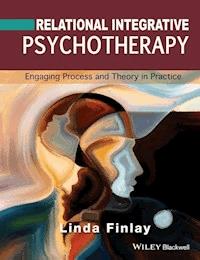
Cover image: © agsandrew/Shutterstock
To Ken Evans – he inspired a generation.
Contents
Foreword
Preface
Organisation of the Book
Acknowledgements
1 What is Relational Integrative Psychotherapy?
Being ‘Relational’
Embracing ‘Integration’
Challenges of Theoretical Integration
Concluding Reflections
Notes
Part I Being and Doing Processes
2 Meeting and Contracting
First Contact
Problem Formulation and ‘Storying’
Use of Diagnostic Categories
Treatment Planning
Contracting
Concluding Reflections
Notes
3 Engaging the Therapeutic Process
Nurturing the Therapeutic Alliance
Ensuring Safety
Listening, Sensing and Making Sense
Enabling Change
Being Present to Relational Processes
Concluding Reflections
Notes
4 Empathising and Attuning
Empathy
Attunement
‘Empathic Attunement’: A Rhythmic Dance
Concluding Reflections
Notes
5 Holding, Containing and Boundarying
Boundarying to Hold and Contain
Defining the Nature of ‘Holding’ and ‘Containing’
Intrapsychic, Emotional and Intersubjective Holding-Containing
The Shadow Side: Arguments Against Holding-Containing
The Therapist as a ‘Contained-Container’
Concluding Reflections
Notes
6 Resourcing: Nurturing Skills and Mobilising Coping Strategies
Identifying Resources
The Value of Self-Help
Nurturing Insight, Awareness and Self-Understanding
Skills Development: Psycho-educational Interventions
Concluding Reflections
Notes
7 Intuiting, Imagining and Interpreting
Using Guided Imagery and Fantasy
Engaging Metaphor
Embodying a Felt Sense
Utilising Dream Work
The Relational Base of Imaginal Work
Concluding Reflections
Notes
8 Challenging
Robust-confrontative Challenging
Analytic-strategic Challenging
Gentle-empathic Challenging
Tacit Challenging
Key Principles of Effective Challenging
Concluding Reflections
Notes
9 Integrating
The Integrating Project: Levels of Integration
Jayne’s Story: Integrating Selves
Kjell’s Story: Integrating Experience
Norbert’s Story: A Transpersonal Integration
Steven’s Story: Healing through Relationship
Concluding Reflections
Notes
10 Ending
Deciding to End
Working through Loss, Separation and Grief
Embracing the ‘Transition’ into the World
Stock-taking
Concluding Reflections
Notes
Part II Theory Applied to Practice
11 Cognitively Orientated Therapy
Principles Underlying the Cognitive Tradition
Working in a Relational-integrative Way
Evidence-based Practice?
Concluding Reflections
Notes
12 Existential Phenomenology: Theory and Therapy
Existential Phenomenology: ‘Landmarks' in the Philosophical Territory
The Phenomenological Attitude: ‘Bracketing' and ‘Being'
Existential-phenomenological Therapy
Concluding Reflections
Notes
13 Gestalt Theory and Therapy
Theoretical Foundations Applied to Therapy
The Gestalt Cycle
Therapists' Being as ‘Presence'
Therapeutic Interventions
Concluding Reflections
Notes
14 Relational Psychoanalytic Theory in Practice
Transference
Projective Identification
Managing Transferences
Owning Counter-transferences
Concluding Reflections
Notes
15 Systemic Theory and Therapy
A Systemic Perspective
Applying a Systems View in Family Therapy
Research on Family Therapy
Concluding Reflections
Notes
16 Transactional Analysis
The Three Ego States: PAC
Developmental-relational Elaborations
‘Drama Triangle’ Dynamics
Applying TA in Relational-integrative Ways
Concluding Reflections
Notes
Postscript
References
Index
EULA
List of Tables
Chapter 11
Table 11.1
Chapter 13
Table 13.1
List of Illustrations
Chapter 1
Figure 1.1
The ‘between’
Part I
Psychotherapy processes
Chapter 3
Figure 3.1
Prochaska and DiClemente’s (1982) Cycle of Change.
Chapter 4
Figure 4.1
Empathy and attunement
Chapter 8
Figure 8.1
Types of challenge
Chapter 9
Figure 9.1
Levels of possible integration
Part II
Chapters 11–16: Six theoretical perspectives and their relationally focused overlap
Chapter 11
Figure 11.1
Beck’s ‘Cognitive Triad’ (1967, 1976)
Figure 11.2
Mindfulness perspective (Faris & van Ooijen, 2012, p. 100)
Chapter 12
Figure 12.1
Existential-phenomenological approach to Integrative Psychotherapy
Chapter 13
Figure 13.1
The field of gestalt theory.
Figure 13.2
The Cycle of Gestalt formation and destruction with diagrammatic examples of typical boundary disturbances at each stage (reproduced from Clarkson, 1999, p. 50)
Figure 13.3
Gestalt approaches to ‘doing' experiments
and
relational ‘being-with'
Chapter 14
Figure 14.1
The relational psychoanalytic field
Chapter 15
Figure 15.1
An individual’s intrapersonal-interpersonal systems
Chapter 16
Figure 16.1
Three ego states
Figure 16.2
Transactions
Figure 16.3
The drama triangle
Guide
Cover
Table of Contents
Preface
Pages
ix
x
xi
xii
xiii
1
2
3
4
5
6
7
8
9
10
11
13
15
16
17
18
19
20
21
22
23
24
25
26
27
28
29
30
31
32
33
34
35
36
37
38
39
40
41
42
43
44
45
46
47
48
49
50
51
52
53
54
55
56
57
58
59
60
61
62
63
64
65
66
67
68
69
70
71
72
73
74
75
76
77
78
79
80
81
82
83
84
85
86
87
88
89
90
91
92
93
94
95
96
97
98
99
100
101
102
103
104
105
106
107
108
109
110
111
112
113
114
115
116
117
118
119
120
121
122
123
124
125
126
127
128
129
130
131
132
133
134
135
136
137
138
139
140
141
142
143
144
145
146
147
148
149
151
152
153
154
155
156
157
158
159
160
161
162
163
164
165
166
167
168
169
170
171
172
173
174
175
176
177
178
179
180
181
182
183
184
185
186
187
190
191
192
193
194
195
196
197
198
199
200
201
202
203
204
205
206
207
208
209
210
211
212
213
214
215
216
217
218
219
220
221
222
223
224
225
226
227
228
229
230
231
232
233
234
235
236
237
238
239
241
243
244
245
246
247
248
249
250
251
252
253
254
255
256
257
258
259
260
Foreword
Ken Evans
Relational Integrative Psychotherapy by Linda Finlay is a tour de force. Drawing on a wealth of knowledge from her experience of different therapies she interweaves them, engaging a coherent relational focus that is both impressive and elegant. Linda’s mastery of the art of writing is evident throughout the book as she fearlessly unpacks highly complex theory with clarity and humility.
In part I Linda takes us on a journey through integrative psychotherapy from the initial engagement with the client through the highs and lows of the relational endeavour to its ending, and thus beginning.
The reader will encounter the conviction and passion Linda brings to her clinical practice as a relational integrative psychotherapist. Numerous evocative examples connect theoretical reflection with clinical vignettes. In reading the vignettes I trust you will feel, like me, openly invited into her clinical room, to think and feel alongside her about her clients, her own embodied response as the therapist and her critical reflection on the process ‘between’ herself and the client.
In part II Linda reaches into six modality approaches and artfully extracts those essences from them that bring fresh insight and a deeper knowledge of the relational: Gestalt Therapy, Transactional Analysis, Cognitive Behaviour Therapy, Relational Psychoanalysis, Family and Systemic psychotherapy and Existential Phenomenological psychotherapy.
Students will benefit enormously from this comprehensive survey of the key modalities impacting relational integrative psychotherapy and I confidently predict this book will be a key text for students of integrative psychotherapy for many years to come. Seasoned therapists will also appreciate this book as a truly helpful resource offering a point of access to and bridge across what other modalities offer to the continued evolution of our clinical practice.
The publication of this book coincides with the ‘coming of age’ of the European Association for Integrative Psychotherapy (EAIP), as it celebrates 21 years since its foundation in 1993–4. I intuit a certain synchronicity here because in several important respects Linda’s book exemplifies a central tenet of the EAIP, which is that “no single form of therapy is best or even adequate in all situations” and in this regard “there is a particular ethical obligation on integrative psychotherapists to dialogue with colleagues of diverse orientations and to remain informed of developments in the field” (EAIP Statement of Philosophy, www.euroaip.eu). Linda admirably continues in the tradition established by Norcross and Goldfried and others as she invites the profession of psychotherapy to look beyond dogmatism: “I see our mission as blending competing voices that can at times express themselves stridently. We achieve our deepest theoretical integration when we are able to internalise competing voices into a transformed, coherent way of being.”
I wholeheartedly commend this book as a significant step towards this mission.
Dr Ken Evans, Fellow RSA, Fellow EAIP, Hon Member EAGT
President, European Association for Integrative Psychotherapy (EAIP)
Vice President, (External Affairs) European Interdisciplinary Association for Therapy with Children & Young People
President, European Association for Psychotherapy (1994–1995)
Visiting Professor of Psychotherapy, USEE
Visiting Professor of Theoretical and Applied Psychology, Union University
Co-Director, European Centre for Psychotherapeutic Studies
Preface
Truth has no path, and that is the beauty of truth, it is living. (J. Krishnamurti, Freedom from the Known)
There are myriad ways to navigate the rich and varied terrain of relational integrative psychotherapy. Here, no single ‘truth’ prevails: many paths beckon, and models and practices evolve as we live them.
This book sets out to map the intricacies of this landscape, in order to help practitioners negotiate its many options and make their personal choices. My own favoured route involves a humanistically orientated blend of existential-phenomenological, gestalt, transactional analysis (TA) and relational psychoanalytic perspectives, but in this book I seek to present a spectrum of routes and show their interconnections. I aim to honour the richness of our field as a whole, rather than promote any particular relational integrative model. I also seek to explore key questions: how do we pull together potentially contradictory ideas and varied practices in a coherent way? How can we embody the relational qualities necessary for genuine existential healing (Hycner, 1991/1993)?
This book embodies, and is reflective of, my personal efforts to navigate this perplexing field. When I started as a person-centred occupational therapist in the 1970s, I made somewhat eclectic use of psychodynamic group work and cognitive-behavioural strategies. My interest in psychotherapy grew as I ventured into play therapy, art therapy and drama therapy, and my horizons were widened further when I became an academic and a phenomenologist. When eventually I began my integrative psychotherapy training, I had to learn how to integrate my understandings of divergent approaches, theories and techniques into a relational way of being that made sense to me.
Writing this book has, for me, proved an integrative healing journey. By stepping back to reflect on what it is to be a relational integrative therapist, and then setting this down in words, I have been helped to a better understanding of our field and the often argumentative voices which echo across it. My challenge has been to stay open to alternative approaches and value the contributions they offer. Perhaps this too will be your challenge as you read on.
In the pages that follow you will encounter familiar routes and be guided towards wider vistas that may inspire you to strike out in bold new directions. My hope is that this map will help you choose your own particular road ahead.
Organisation of the Book
Chapter 1 addresses the question: ‘What is relational integrative psychotherapy?’ I broadly define what is meant by ‘relational’ and ‘integrative’, acknowledging that these are contested terms used in varied ways.
The chapters in part I explore those ‘being and doing’ processes that apply across modalities. Regardless of theoretical orientation, we all aim to engage clients in therapy and empathically attune to their needs. We intuit, interpret, contain and hold clients’ emotions; we offer challenge and enable them to resource themselves; and so forth. Eventually, when clients have internalised our nourishing relationship and are able to feel differently about themselves and more connected to others, we work towards ending therapy. Throughout the chapters of part I, I highlight the central part played by the therapeutic relationship. The aim is to provide an enriched perspective on our field rather than a ‘how to’ manual.
Part II introduces key ideas associated with the different theoretical perspectives. These chapters stand alone as resources to be dipped into rather than read in sequence. I’ve chosen to focus on the major fields: cognitive, existential-phenomenological, gestalt, psychoanalytic, systemic and transactional analysis. My emphasis throughout is on examining how theory might be applied in relational and integrative ways.
I rely heavily on illustrations of relational integrative work in practice and draw on a range of material in an effort to show its diversity and depth. Most examples have been taken from published sources. Some case studies are based loosely on my practice and experience but most are constructed fictionalised accounts. Where relevant I note those (anonymised) stories where individuals have generously given their specific consent to reproduce them. I invite you to dwell with the examples – both the ordinary ones and the extra-ordinary. Allow them to resonate; let yourself be awed by the profound, poignant and at times seemingly magical work in which we engage.
Together with Case illustrations, I’ve used Research and Theory boxes at regular intervals to highlight our evidence base and theory/techniques applied in practice. Numerous endnotes provide specific theoretical explanation and deeper analysis. Significantly, each chapter contains discussion of complementary and competing theoretical ideas towards the goal of integrating theory in relational ways. I selectively highlight particular perspectives in each chapter; reading across the chapters as a whole will hopefully enable a more holistic, integrated understanding.
Acknowledgements
Many people have helped with the evolution of this book. First I want to acknowledge Ken Evans, who has mentored and encouraged me over the years, and whose work continues to inspire me. I was extraordinarily touched when Ken offered to write the foreword to this book and I thank him for his generous words. Five other ‘teachers’ who continue to influence me through their seminal writings are Patricia DeYoung, Richard Erskine, Lynne Jacobs, Ernesto Spinelli and Irvin Yalom. I cite their work frequently in this book and I hope I have done respectful justice to their ideas. Thirdly, I would not have been able to write this book without the nourishing conversations with, and expert guidance of, many friends and colleagues, in particular George Bassett, Angela Carr, Margaret Chapman, Bob Cooke, Kate Evans, Vivian Finlay, Anne Gilbert, Jill Kay, Pete Lavender, Lydia Noor, Barbara Payman, Amanda Phillips-Wieloch and Vivien Sabel. Special thanks need to go to Mel Wilder and Sue Ram for their invaluable editing. The omissions and misunderstandings within the book are, of course, mine alone. Finally, my thanks need to be extended to Darren Reed (commissioning editor) for believing in the project, and Karen Shield (project editor), Hairiani Rashid (production editor) and the rest of the publishing team for seeing the manuscript through to publication.
Linda Finlay
December 2014
1What is Relational Integrative Psychotherapy?
Learn your theories as well as you can, but put them aside when you touch the miracle of the living soul. Not theories but your creative individuality alone must decide. (Jung, 1953, p. 73)
There are currently many different ways of doing relational integrative psychotherapy, a plurality fostered by a Zeitgeist which celebrates both the ‘relational’ and the ‘integrative’ dimensions of psychotherapy. Rather than rely on a single-school approach, with its specific theory and methods, psychotherapists are increasingly looking beyond traditional boundaries towards more holistic practice.
The variety of practice now available to us is not surprising, given our ability to draw upon more than 400 theories and models of psychotherapy (Norcross, 2005). This array testifies to the richness and dynamism of our field. While competing and contested approaches challenge our identity and often appear idiosyncratic and unconvincing, they also signal creativity, openness and respect for divergence. No blanket view or single technique can hope to embrace the complexity of human behaviour. We need to trawl widely to find therapy approaches which encompass both the individual and their social world and that engage intrapsychic, embodied, interpersonal, cultural and transpersonal levels (Norcross & Goldfried, 2005).
It’s probably true to say that much psychotherapy is relational and integrative at heart. If so, the convergence of these two movements may well rebalance an “over-fragmented field” (O’Brien & Houston, 2007, p. 4). In common with others, Markin (2014, p. 327) argues for a more “coherent and less polarizing professional identity”, noting that defining ourselves as coming from a particular modality sets up false dichotomies when, in practice, we routinely straddle multiple approaches.
Lesen Sie weiter in der vollständigen Ausgabe!
Lesen Sie weiter in der vollständigen Ausgabe!
Lesen Sie weiter in der vollständigen Ausgabe!
Lesen Sie weiter in der vollständigen Ausgabe!
Lesen Sie weiter in der vollständigen Ausgabe!
Lesen Sie weiter in der vollständigen Ausgabe!
Lesen Sie weiter in der vollständigen Ausgabe!
Lesen Sie weiter in der vollständigen Ausgabe!
Lesen Sie weiter in der vollständigen Ausgabe!
Lesen Sie weiter in der vollständigen Ausgabe!
Lesen Sie weiter in der vollständigen Ausgabe!
Lesen Sie weiter in der vollständigen Ausgabe!
Lesen Sie weiter in der vollständigen Ausgabe!
Lesen Sie weiter in der vollständigen Ausgabe!
Lesen Sie weiter in der vollständigen Ausgabe!
Lesen Sie weiter in der vollständigen Ausgabe!
Lesen Sie weiter in der vollständigen Ausgabe!
Lesen Sie weiter in der vollständigen Ausgabe!
Lesen Sie weiter in der vollständigen Ausgabe!
Lesen Sie weiter in der vollständigen Ausgabe!
Lesen Sie weiter in der vollständigen Ausgabe!




