


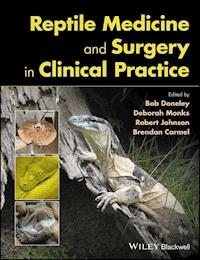
Reptile Medicine and Surgery in Clinical Practice E-Book
110,99 €
Mehr erfahren.
- Herausgeber: John Wiley & Sons
- Kategorie: Fachliteratur
- Sprache: Englisch
A concise and practical quick reference guide to treating reptiles in first opinion veterinary practice
Reptile Medicine and Surgery in Clinical Practice is the ideal guide for the busy veterinarian treating reptile cases. Designed as a quick reference guide, but with comprehensive coverage of all the topics needed for first opinion practice, the book presents the principles of reptile medicine and surgery.
Richly illustrated chapters cover anatomy, physiology, behaviour, husbandry, reproduction, common diseases and disorders, and much more. Application in a clinical setting is emphasized throughout, including guidance on the physical examination, diagnostic testing and imaging, treatment options, and anaesthetic and surgical techniques.
- Practical quick-reference guide—ideal for the busy, first-opinion veterinary practitioner
- Richly illustrated in full colour throughout
- Edited by a team of highly experienced exotic animal veterinarians
- Useful reference for those studying for postgraduate certificates in exotic animal medicine
With contributions from experts around the globe, Reptile Medicine and Surgery in Clinical Practice is a valuable reference offering a balanced international view of herpetological medicine.
Sie lesen das E-Book in den Legimi-Apps auf:
Seitenzahl: 929
Veröffentlichungsjahr: 2017
Ähnliche




















Table of Contents
Cover
Title Page
List of Contributors
Preface
1 Taxonomy and Introduction to Common Species
Taxonomy
Commonly Kept Species
2 Anatomy and Physiology of Reptiles
Introduction
Metabolic Rate
External Anatomy
Integument
Skeletal System
Cardiovascular System
Immune System
Respiratory System
Digestive System
Gastrointestinal Tract
Urinary System
Reproductive System
Endocrine System
Nervous System
Reference
Further Reading
3 Behaviour in the Wild and in Captivity
Introduction
Normal Needs and Behaviour of Captive Reptiles
Physiological Responses
Behaviour Patterns of Captive Reptiles
Fitness and Environmental Enhancement
Signs of Comfort and Discomfort
References
Further Reading
4 Husbandry and Nutrition
Introduction
Basic Concepts
Transport
Handling and Restraint for Feeding and Husbandry Purposes
Sex Identification
Preventative Health Care
Nutrition
Snake Nutrition
Lizard Nutrition
Chelonian Nutrition
Reference
Further Reading
5 Enclosure Design
Introduction
Indoor or Outdoor Enclosures
General Housing Considerations
Breeding Racks
Aquatic Enclosure and Water Quality
Summary
Further Reading
6 Lighting
Introduction
The Solar Spectrum
Vitamin D3
Natural Sunlight
Artificial Sunlight
Estimating the Ultraviolet Requirement: The Ferguson Zone Concept
Providing the Ultraviolet Gradient
Excessive Ultraviolet Exposure/Non‐Terrestrial UVB and UVC
General Recommendations for Reptile Keepers
References
Further Reading
7 Reproduction
Reproductive Strategies in Reptiles
Anatomy and Physiology
Gender Assessment in Reptiles
Breeding Management
Mating
Determination of Gravidity
Determination of Length of Gestation
Managing Gravid Females
Egg Laying
Multiple Clutches
Egg Incubation
Determination of Egg Viability
Hatching
Embryonic Mortality
References
Further Reading
8 Reptile Paediatrics
Introduction
Hatching/Birth
Neonatal Care
Examination and Diagnostic Testing
Treatment
Anaesthesia
Specific Conditions
Further Reading
9 Setting Up and Equipping a Reptile Practice
Marketing A Reptile Practice
Fee Setting for the Reptile Practice
Measuring the Financial Health of the Reptile Practice
The Consultation Room
Hospitalization of Reptiles
Facilities
Biosecurity
The Surgical Suite
10 The Reptile Consultation
The Appointment
The Diagnostic Pyramid
Taking a History
The Physical Examination
Summary
Diagnosis
11 Diagnostic Testing
Introduction
Haematology
Biochemical Analyses
Cytology
Serology
Culture
Reference
Further Reading
12 Diagnostic Imaging
Radiography
Ultrasonography
Computed Tomography
Magnetic Resonance Imaging
Diagnostic Endoscopy
Training
References
13 Clinical Techniques and Supportive Care
General Handling
Diagnostic Techniques
Treatment Techniques
Acknowledgements
Reference
Further Reading
14 Reptile Pharmacology
Introduction
Administration of Drugs for Reptiles
Drug Compounding
Antibiotic Therapy
Antifungals
Antivirals
Antiparasitics
Anti‐Inflammatories and Analgesics
Learning More
References
Further Reading
15 Nutritional and Metabolic Diseases
Metabolic Bone Disease
Renal Secondary Hyperparathyroidism
Obesity
Hypovitaminosis A
Hypervitaminosis A
Thiamine Deficiency
Postprandial Cardiac Hypertrophy in Pythons
Hyperglycaemia in Bearded Dragons
References
Further Reading
16 Infectious Diseases and Immunology
Introduction
Upper Respiratory Tract
Lower Respiratory Tract
Upper Alimentary Tract
Lower Alimentary Tract
Liver Disease
Neurological Disease
Skin and Shell Diseases
Kidney and Urinary Tract Disease
Blood Disease
Formulating a Plan
Undiscovered Infectious Agents
Immunology
Reviews
References
Further Reading
17 Differential Diagnoses
Introduction
Snakes
Lizards
Chelonians
Crocodilians
Further Reading
18 Disorders of the Integument
Approach to Reptilian Skin Disease
Common Dermatoses
Dermatoses Characterized by Abnormal Scaling or Colour Change
Moist Erythematous, Vesicular, Erosive/Ulcerative and Necrotic Dermatoses
Papular and Swollen or Nodular Dermatoses
Miscellaneous Dermatoses
References
Further Reading
19 Diseases of the Gastrointestinal System
Stomatitis and Dental Disease
Mandibular and Maxillary Fractures
Oesophageal Foreign Bodies
Regurgitation
Diarrhoea
Intestinal Obstruction
Colonic Impaction (Constipation)
Cloacal Prolapse
Cloacitis
Liver Disease
Further Reading
20 Diseases of the Cardiovascular System
The Cardiovascular Examination
Cardiovascular Disease
Nutritional Disorders Affecting the Cardiovascular System
Trauma
Neoplasia
Infectious Disorders
References
Further Reading
21 Diseases of the Respiratory System
Predisposing Factors to Respiratory Disease
Aetiologies of Respiratory Disease
Diagnosis of Respiratory Disease
Principles of Treatment
Further Reading
22 Disorders of the Reproductive System
Dystocia/Post‐Ovulatory Egg Stasis
Preovulatory Follicular Stasis
Yolk‐Associated Coelomitis
Salpingitis
Oviductal Prolapse
Phallus Prolapse
Hemipenal Plugs
Ectopic Eggs
Infertility
References
23 Diseases of the Urinary Tract
Renal Disease
Lower Urinary Tract Disease
Further Reading
24 Diseases of the Nervous System
History and Husbandry
The Neurological Examination
Diagnosis
Congenital and Hereditary Disorders
Non‐Infectious Disorders
Infectious Disorders
Viral Diseases of Snakes
Parasitic Infections
Other Infections
Further Reading
25 Disorders of the Musculoskeletal System
Congenital and Hereditary Disorders
Non‐Infectious Disorders
Infectious Disorders
Skeletal Disorders of Indeterminate or Mixed Origin
Muscular and Soft Tissue Disorders
Further Reading
26 Diseases of the Organs of Special Senses
The Eye
Diseases of the Eye
Eye Shape and Position
The Ear
Jacobson’s Organ (Vomeronasal Organ)
Heat‐Sensitive Receptors or Pit Organs
Further Reading
27 Analgesia and Anaesthesia
Introduction
Physiology
Intravenous Access
Analgesia
Patient Assessment and Preparation for Anaesthesia
Premedication
Induction of Anaesthesia
Maintenance of Anaesthesia
Anaesthetic Support
Monitoring of Anaesthesia
Recovery and Post‐Operative Management
Further Reading
28 Surgery
Introduction
Patient Assessment and Preparation for Surgery
Pre‐ and Perioperative Care
Positioning
Patient Preparation
Instruments
Sutures, Radiosurgery and Surgical Laser
Soft‐Tissue Surgery
Surgery of the Tongue
Oesophagostomy Tube Placement
Coeliotomy
Ovariectomy
Salpingectomy
Salpingotomy
Orchidectomy in Lizards
Gastrotomy and Gastrectomy
Enterotomy
Complete or Partial Liver Lobectomy, Liver Biopsy
Cystotomy
Nephrectomy and Renal Biopsy
Prolapsed Hemipene or Phallus
Orthopaedic Surgery
Amputation
Skull and Facial Bone Fractures
Venomoid Surgery
References
29 Turtle Shell Repair
Introduction
Anatomy
Triage
Supportive Care and Stabilization
Wound Care
Fracture Fixation
Post‐Surgical Care
References
Further Reading
30 Necropsy
Introduction
Preliminary Considerations
Necropsy Procedure
Examination of the Major Organ Systems
Sample Collection and Submission to the Laboratory for Ancillary Testing
Reference
31 Reptile Parasitology in Health and Disease
Introduction to Parasites
Practical In‐Clinic Diagnostics
Overview of Faecal Sample Diagnostic Techniques
What to do With Parasitological Results?
Parasites Associated with Disease
Management of Parasite Infections
Further Reading
32 Nursing the Reptile Patient
Reception
Hospital Care
Daily Care
Anaesthesia and Surgical Nursing
Further Reading
33 Euthanasia
Introduction
Methods of Euthanasia
Confirming Death
Redundancy
Further Reading
Appendix 1: Formulary
Appendix 2: Reference Intervals for Commonly Kept Reptile Species
Index
End User License Agreement
List of Tables
Chapter 01
Table 1.1 Reptile orders.
Table 1.2 Lizards.
Table 1.3 Geckos.
Table 1.4 Chameleons.
Table 1.5 Snakes.
Table 1.6 Turtles.
Table 1.7 Tortoises.
Chapter 02
Table 2.1 Preferred body temperature (PBT) of commonly kept species.
Chapter 03
Table 3.1 Signs of comfort and discomfort in captive reptiles (adapted from Warwick 1995).
Chapter 04
Table 4.1 Commonly fed greens.
Table 4.2 Commonly fed invertebrates.
Table 4.3 Commonly presented lizard species based on preferred food categories (food list not extensive).
Table 4.4 A classification of commonly presented chelonians based on diet and habitat.
Table 4.5 A rough guide to feeding common terrestrial herbivorous chelonians.
Chapter 05
Table 5.1 Advantages and disadvantages of various substrate options.
Chapter 06
Table 6.1 The Ferguson zones. The mean Ultraviolet Index (UVI) exposure levels of lizards and snakes spot‐checked in the field during their activity period in the spring–early summer breeding season have determined their grouping into one of four photo‐microhabitat ‘zones’, with increasing average exposure levels from zone 1 to zone 4. Fifteen species were studied. The average number of sightings per species was 14 (range 3–30); summarized from Ferguson
et al
. (2010).
Table 6.2 UV Index readings from individual samples of 21 UVB emitting lamps sold for use with reptiles, available in the UK at the time of writing. The lamps were all ‘seasoned’ for approximately 100 hours before testing and measurements taken after 30 minutes warm‐up time. Readings were taken with a Solarmeter® 6.5 UV Index Meter from directly beneath each lamp at the stated distances. Except where stated, tests were conducted on lamps in simple, open fixtures with no reflectors or shades. No mesh, glass or plastic was placed between the lamp and the meter. (Numbers in brackets: UV Index too high – lamp is unsuitable at this distance).
Chapter 07
Table 7.1 Average clutch size, recommended egg incubation temperatures and incubation length for selected reptile species.
Chapter 09
Table 9.1 Suggested key performance indicators (KPIs) for a reptile practice.
Chapter 11
Table 11.1 Leucocytes commonly found in reptiles.
Table 11.2 Interpretation of polymerase chain reaction results.
Chapter 13
Table 13.1 Fluid therapy.
Table 13.2 Percentage energy requirements for reptile dietary classifications.
Chapter 14
Table 14.1 Treatment recommendations for specific conditions.
Chapter 16
Table 16.1 List of infectious agents mentioned in this chapter and clinically relevant information.
1
Table 16.2 Agents most commonly implicated as primary disease of each system in chelonians, lizards and snakes.
1
Chapter 18
Appendix 18.1 Bacterial Species Involved in Reptilian Dermatoses
Appendix 18.2 Common Dermatoses in Reptiles and Drug Contraindications
Chapter 19
Table 19.1 Classification of liver disease.
Chapter 23
Table 23.1 Blood parameters
a
in the red‐eared slider (
Trachemys scripta elegans
), boa constrictor (
Boa constrictor constrictor
) and bearded dragon (
Pogona vitticeps
) used in the assessment of renal disease (Carpenter 2013).
Chapter 24
Table 24.1 Nerves suitable for assessing cranial nerve function.
Table 24.2 Diagnostic work‐up for neurological disease.
Chapter 26
Table 26.1 Mean values for intraocular pressure in reptiles, using rebound tonometry.
Chapter 29
Table 29.1 A guide to the five prognostic categories for turtles with shell injuries.
Chapter 30
Table 30.1 Post‐mortem factors that may impact necropsy findings.
Table 30.2 Sampling for various types of ancillary necropsy testing.
Chapter 31
Table 31.1 Selection of important reptile parasites and parasite groups.
Chapter 32
Table 32.1 Reptile reflexes.
Appendix 1
Table A1.1 Emergency drugs.
Table A1.2 Antibiotics.
Table A1.3 Anti‐fungal drugs.
Table A1.4 Antiviral drugs.
Table A1.5 Anti‐protozoal drugs.
Table A1.6 Internal parasiticides.
Table A1.7 External parasiticides.
Table A1.8 Hormonal therapies.
Table A1.9 Drugs used to treat liver disease.
Table A1.10 Drugs used to treat kidney disease.
Table A1.11 Drugs used to treat cardiovascular disease.
Table A1.12 Gastrointestinal drugs.
Table A1.13 Anaesthesia and sedatives.
Table A1.14 Analgesia.
Table A1.15 Nutritional support.
Appendix 2
Table A2.1 Lizards.
Table A2.2 Snakes.
Table A2.3 Chelonians.
List of Illustrations
Chapter 01
Figure 1.1 Bearded dragons
Figure 1.2 Blue‐tongued skinks
Figure 1.3 Veiled chameleon
Figure 1.4 Green iguana
Figure 1.5 Jungle carpet python (
Morelia spilota cheynei
; ).
Figure 1.6 Green python
Corn snake
Figure 1.8 Short‐necked turtle (
Emydura
spp; ).
Figure 1.9 Spur‐thighed or Greek tortoise (
Testudo graeca
; ).
Figure 1.10 Star tortoise
Chapter 02
Figure 2.1 Internal anatomy of a snake: a) Cranial third: trachea, thyroid, heart, proximal lung and oesphagus; b) Middle third: liver, lung, stomach, spleen and pancreas; c) Caudal third: colon and coelomic fat pads.
Figure 2.2 Modified anapsid skull of chelonian, lateral and dorsoventral views.
Figure 2.3 Lizard skull showing the powerful adductor (jaw closing) muscles.
Figure 2.4 Skull of a simple snake.
Figure 2.5 Internal anatomy of a snake (male) with coelomic fat pads removed to show caudal viscera.
Figure 2.6 Ventral view of a chelonian after plastron and trunk muscles have been removed.
Figure 2.7 Midsagittal view of a chelonian.
Figure 2.8 Ventral view of a female lizard.
Figure 2.9 Lateral, mid‐sagittal view of a male chameleon.
Figure 2.10 Skull of an advanced snake showing the location of the venom gland. The duct opens into the grooved front fangs.
Chapter 03
Figure 3.1 Male eastern water dragon assuming a dominant posture.
Figure 3.2 An outdoor enclosure provides a natural environment for a red‐bellied black snake.
Figure 3.3 A juvenile perentie thermoregulating in a spread‐eagled posture.
Figure 3.4 A shingleback skink is freely able to move to or away from a heat source.
Figure 3.5 Common tree snakes are nocturnal hunters (courtesy of M. Wilson).
Figure 3.6 A yellow‐faced whip snake tongue flicking.
Figure 3.7 Two adult male lace monitors engaged in mock combat.
Figure 3.8 Shingleback skink in a bluff defensive posture.
Figure 3.9 Excessive constriction when handling is an indicator of stress.
Figure 3.10 Captive green pythons spend much of their time perching.
Chapter 05
Figure 5.1 This outdoor enclosure offers great basking opportunities.
Figure 5.2 This converted aquarium tank houses
Nephrurus asper
geckos. The easily accessible lid prevents access of other animals into the enclosure. In this case, heating is by way of heat cord under the substrate.
Figure 5.3 This glass reptile enclosure has inbuilt vents but can require insulation during colder seasons as glass does not tend to retain heat.
Figure 5.4 These plastic moulded enclosures are easy to disinfect.
Figure 5.5 Timber enclosure suitable for a python. There is a range of thermal options for this snake, as well as different substrates to increase environmental stimulation.
Figure 5.6 A secure outdoor enclosure, suitable for red‐bellied black snakes.
Figure 5.7 Venomous reptiles kept in locked enclosure.
Figure 5.8 Cage to prevent direct animal access to heat lamp. This is an essential part of adequate husbandry.
Figure 5.9 Thermometer and hygrometer.
Figure 5.10 A small rack system, often used for housing breeding animals.
Chapter 06
Figure 6.1 The solar spectrum is part of the electromagnetic spectrum which extends from around 290–295 nm (depending upon solar altitude) in the UVB range, to 1500 nm in the short‐wavelength infrared.
Figure 6.2 The spectral sensitivities of light‐sensitive retinal cone cells in human (modified from Vorobyev 2004), geckos (modified from Roth and Kelber 2004) and turtle (modified from Loew and Govardovskii 2001). Humans have cone cells most responsive to blue, green and orange‐red wavelengths, and the lens blocks wavelengths below 400 nm from reaching the retina. The reptile lens permits wavelengths from around 350 nm to reach the retina and cone cells maximally responsive to UVA expand their range of vision. Note also the differences in peak sensitivities and wavelength ranges between species. The turtle ‘red’ cone, for example, enables it to perceive longer wavelengths than either man or gecko.
Figure 6.3 The effects of visible light (including UVA) upon the neuro‐endocrine network, and UVB plus infrared upon the vitamin D3 pathway. Sunlight has significant effects upon the whole body, via these two systems.
Figure 6.4 A simplified representation of a photo‐microhabitat: ultraviolet, visible light and heat gradients are superimposed and all fall from a maximum in direct sunlight to a minimum in deep shade. When creating photo‐microhabitats in captivity, this principle must apply, with species‐appropriate maximum and minimum levels for each component of the ‘artificial sunlight’.
Figure 6.5 Thermal images. A: Wild specimen of an adult
Testudo graeca
, located basking in natural sunlight in its microhabitat, Murcia, Spain. B: Adult
T. graeca
in captivity, basking under a 100‐watt mercury vapour ‘spot’ lamp. Note the contrast between the almost uniform body temperature of the sun‐warmed animal and the extremely localized heating provided by the basking lamp. The head and limbs of animal B remain at ambient (air) temperature. The areas of greatest heating are along the sutures between the bones of the carapace, suggesting that there may be excessive heat transfer to water molecules in the tissues and blood vessels concentrated in these areas.
Figure 6.6 A graphical representation of the infrared distribution from ‘spot’ and ‘flood’ type bulbs used at varying distances above a basking zone. The goal must be to achieve uniform basking zone temperatures across an area as wide as the entire body of the animal. Smaller ‘spots’ increase the risk of thermal burns as they cannot warm the whole animal evenly.
Figure 6.7 The main types of UVB lamp used in reptile husbandry. In the middle column are graphical representations of the UV gradients which form beneath each lamp type when in use. The shapes of these gradients vary between brands, and are modified by reflectors, mesh, etc.
Figure 6.8 Measurement of the daytime UV Index exposure of two tropical lizards occupying very different microhabitats. (a) Basking marine iguana,
Amblyrhynchus cristatus venustissimus
, Galapagos, in direct sunlight; UV Index 8.3 (photo by the author). (b) Nocturnal animals may receive significant UV exposure during daylight hours. Sleeping leaf‐tailed gecko,
Uroplatus
sp., Madagascar, on tree trunk in light shade; Madagascar UV Index 1.2. The arrow indicates the position of the eyes of this cryptic lizard, lying head down against the bark of the tree.
Figure 6.9 A graphical representation of a basking zone created for a reptile in Ferguson zone 3 or 4, using a combination of incandescent basking lamps for infrared and visible light, a metal halide lamp (non‐UVB‐emitting) for visible light and UVA, and a T5‐HO UVB fluorescent tube. The UV Index gradient from an Arcadia T5 D3+ 12% UVB fluorescent tube fitted with a reflector is shown approximately to scale.
Figure 6.10 Three lizards exposed to hazardous, abnormally short‐wavelength UVB from ‘problem’ compact fluorescent lamps marketed in 2006–07 (see text). A: Juvenile blue‐tongue skink (
Tiliqua scincoides
) with photo‐kerato‐conjunctivitis, after 24 hours’ exposure (courtesy of A. Murphree). B: Yellow‐footed tortoise (
Geochelone denticulata
) with photo‐kerato‐conjunctivitis, after 3 days' exposure (courtesy of M. Buono). C: Albino leopard gecko hatchling (
Eublepharis macularius
) with extensive, very severe UV ‘burns’ after 2 days of exposure; the animal died two days later.
Chapter 07
Figure 7.1 Comparison of the tails of male (a) and female (b) broad‐shelled turtles (
Chelodina expansa
).
Figure 7.2 Phallus extruded through the cloacal opening of an American alligator (
Alligator mississipiensis
).
Figure 7.3 Hemipenal bulge and paracloacal spurs evident in a male helmeted gecko (
Diplodactylus galeatus
).
Figure 7.4 Mineralized hemibacula within the hemipenes are clearly evident in this radiograph of an adult male perentie (
Varanus giganteus
).
Figure 7.5 Vitellogenic follicles are clearly evident in this radiograph of an eastern bearded dragon (
Pogona barbarta
). The homogenous nature of coelomic cavity contents can make radiographic visualization of follicles challenging but, in this case, contrast provided by the lizard inflating itself with air in a threat display, enables the follicles to be clearly visualized.
Figure 7.6 Comparison of cloacal spurs in the green tree python (
Morelia viridis
). The male is on the left (a) and the female on the right (b).
Figure 7.7 (a) In the immediate post‐ovulatory period, the poorly mineralized shells and large number of eggs produced by some squamate species such as this green iguana (
Iguana iguana
) may be difficult to differentiate from preovulatory follicles radiographically. (b) In this lace monitor (
Varanus varius
), the large egg size and more mineralized shells immediately prior to oviposition are readily distinguishable radiographically.
Figure 7.8 Ultrasonographic appearance of an egg in a reticulated python (
Python reticulatus
). Note the hyperechoic shell and relatively homogenous echogenicity of the egg contents.
Figure 7.9 Two clutches of eggs from Cooktown ring‐tailed geckos (
Cytrodactylus tuberculatus
) being incubated in moistened vermiculate. The adherence of substrate to the shell is common in gekkonids.
Figure 7.10 A neonatal carpet python (
Morelia spilota
) emerging from the recently pipped egg. Note the presence of depressions in the shells of the other eggs. This is a normal change seen immediately before hatching in many species with soft‐shelled eggs.
Chapter 08
Figure 8.1 Australian broad‐shelled turtle hatching.
Figure 8.2 Eastern water dragons immediately post‐hatching.
Figure 8.3 Externalized yolk sac in Australian broad‐shelled turtle hatchling.
Figure 8.4 Normal umbilicus in Australian broad‐shelled turtle hatchling.
Figure 8.5 Blue‐tongued lizard giving birth.
Figure 8.6 This juvenile jungle carpet python has toilet rolls as hides to allow for a sense of security in the enclosure.
Figure 8.7 Eastern brown snake juvenile with endotracheal tube made from a 26‐guage catheter.
Chapter 09
Figure 9.1 Metal oral specula.
Figure 9.2 Acrylic oral specula.
Figure 9.3 Reptile sexing probes.
Figure 9.4 Reptile hospital cage.
Figure 9.5 Climbing perches allow arboreal species to display normal behaviour.
Figure 9.6 Tortoise hospital enclosure.
Figure 9.7 Haemoclips are used to ligate blood vessels, such as the ovarian vasculature in this bearded dragon.
Figure 9.8 Lone Star retractor in use.
Chapter 10
Figure 10.1 The diagnostic pyramid.
Figure 10.2 Abnormal posture and mouth breathing in a jungle carpet python with sunshinevirus.
Figure 10.3 This juvenile frilled lizard may benefit from supportive care before conducting a detailed physical examination.
Figure 10.4 The clinical examination of this large reticulated python (
Python reticulatus
) with dysecdysis is aided by keeping most of the snake in a bag, with the help of assistants.
Figure 10.5 The reptilian eye is extremely variable in appearance.
Figure 10.6 Oral examination of the pharynx of this bearded dragon revealed impaction with fibrous plant material.
Figure 10.7 The mucous membrane colour of reptiles can be variable, from pale pink to darkly pigmented, such as in this snake.
Figure 10.8 This venomous snake is ‘tubed’ to allow it to be examined safely. Only experienced veterinarians should examine and treat venomous or dangerous reptiles.
Figure 10.9 Manual eversion of a hemipenis in a blue‐tongued lizard.
Figure 10.10 Petechial haemorrhages, often an indicator of septicaemia, in a moribund eastern long‐necked turtle (
Chelodina longicollis
).
Figure 10.11 A chelonian may evert its phallus during the physical examination.
Chapter 11
Figure 11.1 Inclusion bodies in blood cells of a boa constrictor with inclusion body disease
Figure 11.2 Haemogregarines (
Karyolysis
sp.) in a blood smear (stained with Hemacolor®) of the lizard
Podarcis melisellensis
. The parasites are visible inside the erythrocytes.
Figure 11.3 Open intra‐oral abscesses (here in the skink
Corucia zebrata
) often yield abundant growth of a large variety of bacteria, which seriously hampers interpretation of bacterial cultures.
Figure 11.4 Bacterial cultures obtained from closed abscesses, such as this large abscess in a
Python molurus
are generally far easier to interpret, often yielding abundant growth of a limited number of bacterial and/or fungal taxa.
Figure 11.5 Although the cheilitis in this collared lizard (
Crotaphytus collaris
) is suggestive of an infection with
Devriesea agamarum
, bacterial cultures are necessary to confirm the diagnosis.
Figure 11.6 Growth of
Nannizziopsis guarroi
, isolated from a bearded dragon (
Pogona vitticeps
) on Sabouraud dextrose agar. Fungal cultures should be incubated for at least 10 days.
Chapter 12
Figure 12.1 Positioning of a tortoise for a laterolateral view x‐ray.
Figure 12.2 The presence of osteoderms in crocodilians may mask underlying structures or pathology.
Figure 12.3 A contrast study of the gastrointestinal tract of a hawksbill turtle (
Eretmochelys imbricata
).
Figure 12.4 The stomach of a tortoise full of stones and pebbles due to lithophagia.
Figure 12.5 Urolith in the bladder of a green iguana (
Iguana iguana
).
Figure 12.6 Ultrasound colour Doppler image of a chelonian kidney.
Figure 12.7 Computed tomography of a green turtle (
Chelonia mydas
).
Figure 12.8 Magnetic resonance imaging of a green iguana (
Iguana iguana
).
Figure 12.9 Air sac endoscopy in a python.
Figure 12.10 Cloacoscopic examination of a red‐eared slider (
Trachemys scripta elegans
).
Chapter 13
Figure 13.1 Veiled chameleon (
Chamaeleo calyptratus
) restraint. Chameleons are more comfortable when grasping something with their feet.
Figure 13.2 Restraint of a large green iguana (
Iguana iguana
).
Figure 13.3 Blood collection from the ventral tail vein of (a) a shingleback lizard; (b) a green iguana; (c) Blood collection from the supravertebral sinus in a green turtle.
Figure 13.4 Subcutaneous fluid administration to a double‐crested basilisk (
Basiliscus plumifrons
).
Figures 13.5 (a,b) Correct positioning of an intraosseous catheter in a lace monitor (
Varanus varius
).
Figure 13.6 Gavage feeding a double‐crested basilisk (
Basiliscus plumifrons
).
Figure 13.7 The use of DuoDERM®/Iodosorb® in a shell fracture repair on an eastern long‐necked turtle.
Chapter 15
Figure 15.1 A free living central bearded dragon (
Pogona vitticeps
) basking. Metabolic bone disease only occurs in captive reptiles.
Figure 15.2 Severe stunting, bone loss and rubber jaw in a juvenile lace monitor (
Varanus varius
).
Figure 15.3 Kyphosis, lordosis in an eastern blue‐tongued skink (
Tiliqua scincoides
).
Figure 15.4 Spinal deformity in a central bearded dragon (
Pogona vitticeps
) with metabolic bone disease.
Figure 15.5 Rubber jaw in a juvenile central bearded dragon (
Pogona vitticeps
).
Figure 15.6 Rubber jaw in a juvenile pygmy bearded dragon (
Pogona henrylawsoni
).
Figure 15.7 Pathological fracture of the femur in an adult perentie (
Varanus giganteus
).
Figure 15.8 Spinal deformity of the caudal lumbar spine and tibia and fibula fracture in a central bearded dragon (
Pogona vitticeps
) with metabolic bone disease.
Figure 15.9 Obese captive frilled lizard (
Chlamydosaurus kingii
).
Figure 15.10 Large intracoelomic fat pads and hepatic lipidosis in obese central bearded dragon (
Pogona vitticeps
).
Figure 15.11 Treating an obese reptile is best undertaken by closely monitoring and a diet aimed at providing slow weight loss
Chapter 16
Figure 16.1 A spur‐thighed tortoise (
Testudo graeca
) with nasal discharge indicative of rhinitis. This is often caused by infections with mycoplasma in tortoises but can also be associated with picornavirus or herpesvirus infections, as well as intranuclear coccidia.
Figure 16.2 This ball python (
Python regius
) was infected with a ferlavirus and had small amounts of bloody mucous in the oral cavity as well as hyperaemia of the oral mucous membranes.
Figure 16.3 Tracheal washes can be used for the detection of many different pathogens of the lower respiratory tract. Tracheal wash fluid is often cloudy or flocculated in animals with lower respiratory tract infections. Fluid can be examined microscopically for cells, bacteria and fungi, can be used for isolation of bacteria and fungi and can be used for detection of various viruses, including ferlavirus and nidovirus.
Figure 16.4 A Hermann’s tortoise (
Testudo hermanni
) with sever diphtheroid‐necrotizing glossitis as a result of a herpesvirus infection.
Figure 16.5 Multiple eosinophilic intracytoplasmic inclusion bodies in the pancreas of a boa constrictor with inclusion body disease (haematoxylin and eosin stain, 1000×; courtesy Kim Heckers, Laboklin).
Figure 16.6 A jungle carpet python (
Morelia spilota cheynei
) with abnormal mouth gaping and incoordination, which could have been infected with a range of neurological infectious agents; for example, arenavirus/inclusion body disease, ferlavirus or, in this particular case, sunshinevirus.
Figure 16.7 Skin alterations observed in ranavirus‐infected green anoles (
Anolis carolinensis
; Stöhr et al. 2013).
Chapter 17
Figure 17.1 Identification of the location of internal organs in snakes by determining the distance from the snout, expressed as a percentage of snout– vent length (McCracken 1994).
Chapter 18
Figure 18.1 Examples of variation in reptilian epidermal colour and texture:(a) centralian carpet python; (b) scales on a black‐headed python; (c) freshwater crocodile; (d) knob‐tailed gecko.
Figure 18.2 Adhesive tape impression with purple filamentous dermatophyte hyphae on pale blue keratinocytes (400× magnification; 40× lens).
Figure 18.3 Dysecdysis and mite infestation in a blue‐tongued lizard.
Figure 18.4 Dysecdysis and resultant avascular necrosis of the affected limb in a blue‐tongued lizard.
Figure 18.5 Mites visible inside the orbital rim.
Figure 18.6 Adhesive tape impression with parallel rows of deep blue‐staining
Dermatophilus
zoospores among nucleated and anucleate keratinocytes and scant degenerate neutrophils (upper right) (1000× magnification; oil immersion field).
Chapter 19
Figure 19.1 Early stomatitis in a carpet python.
Figure 19.2 Sublingual abscess in a carpet python.
Figure 19.3 Oesophagostomy feeding tube in a young turtle.
Figure 19.4 Endoscopic removal of an oesophageal foreign body in an eastern long‐necked turtle (
Chelodini longicollis
).
Figure 19.5 Coccidia oocysts in the faeces of a bearded dragon.
Figure 19.6 Cloacal prolapse in a bearded dragon.
Figure 19.7 Cloacal prolapse in a green python (
Morelia viridis
).
Figure 19.8 Cloacitis of unknown aetiology in a python.
Figure 19.9 A distended colon due to flagellate protozoal enteritis in a diamond python (
Morelia spilota spilota
).
Chapter 20
Figure 20.1 Python heart. (a) Ventral aspect. (b) Dorsal aspect.
Figure 20.2 Cardiomegaly in a python.
Figure 20.3 Cardiocentesis in a black‐headed python (
Aspidites melanocephalus
).
Figure 20.4 Doppler monitoring of a varanid to confirm death.
Figure 20.5 Ultrasound of a turtle heart.
Figure 20.6 Ultrasound of small turtle with standoff.
Figure 20.7 Electrocardiogram trace of python under general anaesthesia.
Chapter 21
Figure 21.1 This spotted python (
Antaresia maculosa
) is exhibiting open‐mouth breathing, which is likely secondary to dysecdysis and obstruction of the nasal passages.
Figure 21.2 Typical open mouth posture of a dyspnoeic snake. This carpet python hybrid has evidence of stomatitis that is often a concurrent disease process.
Figure 21.3 A sterile feeding tube has been passed into the glottis and trachea of this carpet python (
Morelia spilota
) for a tracheal wash.
Figure 21.4 Endoscopic examination lower respiratory tract via the air sac in a spotted python.
Figure 21.5 Nebulization of a black‐headed python (
Aspidites melanocephalus
) in an oxygen chamber.
Chapter 22
Figure 22.1 Caesarean section to correct dystocia in a broad‐headed snake (
Hoplocephalus bungaroides
). The snake had given birth to two dead foetuses over the preceding 48 hours and was presented for evaluation for potential dystocia. Ultrasound examination revealed the presence of additional foetuses and a further three dead foetuses were removed by performing a coeliotomy and multiple salpingotomies.
Figure 22.2 (a) Per cloacal aspiration of yolk and albumin from an oversized egg in a gila monster (
Heloderma suspectum
). (b) Following aspiration and lubrication of the cloaca, the collapsed egg is removed using alligator forceps.
Figure 22.3 Inflamed, necrotic and ruptured follicles in an ovary removed from a female perentie (
Varanus giganteus
) with follicular stasis (reproduced with the permission of Timothy Portas and Reptile Publishers).
Figure 22.4 Ultrasonographic appearance of a vitellogenic (a) and atretic (b) follicle in an Aldabran tortoise (
Aldabrachelys gigantea
).
Figure 22.5 Intraoperative photograph of a female perentie (
Varanus giganteus
) with yolk coelomitis following ovariectomy and removal of yolk material from the coelomic cavity. The mesovarium and the serosal surfaces of oviducts and gastrointestinal tract are severely inflamed as a result of yolk material in the coelomic cavity.
Figure 22.6 Abundant yolk material removed from coelomic cavity of a female green iguana (
Iguana iguana
) that died of egg yolk coelomitis without exhibiting premonitory signs
Figure 22.7 Eggs removed via salpingotomy to correct a dystocia in a female western brown snake (
Pseudonaja nuchalis
) with a
Pseudomonas aeruginosa
salpingitis. Note the thickened and deformed shells and the variable size of the eggs.
Figure 22.8 Prolapse of the oviduct in a Steppe tortoise (
Testudo horsfieldii
) subsequent to dystocia.
Figure 22.9 (a) Prolapse of the phallus in a Krefft’s turtle (
Emydura macquarii krefftii
) following conspecific trauma during the breeding season. (b) Hemipenal prolapse in a Komodo dragon (
Varanus komodensis
) secondary to neurological deficits associated with a spinal lesion
Figure 22.10 (a) Fijian crested iguana (
Brachylophus vitiensis
) with a hemipenal plug. (b) Hemipenal plug following removal.
Chapter 23
Figure 23.1
Klossiella
sp. (arrow) in renal tubule; haematoxylin and eosin stain.
Figure 23.2 Inland bearded dragon (
Pogona vitticeps
) with articular gout. Note swollen forelimb.
Figure 23.3 Visceral gout. Note pale streaks through kidneys, representing urates.
Figure 23.4 Urate tophi in renal tubules. Silver stain has stained urate crystals black.
Chapter 24
Figure 24.1 Segmental aplasia in a 14‐year‐old coastal carpet python (
Morelia spilota
) secondary to a proliferative spinal osteopathy. Note the muscle atrophy which is the result of nerve impingement and subsequent denervation (arrows).
Figure 24.2 A normal Spotted python (
Antaresia maculosa
) performing righting reflex during a neurological examination. Note the normal head position, with the remainder of the body returning to ventral recumbency.
Figure 24.3 Spotted python (
Antaresia maculosa
) with central nervous system dysfunction. This snake was polymerase chain reaction‐positive for sunshinevirus.
Figure 24.4 Bearded dragon (
Pogona barbata
) showing characteristic weakness, lethargy and scoliosis as a result of secondary nutritional hyperparathyroidism.
Figure 24.5 Bearded dragon (
Pogona barbata
) displaying clinical signs consistent with nutritional secondary hyperparathyroidism. Note the healed pathological fracture of the left forelimb and the undershot jaw.
Figure 24.6 A lace monitor lizard (
Varanus varius
) mentally obtunded following a motor vehicle accident. With supportive care, this patient made progress but constantly circled to the left and was euthanized.
Figure 24.7 Spotted python (
Antaresia maculosa
) displaying classic signs associated with neurological viruses. Note the tight knots and inability to right itself.
Figure 24.8 Bearded dragon (
Pogona vitticeps
) hatchling with adenovirus, showing classic torticollis and star gazing behaviour (courtesy of Bob Doneley).
Figure 24.9 Bearded dragon (
Pogona vitticeps
) adenovirus inclusion bodies (40× haematoxylin and eosin staining. Arrows indicate adenovirus inclusion bodies.
Chapter 25
Figure 25.1 A two‐headed red‐eared slider turtle (
Trachemys scripta elegans
).
Figure 25.2 Veiled chameleon (
Chameleo calyptratus
) with advanced nutritional secondary hyperparathyroidism and multiple pathological fractures.
Figure 25.3 Radiograph of a veiled chameleon (
Chameleo calyptratus
) with nutritional secondary hyperparathyroidism and multiple pathological fractures (A.K. Maas).
Figure 25.4 Russian tortoise (
Agrionemys horsfieldii
) with multiple trauma‐induced shell fractures. This animal also was found to have moderately advanced nutritional secondary hyperparathyroidism, facilitating the fractures (A.K. Maas).
Figure 25.5 Oral mass in a green tree python (
Morelia viridis
) determined to be osteosarcoma.
Figure 25.6 Bearded dragon (
Pogona vitticeps
) with a jaw mass and a radiographic lesions (circle). This was found to be a mycobacterial abscess (A.K. Maas).
Figure 25.7 Radiograph of a snake with osteitis deformans, showing irregular bone proliferation along the vertebral margins.
Figure 25.8 Generalized thickening of the bony trabeculae at the expense of the intertrabecular spaces and irregular patches of lamellar bone with a characteristic ‘mosaic’ pattern indicate osteitis deformans.
Chapter 26
Figure 26.1 Murray river short‐necked turtle (
Emydura macquarii macquarii
) eye examination with a slit lamp.
Figure 26.2 Python with retained spectacle.
Figure 26.3 Indented spectacle, diamond python (
Morelia spilota spilota
).
Figure 26.4 Shingleback lizard (
Tiliqua rugosa
) with conjunctivitis.
Figure 26.5 Nasolacrimal duct atresia in a juvenile eastern brown snake (
Pseudonaja textilis
).
Figure 26.6 Eastern long‐necked turtle (
Chelodina longicollis
) with unilateral panophthalmitis buphthalmos following trauma. The lens and anterior chamber are opaque.
Figure 26.7 Swelling associated with an aural abscess in a turtle
Chapter 27
Figure 27.1 The ventral coccygeal vein is an ideal route of administration for injectable induction agents for squamates such as this eastern blue‐tongued lizard (
Tiliqua scincoides
).
Figure 27.2 The jugular vein is reliably accessed immediately dorsal to the line of colour change on the neck in Australian long‐necked turtles (
Chelodina
spp.).
Figure 27.3 The dorsal occipital sinus is the venepuncture site of choice in larger crocodilians.
Figure 27.4 Use of a mouth gag facilitates visualization of the glottis in a tiger snake (
Notechis scutatus
). Elapids should be handled by experienced operators.
Figure 27.5 (a) The large, rostral glottis provides easy airways access in squamates such as this Shingleback lizard (
Tiliqua rugosa
). (b) Endotracheal tube in situ in an eastern water dragon (
Intellagama lesueurii
).
Figure 27.6 The passive valve action of the palatal and, visible here, glottal folds means early airway access and control is important in crocodilians.
Figure 27.7 A small estuarine crocodile (
Crocodylus porosus
) with electrocardiogram leads attached to the thorax and thermal probe inserted cloacally.
Figure 27.8 An anaesthetized lace monitor (
Varanus varius
) being monitored by electrocardiogram, oesophageal thermal probe, pulse oximetry and capnography, and being thermally supported by a forced air warmer as well as being mechanically ventilated.
Figure 27.9 A wooden tongue depressor can be used to stabilize endotracheal tubes and Doppler ultrasound probe against the patient during anaesthesia, as in this eastern bearded dragon (
Pogona barbata
).
Chapter 28
Figure 28.1 Absorbable gelatin sponges are useful for controlling haemorrhage in reptiles.
Figure 28.2 Surgical curettage of a mandibular abscess in a green iguana (
Iguana iguana
).
Figure 28.3 Coeliotomy in a green iguana (
Iguana iguana
).
Figure 28.4 (a) Tortoise positioned in dorsal recumbency for plastronotomy. (b) A square segment of plastron is gently elevated to provide excellent exposure for a cystotomy. (c) A sound seal over the surgical wound is essential for good healing after a plastronotomy.
Figure 28.5 Ligation of the ovarian vasculature in a chameleon.
Figure 28.6 (a) Stay sutures placed in the intestine to assist surgical access. (b) Faeces are gently massaged out of the intestine through an enterotomy wound.
Figure 28.7 (a) Prior to cystotomy, urine is aspirated from the bladder. (b) The urolith is visible through the bladder wall. (c) Urolith surgically removed from the bladder of a tortoise.
Figure 28.8 Repair of a forelimb fracture in a chameleon using segments of infusion tube filled with quick‐setting cement and fine pins.
Figure 28.9 (a) Wiring of a mandibular symphysis fracture in a chameleon. (b) Gentle tension band wiring incorporating the transverse fixator. (c) Resin is applied to the sharp ends of the wires.
Chapter 29
Figure 29.1 Multiple, depressed fractures of the carapace caused by hailstone trauma.
Figure 29.2 A clear adhesive dressing adhered to the shell with adhesive tape.
Figure 29.3 Performing a dorsoventral radiograph on an anaesthetised eastern long‐necked turtle (
Chelodina expansa
).
Figure 29.4 Severe, multiple bridge and carapace fractures with shell deficits. The wound is grossly contaminated and has necrotic tissue present.
Figure 29.5 A turtle under general anaesthesia for shell repair. Note the placement of an intravenous catheter delivering intravenous fluids, an endotracheal tube (which is attached to a ventilator) and a rectal temperature probe.
Figure 29.6 Ultraviolet light curing of a methyl‐methacrylate repair (courtesy of Robert Johnson).
Figure 29.7 Filling small fissures in the shell with a dental acrylic.
Figure 29.8 A bridging method of plastron fracture repair using clothing hooks and Knead‐IT® (Selleys Australia & New Zealand).
Figure 29.9 Peripheral carapace fractures have been repaired here using metal sutures.
Figure 29.10 Stainless steel screws have been placed in the shell and orthopaedic wire has been applied in a figure of eight pattern to stabilize this bridge fracture. Note that the wire on the left side of the photo has been covered in an adhesive to protect soft tissue from trauma during ambulation.
Chapter 30
Figure 30.1 Necropsy equipment. (a) Sharp knife, scalpel, scissors and rongeurs (various sizes), forceps, hacksaw and ruler displayed on a disposable waterproof mat and underlying plastic cutting board. Disposable gloves, antiseptic hand wash, bandages, antiseptic and hospital‐grade disinfectant displayed along the top. (b) Sampling supplies, clockwise from upper left: flame for sterilizing instruments before samples are taken, jars of 10% buffered formalin of various sizes for histology samples, sterile jars and vials of various sizes for individual fresh samples, glass slides for cytology impressions, syringe and needle for injecting formalin into tissues (unopened intestine, eyes) for histology, normal saline to moisten plain swabs or small fresh tissue samples, permanent marker for labelling, plain swab and swabs with bacterial transport media.
Figure 30.2 External examination of the carcase. (a) Patchy reddening of the skin in a snake with bacterial septicaemia. Note also caseous oral exudate. (b) Superficially intact plastron in which a layer of keratin overlies severe caseous necrosis (inset). Note also patchy reddening of the skin suggesting concurrent bacterial septicaemia. (c) Flaky, brown keratin in a snake with superficial fungal skin infection. (d) Unilateral submandibular swelling in a lizard. Dissection reveals a large, aged, chronic, inflammatory focus of caseous exudate with typical laminated appearance (inset). Note also the generalized reddening of other tissues of the neck due to suffusion of haemoglobin pigment in this moderately autolysed carcase.
Figure 30.3 Opening the carcase. (a) Venomous or unidentified species of snakes should have the head removed as the initial step of the necropsy. The scalpel is turned upward during ventral midline incision to minimize the chance of inadvertently cutting into underlying organs. (b) Lizard opened ventrally with body wall removed. The internal viscera are being removed in one piece by placing traction on the dissected neck structures and using scissors to cut through dorsal connective tissue attachments. (c) Plastron removal from a large sea turtle by cutting the skin at the junction with the plastron and using knife to sever connective tissue attachments of the lateral plastron to the carapace. (d) Sawing through bony lateral plastron attachment of a freshwater turtle. (e) Once the skin and lateral connective tissue or bone attachments of the plastron are severed, the underlying tissue attachments are cut close to the plastron as it is elevated.
Figure 30.4 Cardiovascular system. (a) Ecchymotic haemorrhages in the connective tissue at the base of the heart (arrow) in a snake with acute Gram‐negative septicaemia. (b) Fibrinopurulent pericardial exudate in a crocodile with subacute Gram‐negative septicaemia. The pleura (arrows) and hepatic serosa are moist, cloudy and thickened. (c) Cloudy, moist epicardium with petechial haemorrhages in a sea turtle with Gram‐negative septicaemia. (d) Multiple irregular, fibrinous nodules adherent to the atrioventricular valves (arrows) in a sea turtle with bacterial septicaemia.
Figure 30.5 Respiratory system. (a) Multifocal to coalescing caseous foci in pulmonary infundibulae in a crocodile with fungal pneumonia. (b) Scattered, discrete, small granulomas in a crocodile with pulmonary mycobacteriosis. (c) Two large, irregular foci of firm white pulmonary fibrosis in a sea turtle with chronic mycobacterial infection. (d) Transverse section of the nasal cavity revealing copious yellow exudate in left side of nasal cavity in a sea turtle with fungal rhinitis.
Figure 30.6 Liver and biliary system. (a) Liver of a captive sea turtle in good body condition showing reticulated pattern due to combined effect of diffuse moderate lipidosis (pale pink colour) and mid‐zonal congestion (darker pink colour). (b) Dark green, atrophic liver of a thin, chronically injured free‐ranging sea turtle. (c) Markedly enlarged gall bladder and adjacent bile duct due to cholelithiasis in an aged lizard. Histologically, the adjacent liver exhibited lipidosis and mild fibrosis but appears grossly dark owing to moderate numbers of parenchymal melanomacrophage clusters. (d) Multiple, small, caseous hepatic foci in a crocodile with embolic fungal infection. (e) Pale, indistinctly mottled, friable, fibrinonecrotic liver of a snake with overwhelming acute Gram‐negative septicaemia. (f) Numerous discrete, raised, pale hepatic nodules in snake with hepatic neoplasia.
Figure 30.7 Urinary system. (a) Juvenile sea turtle showing inconspicuous retroperitoneal location of normal kidney (arrows) adjacent to the colon, underlying the immature ovary and oviduct. (b) Transverse section through kidney showing pallor from fibrosis surrounding caseous exudate in collecting ducts (arrows) in a sea turtle with pyelonephritis. (c) Multiple fine, white, pinpoint foci and streaks visible on the renal surface in a crocodile with visceral gout. There was also marked renal interstitial lymphoid proliferation, imparting the diffusely pale pink colour. (d) End‐stage kidneys in an aged snake. There are pinpoint tan foci representing urate tophi surrounded by granulomas in collecting tubules. Histologically, generalized interstitial fibrosis was also present, although the gross pallor typical of fibrosis is obscured by marked renal infiltration by macrophages containing brown ceroid/lipofuscin (aging pigment). (e) Chalky, white, serosal and renal urate deposits in a lizard with severe visceral gout. The heart is to the right of the image, the kidneys to the left.
Figure 30.8 Gastrointestinal tract. (a) Normal pale, pink, shiny, smooth mucosa of lizard duodenum revealed by gently wiping the luminal mucus and sloughed cells from the surface. (b) Multiple red gastric ulcers overlying areas of mucosa that are raised and pale in a crocodile with lymphoproliferative disease. (c) Serosal reddening, thickening and light fibrous adhesions between intestinal loops in a crocodile with transmural coccidiosis. (d) Segmental enlargement and serosal haemorrhage in a sea turtle with severe bacterial enteritis. (e) Intestine from previous figure opened to reveal mucosal necrosis and copious caseous exudate. Note normal, partially pigmented intestinal mucosa to the right of the affected segment.
Figure 30.9 Musculoskeletal system. (a) Juvenile crocodile with metabolic bone disease. The jaws can be easily bent without breaking. (b) Viscera removed from juvenile crocodile with metabolic bone disease to reveal a fibrous callous (arrow) and haemorrhage of ventral vertebral bodies due to pathological fractures. (c) Fibrinocaseous exudate in the shoulder joint of sea turtle with septic arthritis. (d) Transverse section of the proximal tail of a snake with red‐brown discoloration of muscle, connective tissue and the hemipenes due to the combined effects of heterophil infiltration, coagulation and liquefactive necrosis and bacterial overgrowth in necrotic tissue. The primary pathogenesis was suspected to be septic thrombosis.
Figure 30.10 Brain removal. (a) Use of fine, sharp, pointed rongeurs for careful dissection of the head to expose the brain in a small snake. Once the calvarium is removed, the brain can be fixed in situ in formalin. (b) Brain of a sea turtle exposed using three cuts with a hacksaw. The head is then tilted so the brain gently ‘spills out’ under gravity as the ventral attachments are carefully cut.
Chapter 31
Figure 31.1 Nematode eggs commonly encountered in faecal samples of reptiles I. Ascarid egg from
Heosemys spinosa
(a) and from
Morelia viridis
(b). Heterakid egg from
Agama finchi
(c) and from
Goniurosaurus huuliensis
(d). Note the smooth outer egg wall surface of heterakid eggs compared with the ascarid eggs (arrowhead). Heterakids are typically in lizards such as geckoes and agamas.
Figure 31.2 Nematode eggs commonly encountered in faecal samples of reptiles II.
Capillaria
eggs from
Acanthosaura nataliae
(a) and
Python regius
(b). Note the typical barrel‐shaped eggs with polar plugs of capillaria eggs. Strongylid eggs from
Goniurosaurus huuliensis
(c) and
Corallus caninus
(d). Note the presence of unsporulated
Caryospora
species oocysts (arrow, D). Mucus from the mouth with eggs (e) and larvae (f) of
Rhabdias
species from
Pantherophis obsoletus
.
Figure 31.3 Nematode eggs commonly encountered in faecal samples of reptiles III. Pinworm/oxyurid eggs from
Iguana iguana
(a),
Testudo hermanni
(b),
Goniurosaurus huuliensis
(c),
Uromastyx acanthinura
(d),
Agama finchi
(e) and
Eublepharis macularius
(f). Pinworms are highly species specific and their eggs possess a smooth wall and one side is more concave than the other. Operculum is often visible (arrows).
Figure 31.4 Pentastomid (tongue worms) eggs of reptiles. Pentastomid and spirurid (arrowhead) in
Varanus
species (a). Pentastomid eggs from
Goniurosaurus huuliensis
(b). Pentastomid and oxyurid (arrowhead) eggs in
Goniurosaurus luii
(c). Detail of the pentastomid larvae within the eggs with the typical four pair of V‐shaped claws (arrows; d).
Figure 31.5 Miscellaneous eggs.
Capulotaenia
species from
Morelia viridis
(a).
Oochoristica
species from
Iguana iguana
(b). Operculated trematode eggs from
Furcifer pardalis
(c). Spirurid egg with coiled larva inside (
Abbreviata
sp.) from
Uromastyx
species (d).
Figure 31.6 Protozoa shed in reptile faeces. Sporulated oocysts of
Isospora jaracimrmani
each with two sporocysts, from
Chamaeleo calyptratus
(a). Sporulated oocyst of
Choleoeimeria
species with four sporocysts, from
Hemidactylus brooki
(b). Sporulated oocyst of
Eimeria
species with four sporocysts, from
Heosemys depressa
(c).
Isospora
species from
Nactus
species (d). Sporulated oocyst of
Caryospora
species with a single sporocyst, from
Naja haje
(e). Size comparison of sporulating oocysts of
I. jaracimrmani
and two oxyurid eggs, from
Chamaeleo calyptratus
(f). Oocysts of
Cryptosporidium
species from
Goniurosaurus luii
(g). Cyst for of a ciliate
Nyctotherus
species from
Uromastyx
species (h).
Figure 31.7 Mites on reptiles. Snake mite (
Ophionyssus natricis
) engorged adult (a). Abdomen of
Acanthodactylus
lizard with moderate infestation with mites (b). Trombiculid mites (chiggers) on
Ptyodactylus
gecko (c).
Figure 31.8 Skin nodules with parasitic stages. Larval stages of helminths as seen on the skin of snakes. Extraction of an acanthocephalan (thorny headed worm) (a, b) and microscopic image of the extracted parasite anterior ‘thorny’ part confirming its identity (c). Extraction of a tapeworm larval stage: plerocercoid (spargana) through snake skin (d, e) and a necropsy image of spargana in the pleuroperitoneal cavity of a snake (f).
Figure 31.9 Pseudoparasites encountered in reptile faeces. Coccidia of insects can pass through the intestinal tract of reptiles, typical insect coccidian oocysts possess eight round sporocysts,
Adelina grylli
frequently parasitizes common cricket (
Gryllus
sp.) fed to lizards (a). Faeces of reptiles are a rich source of nutrients for free‐living nematodes that rapidly invade faeces that is left on the enclosure substrate. In such faeces, the presence of free‐living nematodes needs to be ruled out. A free‐living nematode crumbled in the flotation solution (b). Rodents from pet stores are often parasitized by mites. Their exoskeletons and eggs will pass in faeces intact and need to be recognized as parasites of the prey, not as parasites of the reptile (c, d).
Figure 31.10 Parasite pathways within, in and outside an enclosure. Resident stages serving as reservoir pool are highlighted in red and arrows pointing out of the enclosure indicate potential for spread outside the enclosure. Locations of parasitic stages for principle parasite are colour coded for each direct lifecycle parasitic group. For parasites with an indirect lifecycle, the black arrows indicate either faecal contamination with parasitic stages (outwards arrow) or transmission via food serving as an intermediate host or transfer host (inwards arrow).
Chapter 32
Figure 32.1 Transporting a reptile in a soft cloth bag.
Figure 32.2 A polystyrene box for transporting a snake.
Figure 32.3 A lidded weigh box.
Figure 32.4 Appropriate food should be provided.
Figure 32.5 Recording the rotation of injection sites.
Chapter 33
Figure 33.1 A Doppler probe can be used to confirm the absence of a heartbeat.
Guide
Cover
Table of Contents
Begin Reading
Pages
iv
v
xi
xii
xiii
xiv
xv
1
2
3
15
16
17
18
19
20
21
22
23
24
25
26
27
28
29
30
31
33
34
35
36
37
38
39
40
41
42
43
45
46
47
48
49
50
51
52
53
54
55
56
57
58
59
61
62
63
64
65
66
67
68
69
70
71
72
73
75
76
77
78
79
80
81
82
83
84
85
86
87
88
89
91
92
93
94
95
96
97
98
99
100
101
102
103
105
106
107
108
109
110
111
112
113
115
116
117
118
119
120
121
122
123
125
126
127
128
130
131
132
133
135
136
137
138
139
140
141
142
143
144
145
146
147
148
149
150
151
152
153
154
155
156
157
158
159
160
161
162
163
164
165
166
167
168
169
170
171
173
175
176
177
178
179
180
181
182
183
184
185
186
187
188
189
190
191
192
193
194
195
197
198
199
200
201
202
203
204
205
206
207
208
209
210
211
212
213
214
215
216
217
218
219
220
221
222
223
224
225
226
227
228
229
230
231
232
233
234
235
236
237
238
239
240
241
242
243
244
245
246
247
248
249
250
251
252
253
256
257
258
259
260
261
262
263
264
265
266
267
268
269
270
273
274
275
276
277
278
279
280
281
282
283
284
285
287
288
289
290
291
292
293
294
295
296
297
299
300
301
302
303
304
305
306
307
308
309
310
311
312
313
314
315
316
317
318
319
320
321
323
324
325
326
327
328
329
330
331
332
333
334
335
336
337
338
339
340
341
342
343
344
345
346
347
348
349
350
351
352
353
354
355
356
357
358
359
360
361
362
363
364
365
366
367
368
369
370
371
372
373
374
375
376
377
378
379
380
381
383
384
385
386
387
388
389
390
391
392
393
394
395
396
397
398
399
400
401
402
403
404
405
406
407
408
409
410
411
412
413
414
415
416
417
418
419
420
421
422
423
424
425
426
427
428
429
430
431
432
433
434
435
436
437
438
439
441
442
443
444
445
446
447
448
449
450
451
481
482
483
484
485
486
487
488
489
490
491
492
493
494
495
496
497
498
499
500
Reptile Medicine and Surgery in Clinical Practice
Edited by
Bob Doneley
University of Queensland
Queensland, Australia
Deborah Monks
Brisbane Bird and Exotic Veterinary Service
Queensland, Australia
Robert Johnson
South Penrith Veterinary Clinic
New South Wales, Australia
Brendan Carmel
Warranwood Veterinary CentreVictoria, Australia
This edition first published 2018© 2018 John Wiley & Sons Ltd.
All rights reserved. No part of this publication may be reproduced, stored in a retrieval system, or transmitted, in any form or by any means, electronic, mechanical, photocopying, recording or otherwise, except as permitted by law. Advice on how to obtain permission to reuse material from this title is available at http://www.wiley.com/go/permissions.
The right of Bob Doneley, Deborah Monks, Robert Johnson and Brendan Carmel to be identified as the author(s) of the editorial material in this work has been asserted in accordance with law.
Registered Office(s)John Wiley & Sons, Inc., 111 River Street, Hoboken, NJ 07030, USAJohn Wiley & Sons Ltd, The Atrium, Southern Gate, Chichester, West Sussex, PO19 8SQ, UK
Editorial Office9600 Garsington Road, Oxford, OX4 2DQ, UK
For details of our global editorial offices, customer services, and more information about Wiley products visit us at www.wiley.com.
Wiley also publishes its books in a variety of electronic formats and by print‐on‐demand. Some content that appears in standard print versions of this book may not be available in other formats.
Limit of Liability/Disclaimer of Warranty




