


22,99 €
Mehr erfahren.
- Herausgeber: John Wiley & Sons
- Kategorie: Fachliteratur
- Sprache: Englisch
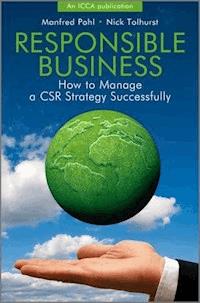
Corporate Social Responsibility, Sustainability and Corporate Citizenship are now essential elements of modern business. Responsible Business is a vital "how to" guide providing information on all aspects of the CSR process. This highly accessible book is full of insights from those responsible for implementing CSR strategy inside companies – whether as CSR managers or at top management level – with coverage of all the important aspects of CSR – from what a sustainability manager's job involves, how to handle stakeholder dialogue, supply chain management to auditing, CSR and the law, and communicating CSR.
Divided into bite-size easy-to-read chapters complete with practical checklists or "dos and don'ts", Responsible Business provides perspectives across different industries and sectors from running micro-finance at an international banking group to CSR in small companies as well as personal insights into a CSR manager's role in the automotive sector, the IT sector, the hotel business and many more.
"If CSR is ever to happen in real time, it will be in the corporate trenches, honed by managers driving CSR beyond academic ideal to practical workplace results. This new book from Europe's ICCA has it all in one place. A brilliant display of actual corporate accomplishments, workable tools, and organisational work-around strategies. Real stuff by real professionals."
—William C. Frederick, author of Corporation, Be Good! The Story of Corporate Social Responsibility
"The work of Nick Tolhurst and the ICCA in this publication and beyond is vital to the field of CSR, as well as to the interdisciplinary fields and sectors that it affects in the private sector, public sector and civil society. I suggest this book become required reading for each sector."
—Mark C. Donfried, Director and Founder, Institute for Cultural Diplomacy
Sie lesen das E-Book in den Legimi-Apps auf:
Seitenzahl: 464
Veröffentlichungsjahr: 2012
Ähnliche


















Table of Contents
Cover
Title
Copyright
Acknowledgements
About the editors
List of contributors
Introduction
1 What does a sustainability manager do?
Company background
The role of a sustainability manager
Down to business
So how do we get started?
Seeing the bigger picture
Lessons learned from the process
2 An introduction to stakeholder dialogue
The stakeholder scenario
What are stakeholder dialogues and why are they important?
How to conduct a stakeholder dialogue – a four-phase process model
Conclusion
3 Who works in CSR? Staffing and recruitment in CSR
Introduction
Finding the best people
Overview of the CSR job market
Salaries and packages
Job titles
CSR in companies
Job function
The gender gap in CSR
Getting into CSR
4 A legal perspective on CSR
Introduction
The power of corporations
Human rights
New legislation
CSR policies/statements
Conclusion
5 Corporate volunteering as a tool of strategic company development
Introduction
Benefits to the company
A how-to for corporate volunteering
6 CSR assurance in practice: measuring and auditing sustainability
Introduction
Background
Benefits and risks of CSR assurance
Standards
Levels of assurance
Checklist
7 Sustainability reporting 2.0: from ‘Trojan horse’ to ‘value booster’
Introduction
How to approach sustainability reporting in general
Embedding sustainability reporting in a strategic context
The sustainability reporting process
The future of sustainability reporting – some trends
8 Ten rules for successful CSR communication
Introduction
Rule #1: Act first, talk later – avoid the trap-door of greenwash
Rule #2: The why and the wherefore – create a framework of interpretation for the company’s actions
Rule #3: Be prepared – critical questions and core operations
Rule #4: CSR must be a boardroom priority – merely being part of corporate communications threatens a loss of credibility
Rule #5: Involve the employees – CSR communication moves from the inside out
Rule #6: Extract messages – CSR issues must stand their ground in the economics of perception
Rule #7: Everybody is different – address the CSR target groups according to their expectations and habits
Rule #8: Embrace dialogue – good CSR corporate communications focuses on exchange
Rule #9: Become an example of good practice – benefit from the influence of opinion-makers
Rule #10: Responsible product brands – turn CSR into a selling point
9 Event project management best practice
Introduction
Targets
Best practice
Project procedure
10 The role of IT in corporate sustainability strategies
Introduction
Reducing the environmental impact of your IT use
Using IT to reduce the impact of your business
Using IT to develop more sustainable business models
Conclusion
11 CSR in the hotel industry: the Accor perspective
The Accor Group
What did Accor hope to achieve by its CSR programme?
How does a sustainable development department work?
The challenges and issues that we face: how to convince the group’s operational players?
What are the factors of success?
What did the company learn?
12 Microfinance: helping communities to develop
Introduction
Microfinance at a glance
Credit Suisse’s contribution
Our philanthropic platform
Our approach
The selection process
Setting targets and measuring goals
Important lessons learned
The way forward
13 Sustainability management in the automotive sector
Introduction
Global challenges
CSR drivers
The Volkswagen CSR approach
Conclusion
14 Beyond marketing: CSR as a business strategy for SMEs – the Betapharm story
Introduction
Interviews
15 Sports sponsoring and CSR: lessons from HypoVereinsbank
Introduction
Sports and social responsibility
HypoVereinsbank’s commitment
Supporting ‘Colourful Teams Kick Well’ (see Box 15.3)
Perspective: sports and responsibility
16 Five rules for sustainable supply chain management
Introduction
Step #1: Establish and manage an internal sustainability or CSR programme
Step #2: Extend CSR programmes into your supply chain
Step #3: Know your suppliers and map your entire sphere of engagement
Step #4: Establish a responsible sourcing programme
Step #5: Establish chain transparency and traceability
17 Public private partnerships in corporate responsibility
Why establish public private partnerships?
How to ensure that projects are successful
Partnership opportunities: develoPPP.de
18 CSR in developing countries
Environmental, social and ethical issues in developing countries
Benefits of CSR
CSR and supply chains
Conclusion
19 Carbon offsetting as a CSR strategy
Introduction
Brief overview of strategies for reducing emissions
Carbon offsetting, CSR and sustainability
Carbon-offsetting projects that complement a CSR strategy
Conclusions and recommendations
20 Implementing profitable CSR: the CSR 2.0 business compass
CSR 2.0 and 3D management
The CSR 2.0 business compass
CSR 2.0 in practice
The CSR 2.0 check
Conclusion and outlook
21 CSR 2.0: the evolution and revolution of corporate social responsibility
The rise and fall of CSR
The failure of CSR
CSR 1.0: burying the past
CSR 2.0: embracing the future
Shapeshifting: from CSR 1.0 to CSR 2.0
CSR 2.0: the new DNA of business
Conclusion: the purpose of business
Further reading
Index
End User License Agreement
List of Tables
6 CSR assurance in practice: measuring and auditing sustainability
Table 6.1 Examples of typical stakeholder needs that can be addressed by CSR assurance
Table 6.2 Some typical benefits of external assurance
Table 6.3 Typical risks of external assurance
Table 6.4 ISAE 3000 levels of assurance
Table 6.5 AA1000 Levels and types of assurance
17 Public private partnerships in corporate responsibility
Table 17.1 An example of a results chain for developing strategies and targets
21 CSR 2.0: the evolution and revolution of corporate social responsibility
Table 21.1 Similarities between Web 1.0/2.0 and CSR 1.0/2.0
Table 21.2 Shifting CSR principles
Table 21.3 Shifting CSR practices
List of Illustrations
2 An introduction to stakeholder dialogue
Figure 2.1 The traditional stakeholder model (NGO, non-governmental organisation).
Figure 2.2 The Nestlé stakeholder model (NGO, non-governmental organisation) (from Tapscott & Ticoll, 2003).
Figure 2.3 Four-phase process modes for stakeholder dialogues. Adapted from: BSR Guide and the Collective Leadership Institute, http://www.collectiveleadership.com/123live-user-data/user_data/3829/public/DOKUMENTE/downloads/Phases%20in%20Stakeholder%20dialogues.pdf
Figure 2.4 Value-chain analysis of the food industry.
3 Who works in CSR? Staffi ng and recruitment in CSR
Figure 3.1 Distribution of CSR professionals by industry type (CSR Salary Survey 2008/09).
Figure 3.2 Overall salary distribution (CSR Salary Survey 2008/9).
Figure 3.3 Overall bonus distribution (CSR Salary Survey 2008/09).
Figure 3.4 Benefits distribution (CSR Salary Survey 2008/09).
Figure 3.5 Budgets directly controlled by respondents (CSR Salary Survey 2008/09).
Figure 3.6 Team sizes (CSR Salary Survey 2008/09).
Figure 3.7 Salary according to gender (CSR Salary Survey 2008/09).
5 Corporate volunteering as a tool of strategic company development
Figure 5.1 A five-step plan for successful implementation of corporate volunteering programmes (Blumberg & Scheuble 2007).
7 Sustainability reporting 2.0: from ‘Trojan horse’ to ‘value booster’:
Figure 7.1 Overcoming the burdens of an add-on sustainability management process by choosing a strategic integration of sustainability into an organisation. KPI, key performance indicator.
Figure 7.2 What shows appropriate stakeholder engagement for the purposes of preparing the report? (Responses from participants of the first GRI Readers’ Choice Awards questionnaire – results presented at the GRI conference 2008, highlighting the views of 2,300 sustainability report readers) (KPMG International and SustainAbility Ltd 2008, p. 10).
Figure 7.3 Royal Dutch Shell’s sources of input to define the materiality of issues that should be included in the sustainability report, on the web, or ignored (for the purpose of the report) (Royal Dutch Shell 2008).
Figure 7.4 What is the most important element that is left out of reports? (Responses from participants of the first GRI Readers’ Choice Awards questionnaire – results presented at the GRI conference 2008, highlighting the views of 2,300 sustainability report readers)(KPMG International and SustainAbility Ltd 2008, p. 9).
8 Ten rules for successful CSR communication
Figure 8.1 Classification of corporate brands in the CSR area. (Classification according to Ethical Corporation, 2007).
Figure 8.2 ‘Must have’ and ‘nice to have’ CSR activities.
Figure 8.3 Instruments for stakeholder management.
Figure 8.4 CSR experts as multipliers for a company’s CSR perception.
Figure 8.5 Responsibility as a buying incentive in relation to a product brand.
Figure 8.6 Checklist for CSR avenues of communication.
9 Event project management best practice
Figure 9.1 The chain of impact for events. ROI, return on investment.
11 CSR in the hotel industry: the Accor perspective
Figure 11.1 Accor’s Earth Guest programme.
12 Microfi nance: helping communities to develop
Figure 12.1 The Credit Suisse microfinance commitment: an integrated approach. MFI, microfinance institution.
Figure 12.2 Credit Suisse supports ACCION’s Center for Financial Inclusion and FINCA’s regional training hubs.
Figure 12.3 Country programmes supported by Credit Suisse.
13 Sustainability management in the automotive sector
Figure 13.1 Corporate social responsibility.
17 Public private partnerships in corporate responsibility
Figure 17.1 In public private partnerships (PPPs) joint projects between the private sector and government agencies are of mutual interest and benefit.
Figure 17.2 Mutual benefits for the public private partnership between Deutsche Gesellschaft für Technische Zusammenarbeit (GTZ) GmbH and BSH Bosch and Siemens Hausgeräte GmbH in Brazil (case study 1).
Figure 17.3 Mutual benefits for the public private partnership (PPP) between Deutsche Gesellschaft für Technische Zusammenarbeit (GTZ) GmbH and Allianz in Indonesia (case study 2).
Figure 17.4 Interfaces between development co-operation and CSR.
Figure 17.5 Control questions for the validation of the partnership using a traffic-light system.
20 Implementing profitable CSR: the CSR 2.0 business compass
Figure 20.1 The CSR 2.0 business compass.
Figure 20.2 The CSR 2.0 questionnaire.
21 CSR 2.0: the evolution and revolution of corporate social responsibility
Figure 21.1 Corporate sustainability and responsibility (the new CSR).
Figure 21.2 The DNA of CSR 2.0 (double-helix model).
Guide
Cover
Table of Contents
Begin Reading
Pages
c1
iii
ix
xi
xii
xiii
xiv
xv
xvi
xvii
xviii
xix
xx
1
2
3
4
5
6
7
8
9
10
11
12
13
14
15
17
18
19
20
21
22
23
24
25
26
27
28
29
30
31
32
33
34
35
36
37
38
39
40
41
42
43
44
45
46
47
48
49
50
51
52
53
54
55
56
57
58
59
60
61
62
63
64
65
66
67
68
69
70
71
72
73
74
75
76
77
78
79
80
81
82
83
84
85
86
87
88
89
90
91
92
93
94
95
96
97
98
99
100
101
102
103
104
105
106
107
108
109
110
111
112
113
114
115
116
117
118
119
120
121
122
123
124
125
126
127
128
129
130
131
132
133
134
135
136
137
138
139
140
141
143
144
145
146
147
148
149
150
151
152
153
154
155
156
157
158
159
160
161
162
163
164
165
166
167
168
169
170
171
172
173
174
175
176
177
178
179
180
181
182
183
184
185
186
187
188
189
190
191
193
194
195
196
197
198
199
200
201
202
203
204
205
206
207
208
209
210
211
212
213
214
215
216
217
218
219
220
221
222
223
224
225
226
227
229
230
231
232
233
234
235
236
237
239
240
241
242
243
244
245
246
247
248
249
250
251
252
253
254
255
256
257
258
259
260
261
262
263
264
265
266
267
268
269
270
271
272
273
274
275
276
277
278
279
280
281
282
283
284
285
286
287
288
289
290
291
292
293
294
295
296
297
298
299
300
301
302
303
304
305
306
307
308
309
311
312
313
314
315
316
317
318
319
320
321
322
323
324
325
326
327
328
329
330
331
332
333
334
335
336
337
338
339
340
341
342
343
344
345
346
347
348
Responsible Business
How to Manage a CSR Strategy Successfully
Manfred Pohl
Nick Tolhurst
This edition first published in 2010
Copyright © 2010 Manfred Pohl and Nick Tolhurst
Registered office
John Wiley & Sons Ltd, The Atrium, Southern Gate, Chichester, West Sussex, PO19 8SQ, United Kingdom
For details of our global editorial offices, for customer services and for information about how to apply for permission to reuse the copyright material in this book please see our website at www.wiley.com
The right of the author to be identified as the author of this work has been asserted in accordance with the Copyright, Designs and Patents Act 1988.
All rights reserved. No part of this publication may be reproduced, stored in a retrieval system, or transmitted, in any form or by any means, electronic, mechanical, photocopying, recording or otherwise, except as permitted by the UK Copyright, Designs and Patents Act 1988, without the prior permission of the publisher.
Wiley also publishes its books in a variety of electronic formats. Some content that appears in print may not be available in electronic books.
Designations used by companies to distinguish their products are often claimed as trademarks. All brand names and product names used in this book are trade names, service marks, trademarks or registered trademarks of their respective owners. The publisher is not associated with any product or vendor mentioned in this book. This publication is designed to provide accurate and authoritative information in regard to the subject matter covered. It is sold on the understanding that the publisher is not engaged in rendering professional services. If professional advice or other expert assistance is required, the services of a competent professional should be sought.
Library of Congress Cataloging-in-Publication Data
Responsible business : how to manage a CSR strategy successfully / edited by Manfred Pohl and Nick Tolhurst.
p. cm.
Includes bibliographical references and index.
ISBN 978-0-470-71242-9 (cloth)
1. Social responsibility of business. I. Pohl, Manfred, 1944- II. Tolhurst, Nick.
HD60.R4715 2010
658.4′08—dc22
2009054389
A catalogue record for this book is available from the British Library.
ISBN 978-0-470-71242-9
ISBN 978-0-470-66033-1 (epdf)
ISBN 978-0-470-66239-7 (epub)
ISBN 978-0-470-66230-4 (mobi)
Acknowledgements
There are many people who helped to make this book possible. First of all, we would like to place on record our profound gratitude to all those authors who contributed their valuable time to this project, without whom of course this book would not have been possible. We would also like to express our thanks to Professor Gerassamo Notaras of the National Bank of Greece as well as Sandra Silvia Huble and Aron Embaye from ICCA who backed this publication from its inception. Further, a special debt of thanks is owed to Christine Pehl, Nicola McClellan, Kerstin Petter, Katja Böhmer, Marnie Guirana, Gabriella Massaglia and Francesca Warren, as well as, on a more personal level, Davina, Daniel, Angela and Roger Tolhurst for their steadfast support. We would also like to thank our publishing team at Wiley – Claire Plimmer, Michaela Fay, Jo Golesworthy, Natalie Girach and Vivienne Wickham – for much good advice, logistical assistance and, most of all, patience.
Most importantly, though, we would like to express our deep gratitude to the members of ICCA for making this book possible and, most especially, Takis Arapoglou, for his inspiration and good advice with this, as with so many other ICCA projects.
Manfred Pohl
Nick Tolhurst
February 2010
About the editors
Professor Manfred Pohl is the founder and CEO of the Institute for Corporate Culture Affairs (ICCA). Born in Bliesransbach, Germany, in 1944, he received his PhD in history from the University of Saarbrücken, Germany, in 1972. Since then, he has been an Honorary Professor at the University of Frankfurt. He is currently the deputy chairman of the European Association for Banking History e.V and of the Frankfurter Zukunftsrat e.V. In October 2001 he received the European Award for Culture at the European Parliament in Strasbourg. From June 2002, Prof. Pohl was head of the Corporate Cultural Affairs department at Deutsche Bank in Frankfurt, responsible for corporate social responsibility strategy, all cultural activities as well as charitable donations and sponsoring within Deutsche Bank globally before retiring in May 2007. Professor Pohl has written over 100 books, articles and monographs on topics as varied as business history, culture, politics, corporate ethics and travel.
Nick Tolhurst is managing director of the ICCA, which he joined in April 2004, a fellow of the Institute for Cultural Diplomacy and a lecturer on CSR at the Steinbeis University in Berlin. Before joining ICCA, he worked for the British Foreign Ministry in Germany, advising British companies in Germany and German companies investing in the UK. Previously, he worked for the European Commission at DG II (Economics and Financial Affairs) preparing for the introduction of the euro in differing cultures and economic systems. He studied at London Metropolitan University (UK) and completed a master’s degree at Osnabrück University (Germany), both in European studies specialising in economics and cultural studies. Nick Tolhurst has written and edited many publications on CSR, corporate culture and economics, including, most recently, The A to Z of Corporate Social Responsibility and the ICCA Handbook of Corporate Social Responsibility. He writes regularly in the media on CSR and related issues.
List of contributors
Andrew Cartland
Managing Director and Co-founder, Acre Resources
Isaac H. Desta
Lecturer and MBA Projects Co-ordinator, Catholic University of Eastern Africa
Hans-Ulrich Doerig
Chairman, Credit Suisse Group
Aron Embaye
Senior Project Manager, ICCA
Ulises Flores
Universidad Autónoma de San Luis Potosí
Anselm Iwundu
Project Leader, Fairfood International
Judith Kohler
Project Manager, GTZ GmbH (German Technical Cooperation)
Oliver Laasch
Professor, Tecnológico de Monterrey (ITESM), Mexico
Jason Leadbitter
Sustainability Manager, Ineos ChlorVinyls
Irina Leibold
Consultant, Scholz & Friends Reputation
Siegmar Ley
Managing Director, Host GmbH
Jonathan S. Lux
Partner, Ince & Co International
Clemens Mulokozi
Head of Sport Sponsoring and Private Customer Marketing, HypoVereinsbank
Marie-Louise Orre
Lawyer, Ince & Co International
Bettina Palazzo
Managing Director, Palazzo & Palazzo
Manfred Pohl
Founder and CEO, ICCA
Gerhard Prätorius
Head of CSR and Sustainability, Volkswagen AG
Chris Preist
Head of UK team of the Sustainable IT Ecosystem Lab, Hewlett Packard
Hélène Roques
Director Sustainable Development, Accor Group
Klaus-Peter Storme
CSR Manager, HypoVereinsbank
Dr Norbert Taubken
Business Director, Scholz & Friends Reputation
Ralph Thurm
Director, Sustainability Strategies, Deloitte Enterprise Risk Services
Nick Tolhurst
Managing Director, ICCA
Volker Türk
Manager CR Reporting, E.ON AG
Dr Sam Vasehgi
Senior Manager CR&S Services, Deloitte & Touche GmbH
Martin G. Viehöver
Manager CR&S Services, Deloitte & Touche GmbH
Wayne Visser
CEO, CSR International
Kirsten B. Wenzel
Senior Consultant, Brands & Values GmbH
Introduction
Manfred Pohl & Nick Tolhurst
Over the last two decades, the subject of corporate social responsibility (CSR) has made the journey from NGOs and academia on to the front pages of the financial and business press and into the boardroom and MBA courses. Indeed, as that most hard-headed of business media – The Economist – announced in the opening line of its 2005 special supplement on CSR, ‘The movement on corporate social responsibility has won the battle for ideas.’ Yet despite this, much literature on the subject still seems to be aimed at academics, concentrating on theories rather than on practical ideas and real-life perspectives of what being in the CSR sector entails. This book is thus aimed at those who – be they at university or already in business – are looking to pursue or build upon a career in a CSR-related field and deals with the nuts and bolts of how to run a CSR strategy successfully in a company or public organisation. As such, it unashamedly steers clear of most of the theories and academic debates surrounding the subject; rather, it concentrates on setting out, in a jargon-free way, strategies for incorporating a responsible business approach within an organisation in a way that is accessible to both those new to the subject and those more established in this area.
The book is divided into chapters that deal with the building blocks of CSR and sustainability, informed, wherever possible, by practical, real-life examples. The chapters and authors fully reflect the wide responsibilities now covered under the general term CSR, with practical advice on the individual aspects of a CSR manager’s role as well as industry information and perspectives from those responsible for managing CSR in specific companies.
While we make no claims that this volume is completely exhaustive in the rapidly changing world of CSR, we have attempted to cover as many topics, perspectives and responsibilities as possible. This publication has also been deliberately structured so that while each chapter should complement the others, they can all be read and referred to individually on a stand-alone basis as need dictates.
The first chapter introduces us to the role, aims and activities of a sustainability manager through the personal experience of Jason Leadbitter, sustainability manager for a large chemical company. He not only deals with the tasks of the position itself, but also examines the relationship of a sustainability manger to top management and provides clear guidelines to enable sustainability/CSR managers to realise their potential to advance sustainable business practices within their organisation. Following this, Bettina Palazzo then outlines the reasons why stakeholder dialogue is so fundamentally important to modern business. Indeed, for many CSR managers, managing expectations, communication and dialogue with their various stakeholders has become, over the last few years, the major part of their role. As well as outlining what stakeholder dialogue involves, Palazzo also provides best-practice examples from the business world and provides a step-by-step guide to successful implementation. In the third chapter, Andrew Cartland looks at the CSR employment situation and examines who works in the sector, as well as addressing some of the key questions in CSR recruitment from both the employers’ and the potential employees’ perspectives. The chapter also includes information how to retain CSR staff, how CSR staff are organised within a company, how much they’re paid and how the positions are placed. Jonathan Lux and Marie-Louise Orre provide an insight into the fast-changing legal world of CSR management in Chapter 4. Here, they examine how the legal implications of CSR practices are rapidly shifting from being a matter of voluntary practice to a subject of legal pressure and enforcement. Real-life examples such as Nike and Chiquita are used to illustrate the enhanced legal demands companies face as well as the absorption of CSR norms into standard business law.
Moving on to an issue that has risen rapidly up the CSR management agenda over the last few years – corporate volunteering – Kirsten Wenzel looks at how to achieve the best results in this field. Wenzel outlines the advantages of strategic corporate volunteering as part of a CSR strategy and illustrates the beneficial impact of corporate volunteering on human resources, stakeholder relations and company reputation as well as providing specific guidelines on how to successfully plan and implement corporate volunteering as part of a CSR strategy. In Chapter 6, Martin Viehöver looks into what CSR verification in practice involves. As the demand for responsible business practices has grown, so has the requirement for such activity to be properly measured and verified – both inside and outside the company. The chapter continues by examining the most important aspects that a CSR manager should know about sustainability verification, and outlines the most important assurance standards for CSR managers, as well as providing a first-guidance and a best-practice checklist. Following on from auditing, Ralph Thurm from Deloitte considers the importance and benefits of sustainability and CSR reporting, and provides background on the rapid development from the first generation to the next level of ‘strategic sustainability reporting’. The chapter sets down the necessary steps to be undertaken to achieve the best results, provides information on Global Reporting Initiative’s sustainability reporting guidelines and finally outlines pointers to future trends in this area.
The difficult subject of how best to communicate CSR is addressed by Norbert Taubken and Irina Leibold of Scholz and Friends in Chapter 8. They outline the dos and don’ts of successful CSR communication and stress the importance of communication in two crucial areas: internally with the company’s own employees, and externally with target groups. Finally, the chapter provides a practical checklist for turning the CSR of a brand into a selling point and identifies the best communication channels for this. The next chapter, by Siegmar Ley, deals with the practicalities of events (CSR, HR or volunteering) from a project management perspective, as increasingly such events are organised under the auspices of a CSR department. Here the emphasis is on the business plan and tools for developing good practice in the run-up to events in order to align such events with other corporate goals.
Chapter 10 deals with the vital role that advances in IT can play in achieving sustainability goals and reducing companies’ carbon and ecological footprints. Here Chris Preist illustrates this not only by examining how existing equipment can be used more efficiently but also by using IT proactively to develop more sustainable business models.
After looking at specific activities within CSR, the emphasis then switches to how CSR managers in industries and particular sectors tackle their roles, with four articles drawn from the banking, automotive and pharmaceutical industries. In the first of these, Hélène Roques, director of sustainable development at Accor, offers a personal perspective of a CSR manager in an international hotel business, detailing the various programmes enacted, an insider’s guide to why specific CSR projects were undertaken, the personal characteristics required by a CSR manager and the vital importance of CSR managers having operational experience in order to ensure success. This is followed by a chapter on sustainable banking and microfinance, which provides a background to one of the fastest-growing CSR tools in the finance sector – microfinance. The author outlines the aims, approaches and challenges of microfinance, as well as the benefits both for the recipients and for the bank itself, in this case Credit Suisse. Gerhard Prätorius then presents a personal insight into CSR in the automotive sector with a perspective on Volkswagen CSR activity, from stakeholder relations to supply chain management and the mission of the company. The author places particular emphasis on the environmental challenges facing the industry, as well as addressing challenging issues such as carbon-neutral travel. Moving from one of the major corporations to smaller and medium-sized enterprises, Nick Tolhurst interviews Horst Erhardt, one of the leading lights behind Betapharm’s groundbreaking use of CSR as an innovation and marketing strategy in the pharmaceutical field. As well as exploring the possibilities for CSR in this sector, the interview also examines the often underestimated potential for CSR in smaller companies.
A more traditional aspect of CSR is given a new angle in Chapter 15, as Clemens Mulokozi & Klaus-Peter Storme from HypoVereinsbank outline the advantages of sponsorship in business terms and how it can fit in to a CSR strategy. The authors look at the new CSR dilemmas and challenges facing sponsoring – in this case sport – which can involve political and social sensitivities. As sport sponsorship is being transformed from traditional ‘passive’ forms to more socially proactive ones, the authors look at the role that sports sponsorship can play in terms of social responsibility, where to engage and what to avoid. In Chapter 16, Anselm Iwundu explores the increasing importance of supply chain management as a part of a company’s overall commitment to responsible business and provides a five-step practical guide to ensuring that companies’ supply chains are sustainable. The author provides real-life business examples from the agri-food industry sector, which has become perhaps the most crucial, and in many ways the most visible, industry in debates on supply-chain good practice. Staying with the international aspects of CSR, the next two chapters look at CSR in developing countries, firstly through Judith Köhler’s article on the role, advantages and challenges of public private partnerships (PPPs). Informed by her experience with the German development agency, the author outlines the role that cross-national PPPs can play in capacity-building and environmental projects, while Isaac Desta provides a background to CSR in developing countries, with particular emphasis on the burgeoning role of local CSR initiatives as well as the supply chain and how companies can achieve staggeringly effective – and efficient – results through imaginative, well-thought-out CSR policies.
The book is rounded off with three chapters devoted to the future of CSR. First, an aspect of CSR that has rapidly shot up the agenda in recent years – carbon offsetting – is addressed, and the question of how this can become an integral part of a company’s CSR strategy is explored. Then, Oliver Laasch and Ulises Flores examine emerging management tools and how companies are finding new ways and techniques to realise the full potential of CSR in business. The chapter is based on a number of interviews and surveys with business leaders from internationally recognised companies. Finally, Wayne Visser considers the future of business as he argues that CSR in its present form has only gone part of the way, and outlines how the next step – CSR 2.0 – will become less Western-orientated, less risk-averse and less of a ‘nice-to-have’ niche, instead evolving into a mass-market ‘must have’ that will become incorporated into ‘companies’ DNA’.
We very much hope this book proves useful for you and we welcome feedback on any issue that arises out of it.
1What does a sustainability manager do?
Jason Leadbitter
In this chapter, the role, aims and activities of a sustainability manager are described, based on the personal experience of the author, who is a sustainability manager for a large chemical company – he offers a step-by-step outline of the goals that are important, how they can be achieved and the challenges that will be faced.
Company Background
I wrote this chapter to provide a personal perspective of what a sustainability manager actually does – in my case, for the INEOS ChlorVinyls chemical company. INEOS is the third largest chemical company in the world, with an extensive chemical portfolio. My responsibilities relate specifically to sustainability within chlorine chemistry and, in particular, to the plastic PVC and other chlorinated products. We are the largest European manufacturer of PVC, with plants in Norway, Sweden, Germany and the UK. In February 2008 my former company, Hydro Polymers (also a PVC producer), was acquired by INEOS. Much of what I have learnt on this personal journey, to which I will refer in this chapter, relates back to my experience with Hydro Polymers, although the opportunities and challenges under new ownership provide renewed vigour and excitement in the pursuit of sustainability.
The Role of a Sustainability Manager
The overall aim is to provide the reader with a clear insight into the practicalities involved in being a sustainability manager. In particular, precisely what does a sustainability manager do? To merely write some kind of job description is important, but this is too prescriptive. It is rather like reading the rules of chess, which is often dull and boring – it is only when you play the game that things become exciting. That said, we do need rules and principles to help guide us in the right direction and to make smart business decisions along the way, i.e. towards sustainability, or, as in the game of chess, to achieve checkmate. I also want to firmly differentiate, as I do in my mind, between two distinct roles in any organisation, namely those of the corporate social responsibility (CSR) manager and the sustainability manager. They may be one and the same person and, if that is the case, please note that there is a wealth of difference between these roles. A CSR manager’s responsibility has to do with how companies engage in societal issues on a voluntary basis, usually in collaboration with stakeholders, with an emphasis on public relations. Conversely, the sustainability manager should be addressing the longer-term strategy of the organisation regarding its core business and commitment to innovation in moving the business towards sustainability. Of course, the two roles are complementary and there is a necessary degree of overlap. However, to address these issues as one individual is a tall order, both from a practicality perspective and in differentiating the roles in your mind.
Down to Business
To be effective as a sustainability manager, a series of essential yet basic criteria must first be met:
commitment from top management
an understanding of the core business activities of the organisation
an understanding of what is meant by sustainable development and sustainability
an appreciation of where the company is today and where it should be heading
the skills to influence and motivate the organisation to move in the right direction and thereby execute the right actions.
Commitment from Top Management
There is nothing more frustrating for sustainability managers than recycling their paper clips. The job has to be taken seriously by top management and there needs to be a mechanism whereby the sustainability strategy relates directly to short- and longer-term business plans, i.e. these must be aligned to maximise efficiency and ensure that all elements of the company are rowing in the right direction. The sustainability manager should be playing a key role in any organisation to ensure the long-term sustainability of that business. The commitment needs to go beyond just fine words. Talk is easy – it is the getting down to work that counts.
Core Business and Activities of the Organisation
Sustainability managers need to get under the skin of their organisation. There needs to be a systemic appreciation of what the organisation does or provides. We should not underestimate the sustainability footprint of any organisation – whether social, economic or environmental – and that of its products or the processes used in their manufacture. To make improvements, there is an obvious need to know the basics – this might be related to operational processes as well as the manufactured products or to those services provided by the organisation.
What Is Meant by Sustainable Development and Sustainability?
No doubt you will have heard these terms mentioned many times, but what do they really mean to you? One of the simplest explanations came from Jonathon Porritt, one of the founding directors of the sustainable development charity Forum for the Future, in the UK. Put simply, sustainability could be described as a defined state, i.e. the point at which you could continue indefinitely without serious erosion to mankind or the environment. Conversely, sustainable development is the process that drives us towards sustainability. That said, if you type sustainability into Google, you will get literally hundreds of definitions. What is important is what sustainability really means to you and the organisation you represent.
An Appreciation of Where the Company Is Today and Where It Should Be Heading
An effective sustainability manager should ask three questions that logically follow on from the question in the previous section:
1. Do we have a definition of sustainability?
2. Considering this definition, what is the gap between where we are today and where we are heading?
3. What can we do to bridge this gap?
The Skills to Influence and Motivate the Organisation to Move in the Right Direction and Thereby Execute the Right Actions
Such skills are essential to ensure that a sustainability manager is fully equipped to take on this demanding task. Being a good manager merits a whole section in its own right. There are numerous management books that articulate the essential skills of an effective manager. For me, sustainability managers must demonstrate a belief and passion that they are making a difference to the company. Often they may be working with few, if any, subordinates. Consequently, the business case for sustainability must be compelling, and also pragmatic and sufficient to win the hearts and minds of peers. The sustainability manager must also be prepared to challenge senior management constructively, with good information and clear arguments about the benefits to the business in the long term of taking a more sustainable path. This may, at times, challenge fixed assumptions and ‘sacred cows’, so good relationships and sound arguments are essential.
So How Do We Get Started?
There are many theories about organisational culture that lead to logical engagement in sustainability – either through the transitional stage of companies moving from regulatory compliance to addressing eco-efficiency and then sustainability, or by benchmarking themselves against their competitors. In our case, we were pushed into it courtesy of Greenpeace. Back in the late 1990s, the PVC manufacturing industry was singled out principally because of our use of chlorine chemistry. In Greenpeace’s eyes, God created all the elements but one – chlorine, which was created by the Devil. And since PVC consumed around one-third of total chlorine output, it was seen as a good single-issue target. Towards the end of the 1990s, our industry had to act to prevent potential legislation and to stem the major threat that was being created by the Greenpeace campaign. Ironically, it was environmentalists themselves who questioned Greenpeace’s thinking that merely by phasing out PVC, the planet would be saved. Important questions needed to be asked, from a sustainability perspective, about what would replace PVC if its use in pipes, cables and a whole range of other applications was to be phased out (see Leadbitter (2002) for further reading on this process).
Across the industry, a major ‘European voluntary commitment’ was begun, known as Vinyl 2010 (see www.vinyl2010.org for details), whilst a separate, independent process initiated by an international sustainable development charity, The Natural Step, tasked the industry with answering the three questions outlined above. Firstly, did we have a definition of sustainability? This was a simple question to answer at the time: no we did not. Consequently, an investigation was completed using a sustainability model, The Natural Step Framework (see www.naturalstep.org/en/applying-framework for details), the principal outcome of which was the identification of five key sustainability challenges facing the industry if it was to become fully sustainable:
the industry should move towards becoming carbon-neutral
the industry should commit towards controlled-loop recycling
the industry should phase out persistent organic compounds
the industry should use sustainable additives in PVC
the industry should engage the whole supply chain in order to address sustainability.
So, in a matter of a few months, not only had we been provided with a definition of sustainability, but we were also provided with details regarding the ‘gap’ between where we were and full sustainability. All that was now needed were the actions required to bridge this gap. This sounds simple, but first of all, let us review the basic criteria highlighted above.
Commitment from Top Management
The threat posed by Greenpeace ensured that top management of all European PVC producers were fully supportive of the actions required to address sustainability, although some serious concerns were being expressed about the cost of achieving this. Speaking of which, to become truly sustainable, the economic element of sustainability is hugely important – no company can aspire to being ‘clean and green’ if it means going out of business! Therefore, a profitable pathway to sustainability is a basic requirement. As we begin to bridge the gap towards sustainability, we must therefore ask ourselves a further set of questions:
Is the investment that we will be making in a process or product a step towards sustainability, i.e. are we headed in the right direction?
Are we creating ‘flexible platforms’ with such investment? (We want each step to enable another that leads to our goal, and thus avoid blind alleys.)
Will the investments that we intend to make bring good enough returns? The returns here include both economic savings and environmental benefits.
An Understanding of the Core Business and Activities of the Organisation the Sustainability Manager Is Representing
Having, as I do, a strong background in industry is an extremely useful qualification when it comes to taking on the role of a sustainability manager. A distinct advantage for me personally was having a professional scientific background, although, beyond any doubt, the greatest driving force is a passion and appetite for such a challenge. There are many experts in most businesses and it is a question of tapping in to this knowledge base and learning the knack of how, where and when to apply it. Clearly, the better prepared you are with a good understanding of the business, the more likely it is that you will be taken seriously by your work colleagues and the more valuable will be the support they provide you with. For example, ‘green’ university graduates must be savvy enough to respect the sensitivities of their more experienced work colleagues. Gaining trust and respect is a mutual process and one not to be underestimated.
Heading Towards Sustainability
Let us assume that we now have a definition of sustainability and we at least have some understanding of where we are today and where we need to go, no matter how daunting that gap may be. What follows needs to be a sensible, logical series of practical actions that will begin to bridge this gap. To illustrate this point, let us evaluate the first of our five key sustainability challenges – the industry should move towards becoming carbon-neutral.
Back in 2000, few companies had a good understanding of their carbon footprint. Today, it is all the rage with the debate surrounding climate change to the fore. In order to make improvements, it is essential first to accurately measure current performance. So, in 2000, we set about measuring the carbon footprint of our activities across the whole supply chain entailed in manufacturing PVC. Clearly, this required some expertise in defining the system boundary, i.e. what is within the process and what lies outside it. Only until you can reasonably estimate carbon emissions will it then be possible to measure incremental improvements in reducing such emissions.
In the case of Hydro Polymers, we identified the key personnel responsible for energy management across our major manufacturing plants in Norway, Sweden and the UK. The first task was for each site to provide details of the energy consumed during manufacture. Once this task had been completed, the process of creating ideas to reduce carbon emissions was introduced. To provide some incentive, our president at the time decided that, over and above normal capital expenditure projects, an additional €4 million per annum would be set aside for sustainability projects. This created a competitive environment and allowed out-of-the-box ideas to be generated across these sites. Through a brainstorming process, such as those undertaken in total quality management, all ideas were listed (largely from the energy managers) and brought before an internally created steering committee. This committee had the responsibility of reviewing the ideas brought forward and prioritising those that appeared most attractive. This was undertaken by assessing the likely carbon savings per unit of investment.
This process was not as easy as it sounds, since the practicalities of each project required detailed assessment of business risk. In addition, the right atmosphere had to be created to allow those energy managers to start thinking outside of the box. Facilitating such processes is the job of the sustainability manager. Consequently various sustainability training sessions were undertaken with these managers to allow their ideas to flow.
One of the most successful projects was the installation of an exhaust pipe on one of the chemical crackers in the Norwegian plant. The process, known as adiabatic volume, allowed the cracking of a chemical gas to continue outside the reaction vessel, which increased the volume of cracked gas without additional energy. I take no credit for the concept, since it was a chemical engineer who had the bright idea. That said, refining the idea, planting the seeds and gaining capital approval so the concept became a reality is a good illustration of what is possible as a sustainability manager. And to see this project progress from concept to reality was very exhilarating. The icing on the cake was a saving of around 8,000 tonnes of carbon dioxide per annum with a payback period in the investment of less than nine months. But you should always remember that you are part of a team and ensure that due recognition is provided to all contributing members of such teams.
Importantly, the sustainability manager in this example holds the vision and frames the challenges, as well as being a visible symbol of the commitment of senior management to the goal of sustainability, allowing those with specialist knowledge and expertise to innovate within that broader context.
Ultimately, the process of carbon-neutrality is only complete when there are no carbon emissions from manufacture, a tall order in any manufacturing process. Yet, in the four years of working towards this target, our company achieved an 18% reduction combined with significant financial savings. Not all projects were as exciting as this one, but the process had another, more subtle outcome of engendering cultural change and energy awareness at all levels within the organisation.
Of course, not all projects are going to be as successful. However, without a strategic vision, purpose and a sense of urgency, progress is unlikely to be as rapid. It is a key responsibility of the sustainability manager to drive this agenda.
Seeing the Bigger Picture
A real challenge for the sustainability manager is to see the bigger picture. Whilst it is very exciting to see carbon emissions being reduced, this must be seen in the context of the product itself. For example, focusing on carbon reductions alone is not enough to achieve full sustainability. There are other major challenges, such as resource use and waste management, to consider. In the case of PVC, over half of it is derived from salt, an abundant natural resource, whilst the remainder is from natural gas, a non-renewable hydrocarbon. Equally, we must also consider the end-of-life fate of the products manufactured by our customers, such as pipes, window frames, cables and medical devices, even though these are outside our control.
Joined-up thinking gets to the core of the creative mind of the sustainability manager. For example, taking an old PVC window frame and using it to re-manufacture a new one with the same set of sustainability challenges begins to look like a smart sustainability move. The carbon emissions from recycling old PVC are some 80% lower than those arising from the manufacture of virgin PVC, providing a giant leap in carbon reduction – far greater than what could be achieved through incremental energy improvement projects in our plants. Equally, we are solving a waste management issue by diverting the waste stream into a useful resource and, in so doing, saving on non-renewable resources compared with virgin product. Of course, the economic benefits must be attractive for such a process to occur, as well as ensuring all technical hurdles are overcome in the recycling process.
One of the key sustainability benefits of PVC is, ironically, one of the aspects seen previously as an environmental criticism: it persists in nature (i.e. it is not biodegradable). Where this persistence is observed in small and disperse molecules that can accumulate in cells or other natural systems, it can be problematic, but when the persistent material is largely inert and made of large molecules that cannot enter cells then it is expressed as durability. Products that are durable and require little maintenance during their potentially long service life, and particularly those that can ultimately be recycled, deserve serious attention with regard to their sustainability credentials. They deliver a long service life requiring little maintenance, and therefore represent an efficient delivery of services for a small initial outlay of resources.
Reviewing all these options with a wide array of technical, commercial and marketing colleagues provides the sustainability manager with immense challenges and opportunities and clearly demonstrates the need to be able to multi-tasking. Indeed, such brainstorming can often begin to take a company in a strategic direction that may differentiate it from its major competitors, even in a commodity market. Not everyone will agree with some of the extreme green marketing that occurs in the retail industry, yet, paradoxically, such moves drive the sustainability agenda. However, at times we need to take a reality check – and for that I come back to the tools and principles provided by The Natural Step Framework, discussed earlier – and ask ourselves the three key questions: is the investment a step towards sustainability; is it creating flexible platforms; and are we gaining returns for such investment?
During the core period of intensive engagement of sustainability within my former company, we chose not to widely externally communicate our achievements although internally there was a pressing need to communicate. This patience paid off since, when formally requested, we could list our achievements with a high degree of credibility and thereby prevent the ‘greenwash’ trap (i.e. a superficial application of sustainability that does not stand up to scientific scrutiny). Perhaps more significantly was the realisation that, no matter how well intentioned any individual company may be in addressing sustainability, to work in isolation without engaging the supply chain will not achieve complete success. Hydro Polymers was no exception to this rule.
Engaging the Whole Supply Chain
Where do you start? For a significant number of companies and organisations, we found ourselves somewhere in the middle of a supply chain, with suppliers on one side and customers on the other. There were two key reasons why we focused on our suppliers first. We believed that we could apply more pressure on them to take action and engage with sustainability and, as a learning process for all; we felt that this carried less risk compared to our customers if we were unsuccessful with their engagement.
For a period of three years, we organised an annual supplier sustainability event at which we requested each supplier to present their sustainability challenges. This task was now so much easier since we could both set out the rules of engagement (The Natural Step Framework) and provide our suppliers with clear, practical examples of what we had achieved over the last four years, thereby leading from the front and showing examples of sustainability in action that others could follow. And there is nothing more rewarding than seeing the acceleration of progress towards sustainability now being adopted electively by a large number of these suppliers, either through their use of The Natural Step Framework or through their own initiatives.
Having gained significant experience with our suppliers, we then proceeded with the riskier prospect at the other end of the supply chain: engaging with our customers. We held various workshops in Oslo, London and Paris. I can only describe the process as a rollercoaster ride and an incredible journey. We believe that we created higher value for our customers, which appeared to strengthen business relationships, something that was backed up by a series of customer feedback questionnaires.
Unlike many other roles in an organisation, a sustainability manager’s task extends well beyond the factory site’s boundary. Indirect environmental impacts can sometimes go unnoticed. For example, the supply of innocuous fillers requires mining and, if not managed responsibly, could lead to devastating effects on biodiversity and human health. This may not be obvious at first, and indeed is not meant to sound daunting. Like any new challenge, you need to walk before you can run, and it is essential first to address sustainability within your own company. However, the bigger picture must be appreciated in order to maximise value and address full sustainability. This can only be achieved by understanding the full supply chain. Once the low-hanging fruits have been picked internally, there is much for the sustainability manager to do beyond the factory gate. Precisely how this is achieved and balanced with other work commitments is beyond the remit of this chapter.
Lessons Learned from the Process
There is no such thing as a sustainable material; it is the management of a material (in a product) across its full life cycle that demonstrates sustainability – blacklists on the procurement side alone make no sense without proper scientific scrutiny.
Find a sustainability model that stands up to scrutiny on which to base your strategy.
Tools such as life cycle assessment are valuable to help perform comparisons and determine where to focus resources regarding improvements.
Full sustainability can only be achieved through engaging the whole supply chain.
Addressing carbon emissions is but one of a number of sustainability challenges, so don’t lose sight of the bigger picture.
Make sure that creative ideas are captured and don’t be dismissive of such ideas, especially during the conceptual stage.
Much greater success will be achieved through teamwork and ensuring that proper recognition is provided to those contributing to the success of the team.
Most companies today are operating unsustainably, even though most don’t realise it.
Don’t be too impatient – transforming your company towards sustainability is no small task.
Pick the low-hanging fruits and promote success internally, but be mindful not to make claims to the outside world until real progress has been made.
Don’t try to swallow elephants to begin with – focus instead on projects which you feel confident you can deliver upon.
Reference
Leadbitter, J. (2002) PVC and sustainability, Progress in Polymer Science, 27(10): 2197–2226.




