


Erhalten Sie Zugang zu diesem und mehr als 300000 Büchern ab EUR 5,99 monatlich.
- Herausgeber: Luath Press
- Kategorie: Geisteswissenschaft
- Serie: Viewpoints
- Sprache: Englisch
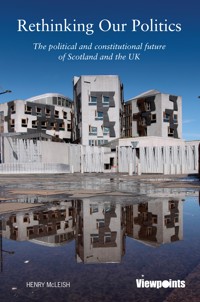
As the Scotland electorate wakes up in the day after the referendum, everything has changed and nothing has changed. Scottish and UK politics is broken, it desperately needs fixed. The future of Scotland will be centre stage, but so will our democracy and the future of a Union in decline. Our politics once again needs to inspire, enthuse, educate and be relevant to the needs and aspirations of the public and reconnect with the values that underpin our society. There are urgent issues that we need to deal with now - the most important of which being rampant inequality. We have to move away from the mindless tribalism and partisanship that too often dominates much of what passes as political debate. Over the past year it has become clear that regardless of their stance on the referendum debate, the Scottish people are united on one front, the yearning for change for the betterment of their nation, their institutions and their politics. For McLeish, the referendum debate is merely the beginning. It is a symptom of the need for a more fundamental shift in the way we engage with politics in the UK and Scotland today. Former First Minister of Scotland, Henry McLeish is well placed to diagnose the crisis at the heart of Scotland and UK politics. In Rethinking Our Politics McLeish looks critically at the conditions which have created an increasingly divided and alienated public and forged Scotland's yearning for radical change. He rails against the stagnation of the union and makes a rousing and persuasive case for a complete overhaul of our political thinking, demanding that instead of making decisions on the basis of fear and insecurity, we rediscover the founding moral purpose of government. This is a must read for those who care about the future of our nation.
Sie lesen das E-Book in den Legimi-Apps auf:
Seitenzahl: 464
Veröffentlichungsjahr: 2014
Das E-Book (TTS) können Sie hören im Abo „Legimi Premium” in Legimi-Apps auf:
Ähnliche
















RT HON HENRY McLEISH began his political career as an elected member in local government in 1974, and was leader of Fife Regional Council for five years. In 1987 he was elected as a member of the UK Parliament and acted as Minister for Devolution and Home Affairs in the Labour government from 1997 to 1999. In the first Scottish Parliament he was Minister for Enterprise and Lifelong Learning from 1999, and in 2000 he became First Minister of Scotland until 2001. Retiring from politics in 2003, he is now an adviser, consultant, writer author and broadcaster and lectures in the USA and elsewhere on the European Union and politics.
He chaired the Scottish Prisons Commission, which produced a report into sentencing and the criminal justice system entitled ‘Scotland’s Choice’. In 2010 he conducted a major report on the state of football in Scotland, which had been commissioned by the Scottish Football Association, and chaired a commission into sport requested by the Scottish government. He is now an honorary professor at Edinburgh University.
Luath Press is an independently owned and managed book publishing company based in Scotland, and is not aligned to any political party or grouping.Viewpointsis an occasional series exploring issues of current and future relevance.
Rethinking Our Politics
The political and constitutional future of Scotland and the UK
HENRY McLEISH
LuathPress Limited
EDINBURGH
www.luath.co.uk
First published 2014
ISBN (PBK): 978-1-906817-83-1
ISBN (EBK): 978-1-910324-21-9
The author’s right to be identified as author of this work under the Copyright, Designs and Patents Act 1988 has been asserted.
© Henry McLeish
Contents
Acknowledgements
INTRODUCTION A Progressive Narrative
CHAPTER ONE Broken Politics and the Mood of a Nation
CHAPTER TWO A Union in Decline
CHAPTER THREE The Constitution of the United Kingdom
CHAPTER FOUR England, The Elephant in the Room
CHAPTER FIVE The Question of Europe
CHAPTER SIX Populism Extremism and the Rise of the Political Right
CHAPTER SEVEN Britishness and National Identity
CHAPTER EIGHT Inequality Poisoning the Well of British Society
CHAPTER NINE Labour and Federalism
CHAPTER TEN Rethinking Our Politics
Acknowledgements
The Author wishes to place on record his thanks to the following for their contribution to the ongoing debate about the political and constitutional future of Scotland and the United Kingdom and in particular the expertise and wisdom they have brought to their work: First, ‘The UK’s Changing Union’ a series of collaborative forums, Wales Governance Centre, Cardiff University and involving Edinburgh University. Second, the Institute for Public Policy Research (IPPR), including, ‘The Dog that finally Barked’, ‘England as an Emerging Political Community’ and ‘England and its Two Unions’. Third, Linda Colley, Professor of History at Princeton University, and author of, ‘Britons-Forging the Nation 1707–1832 and ‘Acts of Union and Disunion’. Fourth, Michael Kenny, Professor of Politics at Queen Mary, University of London and his work with, ‘The Future of the UK and Scotland’ project and the IPPR. Fifth, Vernon Bogdanor, Emeritus Professor of Law, Kings College London and author of, ‘The New British Constitution’. Sixth, Will Hutton, Chief Executive the Work Foundation and theObserverfor two articles on the political evolution of the SNP. Seventh, Michael Keating, Professor of Politics at the University of Aberdeen and along with David McCrone, Emeritus Professor of Sociology, Edinburgh University, ‘The Crisis of Social democracy’ and along with Malcolm Harvey, Research Assistant, Aberdeen University, ‘Small Nations in a big World – What Scotland can Learn’. Eighth, Charlie Jeffery, Professor of Politics at Edinburgh University and Director of the Academy of Government, for his help and advice. Finally, Tom Brown, former editor of theDaily Recordand source of continuing inspiration and wisdom who co-authored with me three books on Scotland since 2007.
INTRODUCTION
A Progressive Narrative
A Changing World
SCOTLAND IS ENJOYING a summer of sport in 2014 and while sport and politics rarely provide telling insights into the issue of national pride, the World Cup in Brazil and the Commonwealth Games in Glasgow could act as a starting point for our ongoing debate on national identity. Germany, winners of the World Cup for the fourth time in their history, looked disciplined, orderly, confident, sophisticated, focussed, committed, organised, like they wanted to win and played like a team. Germany as a nation state projects a similar sense of purpose, confidence, pride and modernity. This is a country with a complex history: a penchant for militarism as evidenced in 1870, 1914 and 1939; a brutal division of Germany as part of the post-war carving up of Europe; unification after the fall of the Berlin Wall in 1989 and now a successful federalist structure. Now the driving force in the EU and content to cede sovereignty to the states of Germany and to the Eurozone and excelling in the world economy as an exporter and maker of excellent manufacturing products and engineering excellence. No-one suggests that sharing sovereignty with the other 17 countries in the Eurozone makes Germany a lesser nation in either European or World affairs. The United Kingdom, in sharp contrast, looks worryingly inferior. Despite repelling invaders for over 1,000 years, being a union in stages between 1530, 1707 and 1801 and having the benefit of island status, the Union today looks tired, unsettled, unstable, insecure and now bitterly divided. We seem lost in a new world and we are unable to escape the past. Most people when they wake up each morning think it is a new day, but too many parts of the Union, including Westminster, wake up and think it is yesterday. There appears to be a lack of purpose, unity, national focus and pride and a collapse of any sense of collective ambition and endeavour. Britishness and any concept of solidarity are fast disappearing. Faced with this apparent drift and failure of the Union to adapt to a changing world, Scotland and the Scots could be forgiven for thinking there could be a better way to build a new future. History shows that spectacular shocks to nation states can bring about radical change and a desire to correct the wrongs of the past and build a better future. The absence of any shake-up in the fortunes of Britain may have set us on this journey, but could this change if Scotland decides to exit the Union and seek a future of its own control, free from the apathy of the Union and seeking to be more like Germany or the Nordic countries rather than the United States of America? Would the Union see this as a sufficient, albeit dramatic, way to make a point and accept the run-down state we are in? More importantly, would Westminster do something about it? The debate is about Scotland’s future in the Union and whether the outcome is YES or NO. But in reality this is primarily about the Union and why it has allowed the conditions to develop in which an independent Scotland is even a serious option. The debate is narrow as the Unionist parties ruled out a second question and the possibility of considering a form of federalism, which is the only serious solution to the problems facing the Union if a NO vote is secured. Scotland could be a serious and successful independent state. That is not the issue. The bigger question is: can the Union survive in its present form regardless of the outcome of the referendum? This book discusses the future of Scotland and the Union and attempts to put into a wider context the challenges facing both. Setting aside the big economic issues, the book concentrates on the political and constitutional issues which do not get the level of debate they deserve in shaping how a nation will vote and a Union will respond.
Why write the book?
After 43 years in the Labour Party, nearly 30 years in elected office and after ten years to reflect on life and politics – a period in which I have gained considerable insight into the challenges and opportunities facing Scotland – I am more and more disappointed about the state of politics in our country, the narrow nature of the referendum campaign, the poverty of political debate, the growing disconnect of the electors from those who govern and seek to govern and the plight of political parties. The Labour Party has enormous potential for positive social, political and economic good but has, in the post-devolution years, lost traction and direction. The SNP, in sharp contrast, has now governed this nation for the last six years during a period of enormous economic difficulty and has captured the imagination of the public through a combination of populism, a broad electoral appeal and the embrace of nationality and identity. Social class is less strongly linked to party allegiance, party membership has collapsed, voter turnout is declining, trust in politicians continues to shrink and people feel disconnected from political parties and disillusioned with all things political.
The Nationalist Party has successfully hijacked the constitutional issue and dominated the debate on Scotland’s role in the Union: despite their success, the SNP does not have a distinctive political philosophy and to date cannot be described as a progressive, left-of-centre or social democratic party in Scotland. Instead the SNP, now heading up the YES campaign, combines a broad appeal to nationalist sentiment, populism, competent government, charismatic leadership and a desire to win. Together these qualities have helped to create a formidable political party, which explains in large measure their success since 2007 and 2011: a party on the margins has moved to the mainstream and is now a party of majority government. This has been nothing less than a political earthquake in Scotland, where the seismic impact continues in a series of powerful aftershocks to threaten the very foundations of the political Union of 1707. Again it is hard to understand why this has been allowed to happen. A glance at the traditional Unionist parties in Scotland helps to answer some of the questions. The rise of the SNP has been accompanied by the decline, some might argue the collapse, of Labour as a political force at Holyrood, suffering from being in denial and incapable of learning any lessons of consequence from the SNP rout in 2011. To put it more dramatically, Labour, north and south of the Border, may be judged by history as being a factor responsible for bringing Scotland to the brink and creating the conditions in which Scotland’s exit from the Union become a real possibility, maybe not this time but sometime soon. The other central theme of this book is the role a union in decline has played in loosening the bonds between Scotland and the Union, weakening any sense of Britishness and undermining loyalties which have been developed over the last 300 years. To adapt the phrase of James Carville, political adviser in the early ’90s to President Bill Clinton, it’s the Union, stupid, that lies at the heart of the constitutional and political turmoil that has engulfed Scotland in the post-devolution era. Labour at Westminster has failed to understand what is happening in Scotland since 1998 and ignored at their peril England. Labour in Scotland has failed to respond. This may prove to be the undoing of the Union: the outcome of the vote on 18 September 2014 will answer that question.
Devolution has unleashed a new political landscape in Scotland. The Unionist parties have clearly failed to find any real focus and seem ill at ease with the uncomfortable truth that Scottish politics has changed forever. There will be no going back to the days of a comfortable Union where Westminster; dominated by the myth of absolute parliamentary sovereignty, the philosophy of democratic centralism and a total contempt for genuinely sharing power, as was the political order of the day. The world is changing but the Union of the United Kingdom isn’t. A perfect storm of political issues is now brewing in Scotland. Recognising them is one thing, but doing something about them is another. But it might be too late.
This book attempts to set out the issues and ideas that are swirling around the most important debate since 1707, ideas which consciously and unconsciously are being absorbed by Scots and will ultimately decide the outcome of the referendum. There is a new politics in Scotland. But overshadowing all of this is the Union and its main institution, the Westminster Parliament, both of which are in long-term decline and creating the instability, insecurity and threats to the very existence of the Union in its present form as well as the future of Wales, England and Northern Ireland. Is it possible for the Union to embrace change and create a more attractive future for Scotland to be part of or are we now at the point where Scotland will exit, the only doubt remaining being when? There are six principal reasons why the referendum campaign is likely to be closer than was envisaged when David Cameron enthusiastically signed the Edinburgh Agreement. The Prime Minister, frustrated at his failure to dampen the rise of the SNP after he came to office, was motivated to support the referendum in the hope that Salmond, the SNP and Nationalism would be defeated. And in some peoples’ eyes Cameron’s decision was political and opportunistic and had little to do with securing an imaginative future for Scotland in a new and transformed Union. Instead this was intended to be David Cameron’s ‘slam dunk’ moment, when history would repeat itself, as in 1707, when England wanted more security on its northern flank. Scotland would be brought into line, Scots would vote NO, notions of a new future would be halted and then the nation would await the generosity of Westminster to see what further powers and responsibilities might be handed down. There has never been a hint of humility from the Unionist party leaders that the Union itself might be the cause of Scotland’s dissatisfaction with Westminster and the political and constitutional crisis which has worsened under the new virulent strain of conservatism extremism, anti-Europeanism and populism now so attractive to voters in England. This book seeks to go behind the politics of YES and NO to discuss issues of influence and importance, consider a broader sweep of history, wider horizons for the debate and a deeper understanding of what the real and medium term issues are.
First, the steady decline of the Union of Great Britain and Northern Ireland, in particular during the post-war period.
Second, the perfect storm of issues, which have been intensified by the approaching referendum, but have been brewing for some time. These issues will survive a NO vote and continue to haunt Westminster if it fails to undertake the sweeping reforms necessary to save the Union. In the US these issues are described as Wedge issues.
Third, the decline of the Unionist parties in Scotland, especially the Labour party. Uncomfortable with sub-national government or devolution, the interest of the Labour Party has ebbed and flowed, normally in response to the success or otherwise of the SNP. With some exceptions, the Party rarely embraced the spirit of constitutional change and its central importance to political progress in Scotland and the safeguarding of the Union. Post-devolution, post-2007, and post-2011, when the SNP moved from the margins of Scottish politics to the mainstream and then to majority government, Labour has been in denial, lost political traction and found it hard to adjust to the new politics of Scotland. At times it has seemed overwhelmed by the constitutional question. It is a pale shadow of its former self and remains too obsessed with nationalism and less concerned with seeing Scotland as a special political place with distinctive needs which, in or out of the Union, requires new thinking and more imagination. There is clearly evidence to suggest that when a vacuum is created by a political party failing to provide a philosophy, it is often filled by populism and in England more extremism and forms of grudge and grievance politics.
Fourth, Scotland has grown in confidence in the post-devolution period since 1999. Fifteen years have encouraged Scots to respect difference in both outlook and policy and value the responsibility and opportunity to view their politics through a prism reflecting a ‘made in Scotland’ label. We are less deferential, more confident and less inclined to take matters of history for granted.
Fifth, there is the widespread discontent and disillusionment with the broken nature of British politics and our democracy.While similar experiences exist in Western democracies, Britain has slumped further than most. We seem to have lost interest in the importance of our democracy and the failing performance of politics, political parties and politicians. Every conceivable measure of the quality of our democracy and political process is on the slide – trust, confidence, election turnout, membership of political parties, political literacy, public discourse, lack of philosophy and ethics, partisanship and tribalism – and since much of the criticism is being levelled at Westminster this dissatisfaction could impact on the campaign, the outcome of the referendum and how the post-referendum debate is framed. In or out, we shouldn’t disguise the ‘scunnerisation’ factor that is all too evident in our politics. Bearing this in mind, the SNP have somehow managed to avoid the political wrath of the people of Scotland and remained reasonably successful for seven years, including the first referendum. There is no doubt that the success of the SNP has been helped enormously by the decline of Labour.
Sixth, the decline of Britishness and the increasing importance of national identity are evident in Wales, Scotland and England. The loyalties of the nations of the Union to the idea of Britishness are changing, with England now embracing a much more decisive sense of Englishness. These changes reflect the wider impact of political, constitutional and governance issues throughout the Union and serve notice that Scotland is not the odd one out. Whether these shifts in attitudes are being promoted positively or negatively, they are giving notice to Westminster and the Union that expectations are being built up which require a response and action.
But linking these factors together provides the most telling feature about the referendum campaign.
There are a number of issues that are inextricably linked – which have for the first time in over a century moved front and centre in British political life. There are good reasons to think that these are just as likely to affect the fortunes of all the political parties in the short and medium term.
They are also likely to weigh heavily on Scots as they consider how they will vote. These are issues which are eating away at the credibility of the Union, highlighting in their different ways aspects of political faith, crucial policy areas, questions of nationality and identity and international developments, which will determine in the short and long term the very nature of the Union, its attractiveness to Scots, who, for the first time for 300 years have a real choice and the means to express this, and a real test of the split political personality of Scotland. These are ostensibly issues of value that are less concerned with the economy or welfare but more about what kind of society we want to live in, what do we value for ourselves and our families and a whole range of ethical and philosophical issues which lie at the heart of a caring, civilised, compassionate and progressive community:
A complex set of factors are now in play and the sum of their respective parts could have a dramatic bearing not only in terms of the September referendum but also in the political and constitutional aftermath of a NO vote. There is no consensus: Scotland is divided and the Union seems, at least at this point, unable to accept responsibility for its part in creating the weak and unbalanced union we have. So Scotland does have a real choice, not just a statement about the Union and 300 years of history, but an opportunity to realise its potential in a different way in a new relationship with the Union, in or out. Underlining the unique opportunity available, whether or not independence wins through this time, notice will have been given that a nation is on a journey and may be content, at this point in time, to be the object of a bidding war by the Unionist parties to ‘buy them off’ with the least change acceptable to Conservative and Labour MPs at Westminster. But the issue won’t go away. This is where the Union will be on trial, with a huge weight of expectancy on it. But, if history is anything to go by, it may be unable or possibly incapable of the transformative work needed to keep the Union intact and retain Scotland’s membership. The Union, as a prisoner of its past, may be beyond seeing a different future and having a different and a sensible road map and timescale to get there.
The book finally looks at a possible future for Scotland: a model for the creation of a progressive and positive nationeither still in the Union – if transformed – or as an independent country. Either option presents difficult questions for the Labour and Conservative Parties in Scotland, who are reluctant to embrace a federalist structure – supported by the Lib-Dems – and will have to dance to the tunes of their hosts at Westminster. Labour should seize the opportunity to answer their critics as to what they stand for at the start of the 21st century and pursue a platform of unashamedly left-of-centre ideas which embrace ‘the common good’, thinking through money and the markets and morality and embracing the humanity, happiness and hope agenda of the Nordic countries. This would require an approach which combines social democracy, the Social Investment State and social partnership. This kind of discussion will fill a gaping hole in the middle of the current debate and whatever is likely to happen after the referendum. The SNP or YES campaign is reaching out to the widest possible audience from the extreme left to the extreme right and believers and non-believers in between. Their vision for the future of Scotland is incomplete, but for good practical reasons. Labour in contrast needn’t be so hesitant but instead be bold, honest to the founding fathers of the Labour Party and true to the vast majority of Scots who want decent, collective and inspirational answers to some of the burning questions of our times: and this doesn’t need Scotland to be in or out of the Union. For Labour it is an approach for both independence and federalism. It would be more difficult in a status quo plus Union, but not impossible. The important point is the need for Labour to waken up to a range of futures and outcomes which all require philosophy, morality, progressive policies, social democracy and self-belief.
My political journey over nearly 44 years has been important in providing insights. I have a breadth of experience that enables me to make sense of my own thinking, the philosophical ideas that party politics should be built on and the political issues that are so important to the people I have represented and the millions of Scots that make up this remarkable country.
Our date with destiny in September 2014 will be one of a whole range of international events being held in Scotland. There is no doubt that whatever the outcome, Scotland will continue to change, develop and seek new constitutional arrangements within the Union. We are on a political and constitutional journey of uncertain destination, but a reasonably clear direction. The elections for Westminster in 2015 and for Holyrood in 2016 may only serve to underline the remarkable volatility, shifting allegiances and unpredictability of the current mood of Scottish electors. One thing is clear: the campaign, despite its many weaknesses, has brought people to meetings throughout Scotland, raised awareness, engaged potential voters young and old, challenged some of the worst aspects of our partisan politics and helped politics be more inclusive. There have also been examples of inspiration and enthusiasm about the Union and Scotland and an attempt to overcome the poverty of our public discourse and the level of our civic literacy. All of this is long overdue.
Pitches, Politics and Pits
Comparing the politics of one generation with another can be misleading, reflecting undue sentiment and a misplaced or distorted sense of how good or bad one period of history was when measured against another. Our history can also be personal and filtered through our experiences. Our memories are not always reliable, some of us often think that the present can never compare with the politics of the ’60s or ’70s where there was more vision, inspiration and idealism. For the vast majority of people, material prosperity, physical security and social stability have improved enormously. However, many people now feel dissatisfied and disillusioned with modern life and search for some meaning to life amidst the excesses of capitalism, growing inequality, excessive commercialisation and greed invading our public space and undermining any idea of the common good in an increasingly atomised and individualistic society. This is often expressed in the belief that there is something fundamentally wrong with our politics. Politics and political parties are not impacting positively on the way we live, failing to either address or solve enduring problems and allowing unacceptable levels of inequality, the few benefitting at the expense of the many, growing social and economic division and a capitalism which is corroding concern for each other and elevating individualism and shallowness above the common good and solidarity. Many question what political parties stand for. Protests, populism and extremism are all gaining traction at the expense of common sense and fairness, especially in England. People are becoming disconnected and frustrated as their views go unattended. Scotland and the United Kingdom are wealthy beyond anything my grandfather could ever have envisaged in his life of football, mining and serving his country in World War One. Why then does modern politics allow such a poverty of spirit, inspiration and soul to dominate our lives? Why do political parties cling to outdated ideas and lack the courage to do anything about the obscene levels of poverty and the lack of fairness in society? Why are we being conditioned into thinking this is the way it has to be? Our profound lack of confidence in politics and our disillusionment with the lack of solutions to enduring problems is in danger of damaging our democracy, fuelling discontent and forcing many people to seek comfort in the populist and the extremist and those that seek scapegoats rather than solutions. Populism can fill a vacuum created when other political parties run out of ideas, credibility and don’t appear to stand for something.
This is the Union of the United Kingdom in 2014. It is also the background against which the referendum will be fought. Do the people reaffirm their commitment to a Union and a political system that is failing, or do they opt instead for the unknown? Whatever their choice, it is a real one. This is what makes this date with destiny so fascinating and so difficult to call. The vote is not just about one geographical entity leaving another. This is about history, a shared sense of sacrifice, post-war achievements and an improved lifestyle for citizens, but now it is also about broken politics, divisive economics, growing inequality, the lack of fairness, new hopes for the future, a rekindled belief in ambition and an increasing weariness about the emptiness and intolerance of much of the political and public discourse. Was it always like this?
Politics and our democracy in crisis
British Politics is going through a period of rapid disintegration. This is putting our democracy at risk. Remarkably, our political parties seem unaware of the scale of this crisis, the urgency needed to address the complex issues involved and the threat to the traditional political system. This crisis has to be viewed against a background of long-term decline in the way we do our politics in Britain and an absolute neglect of ideas, policies and inspiration in terms of looking forward and trying to rescue our democracy and rebuild our politics. Party politics is outdated and structurally antiquated, with little genuine or relevant links to people, who feel disillusioned and alienated from those who seek to represent them. Never in recent history has our politics been so ramshackle and irrelevant to the needs of the vast majority of the population.
The political classes are either unaware of this unfolding crisis, which of course is impossible to believe, or are in a perpetual state of denial. While privately they may acknowledge the seriousness of the problem, there is a worrying paralysis in relation to any serious action or reform. For too long the rules of the political game have favoured the two major parties at Westminster. Despite Labour and the Conservatives losing nearly 20 per cent of their combined vote in General Elections in the last 30 years, new parties emerging and entering Westminster and a dramatic decline in electoral turnout in all kinds of elections over the same period, there has been no real effort to inquire in any systematic way into this crisis. Britain, in consequence, is becoming a much less attractive and less tolerant country to live in and because of the poor levels of public discourse and the pathetic levels of political or civic literacy we are, relative to Western Europe, a declining democracy. The Labour and Conservative Parties have seen a dramatic decline in membership; turnouts in elections are falling; there is a growing divergence in voting numbers between the young and the old, with poll figures for young people worryingly low. Although they are enthused by political issues, they are turned off by politicians and political parties. There is a growing disenfranchisement of the poor as they disconnect from mainstream politics and feel alienated by the often limited response of the Government and institutions to their needs; trust and confidence of the electors in political institutions and politicians has slumped as measured by various surveys; electoral reform is seen as important for European, Devolved and local council elections but not for Westminster; and the recent attempt to move to a form of PR in the recent referendum only showed a massive dislike for a change and a threat to the established hegemony of the two major political parties. For the independence referendum, Scotland will see 16 year olds vote for the first time. But the holding of elections and the actual voting procedures are archaic and anachronistic – electronic tools shift billions of pounds around the world but in the polling station we put X on ballot papers and put them in a box. What about voting on mobile phones, longer election periods, or voting at the weekend? Modernising elections would be a sign that Westminster was serious about the catastrophic decline in turnout – we want more and more people to vote, not less. Statistics abound about the weaknesses and failures of the current system and the serious consequences which follow fewer people voting, especially the poor. In terms of those who actually vote, there is a huge difference between the poor and everyone else.
The Union and Westminster are in a political fix of their own making and to date have been unwilling or uninterested in pursuing reform and modernising. The question is whether there can ever be a mood for a change and then a commitment to radical transformation of our politics and our democracy, but the two main parties show little interest in change. There is a permanent blocking mechanism – mindset, history, sovereignty, preciousness and at times arrogance about the wisdom of doing anything that would blunt the edge of the Conservative and Labour Parties at Westminster. Where does that leave Scots who value their vote and the health of democracy and see no prospect of change at the heart of the Union?
Scotland’s independence referendum is unique
For only the fifth time in over 300 years of the Union of Great Britain and Northern Ireland will an issue of such major constitutional and political importance be decided by the electors in Scotland, elevating the sovereignty of the people rather than the sovereignty of Westminster. This historic departure from the conventions of the British State is to be welcomed and may, dependent on the outcome, hasten the end of the absolute sovereignty of Parliament and its role as the guiding principle in our ramshackle constitution. For centuries our unwritten constitution has allowed us to get by and at the same time provided a pretence that our rights and liberties were being valued and protected. Events in the modern era have shown that there is no principle of absolute sovereignty: membership of the European Union, being subject to the jurisdiction of the European Court of Human Rights (ECHR), the holding of binding referendums and the devolution of power to Scotland, Wales and Northern Ireland have driven a coach and horse through the outdated idea that Westminster’s power and authority is either credible or relevant to the nations of the Union in the 21st century. Referendums, while being a powerful and useful tool for a modern democracy, are complex and do not usually represent public views or concerns solely on the issue before the people. At a particular moment in time, referendums give people the opportunity to make a judgement or make their views known or express their anger on a single issue, but in doing so they may be using their vote to express their feelings on a whole range of issues which in turn have been framed by a wider set of political, social and economic considerations filtered through their own personal experiences.
Scotland’s independence referendum will be no different. When David Cameron signed the Edinburgh Agreement it was clear that, based on a great deal of ignorance of Scotland’s history, a sparse knowledge of 14 years of the post-devolution era, confused and wrong intelligence from Unionist parties in Scotland combined with a genuine sense of opportunism, he thought he was calling Alex Salmond’s bluff and in doing so looked forward to killing off independence and in the process destroying the SNP. This was to be Cameron’s moment where Westminster, after the 18 September, could get back to business as usual and put behind them an uncomfortable distraction which had irritated more than worried the Unionist parties, especially Labour and the Tories. This is likely to represent another Unionist party miscalculation since the SNP came to power in 2007. The subsequent referendum campaign and the clash between ‘Better Together’ and ‘YES for Scotland’ has not gone to plan. There is more than a hint of anxiety in what is unfolding and what may be the outcome of the vote, not necessarily about doubting the NO campaign winning, but much more concerned about the margin of that victory and what may happen afterwards. But it could be much worse than that. A victory for the YES Campaign would shatter the confidence and authority of Westminster and be the biggest humiliation suffered by the Union since the US colonies became independent in the 18th century. For Labour this would be a defeat of unimaginable proportions and put the prospect of a Labour victory at Westminster under the present First Past the Post system in some serious doubt. YES for Scotland could accelerate the decline of the Union and undermine the reputation of the rUK (the rest of the UK) in The EU, NATO and the United Nations, where its permanent member status of the Security Council could be at risk. The consequences of defeat for defeat for the Prime Minister could be enormous, and could undoubtedly result in loss of face for The Prime Minister.
We are getting ahead of ourselves in speculating on the outcome of the referendum, but even at this stage searching questions have to be asked.
How have the Unionist parties allowed this to happen?
Why is a victory for the NO vote in danger of turning into a narrow majority or, even worse, a defeat?
Why are Scots so unimpressed by the Union?
Has there been a failure to either understand the Scottish people or the mood of a nation that may simply have had enough of politics and political parties through the prism of Westminster?
Are there other factors at work, some apparent but misunderstood and some less so, swirling around in the political ether, but nonetheless adding to the discontent, frustration and anger that may drive people to vote YES when they would like to vote NO.
Is it ‘the Union, stupid’ that is the problem and as a result makes it so difficult for the Better Together Campaign to be positive, confident and promote a progressive and positive vision for tomorrow? Is the Union losing its appeal or has it lost it?
Is the YES Campaign just fortunate, despite its obvious strengths, that a perfect storm or powerful cocktail of factors are at work which are weakening the bonds between Scotland and the Union and questioning the historical benefits of a union that has lasted for over 300 years but which now seems incapable of being promoted by its supporters?
Answers to these questions will be discussed in this new book, which unashamedly argues for a better debate than we are currently having and which sets the issues in a broader sweep of history and a deeper understanding of the Union. It is often the nature of our politics to exaggerate the importance of a political event, but we are dealing with a referendum of towering significance to the future of The UK and Scotland. No matter the result, political life will continue after the 18 September and more thought also has to be given to what happens next.
The current debate has been an obvious result of the Labour, Tory and Lib-Dem Parties rejecting a second question on the ballot paper. Without being able to express what a NO vote will mean after the referendum, there is a real danger that voters will feel cheated and opt for a YES despite a real preference to remain in the Union. This raises the issue of how narrow this debate has become: so many ideas, futures and options can’t be discussed because they are outwith the narrow parameters of an agreement that had more to do with the narrow and (understandably partisan) views of the major parties than about the Scottish people, who have shown in many opinion polls their desire to stay in the Union, but a very different union with more substantial powers and responsibilities being shared with Scotland. The absence of a second question is putting at risk the outcome of the referendum and may contribute to a diminished NO vote. This was another Unionist miscalculation.
We need a new approach to the problems of 21st-century Scotland and Britain. This book seeks to define and then provide a brief overview of ten of the most important political and constitutional issues facing Scots as they prepare to vote in the independence referendum. These issues lie at the heart of the Union and the political and constitutional questions about its future which remain unanswered. Looking beyond the referendum, regardless of the outcome, all of these issues retain saliency and may in fact become more important as the polling stations close on the 18 September. The real problem is that in the crowded, confused and complex world of politics we often don’t have an effective way of addressing the issues that matter to people because they don’t fit the soundbite culture, the hard edges of economic policy or the simple in or out rhetoric that this campaign has been subject too. Our politics often seems incapable of finding a deeper seam of wisdom, vision and inspiration to mine. As a result the in or out nature of the debate is narrow, tribalism and partisanship dominate and the key player in all of this, the Union of Great Britain and Northern Ireland, escapes effective scrutiny as to whether or not it is fit for purpose in the 21st century and represents an appropriate arrangement for Scotland to be part of.
We are looking at the past through the prism of the present – often a highly selective version of it – and have little idea of how to predict or understand what might happen in the future. This book, in a very modest way, looks to project a more unified approach not just to the referendum debate and the outcome, but to the long term future of the Union, in the event of a NO vote, or in terms of a YES vote, where the same issues will still have to be faced by the rUK.
We need to explore what kind of Scotland we want and once again this is relevant to the pre- and post-referendum status of our nation as we look at the philosophical, moral, political, international and governance issues that will help shape a different future, regardless of whether Scotland is in or out of the Union: this kind of debate is long overdue and we have neglected for far too long what progressiveness means in the 21st century. We tend to think on highly traditional lines and ignore the fact that new and inspired thinking is needed to deal with complex issues; this referendum has highlighted, especially in relation to the Unionist parties, the vacuum that lies at the heart of our policy making.
In his bookHigh Noon, 20 Global Problems: 20 Years to Solve Them, J. F. Richard said:
Never have there been such massive opportunities for improving the human condition. Yet never has there been such uncertainty about our ability to grasp these opportunities.
Change the context, from the condition of the planet to the future of Scotland, and his comments have relevance to the plight of our nation. What we need is more imagination and new thinking about how we should be governed. There are unsolved problems that should be at the forefront of this referendum debate and campaign, but they are not. Instead we have the replay of old battles – Scotland v England, Unionism v Nationalism, Independence v some more Devolution, SNP v Labour, Edinburgh v London, Scottish Government v Westminster Government and so it goes on, wrapped up in old style partisanship, served up in fierce tribalism and all delivered to the public through low levels of political literacy, poor quality public discourse and a less than balanced press: not the public’s fault, but the result of a lack of interest on the part of the political classes.
Donald Dewar and Scotland’s future
But in this introduction let us pause for a moment and look back to someone who made a huge contribution to devolved Government. The late Donald Dewar understood Scotland and the success of our Parliament as based on his White Paper and the referendum held in 1997. Throughout his period in Government he also made some remarkable and insightful comments about what the future might hold. He also reminds us about what this debate is all about.
Speaking at the opening of the Scottish Parliament in 1999, he said:
This is indeed a moment anchored in our history. Today we can reach back to the long haul to win this Parliament, to the struggles of those who brought democracy to Scotland, to that other Parliament dissolved in controversy over 300 years ago.
Today we can look forward to the time when this moment will be seen as a turning point – the day when democracy was renewed in Scotland, when we revitalised our place in this, our United Kingdom.
Distant echoes
The past is part of us, part of every one of us and we respect it. But today there is a new voice in the land, the voice of a democratic Parliament, a voice to shape Scotland, a voice above all for the future.
For me – and I think in this I speak at least for any Scot today – this is a proud moment, a new stage in a journey begun long ago and which has no end. This is a proud day for all of us.
A Scottish Parliament, not an end, but a means to greater ends and these too are part of our Mace. Woven into the symbolic thistles are these four words – wisdom, justice, compassion, integrity.
Burns would have understood that. We’ve just heard beautifully sung one of his most enduring works, and at the heart of that song is a very Scottish conviction that honesty and simple dignity are priceless virtues not imparted by rank or birth or privilege but part of the soul.
Burns believed that sense of worth ultimately prevails, he believed that was the core of politics and that without it our profession is inevitably impoverished.
The late Donald Dewar in his Spectator Lecture,Towards a Modern and Flexible Constitutionin November 1998 said:
For any Scot, today is a proud moment; a new stage on a journey begun long ago and which has no end. A Scottish Parliament. Not an end; a means to greater ends.
Surely this debate can be opened out to include the idea of a more flexible and modernised Union, which sees transferring more power and responsibility not as a sign of weakness, but as strength and confidence in the constituent parts of the UK.
Scotland’s date with destiny will be 18 September 2014. The first referendum on independence will take place and we will have a real poll as to where Scots see their country and their own future in the years ahead. History shows that it is given to few politicians to fulfil their destiny. Donald Dewar was without doubt one such politician – and, as with his physical stature, he will stand head and shoulders above others in posterity. John Smith and Robin Cook were also taken early.
Dewar’s devolution years should remind us of his insights, often ignored or forgotten, into the significance of devolution, how it was likely to develop in later years and above all else the challenges it would pose to the Labour Party, whose caution, confusion and hesitancy had often threatened to derail the home rule project. Labour’s involvement with the constitutional question, leading ultimately to the embrace of devolution, started in the early part of the 20th century. Keir Hardie first pledged the Labour Party’s support for Scottish home rule in an election address in 1888 and the Labour Party went in to the General Election of 1918 with Scottish home rule as the third priority in its manifesto, ahead of housing, pensions and education. Labour’s engagement with devolution ebbed and flowed, reflecting Scotland’s national mood and the varying political fortunes of the SNP.
From 1997 to his untimely death, devolution was Dewar. It is worth noting that without his contribution, we may not be where we are today, where a successful Parliament has positively impacted on the Scottish people, a new and vigorous debate about Scotland’s future is in full swing and Labour now appreciate that constitutional change is a ‘process not an event’.
Even in 1997, after nearly 100 years of discussing some form of home rule, the Labour Party in Scotland remained uneasy about the constitutional future of Scotland. Devolution was a huge issue in Scotland and Labour now accepted what John Smith had described as ‘the settled will of the Scottish People’ and ‘unfinished business’. In England and Westminster though, there was a feeling of indifference and certainly ambivalence. Devolution had never been part of the DNA or soul of an institution which had ruled without disruption for centuries. This was the context in which Dewar had to win the battle for Scotland.
Being out of politics and able to revisit events more dispassionately has been helpful to me in reappraising the real worth of Donald Dewar’s contribution to both the politics and the history of Scotland.
Although we are now 14 years on from the successful establishment of the Scottish Parliament, it is worthwhile to reflect on how and why home rule for Scotland was achieved.
Historical analysis and the reading of Parliamentary reports cannot give the full picture of how one man’s sharp intelligence, political skill and sheer grinding hard work helped to make Scotland’s dream a reality.
In 1997, when Labour came to power for the first time in 18 years, our Party was in a state of euphoria. We needed time to assume our new responsibilities and become accustomed to our new status as the party of government. It would have been easy to lose focus, but Donald Dewar would not be diverted from the commitments we had made. Throughout that summer, he got down to work to deliver on the promises we had made to Scotland to finally deliver on the home rule campaign that had spanned a controversial century. In doing so, he was responsible for the production of what was generally acknowledged to be one of the most significant White Papers ever presented to parliament and people. It spelled out with clarity and conviction exactly how we would deliver devolution to Scotland, with all the technicalities and procedure for setting up a Scottish Parliament. Many were surprised at how robust it was in relation to Scottish aspirations.
Because of that, and Dewar’s advocacy, the White Paper proved popular and largely received cross-party support. The White Paper, the Scotland Act and driving through the devolution programme were, in my view, Donald Dewar’s finest moments.
Despite Labour’s clear commitment to devolution, there were some in our new Government and Parliament for whom it was a grudging concession. Dewar had to struggle with the big beasts of the political jungle at Westminster and powerful figures within our own party. Yet, throughout the weekly battles within the special Cabinet sub-committee, the Scotland Act emerged unscathed and was massively and triumphantly endorsed in the referendum on 11 September 1997. Returning to Dover House, after long and grueling committee sessions, he would, in that laconic and self-depreciating manner, bemoan how well or otherwise he had done. The civil servants would then arrive to say what another remarkable performance he had turned in to defend Scotland’s interest and the integrity of the Scotland White Paper!
That, to me, was Dewar’s true legacy: history’s verdict will be that Scotland’s hopes and future were enshrined in and ensured by that White Paper. He was our nation’s trustee and he did not fail his native land, to which he was intellectually and emotionally attached.
Of particular importance in assessing the Dewar legacy are his insights as to how the future of devolution might unfold. These are a sharp reminder to those in the Labour Party today who wish constitutional change to go away and get back to business and politics as usual. Speaking at the Spectator LectureTowards a Modern and Flexible Constitutiondelivered on 18 November 1998, the day after the passing of the Scotland Act, Dewar insisted:
Clearly, the debate should not stop when the doors of the Scottish Parliament open. What we have done in Scotland may be a catalyst for further change… what is right for Scotland is not necessarily right for England. There is already innovation in recognising the regional diversity here in England: there are ideas to be assessed, options to be explored. There is time to get it right.
Sadly, Dewar was ahead of his time and the last 14 years have shown the inability of Labour politics to grasp his wider vision and see a different future for the Union. He was also conscious of the role of Scotland in the Union. In the same speech he said:
It would be absurd to think that the UK is so fragile that any change to the constitutional settlement is bound to result in the fracturing of the whole. It would be even more absurd to believe that the UK can saunter on into the future with precisely the same set of arrangements that have served it in the past.
On this point the Better Together Campaign should take note. Reinforcing his realism and the uncertainty of constitutional politics, Dewar was even more explicit in predicting that devolution would be a process.
There is no doubt that the Holyrood Parliament building will be a source of great pride for our country. It is one of the most iconic Parliament buildings in the world, not only in architecture and design but also as a statement about modern Scotland.
Donald Dewar’s political career stretched over four decades, but he was never in government until 1997. In his relatively short period in power, he left a lasting mark and will be remembered as one of Scotland’s outstanding statesmen.
It is a profound tragedy that he was not allowed to see the fruits of his labours. In his oft-quoted comment as he read the opening sentence of the Scotland Act – ‘There shall be a Scottish Parliament – I like that!’ – his real monument is that future generations will look at both Scotland’s form of government and its unique home and they, too, will say ‘I like that…’
Scotland’s first First Minister, had he lived, may have changed the face of post-devolution Scottish politics in so many ways. But sadly, we will never know,
From YES, YES on 11 September 1997, the anniversary of the Battle of Stirling Bridge to a YES or NO on 18 September 2014. Whatever the outcome on that day in the year of the 700th anniversary of the Battle of Bannockburn, Donald Dewar was right. The battle for Scotland’s political and constitutional future will go on. John Smith talked about the ‘settled will’ of the Scottish people. The referendum promises to be the complete antithesis of this. There is no consensus and the nation is bitterly divided. The journey will go on.
Looking back, we can see our constitutional journey through the eyes of a unionist who cares very little about independence but has ended up suggesting a substantial YES vote may well be the only way of shaking up Westminster and forcing them to embark on the radical reforms necessary to make the Union relevant and to more effectively accommodate Scotland’s aspirations. Two articles by Will Hutton in theObserverin 2002, ‘Scottish Independence is a Pipedream’ and in 2014, ‘Scottish independence: stay united and Scotland could be key to a better, fairer Britain’, provide a fascinating insight into the changing fortunes of the politics and the constitution of the Union and illustrate the scale of the SNP journey in the post-devolution period.
His conclusion in 2014 is that the SNP could be a battering ram to create a more federal Britain, with Scotland as the principal beneficiary. His comments provide a valuable insight into what might have been in Scotland if the implications of what looked likely to happen in the post-devolution years had been acknowledged by the Unionist parties. Sadly, the SNP were never seen as opening the political door to a new set of opportunities within the Union but always as a focus of derision and at times hatred as the early successes of the Lib-Lab Coalition at Holyrood lost impact and led the complacent political classes into the first major miscalculation, that it was always going to be business as usual. After being defeated in 2003 at Holyrood, the SNP, who had learned lessons from the devolution years and had started to become a party of civic nationalism, put together a platform of populist but progressive policies and then defied the laws of the new electoral politics in Scotland by becoming a minority party of Government in 2007, a majority party in 2011 and then – the icing on the political cake – they manage to persuade Prime Minister David Cameron to agree to a referendum on rndependence. Of course, this well-respected commentator, like most other Scots, including the Unionist parties, didn’t see any of this coming down the track. What Hutton did see that others didn’t were the possibilities at that early stage of devolution: of building a more secure future for constitutional change within the Union that would anchor Scotland more positively in a Federalist arrangement. Hutton also recognised that without some further thinking, the SNP would create the opportunity to exit the Union. This is now where we are, against all the odds, with poor outcomes in General Elections and despite being in power in Scotland for seven years, the SNP are possibly on the brink of the biggest constitutional upset since the colonies rebelled in the late 18thcentury and left the Union. The obvious question that still needs an answer is how has this been allowed to happen?
In ‘Scottish independence is a Pipedream’, Hutton said:
The English may be indifferent but the SNP remains the animating force in Scottish politics. And if it ever had the chance to push through its programme of an independent Scotland, Britain would be irredeemably changed. It would become Greater England. Its deliberations count. Yet, for the moment, nationalism is stalled.




