


10,79 €
Mehr erfahren.
- Herausgeber: Pushkin Press
- Kategorie: Geisteswissenschaft
- Sprache: Englisch
When Rilke died in 1926, his reputation as a great poet seemed secure. But as the tide of the critical avant-garde turned, he was increasingly dismissed as apolitical, too inward. In Rilke: The Last Inward Man, acclaimed critic Lesley Chamberlain uses this charge as the starting point from which to explore the expansiveness of the inner world Rilke created in his poetry.Weaving together searching insights on Rilke's life, work and reception, Chamberlain casts Rilke's inwardness as a profound response to a world that seemed ever more lacking in spirituality. In works of dazzling imagination and rich imagery, Rilke sought to restore spirit to Western materialism, encouraging not narrow introversion but a heightened awareness of how to live with the world as it is, of how to retain a sense of transcendence within a world of collapsed spiritual certainty.
Das E-Book können Sie in Legimi-Apps oder einer beliebigen App lesen, die das folgende Format unterstützen:
Veröffentlichungsjahr: 2022
Ähnliche



















3
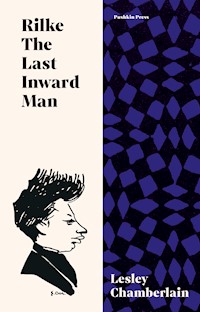
Rilke: The Last Inward Man
–
Lesley Chamberlain
Pushkin Press
Contents
ONE
How to Read Rilke Today
It can only be symbolic to call one of the greatest European poets of the twentieth century the last inward man. Some of us, perhaps at different stages in our lives, will always be attracted to the mystical and the metaphysical. On the other hand, the age of inwardness, the flowering of cultures in the West that were individualistic and reflective, has passed. Rilke himself experienced a great shift in attitude, as more organized forms of religious worship, and faith itself, dwindled in his lifetime. He was never a believer in God. But still the idea, or, rather, the feeling of God, meant a great deal to him. This is one clue to what makes him not only a great poet but an important figure historically. His reputation was at its height, early in the twentieth century, when the cultural momentum was suddenly intensely secular and political. The politically engaged future challenged what art should be. Rilke’s ‘angels’ and ‘roses’ suddenly seemed absurdly irrelevant. Yet it seems to me Rilke’s achievement, and his standing, are all the more poignant, viewed from this crossroads in time.
In 1926, when he died aged only fifty-one, ‘everyone’ was reading Rainer Maria Rilke, if by everyone we can mean the English novelist Virginia Woolf and, say, the future American art critic Meyer Schapiro, who made his first trip to Europe 8carrying Rilke in his pocket. The Austrian modernist novelist Robert Musil was another huge admirer, while in France André Gide, a delicate novelist caught between religious inwardness and Nietzschean amoralism, and Paul Valéry, a modernist poet of comparable complexity, had both met Rilke and held him in high artistic esteem.
Musil hailed the richness of Rilke’s language in a lengthy memorial address in 1927. But then, just ten years later in German-speaking circles, and just a little later in Britain, with the outbreak of war, Rilke was no longer relevant. The German critical avant-garde favoured the imagination of Kaf ka, a poet writing a new kind of prose; and Brecht, a poet who wanted to change the world by revolutionizing the dramatic stage.
It’s easy to see why. Rilke was too refined. He appealed to an educated minority. Brecht by contrast was about to transform the lyric poem, and the very concept of theatre, in the hope of addressing the mass of people. His task was to welcome them—and their experience, and their language, rougher and hungrier and more spontaneous—into the cultural mainstream. Kaf ka’s parables of the mysterious ways of authority meanwhile tapped a new kind of political experience. This was how the confused ordinary man found himself up against menacing ‘higher’ authorities. The pressure of authority was constantly there yet so hard to grasp that it went without a name. Political references back to Kaf ka would abound throughout the totalitarian twentieth century, whereas it was said that Rilke was not political at all. And that was true, though not, as we shall see, the whole story. Meanwhile, I wonder if any account of a great artist read in many countries, absorbed into diverse cultures, can ever be the whole story. Germany–Austria, France, Britain and the United States all had their particular Rilke timelines in the last century. Within that comparison American readers seemed to have loved Rilke 9uninterruptedly, because he gifted them a moving critique of the pace and style of industrial life, which otherwise they could often not bear. Rilke gave, and still gives, a function for poetry to help any and all of us withstand the materialist–technological onslaught. He is a secular bulwark, spiritual but not religious, something these days increasingly rare.1
The European timeline reflected the way that spiritual influence became old-fashioned so quickly, with the Continent wracked by war and in political crisis. Poetry modernized itself radically and became more social in the politically charged 1930s, in Germany especially, after defeat against England, and hyperinflation, and the rise of nationalism and organized labour power. England itself followed, but more spasmodically, and at a decade’s remove, and never with quite the same relentlessness. Still, all this, and the speed of change, was a revolution, and, from our point of view here, a revolution in sensibility—a revolution in the way things were felt and evaluated. This new revolution had everything to do with what ‘modern’ and ‘modernism’ in literature meant. Those cultural phenomena—for they were more phenomenal than consciously organized—had in their turn other causes too.
Two or three decades earlier, above all, there had been an aesthetic revolution, of which Oscar Wilde and Henry James caught the outside edge, and Rilke was touched by it too. Indeed he was closer to the hub of the wheel. He was driving the change. It was there in the way he wrote. He was subjective. He wanted to tell the world about his inner feelings and how hard he found it to place himself in the world. Some of that difficulty had to do with the early years of the twentieth century, and the very way he recorded his inwardness reflected the need to find a new way to say how anxious he was. And yet, at the same time, he didn’t entirely leave the nineteenth century and its calmness—and in German literature its regionalism—behind.
10I will often talk about ‘art’ in this book. I don’t like ‘the arts’ because that is already a commercial concept and a commodity. It’s the way art goes because artists have to live, and because people who can afford it, and many who can’t, want art in their lives and find a way to buy or borrow or steal it. But there, I’m saying what they want—what I want—is art, not ‘the arts’. It’s a great need. At the same time the word, somehow misleading in English, doesn’t just mean painting. As I use the word ‘art’ I mean everything encompassed by the German word die Kunst. That includes music, sculpture, poetry and drama. (Film would be there, except it’s too early in Rilke’s lifetime, and his particular experience, for film.) The idea of art binds all these creative activities together in a refined, deeply worked response to what is human. Nature may be inimitably beautiful, dramatic, portentous and sublime. We can read many messages into nature. But it can never produce, of itself, what art and artists give us, namely, a record of how the life around us collides with, and stimulates, our imagination.
Take music. Classical music offers a fabulous example of what was happening to art in Rilke’s Austria and Germany in the early twentieth century. Though audiences protested, already Schoenberg’s atonal music seemed to express the modern technology-driven condition. It was exciting, bewildering, but also repetitive and seemingly forever unfinished. The sentimental human heart suddenly didn’t know where to take refuge—and nowhere was probably the implicit answer. Face up to modernity, that is, to a certain new kind of bleakness and rawness, exposed by the age of the machine. Don’t hide away.
The neo-Romantic style of composition which preceded Schoenberg was quite different. Schoenberg himself caught the tail end of the fashion, which is why many Romantic listeners prefer the richly textured, but still tonal, early work. Personally 11I love to embed myself in the First String Quartet in D Minor, op. 7. I can find a home there—the kind of ‘spiritual’ home Rilke would often allude to, and meaning a home in the imagination. The neo-Romantics were composers like late Brahms and the searingly emotive Hugo Wolf. Their emotionally laden and discordant harmonies pointed ways out of the nineteenth century. But they did not compel the abiding Western tradition to reinvent itself, as Schoenberg did, perhaps regrettably, but necessarily, after he left that op. 7 behind.
Early Schoenberg was in-between, and in-between is roughly where I think we should place Rilke too, between these two moments in music, that is, the last notes of romanticism and the first signs of rupture. Rilke’s intensely individually felt lyrics and his so-called ‘thing-poems’, his elegies and his sonnets were new and unique, and yet they could be absorbed into what went before—even centuries before. And so on their evidence Rilke seems, like the earliest Schoenberg, not yet ‘modern’ enough.
But to call Rilke conservative and exclusively aesthetic-minded diverts attention precisely from what made him new. The world he addressed was losing its spirituality, and just as Schoenberg felt music needed a new language, so Rilke toyed with whether the old language could continue: what it could refer to, and mean, as references like God and the soul lost credibility.
Rilke worked with a limited range of physical experiences. His life had a narrow focus. But his poems grew into huge questions. Born in Prague, in 1875, and living in Munich, he travelled to Italy just before the nineteenth century ended. In Rome and Florence he began to test his secular faith in the great humanist tradition. He went to Russia, spent a year in the north-German countryside, and moved, in 1902, to Paris. Confined to Munich during the Great War he was only modestly peripatetic thereafter, and gratefully accepted a Swiss bolthole purchased in his name for his last five 12years. When he died in 1926, of leukaemia, having struggled with terrible pain for the last two of those years, his poetry was dazzlingly new to his ever-increasing number of readers—and yet still covering ground that preoccupied him as a young man.
And so we go, back and forth, sideways into the new age. What made Rilke creative was how he responded to his limited series of environments. He relished nature and works of art everywhere, and lived among animals, birds and trees, under dark and light skies. The wind and the stars and the soil were strong presences, but people were relatively scarce. He saw them as strangers, mostly, from a distance, although there were a few people he knew well, and studied, and remembered, in a handful of special poems. Meanwhile he loved, and noticed, colours, cathedrals, Greek sculptures and children’s merry-go-rounds, and flowers. Two of his most famous short poems evoked the hydrangea and the rose, and, like Van Gogh, he was fascinated by once-beautiful forms of life—blossoms, most notably—in decline. But then not only flowers. He spent months of sponsored solitude in some of the minor family houses where the entire European aristocracy—German, Danish, Bohemian—was declining. Whether we read him in the original German, or whether we come to him as the English Rilke, or the French Rilke, of the Japanese Rilke, or read him in Braille, he is a great poet, for the music of his language, and preoccupations like this, that link him to other artists, and to his times.
What made him great though, for it surely wasn’t just some kind of relevance? To repeat the question and anticipate the answer this book gives, I would say he was trying to find a new sensibility for the twentieth century, at a time when a certain style of philosophy had not yet made ‘the meaning of life’ a naive question. His poems concern our gender and sexuality, our sense of what we ought to be doing with our lives, the possibility of the 13existence of God, the charmed kinship with animals which brings us such happiness, the importance of childhood, the attraction of the physical objects we make and buy and choose to live among, the landscapes we respond to, the books we read and the paintings in whose company we live. There is no object under Rilke’s gaze that resists transformation into a feature of a marvellous universe that envelops us in a world that might otherwise leave us restless and afraid.
Human existential identity was the conundrum. Rilke searched not for a definition but for places and seasons that would allow him to speak of it. So it is a marvellous experience to follow daily life with his eyes, through the park and along the street, and occasionally into a more exotic landscape. The search was not for a vantage point but for a metaphor. The metaphor once found, he could transform anything. He doesn’t need clichéd Romantic inspiration to enchant his readers. In his tenth Duino Elegy, for instance, he lists the kinds of places humans frequent: ‘Stelle, Siedlung, Lager, Boden, Wohnort’, and we can immediately feel something significant about ourselves in that thesaurus-like list. Each of those five German words is an approximation or an aspect of something that actually we feel every day. Since they can all roughly mean ‘place to live’ the question is: where are we? Where do we dwell? Where do we call home, and for what reason? More questions follow. For instance, in what place do we flower and bear fruit before, like flowers, we too fade and drop? Where do we plant ourselves and where do we flourish? Ripeness is one of Rilke’s preoccupations too, just as much as decline.
How to translate that string of places varies. It’s ‘place and dwelling, camp and ground and home’ for Vita and Edward Sackville-West, the very first translators of the Elegies; ‘place and settlement, foundation and soil and home’ for the outstanding contemporary translator Stephen Mitchell; ‘soil, place, village, 14storehouse, home’ for the eccentric but sometimes illuminating Rilke pilgrim William Gass. (Notes on where to find the various translations are given at the end of this book.) The point though, however more or less successfully the nuances of the original are rendered, is that all kinds of places matter to us: our geographical location, the place we have settled with others, the place we have chosen to rest; where we were born; what is our present address. Add landscapes: mountains, valleys, meadows, streams, the river Nile, the bridge at Ronda, an ancient volcano. And townscapes: marketplaces, post offices. All these ‘locations’ bring out features of our human existence to help us speculate on what we are doing here, on this earth, in what Rilke indirectly called our Weltraum, literally the space our world occupies, though also conventionally the universe.2 For me the right translation of the word, or, more often, evocation of the thought, will sometimes be ‘space and time’.
By 1899, as he came of age amidst the most important love affair of his life, and scored his first great literary success, Rilke was well aware of the pressures falling on an idealized conception of humanity. The task of his still nominally Christian generation was crucially to respond to Darwin. Reflecting that challenge of an evolved rather than a divinely created humanity, Rilke occasionally expressed a wish to have studied biology. He did take a class in Munich just as the century turned. But mostly he read a little and improvised.3 The point is that he was caught up in the great onslaught of the secular that followed the collapse of a Biblical version of the past. The avalanche was set in motion by persuasive evidence that it was not a force called God that created the world, according to some divine plan whose alleged goodness and higher rationality had long troubled the critical and the suffering. Evolution—though it could be made to include God, by some—was more plausible. And so Rilke, never in so many words, 15registered the death of God. But like Nietzsche he was radically engaged in seeking ‘superabundant substitutes’ for discredited metaphysical consolations, enjoying them even as they faded. Nietzsche’s spirit was one of bold independence of mentality and phrase, and, likewise, Rilke sought out those substitutes in his own stunningly rich German language—a language not ‘faded’ at all but rather intensely vibrant.
For much of my life I’ve felt drawn to Rilke precisely because in his presence art can still stand in for a dying capacity for spiritual contemplation. But I’ve learnt to approach him now with some reservation. Theodor Adorno, the critic who in 1936 insisted the future was Kaf ka and not Rilke, branded Rilke’s inner life a pernicious escapism, discouraging political awareness. Adorno was also the critic who not fifteen years later declared that ‘to write poetry after Auschwitz is barbaric’.4 Yet it seems obvious that the greatest poet of the Holocaust, Paul Celan, like Rilke another Germanophone writer from another corner of the lately defunct Austrian Empire, was deeply influenced by Rilke’s evocation of the materiality of all things human.5 For Celan, in the light of human evil the only moral building material left was language woven about earthly stuff. Moreover, from where did a German-Jewish poet in the post-war years learn that craft of language, and find a vision of equal power, but from Rilke? Both poets understood: if there is some power of goodness which shows up in the making of works of art, it is what compels us to go on reaching for the right words in the right order to give that goodness some flimsy hold on life.6
Take another critic of Rilke’s ‘inwardness’ in his own time: the philosopher Ludwig Wittgenstein said Rilke was poisonous.7 Yet we need dig only a little into Wittgenstein’s own private life to find that he too was wrestling with his own introspective and depressive nature, and, surely in some way both unconscious and 16profound, did not want to be reminded of it in the poetry he read. Consciously Wittgenstein was as dependent on his philosophical gift for the sense of his life as Rilke was on the poetic, and had a comparable fear of loss. On the one hand Wittgenstein was deeply immersed in inwardness through his love of music; only the philosophical value was problematic because it couldn’t be articulated; and then in the later work he insisted the inner life lacked value.8
Rilke—and I’m not the first to think this—was possibly given to us to help us withstand Wittgenstein.
Wittgenstein’s particular focus was how we use language to make claims about truth and to communicate with each other. It helps me to imagine that for Wittgenstein language was a factory, like all the new factories around him in his time, and what it manufactured was meaning, pleasure and the possibility of agreement, alongside a great deal of confusion. Rilke meanwhile dwelt in a world of cities and of nature, of post offices and parklands and merry-go-rounds, and what he did was watch how human beings craft and fabricate the world they use. The disagreement with Rilke never came to a head between the two men. They never met. But had they done, and had a critic been present as a mediator, he or she would have wanted to persuade the philosopher that Rilke’s poetry was art, and not a continuation of metaphysics by other means. It was about how we have our being in the world: how we use its artefacts to weave temporary meanings. The words alone are not enough. We have to keep rejoining them to the objects to which it is possible for them to point, by way of our enjoyment and enlightenment and contact with each other. There is an obvious relation to what Wittgenstein was doing, but Wittgenstein stayed within the network of words, whereas Rilke sought a bodied result. I mean by that poetry that speaks of and to our physical existence, and is thus, to my mind, much 17more satisfying than a philosophy of language that rather strips away the pleasure. For exactitude is not the only value attached to human communication. Rilke evokes our relation to iron and stone and says for instance that this is how we are, embedded in our material world. Perhaps therefore we don’t need to know more than what this pillar of stone knows, having endured through millennia. Embedded in materials, located beneath the sky, leading diurnal lives, we shelter ourselves and we build. Of course it’s not enough, in an age of science; in the modern age. Even so, from the wall and the pillar, the house and the panther, the king and the work of art, we live among a mass of active co-presences, and that is also our condition, alongside the pursuit of knowledge. Sometimes Rilke finds the fact of that existential condition schrecklich, ‘terrifying’, but often it is also wondrous.
It’s hard to argue that Rilke had a social conscience. Though the sight of the poverty and sickness and the possibility that he too could end up that way filled him with fear, he was rather wary of the rise of social democracy; of its protesting presence in the streets, and the circulation of ‘red’ propaganda.9 Some critics stress Rilke’s ‘creaturely’ awareness of our common human condition.10 He felt it and admired it when he travelled among the simple people in Russia. The impoverished streets of Paris held a painful fascination. But in my judgement taking Rilke in this engagé direction is an exaggerated attempt to update him. He lived an easier existence when he could.
In fact much of his ‘inner’—personal—experience was desperate. No conventional religious consolation came his way for feeling lonely and displaced. The irony is the consolation he has since given to so many readers in so many countries. It’s an invitation at once to expand inwardly by way of imagination, and therefore forever to enlarge on a world outside us. Rilke asks us to concentrate on inner resources to be able to find, at 18all, what is out there. Life is fleeting, we are fleeting. While we have time—for there is no consideration of an eternity we might inherit, only the vast immediacy of our being here—we need to respond and transform what we meet. We need to bring the sum of our experience into some kind of order—the kind that poetry can achieve, beautiful but unreconciled—before we die without any belief in a hereafter. The gist of the Duino Elegies is that he might as well be writing for us on our deathbed. The angels can’t hear us, but why would that stop us making the effort, right to the end, with poetry to show us the way?
Although he was born in Prague and died in Switzerland, having led much of his short life in Paris, Rilke was a German lyric poet whose work appeared with a German publishing house. His success in his lifetime depended on a Germanophone audience.11 Though he was greatly influenced by linguistically innovative later nineteenth-century French poetry, and although Ruskin and Walter Pater and the English Pre-Raphaelite painters, and later Rodin and Cézanne and Valéry, introduced aesthetic strains into his work that didn’t derive from German classicism and could rightly be hailed as more generally European than specifically German, or Austrian, still the pressure on Rilke’s language came from the tradition of the mighty German lyric.12 In the patriotic years after 1914, the wife of his publisher urged him to acknowledge this bond with German literature; to make it more conscious. Rilke, though a-patriotic at best, took up reading Goethe, whom he had previously claimed to dislike. For the history of German literature this was a good moment. The publisher’s wife, Katharina Kippenberg, had her way. Goethe, who moved with similar, paradigmatic ease between nature, human presence and the creation and company of works of art, reinforced Rilke’s sense of a bond with the earth and the elements, and it’s no bad thing to see what links these two great poets. From his 19middle years and on Goethe evoked a human existence rich in shared material reality and shared feeling. A similar sense of the real was elaborated by Rilke. Still it was not a case of a literary debt. It was more an unexpected affinity across the span of two centuries, and one of which Rilke would have remained unaware, had it not been pressed upon him.
A much greater affinity was the late eighteenth-century poet Friedrich Hölderlin, whose elegiac poetry Rilke discovered at one of the most difficult times of his life. ‘Hier ist Fallen / dasTüchtigste,’ he wrote in tribute to that unique poet who sang the glories of ancient Greece in a German of unparalleled beauty, before his mind forsook him. ‘The best we can do is fall in battle.’ Rilke always liked this ancient idea, also celebrated by Hölderlin, that an early death was preferable.
We’re not here to stay; even among
the things we love our minds suddenly fall away;
our ripe pictures need filling again;
lakes only occur in eternity. The best we can do
is fall in battle. Lose touch with our schooled feelings
and fall into some vague other world, and move on.13
Rilke was depressed by the First World War, which is why I’ve expanded the verb ‘to fall’ here to mean, in one of several variations, ‘fall in battle’. On the other hand, in 1914, he was also reading Proust, and gathering strength to complete that unique cycle of Duino Elegies that both beg and defy translation into all the many languages of the world. He could still ‘fill out’ the most satisfying and unexpected imagery, which is why he juxtaposed bringing images to fruition while life fell away beneath his feet. Filling and falling. The verbs are as close in German as in English.
20Rilke was a cosmopolitan, indifferent to nationalisms, as I just suggested, and to national traditions. He was drawn to a certain worldliness, a sort of spiritual party-going at which his genius might be fêted. But he also hid away. Like most artists he was riven with contradictions. Let those contradictions speak for themselves.
He adored the idea of childhood, the first and most wonderful party we remember. In this it is especially agreeable to read him alongside Proust.14 The magnificent creator of In Search of Lost Time seems to have shared Rilke’s sense of the magical and glittering, although that should probably be put the other way round, for Proust’s party just went on and on. Rilke though would happily go with it. He liked fashion and ritual, and the kind of artefacts that would tempt a magpie and a child. He visited the zoo and walked in the park, attended exhibitions of painting and sculpture, and enjoyed the increasing attentions of high society as he became better known. He claimed that this range of experience, though small, was enough for any of us to know God, although not in any traditional or established sense. Transmuted into poetry the magic of childhood was a just-sufficient gesture in the direction of the truly real, or the eternal.
Can we immerse ourselves in such a thought-world today? It ought to be more difficult to read Rilke now than it actually is. The good reason for that is he had nothing in common with institutionalized religious dogma and ritual. He loved the stone and the stained glass it took to build a cathedral but he didn’t stop to listen to the service. Rilke, without apology, created his own verses and images. It was as if he painted his own icons and fashioned his own statues in their niches, created nave and aisle and prayer and prayer cushion, only rarely calling them by those conventional names or expressing himself in the old spiritual grammar. He liked the word for the Lord in Russian, gosudar, and the word ‘psalter’, the same in German. He mentioned the 21Bible, and within it the Old Testament and the Apocrypha, but essentially his was a new inner world of unique inventiveness.
In his middle period he is allegedly easiest to read because of his focus on objects and animals. These are the Dinggedichte in German: the ‘thing-poems’. Those were the poems Wittgenstein wanted to reward with the famous bursary he provided, not the later, more arcane endeavours. Since Wittgenstein dedicated his life to the avoidance of obfuscation, one imagines he became impatient, feeling that the later Rilke became wilfully obscure. But let me make a case for what is sometimes too easy to call obscurity and doesn’t anyway relate to any particular period in the work. I’m thinking of Rilke’s use of the verb schwingen, for instance. Whatever dictionary equivalent the translator might settle on, or the German-speaking reader interpret to herself—and that choice is usually the far too accessible sensation of ‘vibration’—this verb suggests for Rilke the stir of creation. When Rilke uses the term schwingen he wants to live in that moment none of us can grasp with our senses, when something inanimate moves of its own accord: a moment when life happens to things, when things ripen, and swell, and fill out, and lift—movements all, but movements we can’t see, and might only guess to have as much life in them as a puff of wind. Rilke believes that the universe can come towards us as something living. This can happen, or seem to happen, when the experience is of beauty and loss, because these feelings are so strong in us. What, he asks, in a post-Darwinian age is then the origin of such a hope? Whatever might be the answer to that, it seems that when we intuit such universal or cosmic moments we break out of the confines of our singular time and space and have some sense of how the world is for us human beings.
Rilke is not fumbling with abstractions out of a vagueness in himself. He writes in 1912 at the end of the first Duino Elegy of the startling moment when 22
das Leere in jene
Schwingung geriet, die uns jetzt hinreißt und tröstet und hilft.
But because of all that I’ve just said it is indeed difficult to translate. The moment when ‘the Void felt for the first time that harmony which now enraptures and comforts and helps us’ lacks any hint of that delicate, logic-defying spring into life that Rilke is after: like an inanimate thing starting to breathe, like life auto-igniting in shock, in sympathy with our misery, and becoming emotionally coherent. The place where ‘vacancy first felt / the vibration which now carries us, comforts and helps’, also misses the target. Neither ‘the Void’ nor ‘vacancy’ sounds comforting because abstractions can’t keep us company. Voids are for maths and science lessons, and architectural drawings. Vacancy is even stranger. The moment when ‘space, aghast… first trembled / to that vibration of the emptiness / which draws us still, and comforts us, and helps us’ is much better, because space for most of us is already a place we are in, and can perhaps imagine talking to.15 One effect of these concluding lines of the first Elegy is that the linguistic problem actually asks us whether we believe in the visionary moment Rilke wants to convey. Even for those disinclined, he’s left behind an invaluable record of how it seemed to him, a century ago.
The lines have to be beautiful and elegiac to bring about the mood, but how does Rilke do it? For one thing he recognizes what poets have celebrated for centuries: that human beauty, a beauty of physical perfection, and of love, doesn’t just die. The very fear that it might has generated so many poems and legends. Rilke’s first Elegy echoes a lament in Greek mythology for the death of the beautiful young Linos. German readers meanwhile must recall Schiller’s ‘And Beauty Too Must Die’, written in 1799. Though beauty is transient in human form, it endures in poetry. Across the centuries Schiller referenced Thetis mourning the death of her 23son Achilles, while Rilke was always aware of how Orpheus lost Eurydice to the underworld. This loss indeed he would re-enact in his own magnificent poem ‘Orpheus. Eurydike. Hermes’.
Yet when the translator introduces a sense of ‘harmony’ into the Rilkean moment of the universal throb of empathy, we know why.16 Music is the nearest we can come to feeling a force which has ‘the daring’ to ‘break through what is inert’. In Rilke’s day Schoenberg invited listeners to associate this daring with his Second String Quartet. Written in 1907/8, just a couple of years after the D Minor First String Quartet, it carried a radically different message. The fourth movement, ‘Entrückung’, for instance, was atonal.17 It suddenly figured music in a new realm. The dictionary definition of Entrückung is ‘rapture’. The sense is of something that has happened to transform the way a person exists and feels. When we are rapt we are spellbound and, to draw out the etymology of the English word, stolen away. The idea is of apparent physical movement spiritually caused. This is what Rilke and Schoenberg seemed to experience. No doubt it was the fashion in their day: the way of that sensibility transitioning between the romantic and the modern. Rilke left us the evidence for how he had this experience, in, say, the Duino Elegies. And so too did Schoenberg when, in the Second String Quartet, his art broke with an entire instrumental tradition. Listeners to the fourth movement who expected the traditional four string instruments to continue their tortured conversations suddenly heard a single ethereal soprano voice.
For all translators there are terrible pitfalls in Rilke. Offering mostly my own translations in this book I am not setting myself above such translations as exist and continue to be made. I only want to suggest where I can that a more relaxed diction, while respecting Rilke’s hugely important rhyme schemes, can stop difficult passages in German becoming impenetrable in English, for Rilke himself was not so tight.
24Come back to that idea of rapture, or Entrückung. Just like Schwingung, it suggests movement, but it is not movement from A to B. One dictionary translation of Schwingung is ‘oscillation’. Perhaps there is the idea of an alternating current building energy. In fact, Schwingung asks the question: what would it be for the settled matter of the universe to self-generate into motion? In the age of Einstein, and immediately post-Darwin, Rilke was groping towards new, seemingly absurd, answers, but ones that constantly referred back to Darwin’s new version of our origins. So how did those origins begin? With Freud, who said there was never one fixed point from which a neurosis began? With Darwin, for whom to do evolutionary science was to plunge into the middle of things, never to know their starting point? I don’t think we mind about origins any more than Darwin and Rilke did. We know we can’t capture the ur-generic moment of who we are and what we are about. We’re just here, now, in the middle of things; thrown into the world, as Heidegger said, also in response to Darwin. Rilke was exploring that feeling.
In contrast to the grand reach of his feelings, Rilke’s actual world was, as I said, much smaller. The new technology that found occasional reflection in his poems was, apart from a schoolboy meditation on the phonograph, concentrated in his Paris experience. It included electric light, electric trams, street lamps, motor cars and the not-so-new photograph. A photograph—and a brief meditation on what kind of a thing it was—would help him write a single poem about his father. The street lamp, Kandelaber in German, featured spectacularly in another poem to which I find myself returning over and over, ‘Archaic Torso of Apollo’. Later Rilke would say that the poet he was should treat all things—by which he meant everything from features of nature to manufactured objects to works of art—equally. Now that was a masterstroke, because it meant that confronting—standing 25opposite—the most familiar and most banal object always opened up a world.18 A world that could be described in an older spiritual language could by the same token also be simply bizarre. For Rilke defamiliarizes objects and procedures in daily use, just as did Joyce, and Wittgenstein, and he was a modernist in that.19
He was born into a time fascinated by how the phenomena of the world strike us as we go about our lives. The philosopher Edmund Husserl, with Rilke another great intellectual product of the late Austro-Hungarian Empire, but half a generation older, was one of the first to turn the fact that we are never free from being struck by something into a new form of enquiry. According to Husserl’s phenomenology, our consciousness, like an open eye that cannot help but see, always has a something in mind, tangible and visible, or not. The theory itself is like a short Rilke poem, and Rilke actually wrote about the eye of the panther he saw in the Paris zoo. With his all-consuming eye does this creature see more than we do? The eye forms an image and then swallows that image into its depths. Phenomenology happened to philosophy because in the later nineteenth century the horizon of European poets and thinkers became visually and audibly and tangibly ever more busy. The bustling world of manufacture was suddenly full of things and events. The growth of European cities and their populations, and all the tools millions of people now needed to live, and all the objects they consumed, changed the content of consciousness.20 Rilke fell in with many poets’ disapproval of what industry and urbanization were spoiling. Where was quietness? Where was the capacity to pay attention, without distraction? (Yes, even then.) But visually what fascinated him were the juxtapositions: the panther behind bars, the fading hydrangea, a man inflicted with St Vitus’s Dance, the grandeur of an eighteenth-century palace, and the first signs of traffic. He enjoyed them, at the same time as he noticed what jarred. He was 26caught up in modernity, but, unlike Brecht, say, with his poetic tribute to asphalt, not quite of it.
Because he was enamoured of childhood Rilke loved what he saw and ignored what a child couldn’t understand. He looked at paintings and sculptures in a way that continued and preserved his innocence. His inwardness, it struck me a long time ago, when I first became a Rilkean, wasn’t so much naive as, to use that word borrowed by Schoenberg again, entrückt: belonging to a different sphere. (Schoenberg’s music was in turn inspired by a poet whom Rilke greatly admired, Stefan George.) For Rilke it was as if the spiritual absences he felt could be refined into near-presences, through poetry. His was theme and variation on what was not there, probably never was, except in the miracle of art. It was that obsession with the genesis of meaning again. Humanity had the capacity to transcend itself through imagination. Human hands, to adapt one of his fondest images, were made to reach out to an order of things that was absent but not empty. No doubt his poetry was a move towards preserving the inner world he had built for himself as a home; even a neurotic home; but the torment underlying it was radical and unconsoled. The panther’s eye seems to see something, but then swallows it up; perversely keeps whatever it is from us.




