


2,39 €
Mehr erfahren.
- Herausgeber: McNidder and Grace
- Kategorie: Geisteswissenschaft
- Sprache: Englisch
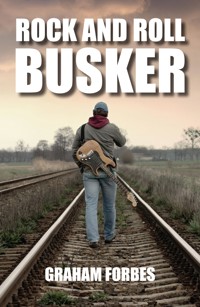
A busker is a wee guy (or woman) who plays on the streets for tips. In bands, to busk, means to bluff your way through a song that you haven't rehearsed with whomever you happen to be standing beside on a stage. It may be the first time you have played it. Sometimes you might not have even heard the song before. When there is a big crowd in front of you, listening to every note, that's when the fun starts. This is a passionate, humorous and highly original look at the life of a musician on the road and what it is really like to be a musician. If you love music and you want to know more about what it is like to be a musician, then you will love this book.
Das E-Book können Sie in Legimi-Apps oder einer beliebigen App lesen, die das folgende Format unterstützen:
Seitenzahl: 464
Veröffentlichungsjahr: 2013
Ähnliche



















For my daughters-in-law Xinzi and Lorraine.
Contents
Thanks and Acknowledgements
It is a magical thing to make music with other people. In addition to those mentioned in the book, there are so many that I have been privileged to play with and I would like to thank them all for the days they gave me. Most recently these have been: Gordon and Shona Martin, Hazie Martin, Alan Mathers, Roddy Wilkie, David Storey, Robert Calder, Cameron Lewis, Fiona Green, Lisa McCormick, Kari Green, Charlotte Marshall, Tim Clarke, Fraser J Lyndsay, Colin Robertson, Stuart Morrison, Jade Lezar, Eric Stewart, Les Barrett, Brian McFie and Alisdair Dingwall.
In America: Rick Fass, Wendy Joffe, Buster Coles, Larry Yunker, Jimmy Purcell, Peter D Straw, RJ Howson, Tom MacKnight, Greg Slusher, Sudie Brattli, Geno and Julie Anne Marino, Carolyn Davis, Kara Nally, Katt Graeber, Pete Aravelo, Andrew Lacroix, Mitch Minx, Brandon Bennett, Bobby Ray Bishop, “English” Willie, Dave Sakelaris, Kevin Nikirk, Andrew Gohman, Brian Ellingson, Mitch Clark, Theresa Nichols-Wimer, Skip Metheny, Michael Dempsey, Rebecca Bird, Jimi Gee, Tom Carrano, Mack Black, Bert Dellarmi, Rusty Cage, David Robbins, Dave Talkovic, Joe Bruno, Jeremy Egglefield, Eddie James Liashek, Sandi Grecco and Kerri Collins.
I would also like to thank for editorial assistance and encouragement: Armorel Allan, Ryan Praefke, David Fletcher, Alex Mayes, Andy Peden Smith, Linda MacFadyen, and especially Graham and Alan Forbes, without whom this book would probably have only a few chapters.
I live in Glasgow half the year, where everyone plays louder than me, and Florida the other half, where everyone plays quieter. I’m always pleased to hear from like-minded people. My email address is: [email protected], and on Facebook, grahamforbes01.
Forewarned
Most rock biographies are about pampered superstars. They tell tales of sex and drugs and rock and roll. We’ve heard them all before. In the real world, millions of ordinary musicians like me are playing in bars, dance halls, hotels and restaurants. We do it for little pay; most of us know we will never play the big stadiums of the world. We are not impressed by whining multi-millionaire rock stars bleating about their addictions and hard lives… aye right. These guys really piss us off even if they do play great riffs that we’ll spend hours slavishly copying.
Rock And Roll Busker is a tribute to all working muzos. The guys who will drag their gear through snowdrifts to play BrownEyedGirl one more time if that’s what the dancers want. We are what we are, and we do what we do. Without us, Saturday nights would be much quieter. For some it might seem a Highway to Hell but we have a whole lot of laughs on the way. It is only rock and roll, but we love it.
Introduction
About 20 years ago in Nashville, Tennessee, a very renowned hit songwriter named Harlan Howard told me the following: “Son, do you realise that, statistically speaking, you have a better chance of being killed by lightning while riding a bicycle than you do of ever, in your entire lifetime, having a Top 40 record?” I was a green upstart in my mid 20’s at the time, swimming naively in a sea of countless other would-be singers and players all desperate just to get a foot or a toe into any door, and I suppose he was mercifully trying to put me off pursuing a career as a professional musician.
But for all of the reasons Graham Forbes so eloquently describes in this book, Howard’s cautionary words to me only strengthened my resolve. With the decline of sales revenue from recorded music over the past decade, and the subsequent consolidation of media industries worldwide, I’d reckon that one’s chances of having a hit record now have decreased even further in favour of death by lightning and bicycles. But the Truth, known and felt in ways that certainly pass understanding by every true musician, has always been that anyone who pursued the music business in the hopes of earning a fortune was in it for the wrong reasons, and was almost certainly setting themselves up for monumental disappointment. A writer writes. A player plays. We do what we are – or we suppress it at great psychological and spiritual costs. This is true for the financially successful and unsuccessful alike.
Recently, I heard Bob Dylan – clearly an artist who falls firmly on the “successful” end of the financial scale – interviewed. He was asked whether, at his age, he was still happy to be touring constantly, playing shows all over the world, dragging himself through a endless litany of airports and hotels and venue dressing rooms. Wouldn’t he be happier spending more time in comfort at home these days? His answer was beautiful and pinned me like a bolt of recognition: He said that the point of life was not to be “happy,” but rather the point of life was to figure out what one is supposed to be doing and then to spend as much of one’s time as possible doing it! Last week, I was told essentially the same thing by a completely unknown guitar player in his early 60’s working for tips in a tiny honky tonk bar on Nashville’s Lower Broadway.
So this book is definitely for any and all of our kindred musician spirits out there who want to share in the experience and passion of another musician; you will see yourself reflected in Graham’s words over and over. And it is also a book for those folks out there who know and/or love a musician or an artist but simply cannot understand what drives them so fiercely against all reasonable odds. Hell, it’s a book for everyone really, because it’s just a damn good story, wonderfully told.
Most importantly, this book is a story of hope. It’s a story of how fulfilment and satisfaction are often found in unexpected places and how one must be open to recognising and embracing them. And it’s a story of coming to terms with one’s own nature. I found myself continuously chuckling and nodding knowingly throughout reading it. As for me, the highest any of my records has ever charted is number 39, but hey – I beat the odds! And I haven’t been killed by lightning yet. And neither has Graham Forbes. Join him for this part of his journey. See you down the road, G!
John Wheeler, Hayseed Dixie
1
BODIE VALDEZ AND FRIENDS
No one decides to become a musician.
You either are or you aren’t. You’re born one, your DNA or brain circuits or whatever it is that makes you a bit weird are wired that way. There really isn’t a choice. You have to play. But here’s where it gets tricky. From the outside it looks like a really cool life. And for a few it is. Very cool. Who wouldn’t want to play a shiny Fender Stratocaster, prance in front of beautiful women, and, just to end the day perfectly, get paid and laid too?
Millions try, but few are asked to give up their day jobs.
All that guff peddled by LA get-rich-quick gurus, all that baloney they preach that we can achieve anything, anything at all if only we put our mind to it, has brought crushing disappointment to many, but makes wonderful TV entertainment. True believers queue to be canon fodder on American Idol and X Factor, croaking out their hopeful songs and wondering why everyone is peeing themselves laughing.
If they really were musicians, X Factor would simply have been another stop on the road; definitely a milestone, but just one more gig. If a national talent show is the first time someone has appeared onstage, then what have they been doing all their life? They see rock stars making it look so easy and think they can do that, but they don’t realise it took years and hundreds of gigs to get that kind of confidence and professionalism. No amount of thinking positive thoughts or motivational hugging will make someone a musician. Simon Cowell can X-Factory the final product and mass-market a new star, but the winner had to have real talent in the first place.
In Texas, there’s a mega-successful TV preacher called Joel Osteen. He’s a very convincing speaker; a good-looking white boy with a gentle voice and charming smile. He says interesting things, positive words of encouragement that offer hope, comforting thousands, perhaps millions of troubled souls adrift on these stormy waters of life. Every week 17,000 followers pack the former basketball arena where he has his church; countless more tune in on Sunday morning TV.
He promises abundance in all things and knows no one is likely to disagree; who doesn’t want to pay off their credit cards? And who can deny we could do more than perhaps we thought possible if we get rid of our negative thoughts? If the nodding believers really want something, no matter how seemingly impossible, Joel assures them that God would not have given them that desire without the means to achieve it. Suddenly, for his thousands of trusting followers, life becomes simple; they close their eyes and raise their outstretched hands to the heavens. It all makes sense! Joel promises them that they are children of the Most High God and He will reward them in supernatural ways. All they need is faith.
If only it were so easy.
As teenagers, most of us posed in front of our bedroom mirror, imagining a future playing packed stadium gigs, signing autographs and hanging out with the Stones, but the majority wisely accepted that there was far more chance of winning the lottery and sensibly readjusted their expectations, hopefully at a young age when there was still time to forge an interesting career in worthwhile and useful employment. Some never quite accept that they were not destined to stand beside Bono, playing guitar to adoring millions, and are usually to be found working in music shops, with cynical and bitter smirks on their faces.
Then there are guys like me, perhaps had a little taste of success here and there, maybe landing lucky occasionally, but never becoming a household name, at least not beyond hearing distance of our homes. We play because we love it. Most of the time. And whatever happens, whatever disappointments, heartless betrayals and cruel rejections we endure we keep coming back for more, like happy little puppy dogs. Just takes one round of applause, one pat on the back and, yippee, life is good again.
There are millions of us all over the world. We’re not impressed by biographies ghost-written for multi-millionaire rock stars whining about their addictions and hard lives… ayeright. These guys really piss us off even if they do play great riffs that we’ll spend hours slavishly copying. And I don’t want to single anyone out, but we loath those rock stars that preach love and peace but hate their bandmates so much they can’t bring themselves to travel in the same private jet, although they are not slow to pocket the re-union tour loot. You know who I’m talking about.
There was some well-faded ex rock star on TV the other day, bleating about how they never wanted to be a star in the first place, sigh… They were whining about how they’d never been comfortable being recognised everywhere they went and so it wasn’t their fault they became addicted to heroin. And they had battled against alcoholism too; life had been so tough at the top. Then they told us how they’d been cured, but became hooked on sleeping pills and so had gone to the only place that would understand, Eric Clapton’s rehab retreat in sunny Antigua. And you know what, they breathlessly explained, like we gave a shit, it was there they discoveredthat all their lives they’d actually been depressed and….
Spare me.
All over the world, in every city, in every bar, dancehall, wedding reception room, wherever there is a corner to set up a little Fender amp and a few twiddly bits and pieces, you’ll find real musicians, men and women who play for the love of it. Maybe only a few have God-given talent, maybe we’re just too dumb to quit, but we like it. In cafes and restaurants, guys with acoustic guitars and backing tracks bravely playing Brown Eyed Girl for munching salad-eaters, or in the corners of little wooden beachfront bars singing You can almost taste the hot dawgs and French fries they sell to margarita-slurping sunset watchers.
We may be in steamy bars coaxing silky blues riffs out of battered old Stratocasters, or we could be still-slim small-town rockers occasionally getting to play in the opening band for someone famous, enjoying being able to turn up our amps for a change, and feel, for half an hour or so, like a genuine big-stage rock star.
Why do we do it?
It would be nice if I could offer a simple explanation. Because there are no limousines, no helping hands to unload the beat-up car at 2am, no one to lift our tattered old amplifier as we carefully lug our gear back into the house on a freezing night after playing a 5-hour wedding, no antidote for the bone-deep fatigue that awaits us at our day job next morning. There are no supermodel groupies, money is always scarce and what we have is often blown on yet another bit of equipment that we hope will finally give us the guitar sound that we have been searching for all those years. Many of us are divorced, or in our second or third marriages. A few lucky ones have wives who somehow know why their husbands trail off night after night in all weather to play the same old songs; who understand why their men prefer belting out Mustang Sally rather than sit at home watching this week’s CSI, or maybe having a nice early night for a change. A few even know why, to a musician, a warm valve amp working perfectly is such an elusive thing of joy.
The hopeful hordes queuing for TV talent shows have never imagined the possible harsh reality that their dreams of a career in music could be a lifetime trek round small town bars and hotel function rooms. But if you had told most working musicians that this is how their lives would unfold, they’d still jump in with both feet. Of course, some of them will get hooked on drugs or drink, but it sure isn’t out of wallowing in self-pity about the torment of being loved by millions of devoted fans.
Some people are born to build things, or perform root canal work, or stir endless pots of pasta in sweating kitchens, or paint walls, or do the countless other tasks that make life liveable. Some fail to find anything honest or productive to do and become politicians or bankers – don’t get me started. Musicians are born to play. We only feel right when we’re playing. It’s something we just have to do.
I don’t really understand it. But I was playing guitar in a blues bar in Bradenton, Florida last night and the house band had Doc Mambo, a terrific New York-Cuban bass player, and his pal from Macon, Georgia on keyboards. They’d toured the world as sidemen for some big names back in the day so they really knew their stuff. Doc always listening, playing close to the bass drum, playing the right notes to lift or soften just when the music needed it, not like those robots who trot out the same old boring scales and plodding runs no matter what the rest of the band is playing. Always simple, never flash, none of that slappy, flashy, arty-farty, demented, all-over-the-damn-fretboard nonsense that some guys think makes them look clever. No, this guy knew how to build atmosphere, emotion. He breathed music.
The keyboard player – oh, it was great to watch this big grinning black guy teasing out the notes so gently, then when he got excited slapping the keys like they were congas, and the rhythm making everyone want to move, to sway with him.
Bodie Valdez is singing;
Ah went down to the crossroads, fell down on ma knees.
Asked the Lord above for mercy, save me if you please.
He left home with a broken heart many years ago, and gradually travelled the Greyhound routes south, searching out old bluesmen to teach him his craft, even finding guys that had played beside Robert Johnston. He’s blowing and sucking on his harmonica, it rises and falls and wails and growls and moans and howls, just like it did when he was jamming with Buddy Guy back home in sweet Chicago.
And they gave me a tweed covered cigarette-burned 1959 Fender Bassman amp to play through, with four 10-inch speakers and all the right valves and stuff, and hanging from my shoulders was a beautiful sunburst Strat with great pickups and, I tell you, there are some nights when the amp sound is just so good that the guitar will do any damn thing that you want it to. It’s like it was wired straight into your brain. And yes, it was one of those so-rare nights when I could get every sound locked up in my head to come out of this steaming little amp, you know what I mean? As if it knew how we should sound, like it was part of me, my hands, my body.
And we’re playing like we’d been on this stage together a thousand times, me and these guys, although I’d never met them before, but tonight we sounded like one person, one mind. And the guitar was so responsive, my hands were sweating, the warm rosewood neck smooth and slinky and damn, I was making that guitar scream. I stroked it gently, squeezing out a few Memphis-blues chords, then hit a high A on the third string and bent the thing until it was like a wail of pure pleasure, then dropped back down to a low uneasy growl then back up to a howl of sheer pain like something from the swampland outside in the hot Florida backwoods. We all knew why we were playing, what Bodie was singing about. Have You Ever Loved A Woman?
And everyone in that bar could see, could hear, could feel that something really special was happening here tonight. Even the tattooed denim and leather bikers at the back stopped aiming down their pool cues and paid attention, 50-dollar grudge bets on hold. The bartender stood and stared, arms folded, towel resting on his shoulder. No-one was asking for Jackie D’s or Coors anyhow, not now, not when these guys with that skinny Scottish stranger were playing like that. Damn that’s good!
And the short-skirted waitress, legs still smooth and long as in her high-school cheerleader days all those years ago, her stomach bare and flat, oh ok, maybe a little saggy, just a little, but sure good enough to pick up some nice tips later on when one or two of those guys leaning on their usual lonesome spots at the bar started thinking about their cold and empty beds back in the trailer park just around the corner. Even they stopped nursing their warm shots and looked up from the memories that churned in their brains, for a moment forgetting missed sure-things and might-have-beens, nodding their heads as the bluesmen on the little stage played like the whole world was here tonight.
The crowd loved it. It’s amazing how much applause, how much cheering, how much happiness 31 people can give you.
2
THE ECHOS
From the very start, I imagined how cool it would be to be famous. As soon as I was old enough to know there was such a thing as famous, I wanted it.
I had just started wearing long trousers when I first heard the Beatles and the Stones. Until that moment I had fantasised about being a footballer. I wanted to score goals, sign autographs, be recognised wherever I went. Then, as soon as I heard Mick sing Route 66 I forgot all about kicking a ball. I wanted to score girls, sign autographs, be recognised wherever I went.
I’d love to be able to say that something about music deeply inspired me, that one haunting note in those churning guitar chords moved me in a spiritual way, or that it connected all my dormant neural circuits together, and that I knew right then I’d be a slave to the Stratocaster for the rest of my days. Perhaps that’s what happened. But there was a far more important reason.
Rock music made me feel incredibly horny. And at 14, that’s really all that matters. Well I’m a king bee, buzzinground your hive – of course! Now I knew what girls were for and what I wanted to do with them. I managed to save four quid by doing some odd jobs, marched into a local music shop and bought my first guitar, my first real six-string and played it, as someone said, ’til my fingers bled. Glasgow was a tough city on a skinny kid, so they weren’t the best days of my life. But they sure weren’t the worst.
The Stones called themselves an RnB band. I loved that: RnB – what a name for music. The Beatles were a beat group, but RnB sounded far nastier. Even if he didn’t like their music, your father would happily wave your big sister off on a date with a Beatle, knowing they’d have her back by ten. But never with one of the Stones – they would just have her. The Beatles were friendly moptops, especially Paul with his big brown angel eyes; they were nice lads even if they did need their hair cut, and at least it was clean, you could tell that by the way it bounced when they sang oooo and ahhh. The Stones were dirty. They pissed in garage forecourts. They looked like girls, ugly ones. The Daily Mail trumpeted that a spell in the army would sort them out. There had never been anything like them.
RnB conjured up images of packed sweaty cellar clubs, blue smoke curling up from the cigarette the guitar player had wedged at the top of his strings, skinny, pale guys on stage, wearing dirty jeans and with dirty Jeans gazing up at them, harmonica wailing, the crack of snare with the thud of the bass drum, and the sweet smell of hot valves. At the corner of Byres Road and Great Western Road, the north-most outpost of Glasgow’s posh West End, just a couple of miles from where I lived, there was a club like that in a long-disused train station at the entrance to the Botanic Gardens. The Candlelite Club.
Even the spelling lite looked so cool to me. I’d walk there every Sunday night to stand in front of the stage with a wee notebook in my hand, writing down the chords the band were playing – I’d do anything to learn these songs. The band was called the Poets. They were great. They were eventually signed by Andrew Loog Oldham, the Stones manager, but they never quite made the big-time. To me they were gods. They were everything I wanted to be.
It’s amazing the beefy bouncer let me in because the place was dangerous, was always packed with headcases from the Maryhill Fleet, one of Glasgow’s biggest gangs. These nutters were very proud that they were all pure mental. Walls were daubed with the words Fleet Ya Bass, an expression that academics spent months trying to figure out. Some pontificated it was from Gaelic. It meant only this: if the mad bastards caught you then you could expect to be nutted senseless. Or ripped, which meant a piece of street surgery would be carried out on your face. In the worst case, if you gave the Fleet reason to think you might be one of their rivals, the equally pure mental PartickCross, they might deliver their ultimate service guarantee. I saw it spray painted on derelict tenements: Maryhill Fleet kick to kill. Sometimes they did – a pal’s older brother was booted to death at a club very like the Candelite. He was 17. Going anywhere in Glasgow meant keeping your wits about you at all times. You learned to smell trouble. It was fucking terrifying.
I remember squeezing into the club among the drunk and drooling hooligans. They were all a lot older so they left me alone. I was wearing my school blazer, my only jacket. I’d managed to unpick the stitching that held on the badge; my exasperated mother was constantly sewing it back on again. In those days clothes were made in good, solid British factories that had outlawed child labour a century before, so they were expensive. Kids my age just didn’t have many clothes and what they had was built to last.
I stood at the front of the stage, as close to the band as I could, staring at their black leather jackets – what I would have given for one of those. And their long sideburns – their ‘image’ was based on a picture of Robert Burns. It would be many years before the bum-fluff on my face could look like that. They played earthy songs like Little By Little, Fortune Teller, and a terrific wailing version of the Animals’ House of theRising Sun using harmonica instead of an organ. Every so often the packed crowd would surge wildly when a fight broke out and a well aimed head butt found the bridge of someone’s nose: the girls in that club were fearsome.
The band always took a break around nine and I would leave then – I had an angry father wanting to know where the hell I had been to this time at night. I’d rush home, carefully avoiding any sneering gang members on the hunt for prey, grunt hello to my parents then disappear into my bedroom and quietly play as many songs as I could remember. If I had spent half as much time studying, as my father was always telling me to do, I’d probably have ended up going to university and wasting my life as a lawyer or accountant.
I really had to work hard learning guitar. Some guys have a great ‘ear’. They can hear when a guitar is in tune, for a start. I kind of couldn’t, at least not at the start. It took a while. My confidence wasn’t helped when our psychopathic music teacher lined all the boys up, played a note and told each of us in turn to sing it. Alone. When you are 14 and faced with a room full of smirking girls, there are few greater terrors. He might as well have ordered us to show our dicks to the class.
I went rigid, my face burning. I croaked and tried to hum the note for the bald, bony old bastard who I hated more deeply than anything else, and who ended his days crippled with lingering cancer, boils, piles and a thousand bitter regrets, or at least he did if my wishes counted for anything. A horrible noise came from my throat, like a horse choking. He glared at me. Tone deaf! Next! Judgement made. I could probably have learned guitar in a school music class, but I was condemned. Tone Deaf. If I wanted to play guitar, I was on my own.
He was an arsehole. I’m not tone deaf, although compared to some of the really good musicians I worked with years later, I certainly didn’t hear as clearly as they did. Even average musicians usually hear a lot more in music than most people who usually focus on the vocals; after a bit of practise it is quite easy to listen to a record and concentrate on any of the instruments, blocking out the rest, in the same way that someone who has taken the time to learn a foreign language can hear words that just sound like gibberish to anyone else. Especially if the language is Dutch, or Gaelic – although I don’t believe these are actual languages, they are just grant-grabbing scams to get money out of Tourist Boards, are they not?
Some lucky musicians have what is known as perfect pitch. They can hear the slightest error in tuning, which makes a lot of 60s and 70s guitar solos pretty painful for them to listen to. I have met guys that could listen to a damn dial tone and tell you what note it is. I know a musician who used to remember telephone numbers by the little sounds they made on her keypad. Some of these people go nuts because in cities we are surrounded by so many discordant sounds, their brains get overloaded trying to block them out. This might be one reason why some musicians take drugs. It also might be the reason why some less talented musicians take drugs – it is not easy working with someone who has perfect pitch and a personal vision of how every friggin note should be played by every band member on every single tune. There is such a visionary in many well-known bands, which is why they can be very successful groups but miserable people.
When I heard the Stones I knew what I wanted to do with my life. Suddenly everything made sense. I had a pal in school called Gordon Miller who told me he had a guitar and we decided to form a band. Everyone called him Wee Millsy, because he was. He wore specs, had a pigeon chest, skinny legs and was very clever, especially with foreign languages. He was an odd character, with a sense of drama. When I first met him he was wearing a broad bandage round his forehead that made him look like a First World War soldier. He just loved spending afternoons in the Casualty ward of the Western Infirmary.
Wee Millsy was a good footballer, having learned to play with boys who lived in his street but, unlike him, went to a Catholic school. Surviving among these guys was quite an achievement; they were cruel and hard little bastards, most of them belonging to the feared Partick Cross gang. If wee Millsy hadn’t been so good at darting up the right wing with the ball at his feet they would have used him as a punchbag because he went to Hyndland School, as I did, and it was a Protestant school. Glaswegian politicians have always demanded religious apartheid.
Football in those days was a man’s game, and every week, it seemed, wee Millsy would get clattered, especially if he had nipped round a big defender and made him look clumsy. When that happened wee Millsy would turn up at school with impressive sticking tape and bandages swathed around various parts of his body or on one unforgettable occasion, hirpling along with two walking sticks that belonged to his old granny. The dear old lady depended on the sticks to make her daily walk to the local dairy to buy milk for her cup of tea, so I guessed she was drinking it black that day. Actually, she wasn’t really a dear old lady, she was one of those crabbit old buggers that complained about everything. The people at the dairy were probably glad to get a few days’ peace.
So wee Millsy and I decided we would be pop stars. Or at least I did. When I was practising guitar, he amused himself conjugating Latin verbs, or reading the sort of books that would guarantee him a place at Glasgow University. I spent far too much time reading about the Stones and drawing guitars on my jotters. I’d draw wee Millsy and myself on a big stage standing in front of a wild drummer, singing to a sea of heads, cables snaking behind us to Selmer amps just like the Stones had, all of us with long hair and ever so slightly scowling. This was important.
I would stand in front of the mirror practising my ‘look’. I had to seem as though I was too cool to want fans so couldn’t appear to be interested, but at the same time needed to look interesting. It was good to give the impression that I had opinions on things like the Atom Bomb, and so was slightly angry, but not annoyed. The key was to look bored but not boring. It was not an easy task. I just wished my father wouldn’t keep making me get a haircut – he was convinced that anyone with long hair was a ‘pansy’. The minute mine touched my ears he would glance up from his newspaper then loudly bark one word. Hair! He lived in morbid fear that if it were allowed to grow, the next stage would be a mincing walk and an interest in flower arranging.
His worries were made even worse when I started to buy a girls’ weekly pop magazine called Jackie. He could have saved himself years of torment; I was obsessed with girls. Buying Jackie was part of a plan; the mag had a problem page where the very wise Cathy and Claire would give advice to girls confused about the problems of teenage dating. There were men’s magazines that offered similar counselling, but from a male perspective. I already knew how teenage boys thought. I wanted to understand what females wanted so that I would know exactly what to say to my fantasy girl, which was pretty much anyone in a skirt.
I learned that girls respect guys who didn’t make a fevered lunge to grasp their tits on the first date. This was well worth knowing, because the power of female breasts was almost unbearable, I longed to touch them. I thought I would get somewhere if I held doors open for girls and casually drop into conversation how I much I disliked the guys in school who bragged to everyone about what they did to their girlfriends. Of course, all this was in vain. The only guys at school who had cool girlfriends were Neanderthals, guys on the rugby team, great hulking brutes that looked ridiculous in school blazers and treated all girls like shit. Some of them even shaved for chrissake.
Deep down, I knew that only playing guitar in an RnB band would get me a chick who wouldn’t deck me when I tried to unbutton her blouse. My dad’s constant pointing to the front door and telling me not to come back until I’d been to the barber was the torpedo that always sank my ship. It was impossible to look like Keith Richards when your nut was trimmed to the nut. If Mick Jagger had a short back and sides, would the girls be screaming at him? No, I thought not.
And so I continued to dream and draw on my school jotters. I knew it was only a matter of time. I would draw the bass drum and on the front was the clincher, the final wonderful touch, the thing that would make every guy in the school envious and every girl want us. There it was for the world to see, the band name: the Echos. I said the name over and over, I could ‘hear’ us being announced on Top Of The Pops. Andnow, with their latest toppermost of the poppermost charthit, the ECHOS! How could we fail with a name like that?
When wee Millsy invited me to learn some songs in the two-room-and-kitchen council flat he shared with his mother, sister and brother, I messed up my hair as much as possible and rushed there, excited as never before. This would be the start. After tonight I could say I played in a band. In a band. The doors that would open! Everything was about to change, finally my life was about to begin.
Wee Millsy was limping like someone with a badly fitted artificial leg as he took me into his tiny bedroom, which was almost filled with the bunk beds in which he and his brother slept until they were in their early 20s, when they finished university and moved out. His mother slept in the kitchen in an alcove that tenement dwellers called a bed recess, while his sister had the luxury of a fold down couch in the ‘front’ room of the house. She was older, studying English and Politics at Glasgow Uni, and glanced at me as though I was a dog turd.
Gordon’s father had died of lung cancer many years before. Despite this, his mother smoked with total dedication and, at only 14 years old, wee Millsy was getting through a 5-pack of Bristol most days, plus as many as he could whip from his mother’s supply. He could even skilfully ‘nip’ the glowing end of his cigarette when he wanted to save it for later. My father would have murdered me if I smoked. I preferred to save my money for guitar-related things, even though I thought Keith Richards looked so damn good with a glowing filter tip dangling from his mouth.
I took my guitar out of its nylon case. Here we go. Wee Millsy grimaced at the awful unseen pain in his injured leg then we played our first song together. I think it might have been My Girl, the Otis Redding version. I had carefully memorised the guitar part after watching the Poets do it the previous weekend.
In a few minutes one thing became clear: I couldn’t sing and he could barely play guitar. It was a good start.
3
THE FORBES BROS
I spent every moment practising guitar. My favourite place was in the bathroom. In the same way that would-be Sinatras love to hear their voice gently echoing back to them from their lavvy walls, so too did my guitar sound warm and sweet as it harmonised with my exuberant teenage farts, in those wonderful years when you can let rip completely confident that there will be no unintended outcome. I’d practise playing chords and scales until the pan had etched a deep red ring round my arse.
And then at 14 came the opportunity to actually play a gig. I was on holiday with my family, at a campsite in Ayrshire. Somehow all seven of us had crammed into a wee car driven by a pal of my Dad. This saved the bus fare. Compared to somewhere like Butlins, which we thought was the dream vacation destination of the wealthy, the campsite was truly awful, a grim few rows of wooden huts quickly thrown up by some cash-strapped farmer on a field too barren to produce any kind of crop. In fertile Ayrshire, famous for delicious potatoes and smiling cows, that means a really bad field. Perhaps it had nuclear waste underneath or the hastily bulldozed remains of an open cast coal mine. Something terrible must have lurked beneath the surface or the farmer, I am sure, would have grown turnips instead of the annual hassle of being overrun by impoverished Glaswegian holidaymakers. It looked like a former POW camp, and, judging by the ancient, creaky beds in the huts, it might well have been. Even the name of the place was full of foreboding: Drongan. Nobody could make that sound like a nice, carefree holiday spot. It promised grey sky and forlorn winds. But we loved it.
My family was not wealthy. Very few people were in those days, but we owned our own flat, and my mother did not have to work. We were ‘comfortable’, which meant that the money we would not have to spend on coal during the two-week holiday could be used for renting just such a hut as this. All we had to do was get there.
I loved holidays at the huts because I would forage in the nearby woods. In those innocent times, children were encouraged to go off to play by themselves in places such as dense woodland and not return until nightfall, sufficiently exhausted to sleep peacefully until the next happy sunrise. I discovered a waterfall one day, and somehow this summed up everything wonderful about remote countryside. A waterfall. It looked to me like something out of Africa. I remember suddenly coming into a small clearing in the trees and there it was, the most amazing sight I had ever seen. It was probably about 10 feet high, not exactly the Victoria Falls, but something about the way it tumbled down what seemed like a giant rocky cliff and into a deep pool of sparkling water made me feel as if I were deep in the jungle. I just knew there would be huge fish in that pool. Maybe even the ones I’d read about that could eat human flesh.
A few older boys appeared and I backed off. If you grew up in Glasgow you knew you must not appear scared of bigger boys or they would home in on you with all sorts of tortures, but you had to balance this bravado against making sure you would have a good start in case you had to run like fuck. The trick was not sprinting until it was necessary. Wild dogs will always chase someone running in fear and this rule applied equally to Glaswegian teenagers, especially Celtic fans.
The possibility of piranha did not deter one of the boys from stripping off and jumping into the pool. I watched, hoping he would be pulled below the surface by some thrashing unseen denizen of the deep, but after a while he stopped swimming and just squatted with the water up to his waist. His face took on an odd look, as though he was straining, and suddenly a great huge shit triumphantly bobbed to the surface. His pals laughed and started throwing stones into the water beside him, trying to hit the Glaswegian brown trout and splash their pal with it. I decided to bugger off at that point in case they threw me in too.
It often rained, great windswept deluges sweeping in off the cold and moody Irish Sea, like revenge for years of cruel colonialism, turning the site into a thick quagmire from which there was no escape. To provide a diversion and relieve the happy Glasgow working folk of their saved coal money, the farmer offered entertainment. At the top end of the campsite was a large two-room community hut that had a bar of sorts – a rickety wooden table with an old lady arthritically opening and pouring cans of McEwan’s Pale Ale into grimy pint glasses. Her fingers were curled and misshapen, the brutal cost of a lifetime of milking cows on freezing winter mornings so that we city folk might have something creamy to pour on our Corn Flakes. There was a carefully dispensed bottle of whisky too.
The menfolk would hand over a few coins and eventually be given their glass of dark, frothy, sour-smelling beer. They would lounge around cheerfully, as though they were in the VIP bar of the QE2, smoking and talking about the great football players of the post war years. I knew the names of many legends that had retired before I was born, and if they had passed me in the street I would easily have recognised George Young, Jimmy McGrory, Alan Morton and others. When I looked at old photographs of these players, I noticed that they never smiled, they had hardened faces and grainy skin as if they had spent many years working down coal mines, and wore big clumpety boots. They looked far older, even in their best playing years, than wee Willie Henderson, slim Jim Baxter and the other stars I could see every week at Ibrox or Firhill, the home of Partick Thistle. Well, at Ibrox anyway.
With something to drink at the makeshift bar, the men of the camp were content to be on holiday in the countryside, away from the dirt and noise and crowds of the city. Even if it was pissing with rain, it was far better to be here than working in the freezing docks and shipyards of Glasgow, as many of them did. Holidays had been unknown when our parents were children. Did we know how lucky we were?
All the kids below drinking age, from squalling babies to surly young teenagers bored because it was too wet outside to play football or shit in pools beneath waterfalls, were in the strict charge of their mothers who would lead them into the other room in the community hut, collect a cup of tea and a glass of flat lemonade and a saucer of digestive biscuits, then settle down on wooden chairs to watch the evening’s spectacle: the talent contest. Plump motherly arses in floral printed skirts bulged out the backs of the chairs. The women always seemed to wear the same summer dress, as though they only had one, and they carefully kept them free of drips from their teacups. There was a small stage at the far end of the room, and it would be from this dizzying height I would first look out at a crowd. This was to be my very first public appearance. I was crapping myself.
It’s always best not to over-think these things. If you do you will always talk yourself out of it. Far better to barge ahead before the fear takes hold, like a snowboarder soaring over a crevasse in the hope he will be safely across before it realises he is there. A woman was on the stage, first blowing loudly then speaking into a silver microphone that seemed to shrink from her grasp. In a thick, excitingly exotic Ayrshire accent, she invited anyone who wanted to come up and ‘do a turn’ to write down their name on a board at the side. The grand prize tonight was a hamper of groceries. She pointed proudly to a table at the side of the stage; on it posed a small, embarrassed-looking cardboard box. In it were a tin of beans, a brown paper bag of Ayrshire tatties still dirty from the field, and half a dozen eggs.
I casually glanced at the other hopeful contenders. They were all adults, except for a couple of snotty little kids I just knew would recite a poem or something equally childish. I quickly realised I would be the only one playing an instrument and felt a sudden surge of confidence. How could I fail to win? I quickly scrawled my name on the board. This would be easy.
I had persuaded my younger brother to sing a Dylan song with me and we had been practising it all week. I could hear it, constantly running through my head: How many roads musta man wa-alk down. We sat stiffly near the front, nervously waiting for our turn. So far the acts had been dire. The two kids came and went with not a word. As soon as they stood on the stage their heads dropped and they turned their backs and stayed silent. Then it was the turn of some old guy chirping out a Harry Lauder song. He had clearly enjoyed his ‘wee refreshment’ at the bar too much and could hardly stand. Like all the men, he was wearing old brown sandals with thick dark socks, long grey trousers and a white shirt with the collar open. He was a terrible singer and his quivering voice sounded thin and weedy. I doubted the judges would be impressed. Yes, this was going to be easy.
At last our names were called and my brother and I stepped confidently onto the stage. All of a sudden we saw all the faces stare up at us, some curious, others clearly hostile, rooting for their own family or friends to win. My brother stepped to the microphone stand, his 13-year-old knees knocking. He glanced at what seemed to be a massive crowd.
“Aw fuck.”
He muttered it, or thought he did, but he was too close to the microphone. His young voice boomed through the room. Everyone heard him and some of the older kids began laughing. Some instinct made us start playing; I strummed my guitar and we warbled, How many streets must a man wa-alk down? There was a loud guffaw from an older boy who must have known the song, and knew, to a Glaswegian, a road is the same as a street. Soon the laughter spread, but we sang on, as I defiantly hammered out my carefully learned chords.
We didn’t win the spuds.
4
THE BOWMEN
It was great to be in a band in the 60s and, more than anything in this world, it was what I wanted. It was the key to everything. One Saturday afternoon I saw a few goofy looking guys carrying a couple of drums, a mic stand and a proper electric guitar along Dumbarton Road in Glasgow to a church hall they were playing in. They were pushing an amplifier in a pram. The guy holding the guitar didn’t have a case for it, and it gleamed in the sunshine, all glorious metallic silver and red and black. It looked, to me, the most wonderful thing on earth, and I knew right then I had to have one, I would do anything to possess such a thing. And here was the clincher, as dorky and bumbling as these guys were, there were a few giggling girls following them, asking for autographs, and did they know any of the Beatles?
Without the band equipment, these guys would have been duffed up in a heartbeat in any Glasgow school playground, but their guitars transformed them into gods. There has never been anything as powerful as the ‘beat boom’ in the 60s. God alone on his throne up high must have had the faintest idea what it must have been like to actually be a Beatle back then. Even mummies’ boys like this lot – where else would they have got the money to buy their equipment? – were like stars. As it happened they went on to sell millions of records under the name Middle of the Road.
Being in a group – any group – was all I wanted. I would happily have swapped a leg for a three-minute spot on Top OfThe Pops. Nowadays almost everyone plays in some band or other but then it was the domain of beings from another planet. Or so it seemed. Strumming my Spanish guitar along with wee Millsy had been a start, but studying and football seemed far more important to him. I couldn’t imagine why. Knowing Latin verbs would never get you laid. I had to get an electric guitar.
I was quite good at making money. Instead of breaking my back doing a newspaper round for a shop, staggering miles with a bulging sack for a few shillings as many of my pals did, I discovered that if I could find my own customers I could buy newspapers at a discount direct from the Evening Times, the main paper in Glasgow. And so I chose four streets near where I lived, and set about convincing the neighbours how good it would be to have their paper delivered every night. Within a week, I was collecting a large bundle of newspapers. The profit on each one was mine; I soon had enough money saved to buy an electric guitar. The Evening Times is still going, and although I faithfully delivered thousands of copies for the five years I was at secondary school, they have never as much as reviewed one of my books. I’m just saying…
And then I saw a postcard in a shop window selling a Hoffner Colorama guitar, one of the better of the crappier guitars of the time. The student selling it accepted my offer of £7.00 and showed me how to plug the guitar into the back of my radio, since I didn’t have an amplifier.
When my father saw me sticking bare wires into the radio he nearly threw it, and me, out of the window. When he calmed down, he sighed and arranged for me to buy a little amplifier on hire purchase from a guy he knew who owned a little music shop. He didn’t approve of me playing guitar, not in the slightest, but if I was going to muck about it would be best not to electrocute myself.
At last…
I was 16 years old. I’d been practising every day. Now I had a proper electric guitar and an amp I managed to join a wee band with a couple of older guys from school. Actually, they weren’t much older, I was in third year and they were repeating their fourth year, so there would only be a couple of years in it. But at that age it’s a lot. They looked much older, they were even shaving – I was only just out of short trousers. They had played proper gigs before; I hadn’t. They way they talked they had done a lot of things I hadn’t. We were booked to play at a wee bowling club and I felt like one of the Stones. I also had an invite from a girl to go with her to an all-night party, and that might have meant another first, but when I told her I would be playing a gig instead she stormed off in a huff. I didn’t care.
We were playing to what seemed very old people. The men all had matching blazers with the club’s badge on the chest pocket, even some of their wives were wearing them. I’ll never forget how good it felt plugging my red Hoffner guitar into my little amplifier, playing alongside another guitarist, a bass player and a drummer, and the way I forgot about everything else, all the teenage worries, all that stuff. As long as I was playing nothing else mattered.




