


22,99 €
Mehr erfahren.
- Herausgeber: John Wiley & Sons
- Kategorie: Fachliteratur
- Sprache: Englisch
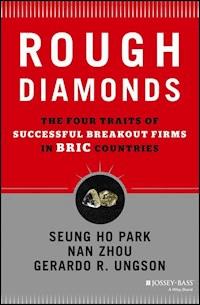
Discover the four traits of the best performing, but least known, breakout firms in BRIC countries "Rough diamonds" are the best performing firms in the BRIC (Brazil-Russia-India-China) countries. These firms compare favorably with the top 500 firms and the top 25 manufacturing firms in their countries and comparable firms worldwide, exceeding them profit margins and return on assets over an extended time period. This book outlines who these firms are and explains their exemplary performance through the Four Cs for Sustaining High Performance: Capitalizing on late development; Creating Market Inclusive Niches; Crafting Operational Excellence; and Cultivating Profitable Growth. * Offers a description of the four major traits that high performance companies in Brazil, Russia, India and China have in common * Contains company profiles from BRIC countries that have proved to be successful * Written Sam Park the president at Skolkovo-Ernst & Young for Emerging Market Studies and Chair Professor of Strategy at Moscow School of Management Skolkovo This important resource outlines the four traits of the best performing, but least known, breakout firms in BRIC countries.
Sie lesen das E-Book in den Legimi-Apps auf:
Seitenzahl: 256
Veröffentlichungsjahr: 2013
Ähnliche



















Table of Contents
Title Page
Copyright
Foreword
Preface
Acknowledgments
Introduction
Chapter 1: An Overview
Identifying the Rough Diamonds
The High Performance of Rough Diamonds
The Evolving Landscape in the BRIC Countries
Rough Diamonds Propel Emerging Markets
Grow, and Grow Alike
Beyond Exemplary Firms, What Is Really Different?
Notes
Chapter 2: The Four Cs of High Performance
The Four Cs for Sustaining High Performance
Putting the Four Cs to Work
Notes
Chapter 3: Capitalizing on Late Development
Sources of Opportunity in Late Development
Rough Diamonds Capitalize on Favorable Government Policy
Rough Diamonds Exhibit Relentless Passion in Adversity
Rough Diamonds Excel at Building Relationships or Technological Expertise
First Capitalize, Then Create
Notes
Chapter 4: Creating Inclusive Market Segments and Niches
Rough Diamonds Anticipate and Respond to Consumer Expectations
Rough Diamonds Consolidate Fragmented Pockets of Demand
Rough Diamonds Develop Deep Differentiation Advantages
Rough Diamonds Grab the First-Mover Advantage
Notes
Chapter 5: Crafting Operational Excellence
Rough Diamonds Excel at Integrated Logistics and Supply Chain Management
Rough Diamonds Nurture Collaborative Innovation
Rough Diamonds Embrace Total Quality Assurance
Rough Diamonds Build Flexible, Agile, and Cohesive Management Systems
Notes
Chapter 6: Cultivating Profitable Growth
The Direction of Rough Diamond Diversification
The Speed and Extent of Rough Diamond Diversification
Examining the Mode of Product Diversification
Different Countries Spawn Different Growth Patterns
Notes
Chapter 7: How Rough Diamonds Avoid the Growth Fetish
What Is Sustainable Growth?
Sales or Profits? An Overview of BRIC Companies
Not All Growth Is Good
Examining Growth Trajectories in the BRICs: Four Scenarios
Cross-Country Differences
Why Profitability Matters in Emerging Markets
Integrating Profitability with Qualified Sales Growth
Profitable Growth Through Core Competencies
Notes
Chapter 8: Hypergrowth: Can It Be Sustained?
Privatization in Emerging Markets
Diagnosing Sustained Growth from Primary Drivers
Assessing Sustained Growth Using Secondary Drivers
Notes
Chapter 9: National Differences: A Tale of Four Countries
China: Mobilizing Relational Capital for Growth
Brazil: Capability-Based Brand Advantage
Russia: Entrepreneurial Leadership for Growth
India: Strategically Managed Innovation for Growth
Commonalities and Differences
Notes
Chapter 10: Responding to Rough Diamonds: Implications and Recommendations
Rethink the Rules of the Game
Local Is the New Normal
Reduce Ethnocentric Tendencies
Recognize That Some Conventional Beliefs About Emerging Markets No Longer Apply
Develop a Contingency Plan for Strategic Partnerships with Rough Diamonds
Current and Future Rough Diamonds Signal the Sustained Growth of Emerging Markets
Notes
Appendix: Methodology
Criteria Selection for Identifying the Rough Diamonds
Checking Rough Diamonds Against the Comparison Groups
The Authors
Index
Copyright © 2013 by John Wiley & Sons, Inc. All rights reserved.
Cover design by Adrian Morgan
Cover image: Copyright © Shutterstock
Published by Jossey-Bass
A Wiley Brand
One Montgomery Street, Suite 1200, San Francisco, CA
94104-4594— www.josseybass.com
No part of this publication may be reproduced, stored in a retrieval system, or transmitted in any form or by any means, electronic, mechanical, photocopying, recording, scanning, or otherwise, except as permitted under Section 107 or 108 of the 1976 United States Copyright Act, without either the prior written permission of the publisher, or authorization through payment of the appropriate per-copy fee to the Copyright Clearance Center, Inc., 222 Rosewood Drive, Danvers, MA 01923, 978-750-8400, fax 978-646-8600, or on the Web at www.copyright.com. Requests to the publisher for permission should be addressed to the Permissions Department, John Wiley & Sons, Inc., 111 River Street, Hoboken, NJ 07030, 201-748-6011, fax 201-748-6008, or online at www.wiley.com/go/permissions.
Limit of Liability/Disclaimer of Warranty: While the publisher and author have used their best efforts in preparing this book, they make no representations or warranties with respect to the accuracy or completeness of the contents of this book and specifically disclaim any implied warranties of merchantability or fitness for a particular purpose. No warranty may be created or extended by sales representatives or written sales materials. The advice and strategies contained herein may not be suitable for your situation. You should consult with a professional where appropriate. Neither the publisher nor author shall be liable for any loss of profit or any other commercial damages, including but not limited to special, incidental, consequential, or other damages. Readers should be aware that Internet Web sites offered as citations and/or sources for further information may have changed or disappeared between the time this was written and when it is read.
Jossey-Bass books and products are available through most bookstores. To contact Jossey-Bass directly call our Customer Care Department within the U.S. at 800-956-7739, outside the U.S. at 317-572-3986, or fax 317-572-4002.
Wiley also publishes its books in a variety of electronic formats and by print-on-demand. Some material included with standard print versions of this book may not be included in e-books or in print-on-demand. If the version of this book that you purchased references media such as CD or DVD that was not included in your purchase, you may download this material at http://booksupport.wiley.com. For more information about Wiley products, visit www.wiley.com.
Library of Congress Cataloging-in-Publication Data
Park, Seung Ho, 1960–
Rough diamonds: the four traits of successful breakout firms in BRIC countries / by Seung Ho Park, Nan Zhou, Gerardo R. Ungson.— First edition.
Park pages cm
Includes bibliographical references and index.
ISBN 978-1-118-58926-7 (cloth); ISBN 978-1-118-58922-9 (ebk.); ISBN~978-1-118-58951-9 (ebk.); ISBN 978-1-118-58955-7 (ebk.)
1. Industrial management—Developing countries. 2. Industries—Developing countries. 3. Industrial policy—Developing countries. 4. Economic development—Developing countries. I. Zhou, Nan, 1982– II. Ungson, Gerardo R. III. Title.
HD70.D44P37 2013
658.4′06—dc23
2012048752
Foreword
For those few skeptics who still wondered how far-reaching an impact the world's developing markets will have on the global economy, the recent recession provided a pretty compelling answer. Even as the advanced markets in North America and Europe stumbled into recession from 2007 to 2009, and in some cases beyond, emerging markets continued to post significantly higher growth rates—collectively, as much as 5 percentage points higher.
By now, the primary debate about the potential of developing economies has shifted from the discussion of whether they will continue expanding to discussions about how fast they will grow and for how long they can sustain these remarkable rates. The world's top multinationals have already recognized the key role that developing markets will play in their futures. Brazil, Russia, India, and China (BRIC) have become the world's most sought-after markets, drawing new companies and investments with a combination of sizable populations, rising incomes, developing market institutions, and emerging middle classes. For businesses, sustained growth in these BRIC markets is a foregone conclusion, a given that has led many to look for even newer growth markets in Africa, the Middle East, and South America and across much of Asia.
No doubt multinationals from around the world will continue to play a critical role in the ongoing progression of the BRICs and other emerging economies. After all, the countries that have cut themselves off from the global economy and outside investments have seen their economies suffer for it. Yet no national economy can thrive on outside investment alone. Inevitably only the continued rise of domestic companies, reliable market institutions, and a combination of domestic and international trade can sustain the development of these key emerging economies.
The developing BRIC economies can boast a growing roster of home-grown champions that are leading the way. The likes of Tata (India), Gazprom (Russia), Sinopec (China), and Petrobras (Brazil) have long established themselves as globally recognized brands. They challenge even the greatest of multinationals in terms of expertise, innovation, and leadership in their industries. They've set the standard for business in emerging markets. They are the vanguard.
They are not, however, the ticket to broader economic development, at least not on their own. The true power that is fueling genuinely sustainable growth in these markets is coming from the large but often overlooked tier of successful companies and brands that, while not yet household names worldwide, have posted long-term growth rates far higher than those of most of their counterparts in both emerging and developed economies. These companies, including the rough diamonds identified in this book, provide the supporting foundation of domestic growth that necessarily underpins the ongoing development of a broader marketplace and increasingly robust economy in their home countries.
Yet their impact ripples well beyond the people they employ, the products they develop, and the production they contribute to the national and global economies. These companies raise the bar for both public and private entities. Their business demands force governments and regulatory agencies to establish a framework that sustains and enhances development. Their innovation forces staid old companies to raise their game if they want to remain competitive. Their ever-increasing quality raises both the expectations and the capabilities of their customers. And in many cases, their progressive management and world-class leadership vastly improve workplace standards and worker productivity across entire industries.
This sort of fundamental development, if it is to take a solid foothold in emerging economies, must come from within. It has to grow organically, so it can accommodate the idiosyncrasies of each individual country—its history, culture, and political ecosystem. No doubt the global economy has helped establish market institutions and standards of commerce that benefit businesses in any participating nation. Yet within each nation and each domestic market, this tier of long-term growth companies will provide the true foundation for a sustainable economic development.
Perhaps the only guarantee for these emerging economies is that global and domestic forces will arise to challenge their growth. Recessions will occur. Market institutions will stumble. Regulations will fail. And businesses will rise and fall. It's human nature and it's the fundamental nature of human economies. But the stronger the foundation of companies with established business models and long-term growth histories is, the better these developing economies will weather the storms and the more they will thrive in the good times.
John Quelch
Harvard Business School
Preface
Across from the Beijing offices of the SKOLKOVO Business School–Ernst & Young Institute for Emerging Market Studies (IEMS) is Olympic Park, the site of the 2008 Summer Games. Every day tourists and other visitors stream through the park to look at the famous Bird's Nest and Water Cube. Some take pictures in front of these two buildings, while others simply wander around, appearing content to recreate the momentous events of that summer. Tourists who are asked why they flock to those buildings rarely talk about the buildings themselves. “That is where Mark Phelps won his Olympic record eight gold medals,” they say, or, “That is where Usain Bolt ruled in the 100-meter dash.”
People remember winners. In sports bars around the world, people quiz their friends about Super Bowl titlists, World Series champions, and World Cup winners. They remember Spain's run in the World Cup. They can recite the years the San Francisco 49ers won the Super Bowl, or how many championships the New York Yankees have won in their illustrious history. Ask them who finished second, and more often than not, you get silence in return. The occasional success still gets its due recognition, but the key places in our memory are held by those who build a record of sustained success over time. We remember the dynasties. It should make perfect sense, then, that this happens in the business world too. Successful companies fill the major plank of attention and analysis. Google, Microsoft, Apple, Facebook, and other leading firms receive the highest marks in credit and brand recognition.
Each generation has its own list of legendary icons, but a definitive answer to what sustains high levels of performance remains elusive. Perhaps we focus too much on the downstream, gazing at already-successful firms. We certainly tend to pay less attention to the upstream, seeking the early-stage differentiation that eventually separates the winners from the losers. Which of those firms will take their place in the next dynasty of market leadership? Have they already sowed the seeds of that future success?
These questions led us to the rough diamonds—the emerging market's most promising but still developing firms.
The kernel of this search began a few years ago when a group of respected entrepreneurs founded a new business school, Moscow School of Management SKOLKOVO, to develop future business leaders in Russia and other emerging markets. The idea of rough diamonds surfaced when Seung Ho Park started building a new think tank in collaboration with the school: the SKOLKOVO Institute for Emerging Market Studies. Since the ushering in of free market reform in emerging markets in the early 1980s, a cadre of firms—Gazprom and Rosneft (Russia), Infosys Tech and Tata Consultancy (India), Petrobras and Embraer S.A. (Brazil), and Sinopec and China Telecom (China)—had received a great deal of attention from the academic and business press. And rightly so: they're great companies. But Park and Wilfried Vanhonacker, the founding dean of the SKOLKOVO Business School, wondered what businesses would be in the next generation of successful firms. Can emerging markets produce the next business dynasties?
Over the next three years, Park and the IEMS research staff initiated the rough diamonds project with help from the Ernst & Young field offices in the BRIC countries (Brazil, Russia, India, and China). The methodology they employed was stringent and meticulous, so it took some time before a common set of enduring patterns emerged that accounted for sustained, profitable growth in all four countries. It is this story that unfolds in detail in this book.
We could not have finished this project without the inspiration of the exemplary business leaders in these emerging markets. In particular, we owe deep gratitude to Ruben Vardanian, a highly respected entrepreneur in Russia and a visionary leader of the SKOLKOVO Business School project. The global leadership and unbounded support of Ernst & Young helped see this project through to the end. The final phase of the project could not have been accomplished without the invaluable assistance of the editorial team at Jossey-Bass: Katherine D. Davies, Dan Zehr, Kathe Sweeney, Alina Poniewaz-Bolton, and Susan Geraghty. They were pivotal in facilitating the process and rewriting much of the original manuscript, which was laden with academic terms, into a readable and accessible final book.
Finally, we could not have accomplished a task of such magnitude without the enduring counsel and constant inspiration from our families. Ja Young, Alexandra, and Amelia Park patiently went through their activities while Seung Ho Park took off on frequent trips to emerging countries while working on this project. Nan Zhou thanks her family members, especially Yawei Wang, Shuiqing Zhou, and Jiajing Zhang for helping her concentrate on her research. Gerardo thanks his family for their constant support: Suki Ungson, Melissa and Tegan Martin, Carlo Riego, Mark Neveu, and Kaipo. Although it is impossible to completely express our appreciation for all they did to support us, as a small token of our gratitude we dedicate this book to them.
March 2013
Seung Ho ParkMoscow, Russia Nan ZhouBeijing, China Gerardo R. UngsonSan Francisco, California
Acknowledgments
The project could not have been accomplished without the cooperation of all the firms that participated in the study and the assistance of countless people, including students, office staff, and Ernst & Young managers, who undertook various phases of the project. While a few sentences will not cover the entirety of all individuals to whom we owe a deep sense of appreciation, we particularly thank and acknowledge the following people who devoted time to help us in all four countries we studied: Kefei Zou, Jian Luo, Kino Li, Weidong Jin, Lin Yan, Jianbo Xu, Ruidong Shen, Yunliang Qiu, Alex Zhang, Nigel Knight, Utpal Almoula, Siva Prasad, Andre Ferreira, Sam Fouad, Hetal Pandya, Sandeep Gupta, Mansi Joshi, P. M. Murty, Siva Prasad, Padma Chourey, Namrata Datt, Farokh Balsara, M. S. Unnikrishnan, Vivek Gambhir, Abhishek Agrawal, Bhaskar Bhat, Harsh Mariwala, Ilgiz Baimuratov, Denis V. Shamening, Vladimir G. Borisov, Vitaly Korolev, Maria Agapkina, Aleksey Rybnikov, Alexander Filatov, Vladimir Nikolaevich Sungorkin, Prokhorov Konstantin Anatolevich, Irina Olegovna Samokhina, Alexander Storchak, Mikhail Bondarenko, Artur Davidyan, Alex Settles, Liudmila Petrova, Thiago Borges, Raisa Vasilevna Demina, Viktor Gaiday, and Dmitry Voskoboynikov.
An earlier, abbreviated version of the book was distributed as a coauthored report, Rough Diamonds: The 4Cs for Sustained High Performance, by S. H. Park, N. Zhou, and G. Ungson for Ernst & Young. Portions of the project were also presented at the Davos Forum and the St. Petersburg Economic Summit in 2012.
Introduction
High performers take charge of their own destiny. They have a laser-sharp focus on executing against the four drivers of competitive success: customer reach, operational agility, cost competitiveness and stakeholder confidence. And they strike the right balance in their approach to each of these four drivers in relation to the others—strategically and tactically.
Lesen Sie weiter in der vollständigen Ausgabe!
Lesen Sie weiter in der vollständigen Ausgabe!
Lesen Sie weiter in der vollständigen Ausgabe!
Lesen Sie weiter in der vollständigen Ausgabe!
Lesen Sie weiter in der vollständigen Ausgabe!
Lesen Sie weiter in der vollständigen Ausgabe!
Lesen Sie weiter in der vollständigen Ausgabe!
Lesen Sie weiter in der vollständigen Ausgabe!
Lesen Sie weiter in der vollständigen Ausgabe!
Lesen Sie weiter in der vollständigen Ausgabe!
Lesen Sie weiter in der vollständigen Ausgabe!
Lesen Sie weiter in der vollständigen Ausgabe!
Lesen Sie weiter in der vollständigen Ausgabe!




