


9,99 €
Mehr erfahren.
- Herausgeber: 50Minutes.com
- Kategorie: Sachliteratur, Reportagen, Biografien
- Serie: History
- Sprache: Englisch
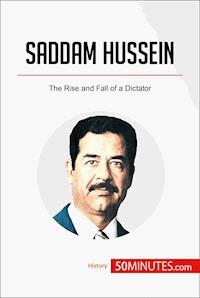
Keen to learn but short on time? Get to grips with the life of Saddam Hussein in next to no time with this concise guide.
50Minutes.com provides a clear and engaging analysis of the rise and fall of Saddam Hussein. Following a series of bloody coups, Saddam Hussein came to power in Iraq in 1979 and quickly established an authoritarian dictatorship that endured for over twenty years. His leadership was characterised by a series of wars, including his invasion of Kuwait in 1990, which culminated in a brutal defeat at the hands of a US-led coalition and hefty UN sanctions being imposed on Iraq. Saddam Hussein was removed from power in 2003, but Iraq had been left heavily weakened by years of poverty and repression, and soon found itself facing a new enemy in the form of Daesh.
In just 50 minutes you will:
• Learn about the historical events that paved the way for Saddam Hussein’s rise to power
• Understand the various conflicts that arose in the Middle East during the dictatorship, including the Iran-Iraq War and the Gulf War
• Discover how the situation in Iraq has developed since Saddam Hussein was deposed
ABOUT 50MINUTES.COM | History & Culture
50MINUTES.COM will enable you to quickly understand the main events, people, conflicts and discoveries from world history that have shaped the world we live in today. Our publications present the key information on a wide variety of topics in a quick and accessible way that is guaranteed to save you time on your journey of discovery.
Das E-Book können Sie in Legimi-Apps oder einer beliebigen App lesen, die das folgende Format unterstützen:
Seitenzahl: 44
Veröffentlichungsjahr: 2018
Ähnliche



















Saddam Hussein
Key information
Born: 28 April 1939 in Al-Awja near Baghdad, Iraq.Died: 30 December 2006 in Baghdad, Iraq.Time in office:Vice President of Iraq from 1971 to 1979.Military commander and President of Iraq from 1979 to 2003.Impact:Establishing a personal authoritarian dictatorship in Iraq from 1979 to 2003.The Iran-Iraq War (1980-1989).The Gulf War (1990-1991).Introduction
Over the course of the 20th century, many dictators crawled out of the shadows and into the spotlight in order to impose their own political agendas and promote the territorial expansion and economic growth of their own countries. Like Germany and the Soviet Union, the Middle Eastern country of Iraq saw one man rise to prominence and seize the reins of power for himself: Saddam Hussein, whose imperialistic policies were founded on his determination to subjugate the rest of the Middle East, placing Iraq at the centre of a new empire like Babylon reborn.
Although he was born in a poor, rural area of Iraq, Saddam rose to a position of tremendous political power. He portrayed himself as a firm believer in pan-Arab ideology and a defender of secular republicanism in the face of the growing threat from Islamic extremism, which was spreading through the neighbouring country of Iran and stirring up fear in Western and Arab countries alike. His strategy for limiting this influence was to establish a personal authoritarian dictatorship in Iraq, supported by his family and the Sunni sect he belonged to, and to declare himself an enemy of the Shia sect, which he deemed too devout, and the Kurds, whom he deemed too pro-independence.
Saddam led this political regime for over 20 years, imitating dictatorial principles that had been used by the Soviet and Nazi regimes and combining them with principles based on Arab and tribal ideology. He led Iraq into another war with Iran, and even invaded the independent nation of Kuwait, provoking international outcry and censure from the USA. From the 1990s onwards he began making missteps in terms of military strategy, which weakened his grip on power, leaving Iraq locked in a gradual spiral into chaos.
Biography
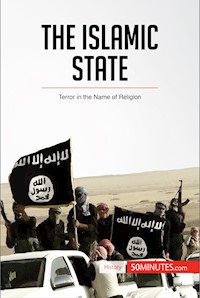
Portrait of Saddam Hussein.
Involvement in the Ba’ath Party
Saddam Hussein was born in Al-Awja, a small rural village near the Iraqi capital of Baghdad. He grew up in a poor family and never knew his father, only a step-father who was prone to violence. As a teenager, he was taken in by his uncle Khairallah Talfah (1910-1993), who lived in Baghdad and was a member of the Ba’ath Party.
The Ba’ath Party
The Ba’ath Party is a pan-Arab, socialist, secular political party which was founded in Syria by Michel Aflaq (Syrian politician, 1910-1989) and Salah al-Din al-Bitar (Syrian politician, 1912-1980) in 1944. Ba’athist ideology is based on the aim of uniting the Arab world by dismantling all borders so that the resources of each country can be pooled. Although the party adheres to socialist ideology, it rejects communist thought and the idea of the class struggle, as well as the restrictions communism places on individual freedoms. Ba’athism recognises Islam as an essential aspect of Arab culture, but it also upholds the separation of politics and religion.
Saddam joined the Ba’ath Party during his final years as a student and participated in an unsuccessful coup d’état against King Faisal II (1935-1958) in 1956. Two years later, another faction led by the communist-leaning General Abd al-Karim Qasim (1914-1963) successfully overthrew the monarchy, and the king was executed along with many of his family members.
Portrait of King Faisal II of Iraq.
Having proven himself during the coup of 1956, Saddam then became an active member of the party. In 1959, he and a dozen other students were chosen to participate in an assassination attempt targeting Qasim, but Saddam was wounded during the attempt, which was unsuccessful, and fled to Damascus. He remained there for a year, during which he met Michel Aflaq, one of the founders of the Ba’ath Party, before leaving Damascus in 1961 to finish his studies in Cairo. However, he remained a highly active member of the party, which successfully overthrew Qasim on 8 February 1963 and instated Abdul Salam Arif (1921-1966), who had formerly served as Prime Minister under Qasim, as President of Iraq. However, the Ba’ath Party was soon ousted from the new regime, including Saddam, who was then appointed Deputy Secretary of the Regional Command under Ahmed Hassan al-Bakr.
Portrait of General Hassan al-Bakr.
After being imprisoned for two years (1964-1966) due to his role in an attempt to assassinate the president, Saddam returned to politics by helping to organise the 17 July Revolution (1968), a coup in which power in Iraq was seized by General Hassan al-Bakr. Saddam’s role was to oversee the militias tasked with hunting down any communist or Nasserist (ardent supporters of Egyptian President Gamal Abdel Nasser’s ideology) opponents to the new regime. In 1969, Saddam was made deputy chairman of the Ba’athist Revolutionary Command Council and soon became the most powerful figure in the regime.




