


Erhalten Sie Zugang zu diesem und mehr als 300000 Büchern ab EUR 5,99 monatlich.
- Herausgeber: BoD - Books on Demand
- Kategorie: Geisteswissenschaft
- Sprache: Englisch
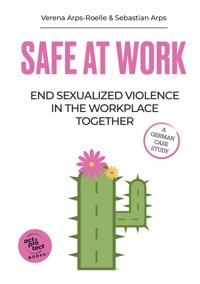
Sexualized violence is omnipresent and takes place wherever people meet - including the workplace. Sexism, sexual harassment and abuse of power are rooted deeply, often difficult to recognize and even more difficult to eliminate. Verena Arps-Roelle and Sebastian Arps want to change that. In their book, which is based on a german case study, they show how you can create a culture free of sexualized violence in three steps - as an employee, colleague, manager and employer. This book offers valuable and experience-based insights into the complex topic and expands your knowledge of legal, corporate and social aspects. It equips you with tried-and-tested methods for setting clear boundaries and shows you how to use your strengths as a person or company to prevent and intervene in order to create a safe and respectful environment. Therefore, sometimes we have to be a cactus: Learn how to use your spines to see, name and stop sexualized violence.
Sie lesen das E-Book in den Legimi-Apps auf:
Seitenzahl: 236
Veröffentlichungsjahr: 2025
Das E-Book (TTS) können Sie hören im Abo „Legimi Premium” in Legimi-Apps auf:
Ähnliche




















DEDICATION
For all survivors of violence who continue to carry light within them despite the darkness. Your courage and strength are an inspiration to us all.
THE AUTHOR
Verena Arps-Roelle is the founder of the initiative "act & protect® – AGAINST SEXUALIZED VIOLENCE." As an activist and expert, she advocates for a comprehensive approach to addressing sexualized violence. Her focus includes (entertainment) sexism, stereotypes, and victim blaming. Verena uses her personal experience as a survivor of sexualized violence to convey preventive and intervention measures that are practical and sustainable. She is committed to supporting other activists, institutions, and campaigns for societal and political change. As a consultant and trainer of the "act & protect® Academy," which she co-founded with Sebastian Arps, she supports companies, NGOs, associations, educational institutions, and individuals. Verena also certifies organizations with the "act & protect® Seal." As a speaker, she is known for her precise, compelling, and constructive presentations.
Learn more about Verena and her work at:
www.actandprotect.de
www.elementartraining.de/actandprotect
THE CO-AUTHOR
Sebastian Arps is an expert in (neuro-)communication, a sociologist, and a business psychologist. As the owner of Elementartraining, he supports companies and individuals through transformative processes. His work is characterized by a creative and constructive approach that fosters lasting change on both business and personal levels. With his deep understanding of structures and needs, he critically examines existing processes to help organizations and people recognize and break entrenched patterns. Sebastian’s work is based on the four elements of personality: perception, emotion, cognition, and behavior - elements that only function effectively together. Many of the methods presented in this book were developed and refined by Sebastian for the act & protect® Academy and have been successfully implemented in practice. In 2024, Sebastian co-initiated the "Together for Democracy" alliance with Verena Arps-Roelle, advocating for democratic values, including in corporate settings.
Learn more about Sebastian and his work at:
www.elementartraining.de
www.gemeinsamfuerdemokratie.com
CURRENT CAMPAIGNS
Our non-profit work also includes drafting and publishing petitions on change.org and to the German Bundestag. We use these petitions to highlight legal gaps, societal issues, and necessary changes, bringing them into political discourse. Below is an overview of our current petitions (as of January 2025).
LEGAL RECOGNITION OF CATCALLING AS A CRIMINAL OFFENSE
In Germany, "sexual harassment" is currently only recognized as such if physical contact occurs (as of November 2020). Many European countries, such as France, Belgium, the Netherlands, Spain, and Portugal, have already criminalized catcalling, defined as sexually suggestive calling, talking, whistling, or gesturing toward a person in public spaces. Our demand to include catcalling as an independent criminal offense in German law is part of the leading petition PET 4-20-07-49121-003699, currently under review by the German Bundestag.
MORE PROTECTION IN ADVERTISING
This petition opposes sexualized depictions in advertising and media—both online and offline—particularly in relation to content targeting children and adolescents. The aim is to prevent discriminatory stereotypes and self-image distortions through education, competency development, and interdisciplinary training. A key focus is combating sexualized advertising and its misuse in the dark web through deepfakes (AI-manipulated media) and non-nudes (sexually suggestive images of non-nude individuals). This petition, ID 139418, is currently under review by the German Bundestag and has been undergoing a final geo-review by the state parliaments since January 2025.
CHILD- AND SURVIVOR-CENTERED JUSTICE
Supporting survivors requires legal proceedings adapted to their age and needs. This includes video interrogations, qualified trust persons, interdisciplinary collaboration among stakeholders, and binding quality standards. The Scandinavian Barnahus model serves as an inspiration. This petition, ID 139212, is under final review by the petitions committees of state parliaments sincef all 2024.
STOP ENTERTAINMENT SEXISM AND SEXUALIZED VIOLENCE IN REALITY TV
Protecting participants and audiences from sexist and abusive content in reality TV formats requires safe conditions. This petition aims to sanction boundary-crossing behavior, improve the media’s handling of sensitive topics, and protect all involved. Submitted to the German Bundestag and the state parliament of North Rhine-Westphalia under ID 167903, it has also been forwarded to the Broadcasting Commission of the Minister Presidents and the state media authorities for evaluation.
PROLOGUE
Sexualized violence is a pervasive problem, but it must not become normalized. It manifests in all sociocultural and structural contexts: families, clubs, sports, social networks, advertising, media, schools, and workplaces. And in the workplace, it affects more people than commonly assumed.
In this book, we focus primarily on the example of Germany. However, we also draw comparisons with other countries, incorporating studies and additional insights. This is not a problem unique to Germany; it is a global issue. Across the world, we see similar patterns, numbers, data, and facts regarding sexualized violence. The impact and prevalence of this issue are evident in various sociocultural and structural contexts everywhere, emphasizing the need for a broader, international perspective on tackling it.
This book takes an in-depth look at the issue by following three essential steps toward violence-free workplace cultures:
1. See it
Understanding its definitions, forms, and dynamics. We reveal myths and misconceptions, clarify when sexualized violence begins, and discuss its personal, societal, and corporate impacts.
2. Name it
Examining its consequences, preventive measures, and appropriate interventions. We empower individuals and organizations to take responsibility and recognize their privileges and boundaries.
3. Stop it
Providing practical strategies for setting boundaries clearly and constructively. From survivors to allies to perpetrators—everyone benefits from acknowledging, addressing, and ending sexualized violence.
In doing so, we adhere to the principle that non-violence must not be associated with pigeonholing, general suspicion or mistrust. Instead, we strive for a transparent, appreciative, inclusive and productive working culture - a culture that offers clear and constructive ways of dealing with sexualized violence.
Be a cactus.
In this book, you will encounter our cactus symbol. The cactus serves as a reminder to recognize and use your own strengths: Extend your spines, set boundaries, and defend yourself and others confidently.
The cactus symbol signals methods and approaches that help act decisively and respectfully in difficult situations. It is meant to encourage you to extend your individual spines, poke, and assert yourself. And to be more cactus.
CONTENT NOTICE
This book provides a comprehensive insight into the sensitive topic of "Sexualized Violence in the Workplace." It is not intended as legal advice or therapeutic support. Instead, it serves as an in-depth exploration of the various facets of sexualized violence, its impacts, and preventive and interventive measures within the work context.
As a reader, you will gain an understanding of the different forms of sexualized violence and how to categorize them. You will be equipped with knowledge, encouragement, and concrete action options. The content covers a broad range, from general information to legal and ethical aspects, and includes detailed statistics and facts. At the same time, we offer diverse impulses for support and effective empowerment. Our goal is to strengthen you mentally, professionally, and cognitively so that you can set, defend, and maintain your boundaries in the future in a safe, conscious, and unequivocal manner.
This book contains information about sexualized violence that may be retraumatizing or triggering for some readers. If you are personally affected and need support, please contact a professional counseling service near you or one of the help organizations listed at the end of the book under "Important Contacts.“
The terms used, such as perpetrator, perpetrating party, affected person, victim, accused, and offender, are not used in a legal context in this book but within the framework of sexualized violence.
In legal texts and guidelines, the term "sexual harassment" is often used because it precisely and legally describes the various forms of violence characterized by sexual acts or assaults. This term is well-established in legal practice and allows for the specific classification and prosecution of crimes such as rape, sexual coercion, or sexual violence. The legal definitions of "sexual harassment" focus on physical and direct sexual assaults to hold perpetrators accountable and provide legal protection for the victims. However, in this book, we use the term "sexualized violence" from feminist language to do justice to the victims and provide a more comprehensive picture of violence. The term "sexualized violence" includes the physical dimension of sexual assaults but also encompasses emotional and psychological violence. This form of violence often appears in more subtle, less obvious manifestations, such as suggestive comments, discriminatory behaviors, or psychological manipulation—which also have significant impacts on the well-being of those involved. By using the term "sexualized violence," we want to acknowledge the multifaceted experiences and profound effects such violent experiences have. This broader perspective allows for the recognition and addressing of emotional and psychological dimensions of violence, which are not always sufficiently considered in many legal definitions. Our aim is to provide a more complete picture of sexualized violence in the workplace through more precise and comprehensive terminology. When we refer to the term "sexual harassment" in the context of laws, we place it in quotation marks.
In this book, we focus on the perspectives of people in mentally stable contexts. People with mental health conditions or in challenging psychological situations have specific needs as both victims and perpetrators, especially when it comes to sexualized violence and experiences. These situations require special considerations and support, which are not covered in this work. For comprehensive information and specialized support in such cases, we recommend consulting appropriate literature or specialized services. Through this focus, we aim to ensure that all people are adequately and respectfully supported and that we meet the diverse needs to avoid stigmatization and take into account the variety of human experiences and life realities.
We primarily refer to existing general conditions in Germany in this book. However, to enrich the discussion and provide a broader perspective, we also draw comparisons with other countries around the world.
Women* and Men*
Im In the spirit of inclusivity and sensitivity, we use the term "women" for all individuals who identify with the female gender or non-binary identities (i.e., people who do not feel like a man or woman, whose gender identity includes male and/or female aspects, lies somewhere in between, or is completely outside these categories) and "men" for all individuals who identify with the male gender or non-binary identities. In this book, we refrain from using the gender asterisk for the terms "man/men" and "woman/women" in order to create a space that respectfully and comprehensively represents the diversity of people in our society and their individual experiences while keeping the reading flow as smooth as possible.
This book does not claim to be comprehensive. The topic of sexualized violence is a constantly evolving field. Moral views change, new research is conducted, current studies are published, and laws are continuously updated. This is also why the book is designed so that each chapter can be read independently. This structure allows you to engage with the different topics individually and flexibly, diving deeper as needed. Through this modular approach, we foster a tailored reading experience that allows you to focus on the content most relevant to you.
Publishing through Books on Demand (BoD) is a conscious decision for us. Our goal is not to achieve high margins but to reach as many people as possible and offer our methods at fair prices. We want to ensure that our books are accessible to a wide audience and that potential readers are not deterred by excessive costs. At the same time, it is important to us to retain content control to ensure that our message remains unaltered.
We wish you exciting „I see!" moments, enriching knowledge deepening, and inspiring encouragement!
Verena Arps-Roelle & Sebastian Arps
CONTENT
INTRODUCTION
THROUGH TIME - THE HISTORY
Sexualized violence against women: Through the centuries
Sexualized violence against men: A taboo topic
Sexualized violence against LGBTQIA+ Persons: Hard to endure
Sexualized violence: An everyday phenomenon
SEE IT
CHAPTER 1: BEHIND THE CURTAIN SEXUALIZED VIOLENCE AT WORK TODAY
The dark reality: Definitions and forms
Cases: Three examples
When is it enough: When does sexualized violence begin?
Faces of sexualized violence: At the workplace
Gender gaps: Injustice between the genders
True or false: The dilemma with perceptions
CHAPTER 2: FACT-CHECK A LOOK AT STATISTICS AND RESEARCH
An unemotional look: Current studies
Numbers that speak: Costs that alarm
Breaking the taboo: The best prevention
Support: Giving and receiving
General Equal Treatment Act: Obligations and rights
Last way out termination: Executives as perpetrators
CHAPTER 3: MISCONCEPTION CHALLENGES AND SOLUTIONS
The truth: Expose myths and prejudices
Unsupportive attitudes: Victim-blaming and more
The pink-blue trap: Not just for children
Cognitive dissonance: When we think differently than we act
Stable values: Thinking and acting in harmony
CHAPTER 4: PAINFUL REALITY CONSEQUENCES FOR ALL
Visible and invisible scars: Physical, psychological and social
In the shadow of fear: The fear of stigmatization
I am the perpetrator: What now?
Sexualized Violence Makes You Sick: Not just the affected
CHAPTER 5: ON THE TEST BENCH COMPANIES
An expensive burden: Costs for companies
Cultural change: Impact on motivation
Taking responsibility: From the companies' perspective
Acting together: From the employees' perspective
CHAPTER 6: ON THE TEST BENCH POLITICS
Focus: Legal foundations
(No) Courage for the gap: Implementation and enforcement of laws
Where we stand: Germany in comparison
CHAPTER 7: ON THE TEST BENCH SOCIETY
The dark consequences: Tangible impacts
Caught in stereotypes: (Un)Conscious bias
Turning off autopilot: From unconscious to conscious
A change is necessary: The importance of transformation
NAME IT
CHAPTER 8: PERPETRATORS TYPICAL PATTERNS OF OFFENSE
Facing the facts: The issue of false accusations
Factuality instead of criminalization: Objective not subjective
Breaking the cycle: Identifying perpetrators
The DARVO Tactic: Perpetrators´ strategies
CHAPTER 9: ACTIVE COMPANIES THE POWER OF CULTURE
From prevention to support: Safe work
Clear guidelines: Binding codes of conduct
Safe spaces: Architectural protection
CHAPTER 10: ACTIVE POLITICS THE POWER OF LAWS
Political need for action: More than laws
Facts as a weapon: The power of data and research
CHAPTER 11: ACTIVE SOCIETY THE POWER OF THE MANY
#MeToo: You too?
New standards: The societal code of conduct
Connecting or dividing: The role of the media
United in Action: Goal-Oriented Cooperation
From victims to survivors: What words can do
True equality: The collective path
#NotAllMen: Yet too many
STOP IT
CHAPTER 12: COMPETENCIES FOR SAFE SUPPORT
From zero to Hero: Confident contact persons
The ACTION© method: For empathetic responses
Conversations with accused persons: Clarification
Empowerment: Instead of helplessness
Zero tolerance, full impact: Leadership as rolemodel
Safety first: Protection concepts for security
CHAPTER 13: CONCRETE AND PRACTICAL TIPS AND METHODS
Setting boundaries: What you can do
The PIW© method: Effective feedback
The Johari Window: From unconscious to conscious
Be an ally: Everyone counts
CHAPTER 14: COMMUNICATION CLEAR AND CONSTRUCTIVE
Verbal communication: Your words
Non-verbal communication: Your posture
Paraverbal communication: Your voice
Written communication: Your sentences
Documentation: Your thoughts as a memory aid
CHAPTER 15: RESOURCES PATHS TO HEALING
Therapeutic approaches: Trauma and coping
Self-help: Empowerment and strengthening
Self-care: After experiences
Legal options: Contact points
CHAPTER 16: THE VISION A VIOLENCE-FREE WORKPLACE
What Do We Lose
What Do We Gain
CONCLUSION AND ENCOURAGEMENT
IMPORTANT CONTACTS
SOURCES
INTRODUCTION
THROUGH TIME THE HISTORY
The history of sexualized violence in the workplace in Germany and worldwide is long, complex, and distressing. For centuries, individuals have been exposed to sexualized violence in various forms at their workplaces. This affected both men and women, as well as individuals perceived as female, male, and non-binary.
In the following pages, we will explore the last few centuries to provide an impression of the variety and severity of these experiences.
These pages offer an initial glimpse into the complexity of the topic, which reveals even more facets across all eras upon closer examination.
SEXUALIZED VIOLENCE AGAINST WOMEN: THROUGH THE CENTURIES
Women have been, and continue to be, exposed to sexualized violence in the workplace—a problem that spans throughout history. In many cultures and periods, women were subjected not only to human trafficking and economic exploitation but also to sexual assault. This violence served as a means of control, degradation, and the exertion of power.
Access to education and professional opportunities for girls and women was severely restricted across many eras. They were often limited to certain roles, shaped by gender-specific norms and hierarchies. These disadvantages increased their vulnerability to sexualized violence, which in turn led to health problems, marginalization, job loss, poverty, and even suicide. In earlier centuries, particularly in smaller towns and villages, many women were heavily dependent on the community. There was often a culture of silence or the belief that such assaults were the inevitable lot of women.
Due to poverty, the loss of the male head of the household, or a lack of employment opportunities, many women were forced into prostitution. They were often controlled by pimps who used violence to force them into prostitution or prevent them from leaving. Clients also frequently exercised violence. The societal stigma intensified their isolation and made it difficult for them to find help—a situation that still persists in some aspects today.
Until the 18th century, women were often persecuted, tortured, and killed under the pretext of witchcraft—especially those who worked as midwives or healers and deviated from normative expectations.
Even during the Industrial Revolution in the 19th century, women's conditions did not improve. Despite their increasing presence in factories and male-dominated professions, they remained unprotected from sexualized violence. Instead, the increasing participation of women in the labor market was associated with their segregation into poorly paid jobs. Women were seen as “cheap labor,” which in turn facilitated sexualized violence in all its forms.
At the beginning of the 20th century, the German Civil Code (BGB) stipulated that women, especially married women, were subject to numerous legal restrictions. They needed their husband’s consent to take up paid work. This regulation was based on the concept of gender roles, which saw the man as the primary breadwinner and the woman as the housewife and mother. Traditional male control within the family was threatened by working women, often leading to violence, power struggles, and dominant behaviors.
Women faced social pressure to stay at home, while the economic pressure to support themselves was great. This was a difficult situation, especially for single, divorced, and widowed women, who had to take on multiple risks. Court documents from this period show that many female employees were abused by their male employers.
In the early industrial period, society made no distinction between working women, prostitutes, and criminal groups. This was due to several factors: women from poor families had to work, yet it was unusual for women to work outside the home. Both prostitutes and paid workers were seen as escaping patriarchal control, which was intended to be reclaimed through sexualized violence. It made no difference whether women were selling their labor or sexual services.
At this time, responses from women to sexualized violence in the workplace can be divided into individual and collective reactions. Some women viewed sexual violence and harassment as a personal problem or bad luck. Others saw it as a social issue and responded collectively by joining unions and other organizations to secure legal protection.
During World War I and World War II, women worked to fill the gaps left by men who were sent to the front lines. They took up jobs in factories, agriculture, and many other areas that had previously been dominated by men. In addition to their work, they helped rebuild society and the economy after the war. However, after World War II, as men returned from the front lines and from prisoner-of-war camps, society's attitudes toward women shifted once again. The focus returned to traditional gender roles. Women were expected to resume the role of housewife and mother, concentrating on household duties, child-rearing, and supporting their partners. Many societal and political forces pushed for men to reclaim their jobs and experience the “normalcy” they had lost during the war. This return to traditional role models, alongside existing societal norms and legal frameworks, discouraged many women from continuing their careers or pursuing new professional opportunities.
Until 1957, § 1356 of the German Civil Code (BGB) stipulated that women were generally subordinated to their husbands in household and child-rearing matters and could only work with their husband’s consent. The decisive change came with the reform of marriage and family law: from 1957 onwards, women no longer needed their husband's explicit permission to work. Nevertheless, the idea that women were primarily responsible for the household and supporting their husbands remained deeply ingrained.
It was not until the 1960s that these attitudes began to gradually change. Women gained increasing access to a broader range of professions and career opportunities.
In the 1960s and 1970s, women worldwide fought for equal rights and against sexualized violence, including in the workplace. The feminist movement helped raise awareness of the need for reforms. Many countries introduced laws to combat various forms of sexualized violence and establish protective measures for victims.
In the 1970s, the principle of equality between men and women was more strongly enshrined in law, particularly through amendments to the Basic Law. Article 3 now guaranteed equality between men and women, and from that point on, women no longer needed their spouse's consent to work.
The #MeToo movement, initiated by activist Tarana Burke in 2006 and globally popularized by actress Alyssa Milano in 2017, brought the issue back into the spotlight. Under the hashtag #MeToo, countless women shared their experiences of sexualized violence and "sexual harassment," exposing the extent of the problem and leading to calls for comprehensive change.
Despite these advances, women still experience sexualized violence in the workplace today.
SEXUALIZED VIOLENCE AGAINST MEN: A TABOO TOPIC
Although sexualized violence against men in the workplace is less well-documented, it nevertheless existed. Historical examples show that men became victims in various contexts. Men were victims of sexual violence in the context of human trafficking, used as a means of gratification, suppression, and control.
In earlier centuries, men as serfs were in a strong dependency relationship with a landowner. Even as servants or household employees, they faced dependence on their employers, which facilitated sexual exploitation due to the power imbalance.
Even in monastic or other religious institutions, male novices or monks were subjected to sexual assault by higher-ranking members of the community. These abuses were often promoted by the authority of the perpetrators within the institution and were more frequently covered up to protect the institution's reputation and the sanctity of the perpetrators.
In seafaring, particularly during long voyages, men were exposed to assaults. The isolated environment and strict hierarchies made it difficult to escape or resist such violations.
Particularly in male-dominated workplaces, abuse of power and harassment occurred. In such contexts, sexualized violence was used as a means of intimidation or to demonstrate dominance. Gender stereotypes and social norms often led men to hesitate (and still do today) in discussing their experiences or seeking help-out of fear of being perceived as weak, unmanly, or stigmatized.
In military contexts, particularly during wartime, soldiers or prisoners of war experienced sexual violence as torture, to humiliate or demonstrate power, and to inflict psychological damage. Historical records, such as reports on prisoners of war, often contain references to such mistreatment.
Until the year 2000, gay and bisexual Bundeswehr soldiers were treated unfairly and disadvantaged in military service, as they were considered a security risk. Studies, such as "Taboo and Tolerance" by the Center for Military History and Social Sciences of the Bundeswehr from 20191, show that men in various military contexts were affected by sexualized violence.
What has persisted throughout history is the idea that men must always be strong, unshakable, and honorable. These stereotypes are a subtle yet profound form of sexualized violence that continues to this day.
SEXUALIZED VIOLENCE AGAINST LGBTQIA+ PERSONS: HARD TO ENDURE
The LGBTQIA+ community has a long history of sexualized violence in the workplace. In many societies, same-sex relationships and other forms of queer identities were heavily stigmatized and criminalized. In Europe, homosexual relationships were often met with harsh penalties such as imprisonment, forced labor, or even the death penalty. LGBTQIA+ individuals lived in constant fear of persecution, concealed their identities, and lived in secrecy—significantly limiting their professional opportunities. Being openly queer often meant social exclusion and the loss of jobs. From the late 19th century to the mid-20th century, some Western countries began to cautiously move towards decriminalization, while others continued to enforce strict laws. These not only led to criminal penalties but also had devastating effects on the victims' professional existence. Many lost their jobs or were forced to keep their sexual orientation secret to avoid professional disadvantages.
In Germany, for example, § 1752, which criminalized sexual acts between men, was applied during the Imperial era and the Weimar Republic, and was tightened under Nazi Germany. LGBTQIA+ individuals were persecuted, stigmatized with the "pink triangle," sent to concentration camps, and murdered.
In the German Democratic Republic (GDR), the provision was only applied in a mitigated form between 1957 and 1968 and was subsequently removed from the Criminal Code. In the Federal Republic of Germany (FRG), the law was only amended in 1969: homosexual acts between adult men over the age of 21 were made unpunishable. It was not until 1994 that the Bundestag decided to finally abolish Section 175. In 2002, the German Bundestag repealed the sentences passed during the National Socialist era. However, it was not until July 22, 2017 that all judgments after 1945 were also repealed. Since March 2019, there has been an additional directive that enables all persecuted members of the LGBTQIA+ community to apply for one-off compensation for negative effects such as job loss.
Since then, comprehensive national and international antidiscrimination laws have been enacted to protect LGBTQIA+ people in the workplace. These often include provisions that prohibit discrimination on the basis of sexual orientation and gender identity and are intended to ensure equal access to employment opportunities. In addition, there are increased efforts towards equality and inclusion. However, the situation varies greatly around the world: in some countries there are far-reaching protective rights and social acceptance, while in other countries LGBTQIA+ people continue to be prosecuted or face social discrimination. These different legal frameworks have a significant impact on the professional opportunities and working lives of LGBTQIA+ people.
People from this community continue to frequently experience harassment, abuse and discrimination due to their sexual orientation, gender identity or gender expression, including in Germany. These experiences occur particularly in professional fields that are characterized by traditional gender roles and heteronormative ideas. One striking example is the “Lavender Scare” 3 in the USA during the 1950s: homosexual civil servants were persecuted and dismissed because their sexual orientation was falsely associated with a possible link to communism in the Soviet Union, making them a security risk. This targeted discrimination led to systematic persecution and public humiliation.
In the arts and entertainment industry, LGBTQIA+ people have also experienced significant discrimination and abuse over time - they have been exploited, persecuted and ostracized.
In many military and police institutions, discrimination against LGBTQIA+ people was widespread. These organizations, which are often highly hierarchical and tradition-bound, excluded or harassed individuals from the LGBTQIA+ community.
It is particularly important to recognize the specific challenges that the LGBTQIA+ community has faced and continues to face in relation to sexualized violence in the workplace and to take appropriate measures to prevent and support them.
SEXUALIZED VIOLENCE: AN EVERYDAY PHENOMENON
DScandals and reports have revealed the extent of the issue, leading to broader debate and heightened awareness. It is now recognized that sexualized violence in work relationships can be perpetrated not only by superiors or colleagues but also by customers, clients, business partners, or others.
This realization has been an important step forward, as it broadens the understanding of power dynamics and the many different settings in which violations can occur. It underscores that sexualized violence is not limited to hierarchical structures within companies—it can just as easily happen in lateral or external relationships, often made more complex by dependencies or economic pressures.
Sexualized violence at work can take many forms, some of which are overt and easily identified, while others are subtle and insidious. It may include physical assault, sexually explicit comments, suggestive gestures, invasive personal questions, persistent unwelcome attention, digital harassment such as inappropriate messages or image sharing, or the coercive misuse of authority. The boundaries are often fluid, and what might at first appear as a "harmless joke" can be deeply degrading, especially when repeated or tolerated in a broader culture of silence or denial.




