


203,99 €
Mehr erfahren.
- Herausgeber: John Wiley & Sons
- Kategorie: Fachliteratur
- Sprache: Englisch
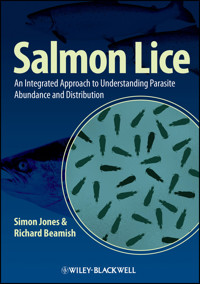
The salmon louse Lepeophtheirus salmonis is adapted to survive in hostile marine environments of the northern hemisphere, including an ability to parasitize several species of salmon. Salmonids are some of the most economically important and sought after fish for human consumption, and louse parasitism has a significant impact both on cultured and wild fish populations. Salmon Lice is a timely collection of the latest research on the cause and spread of lice infestations and management techniques being designed and implemented to combat this issue.
Salmon Lice provides a thorough single volume review of Lepeophtheirus salmonis, the key parasite standing in the way of sustainable and profitable production of salmonid fishes including salmon, trout and charr. Opening with a review of the biology, morphology, life cycle, and larval behavior of the parasite, Salmon Lice proceeds to review the distribution of planktonic larvae of salmon lice, addresses management techniques used in salmonid aquaculture and capture fisheries, provides a practical assessment of the salmon lice issue and explores potential solutions to the problem.
With comprehensive coverage of the biology and distribution of this harmful and ubiquitous parasite, Salmon Lice will be of value to fish health researchers, aquaculture and fisheries professionals, and seafood industry personnel to inform the management of both cultured and wild salmonid populations.
Key Features:
- In-depth coverage of a key parasite impacting viability and sustainability of salmonid fisheries and aquaculture
- Integrates parasite biology and hydrodynamic models in diverse coastal ecosystems
- Provides a practical assessment of the salmon louse issue
Reviews international salmon louse monitoring and management techniques used in salmonid fisheries and aquaculture
Sie lesen das E-Book in den Legimi-Apps auf:
Seitenzahl: 682
Veröffentlichungsjahr: 2011
Ähnliche



















Contents
Cover
Title Page
Copyright
List of Contributors
Foreword by Bob Kabata
Preface
Introduction: Lepeophtheirus salmonis— A Remarkable Success Story
Introduction
Salmon Louse Biology
Host–Parasite Relationships
Summary
Part I: The Distribution and Abundance of Planktonic Larval Stages of Lepeophtheirus salmonis: Surveillance and Modeling
Chapter 1: Modeling the Distribution and Abundance of Planktonic Larval Stages of Lepeophtheirus salmonis in Norway
Introduction
Methods to Determine Planktonic Louse Distribution and Abundance
Model Results of the Distribution and Abundance of Planktonic Salmon Lice
Concluding Remarks
Chapter 2: Abundance and Distribution of Larval Sea Lice in Scottish Coastal Waters
Scotland's Coastal Waters
Sea Lice in Scotland
Case Study: The Loch Torridon System
Modeling Sea Lice Dispersal in Loch Torridon
Conclusions
Summary
Chapter 3: Sea Louse Abundance on Farmed Salmon in the Southwestern New Brunswick Area of the Bay of Fundy
Introduction
Sea Louse Abundance on Farmed Salmon in Southwestern New Brunswick
Management Actions to Control Sea Lice in southwestern New Brunswick
Sea Louse Interactions between Farmed Salmon and Wild Fish in southwestern New Brunswick
Summary
Acknowledgments
Chapter 4: Modeling Sea Lice Production and Concentrations in the Broughton Archipelago, British Columbia
Introduction
Numerical Circulation Model
Particle Tracking
Sea Lice Modeling
Results and Comparisons with Data
Discussion and Conclusions
Summary
Acknowledgments
Part II: Salmon Louse Management on Farmed Salmon
Chapter 5: Salmon Louse Management on Farmed Salmon—Norway
The Salmonid Farming Industry
Regulation and Licensing
Legislation Related to Lice Management
Approaches to Sea Lice Management
National Salmon Watercourses and Fjords
Use of Coordinated Sea Lice Areas and Zones
Summary
Chapter 6: Ireland: The Development of Sea Lice Management Methods
Introduction
The National Monitoring Programme
The Development of Bay Management
Developments in Treatment Strategies
Recent Results and the Emergence of New Issues and Problems
The Development of a Strategy for Improved Pest Control on Irish Salmon Farms
Conclusions
Chapter 7: Salmon Louse Management on Farmed Salmon in Scotland
Historical Perspective
The Early Years: Identifying the Problem (1975–1989)
A Maturing Understanding: Management and Collaboration (1990–1999)
The “Modern” Era: Quantitative Epidemiology and Models (2000–Present)
Chapter 8: Sea Lice Management on Salmon Farms in British Columbia, Canada
Introduction
Sea Lice Species Infesting Salmon in British Columbia
Health Effects of L. salmonis in British Columbia
Sea Lice on Salmon Farms in British Columbia
Government Auditing of Industry Sea Lice Monitoring in British Columbia
Epidemiology of Sea Lice on Farmed Salmon in British Columbia
C. clemensi on Atlantic Salmon in British Columbia
L. salmonis on Atlantic Salmon in British Columbia
Hydrographic Effects on Abundance
Treatments for Sea Lice in British Columbia
Summary
Acknowledgments
Part III: Salmon Lice on Wild Salmonids in Coastal Zones: Present Status and Implications
Chapter 9: Present Status and Implications of Salmon Lice on Wild Salmonids in Norwegian Coastal Zones
Introduction
Physiology and Pathology of Lice Infections in Atlantic Salmon, Sea Trout, and Arctic Charr
Effects of Salmon Lice on Wild Sea Trout, Arctic Charr, and Atlantic Salmon in Coastal Zones and Fjords of Norway
Population Levels—Can Salmon Lice Regulate Populations of Wild Salmonids in Norway?
Summary
Chapter 10: Lepeophtheirus salmonis on Salmonids in the Northeast Pacific Ocean
Introduction
The Population Biology of Pink Salmon
L. salmonis on Juvenile Salmon in Nearshore Habitats
Overwintering Hosts of L. salmonis
Occurrence of C. clemensi on Juvenile Pacific Salmon
Impacts of L. salmonis on Juvenile Pacific Salmon
Impacts of L. salmonis on Populations of Pacific Salmon
Color plates
Index
This edition first published 2011, © 2011 by John Wiley & Sons, Inc.
Wiley-Blackwell is an imprint of John Wiley & Sons, formed by the merger of Wiley's global Scientific, Technical and Medical business with Blackwell Publishing.
Registered office: John Wiley & Sons Ltd, The Atrium, Southern Gate, Chichester, West Sussex, PO19 8SQ, UK
Editorial offices: 2121 State Avenue, Ames, Iowa 50014-8300, USA The Atrium, Southern Gate, Chichester, West Sussex, PO19 8SQ, UK 9600 Garsington Road, Oxford, OX4 2DQ, UK
For details of our global editorial offices, for customer services and for information about how to apply for permission to reuse the copyright material in this book please see our website at www.wiley.com/wiley-blackwell.
Authorization to photocopy items for internal or personal use, or the internal or personal use of specific clients, is granted by Blackwell Publishing, provided that the base fee is paid directly to the Copyright Clearance Center, 222 Rosewood Drive, Danvers, MA 01923. For those organizations that have been granted a photocopy license by CCC, a separate system of payments has been arranged. The fee codes for users of the Transactional Reporting Service are ISBN-13: 978-0-8138-1362-2/2011.
Designations used by companies to distinguish their products are often claimed as trademarks. All brand names and product names used in this book are trade names, service marks, trademarks or registered trademarks of their respective owners. The publisher is not associated with any product or vendor mentioned in this book. This publication is designed to provide accurate and authoritative information in regard to the subject matter covered. It is sold on the understanding that the publisher is not engaged in rendering professional services. If professional advice or other expert assistance is required, the services of a competent professional should be sought.
Library of Congress Cataloging-in-Publication Data
Salmon lice : an integrated approach to understanding parasite abundance and distribution / edited by Richard Beamish, Simon Jones. p. cm. Includes bibliographical references and index. ISBN-13: 978-0-8138-1362-2 (hardcover : alk. paper) ISBN-10: 0-8138-1362-X 1. Lepeophtheirus salmonis. 2. Lepeophtheirus salmonis–Control. 3. Lepeophtheirus salmonis– Geographical distribution. I. Beamish, Richard. II. Jones, Simon. QL444.C79S25 2011 639.3′756–dc23 2011016564
A catalogue record for this book is available from the British Library.
This book is published in the following electronic formats: ePDF 9780470961537; Wiley Online Library 9780470961568; ePub 9780470961544; Mobi 9780470961551
Disclaimer The publisher and the author make no representations or warranties with respect to the accuracy or completeness of the contents of this work and specifically disclaim all warranties, including without limitation warranties of fitness for a particular purpose. No warranty may be created or extended by sales or promotional materials. The advice and strategies contained herein may not be suitable for every situation. This work is sold with the understanding that the publisher is not engaged in rendering legal, accounting, or other professional services. If professional assistance is required, the services of a competent professional person should be sought. Neither the publisher nor the author shall be liable for damages arising herefrom. The fact that an organization or Website is referred to in this work as a citation and/or a potential source of further information does not mean that the author or the publisher endorses the information the organization or Website may provide or recommendations it may make. Further, readers should be aware that Internet Websites listed in this work may have changed or disappeared between when this work was written and when it is read.
List of Contributors
Trish L. Amundrud Marine Scotland Science Marine Laboratory Aberdeen, Scotland, United Kingdom
Melanie Andrews Kinki University Fisheries Research Laboratory Kushimoto, Wakayama, Japan
Lars Asplin Institute of Marine Research Bergen, Norway
Richard J. Beamish Pacific Biological Station Fisheries and Oceans Canada Nanaimo, British Columbia, Canada
Michael J. Beattie New Brunswick Department of Agriculture, Aquaculture and Fisheries St. George, New Brunswick, Canada
Pål Arne Bjørn Institute of Marine Research Bergen, Norway
Karin K. Boxaspen Institute of Marine Research Bergen, Norway
Blythe D. Chang St. Andrews Biological Station St. Andrews, New Brunswick, Canada
Piotr Czajko Department of Mechanical Engineering University of Victoria Victoria, British Columbia, Canada
Bengt Finstad Norwegian Institute for Nature Research Trondheim, Norway
Michael G.G. Foreman Institute of Ocean Sciences Fisheries and Oceans Canada Sidney, British Columbia, Canada
Moira Galbraith Institute of Ocean Sciences Fisheries and Oceans Canada Sidney, British Columbia, Canada
Philip A. Gillibrand National Institute for Water & Atmospheric Research Christchurch, New Zealand
Ming Guo Institute of Ocean Sciences Fisheries and Oceans Canada Sidney, British Columbia, Canada
Craig J. Hayward Tohoku University Institute for International Education Sendai, Miyagi, Japan
Barry W.H. Hill New Brunswick Department of Agriculture and Aquaculture St. George, New Brunswick, Canada
David Jackson Marine Institute Galway, Ireland
Simon R.M. Jones Pacific Biological Station Fisheries and Oceans Canada Nanaimo, British Columbia, Canada
Ian Keith Fisheries and Oceans Canada Courtenay, British Columbia, Canada
David L. Mackas Institute of Ocean Sciences Fisheries and Oceans Canada Sidney, British Columbia, Canada
Stuart J. Middlemas Marine Scotland Science Freshwater Laboratory Faskally, Pitlochry, Scotland
Diane Morrison Marine Harvest Canada Campbell River, British Columbia, Canada
Alexander G. Murray Marine Scotland Science Marine Laboratory Aberdeen, Scotland, United Kingdom
Barbara F. Nowak University of Tasmania National Centre for Marine Conservation and Resources Sustainability Launceston, Tasmania, Australia
Fred H. Page St. Andrews Biological Station St. Andrews, New Brunswick, Canada
Michael J. Penston Marine Scotland Science Marine Laboratory Aberdeen, Scotland, United Kingdom
Campbell C. Pert Marine Scotland Science Marine Laboratory Aberdeen, Scotland, United Kingdom
Crawford W. Revie University of Strathclyde Glasgow, Scotland, United Kingdom
Gordon Ritchie Marine Harvest Technical Centre Stavanger, Norway
Sonja M. Saksida British Columbia Centre for Aquatic Health Sciences Campbell River, British Columbia, Canada
Anne D. Sandvik Institute of Marine Research Bergen, Norway
Mark Sheppard Fisheries and Oceans Canada Courtenay, British Columbia, Canada
Dario J. Stucchi Institute of Ocean Sciences Sidney, British Columbia, Canada
Foreword
Ever since humans emerged in the primordial past as a distinct species, they sustained their populations in the manner that we referred to as hunter gatherers. In short, they lived as best they could, by utilizing what nature could provide. This was sufficient for as long as the human populations were small enough to survive on the stores of natural products, both plant and animal. As the populations increased in size, this way of providing the necessities of life was no longer satisfactory. The hunter gatherers slowly became farmers. Species of useful animals, too many to mention them all, were domesticated. Plants providing staple food were planted and harvested. Even some freshwater fish, able to be confined in small-scale environments, were cultivated.
Only one branch of this general development remained outside the scope of change: marine fisheries. Let us face it: marine fishermen are the last survivors of the hunting gathering economy. Physically barred from the environment inhabited by the species they hunt and gather, faced with the enormous size of that environment, they pursue the object of their hunt in the manner still akin to the old hit-and-miss way of their ancestors. Their methods have vastly improved, and their hunts began to provide truly bountiful returns. Some Russian experts estimated that marine fisheries yielded annually as much as 100,000 tons of fish during the last few decades.
This kind of drain on the resource could not continue indefinitely. It had to be reduced, if the stocks of marine fish were to survive. Slowly, the large, long-distance fishing fleets began to disappear, and restrictions on the size of catches had to be introduced. Finally, the inevitable happened. The first attempts at marine fish farming came into being. Salmon farms arrived at the scene.
As might have been expected, the initiation of husbandry, in addition to obvious benefits, brought with it a range of problems and controversies. Husbandry creates high-density populations of the husbanded species. Interactions of individuals in such populations facilitate exchanges between them, including the spread of diseases and parasites. Such effects have not been unknown in dense populations of husbanded land animals. Salmon farms are not exempt. Dense populations of farmed salmon are plagued with a number of parasites, the most notorious of which is a so-called sea louse, a caligid copepod Lepeophtheirus salmonis, capable of reaching high intensity and prevalence of infection.
The farms are not isolated. They occupy limited parts of the environment, which they share with the wild populations of the same species. Consequently, they inevitably pass on L. salmonis to the neighboring wild salmon. Since salmon constitutes the basis of a substantial and valuable fishery, it is not surprising that the imputed negative, even harmful, effects of salmon farms became a matter of bitter arguments. When a political party included in its program the abolition of these farms, the entire matter can be classified as biopolitics. Vast amounts of money are devoted to studies that may justify this attitude. And yet, the benefits that these farms provide in many areas of the world cannot be denied—both economic and social benefits. There are estimates of US$ 100 million losses annually, resulting from the damage caused by L. salmonis (farms by implication). At the same time, one comes across records showing that salmon farming has become the pillar of the economy of the coastal communities, not only in the places where it is relatively small, as in Ireland, but also among producers of vast quantities of farmed salmon, as in Norway. The export value of the Norwegian farmed salmon brought in over 18 billion in local currency in the years 2006 and 2007.
It cannot be denied that the salmon louse is harmful, sometimes very harmful to its salmon host, and that it would be much better to get rid of it. Since this is impossible, vigorous attempts are being made to reduce its numbers by all sorts of treatment, based on chemical medication, environmental manipulation, or both. So far, these attempts have met with limited success.
It is important to keep in mind that salmon farming exists in two oceans, the Atlantic and the Pacific. The latter, specifically along the coast of British Columbia, is specific in that it takes place in the area inhabited by very large stocks of wild salmon. The species farmed there is largely the Atlantic salmon, more amenable to farming than the Pacific salmon. Here too, the greatest concern presents the sea louse, L. salmonis. However, the most recent investigations have shown that this sea louse is not genetically identical with the Atlantic sea louse known under the same name.
It has been established that the sea lice from the farmed salmon are able to infect wild Pacific salmon. However, no evidence was found that this infection has very serious effects on the wild stocks. Indeed, the control measures in British Columbia aimed at curbing this infection proved to be more effective and required less effort than elsewhere. The concern exists that this might not continue and that the existing measures might cease to be effective. Research for alternative measures continues. Some investigations, which have already concluded that the deleterious effects of the sea louse are irredeemable and that curbing or completely removing salmon farming is the only acceptable measure, have not taken into account other factors that can adversely affect wild salmon stocks. There are many to be examined, to mention only the effects of spawning channels and other anthropomorphic artifacts known to have ill effects on the neighboring small wild stocks, the possible effects of the sea louse transmitted by nonsalmonid hosts, such as stickleback, herring, or even climatic fluctuations. After all, there are louse-infected wild salmon populations in the areas remote from the salmon farms. The advantages of the farm fallowing benefits have also been overestimated.
Clearly, the last word in this matter has not been spoken. There is still a lot to be considered and thoroughgoing urgent investigations of the sea louse problem are in full swing. A substantial amount of them have about reached the publication stage and are collected in the voluminous typescript, which is hereby introduced.
Bob Kabata
Preface
This book introduces the salmon louse, Lepeophtheirus salmonis, and summarizes its ecology defined by the biology of its hosts and the environment within which both the host and the parasite coexist. The chapters in the book describe the distribution of planktonic salmon lice larvae in the context of oceanographic models developed in geographically diverse regions and salmon biology. The role of open net pen salmon aquaculture in affecting the distribution and abundance of salmon lice is reviewed. In particular, common themes in parasite management such as the therapeutants used, Integrated Pest Management and Area Management Agreements are identified and discussed from regional perspectives to emphasize similarities and differences. Likewise, Scottish, Irish, Norwegian, and Canadian marine coastal habitats are described to emphasize unique and similar processes encountered in each region that are relevant to the distribution and survival of the parasite.
Open net pen farming of Atlantic salmon in the Northern Hemisphere occurs in coastal areas that are the natural habitat of the salmon louse. Farmed salmon populations serve as hosts to parasitic salmon lice and there is a perceived risk that transfer of salmon lice from farmed salmon will adversely impact wild salmon. The biotic and abiotic factors regulating abundance and distribution of salmon lice in coastal areas are poorly understood. The factors that affect the early marine survival of salmon are also poorly understood. This poor understanding in association with a rapidly expanding salmon farming industry and unexplained declines in salmon abundances focused international attention on the salmon louse. The book provides an objective and global assessment of this controversial topic and as such, will be a valuable resource for fisheries biologists and managers.
Simon JonesRichard Beamish Nanaimo, British Columbia
Introduction: Lepeophtheirus salmonis— A Remarkable Success Story
Craig J. Hayward, Melanie Andrews, and Barbara F. Nowak
Introduction
Lepeophtheirus salmonis, the salmon louse (Figure I.1), belongs to the Caligidae, a family of parasitic copepods collectively known as sea lice. Sea lice rank among the most notorious of parasites affecting cultured marine fish (Lester and Hayward 2006). L. salmonis is one of the most common species infesting Atlantic salmon (Salmo salar) in the Northern Hemisphere (Wootten et al. 1982; Pike 1989), and infection with this species is regarded as the most expensive health issue for the salmonid aquaculture industry (Boxaspen et al. 2007). The parasite also infects a range of other salmonid fish, both farmed and wild, as well as other unrelated fish such as the three-spined stickleback Gasterosteus aculeatus (see Jones et al. 2006), seabass Dicentrarchus labrax (see Pert et al. 2006), and saithe Pollachius virens (see Bruno and Stone 1990; Lyndon and Toovey 2001). Infestations can cause erosion of skin, most often on or near the head, with heavy infestations often resulting in host mortality (Finstad et al. 2000). L. salmonis is absent from sites with lowered salinity, and the most susceptible stage of the life cycle of salmon are smolts newly introduced to seawater (Wootten et al. 1982; Finstad et al. 2000).
Figure I.1 Adult salmon lice, L. salmonis, from the eastern North Pacific (redrawn from Kim 1998) and eastern North Atlantic (photographic credit: Craig Orr). (Data from Lester, R.J.G. and Hayward, C.J. 2006.)
In recent years, comprehensive reviews of the growing body of literature available on L. salmonis and other species of sea lice affecting salmonids have been provided by Wagner et al. (2008), Boxaspen et al. (2007), Boxaspen (2006), Costello (2006), Lester and Hayward (2006), Heuch (2005), 2004, Johnson and Fast (2004), Tully and Nolan (2002), and Pike and Wadsworth (1999).
For recent overviews of the prevention and control of L. salmonis and other sea lice infections in aquaculture, see Boxaspen et al. (2007) and Lester and Hayward (2006). Earlier discussions on this topic include those by Alderman (2002), Davies and Rodger (2000), Roth (2000), Pike and Wadsworth (1999), and Roth et al. (1993).
Salmon Louse Biology
Life Cycle
The life cycle of L. salmonis (Figure I.2), as with most other parasitic copepods, is direct: it requires only one host for completion, although more than one host individual may be involved.
Figure I.2 Life cycle of the salmon louse, L. salmonis (redrawn from Johnson 1998). (Data from Lester, R.J.G. and Hayward, C.J. 2006.)
L. salmonis also has the typical caligid complement of developmental stages (White 1942; Johannessen 1978; Schram 1993; Johnson and Albright 1991a, 1991b). After hatching out of eggs strings in the water column, there are two naupliar stages (designated “N1” and “N2”) that are free-living; next follows a copepodid stage (“C”) that must find and infect a fish; then follows four chalimus stages (“Ch1” to “Ch4”) that are tethered to a site on a host fish by a frontal filament; and then two preadult stages (“PA1” and “PA2”) and one adult stage (“A”) (Johnson and Albright 1991a, 1991b). The preadult and adult stages are also parasitic, but are mobile and can move over the surfaces of fish, and can also swim in the water column. Each stage is separated from the preceding stage by a molt (shedding of the outer cuticle, or “shell”), exposing a new cuticle underneath. The life cycle (whole or partial) was described previously (White 1942; Johannessen 1978; Schram 1993).
Although only one host is required for completion of the life cycle, mobile stages of L. salmonis can readily transfer from one host fish to another. Ritchie (1997) removed various stages of L. salmonis from farmed salmon in Scotland, and found that over a 4-day period, 63% of male lice and 52% of female lice transferred to new hosts. Similarly, in aquarium experiments with naïve salmon postsmolts and mobile stages of L. salmonis, 61% of males and 69% of females transferred to new hosts over a 4-day period (Ritchie 1997).
Temperature and Duration of Development Stages
The duration of the different developmental stages is directly dependent on water temperature (Lester and Hayward 2006). For all stages, the reduction in minimum development time associated with increasing water temperature is well described by Belehrádek's function (Stien et al. 2005). The generation time for is 8–9 weeks at 6°C, 6 weeks at 9°C, and 4 weeks at 18°C (Wootten et al. 1982; Stuart 1990). In Scotland, up to four generations may occur between May and October with a summer water temperature of 9–14°C (Wootten et al. 1977; Wootten et al. 1982). In Ireland, Tully (1989) recorded a generation time (ovigerous female to ovigerous female) of 56 days at 13.6°C (males took 52 days) in an experimental cage; Johnson and Albright (1991a) reported a generation time of 7.5–8 weeks (at 10°C) in the laboratory for originating from Pacific Canada. Under laboratory conditions, females from Atlantic Canada lived for up to 210 days, indicating that they can overwinter on salmonid hosts in the open ocean and return to coastal areas when the host fish returns to spawn (Mustafa et al. 2000c). The lifespan of adults under natural conditions has not been determined (Pike and Wadsworth 1999).
Lesen Sie weiter in der vollständigen Ausgabe!
Lesen Sie weiter in der vollständigen Ausgabe!
Lesen Sie weiter in der vollständigen Ausgabe!
Lesen Sie weiter in der vollständigen Ausgabe!
Lesen Sie weiter in der vollständigen Ausgabe!
Lesen Sie weiter in der vollständigen Ausgabe!
Lesen Sie weiter in der vollständigen Ausgabe!
Lesen Sie weiter in der vollständigen Ausgabe!
Lesen Sie weiter in der vollständigen Ausgabe!
Lesen Sie weiter in der vollständigen Ausgabe!
Lesen Sie weiter in der vollständigen Ausgabe!
Lesen Sie weiter in der vollständigen Ausgabe!
Lesen Sie weiter in der vollständigen Ausgabe!
Lesen Sie weiter in der vollständigen Ausgabe!
Lesen Sie weiter in der vollständigen Ausgabe!




