


6,99 €
Mehr erfahren.
- Herausgeber: Parkstone International
- Kategorie: Erotik
- Sprache: Englisch
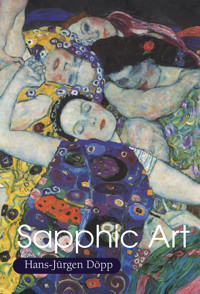
The poetess Sappho did not, in any way, facilitate the relationship between men and women, with her admirable Ode to Aphrodite which celebrates the love and sexuality between two women. With the liberalization of morals, female homosexuality is part of modern society and cannot be ignored. But what does history retain from these practices? How is the love between women appreciated? By infringing on the rules of past societies, how did these women live their particularity and their forbidden sexuality? This difficult exercise, undertaken by Professor Döpp, attempts to explain these censured pleasures, without inclining towards a certain voyeurism.
Das E-Book können Sie in Legimi-Apps oder einer beliebigen App lesen, die das folgende Format unterstützen:
Seitenzahl: 29
Veröffentlichungsjahr: 2019
Ähnliche










Layout:
Baseline Co. Ltd
Ho-Chi-Minh-City, Vietnam
© Parkstone Press International, New York, USA
© Confidential Concepts, worldwide, USA
© Image-Barwww.image-bar.com
All rights reserved.
No part of this publication may be reproduced or adapted without the permission of the copyright holder, throughout the world. Unless otherwise specified, copyright on the works reproduced lies with the respective photographers, artists, heirs or estates. Despite intensive research, it has not always been possible to establish copyright ownership. Where this is the case, we would appreciate notification.
ISBN: 978-1-64461-779-3
Hans-Jürgen Döpp
Sapphic Art
Contents
List of Illustrations
1.Sappho (Fresco from Pompeii), National Museum of Archaeology, Naples
2.Simon Solomon, Sappho and Erinna in the garden at Mitylene, 1864. Watercolour
3.Otto Schoff, 1925
4.Deveria, romantic lithograph, circa 1830
5.Deveria, romantic lithograph, circa 1830
6.Deveria, romantic lithograph, circa 1830 (detail)
7.Erotic photography of the period, 1880 to 1910
8.Frank von Bayros, 1909
9.The Fisherman, circa 1925
10.Gustave Courbet,The Sleep, 1866
11.Berthomme de Saint-André, 1927
12.Berthomme de Saint-André, 1927
13.Gustav Klimt, Nudes drawings
14.Albert Marquet, circa 1920
15.Hans Pellar
16.Anonymous, 1930
17.Paul Avril, circa 1910
18.Paul Avril, circa 1910
19.Paul Avril, circa 1910
20.Erich Godal (pseudonym), 1936
21.Campa (pseudonym), 1936
22.Henri Monnier, 1830
23.Erotic photography of the period, 1880 to 1910
24.Anonymous, circa 1930
25.Laszlo Boris, 1921
26.Godal (pseudonym), circa 1925
27.Courbouleix, circa 1935
28.Paul Emile Becat, 1948
29.Paul Emile Becat, 1948
30.Gerda Wegener, 1925
31.Gerda Wegener, 1925
32.Otto Kopp, circa 1910
33.Berthomme de Saint-André, 1927
34.Berthomme de Saint-André, 1927
35.Berthomme de Saint-André, 1927
36.Otto Schoff, 1925
37.Otto Schoff, 1925
38.Otto Schoff, 1925
39.Jean-Gabriel Domergue, 1924
40.Jean-Gabriel Domergue, 1924
41.Jean Morisot, 1925
42.Léon Bakst, circa 1925
43.Peter Fendi, vers 1835
44.Marcel Vertés, 1928
45.Félicien Rops, circa 1890
46.Attila Sassy, circa 1910
47.Attila Sassy, circa 1910
48.Ernst Gerhard, circa 1925
49.Margit Gaal, 1920
50.Jean-Gabriel Domergue, 1924
51.Otto Schoff, 1925
52.Otto Schoff, 1925
53.Helmuth,Lesbian Pleasure
54.Erotic photography of the period from 1880 to 1910
55.Erotic photography of the period from 1880 to 1910
56.Wilhelm Wagner, circa 1920
57.Wilhelm Wagner, circa 1920
58.Wilhelm Wagner, circa 1920 (detail)
Notes
“Are they women?” is the title of a French novel about lesbian love. For centuries, men have assumed the right to write about lesbianism and express opinions about it. They could hardly ever accept the phenomenon. The author of this essay is also a man, but he intends to write, not so much about lesbian love itself as about the phallocratic view of it.
This began very early with opinions of Sappho, the celebrated Greek erotic poet, born round about 612 B.C.E. in Eresos on the island of Lesbos. Her private life was denigrated and, in complete contradiction to the facts, she was ridiculed as a nymphomaniac. Sappho’s liaison with the handsome Phaon can be dismissed as a fable as can her supposed suicide by leaping into the sea because he had grown weary of her. (The metaphor of a suicidal plunge from a cliff was during that period a literary image for the attempt to free oneself from the suffering caused by love-madness or indeed by the ecstasy of love. It is incorrect to interpret it as historical fact.)




