


18,99 €
Mehr erfahren.
- Herausgeber: John Wiley & Sons
- Kategorie: Geisteswissenschaft
- Serie: CPC - Contemporary Political Communication
- Sprache: Englisch
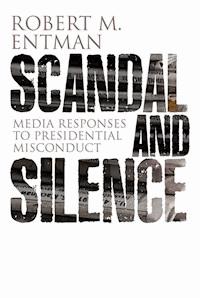
This timely and engaging book challenges the conventional wisdom on media and scandal in the United States. The common view holds that media crave and actively pursue scandals whenever they sense corruption. Scandal and Silence argues for a different perspective. Using case studies from the period 1988-2008, it shows that:
- Media neglect most corruption, providing too little, not too much scandal coverage;
- Scandals arise from rational, controlled processes, not emotional frenzies - and when scandals happen, it’s not the media but governments and political parties that drive the process and any excesses that might occur;
- Significant scandals are indeed difficult for news organizations to initiate and harder for them to maintain and bring to appropriate closure;
- For these reasons cover-ups and lying often work, and truth remains essentially unrecorded, unremembered.
Sometimes, bad behavior stimulates an avalanche of media attention with demonstrable political consequences, yet other times, equally shoddy activity receives little notice. This book advances a theoretical model to explain these differences, revealing an underlying logic to what might seem arbitrary and capricious journalism. Through case studies of the draft and military scandals involving Dan Quayle, George W. Bush, Bill Clinton and John Kerry; alleged sexual misconduct of politicians including but not limited to Clinton; and questionable financial dealings of Clinton and George W Bush, the book builds a new understanding of media scandals which will be essential reading for anyone concerned with the relationship between media and democracy today.
Sie lesen das E-Book in den Legimi-Apps auf:
Seitenzahl: 502
Veröffentlichungsjahr: 2013
Ähnliche




















Table of Contents
Cover
Contemporary Political Communication
Title page
Copyright page
Dedication
Figures
Tables
Acknowledgments
1 High Crimes or Misdemeanors?
Understanding scandals
Themes
The plan of the book
2 Analyzing Media and Presidential Scandal
Taxonomy of presidential scandal
Cascading network activation and scandal
Scandalizing public opinion
Networks in production of scandals
Scandal cascades
The cascade model in operation
Conclusion
3 Private Lives in the Public Sphere: What Do Journalists Know, and When Do They Tell It?
Reporting the Bush allegations
Relative visibility of Flowers and Fitzgerald
Private discourse
Publicized knowledge: Clinton’s infidelity
Dukakis, Gingrich and Dole
Explaining disparities
4 Secret Sins of 2008: The McCain, Edwards and Clinton Families’ Values
John McCain – and his wife
Analyzing media coverage of Game Change
Covering (up) John Edwards
The Internet’s role in the production of scandal
5 Dodging Scandals – and the Draft
Quayle vs. Bush
The worst-case scenario: Clinton
Media decision rules and cultural resonance shape scandal
Conclusion
6 Rathergate: From a Scandal of Politics to a Scandal of Journalism
Reporting on the 60 Minutes II report
Ignoring the smoking gun
Accepting the Bush frame
Economic limits to scandal journalism
Cultural incongruence of Bush as AWOL
Bias toward reducing pressure
Conclusion
7 Harkening to Other Matters: What News Looks Like When a Scandal is Silenced
Elements of the Harken misconduct
Insider trading and reporting
Blocked scandal
Harken coverage by the numbers
Explanations
Conclusion
Appendix to chapter 7: Harken data tables
8 Silenced Scandals of Grave Misconduct
Missing weapons of mass destruction
Tracing the path of non-scandal
How the news deflected a presidential scandal
Discussion
The Downing Street memo scandal and the contrast with America
Why the media slept
Bush–Cheney vs. Plame–Wilson
Framing Scooter Libby
Explaining the Plame–Libby connection
Conclusion
9 Recalibrating Scandal and Silence
What should the media do and when should they do it?
Character in sex scandals
Beyond hypocrisy
Calibrating scandals of the social realm
Calibrating the most costly scandals
Endemic corruption and partisan competition
Next steps
Conclusion
References
Index
Contemporary Political Communication
Robert M. Entman, Scandal and Silence
Max McCombs, R. Lance Holbert, Spiro Kiousis and Wayne Wanta, The News and Public Opinion
Craig Allen Smith, Presidential Campaign Communication
Copyright © Robert M. Entman 2012
The right of Robert M. Entman to be identified as Author of this Work has been asserted in accordance with the UK Copyright, Designs and Patents Act 1988.
First published in 2012 by Polity Press
Polity Press
65 Bridge Street
Cambridge CB2 1UR, UK
Polity Press
350 Main Street
Malden, MA 02148, USA
All rights reserved. Except for the quotation of short passages for the purpose of criticism and review, no part of this publication may be reproduced, stored in a retrieval system, or transmitted, in any form or by any means, electronic, mechanical, photocopying, recording or otherwise, without the prior permission of the publisher.
ISBN-13: 978-0-7456-4762-3
ISBN-13: 978-0-7456-4763-0(pb)
ISBN-13: 978-0-7456-6052-3(Multi-user ebook)
ISBN-13: 978-0-7456-6051-6(Single-user ebook)
A catalogue record for this book is available from the British Library.
The publisher has used its best endeavours to ensure that the URLs for external websites referred to in this book are correct and active at the time of going to press. However, the publisher has no responsibility for the websites and can make no guarantee that a site will remain live or that the content is or will remain appropriate.
Every effort has been made to trace all copyright holders, but if any have been inadvertently overlooked the publisher will be pleased to include any necessary credits in any subsequent reprint or edition.
For further information on Polity, visit our website: www.politybooks.com
In memory of my beloved father, Bernie Entman (1922–2010), and for my sister Barbara Synnott and her children Michael, Katherine and Thomas
Figures
Tables
Acknowledgments
This book benefited enormously from assistance from the diligent, intelligent and creative students at the School of Media and Public Affairs (SMPA) of the George Washington University. The most important of these are graduate students Abby Jones, Lauren Martens, Morgan Dibble, Gerard Matthews, Jesse Holcomb, and undergraduates Zack Hutson and Eric Walker. Abby Jones spent the longest time working with me and deserves particular thanks for her extraordinary help on this and other projects. All of these students provided not merely assistance but critique and suggestions, and Morgan also helped in designing the graphic figures for the book. Dongxiao Li of Zhejiang University spent a year at the SMPA writing her dissertation on scandal and media in China, and I benefited from our cross-cultural discussions. Ji-Hyeun Kwan and Matthew Iles were able and helpful research assistants during the 2008–9 academic year, while I was Visiting Professor of Public Policy at Duke. Above all, I’d like to thank Dr. Carole V. Bell who, as a post-doctoral fellow at SMPA during 2010–11, offered indispensable insights and research, along with a sharp critical eye. In addition Carole’s help with my teaching duties when I took ill was generous and greatly appreciated. The support of Dr. Kimberly Gross, Associate Director of SMPA, and Frank Sesno, Director, also helped enable the writing of this book in a variety of ways for which I am grateful. The idea of writing a book about media and scandal occurred to me during a stimulating week in 2001 spent as the Stice Lecturer in Social Science at the University of Washington. In the decade since then, I have enjoyed the support, questions and insights of many fine colleagues at NC State University, Duke and GW; they made this a better book.
As always, special thanks and love go to my wife Francie Seymour and to our children Max and Emily. I couldn’t have done it without them.
1
High Crimes or Misdemeanors?
To an outside observer, the Washington scandal machine may seem to operate at random. The same media that roundly condemned President George W. Bush for his passivity in the face of Hurricane Katrina (see Bennett, Lawrence & Livingston 2007) failed to get worked up by his inaction as economic calamity loomed in 2008. The same news organizations that endlessly probed the marital psychology of Bill and Hillary Clinton passed over the unconventional aspects of John and Cindy McCain’s marriage (see Heilemann & Halperin 2010). And journalists came down hard on 1988 vice presidential nominee Dan Quayle for using family connections to evade Vietnam by entering the National Guard, yet in 2000 barely mentioned George W. Bush’s similar record.
If corruption, immorality or incompetence sometimes generate a punishing avalanche of negative publicity, what about the many instances where the media ignore or downplay serious misdeeds? And if in some instances intense attention focuses on private trespasses, how can we account for the more numerous times when politicians enjoy a generous zone of privacy? Over the years, in fact, journalists’ responses to transgressions of comparable gravity – or triviality – have varied dramatically. Concentrating on US presidents and aspirants to the White House, the level at which the stakes are highest and the media’s watchdog duties most pressing, this book reveals the underlying logic to what might seem arbitrary and capricious journalism.
Although the media’s scandal choices do possess an internal logic, the journalistic swings from overkill to neglect are problematic for democracy. Holding governments accountable and reducing the tendency of power to corrupt requires that attention to scandals be properly calibrated. As just suggested and the book will show, American media do not, and perhaps cannot, regulate scandal news to consistently match up with the seriousness of official misdeeds. Nor does scandal journalism give similar treatment to equivalent or even identical misconduct from one case to another. Exploring and explaining poorly calibrated scandal news, the inconsistency and the lack of proportional fit between the societal costs of official misbehavior and the intensity of media attention, is this book’s mission.
Many have observed that the media often seem to pursue trifling mischief far beyond rational judgment of the its underlying severity, which diverts the attention of the public and politicians alike, while discouraging fundamentally honest, competent potential leaders from entering politics (see Sabato, Stencil & Lichter 2000; Davis 2007). What’s far less understood or debated is the watchdogs’ frequent hesitation to bark even after they sense trouble. When the media ignore evidence, show only glancing interest or fail to frame the acts as a scandal, misdeeds tend to evanesce, often going unattributed and even unrecognized. Seemingly capricious treatment of scandal weakens the disincentives to corrupt behavior that a vigorous free press should maintain.
Perhaps paradoxically, this remains true in the Internet age. Information is more widely and cheaply available, but the fragmentation of the public sphere into more specialized (and polarized) ideological enclaves (see Gitlin 1998; Hindman 2008) means scandalous information about misconduct often cannot reach the critical mass needed to initiate a full-blown scandal. All the Internet, infotainment and social media diverting the audience make it more urgent, not less, that scholars and journalists themselves understand the forces that lead the New York Times, Washington Post and other major print, broadcast and cable news organizations to magnify some scandals while neglecting others. And, not coincidentally, websites run by these leaders of the legacy media also rank among the top 20 devoted to news (Pew Project for Excellence in Journalism 2010), so this focus does not mean ignoring the Internet. As we’ll see, at the close of the twenty-first century’s first decade, such innovative channels for news as the blogosphere, Facebook and Twitter could not create politically meaningful scandals without assistance from traditional national outlets. These remained the crucial gatekeepers, the ones whose imprimatur lent political heft to scandal.
Lesen Sie weiter in der vollständigen Ausgabe!
Lesen Sie weiter in der vollständigen Ausgabe!
Lesen Sie weiter in der vollständigen Ausgabe!
Lesen Sie weiter in der vollständigen Ausgabe!
Lesen Sie weiter in der vollständigen Ausgabe!
Lesen Sie weiter in der vollständigen Ausgabe!
Lesen Sie weiter in der vollständigen Ausgabe!
Lesen Sie weiter in der vollständigen Ausgabe!
Lesen Sie weiter in der vollständigen Ausgabe!
Lesen Sie weiter in der vollständigen Ausgabe!




