


58,99 €
Mehr erfahren.
- Herausgeber: John Wiley & Sons
- Kategorie: Geisteswissenschaft
- Sprache: Englisch
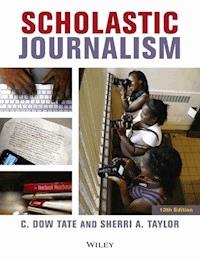
The new 12th edition of Scholastic Journalism is fully revised and updated to encompass the complete range of cross platform multimedia writing and design to bring this classic into the convergence age.
- Incorporates cross platform writing and design into each chapter to bring this classic high school journalism text into the digital age
- Delves into the collaborative and multimedia/new media opportunities and changes that are defining the industry and journalism education as traditional media formats converge with new technologies
- Continues to educate students on the basic skills of collecting, interviewing, reporting, and writing in journalism
- Includes a variety of new user-friendly features for students and instructors
- Features updated instructor manual and supporting online resources, available at www.wiley.com/go/scholasticjournalism
Sie lesen das E-Book in den Legimi-Apps auf:
Seitenzahl: 1115
Veröffentlichungsjahr: 2013
Ähnliche




















CONTENTS
ABOUT THE AUTHORS
PREFACE
ACKNOWLEDGMENTS
WALK THROUGH
TIMELINE
Journalism key events
Major historical events
Scholastic journalism events
1 UNDERSTANDING NEWS
WHERE DOES NEWS COME FROM?
NEWS VALUE
THE IMPORTANCE OF AUDIENCE
BEAT REPORTING
FEATURIZING NEWS
NEWS IN OTHER CONTEXTS
SOURCING NEWS
OTHER FACTORS AFFECTING COVERAGE
CONCLUSION
2 INTERVIEWING AND REPORTING
INTERVIEWING
OBSERVATION
RELIABILITY OF SOURCES
INTERNET RESEARCH
CONVENTIONAL RESEARCH
CONCLUSION
3 NEWS WRITING
NEWS WRITING
THE NEWS LEAD
ALTERNATIVE NEWS LEAD APPROACHES
FEATURE LEADS
DEVELOPING A NEWS STORY
POTENTIAL WEAKNESSES IN NEWS WRITING
ONLINE NEWS COVERAGE
USING QUOTES AND ATTRIBUTION
A NEWS WRITER’S CHECKLIST
CONCLUSION
4 WRITING SPECIALTY STORIES
HEALTH WRITING
ACADEMIC WRITING
DEATH COVERAGE
SPEECH STORIES
POLL STORY
CIVIC JOURNALISM
YEARBOOK WRITING
CONCLUSION
5 WRITING FEATURE STORIES
THE FEATURE STORY IDEA
THE FEATURE-WRITING PROCESS
ELEMENTS OF FEATURE WRITING
FEATURE STORY TYPES
HUMAN INTEREST STORY
INFORMATIVE FEATURE STORY
OTHER TYPES OF FEATURES
CONCLUSION
6 SPORTSWRITING
WRITING THE SPORTS STORY
TYPES OF SPORTS STORIES
FEATURE LEADS FOR SPORTS STORIES
PACKAGED COVERAGE
SPORTS WEBCASTING
CONCLUSION
7 OPINION WRITING
DEVELOPING EDITORIAL IDEAS
ROLE OF THE EDITORIAL
OPINION VS. FACT
EDITORIAL WRITING: THE FORMULA
EDITORIAL LEADS
DEVELOPING THE ARGUMENT
EDITORIAL CARTOON
COLUMNS
BLOG WRITING
REVIEW WRITING
REVIEWING TIPS
PACKAGED OPINION COVERAGE
CONCLUSION
8 IN-DEPTH REPORTING
FINDING TOPICS FOR IN-DEPTH COVERAGE
GETTING STARTED
WRITING THE IN-DEPTH STORY
THE NEED FOR ACCURACY
CONCLUSION
9 COACHING WRITERS AND EDITING COPY
THE COACHING PROCESS
PROOFREADING AND CORRECTING A STORY
COMMON EDITING MISTAKES
USING JOURNALISTIC STYLE
COACHING WRITING CONTINUES
CONCLUSION
10 WRITING HEADLINES
HEADLINES: THE BASICS
THE APPEARANCE OF HEADLINES
WRITING A HEADLINE
FEATURE HEADLINES
CONCLUSION
11 TYPOGRAPHY AND PRODUCTION
TYPE: THE BASICS
CHOOSING TYPE
PRODUCTION AND PRINTING
CONCLUSION
12 NEWSPAPER LAYOUT AND DESIGN
THE IMPORTANCE OF DESIGN
PACING THE NEWSPAPER’S DESIGN
CONCLUSION
13 YEARBOOK DESIGN
SPEAKING THE LANGUAGE
GETTING READY TO DESIGN
DESIGNING THE PAGES
SPECIAL CONSIDERATIONS
DVD AND INTERACTIVE COVERAGE
THE USE OF COLOR
CONCLUSION
14 ONLINE JOURNALISM
CREATING WEB PUBLICATIONS
INVOLVING THE READERS
ENHANCED YEARBOOK CONTENT
DESIGN OF THE WEBSITE
COOPERATIVE EFFORTS
CONCLUSION
15 VISUAL STORYTELLING: PICTURES, ART AND GRAPHICS
THE IMPORTANCE OF VISUALS
PHOTOGRAPHS
TELLING STORIES THROUGH IMAGES
DIGITAL SHOOTING
CAPTIONS AND CUTLINES
PHOTO EDITING
ART AND ILLUSTRATIONS
INFORMATION GRAPHICS
OTHER GRAPHIC FORMS
CONCLUSION
16 ADVERTISING IN NEWSPAPERS AND YEARBOOKS
CREATING AN ADVERTISING PROGRAM
CREATING AN ADVERTISEMENT
CONCLUSION
17 STUDENT PRESS LAW
WHO, WHAT, WHERE, WHEN AND HOW – AND STUDENT PRESS LAW
THE FIRST AMENDMENT
THE SUPREME COURT AND SPEECH IN SCHOOL
CONCLUSION
18 ETHICS FOR STUDENT JOURNALISTS
WHAT IS ETHICS?
ETHICS, THE LAW AND THE FIRST AMENDMENT
MEDIA ETHICS
COMMON ETHICAL ISSUES JOURNALISTS FACE
ETHICAL LAPSES – GAFFES, QUANDARIES AND JOURNALISTIC FELONIES
JOURNALISM CODES OF ETHICS
CONCLUSION
19 CAREERS IN THE MEDIA
STUDYING MEDIA IN HIGH SCHOOL
AFTER HIGH SCHOOL
AFTER COLLEGE
CONCLUSION
PROFESSIONAL AND STUDENT ORGANIZATIONS
GLOSSARY
INDEX
ONLINE RESOURCES
These additional resources for students and instructors are available at
www.wiley.com/go/scholasticjournalism.
STUDENT MATERIALS
Glossary of all key terms
Library of useful links from the text
Contact information for professional and student organizations
List of additional resources
INSTRUCTOR’S MANUAL
Introduction
Learning objectives for each chapter
Narratives for the end-of-chapter exercises
Answers to test your knowledge and quick exercises by chapter
Key terms defined by chapter
Additional exercises for each chapter
This twelfth edition first published 2014© 2014 John Wiley & Sons, Inc.
Edition History: Iowa State University Press (9e, 1996); Iowa State Press (10e, 2001); Blackwell Publishing Ltd (11e, 2007)
Registered OfficeJohn Wiley & Sons Ltd, The Atrium, Southern Gate, Chichester, West Sussex, PO19 8SQ, UK
Editorial Offices350 Main Street, Malden, MA 02148-5020, USA9600 Garsington Road, Oxford, OX4 2DQ, UKThe Atrium, Southern Gate, Chichester, West Sussex, PO19 8SQ, UK
For details of our global editorial offices, for customer services, and for information about how to apply for permission to reuse the copyright material in this book please see our website at www.wiley.com/wiley-blackwell.
The right of C. Dow Tate and Sherri A. Taylor to be identified as the authors of this work has been asserted in accordance with the UK Copyright, Designs and Patents Act 1988.
All rights reserved. No part of this publication may be reproduced, stored in a retrieval system, or transmitted, in any form or by any means, electronic, mechanical, photocopying, recording or otherwise, except as permitted by the UK Copyright, Designs and Patents Act 1988, without the prior permission of the publisher.
Wiley also publishes its books in a variety of electronic formats. Some content that appears in print may not be available in electronic books.
Designations used by companies to distinguish their products are often claimed as trademarks. All brand names and product names used in this book are trade names, service marks, trademarks or registered trademarks of their respective owners. The publisher is not associated with any product or vendor mentioned in this book.
Limit of Liability/Disclaimer of Warranty: While the publisher and author(s) have used their best efforts in preparing this book, they make no representations or warranties with respect to the accuracy or completeness of the contents of this book and specifically disclaim any implied warranties of merchantability or fitness for a particular purpose. It is sold on the understanding that the publisher is not engaged in rendering professional services and neither the publisher nor the author shall be liable for damages arising herefrom. If professional advice or other expert assistance is required, the services of a competent professional should be sought.
Library of Congress Cataloging-in-Publication data is available for this book.
9780470659335 (hardback)9780470659342 (paperback)
A catalogue record for this book is available from the British Library.
Cover images used courtesy of Sherri A. TaylorCover design by Simon Levy
ABOUT THE AUTHORS
C. Dow Tate is a journalism teacher at Shawnee Mission East High School in Prairie Village, Kansas, and the director of the Gloria Shields All-American Publication Workshop sponsored by Dallas County Schools. In 2011, he was named a Kansas Teacher of the Year finalist. He was inducted into the Scholastic Journalism Hall of Fame at the University of Oklahoma and was named a Texas Legend, as one of the most influential people in the state’s 75-year scholastic journalism history. His students’ publications – the newspaper, yearbook and news website – have earned the nation’s highest honors, including the National Scholastic Press Association’s National Pacemaker and the Columbia Scholastic Press Association’s Gold Crown. Tate has been named the Dow Jones Newspaper Fund’s National High School Journalism Teacher of the Year as well as the Texas Max R. Haddick Teacher of the Year.Sherri A. Taylor teaches graphic design in the Multimedia, Photography and Design Department of the S.I. Newhouse School of Public Communications at Syracuse University. She is also Director of the Empire State School Press Association at Syracuse University, and Director of the School Press Institute, a summer journalism workshop for high school students. As a high school teacher in Irving, Texas, she advised a state and national award-winning yearbook and newspaper. She has been inducted into the Scholastic Journalism Hall of Fame at the University of Oklahoma, was named a Pioneer from the National Scholastic Press Association and received a Gold Key from the Columbia Scholastic Press Association. She also received the Max R. Haddick Teacher of the Year award, and named a Texas Legend. She has judged the Society of News Design’s international competition and judged the Katie Awards for the Dallas Press Club. She advises a magazine at Syracuse University, MPJ, which has won both Associated Collegiate Press Pacemakers and Society of Professional Journalists regional and national Best College Magazine awards.Roy S. Gutterman (author of Chapters 17 and 18) is an associate professor of communications law and journalism and director of the Tully Center for Free Speech at the S.I. Newhouse School of Public Communications at Syracuse University. He started in journalism at The Fanscotian, the student newspaper for Scotch Plains – Fanwood High School in New Jersey, and went on to work as a reporter for the Cleveland Plain Dealer. He practiced law and writes and speaks on First Amendment and free speech and free press issues.
PREFACE
A GROUP OF FRIENDS CHATTER OUTSIDE the band hall. The phone buzzes heralding a new text. Sirens scream outside the chemistry lab windows. So what are they talking about? What does the text say? Where are the police going? These are the questions any student would have.
Students may not realize it, but their inborn curiosity is a huge asset. If they like to ask questions and get answers, they have a journalist’s instincts. Their hands may not shoot up as often as they did in second grade, but we know that those questions still bounce around in their heads. Scholastic journalism provides an outlet, a forum that encourages students to explore and apply their natural curiosity.
This textbook builds on our desire to know what is going on in the world around us. Students will learn how to collect information through interviewing and research. They’ll learn to communicate through text, design and photos. They’ll learn to create stories that are relevant, accurate and important for their school, their classmates, their audience.
While we’ve seen numerous newspapers shut down in the last decade, we understand that journalism isn’t dying, it’s merely evolving. The range of media at our fingertips is constantly growing. In this tumultuous era of 24-hour news, enhanced by the opportunities of social and new media, the need for scholastic journalism training is also growing. The skills that young journalists learn – writing, designing, questioning, problem-solving, computing – are as valuable now as ever. Giving young people the skills to think for themselves will serve the generation and the public well.
Good journalism is alive in student journalism programs across the country. In the following pages you’ll find a wide array of examples showcasing articulate, insightful and creative student writing, photojournalism and design in school websites, newsmagazines, newspapers and yearbooks. High school reporters across the country are tackling relevant stories that impact their classmates and communities. The school reporter can tell the story of the softball player with the stamina to battle through cancer, highlight a teacher’s musical success on YouTube or enlighten an audience to the dangers of prescription drug abuse.
This textbook, the latest edition in the book’s 60+ year history, embraces the changes that the Internet has brought to journalism. Students will learn the basics of journalism to be used in blogs or webcasts, online galleries and online posts.
T his book is written for the 21st-century classroom. It’s for the classroom filled with students who are constantly bombarded with texts, tweets and fast-moving information. And it’s for the teachers who have to prepare those students to be competitive in an ever-changing marketplace. This edition has been revised to include more user-friendly features. The Test Your Knowledge questions and Quick Exercises break up the text into manageable chunks and offer readers the chance to check their comprehension and apply their new skills throughout each chapter. The weblinks provide quick references and resources for interactive and extended learning possibilities. An instructor’s manual and wealth of supporting online resources to accompany the book can also be found at www.wiley.com/go/scholasticjournalism.
Whether the information comes through a mimeo-graphed paper or a podcast, we will always have an interest in the life around us and there will always be a need for curious minds to inform, educate and entertain us. And beyond scholastic journalism, we believe the skills students learn from this textbook will benefit them – in journalism or in whatever career they pursue.
In the fast-changing world of technology and mass media, vibrant fresh ideas often come from the next generation. We encourage students to have the confidence to be creative visionaries. We believe this book will provide the foundation for strong scholastic journalists who can become active, thoughtful and responsible members of the media and society.
ACKNOWLEDGMENTS
WE’D LIKE TO THANK A long list of teachers, colleagues, friends and corporations who helped us in the preparation of the 10th, 11th and 12th editions. Their support, insight and help in providing permission to use material from their newspapers and yearbooks have been invaluable in producing this textbook.
Kathryn Abbruzzese-Browning, Bishop Snyder High School, Jacksonville, Fla.Wasim Ahmad, School of Journalism, Stony Brook University, Stony Brook, N.Y.Logan Aimone, National Scholastic Press AssociationMartha Akers, Loudoun Valley High School, Purcellville, Va.Genaro C. Armas, Associated Press, State College, Pa.Dan Austin, Casa Roble High School, Orangevale, Calif.Crissie Ballard, Anderson High School, Austin, TexasMichelle Balmeo, Monta Vista High School, Cupertino, Calif.Elizabeth M. Barberio, WileyJavonna Bass, Boyd High School, McKinney, TexasRobert and Penny Belsher, Ferris, TexasSue Blackmon, Klein Forest High School, Houston, TexasJason Block, Prospect High School, Mount Prospect, Ill.John Boogert, The Wichita Eagle, Wichita, Kan.Wayne Brasler, University High School, Chicago, Ill.Jen Bray, WileyDeanne Brown, Westlake High School, Austin, TexasReneè Burke, William R. Boone High School, Orlando, Fla.Jennifer Buske-Sigal, (formerly) Washington Post, Washington, D.C.Chaz Busuttil, Woodlands High School, Hartsdale, N.Y.Robert Butler, Butler’s Cinema Scene, http://butlerscinemascene.com/. Kansas City, Mo.Andy Cantrell, Findlay High School, Findlay, OhioKeith Carlson, Naperville High School, Naperville, Ill.Erin Castellano, Clayton High School, Clayton, Mo.Angela Cave, The Evangelist, Albany, N.Y.Dave Cheng, St. Elizabeth Catholic High School, Thornhill, ON, CanadaWilliam G. Connolly, The New York TimesJudi Coolidge, (formerly) Bay Village High School, Bay Village, Ohio; Balfour Yearbooks, Dallas, TexasAshlee Crane, Shawnee Mission Northwest High School, Shawnee, Kan.Nicolet Danese, Monta Vista High School, Cupertino, Calif.Brennan Davis, Irmo High School, Columbia, S.C., OhioCharles Davis, University of Missouri, Mo.Mike Davis, One28 Media, Syracuse, N.Y. (formerly) The Oregonian, Portland and The Albuquerque Tribune, New MexicoLane DeGregory, St. Petersburg Times, St. Petersburg Fla.John Dent, Dos Pueblos Senior High School, Goleta, Calif.Steve Dorsey, (formerly) R + D, Detroit Media Partnership, Detroit, Mich.Mary Kay Downes, Chantilly High School, Chantilly, Va.Drake University, Des Moines, IowaJennifer Dusenberry, Washington, D.C.Mitch Eden, Kirkwood High School, Kirkwood, Mo.Michelle Edwards, Montgomery Blair High School, Silver Spring, Md.Patricia Fels, Sacramento Country Day School, Sacramento, Calif.Cynthia Ferguson, Oxford High School, Oxford, Miss.BrendaField, Glenbrook South High School, Glenview, Ill.RobertFlores, ESPN.comKriti Garg, Monta Vista High School, Cupertino, Calif.Katherine Gazella, St. Petersburg Times, St. Petersburg, Fla.Jon Glass, S.I.Newhouse School of Public Communications, Syracuse University, Syracuse, N.Y. (formerly) Palm Beach Post.com, Palm Beach, Fla.Andrew Goble, Kansas City, Mo.Anthony R. Golden, S.I. Newhouse School of Public Communications, Syracuse University, Syracuse, N.Y.Sophie Gordon, Francis Howell North High School, St. Charles, Mo.Karl Grabaugh, Granite Bay High School, Granite Bay, Calif.Sue Grady, Hindsale Central High School, Hinsdale, Ill.Mark Graney, WileyKim Green, Columbus North High School, Columbus, Ind.JiaYu Griegel, Seattle, Wash.Charlotte Grimes, S.I. Newhouse School of Public Communications, Syracuse University, Syracuse, N.Y.Kathy Habiger, Mill Valley High School, Shawnee, Kan.LaJuana Hale, Marcus High School, Flower Mound, TexasSandy Hall-Chiles , Yavneh Academy, Dallas, TexasCharla Harris, Pleasant Grove High School, Texarkana, TexasBobby Hawthorne, Austin, TexasSusan Houseman, Conestoga High School, Berwyn, Pa.Rod Howe, Westside High School, Omaha, Neb.Dean Hume, Lakota East High School, Liberty Township, OhioCynthia Hyatt, Conestoga High School, Berwyn, Pa.Kim Isbell, Humboldt High School, Humboldt, Kan.Paul Kandell, Palo Alto High School, Palo Alto, Calif.Frances Johnson, Armed Forces Services CorporationJim Jordan, Del Campo High School, Fair Oaks, Calif.Linda Kane, (formerly) Naperville Central High School, Naperville, Ill.Joel Kaplan, S.I. Newhouse School of Public Communications, Syracuse University, Syracuse, N.Y.Crystal Kazmierski, Arrowhead Christian Academy, Redlands, Calif.Lori Keekley, St. Louis Park High School, St. Louis Park, Minn.Marilyn Kelsey, Bloomington High School, Bloomington, Ind.Jack Kennedy, (formerly) Iowa City High School, Iowa City, IowaJason King, ESPN.comDavid Kirkpatrick, MarketingSherpaJessica Klebanoff, WileyDavid Knight, Lancaster, S.C.Nancy Kruh, Dallas Morning News, Dallas, TexasIan Lague, (formerly) Oakland, Calif.Corey Lau, Orangevale, Calif.Pete LeBlanc, Antelope High School, Antelope, Calif.Frank LoMonte, Student Press Law CenterGary Lundgren, Jostens Yearbooks, Minneapolis, Minn.Leland Mallett, Legacy High School, Mansfield, TexasDan Mancoff, Riverside Brookfield High School, Riverside, Ill.Aaron Manfull, Francis Howell North High School, St. Charles, Mo.Jeanette Marantos, Wenatchee High School, Wenatchee, Wash.Sharon Martin, Wichita East High School, Wichita, Kan.Susan Massy, Shawnee Mission Northwest High School, Shawnee, Kan.Stacy Mathew, Montgomery Blair High School, Silver Spring, Md.Sharn Matusek, Lowell High School, San Francisco, Calif.Chip Maury, (formerly) Indianapolis Star, Indianapolis, Ind.Jeff Mays, DNAinfo.com, New York City, N.Y.Tamra McCarthy, Enochs High School, Modesto, Calif.Cindy McCurry-Ross, The News-Press Media Group, Fort Myers, Fla.Mike McLean, McLean Photography, Dallas, TexasEllen McNamara, KSTP, Minneapolis, Minn.Andrew Meachum, St. Petersburg Times, St. Petersburg, Fla.Karishma Mehrotra, Monta Vista High School, Cupertino, Calif.Barbara Meier, Episcopal School of Dallas, Dallas, TexasElizabeth Merrill, ESPN.comJohn Moore, Getty Images, New York, N.Y.Jessica Mugler, Francis Howell High School, St. Charles, Mo.My High School Journalism, American Society of Newspaper EditorsJeff Nardone, Grosse Pointe South High School, Grosse Pointe Farms, Mich.National Press Photographers Association, Durham, N.C.Libby Nelson, Washington, D.C.Kathy Neumeyer, Harvard-Westlake School, Studio City, Calif.Jairo Nevarez and Lee Perkins, The ReMarker, St. Mark’s School of Texas, Dallas, TexasThe Newseum, Washington, D.C.Mark Newton, Mountain Vista High School, Highlands Ranch, Colo.Casey Nichols, Rocklin High School, Rocklin, Calif.Sarah Nichols, Whitney High School, Rocklin, Calif.Joye Oakley, Norman High School, Norman, Okla.Lori Oglesbee, McKinney High School, McKinney, TexasJane Pak, Dallas, TexasGary Pankewicz, Hasbrouck Heights High School, Hasbrouck, N.J.Sung Park, University of Oregon, Eugene, Ore.Ann Peck, Cupertino High School Cupertino, Calif.Cheryl M. Pell, School of Journalism, Michigan State University, East Lansing, Mich.Jeremy Pelofsky, ReutersAdam Penenberg, New York University, N.Y.Meghan Percival, McLean High School, McLean, Va.Joe Pfeiff, Mountain Ridge High School, Glendale, Ariz.Pizza Hut, Inc., Dallas, TexasAmy Poe, McLean High School, McLean, Va.Betsy Pollard Rau, (formerly) H.H. Dow High School, Midland, Mich; School of Journalism, Central Michigan University, Mount Pleasant, Mich.Jillian Porazzo, WileyProfessor Ralph B. Potter, Jr., Harvard Divinity School, Mass.Rebecca Potter, Texas High School, Texarkana, TexasMary Pulliam, (formerly) Duncanville High School, Duncanville, TexasLouise Reynolds, Walt Whitman High School, Bethesda, Md.Carol Richtsmeier, Midlothian High School, Midlothian, TexasJames Rogers, Slocum, TexasTom Rosenstiel, The Project for Excellence in JournalismDarren A. Sanefski, The Meek School of Journalism and New Media, The University of Mississippi, Miss.Rod Satterthwaite, The Squall, Dexter High School, Dexter, Mich.Laura Schaub, Emerita, University of Oklahoma, Norman, Okla.School Newspapers OnlineTracy Anne Sena, Convent of the Sacred Heart High School, San Francisco, Calif.Tim Shedor, Overland Park, Kan.Brian P. Shelton, Hebron High School, Carrollton, TexasElizabeth Slocum, Philadelphia Enquirer, Pa.Kevin Z. Smith, Society of Professional JournalistsMia Smith, Torrey Pines High School, San Diego, Calif.Margaret Sorrows, Bryant High School, Bryant, Ark.Howard Spanogle, Asheville, N.C.Randy Stano, University of Miami, Coral Gables, Fla.Bob Steele, The Janet Prindle Institute for Ethics at DePauw Universtiy, Ind.Dot Stegman, (formerly) Kapaun Mt. Carmel High School, Wichita, Kan.Greg Stobbe, Fresno Christian High School, Fresno, Calif.Robin Stover, Rock Bridge High School, Columbia, Mo.Lynn Strause, Herff Jones Yearbooks, East Lansing, Mich.Jim Streisel, Carmel High School, Carmel, Ind.Edmund Sullivan, Columbia Scholastic Press Association, New York, N.Y.David Sutherland, S.I. Newhouse School of Public Communications, Syracuse University, Syracuse, N.Y.Becky Tate, Shawnee Mission North High School, Overland Park, Kan.Eric Thomas, St. Teresa’s Academy, Kansas City, Mo.Judy Thomas, Kansas City Star, Kansas City, Mo.TLP Advertising, Dallas, TexasCindy Todd, Westlake High School, Austin, TexasLori Todd, Hillcrest High School, Dallas, TexasMelissa Wantz, Foothill Technology High School, Ventura, Calif.Professor Stephen J.A. Ward, University of Wisconsin, Wis.Ashley Watkins, Kapaun Mt. Carmel High School, Wichita, Kan.Chris Waugaman, Prince George High School, Prince George, Va.Alan Weintraut, Annandale High School, Annandale, Va.David Weisenburger, Gahanna Lincoln High School, Gahanna, OhioRay Westbrook, St. Mark’s School of Texas, Dallas, TexasLeslie White, Dallas Morning News, Dallas, TexasJason Whitlock, Fox Sports NewsSamuel Williams, Lowell High School, San Francisco, Calif.Tony Willis, (formerly) Carmel High School, Carmel, Ind.Brian Wilson, Waterford-Kettering High School, Waterford Township, Mich.Scott Winter, Assistant Professor, College of Journalism and Mass Communications, University of Nebraska–Lincoln, Neb.Esther Wojcicki, Palo Alto Senior High School, Palo Alto, Calif.Doug Wonders, S.I. Newhouse School of Public Communications, Syracuse University, Syracuse, N.Y.Mitch Ziegler, Redondo Union High School, Redondo Beach, Calif.Tom (Thomas) E. Rolnicki (1949–2009) was an author of this textbook from the 8th edition through the 11th. Tom was the executive director of the National Scholastic Press Association and the Associated Collegiate Press for 26 years. During that time, he wrote many and edited all of the association’s publications. A career educator, he taught at high schools, colleges and universities in Wisconsin, Iowa and Minnesota and spoke at journalism conferences, workshops and conventions throughout the United States and Canada and in other countries, including Croatia, South Korea, Germany, the Czech Republic, Finland and Slovenia. Rolnicki was honored with the Carl Towley and Medal of Merit awards from the Journalism Education Association and the Gold Key from the Columbia Scholastic Press Association.
WALK THROUGH
Chapter opening page
Each chapter begins with a thought-provoking and instructive quotation and a list of key learning objectives to help the reader navigate the text.
Timeline
The timeline traces the development of journalism and scholastic journalism in America and provides the reader with valuable historical context.
Helpful tips
Helpful Tips boxes include useful checklists of dos and don’ts as well as a wealth of easy-to-apply guidelines and advice aimed at assisting students in making the transition from reading about scholastic journalism to practicing it.
Newsflash
Newsflash boxes throw a spotlight on specific aspects of scholastic journalism, allowing the reader to explore them in greater depth.
In action
In Action boxes take the reader through the thought process of making key decisions and explore worked examples.
Words of wisdom
In Words of Wisdom boxes industry professionals and teachers share helpful secrets, tips and advice that will both instruct and inspire readers.
Weblinks
Weblinks direct the reader to online references and resources for interactive and extended learning possibilities.
Quick exercise
Quick Exercise boxes appear throughout each chapter and give students the chance to apply their knowledge through short individual and group projects.
Test your knowledge
Test Your Knowledge questions provide readers with the opportunity to check their comprehension of the material they’ve just encountered.
Key terms and glossary
Key terms are introduced in bold and clearly definedboth in the text and in a complete Glossary at the end of the book.
Figures
Vibrant images showcase excellent examples of creative student writing, photojournalism and design in school websites, newsmagazines, newspapers and yearbooks
Exercises
End-of-chapter exercises provide students with assignments and projects that can be done in class or at home, and which offer an opportunity to apply their knowledge in practical and creative ways.
TIMELINE
Journalism key events
SOURCES
http://www.wnylrc.org/documentView.asp?docid=138
http://ehub.journalism.ku.edu/history/1900/1900.html
http://www.poynter.org/latest-news/business-news/transformation-tracker/28803/new-media-timeline-1969–2010/
http://www.uncp.edu/home/acurtis/Courses/ResourcesForCourses/JournalismHistory.html
http://www.animatedatlas.com/timeline.html
http://www.j4ip.org/J4IP/pg003.html
http://www.si.edu/Encyclopedia_SI/nmah/timeline.htm
http://www.class.uidaho.edu/jamm445hart/Timeline.htm
http://library.thinkquest.org/27629/themes/media/mdtimeline.html
Major historical events
Scholastic journalism events
SOURCES
John Cutsinger, Mark Herron, Mary Saracino (eds),History Worth Repeating: A Chronology of School Yearbooks (Jostens, 1996).
Mary Arnold and Beth Duffy, “Is the High School Yearbook Tomorrow’s Dinosaur? A National, Historical Overview and an Iowa Survey,” Paper presented at the 74th Annual Meeting of the Association for Education in Journalism and Mass Communication (Boston, Mass., Aug. 7–11, 1991).
1
UNDERSTANDING NEWS
YOU’RE WALKING DOWN THE HALL in your high school and you overhear a conversation among several members of the student debate team. It turns out that the principal has canceled an upcoming debate trip because of district budget cuts. The students are dismayed and disappointed. They have spent months practicing and strategizing for this yearly trip to the state debate tournament. They don’t understand how this last-minute cancelation could have happened and they didn’t see it coming.
As this example makes clear, news is all around you. Sometimes you hear it in idle classroom conversations, sometimes in the cafeteria or the hallways. Or you might read about a pressing issue being discussed on a social networking site such as Facebook or Twitter. Sometimes you may not realize that a casual conversation could be the beginning of a story with far-reaching implications. If your friends are talking about it, it may be news.
For instance, if your friends are complaining about not having access to parking in the school lot despite paying a parking fee, or about having to pay a new fee to participate in clubs and sports or about not having enough time to eat after lunch periods are cut by five minutes – in each case, you’re hearing potential news. All of these topics appeared as news stories in high school newspapers. As a reporter, you’re empowered to report and write these stories. You’ll provide the context and perspective for these news items, providing the answers to basic questions that your friends can’t access. You can interview the people who made the decisions and provide factual information to sort out the gossip and rumor that surround any controversial issue.
Lesen Sie weiter in der vollständigen Ausgabe!
Lesen Sie weiter in der vollständigen Ausgabe!
Lesen Sie weiter in der vollständigen Ausgabe!
Lesen Sie weiter in der vollständigen Ausgabe!
Lesen Sie weiter in der vollständigen Ausgabe!
Lesen Sie weiter in der vollständigen Ausgabe!
Lesen Sie weiter in der vollständigen Ausgabe!
Lesen Sie weiter in der vollständigen Ausgabe!
Lesen Sie weiter in der vollständigen Ausgabe!
Lesen Sie weiter in der vollständigen Ausgabe!
Lesen Sie weiter in der vollständigen Ausgabe!
Lesen Sie weiter in der vollständigen Ausgabe!
Lesen Sie weiter in der vollständigen Ausgabe!
Lesen Sie weiter in der vollständigen Ausgabe!
Lesen Sie weiter in der vollständigen Ausgabe!
Lesen Sie weiter in der vollständigen Ausgabe!
Lesen Sie weiter in der vollständigen Ausgabe!
Lesen Sie weiter in der vollständigen Ausgabe!
Lesen Sie weiter in der vollständigen Ausgabe!
Lesen Sie weiter in der vollständigen Ausgabe!
Lesen Sie weiter in der vollständigen Ausgabe!




