


Erhalten Sie Zugang zu diesem und mehr als 300000 Büchern ab EUR 5,99 monatlich.
- Herausgeber: The History Press
- Kategorie: Geisteswissenschaft
- Sprache: Englisch
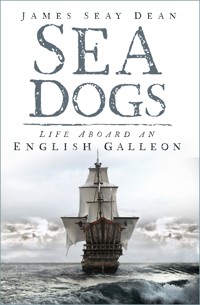
'James Seay Dean is the noted authority on these voyages … he provides a sympathetic treatment of life aboard ship in some of the most challenging circumstances these redoubtable sailors faced "beyond the line".' – Professor Barry Gough, maritime historian 'A fascinating and informative account of the development of Tudor and Stuart sailing ships. Its examination of their architecture, sailing, and tactics, especially as it is set within the international political context, makes a most interesting story.' – Bryan Barrett, Commander RN, ret. From jacktar to captain, what was life like aboard an Elizabethan ship? How did the men survive tropical heat, storms, bad water, rotten food, disease, poor navigation, shifting cargoes and enemy fire? Would a sailor return alive? Sea Dogs follows in the footsteps of the average sailor, drawing from the accounts of sixteenth-century and early seventeenth-century ocean voyages to convey the realities of everyday life aboard the galleons sailing between England and the West Indies and beyond. Celebrating the extraordinary drive and courage of those early sailors who left the familiarity of their English estuaries for the dangers of the Cabo Verde and the Caribbean, the Rivers Amazonas and Orinoco, and the Strait of Magellan, and their remarkable achievements, Sea Dogs is essential reading for anyone with an interest in English maritime heritage.
Sie lesen das E-Book in den Legimi-Apps auf:
Seitenzahl: 552
Veröffentlichungsjahr: 2014
Das E-Book (TTS) können Sie hören im Abo „Legimi Premium” in Legimi-Apps auf:
Ähnliche



















‘Let sea-discoverers to new worlds have gone,
Let maps to others, worlds on worlds have showne …
Where can we finde two better hemispheares
Without sharpe North, without declining West?’
John Donne, ‘The Good Morrow’, 1633
First published 2014 under the title Tropic Suns: Seadogs Aboard an English Galleon
This paperback edition published 2022
The History Press
97 St George’s Place, Cheltenham,
Gloucestershire, GL50 3QB
www.thehistorypress.co.uk
© James Seay Dean, 2014, 2022
The right of James Seay Dean to be identified as the Author of this work has been asserted in accordance with the Copyright, Designs and Patents Act 1988.
All rights reserved. No part of this book may be reprinted or reproduced or utilised in any form or by any electronic, mechanical or other means, now known or hereafter invented, including photocopying and recording, or in any information storage or retrieval system, without the permission in writing from the Publishers.
British Library Cataloguing in Publication Data.
A catalogue record for this book is available from the British Library.
ISBN 978 0 75095 738 0
Typesetting and origination by The History Press
Printed and bound in Great Britain by TJ Books Limited, Padstow, Cornwall.
eBook converted by Geethik Technologies
Contents
Preface
Notices to Mariners
Acknowledgements
Introduction
1 ‘Ships Are But Boards’
2 ‘Remainder Biscuit’
3 Western Winds – A Tropical Rutter
4 Stars for Wandering Barks
5 The Way of a Fighting Ship
6 ‘Plague of the Sea and Spoyle of Mariners’
7 Traffiques and Booty
8 Epilogue
Appendix A: Chronology
Appendix B: Tropical Climate and Weather
Appendix C: Glossary
Bibliography
About the Author
Preface
This is a seafarer’s book that draws from hundreds of sixteenth-century and early seventeenth-century ocean voyages. It was written to convey the realities of everyday life aboard the galleons sailing between England and the West Indies. From jack tar to captain, what was life like aboard an Elizabethan ship? How did the men survive tropical heat, storms, bad water, rotten food, disease, poor navigation, shifting cargoes and enemy fire? With a whiff of oakum, salt spray and gunpowder, and in the words of Hawkyns, Drake, Ralegh and the ordinary seaman aboard, what was it like to live on a galleon or pinnace in the American Tropics?
These are matters deeply familiar to a man who has sailed the Atlantic and West Indies for many years as crew, mate, navigator, sailing master, captain, owner and lecturer, on vessels ranging from small sloops and cutters to brigantines and four-masted barquentines. The author is as comfortable on deck as at a desk, as practised at going aloft as negotiating the upper floors of library archives. To an emeritus professor of Elizabethan studies, the details of these lives at sea have been a particular fascination for many decades.
The structure of Sea Dogs follows the sequence that a common sailor bound across the ocean would have observed: first the state of his ship, his food and water, then his weather, the climate and best time of year to sail, the tools and skills of getting from here to there and back again, the way the ship is run at sea, various measures for recognising and treating illnesses and, at last, being paid once the long trick is done.
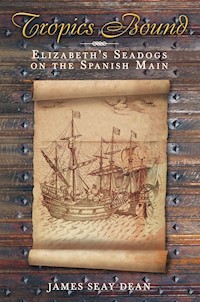
Sea Dogs: Life Aboard an English Galleon (first published by The History Press in 2014 under the title Tropic Suns: Seadogs Aboard an English Galleon) complements Tropics Bound: Elizabeth’s Seadogs on the Spanish Main (Stroud: The History Press, 2010), which narrates the voyages undertaken in the name of gospel and gold between 1516 and 1618, a century before events at Plymouth Rock. Sea Dogs was initially intended to be part of Tropics Bound, but here it sails on its own as a companion volume, not as technical ballast but as the on board lore of another ship alongside. Read together, the two books encompass the Elizabethan mariners’ remarkable accomplishments.
The span of both begins with the same first English voyage to the West Indies in 1516, but where Tropics Bound ends with some finality at Ralegh’s beheading in 1618, the terminus for Sea Dogs is the decade of the 1640s. That decade was one of major transitions, including the end of a century of Dutch, English and Irish efforts to plant settlements in South America. In England, it covered the start of a civil war over divine versus popular rights, then the death of a king and installation of a commonwealth. The 1640s were also the cauldron of a new empirical fusion of theory and practice in medicine, astronomy, physics, magnetism, optics, mathematics and navigation.
Elizabethan and Jacobean maritime history has been the focus of many of this author’s many articles and three of five books. The sources were researched incrementally during the years the author worked toward his doctorate from the Shakespeare Institute of the University of Birmingham, England and during research fellowships in the USA at Wisconsin, Illinois, Chicago, Vanderbilt, Brown and Williams universities. In England, this interest in the maritime history of the period was reinforced during fellowships at Exeter University, at the University of East Anglia, in Norwich, and at Harris Manchester College, Oxford. The approach has been to present maritime history in the light of modern knowledge and science, scrutinizing the period both as a sailor and as an historian.
Tropics Bound and Sea Dogs honour the 400th anniversaries of the first permanent settlements in or off the coast of North America: St John’s, Newfoundland (1583), Jamestown (1607), Bermuda (1609) and Plymouth (1620). Both books were written to celebrate the extraordinary drive and courage of early sailors who left the familiarity of their English estuaries for the dangers of the Cabo Verdes and the Caribbean, the Rivers Amazon and Orinoco and the Strait of Magellan.
Notices to Mariners
The prudent mariner, here the reader of Sea Dogs, will appreciate knowing the essential chart datum: its scope and terms. Following the practice of the Naval Records Society (but not that of the Hakluyt Society), the spellings of early texts have been modernised for the common reader’s sake, though the syntax, vocabulary and punctuation of the originals have generally been kept. Notes and bibliography direct the reader to early sources. Only a very few manuscripts from the period have survived; certainly, no ships’ logs or charts are known to exist. Even contemporaneous accounts of life aboard can be second hand, the tales generally having been reported and written in port, after the fact. The author is happy to clarify or expand any point for the interested reader and can be reached through a letter to the publisher. The aim is to present a readable book framed and ballasted by reliable research.
Times and Dates
At sea, time is traditionally measured from noon zenith to noon zenith, not as on land, where civil time begins the day at midnight. This book is mainly about English Tudor and Stuart sailors and uses the calendar they used, the Old Style (Julian) calendar and not the New Style (Gregorian) one, which puts the English about ten days behind the Continent. Exceptions are noted in the text. During this period the English observed both 1 January and 25 March as the start of the new year. In this work, 1 January is generally taken as the start.
Calculations
Latitude then, as now, was easy to measure, but not longitude. No accurate chronometer to calculate time from a prime meridian or any instrument to measure celestial angular distance was yet available. Minutes and seconds of latitude were then divided by sixty, not in tenths as today. A ship’s tonnage originally meant her cargo capacity – that is, how many tuns or barrels she could carry. The measurement of tonnage differed for naval vessels and from country to country. An English ton, for instance, was smaller than a Spanish one.
Names
Obsolete, obscure or ambiguous sailing terms are explained contextually, in the glossary or by means of the index. Meanings and usage shift over time and place, as, for example, the spellings ‘gage’ and ‘gauge’, where the former on both sides of the Atlantic maintains ‘gage’ as in ‘weather gage’ to mean being upwind of other vessels. Naval ranks, whatever the country, are generally given the usual English way – e.g. admiral, vice-admiral, rear-admiral, captain, master, land general. People then often spelled surnames in a variety of ways. Hawkyns sometimes appeared as Hawkins. Ralegh was also written as Raleigh, Raley, and as the Spanish heard the full name of ‘Walter Ralegh’, Gualterral. As for Drake, he was El Draque the dragon and worse. Finally, place names and diacritical marks here follow present-day practice, though I have generally preferred Nueva España over New Spain or México. The northern coast of South America – the Spanish Main – sometimes also appears here as Tierra Firme.
Acknowledgements
No author can be expert on all the matters covered here. I wish to thank those with specific knowledge, the people who have helped with Sea Dogs, sequel to Tropics Bound. All of these authorities sail. For expertise on tropical disease and diet, I thank Robert Desowitz, world authority on malaria and tropical diseases, and Lyman Dwight Wooster, Johns Hopkins Medical School, for reviewing the chapter on tropical medicine. For clear expression on matters of food and drink, Ian Gordon, FRSC and master brewer. For climate and weather, meteorologist Alan Watts and geologist Brian Fagan. For cargoes and trade, historian Anthony Ryan, Liverpool. For ship design and construction, and maritime trade, the Bristolian shipwrights of Cabot’s 1490s Matthew and Andrew Shaw, bosun/shipwright of Maryland’s Dove, replica of the 1630s original.
The technical chapters on architecture, ship handling and tactics required close review by seasoned mariners. For sailing tactics, strategy, and keeping argument on trajectory, then, I thank Bryan Barrett, Commander RN retired, expert in deep sea demolitions; Jerry Breast, Rear Admiral, USN retired, aircraft carrier commander and pilot,; and John Hoyt, naval architect and engineer, consultant at the USN Naval Surface Warfare Center and lecturer at the US Naval Academy. For sailing ship handling, I was for some years sailing master under the late Ulrich Prüsse, merchant navy captain, Hamburg, whose ticket read ‘any tonnage, any ocean in the world’. Navigation I learned from Aubrey Smith, lecturer at the US Naval Academy, and from Robin Wilshaw, yacht captain, with whom we sailed transatlantic and elsewhere for over a dozen years under the red ensign. Other sources at the U.S. Naval Academy, Annapolis, and at the Royal Naval College, Dartmouth, have also helped.
To years of sea time in Atlantic and Caribbean waters, add hours spent in company with the irreplaceable staff of the Bodleian Library, the British Library, the National Maritime Museum, the library at Greenwich, the U.S. Naval Academy Library, the John Carter Brown Library, the Folger Shakespeare Library, the Library of Congress, and that of Harris Manchester College, Oxford, with special thanks to its principal, Rev. Dr Ralph Waller, and librarian Sue Killoran.
The eminent Canadian maritime and Commonwealth historian, Professor Barry Gough, has again weighed in with authority, friendship, kindness and a sharp read of draughts. Over the years, he and I have sailed the Great Lakes, the Pacific north-west and New England coasts together and have navigated the channels of historical method in both England and America. Canadian editor Camilla Turner has eased the line of the manuscript as it developed from my researches, as she did for Tropics Bound. Mary Gregory, emeritus fellow in economics at St Hilda’s College, Oxford, besides logging over 200 miles at sea in the author’s yacht, found time off watch and when not sailing Antarctica to offer up twenty-eight pages of insightful criticism of an early draft of Sea Dogs. The publishers and authors have done their best to ensure that quotations and all illustrations are clearly within the public domain. At The History Press, I thank editors Mark Beynon and Lauren Newby, and earlier editors there, Simon Hamlet and Abigail Wood, for seeing these efforts from conception to completion.
Journal and magazine editors have also contributed – at The Northern Mariner/Le Marin du Nord, Roger Sarty and Paul Adamthwaite, and at Sailing Magazine, William Schanen, editor and publisher. Philip Webster, board member of the Chesapeake Bay Maritime Museum and the National Maritime Historical Society and its journal Sea History, supplied information on the exploration of the Chesapeake Bay by Captain John Smith’s shallop. At the University of Exeter, the celebrated maritime historians Professor Michael Duffy and Nicholas Rodger have helped, the former with a research fellowship and the latter with insightful criticism. At the University of East Anglia, historian Dr James Casey, authority on Renaissance Spain, offered support. In America, the University of Wisconsin kindly provided several sabbaticals and fellowships to this book’s end. As before, Dr Angélica Guimarães Lopes, Brazilian scholar, saw the start of the idea for Tropics Bound and Sea Dogs. Throughout years of research my sons Christopher and Alexander have been both my Cruzeiro do Sul and my Polaris, stars to my wandering bark. Besides love, these two have added their expertise in sailing and computers. I dedicate this book to them. Mary, my wife and first mate by land and sea, has helped bring both these volumes from hidebound idea to hardback reality.
As a navigator, I hope that others will check my calculations and bring any errors to my attention via the publisher. For as the Hanse mariners and Dutch cartographers observed, navigare necesse est, vivire non necesse est. Such navigations as these naturally require regular course correction.
J.S.D., from Soundings on the Chesapeake Bay
May 2014
Introduction
Sea Dogs is based on accounts of hundreds of ocean voyages undertaken during the Elizabethan and early Jacobean periods. The words of English captains, pilots, gunners and common seamen speak of icy decks and parched planking, chapped hands, black powder burns, with only rancid beer and soured wine to slake a thirst.
This how-to book ranges as far south in the Atlantic as the frigid waters of the Strait of Magellan, and as far north as Newfoundland, though most of the voyages described here were to the warmer latitudes between the Tropics of Cancer and Capricorn, 23.5° N to 23.5° S. In their scope, the chapters treat England’s quest for trade and colonies in the waters from Florida to Tierra del Fuego. Their perspective is not from court or courtroom or counting houses but from rolling and pitching decks. It was in the early voyages to the Caribbean that English mariners learned naval tactics that helped them win the Armada battles in 1588 and the later battles with the Dutch and French in the next century.
What went into a transoceanic voyage in those early days? First, the sailor must have a seaworthy ship to venture not just along coasts but across oceans. The design of ships was changing. Sir John Hawkyns, as Treasurer of the Navy, ordered ships after 1570 to become more weatherly, which was done by cutting down forecastles and sterncastles to reduce windage and changing the aspect ratio of length to beam from 2:1 to 3:1 and even to 4:1. Such race-built (razed, or cut-down) galleons were soon adopted by most European mariners. Sailing the New World rigorously tested Old World shipbuilding methods. The designs of Northern European hulks and carracks joined with Portuguese caravelas and naus (Sp. naos), and combined square sails with lateen rigs to develop pelagic vessels that could sail both arctic and tropical waters. Such changes are apparent in the oldest surviving English scale drawings, attributed to master shipwright Matthew Baker, in Fragments of Ancient Shipwrightry, c.1586. And for ships’ gunnery, English foundries produced superior bronze cannon and smaller truck carriages that allowed for quicker and safer firing than iron cannon mounted on the larger field carriages used by the Spanish.
A sailor’s attention might go next to victuals, stores and cargoes. Before any long voyage, any prudent captain would attend closely to provisioning and to the drying, salting or pickling of food, aiming to provide a diet that would delay the onset of scurvy or, better, that would keep his crew alive and working. A ship’s stores also included all that would be needed for self-sufficiency: items such as extra cordage, sails, iron, a full chest of tools, even knocked-down pinnaces to be assembled once in the Americas. At times they might need to build a ship from keel up on some distant strand. Castaways on the beaches of Bermuda, and the river-travelling English and Cimarróns in dire circumstances in the jungles of Panamá, salvaged their ship’s tools first, prizing them to build a shallop or pinnace.
Setting out from port and off soundings, what climate and weather would these early seamen face southbound from England for the islands of the Canarias or the Cabo Verdes and then westward for the West Indies? Following the example of Matthew Maury’s Wind and Current Chart of the North Atlantic (1847, with supplements), this book pricks out the start of a tropical pilot atlas, a rutter, of sixteenth- and early seventeenth-century tropical climate, weather, winds and ocean currents for the North Atlantic, the West Indies and the South Atlantic, based on the weather reported in journals for some 150 years. Entries allow us to track the period’s major storms, their location, force and direction. Though the Little Ice Age affected some parts of the world during those centuries, weather in the tropics then was essentially weather in the tropics now, so that modern climatology, oceanography and meteorology can with some adjustment be applied to the earlier period.
We must next know how the mariner navigated offshore. How did he traverse the Doldrums, especially when sailing to the South Atlantic, or how set a course for the West Indies, run along the South American coast and up the rivers Amazon and Orinoco, and later turn north and east to return safely toward England? Because the English at first lagged in skill behind the Portuguese, Italians and Spanish, they would often kidnap an Iberian pilot to guide them across oceans. Over time, they came to overtake and surpass their predecessors in navigation.
Sea Dogs traces this growing English mastery of the new transatlantic navigation. Since the first half of the sixteenth century Portuguese and Spanish pilots had led the way in producing books on navigation. It was only in 1574 that mathematician, artillery soldier and mariner William Bourne published A Regiment for the Sea, the first practical book in English on navigation. Captain and pilot Sir John Davis, experienced in sailing the tropics and both arctics, devised his back-staff in 1594, an instrument that eliminated parallax error and the problem of direct glare from the sun that occurs when using an astrolabe or the familiar cross-staff. He then followed his invention in 1595 by publishing Seaman’s Secrets. Captain John Smith, that soldier of fortune and governor of Jamestown, though no true sailor, published in 1626 An Accidence or the Pathway to Experience Necessary for All Young Seamen, a word-book and collection of forthright and useful advice for all those who were called to or fancied the sea. He followed it with A Sea Grammar, 1627, taken largely from a popular early manuscript by the pirate, admiral and lawyer Sir Henry Mainwaring, who years later published his work as The Seaman’s Dictionary. Mainwaring’s was the most practical and authoritative English book to that date on the way of a ship from truck to keel.
Present maritime science can help clarify sixteenth- and early seventeenth-century navigation, then at best an imprecise science. The Elizabethan navigator had some tools: an astrolabe, a cross-staff, a lead line, compass and chip-log for dead reckoning (with which by calculating time, speed and distance, the one unknown is deduced from the two knowns). At the time, he could accurately determine only latitude, since determining longitude accurately requires either calculating angular distance between celestial bodies or telling time highly accurately, both beyond the ken of the Elizabethans. As for charts, especially those covering the American Tropics, the best were usually Spanish or Portuguese, and closely guarded.
How did the English mariner, from captain to cabin-boy, deckhand to gunner, face the formidable naval firepower power of Imperial Spain? Outgunned and outmanned, it was rarely an even match. The sixteenth century saw the end of some long-standing traditions of naval warfare, though the Spanish would maintain them longer than the English. One was the galley, a warship as old as the Greek triremes. Powered by sail and oar, these warships with their battering rams had stopped the Persian advance at the Battle of Salamis in 480 BC. Two thousand years later, in 1571 at the Battle of Lepanto, Christian galleys closed and rammed, grappled, and boarded the Turkish galleys, decisively defeating the Moorish threat. That victory turned out to be the last glorious contest of such warships. Within ten years galleys were seen to be as archaic as the mounted knights on Bosworth Field in 1485 in full armour – another swan song.
Yet habit dies hard. Throughout the sixteenth century, Spanish officials in the West Indies still pleaded for Seville to send galleys to protect their plantations and ports against French and English corsairs. Port captains, though, pointed out that galleys were expensive to maintain and, except in calm waters, were largely useless in open Caribbean wind and wave. Galleys were certainly no contest against the newer technology of the heavily armed pinnace, a quick, nimble vessel also fitted with sails and oars and of relatively shallow draught but, unlike the galley, sturdy and with fine sea-keeping qualities.
Tactics too had changed. No longer were ships thought of principally as ferries to carry marines for boarding an enemy ship but as manoeuvrable floating gun platforms. Another innovation was amphibious warfare, employed early on along the shorelines of the Caribbean. Marines were landed at night on beaches away from a port, then marched to a port’s rear gates and attacked, while from sea naval broadsides pounded the city in a surprise sea–land operation. The powerful new English bronze naval cannon had such a powerful recoil that ships had to be redesigned, and the new weapon changed tactics and ships. Cannon had long been used as pursuit weapons by galleys. In galleons a few were kept as chase guns, but the real firepower now lay in concentrating battery fire in broadsides, close in if Spanish and longer range if English. Though boarding enemy ships with harquebus, pistol and sabre still continued, English ships took the lead in using long-range naval artillery as the primary weapon.
New tactics called for prescribed formations – gaining the windward gage, then crossing the T – to concentrate firepower and present the least target to the enemy. Such techniques were first tried and tested by the English in the West Indies, where decades of sea battles had tempered the steel of the weaker English against more powerful Spanish ships. Those lessons were carried back to European waters and later were to become regular naval practice.
And what of disease? Going to sea, particularly to tropical waters, was at best a desperate measure taken only in the face of starvation, or of no work in the fields and markets, or the plague. Once at sea, sailors were more likely to die from disease than from harquebus or cannon fire. We cannot examine the bones of Sir John Hawkyns and Sir Francis Drake, committed long ago to the waters off San Juan and Nombre de Dios, but early journals by captains and chaplains describe tropical diseases graphically, including how these leaders died. Though epidemiology has in some cases changed, the deadly ailments facing Elizabethan seadogs are still present today. The immune systems of North European sailors, more than the African or even the Mediterranean, were susceptible to malaria (then called the ague), yellow fever, amoebic or bacillary dysentery (called the bloody flux) and a variety of parasitic diseases. These contagions were often enough contracted off the African coast, particularly in the Cabo Verde islands, where mariners had to land for water and from where they would catch the northeasterly Trade Winds for a transatlantic crossing. Catch the winds they did, but as well, they often caught yellow fever, malaria, dysentery and other ills.
Water and food went off quickly in the tropics, and foul water and food poisoning caused many deaths. Fresh water at sea was a constant concern whether sailing in torrid or frigid climates. Sir John Hawkyns’ son, sea captain Sir Richard Hawkyns, was particularly mindful of his men’s health. As early as 1593, he distilled seawater mid-ocean to fill his ship’s freshwater casks.
Sir Thomas Cavendish during his 1586–88 circumnavigation was the first Englishman to issue lemons and limes to prevent scurvy, a practice known to the Spanish captains since at least the 1540s. Later, in February 1601, after a disastrous first voyage that lost many to scurvy, master mariner Sir James Lancaster set off for the Spice Islands and, following Cavendish’s example, dosed his crew with lemon juice to prevent scurvy. It worked.1 Only much later, in 1753, did Dr James Lind tie scurvy to ascorbic acid deficiency. Still later – 1794 – the Royal Navy first ordered a test of limes to prevent scurvy aboard naval vessels.
Documents record the first attempts to identify cures, whether by oranges, limes, lemons, cabbage, cinchona bark, spoonwort or new-found remedies. One of the most spectacular New World simples was the wonder drug from Trinidad and elsewhere in the tropics: sotweed. This was the tobacco so loved by Sir Walter Ralegh, so detested by King James I. The English sailors contracted new diseases in the Americas, but their ship’s pharmacy grew richer with newly discovered local cures for both known and new diseases.
Commerce? From merchant adventurers to the boatswain’s mate, the aim was profit. A voyage normally followed the triangular trade route from Europe to Africa to America and back to Europe, mostly carrying finished items in exchange for raw materials such as hides, tropical woods, cochineal and tobacco. In some cases the West Indies sent finished products back to Europe, but it was not just a matter of dyes and cloth. In a letter from La Havana to the Casa de Contratación in Seville, the governor writes in 1591 that he has already built two of eight frigates ordered constructed for Spain. The keels of the other six, he writes, would be laid when the Crown sent more money, supplies and labour. Still other ships, intended to augment another Armada against England, were also ordered from Cuba.
Profit and national interest? Sir Walter Ralegh wrote in 1614 that ‘whosoever commands the sea commands the trade; whosoever commands the trade of the world commands the riches of the world, and consequently the world itself’.2 As for profitable cargoes, the English hulls took out hardware and cotton and linen fabrics, and though the preferred payment was in gold bullion and silver, such cargoes came only to the lucky few. The American tropics were enemy waters for the English, thanks to the Spanish embargo on foreign trade. It is little wonder that merchant ships mounted cannon. In the fifteenth century the Portuguese had learned this lesson the hard way, when attacked by pirates in the Indian Ocean. The English, whether naval men or pirates, traded goods and broadsides with the Spanish in the West Indies to one end: profit.
The age is embodied in the stories of three famous West Country seafaring families. The Hawkynses, the Drakes and the Raleghs sum up the period’s gains in trade, warfare and colonisation. Each family had different ways of meeting the challenges of a sea voyage, whether for plunder or policy. The Hawkynses since the 1530s had been merchant mariners primarily out for trade, and though they preferred gold, they traded goods for slaves and in payment received woods, spices and hides. With little modification, their armed merchantmen were to serve the Crown when Spain’s threat to England finally materialised in 1588. Since the 1560s, firebrand Drake had sought revenge in Spanish blood and Spanish gold, raiding homeland and overseas colonies. Piracy was a way to profit, and, coincidentally, to national power. Piracy could thus serve national policy. Ralegh, like his fellow courtier Sir George Clifford, Earl of Cumberland, went to sea to repair his fortunes (and his reputation at Court), but in planting colonies, his own interest was also England’s. He despised picory or thievery, which on a larger scale became piracy and marauding, but it was these activities that funded his grand enterprises: Virginia in the 1580s and Guiana in the ’90s.
The seadogs were tough sailors who waded ashore onto tropic strands in the Americas, their salt-caked bodies riddled by malaria, dehydrated by the bloody flux, or sweating and feverous from tertian and quartan agues. Such are the realities they endured, and it is they who flesh out this story of Maritime England’s coming of age.
At the start of the sixteenth century England was a marginal seapower deep in the shadow of Spain and France. But a century of battles for free trade in the West Indies hardened England to face in her home waters the Dutch and French navies over issues of trade, politics or religion for the next three centuries. On ship and shore the Tudor and early Jacobean seafarers’ painstaking advances in naval arts and sciences prepared the way in a later age for Britannia to rule the waves.
Notes
1 Giles Milton, Nathaniel’s Nutmeg (London: Sceptre, 1999), 79, provides a vivid account of Lancaster’s voyage.
2History of the World, written whilst in the Tower.
1
‘Ships Are But Boards’
‘Ships are but boards, sailors but men.’
William Shakespeare, The Merchant of Venice, 1596–97
One day toward the end of January 1556 the English merchant Robert Tomson, passenger in a fleet of eight Spanish ships, was anticipating a landfall within hours at Nueva España’s San Juan de Ulúa. The ship was 15 leagues (45 nautical miles) from port. He had left England some years before, moved to Spain, and had set out for the New World to pursue his fortune through trade. Tomson expected to step ashore before dinner on Mexican soil and to make his way to lodgings in nearby Vera Cruz. But from out of nowhere – it was a full three months beyond the hurricane season in the Gulf of Mexico – came a deadly storm, a Norther typical in those waters. The storm battered the fleet for ten days. One 500-ton hulk was cast away. As for Tomson’s ship, he writes that in its ‘boisterous winds, fogs and rain our ship being old and weak was so tossed, that she opened at the stern a fathom under water, and the best remedy we had was to stop it with beds and pilobiers,1 and for fear of sinking we threw and lightened into the sea all the goods we had or could come by’.2 The captain cut away the mainmast and threw all but one cannon overboard. Tomson was fortunate to live to tell the tale of steep waves and archaic design.
Ships in the sixteenth century were indeed boards, vulnerable especially in the tropics, where wind, wave and sun challenged traditional European designs and construction. In the 1520s English shipwrights were building hulks, cogs and carracks largely designed for coastal sailing but not suitable for transoceanic voyaging. The next seventy-five years were to see radical changes in design and practice in English shipyards. This chapter examines how the English first followed Portuguese and then Spanish examples, then over the decades caught up with and surpasssed these great maritime nations in both design and construction. It considers first the carracks, caravelas, galleons and their refinement as race-built galleons. Second, it turns to the techniques of construction. The old tradition of building with green wood proved troublesome, especially in the tropics. As ships were built from a series of ratios, shipwrights wasted much wood. New powerful cannon required stronger and more stable ships. The race-built galleon was such a ship. Its design could support the more powerful armament, and such vessels were fast and manoeuvrable. From 1570 on, most of the Navy was built or rebuilt the new way. By the 1590s English race-built galleons were copied by the rest of Europe. Related to design was the measurement of a ship’s tonnage. Third, the chapter considers lessons learned from oceanic voyaging, during which the English saw new designs or on occasion fashioned a vessel from local raw materials. New vessels include the Dutch vlieboot, the Moorish gallizebra, the Brazilian jangada, Panamanian and Argentinian rafts and Chilean bladder boats. In the Americas, local shipwrights built Cuban frigates for use in Europe, and English shipwrights built a Panamanian pinnace, and a Bermudian bark.
Portuguese Caravelas
A generation before the English sailed off soundings into the Atlantic, the Portuguese and Spanish were Europe’s uncontested maritime nations. The venerable Portuguese nau (a generic name for a large ship) was beamy, short-keeled, with a deep-draught and a large hold for cargo. Naus could carry much cargo, but they were not weatherly vessels. The early Portuguese navigators favoured the smaller but more seaworthy caravela redonda, relatively narrow in beam, with its hermaphrodite rig of square and fore and aft sails on as many as four masts. Here was a design that sailed well and was seaworthy, though smaller. In 1498 a caravela took the Portuguese navigator Vasco da Gama around Africa to India’s pepper and cinnamon. It was a caravela that Pedro Álvares Cabral commanded when he discovered Brazil in 1500. The Portuguese were to write the first manuals on ship construction. About 1565 Fernando de Oliveira published his Livro da fábrica das naus. The Spanish were quick to follow. In 1575 Juan Escalante de Mendoza brought out Itinerario de navigación de los mares y tierras occidentales, a work that considers, among other matters, the proportions of ocean-going vessels, then the usual way to build a ship.
Tudor Carracks and Galleases
England, on the periphery of power, lagged behind the Continent in maritime construction. Shortly after Henry VIII became king in 1509, one of his first acts was to build his navy, a late medieval navy, where size, not efficiency, mattered. The old ways are figured in Henry VIII’s great ship, the carrack Henry Grace à Dieu (colloquially, the Great Harry), and her contemporary, the carrack Mary Rose.3 To challenge the Scottish great ship, Michael, built in 1511, Henry VIII the next year ordered the Great Harry built at the Woolwich yard. Henry’s Harry was the greatest of them all: four-masted, 1,000–1,500 tons, 165ft in length, with a four-deck forecastle and a two-deck sterncastle, ordnance of forty-three cannon of which twenty or twenty-one were the new bronze (colloquially called brass), and some 200 smaller ordnance. Her crew numbered between 700 and 1,000 men. Besides her size and the latest bronze cannon, she was the first English warship to have gunports cut into her hull. When launched, she was the grandest vessel afloat in European waters. But like the carrack Mary Rose, the Harry also proved top-heavy, and her rolling made for wildly inaccurate gunfire. In 1536 she was sent back to the shipyard for refitting. Shipwrights there anticipated Hawkyns’ race-built design by over thirty years by reducing the Harry’s top hamper, cutting down her tonnage to 1,000 tons, and improving her sail plan. In this refit, to make her easier to sail and to balance her centre of effort, her two masts forward carried the main, topsail and topgallants and the two aft carried five lateen sails. She became more responsive, faster, and was a more stable platform for firing her cannon. It is this refitted Harry that is shown in the Anthony Roll, 1546.4
Like the Portuguese naus, though, even rebuilt carracks were slow and sailed poorly. Their capacious design, however, had long worked for the Hanse merchants trading in Scandinavia. Their high freeboard had proved a bulwark against attackers and against the steep cold waves of the North Sea. Their deep holds could carry many tuns of profitable cargo. One example was the 700-ton, 70-gun Jesus of Lubeck, 1544. She was one of five carrack traders built originally as merchantmen, 400 to 700 tons. Henry VIII bought her in 1544–45 in Hamburg from the Hanseatic League, and armed her as a warship to augment his navy. The refitted Jesus as shown in the Anthony Roll5 was in 1546 an impressive ship of great bulk, tonnage and substantial firepower. Of her four masts the fore and mainmasts carried a course and topsail, and on the mizzen and bonadventure mizzen a single lateen sail each. In battle she carried 300 men. Like most vessels of the time the Jesus had been built of green wood, as had Cabot’s caravel, the Matthew, in the 1490s. Her unseasoned timber soon rotted. Her high forecastle and poop and full-cut sails made her poor in going to weather but good for defence from boarders.
Her high freeboard and broad beam allowed her to carry some heavy ordnance (seventy cannon in all) at a reasonable distance above the waterline, with smaller guns on the upper decks. Her stern’s flat transom was high, with a centre-hung rudder mounted outboard on the transom, usual for the time. The stern was armed with eight cannon of somewhat smaller bore than her main cannon. Two were positioned close to the waterline, on either side of the rudder. Despite these modifications, she was built to be a Baltic trader, not a warship, and the hull suffered from the pounding recoil of heavy artillery. Spanish galleons, with more closely spaced ribs, could take the stresses better. The Jesus’ cannon out-muscled her timbers.
Besides carracks, Harry had galleasses. Any captain wants a ship that can manoeuvre in any direction, independent of the wind. The galleass seemed the answer. The galleass, variously called galleys, galleasses or barks, was powered by as many as sixty oars, and had three masts that supported a full sail plan. She was sleek, with a length-to-beam ratio of 3:1 (2:1 was then normal). The vessel was armed with light cannon. She promised to be more versatile than the huge carrack. If there were wind, sail; if calm, row. Underwater, the galleass had the sleek lines of the galley, with a full keel and relatively deep draught, and a pronounced tumblehome that added stability. Such was Henry’s Great Galley, launched in 1515 just a year after the Great Harry slid down the ways in 1514. This huge clinker-built vessel of 800 tons had four masts, 120 oars and 97 cannon. But Henry’s massive Great Galley (really a galleass) unfortunately proved leak. Furthermore, 800 tons were simply too much to row. In 1544, she was sent back to the yards to be rebuilt as a great ship of 500 tons, without the oars.
In 1545, the war with France proved the uselessness of the large oared galleasses. Both the galleass and the carrack were dying breeds. Even as they came down the ways at the Chatham yard, smaller and faster vessels had for a half century proved their worth in Europe. Yet though Henry’s feet were firmly planted on a medieval deck, in some ways he was farseeing. He had always insisted on a fine turn of speed from his horses, women and ships. Thus when his galleasses proved too heavy and too slow he ordered them all back to the shipyards. There they lost their oars and some tonnage. By 1549 they had all been rebuilt as ships.6
Galleons
When the northern carrack met the southern caravela, the result was a three-masted ship with both square sails and a mizzen lateen sail, and a stern-mounted rudder. Size had met speed. The hermaphrodite plan sailed better than the plan of the bulky northern European ships and on the open sea could go to weather or reach well in following seas. This new vessel was the galleon, so successful a design that from the fifteenth to eighteenth centuries, the galleon was the principal merchant and naval vessel of the English and European fleets. Like all ships of the time, the design was generic so that a single ship could serve as a cargo vessel or warship. Galleons had a pronounced tumblehome that brought the upper gun deck closer to the vessel’s centre line, improving stability and making for accurate gunnery. Longer and narrower than carracks, they sailed better than the earlier design. So successful was the galleon as a design, that one, the Lion, was rebuilt three times over her extraordinarily long lifespan of 141 years, from 1557 to 1698.7
The galleon’s hull was similar to that of the caravela redonda, but she was more stoutly built to withstand heavy seas and to carry heavy ordnance. She was fully rigged like her predecessor. Galleons of this period had three or more masts, of which the fore and main masts were rigged with squares, and lateen-rigged on the after masts. She had a beak, a high forecastle and sterncastle and one or two gun decks. In both merchant and naval use she was armed. It was this sort of vessel that Sir John Hawkyns in the 1570s typically modified as the race-built galleon.
Hawkyns’ Race-Built Galleons
Storms and battle encountered in Hawkyns’ third trading voyage in 1567–68 to the Caribbean convinced him that a new ship design was needed. D.W. Waters argues cogently that from the disaster at the small port of San Juan de Ulúa in 1568, Hawkyns understood that the Elizabethan navy’s ‘narrow seas’ now had to mean ‘oceanic’, and that ‘battle by boarding’ had to give way to ‘battle by bombardment’. In that one battle Hawkyns recognised the need for a different design and for new tactics.8
By the 1560s the old carrack Jesus of Lubeck had been well past her useful life and was headed for the breakers when she became Elizabeth’s major stake in Hawkyns’ second voyage, 1564–65, and then the third, 1567–68. For that third voyage the queen valued her condemned vessel not worth the repair costs of £4,000, and Hawkyns had to spend a considerable sum to make the 24-year-old ship seaworthy. Overhauled, the Jesus sailed as Hawkyns’ admiral (flagship). Though archaic in design, she still had a cavernous capacity for cargo and the potential for substantial profit. She was leak and unseaworthy, but Hawkyns had to keep her, as she was the queen’s impressive royal vessel, part of her stake in the enterprise. Elizabeth’s other contribution was the Minion, 300–600 tons, much younger, purchased in 1558. But within six years of her launching she was likewise condemned as unseaworthy and deemed not worth repairing. Like the Jesus, she too was overvalued by the queen. On the West Indian run, Spanish ships rarely undertook more than four voyages out and back before being retired.9 In the sixteenth century it was rare that a ship would last fifteen years. Five to ten years was the average life before she went to the breakers, and for Spanish ships even less. Shipwrights knew that within fifteen years even a very well-built vessel would surely need to be completely rebuilt. Keep in mind that the tea clippers of the nineteenth century were built to last only a couple of years. By any standard, then, both of Elizabeth’s ships were long past their prime.
On the return leg during that third voyage the Jesus suffered serious damage in a hurricane. In the Gulf’s steep waves, we read, the planking of her transom opened the seams enough for fish to swim through the gap, so large a man’s wrist could reach in. Hawkyns had to head for the Spanish port of San Juan de Ulúa, where he was attacked by the Spanish. Hawkyns lost the battle, all his valuable cargo, the old carrack and her new bronze cannon, and other vessels. On escaping and once back in England, he knew his course – to design and build the race-built galleon. The term ‘race-built’ comes from the French ‘razer’, to cut or scrape away, as to cut away a highly charged superstructure.10
Two years later, in 1570, Hawkyns joined in partnership with the Deptford shipwright Richard Chapman to build this new kind of vessel. The result was a race-built galleon less than half the size of the carrack Jesus of Lubeck but stronger and faster. The race-built galleon Foresight, keel 78ft, 295 tons, 28/36 guns, had a length-to-beam ratio of 3:1, not the usual 2:1. Below the waterline her hull shape was modelled on that of the galleass. Locating her gundeck on a stepped deck above the cargo deck relatively higher above the waterline gave increased freeboard and kept the heavier cannon drier and increased their range. To offset the higher centre of gravity caused by the placement of the heavy ordnance, Chapman increased the draught, which not only improved stability but also decreased leeway. He decked over the galleon’s waist to add a battery of lighter ordnance of shorter 9lb demi-culverins. He cut down the fore and stern castles to reduce windage and to improve windward performance. Her bows were angled to break the seas and to keep the lower forecastle drier. Her lengthened bowsprit, supported and strengthened by the beakhead, along with a forward-raked foremast, allowed this new-styled galleon to carry a square spritsail forward, thus balancing the helm better and making the ship drier.
So successful was the Foresight that in the same year two other vessels were rebuilt to Hawkyns’ new fashion. Both were older galleasses (oars had given way to gun decks): the Bull, 1546, 160 tons BM (Builder’s Measurement), six demi-culverins, eight sakers and lesser ordnance (by 1585), reclassified as a ship from 1549; and the Tiger, pictured in the Anthony Roll, 1546, 160 BM tons (increased after rebuilding in 1570 to 200 tons, armed with six demi-culverins and ten sakers and lesser ordnance (by 1585). Over the next few years, the bulk of the navy’s existing fleet was modified, and newly commissioned vessels were constructed from keel up to the new design. Hawkyns reduced the top hamper of the older galleons, increased the length-to-beam ratio so that the ships appeared to float ‘low in the water’ like galleasses, and recut their sails to make them flatter, thus allowing the vessel to sail closer to the wind. The improved ships could then sail within six or seven points of the wind (each point 11° 15´, a ‘point’ being one of the 32 points of the compass card), about what a nineteenth-century ship of the line or a modern schooner can do. These changes made them faster, stronger and more seaworthy. By 1588 when the English fleet met the Spanish in the English Channel, sixteen of the twenty-one front-line ships had been either modified or built afresh as race-built vessels.
In November 1577 the queen had stipulated that on the death of Benjamin Gonson, Treasurer of the Navy and Hawkyns’ father-in-law, Hawkyns would be given the post as Treasurer. Hawkyns took up the job in early 1578, within a few months of Gonson’s death. Besides the ongoing ship modifications, Hawkyns promptly authorised funds for speeding repairs and shipbuilding by ordering drydocks with moveable floodgates. Before, the gate had been a massive earthen berm, built up shovelful by shovelful and pumped dry once the ship was inside. Once the work had been completed, the berm was breached so the dock filled with water, a lengthy process. The new floodgates allowed for faster ship maintenance and repair of the twenty-four ships and other vessels of the Royal Navy.11
Shipbuilding, Old and New
Significantly, it was not in Spain or England but in Cuidad México, Nueva España, that the first detailed book on ship design and construction was published. This was Mexican naval architect Diego García de Palacio’s Instrucción náutica para navegar, 1587. With this work, the New World came into its own in ship design and shipbuilding. In just two generations Mexico had rivalled and then surpassed the mother country, Spain. García de Palacio provides the proportions for the hull and the rigging and considers methods of construction, sailmaking and more. He extends the length-to-beam ratio, sets the hold’s depth at half the beam and, to gain stability and reduce windage, razes the fore– and aftercastles following the recent English practice of race-built design. So advanced was Spanish-American shipbuilding (timber and labour there were cheap as well) that Seville ordered the Mexican and Cuban colonials to build frigates for the attacks planned on England. Even later, in 1617, the Spanish king contracted with La Havana, Cuba’s port on the Gulf of Mexico, to build four galleons. On the Pacific side of Mexico, ports such as Guayaquil were kept busy filling royal shipbuilding contracts.12 Shipbuilding had moved to the New World.
The experience of more than 100 years of sailing the West Indies had made for better design. A Spanish ordinance in 1607 specified that vessels sailing in the carrera de las Indias, the convoy system that had long transported New World treasure to Spain, have a keel-to-beam ratio of 2.59 to 1. By 1613 that ratio was increased to an average of 2.55–2.71 to 1. In contrast, the Swedish Vasa, 1628, had a lean ratio of 5.1 to 1 and a depth-to-beam ratio of 0.41 to 1. Though impressive, the royal warship Vasa quickly proved herself unstable and she capsized while still in Stockholm harbour on her maiden voyage, thanks to insufficient ballast, shallow keel and a high superstructure and thus a high centre of gravity. By 1618 the maximum tonnage for Spanish ships of the flota was limited to 624 toneladas (after 1590, the measure was 1.42m3 per tonel macho). Such a vessel was large enough to carry a profitable cargo and ordnance when serving as a warship and yet small enough to sail over the shallow bar at a Spanish port such as Sanlucar, navigate the shoal waters of the Gulf off San Juan de Ulúa, or cross the bars (often less than 3 fathoms deep) at the mouths of the Amazon and Orinoco rivers. The shoal waters of the West Indies archipelagoes meant that deeper-draught vessels, not just carracks but the larger race-built galleons drawing 16ft or more, could not navigate among the islands. Returning from the West Indies in the summer of 1586, Drake wanted to anchor within Albermarle Sound behind the Outer Banks of North Carolina near Nags Head, but his deep-draught vessels had to remain offshore. Vulnerable, his fleet was hit by a severe June storm, changing American history by way of the Roanoke colony.
Over the objections of merchants and shipbuilders that such smaller vessels were unseaworthy and unprofitable, increased trade won out over bulk. Whereas in the sixteenth century a significant number of Spanish and a few English ships were between about 700 and 1,000 tons, early seventeenth-century trade in Tropical America could be undertaken only in medium-sized vessels. The Duke of Medina Sidonia noted in 1610 that these vessels were between 300 and 500 toneladas, half the size of the old carracks 100 years earlier.13 The Americas were also building such mid-sized vessels, race-built in design and of moderate draught. The smaller ships fit the waters they sailed.
Shipbuilding
Construction techniques in the period were both old and new. The old European practice of using green wood in building ships was severely tested in the tropics. As the unseasoned wood dried out under hot sun, seams in deck and hull planking soon opened. Like planking, the wooden staves and hoops of water casks would split, leaving a ship without drinking water. In large Atlantic swells or the steep waves of the Gulf of Mexico, rolling and pitching was increased by the excess weight and higher centre of gravity caused by heavy cannon and highly charged superstructures of fore- and sterncastles. This opened the hull planking, especially the flat transoms but also the deck planking of the old carracks. Their highly charged superstructures further reduced their ability to go to weather, as Admiral Pedro Sarmiento de Gamboa and others discovered in the stormy Strait of Magellan in the 1580s.
The seaworthy and responsive smaller caravelas and pinnaces had already proved their worth in the Portuguese explorations. These ships’ boats, pinnaces and shallops had been used to explore and trade along the coast of the Indian Ocean, whatever the winds or depths. They now proved equally suitable in the Caribbean’s Golfo de Paria, near Trinidad, and up the Amazon and Orinoco rivers, as well as farther north in the shoal waters guarding the barrier islands off North Carolina, and later in the shallow Chesapeake Bay.
Despite new conditions, construction of hulls generally maintained the traditional ways, sometimes with good reason, sometimes without. In Bilbao and Vizcaya, major centres of shipbuilding in northern Spain, for centuries the shipwright would go to the forests and cut during winter, when trees had no leaves and there was little sap. Most woods were cut during a waning moon, when it was thought the sap had gone down to the roots and any lumber would hence be straighter. Knees were cut from where tree trunks branched in limbs. From a tree’s tough roots came trunnels (tree nails). The shipwright at this time did not work from plans or half-models but from ratios. His basis was the swimming line (waterline), ‘a horizontal line around the ship, from the point where the third and fourth futtocks of the ship’s main frame joined just below the widest beam dimension’.14 The swimming line further marked the limit for safe loading, a Plimsoll line of sorts. From that line the height of the decks and other vertical measurements were taken.
Traditional Mediterranean-framed vessels were built beginning with the keel, to which was scarfed the stempost and, at the stern, the sternpost. Oak was used for the keel, keelson, ribs and lighter-weight pine for the superstructure. After laying the keel, the shipwright fashioned the stem and stern, then used the main frame (the largest frame) to shape the others in a system called whole moulding. Depth was figured to be between a half and a third of the beam length. Critical to building the frames was the ratio of the length of the lower deck beam to the flat length of that frame’s floor timber. The Treatise on Shipbuilding, c. 1620, cautions: ‘If the proportion between the flat floor and the beam was exceeded to get more buoyancy, the ship became tender-sided or crank and needed furring or girdling to restore the proportion’.15 Newer galleons had five identical frames forward or aft of the main frame. The result was a pronounced rise of the bottom at the bows and stern, offset at the stern by deadwood that directed the flow of water past the rudder and gave it bite.
The keelson strengthened the keel and helped secure the ribs. The ribs, starting with the largest first, were added next, according to the proportions of length-to-beam ratio. Once in place, the ribs were joined laterally from stem to stern. Futtocks (corner braces) joined the floor timbers to the main frame’s lower deck beam, onto the top timber line.16 After the hull’s internal joinery was in place, the hull and deck were planked in the new carvel style (butt-joined) and caulked, rather than employing the lapstraked (overlapped) planking of the old northern European way. The seams were payed with oakum or hemp, then tarred. To protect against the teredo worm, tarred cloth and lead sheeting were added below the waterline and sealed with a tar-grease mixed into the tar.
Masts were white pine, with the foremast shorter than the mainmast. Their length required scarfing a number of pieces together. Masts were tapered at their tops, and their bases were cut to fit into the mast-step on top of the keelson, then shimmed with wedges at deck level to keep the mast secure. Masts were supported by shrouds and stays of hemp line. Like the hull, the yards too were a matter of proportion, fullest in the middle and tapered at their ends. The location of the masts on the axis of the vessel was proportionate to the hull, and a function of the centre of the vessel’s gravity and resistance. Sails were rectangular, trapezoidal and triangular, and sewn as vertical strips of canvas. Later, these full sails were cut flatter to aid in going to weather.
As for the masts and rigging, a frequent problem at sea was that they cracked or broke, called ‘springing’. It is mentioned in many journals, both English and Spanish. Pitching and rolling caused wear on the hemp rigging. When heeled, the weather shrouds would stretch and stiffen, leaving the lee side so slack that masts would bend at least a foot to leeward. As the hull flexed, masts and spars often broke. The long spar of a Mediterranean lateen sail was particularly vulnerable on the open ocean.17 And, as is true with most aftermost sails, the lateen sail on the mizzen mast of sixteenth-century vessels, nearly useless when running, helped to balance the ship when going to windward.
Ship design was affected as well by armament. Heavy, powerful cannon raised the centre of gravity and strained the vessel’s framing from the recoil. Henry VIII’s Master Shipwright, James Baker (father of the more famous Matthew Baker, Royal Master Shipwright), thus first located the gun deck for such cannon between the cargo deck (the main deck) and the upper deck, but later in the 1530s he added guns to the main deck as well. It was Baker who first changed from round to square gun ports, as they could be sealed shut better in heavy weather. His cannon were mounted on trucks with small wheels that could easily be run inboard, to shift weight closer to the centre line of the ship and to reduce heeling moment. The resulting vessel was at once watertight and more stable.18
Culverins
Since the early sixteenth century, guns had improved, thanks to better refining, casting and design. One such example is the full-length bronze culverin, a beautiful piece of work, but at 14ft, too long and too heavy for the sleek new race-built galleons. Nine-foot demi-culverins were a good compromise. Yet the tendency for longer and heavier guns continued, and so after about 1600, that is, after Hawkyns’ death in 1595, race-built galleons grew beamier, recalling pre-1570 vessels.19 Hawkyns’ race-built ships, though nimble, pitched badly because of reduced buoyancy fore in the bows and aft at the stern. They were affected too by their relatively short keels and they also hogged (curved down).20 Captain Sir Richard Hawkyns, son of John Hawkyns, reported that his Revenge, 464 BM tons, though relatively stiffly built with heavy bulkheads to provide extra hull strength, was notoriously difficult to handle. In her brief 14-year life she ran aground six times and once when she beached, turned keel up. Thrice she sprang planks, making for leaks that could sink her. The bulk of Hawkyns’ merchant fleet, however, was made up of much better designed and built vessels.
Spanish galleons, in contrast to English ones, were built more stiffly, their frames more closely spaced – good for strength when firing cannon, but too stiff in the North Atlantic’s steeper waves found in higher latitudes, where the ship needed to be able to work a bit in heavy seas. The high hamper of their fore and sterncastles increased heeling moment. The Spanish ships would spew their caulking, spring their hull planking, and in straining the longitudinal axis of the ship, proved leak.
There were other new ship designs, but as pinnaces and other vessels are significant more for their use than for any innovations in construction, they are considered later in the chapter on the tactics of fighting ships.21
Tonnage
Another factor affecting design was a vessel’s cargo capacity. Ships were rated by armament and tonnage. What is a ton, a tun or butt? Warships and merchant ships measure tonnage differently. Peter Kemp defines a ‘ton’ as ‘a measure of capacity at sea’, deriving from a ‘tun’, a large cask equivalent to two pipes, or four hogsheads, or 252 old wine gallons. Thus tonnage originally was the number of tuns of wine a vessel could carry in her hold. It measured cargo capacity.22




