


104,99 €
Mehr erfahren.
- Herausgeber: John Wiley & Sons
- Kategorie: Fachliteratur
- Sprache: Englisch
Fish and seafood are highly perishable, and must be preserved immediately after being caught or harvested. It is very important both to preserving its quality and to ensure that it does not pose any risks to human health upon consumption. Chilling, refrigeration and freezing are the major preservation methods used with seafood and fish products, all three processes aiming to preserve the freshness and flavour of the fish. Consumer demand for fish remains high despite escalating prices in the last ten years which have seen the retail cost of the most popular breeds (cod, haddock, salmon) more than double for unfrozen fish. Many consumers appear to be willing to pay a premium for freshness and quality, both of which are closely linked in shoppers’ minds with the efficient chilling and refrigeration of the fish along the supply chain. At the same time, frozen fish and seafood has also grown more popular with shoppers, as a cheaper, more convenient alternative to refrigerated fresh fish and seafood.
Seafood Chilling, Refrigeration and Freezing presents the science behind the chilling, refrigerating and freezing of fish and seafood, describing the chemical, microbiological and physical changes which take place during preservation, and considering the new technologies which can be used, highlighting their benefits and their economic implications. The book takes account of the different requirements for different breeds of fish and seafood, and includes both traditional and novel technologies, providing both current and future perspectives. It will be required reading for food scientists, fish processors and retailers as well as fish specialists, researchers and process designers.
Sie lesen das E-Book in den Legimi-Apps auf:
Seitenzahl: 422
Veröffentlichungsjahr: 2015
Ähnliche


















CONTENTS
Cover
Title page
Preface
CHAPTER 1: Introduction
1.1 Spoilage of seafood
1.2 Preservation of seafood
CHAPTER 2: Chemical composition of fish
2.1 Proteins
2.2 Lipids
2.3 Carbohydrates
2.4 Minerals
2.5 Vitamins
2.6 Conclusion
References
CHAPTER 3: Quality changes and spoilage of fish
3.1 Introduction
3.2 Factors affecting quality of fish
3.3 Post-mortem changes in fish muscle
References
CHAPTER 4: Chilling
4.1 Fundamentals of chilling
4.2 Chilling of fish
4.3 Chilling on board
4.4 Combination of chilling with traditional and advanced preserving technologies
References
CHAPTER 5: Quality changes of fish during chilling
5.1 Introduction
5.2 Chemical changes
5.3 Microbiological changes
5.4 Enzymatic changes
5.5 Physical changes
5.6 Sensory changes
References
CHAPTER 6: Refrigeration
6.1 Introduction
6.2 Fundamentals of refrigeration
6.3 Refrigeration systems
6.4 Refrigerants
6.5 Refrigeration of fish
6.6 Refrigeration on board
6.7 Combination of refrigeration with traditional and advanced preserving technologies
References
CHAPTER 7: Freezing technology
7.1 Principles of freezing
7.2 Biological aspects of freezing
7.3 Freezing methods
References
CHAPTER 8: Freezing and frozen storage of fish
8.1 Effects of freezing and frozen storage on fish quality
8.2 Shelf life of frozen fish
8.3 Freezing of fish on board
8.4 Transportation of frozen fish
8.5 Combination of freezing with traditional and advanced preserving technologies
References
CHAPTER 9: Thawing of fish
9.1 Quality changes of fish during thawing
9.2 Thawing methods of frozen fish
9.3 Recommendation for GMP in seafood thawing
References
Index
End User License Agreement
List of Tables
Chapter 02
Table 2.1 Proximate composition of selected fish species
Table 2.2 Amino acid contents of selected fish species
Table 2.3 Fatty acid composition of selected fish species
Table 2.4 Mineral content of selected fish species
Table 2.5 Vitamin contents of selected fish species
Chapter 04
Table 4.1 Theoretical weight of ice needed to chill 10 kg of fish to 0°C from various ambient temperatures
Chapter 05
Table 5.1 Summary of autolytic changes in chilled or frozen fish
Chapter 08
Table 8.1 The cold storage life of seafood
Chapter 09
Table 9.1 Physical characteristics of water and ice
Table 9.2 Recommendations for GMP in seafood thawing
List of Illustrations
Chapter 02
Figure 2.1 Degradation of ATP.
Chapter 03
Figure 3.1 Post-mortem changes in fish muscle.
Figure 3.2 Degradation of trimethylamineoxide (TMAO).
Figure 3.3 Glycogen breakdown after death of fish.
Chapter 04
Figure 4.1 Changes in fish freshness with temperature.
Figure 4.2 Icing of fish in boxes.
Figure 4.3 Dry ice production.
Figure 4.4 Differences of chilling, super-chilling and freezing.
Figure 4.5 Spoilage of fish exposed to sunlight.
Chapter 06
Figure 6.1 Schematic diagram of refrigeration system
Chapter 07
Figure 7.1 Moisture sorption isotherm curve of a food product.
Figure 7.2 Freezing diagram.
Chapter 08
Figure 8.1 Freezing fish on board.
Chapter 09
Figure 9.1 Temperature changes of food with respect to time during freezing and thawing.
Figure 9.2 Thawing with electrical resistance.
Figure 9.3 Microwave thawing of fish.
Figure 9.4 High hydrostatic pressure thawing of fish.
Guide
Cover
Table of Contents
Begin Reading
Pages
iii
iv
ix
1
2
3
4
5
6
7
8
9
10
11
12
13
14
15
16
17
18
19
20
21
22
23
24
25
26
27
28
29
30
31
32
33
34
35
36
37
38
39
40
41
42
43
44
45
46
47
48
49
50
51
52
53
54
55
56
57
58
59
60
61
62
63
64
65
66
67
68
69
70
71
72
73
74
75
76
77
78
79
80
81
82
83
84
85
86
87
88
89
90
91
92
93
94
95
96
97
98
99
100
101
102
103
104
105
106
107
108
109
110
111
112
113
114
115
116
117
118
119
120
121
122
123
124
125
126
127
128
129
130
131
132
133
134
135
136
137
138
139
140
141
142
143
144
145
146
147
148
149
150
151
152
153
154
155
156
157
158
159
160
161
162
163
164
165
166
167
168
169
170
171
172
173
174
175
176
177
178
179
180
181
182
183
184
185
186
187
188
189
190
191
192
193
194
195
196
197
198
199
200
201
202
203
204
205
206
207
208
209
210
211
212
213
214
215
216
217
218
219
220
221
222
223
224
225
226
227
228
229
230
231
232
233
Seafood Chilling, Refrigeration and Freezing
Science and Technology
Nalan Gökoğlu and Pınar Yerlikay
Fisheries Faculty, Akdeniz University, Antalya, Turkey
This edition first published 2015 © 2015 by John Wiley & Sons, Ltd.
Registered OfficeJohn Wiley & Sons, Ltd., The Atrium, Southern Gate, Chichester, West Sussex, PO19 8SQ, UK
Editorial Offices9600 Garsington Road, Oxford, OX4 2DQ, UKThe Atrium, Southern Gate, Chichester, West Sussex, PO19 8SQ, UK111 River Street, Hoboken, NJ 07030-5774, USA
For details of our global editorial offices, for customer services and for information about how to apply for permission to reuse the copyright material in this book please see our website at www.wiley.com/wiley-blackwell.
The right of the author to be identified as the author of this work has been asserted in accordance with the UK Copyright, Designs and Patents Act 1988.
All rights reserved. No part of this publication may be reproduced, stored in a retrieval system, or transmitted, in any form or by any means, electronic, mechanical, photocopying, recording or otherwise, except as permitted by the UK Copyright, Designs and Patents Act 1988, without the prior permission of the publisher.
Designations used by companies to distinguish their products are often claimed as trademarks. All brand names and product names used in this book are trade names, service marks, trademarks or registered trademarks of their respective owners. The publisher is not associated with any product or vendor mentioned in this book.
Limit of Liability/Disclaimer of Warranty: While the publisher and author(s) have used their best efforts in preparing this book, they make no representations or warranties with respect to the accuracy or completeness of the contents of this book and specifically disclaim any implied warranties of merchantability or fitness for a particular purpose. It is sold on the understanding that the publisher is not engaged in rendering professional services and neither the publisher nor the author shall be liable for damages arising herefrom. If professional advice or other expert assistance is required, the services of a competent professional should be sought.
Library of Congress Cataloging-in-Publication Data
Gökoğlu, Nalan, author. Seafood chilling, refrigeration and freezing : science and technology / Nalan Gökoğlu and Pınar Yerlikaya. pages cm Includes bibliographical references and index.
ISBN 978-1-118-51218-0 (cloth)1. Frozen seafood. 2. Frozen fish. 3. Refrigeration and refrigerating machinery.I. Yerlikaya, Pınar, author. II. Title. SH336.F7G65 2015 664′.9453–dc23
2015007742
A catalogue record for this book is available from the British Library.
Wiley also publishes its books in a variety of electronic formats. Some content that appears in print may not be available in electronic books.
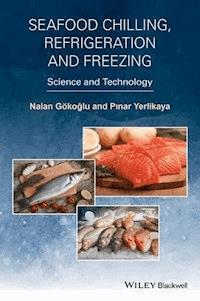
Cover image: ice background ©sbayram/istockphoto; three salmon pieces on a chopping board ©olgna/istockphoto; Raw sea bass fish on cutting board top view ©ALLEKO/istockphoto; Fish on ice ©PapaBear/istockphoto.
Preface
Fish and other seafood are the major sources of nutritious protein and micronutrients. They form part of a healthy diet due to their content of high-quality protein with essential amino acids, minerals and vitamins. However, their flesh is perishable feature and causes spoilage. Therefore, preservation of seafood is an important issue. The preservation methods lowering the temperature protect the original properties of these products. The first application on board a vessel is chilling or freezing. These preservation methods are used comprehensively for fish and fish products. Books on chilling, refrigeration and freezing are generally available for all foods, but there is a limited number of books specializing on fish.
In this book, besides general knowledge on chilling, refrigeration and freezing, seafood-specific applications are given. I hope that this book will be useful for researchers, students and industrialists.
The authors would like to thank their families for their support and patience.
Drawings: Dr. Yasar Ozvarol.
Nalan Gökoğlu and Pınar Yerlikaya
CHAPTER 1Introduction
1.1 Spoilage of seafood
Fish can be easily spoiled after death. The decomposition of fish flesh occurs mainly due to various chemical, microbial and enzymatic actions. Microorganisms are found on the skin, gill surfaces and in the intestines of live fish. In live fish, these microorganisms do not affect on fish quality due to the normal body defences of fish. However, microorganisms attack fish tissues after death. While numerous microorganisms can cause spoilage of fish, the main ones are bacteria. The bacterial flora of fish is affected by several factors, including season and environment. The bacterial microflora of fish is related to the microbial population of the water in which it lived. Psychrophilic and mesophilic microorganisms are responsible for the fish spoilage. Microorganisms enter the body of fish through gills, blood vessels, skin and abdominal wall. Moreover, bacteria may enter through injured tissues. Bacteria cause undesirable flavour and taste changes in the flesh of fish. Besides flavour and taste, bacteria are responsible for the changes in appearance and physical properties of fish. Deteriorative changes in fish are due to decomposition of non-protein nitrogen compounds. Proteins are degraded into peptides, amino acids, ammonia and some other low-molecular weight nitrogen compounds. The deteriorative changes occurring in fish result in the gradual accumulation of certain compounds in the flesh. Enzymes remain active after the death of the fish and are particularly involved in flavour changes that take place during the first few days of storage. Autolysis is the breakdown of proteins, lipids and carbohydrates by enzymes. The initial quality loss in fish occurs by these autolytic changes. All of the factors affecting the quality of fish, such as bacteria and enzymes, may bring about sensory changes, which are unacceptable for the consumer.
1.2 Preservation of seafood
Since fresh fish spoil easily, they need to be processed and preserved. Preservation provides a long shelf-life for fish and fish products. Preservation can be defined as the storage of excess fish when they are abundantly caught or produced so they can be consumed as if fresh in times when food is scarce or when transported to long distances. Preservation affects food in two ways: (1) it keeps the original freshness and properties of fish; (2) it changes the original properties of the food and creates new product. The main purpose of both of these is to prevent spoilage, especially by microorganisms. Several preservation methods have been developed, some of them providing a longer shelf-life than others. The choice of a preservation method depends on the product, properties of the product, availability of energy, the storage facilities, and the costs of the method. It is sometimes necessary to combine methods.
Fish spoils very quickly in high ambient temperatures, because chemical, physical and microbiological actions accelerate in high temperatures. Therefore, the temperature should be reduced immediately after harvest. In this regard, preservation begins in fishing vessels for fish and fishery products. The first preventative step to keep the quality of fish is taken onboard. Chilling, refrigeration and freezing are generally used onboard as preservation methods; these methods are also common in inshore applications. The fish are transported to land under cold conditions, and stored in cold storage until processing or marketing in the plant. Products remain fresh under refrigeration for a few days; they can be stored much longer when frozen. Low temperatures must be maintained accurately and continuously.
1.2.1 Chilling
Chilling is to reduce fish temperature to 0°C. The main aim of chilling is to prevent physical, chemical and microbiological activities occurring under normal conditions by reducing the temperature. Chilling cannot completely stop spoilage of fish but retards it. Effective chilling depends on some factors, including initial microbial load, chemical composition, temperature, relative humidity, and air velocity. The lower the temperature means the longer the shelf life. Mesophilic and thermophilic microorganisms are retarded at chilling temperature. Different chilling methods are used for fish and fishery products. The most common and effective method is chilling with ice. In this method the fish is completely surrounded by ice because the cooling capacity of ice is very good. Melting ice removes heat from the fish and so cools it. Moreover, chilled or refrigerated sea water (RSW) is used for chilling of fish. This method is common in onboard applications.
1.2.2 Refrigeration
Refrigeration is also a method of lowering the temperature of the product. In this method mechanical cooling is used. Air is cooled by a refrigerator and cold air is passed over the surface of a fish to rapidly cool it. Air takes the moisture from the surface of the product, and therefore surface of the fish becomes dry. For this reason, refrigeration is more suitable for iced fish. After icing of fish in boxes or containers, they are stored under refrigeration and effective cooling is achieved in this way. On the other hand, frozen products should be stored in cold conditions until use. Different refrigeration systems and refrigerants are used for fish and fishery products. Refrigeration equipment can be installed in fishing vessels. Thus, fish quality keep just after catching. RSW is a good chilling method on board, and refrigerated equipment installed in the vessel produces RSW.
1.2.3 Freezing
Preservation of fish and fishery products for longer periods can be achieved by freezing. Freezing is the process of removing heat to lower product temperature to –18°C or below. It has the advantage of minimizing microbial and enzymatic activity. Microbial and enzymatic activities are limited by lowering temperature and water activity. Many spoilage bacteria can be destroyed by freezing. In order to continue this effect of freezing, the frozen state must be protected. Frozen products must be stored in the cold until use and the cold chain definitely should not be broken.
Thawing is a very important process for frozen seafood. If thawing is not performed in proper conditions, the quality of frozen fish is significantly affected, even if frozen in good conditions. Thawing at low temperatures will prevent the loss of quality of the fish. Several thawing methods are used for fish and fishery products. Whichever method is used, rapid thawing is essential.
In this book; chilling, refrigeration and freezing, which are important preservation methods in fishery and fish industry are defined. Uses of these methods are described individually. These methods, especially chilling and refrigeration are very important because they are applicable after catch onboard. Freezing also is applicable in factory vessels. On the other hand, freezing is the most effective method to preserve the original quality of fish for longer periods. If sensitivity of fish to spoilage is remembered, the importance of these preservation methods will be understood. To extend the shelf life of fish and fish products, even a few hours is very important.
CHAPTER 2Chemical composition of fish
2.1 Proteins
The major constituent of fish flesh is water, which accounts for about 70–80% of the weight of the fillet. The water in fresh fish muscle is tightly bound to the proteins in the structure. There is an inverse relationship between water and lipid content in fish. During different seasons, with an increase in fat content, there is a decrease in water content. The moisture content is also known to generally decrease with age. The water content of lean fish increases during sexual maturation. Red lateral muscle includes slightly less protein and more lipid than the white muscle. The posterior part of the fish fillet contains more protein and fewer lipids than the anterior part. Lipids are energy reserves and are utilized in the maintenance of life. In case of migration or spawning periods, protein is utilized for energy, in addition to lipids, resulting in a reduction of biological condition.
Lesen Sie weiter in der vollständigen Ausgabe!
Lesen Sie weiter in der vollständigen Ausgabe!
Lesen Sie weiter in der vollständigen Ausgabe!
Lesen Sie weiter in der vollständigen Ausgabe!
Lesen Sie weiter in der vollständigen Ausgabe!
Lesen Sie weiter in der vollständigen Ausgabe!
Lesen Sie weiter in der vollständigen Ausgabe!
Lesen Sie weiter in der vollständigen Ausgabe!
Lesen Sie weiter in der vollständigen Ausgabe!




