


57,99 €
Mehr erfahren.
- Herausgeber: John Wiley & Sons
- Kategorie: Fachliteratur
- Serie: Wiley Finance Editions
- Sprache: Englisch
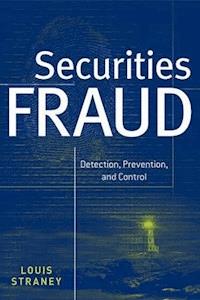
The first complete, expert guide to securities and investment fraud Filled with expert guidance for detection and prevention of all kinds of securities fraud and investment misconduct, Securities Fraud helps you identify red flags of fraud and offers practical ways to detect and prevent it. Written by a Wall Street professional with three decades of experience spanning the most critical period of our financial markets This book challenges classic fraud theories, describing how to dismantle information silos that permit fraudsters to conceal their activities. * Begins with an overview of the evolution of securities regulation and the impact of securities fraud * Offers real cases and examples which illustrate recurring themes and red flags * Provides the first guide of its kind to offer a complete look at the various kinds of securities fraud and investment misconduct Securities Fraud is the essential guide you need for a bird's-eye view of fraud that may be taking place even now within your own organization and with your portfolio.
Sie lesen das E-Book in den Legimi-Apps auf:
Seitenzahl: 350
Veröffentlichungsjahr: 2010
Ähnliche


















Contents
Cover
Half-Title Page
Series
Title Page
Copyright
Dedication
Preface
Acknowledgments
Introduction
Chapter 1: The Face of War
Cost of Defeat
Drawn and Quartered
Art and Fog of War
Origins
Human Capital
Notes
Chapter 2: Shared Interests
Trade Secrets
Shared Interests
Nation of Farmers
Cazique of Poyais
Statutory Foundations
Notes
Chapter 3: The Eleven
Greater Than 10 yet Less Than 12
1. The Kansas Securities Act (Blue Sky Law)
2. The Securities Act of 1933
3. The Securities Exchange Act of 1934
4. The Glass-Steagall Act of 1932
5. The Commodity Exchange Act of 1936
6. The Investment Company Act of 1940
7. The Investment Advisers Act of 1940
8. The Bank Secrecy Act of 1970
9. The USA Patriot Act of 2001
10. The Sarbanes-Oxley Act of 2002
11. Shearson/AMEX v. McMahon
Safety Nets—A Misnomer
Coverage Caveats
Beyond the Rules
Notes
Chapter 4: Funding and Fraud
It Really Doesn't Matter
Securities? No. Securities Fraud? Yes!
Montgomery to Manhattan
Promises, Promises
A Rotten Compromise
Common Stock, Uncommon Results
Read the Label
Financial Purgatory
An Evil Equation
Transition to Victimization
Notes
Chapter 5: Command and Control
Absolutologist
By the Numbers
It Starts at the Top
Carlo “Charles” Ponzi
Robert Vesco
Robert E. Brennan
Michael de Guzman et al.
Bernard L. Madoff
Notes
Chapter 6: Paid to Steal
At All Costs—Protect the Brand
Michael Holoday
Nick Leeson
Michael Milken
Robert L. Citron
Yanming
Notes
Chapter 7: Outside Inside
Investor Fraud
Anthony “Tino” De Angelis
Ivan Boesky
G. Foster Winans
Martha Stewart—“I Was In Prison You Know”
Magic of Algorithms
Notes
Chapter 8: Misunderestimated
Adviser Fraud
Patterns
Jordan Belfort—Robert Brennan Incarnate
Frank Gruttadauria
Martin Frankel (or One of Twelve Other Aliases)
Captain Money—J. David Dominelli
Eric Bartoli (A.K.A. Enrico Orlandini)
Retrospective
Notes
Chapter 9: Days of Future Past
Dystopian Future
Rating Agencies
Trevor Cook (Oxford Global Partners)
Patricia Cornwell v. Anchin, Block & Anchin
Derivatives
Huang Guangyu
Galleon Group Hedge Fund
Jerome Kerviel
Kenneth Lewis
Semion Mogilevich
Sean David Morton
Rebecca Parrett
Pathway to Prosperity
Goldman Sachs
Marcus Schrenker
R. Allen Stanford
Kenneth Ira Starr
Structured Products
Weizhen Tang
Douglas F. Vaughan
In Their Own Words
Synthesizing Raw Data
Notes
Chapter 10: The Warrior's Path
Endless Struggle
Appendix: Frequently Used Abbreviations
About the Author
Index
Securities Fraud
Founded in 1807, John Wiley & Sons is the oldest independent publishing company in the United States. With offices in North America, Europe, Australia and Asia, Wiley is globally committed to developing and marketing print and electronic products and services for our customers' professional and personal knowledge and understanding.
The Wiley Finance series contains books written specifically for finance and investment professionals as well as sophisticated individual investors and their financial advisors. Book topics range from portfolio management to e-commerce, risk management, financial engineering, valuation, and financial instrument analysis, as well as much more.
For a list of available titles, visit our Web site at www.WileyFinance.com.
Copyright © 2011 by John Wiley & Sons, Inc. All rights reserved.
Published by John Wiley & Sons, Inc., Hoboken, New Jersey. Published simultaneously in Canada.
No part of this publication may be reproduced, stored in a retrieval system, or transmitted in any form or by any means, electronic, mechanical, photocopying, recording, scanning, or otherwise, except as permitted under Section 107 or 108 of the 1976 United States Copyright Act, without either the prior written permission of the Publisher, or authorization through payment of the appropriate per-copy fee to the Copyright Clearance Center, Inc., 222 Rosewood Drive, Danvers, MA 01923, (978) 750-8400, fax (978) 646-8600, or on the web at www.copyright.com. Requests to the Publisher for permission should be addressed to the Permissions Department, John Wiley & Sons, Inc., 111 River Street, Hoboken, NJ 07030, (201) 748-6011, fax (201) 748-6008, or online at www.wiley.com/go/permissions.
Limit of Liability/Disclaimer of Warranty: While the publisher and author have used their best efforts in preparing this book, they make no representations or warranties with respect to the accuracy or completeness of the contents of this book and specifically disclaim any implied warranties of merchantability or fitness for a particular purpose. No warranty may be created or extended by sales representatives or written sales materials. The advice and strategies contained herein may not be suitable for your situation. You should consult with a professional where appropriate. Neither the publisher nor author shall be liable for any loss of profit or any other commercial damages, including but not limited to special, incidental, consequential, or other damages.
For general information on our other products and services or for technical support, please contact our Customer Care Department within the United States at (800) 762-2974, outside the United States at (317) 572-3993 or fax (317) 572-4002.
Wiley also publishes its books in a variety of electronic formats. Some content that appears in print may not be available in electronic books. For more information about Wiley products, visit our web site at www.wiley.com.
Library of Congress Cataloging-in-Publication Data:
Straney, Louis L. Securities fraud : detection, prevention and control / Louis L. Straney. p. cm. – (Wiley finance; 584) Includes index. ISBN 978-0-470-60157-0 (hardback); ISBN 978-0-470-91857-9 (ebk); ISBN 978-0-470-91858-6 (ebk); ISBN 978-0-470-91859-3 (ebk) 1. Securities fraud. I. Title. HV6768.S73 2010 363.25′963—dc22 2010023273
To Mary Bates Straney.
Preface
Full and accurate disclosure is a cornerstone of financial services. For that reason, it is appropriate to begin with the acknowledgement that this is not a “how-to” book. Additionally, this is not a “tell-all” exposé of Wall Street. Furthermore, I have made no attempt to instruct the reader how to invest or bring legal action against their financial adviser or firm. For the institutional investor, securities firm, regulator, or policy maker, I make no claim that this book, in and of itself, will make your organization bulletproof. Most importantly, much to the disappointment of swindlers, this is not a cookbook for fraud.
Given these caveats, the premise for this book is rather limited: With reasonable care, for all potential victims, in most instances, securities fraud is preventable. And except for the extremely lucky, prevention requires insight. Unfortunately, most accounts of investment misconduct have focused on the “how to” elements, and totally neglected the “how not to” option. With this disclaimer in mind, I welcome you to the “how not to” be a victim of securities fraud experience.
There are a number of things that I dislike. Among those are certain vegetables, weak coffee, dead batteries, and conventional wisdom—the most offensive on the list. It baffles me how any writer can rely upon so-called conventional wisdom to stimulate insight or worthwhile dialogue. Conventional wisdom is free at the barber shop or locker room, so why purchase it? With this in mind, I do enjoy a lively battle. You will find a number of metaphors related to war in this book. That was intentional on my part. Securities fraud is economic terrorism and unless we accept it as a serious threat, we cannot prevail. It would be encouraging to discover that after reading this book, many of you become enraged to the point that you attempt to disprove my theories, or to overhaul the system.
You will soon discover that I have used a linear approach with general topics discussed first, which will lay the foundation for more specific concepts in later chapters. For example, every attempt will be made to first establish a solid base of working definitions in a historical context. From this platform of knowledge and conceptual insight, it is a natural transition to understanding the jargon and devices of securities fraud. It is important to visualize “how we arrived at this point,” and this can only be accomplished with a thorough study of core elements. However, a rigidly sequential methodology is admittedly unimaginative so I will often overlay an important concept with a personal experience or all around good yarn. In my opinion, chronicles must be good stories first and only then can they evolve into worthwhile messages.
Even though the destructive nature of securities fraud is very much a media topic, Chapter 1 will quantify what I believe to be a pandemic problem. In Chapter 2, a four-century overview of the financial markets will demonstrate that the development of the financial markets was based on the notion of “shared interests.” Think of Chapter 2 as hearing about the old days from an elderly family member. In the attempt to be succinct, major securities statutes and regulatory guidelines will be limited to 11 mandates in Chapter 3. You will find that even though there is randomness in the financial markets, the number 11 has a somewhat mysterious heritage. Since many will be interested in the artist's palette and brushes—the tools of his craft—Chapter 4 is dedicated to a description of the most common securities and devices used in fraudulent acts. At first consideration, Chapter 4 may seem redundant for the more experienced investors. Nevertheless, the markets are fast paced in design and destruction so this chapter should contain new knowledge for all readers. Chapters 5 through Chapter 8 are dedicated to identifying the four categories of victims which includes both individual investors and firm. Only after understanding these four unique perspectives can we hope to detect and protect investment misconduct and securities fraud. Chapter 9 provides an extensive list of early stage cases or developments that are worth monitoring. Additionally, the chapter has a section unique to this book which focuses on my personal contact with individuals who are accused or convicted of securities fraud. Chapter 10 includes examples of “red flags” and tough questions to ask your adviser (and yourself) before establishing an investment relationship. However, it must be stressed, this book was written to build upon cumulative knowledge. If you skip Chapters 1 through 8, Chapter 9 may be entertaining but certainly not significant in impact. Conclusions, recommendations, and forward-thinking concepts are discussed in Chapter 10. As we conclude, you will be drawn to notions well beyond so-called conventional wisdom, siloed vision, and traditional theories. At this point, you should be less likely a victim of securities fraud and more likely an agent of change.
LOUIS L. STRANEYSanta Fe, New MexicoOctober 2010
Acknowledgments
I have several acknowledgments but for the sake of brevity I must limit my comments. First, I want to say thanks to my second grade teacher for punishing me for writing the story about the unwed ducks having ducklings. Her provincial attitude gave me everlasting resolve. Well beyond my initial efforts reflecting on open marriages in ducks, I must offer my sincere thanks to retired University of Louisville professors Charles Breslin and Dr. Mary Ellen Rickey. Every ounce of their being was dedicated to discovery and wisdom.
My initial research on securities fraud was encouraged by Joseph Wells and John Gill, and meticulously edited by Laura Hymes at the Association of Certified Fraud Examiners. At John Wiley, I deeply appreciate the efforts of Tim Burgard and my editors Stacey Rivera, Helen Cho, and Laura Cherkas, who played a critical and immensely helpful role in completing this project. They shared my belief that it was the right time to take a leadership role in this topic, and I thank each of them for being part of that effort.
Of course, my longtime Wall Street colleagues and friends were essential fellow travelers in my career. Along with the rules, regulations, annual budgets, and investment strategies, I most respect the guidance from comments such as, “just do the right thing,” and “the clients pay the bills.” Possibly the most memorable advice came from the venerable Wall Street legend, Lewis Glucksman: “No deal is too large to walk away from!”
Without the understanding and support of my family, this book would not have been possible. Demonstrating extraordinary patience and confidence, throughout the years they supported my Wall Street career. With even more resilience, they were enthusiastic collaborators, editors, critics, unpaid reviewers, and co-conspirators on this project. My sincere thanks to everyone: Harper, Willa, Noel, Lee, Hillary, Adam, Mom, Dad, and the most patient and supportive partner imaginable, my wife, Mary.
Please be assured that I know who pays the bills—my readers—and I very much appreciate your interest in what I believe to be the least reported, yet preventable, disease on this planet: securities fraud.
Introduction
I can calculate the motion of heavenly bodies, but not the madness of people.
—Sir Isaac Newton
Some writers will reluctantly admit that they want their work to be commercially successful. Not me. I am up-front about that. My biggest fear is to find that investment fraud has become passé and the much-needed dialogue has become supplanted by some short-term crisis. Fully accepting that even in the age when worthwhile content is free from Internet sources, there is a role for instructive texts. After all, the New York Times still has a book section. Oprah has a reading list. Most towns still have their Andrew Carnegie–financed public libraries. I have no expectations that a study of despair and deception will fly off the shelves or be constantly streamed through e-book conduits. Reaching for a wide audience through a topic that I feel is of major importance, I knew that I had several issues to consider. The balance between fact and fantasy must lie somewhere between a PowerPoint presentation and a romance novel.
After no small amount of reflection, I decided that the appeal of the well-received writer often lies in tone and voice. Artfully, successful writers weave romantic and mystical events throughout the plots. By necessity, the topic of this book somewhat defines the tonal approach. Contextually, it is necessary to communicate an extensive set of facts, trends, and something journalistically akin to hard news. Even though the topic somewhat drafts the design, the author has the hammer and nails. With this in mind, even the most formal context can accommodate some edginess.
In my opinion, it was critical that I approach the events and characters from a unique perspective. If you have previous experience with texts on securities fraud, many are either tonally rigid or so relaxed that there is little substance to the content. I dislike both extremes so I was led to the conclusion that tone was a variable somewhat out of my control and I would rely heavily on voice.
In that spirit, I will take unapologetic liberty with voice. An important goal is that both the author and the reader will be woven into the fabric of the story. I trust that each of you will join me on the decks of the ships of the Dutch East India Company as well as on Wall Street trading floors. Much of the material in this book was drawn from my personal experiences of three decades as a senior manager on Wall Street and my second career as a securities litigation consultant and expert witness. Some examples will be drawn from carefully disguised cases where I have acted as a part of the drama. Therefore, the voice of this book is mine and has been shaped by hardscrabble experience and training, and further influenced by your victimization.
As with global accents and dialects, there are many voices to choose from. For example, one extreme would be the quick-witted journey of Mark Twain in his Innocents Abroad. Twain's voice is approachable and in movie terms G-rated. The other extreme is the enormously successful commentary on the American dilemma portrayed in Hunter S. Thompson's Fear and Loathing in Las Vegas. If you are willing to accept that Twain is for the General Audience, the Gonzo Journalist, Thompson, is an unchallenged Restricted rating. Recognizing the limitations and achievements of both Twain and Thompson, I determined that my voice would borrow from each— something along the lines of, Innocent Loathing on Wall Street. Innocent to the extent that it is my belief that the issues and challenges discussed in this book should be obvious to everyone; and loathing because I have found that unless something implodes too few are taking these issues seriously.
Throughout this book, there are graphically expressed opinions. Even though I have had the pleasure of working with many extraordinary editors and professionals at John Wiley, the opinions and theories (many of which are likely very controversial) in this book are strictly mine. As Hunter Thompson cautioned (or possibly promised), “Buy the ticket, take the ride.”
Specificity, including the names of individuals and examples are essential to this book. Every attempt has been made to utilize reliable sources. However, the reader should expect that as this book ages, some court decisions can be reversed, allegations can be withdrawn. In some situations, Presidential pardons may be issued. Benchmark cases and examples were chosen with a complete absence of judgmental prejudice. Both the publisher and this writer plan to aggressively revise this book to maintain a sense of accuracy and timeliness. At the outset, I will accept the fact that punishment for securities fraud, relative to other crime, is often uneven and illogical. To pass judgment on the eventual outcome of any particular case is well beyond the scope of this work. Those issues are for the courts, the regulators, and our nation's leaders.
As a reader's guide, it should be noted that this narrative is generally chronological, but not without an occasional meandering to another period or topic. Additionally, each chapter was designed to build upon prior knowledge and to be consumable in approximately one hour of reading. All the same, as with my flexible chronology, the reader should expect that some chapters will require an adjusted time commitment.
The critical issue is avoiding victimization from investment misconduct and fraud on every level and from every perspective. With this in mind it is to be expected that the approach for each reader will be highly subjective. In getting started, there are many options. Feel free to start with the index. Read it aloud to your grandchildren. Use the book as a contribution to your religious organization. Memorize the text from back to front. Track down a family-related felon, or see if your firm or favorite stock is mentioned. Your methodology will be successful if at the conclusion of this experience, you are less likely to be a victim of securities fraud.
Chapter 1
The Face of War
In such a world of conflict, a world of victims and executioners, it is the job of thinking people, not to be on the side of the executioners.
—Albert Camus
Cost of Defeat
We live in a postwar society. In human capital and monetary value, the decades-long conflict has taken a horrific toll. And as painful as it is to face, by a large and embarrassing margin, we lost.
By any measure, it was a very odd series of battles. Admittedly, our forces were not well trained or outfitted. We relied on outdated resources while our enemy effectively used the latest technology. When we captured a leader of our opponent, the punishment was often a token reprimand. Curiously, when our adversary was struggling for survival, we extended a life line. And most alarming, except for infrequent interludes, our national leadership seldom felt that our struggle was a priority. After choosing the weapons, establishing the rules of engagement, and designing the field of battle, repeatedly we were outflanked, and finally we were soundly defeated in the war against investment fraud. Well-executed evil strategy often triumphs over well-intentioned weak tactics.
Lesen Sie weiter in der vollständigen Ausgabe!
Lesen Sie weiter in der vollständigen Ausgabe!
Lesen Sie weiter in der vollständigen Ausgabe!
Lesen Sie weiter in der vollständigen Ausgabe!
Lesen Sie weiter in der vollständigen Ausgabe!
Lesen Sie weiter in der vollständigen Ausgabe!
Lesen Sie weiter in der vollständigen Ausgabe!
Lesen Sie weiter in der vollständigen Ausgabe!
Lesen Sie weiter in der vollständigen Ausgabe!
Lesen Sie weiter in der vollständigen Ausgabe!
Lesen Sie weiter in der vollständigen Ausgabe!
Lesen Sie weiter in der vollständigen Ausgabe!




