


30,99 €
Mehr erfahren.
- Herausgeber: John Wiley & Sons
- Kategorie: Fachliteratur
- Sprache: Englisch
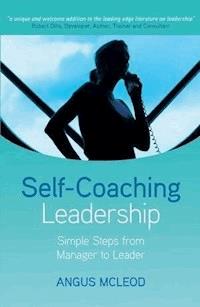
Generally, leadership is about influencing people to make big things happen. Management is a process of organizing people to get things done. They are different skills, but equally critical to success in today’s workplace. The key is to know which approach works best in which situation.
Written in a clear, simple style, Self-Coaching Leadership redefines and demystifies the journey to leadership. Angus McLeod’s no-nonsense thinking, straightforward approach and practical tools enable readers to more easily identify when a leader is needed - and coach themselves toward improved influence, performance and effectiveness.
Sie lesen das E-Book in den Legimi-Apps auf:
Seitenzahl: 295
Veröffentlichungsjahr: 2012
Ähnliche



















Table of Contents
Cover
Further praise for Self-Coaching Leadership
Title page
Copyright page
Dedication
List of illustrations
About the author
Preface
Acknowledgments
Part One: Leadership of Self
1 Time
Lock-in syndrome
Fire-fighting
Busy heads
The step back
Busy bodies
Silent time for reflection
2 Life balance
Where there is a will, there is a way
Honoring jobs done
3 Personal goals
The pre-goal method
The Stretch Zone
4 Wheel of work
Segments of the wheel
5 Solution thinking
Deep Thought solutions
Flexible thinking and the multiple intelligences
6 Applying personal changes
Reducing work time
Part Two: Influence – Leadership of Others
7 Widening and narrowing attention
Further questions
Changes: overt motives made clear
8 Rapport skills and building trust
Rapport skills
Beginnings, middles and ends
Honoring and celebration
Mindsets for rapport and trust
Trust
9 Relationship building: putting it together
10 Leadership qualities
Traits, trust factors and people skills
Trust factors
Trait: Clear communicator
Trait: Straight-talker
Trait: Flexible
Trait: Reliable and consistent (TF)
Trait: Accepts responsibility (TF)
Trait: Discrete (TF)
Trait: Credible
People skill: Listens intently
People skill: Understands others
People skill: Supportive (TF)
People skill: Interested in me (TF)
11 Other influencing skills of the leader
Accommodation, compromise and collaboration
12 Mindsets for leaders
13 Motivation
Motivation: Under- and over-managing
Motivation: Mentoring and coaching
The 1-2-1 meetings
Facilitating all 1-2-1s
New staff 1-2-1
Understanding stress
Probing the Wheel of Work
14 My own 1-2-1
15 Influencing peers and bosses
16 Strategic influence
What I need to communicate
The strategy for action
17 Managing meetings
Agenda frames for behaviors and outcomes
Meetings: Factoring for success
18 Developing talent
Organizational character overview
Part Three: Self-Learning for Leaders
Modeling leadership
19 The Real Thing at work
Being and doing
Recalibrating authenticity for work
Maintaining progress
20 Self-awareness for leaders
Feedback for leaders
21 Emotional Intelligence
Working to improve EI
Epilogue
References
Index
Further praise for Self-Coaching Leadership
‘… so many new models and processes to use it felt like Christmas – they are great and so effective … ’
Karen Donley, HR Director, MBDA, BAe
‘… provides a rich resource for all those concerned with raising the bar on senior management and leadership performance, whether as the executive in question or his/her coach or advisor.’
David Hoad, Director, The Kingsmoor Consultancy
‘A practical workshop manual to have open as you tackle the challenges of life as a manager. Do the exercises and make this book work for you – you will find it is like an experienced coach; it gives you the tools to do a better job, relax, learn and grow at the same time.’
Tim Nottidge, General Manager, Business Development, BT Global Services
‘It provides an excellent introduction to being able to consider “how” executives can improve their self management and the management of others within the limited time available, while facing ever increasing pressures. It also set out a more detailed methodology to follow to take practical steps which will help to achieve the benefits which we all seek.’
DC, HR Director, multi-billion turn-over NGO
‘Beautifully congruent. This book doesn’t dictate what you should do to be a leader – it provides examples, models and inspiration so you acquire exquisite leadership skills in the reading of it.’
James Lawley and Penny Tompkins, authors of Metaphors in Mind: Transformation through Symbolic Modelling
‘I would recommend this book to any manager or leader who really wants to get ahead.’
Veronica Lim, Executive Coach, www.veronicalim.com
‘The book is the perfect blend of well resourced information grounded with relevant examples and exercises that allow the reader to work through the whole book or to build on a particular skill and would be a useful addition to your bookshelf.’
Camilla Arnold, Director of Talent, TXG Ltd
Copyright © 2007 John Wiley & Sons Ltd, The Atrium, Southern Gate, Chichester,
West Sussex PO19 8SQ, England
Telephone (+44) 1243 779777
Under the Jossey-Bass imprint, Jossey-Bass, 989 Market Street, San Francisco CA 94103-1741, USA
www.jossey-bass.com
Email (for orders and customer service enquiries): [email protected]
Visit our Home Page on www.wiley.com
All Rights Reserved. No part of this publication may be reproduced, stored in a retrieval system or transmitted in any form or by any means, electronic, mechanical, photocopying, recording, scanning or otherwise, except under the terms of the Copyright, Designs and Patents Act 1988 or under the terms of a licence issued by the Copyright Licensing Agency Ltd, 90 Tottenham Court Road, London W1T 4LP, UK, without the permission in writing of the Publisher. Requests to the Publisher should be addressed to the Permissions Department, John Wiley & Sons Ltd, The Atrium, Southern Gate, Chichester, West Sussex PO19 8SQ, England, or emailed to [email protected], or faxed to (+44) 1243 770620.
Designations used by companies to distinguish their products are often claimed as trademarks. All brand names and product names used in this book are trade names, service marks, trademarks or registered trademarks of their respective owners. The Publisher is not associated with any product or vendor mentioned in this book.
This publication is designed to provide accurate and authoritative information in regard to the subject matter covered. It is sold on the understanding that the Publisher is not engaged in rendering professional services. If professional advice or other expert assistance is required, the services of a competent professional should be sought.
Other Wiley Editorial Offices
John Wiley & Sons Inc., 111 River Street, Hoboken, NJ 07030, USA
Jossey-Bass, 989 Market Street, San Francisco, CA 94103-1741, USA
Wiley-VCH Verlag GmbH, Boschstr. 12, D-69469 Weinheim, Germany
John Wiley & Sons Australia Ltd, 42 McDougall Street, Milton, Queensland 4064, Australia
John Wiley & Sons (Asia) Pte Ltd, 2 Clementi Loop #02-01, Jin Xing Distripark, Singapore 129809
John Wiley & Sons Canada Ltd, 6045 Freemont Blvd, Mississauga, ONT, L5R 4J3, Canada
Wiley also publishes its books in a variety of electronic formats. Some content that appears in print may not be available in electronic books.
Anniversary Logo Design: Richard J. Pacifico
British Library Cataloguing in Publication Data
A catalogue record for this book is available from the British Library
ISBN 978-0-470-51280-7 (HB)
To Dr Gordon Signy
List of illustrations
1.1
TDA fire-fighting cycle
1.2
Focus for efficacy
1.3
Stillness–Activity Dimension
1.4
Emotive impact curve
2.1
Present and desired rankings for key life balance issues
2.2
Healthy Action Cycle
3.1
Stretch to learn: from comfort to stretch zones
4.1
Typical Wheel of Work
5.1
Deep Thought and creativity
8.1
Trust building and freefall
10.1
Missing the message due to thinking instead of listening
13.1
McLeod Management Model
13.2
Extended McLeod Management Model
13.3
Typical Wheel of Work
13.4
Choice and Persistent Stress Syndrome
About the author
ANGUS MCLEOD WAS AN ACADEMIC RESEARCH scientist before moving into industry, where he held a number of roles, first in technical management including quality, then in marketing and sales. He moved into general management including COO and Chairmanship jobs before moving into consultancy. He has held numerous commercial directorships and continues to sit on a number of company boards, mostly in the environmental and training and development sectors. His business experience includes a buy-in MBO for an international financial institution. His consultancy experience in the last 10 years has developed into leadership, team development as well as executive and performance coaching. He and his colleagues offer facilitation, course design, training in a multitude of management and leadership skills as well as providing coaching, mentoring and supporting consultancy.
Dr McLeod is widely published in leading journals in the USA and the UK where his business is primarily directed. He wrote Me, Myself, My Team (Crown House, 2000; 2nd edition, 2006) which focuses on the development of personal qualities of all those who work in teams and the application of that learning for team development. He wrote the widely-acclaimed book Performance Coaching: The Handbook for Managers, HR Professionals and Coaches (Crown House, 2003), which is the practical resource book featuring real coaching situations and dialogues. He designed the 13-day Diploma-Course in Performance Coaching for Newcastle College with over 7,000 student registrations in its first year (2004) and assisted in the development of standards in coaching and mentoring for the UK (2005). He travels widely and regularly contributes at conferences around the world.
Dr McLeod co-founded the Coaching Foundation Ltd in the late 1990s. This is a not-for-profit organization helping to develop best practice in both executive and life-coaching and exposing the membership to a wide range of new thinking. He also runs personal development courses including the Question of Balance, Wellbeing from Healthy Thinking and the Write-One writing course in a number of countries.
He was the motivator for Ask Max, the internet-based e-mentoring service which is available via his organization, Angus McLeod Associates.
Dr McLeod has bachelor and doctoral degrees in science. He is trained in NLP and co-counseling and has a Diploma in Performance Coaching. Dr McLeod is also a Master Meta-Coach and a member of the International Society of Neuro-Semantics. He is a full member of the Neuro-linguistic Psychotherapy Counseling Association.
He is a keen motorcyclist, involved in training to advanced levels. He is also a competitive rower and Chairman of his club. He works from Philadelphia in the USA and from the West Midlands in the UK.
www.angusmcleod.com
contact:
Preface
TONY IS THE OPERATIONS DIRECTOR FOR A MAJOR international, manufacturing business. It’s a job he has had just over 12 months after being recruited to ‘move and shake’. As a result of his efforts, throughput has doubled. He works long and hard, thinks carefully about strategic change and gets the job done. The urgent period of change is now almost complete and he needs his people to be more independent – making solutions and suggesting more ideas to improve productivity. Tony is bright and knows that he needs to start changing his management style if he is to continue in the present role. The time for telling people what to do and how to do it must end, and there needs to be a period when people are more involved in the solutions by taking more initiative and responsibility. Tony also needs greater involvement from his people to enable him to spend less time in the day-to-day operations, and more time on the bigger structures and strategies that lie ahead. However, in meetings he notices that when he asks a question, he rarely gets a response. His people are used to Tony giving them directions.
Tony has read a great deal about managing and has implemented many current ideas to help his people to take risks and use their initiative. However, they are still highly dependent upon him, so what should he do now?
This book is for people like Tony and the many people I coach, some of whom are at the top of their profession. It is not a handbook of leadership but a collection of learnings based upon the real experiences and enormous changes that these people have made in the last couple of years in particular. It provides ‘can-do’ strategies for change that you can implement immediately. The people I coach, by and large, are already high earners, heading up large teams and responsible for very large financials. Through their own learning in a few sessions, they mainly report that they are more effective, work fewer hours, are more strategic, have better and more motivated people and work in a noticeably different way – so much different that a number are unexpectedly promoted within a few months of the end of the coaching assignment. The learning from which these people benefited is contained in this book and may help to put you on a similar fast-track to promotion, or a new job.
Generally, leadership is about influence, encouraging our people to follow us. Managing tends to be a process of pushing people somewhere. The ideas and solutions in this book deal with both of these administerial approaches. We continuously need to manage as well as lead, and I offer a model that defines managing and leading and lets you know the approach that can be most effectively used, and when. I present tools and strategies to assist you in developing your own unique ways of managing and leading.
Self-challenge and greater self-awareness are at the heart of our development as leaders. These two characteristics offer us more choices in the way we choose to work and help us to understand others better – to motivate them more effectively – and Part Three of this text is largely concerned with development at this level.
The ‘Real Thing’, the genuine nature of self, is often sidelined – many of us tend to manage using an adopted style; something borrowed, something new, evolving over time. But modern leadership demands a more flexible approach. People, their aspirations and their demands have changed. We need to adapt to keep the edge. One of those edges is the elegant use of the ‘Real Thing’, or authenticity. And the Real Thing is invariably more impactful than acting a part. So Part Three also develops ideas to help develop and use your authenticity intelligently; to impact and inspire others to follow you.
As far as possible, as with my training work, I illustrate real-life applications to enable you to decide what may be useful to you and how you might adapt the ideas to address your own challenges. If you take just one thing and apply it successfully, then I am content. To assist in that, this book is heavily indexed.
The book is organized into three main sections: Part One looks specifically at leadership of self and offers practical methods for change, impact and efficiency at the next level. Many of these methods have been tested and applied by managers and leaders who have made that transformation.
Part Two begins to apply much of that learning in leading those around us. It is unapologetically directed at those methods that influence the people we connect with – a practical set of methodologies rather than a textbook of strategic management for organizational change. It directs attention at applied leadership as it influences people to perform for you. A great deal of the content springs from real ideas, methods and strategies that are applied by highly successful people whom I have coached or who have been delegates of mine. I have emphasized ideas that can be applied immediately at work – often to all stakeholders in the organization, and not just those who work for us directly. Objectives include being able to make better decisions, to increase motivation in teams and to create more sustainable organizations.
Part Three extends the practical aspects of personal leadership with a greater level of stretch. The purpose is to develop a greater awareness of self as leader and to control and increase the number of development steps that will make a specific difference to you. The ‘Real Thing’ is also presented there.
It is worth noting that the significant items in Parts One and Two offer direct applications for encouraging those who work for us. If we can stimulate our people (and other stakeholders) to appreciate leader-thinking, then the whole of our team, and even the whole of the organizational culture, is going to shift to higher levels of efficacy.
The index is designed to help you to find your way about and to make the search for something previously seen as easy as possible.
Be inspirational; join the group of great and successful leaders,
Mt Airy,Philadelphia, PA
Acknowledgments
MANY FRIENDS AROUND THE WORLD HELP BY BEING positive and unsurprised by my vision. They rarely wish me ‘good luck’ but instead express their confidence – leaders everywhere will recognize the difference in those two approaches. Friends forgive my disappearances and welcome me back. They know who they are and I love and appreciate every one of them. I hope that any gap between the extent of that love and their understanding of it is narrowed in reading these words.
Particular thanks are warmly due to Dr Adrienne Carpenter who created the writing space and made wholly illegible editing notes, much to my amusement. I am indebted to Captain Frank Biller of the celebrated Fairmount Club on Boathouse Row. He saved me from sinking into the author’s pit by inviting me to sweep-oar with him and his members at any time.
Thanks to my business partner in Ireland, Michael Byrne, who provided advice on the first draft and the most wonderful hospitality in his beautiful country. Thanks also to David Dove and my colleagues at 3CCCs for their understanding at my absences.
I wish to thank the many successful coachees who have inspired me with their willingness to risk and achieve. You have provided me with the most enthralling part of my education in coaching and leadership – it was also the cheapest part!
Last, but not least, my thanks go to Lynne Stirling who offered advice at a time when her own management and leadership skills were needed elsewhere.
Part One Leadership of Self
LEADERSHIP IS NOT SIMPLY DEFINED BY OUR ACTIONS AND the way we influence those around us. Leadership arises out of personal abilities that are beyond the average in many ways. Common characteristics include:
Introspection
Self-challenge
Making personal stretch-goals of increasing size and impact
Seeking out a wider range of solutions than those that arise from experience
Listening well
Being very clear
Creating clear visions and goals.
For these reasons Part One is dedicated to the management, self-coaching and leadership of self. The content is designed to test and stretch, and to provide models for gaining new perspectives, widening personal choice and behaving differently and more successfully at work.
We might start with an issue facing the majority of top managers in organizations everywhere – Time.
1
Time
TODAY’S SENIOR EXECUTIVES MAINLY SHARE THE principal issues of a huge workload and a perceived lack of time. What is also true is that, through coaching, this invariably changes in a remarkable way without loss of impact, results or esteem. How is that possible?
Lesen Sie weiter in der vollständigen Ausgabe!
Lesen Sie weiter in der vollständigen Ausgabe!
Lesen Sie weiter in der vollständigen Ausgabe!
Lesen Sie weiter in der vollständigen Ausgabe!
Lesen Sie weiter in der vollständigen Ausgabe!
Lesen Sie weiter in der vollständigen Ausgabe!
Lesen Sie weiter in der vollständigen Ausgabe!
Lesen Sie weiter in der vollständigen Ausgabe!
Lesen Sie weiter in der vollständigen Ausgabe!
Lesen Sie weiter in der vollständigen Ausgabe!
Lesen Sie weiter in der vollständigen Ausgabe!
Lesen Sie weiter in der vollständigen Ausgabe!
Lesen Sie weiter in der vollständigen Ausgabe!
Lesen Sie weiter in der vollständigen Ausgabe!
Lesen Sie weiter in der vollständigen Ausgabe!
Lesen Sie weiter in der vollständigen Ausgabe!
Lesen Sie weiter in der vollständigen Ausgabe!
Lesen Sie weiter in der vollständigen Ausgabe!
Lesen Sie weiter in der vollständigen Ausgabe!
Lesen Sie weiter in der vollständigen Ausgabe!
Lesen Sie weiter in der vollständigen Ausgabe!
Lesen Sie weiter in der vollständigen Ausgabe!
Lesen Sie weiter in der vollständigen Ausgabe!
Lesen Sie weiter in der vollständigen Ausgabe!
Lesen Sie weiter in der vollständigen Ausgabe!




