


11,99 €
Mehr erfahren.
- Herausgeber: John Wiley & Sons
- Kategorie: Fachliteratur
- Sprache: Englisch
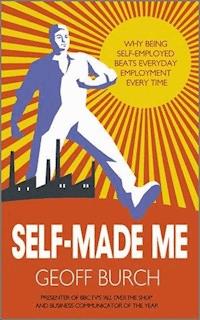
Stop working for the man – break free and make sure you’re getting paid what you’re worth
Stop slogging away 9 – 5 for a set salary (plus the overtime you inevitably do and don’t get any credit for). Abandon the day job and go it alone. Start doing what you want to do, when you want to do it. There are currently 4 million self-employed people in the UK –be one of them, join them, set yourself free. It’s not about becoming an entrepreneurial whiz-kid, it’s about working the way you want to work, on the things you want to work on, and in the location you want to do it from. Remember, you don’t have to sit in an office to get a job done. Self-Made Me shows you how to work how and where you want and earn exactly what you’re worth – not what an employer wants to get away with giving you. Be your own boss and increase your value.
- It’s never been easier to be self-employed than it is today, with increased communications, mobile working and outsourcing
- This straight-forward and engaging guide will help you make being self-employed a success
- Shows you how to get paid what you are actually worth, and how to work as hard or as little required to create the lifestyle you choose
Self Made Me is for a new breed of people, and will show you how to make self-employment work for you.
Sie lesen das E-Book in den Legimi-Apps auf:
Seitenzahl: 333
Veröffentlichungsjahr: 2012
Ähnliche

















Table of Contents
Cover
Title page
Copyright page
DEDICATION
Epigraph
INTRODUCTION
ARE YOU PAID WHAT YOU ARE WORTH?
PAID EMPLOYMENT – A NEW-FANGLED IDEA
PART 1: THE CASE FOR SELF EMPLOYMENT
CHAPTER 1 IT’S ALL ABOUT YOU
A HAPPY OUTCOME
TIED TO THE BIG MACHINE
THE SPECIALIST TRAP
FREE AT LAST
DOES HE NEED WATCHING?
IT ALL ADDS UP
RIDING THE ROLLERCOASTER
CHAPTER 2 LEARNING AND GROWING
STUCK IN THE MIDDLE WITH YOU
WHY DIDN’T IT WORK OUT?
THE PERSONAL BRAND
BE A GUERILLA
THE MEANING OF WORK
CHAPTER 3 THE ROLE MODEL
THE VALUE OF GURUS
A LIFE OF CRIME
CHAPTER 4 CALL THE EXPERT
DOOMED
IT ISN’T WHAT YOU KNOW
PRIDE IN THE JOB
A POTENTIAL DISASTER
LOOK FOR THE CRACKS
CHAPTER 5 THE PROFESSIONAL GAME
WHAT SHALL WE DO NOW?
THINK LIKE A SHARK
A LIFE IN CHAINS
WHEN GURUS COLLIDE
THE NATURE OF WORK
IT COSTS A LOT OF MONEY TO BE THIS CHEAP
A TRUE PROFESSIONAL
CHAPTER 6 SHOW ME THE MONEY
GOOD VALUE
LET THEM SEE THE EVIDENCE
IT DOES WHAT IT SAYS ON THE TIN
AN EXCELLENT IDEA
LOOKING FOR WORK
THE WINNING TICKET
THE IDIOT’S GUIDE TO THE TOP
NEVER MAKE THE SAME MISTAKE TWICE
CHAPTER 7 A CUNNING PLAN
SOMETHING IN THE WOODSHED
THE BUSY FOOL
OH, WHAT FUN!
THEN WHAT?
A DIFFERENT WAY
A SIMPLE ASSUMPTION
THE MADNESS OF BUSINESS PLANS
PLAN TO FAIL
CHAPTER 8 THE MERCHANT ADVENTURERS
A NEW SPECIES
TAKE IT EASY
FAIR SHARES
THE EMPIRE STRIKES BACK
EVERY BURGLAR NEEDS A FENCE
GET OUT AND DO IT
PART 2: EXPLORING THE OPPORTUNITIES
CHAPTER 9 FACE THE FACTS BEFORE YOU START
HONESTY
TOO NICE
CHAPTER 10 WHY WOULD YOU WANT TO DO THAT?
ANOTHER GIFT SHOP
WHAT THIS PLACE NEEDS IS . . .
NO VACANCIES
CHAPTER 11 JUST THE JOB
THE SELECTION PROCESS
SEE THE TROUBLE COMING
CHAPTER 12 THE FAME GAME
THE NAME IS THE GAME
FAMOUS
TRUST ME
GIVE ME A RING
INVEST IN QUALITY
CHAPTER 13 ON THE SHOULDERS OF GIANTS
THE WIND BENEATH MY WINGS
STAND BEHIND THE BIG KID
RIP OFF
SETTING THE STANDARDS
CHAPTER 14 THE PROFESSIONAL APPROACH
A PROPER HAIRDRESSER
THE IMAGINARY FRANCHISE
FRED’S GARAGE
CHAPTER 15 REASSURANCE
GOAT POLITICS
KNOW YOUR CUSTOMER
THE BIGGER THE BUSINESS, THE BIGGER THE RISK
STABBED IN THE BACK
CHAPTER 16 WORKING THE ROOM
A GREAT BUSINESS . . . IF IT WASN’T FOR THE PEOPLE
PLAY NICE
BEHAVIOUR MODIFICATION
WORKING FOR NOTHING
CHAPTER 17 MARKETING – THE SEARCH FOR OPPORTUNITY
WHAT MARKETING WON’T DO
EXTRA! EXTRA! READ ALL ABOUT IT!
OPENING DOORS
BEWARE AWARE
CHAPTER 18 WEB OF INTRIGUE
THE WORLD IS YOUR VIRTUAL OYSTER
WHAT CAN THE WEB DO FOR US?
OPTIMIZE DON’T COMPROMISE
WEIRD AND WONDERFUL
WORDS ARE CHEAP
HANDYMAN
SHIPS THAT PASS IN THE NIGHT
ALL OF A TWITTER
MEET YOURSELF COMING BACK
CONCLUSION
BIBLIOGRAPHY
ACKNOWLEDGEMENTS
This edition first published 2012
© 2012 Geoff Burch
Registered office
John Wiley & Sons Ltd, The Atrium, Southern Gate, Chichester, West Sussex, PO19 8SQ, United Kingdom
For details of our global editorial offices, for customer services and for information about how to apply for permission to reuse the copyright material in this book please see our website at www.wiley.com.
The right of the author to be identified as the author of this work has been asserted in accordance with the Copyright, Designs and Patents Act 1988.
All rights reserved. No part of this publication may be reproduced, stored in a retrieval system, or transmitted, in any form or by any means, electronic, mechanical, photocopying, recording or otherwise, except as permitted by the UK Copyright, Designs and Patents Act 1988, without the prior permission of the publisher.
Wiley publishes in a variety of print and electronic formats and by print-on-demand. Some material included with standard print versions of this book may not be included in e-books or in print-on-demand. If this book refers to media such as a CD or DVD that is not included in the version you purchased, you may download this material at http://booksupport.wiley.com. For more information about Wiley products, visit www.wiley.com.
Designations used by companies to distinguish their products are often claimed as trademarks. All brand names and product names used in this book are trade names, service marks, trademarks or registered trademarks of their respective owners. The publisher is not associated with any product or vendor mentioned in this book. This publication is designed to provide accurate and authoritative information in regard to the subject matter covered. It is sold on the understanding that the publisher is not engaged in rendering professional services. If professional advice or other expert assistance is required, the services of a competent professional should be sought.
Library of Congress Cataloging-in-Publication Data
To follow
A catalogue record for this book is available from the British Library.
ISBN 9780857082657 (paperback) ISBN 9780857082756 (ebk)
ISBN 9780857082763 (ebk) ISBN 9780857082770 (ebk)
FOR DAVID AND ARCHIE
AND TO ALL THE BRAVE GO IT ALONERS WHOSE TENACITY HAS INSPIRED ME TO WRITE THIS BOOK
It is said that in life you can either be a great example or a terrible warning
INTRODUCTION
A NEW WAY OF LIVING IN A CHANGING WORLD
Welcome aboard the good ship Freedom! Maybe you have joined this happy adventure as a willing passenger. Perhaps this cheery vessel has heaved-to, to rescue you from the lifeboat of redundancy while your previous employer sinks without trace. Or maybe you have been rescued, having being marooned on the dreary island of unemployment. For whatever reason you have decided – or been forced – to accompany us, you have just joined the finest and most fulfilling way to cruise through life.
ARE YOU PAID WHAT YOU ARE WORTH?
Following that little ramble, I am now going to have to use the word, or words, that make me cringe and those are ‘self-employment’. I desperately struggle to find a more suitable or politically correct alternative to the label that other people have decided to attach to those of us who work for ourselves. To make myself a bit clearer, let’s take those phrases to bits and examine them. ‘Self’ – that’s you or me; ‘employed’ – that’s the job we have been given to earn our living. ‘Work’ – now there’s an interesting word, and one that this book will look at a great deal, but for now, and without too much explanation, I suppose you could say ‘work’ is an activity that someone is prepared to pay you for. ‘Ourself’, of course, is you or me, which means that the revenue created by the ‘work’ belongs to you or me. Although that seems obvious, if you have a ‘proper job’ the revenue generated by your efforts will go to someone else, your employer. If you follow the advice and guidance in this book, you should be able to get paid what you are worth for your work whilst being self-employed. If your employer can get what you are worth for your work, it stands to reason that they will not give all the revenue to you – that is how they make a profit, by paying you less than you are worth.
PAID EMPLOYMENT – A NEW-FANGLED IDEA
Employment is a fairly new and short-lived idea that has probably had its day. You may feel that is a fairly outrageous comment, so let me explain.
If you go back a few hundred years, even the peasants were self-employed. The lord would give them free use of a piece of land and whatever profit the peasant made was tithed or shared with the lord by way of rent. While I am not suggesting a return to feudal agriculture, it is interesting to note that in mediaeval times no-one had invented the spine-chilling word, ‘management’.
Stop here for a moment. Do you really want or need to be managed? Maybe as a 3- or a 15-year-old people would describe you as hard or easy to manage, but that was when your life was in other peoples’ hands. However, now as a free adult, why on earth would you hand yourself over to be managed?
The feudal lord wasn’t interested in managing anything. The peasants could get up when they wanted, plant what they wanted, and work when they wanted. What the lord was interested in was outcomes not process. If after a bumper harvest you filled the lord’s tithing barn with crops, he wouldn’t walk around with a stopwatch and clipboard saying, “How did you achieve this? Did you comply with the correct procedures and processes?”
The other big feature of self-employment is the incredible level of efficiency that it produces. In a previous book (Go It Alone), I examined the best way of getting people from one place to another as fast as possible by bicycle. The first method to consider would be to take, say, one hundred people and try and construct a single cycle that all one hundred people could ride on. The problem is that as the bicycle gets bigger, its efficiency starts to fall – even a tandem, which only carries two people, can have its problems because there will always be accusations between the two partners about who pedals the hardest. As the number of people grows, it becomes even more difficult to find out who is actually pedalling – and to support the weight of one hundred people, the bike would have to be massively heavy and ungainly to the point where, as it takes on extra pedallers, its weight increases and exceeds their ability to pedal. So picture the scene: you have this huge monster of a machine with a hundred people on it – some who don’t bother to pedal at all, some who have to pedal furiously just to support their own weight, and then you have the problem of steering such an ungainly beast. Because of its bulk, the process of steering has to become a full-time job, so the people who steer it feel that they don’t have to pedal as well because steering and choosing the direction of the bike is a full-time occupation.
This is like the modern company where the board of directors believes that they have to do nothing but steer, and the people that do the pedalling, the workers, feel that their steerers or directors make bad decisions and don’t really work very hard. The other problem, of course, is that if any wrong decisions are made in steering or choice of direction and there is a crash, all one hundred pedallers are equally doomed.
So what is the correct way to do it? The self-employed equivalent is to give everybody their own bicycle. In a bicycle race, a group of racing cyclists is referred to as the peloton where they race against each other in a very efficient and swift manner. The one hundred people in the race – or at least most of them – will arrive at their destination at an astonishingly high average speed. Sure, a few will crash, but even most of those can hop back on and get started again without the drama of a one hundred-person machine crashing.
I thought about this analogy and have tried to tie it into the trouble and turmoil that we have seen in the world at the time of writing this book. I’ve realized that, rather than bicycles, perhaps a better way of looking at this would be to compare the world of work to a beehive. A beehive is not a business; the bees are not employees, they are a community. Each single bee leaves the hive and looks for wealth in the shape of pollen, which it carries back to the community. What would not work would be a four ton bee! There is no efficiency in size, it would be too big to bother with every little flower, it would be too big to cheerfully share its wealth and experience with other bees, and in truth it is probably too big to even get off the ground.
I am sure some employers will view this book as somewhat threatening and anti-social but in truth it is pro-social – all I am saying is that individuals who go and find their own value and wealth can contribute more efficiently and cheerfully to the community we live in.
I don’t intend this book to be a book on how to start a ‘business’. I have tried very hard to differentiate between the self-employed individual’s way of making their way in the world, which I will refer to throughout this book as the ‘enterprise’, and the idea of starting a ‘business’, but I cannot avoid occasionally blurring the edges. It is possible that the self-employed individual may work with another, whether that is a partner or their spouse, or may occasionally employ another person in the shape of a trainee or an apprentice, but when does that become a business? I’m not sure but I think that is up to the reader to decide. Bizarrely, banks have a very strange view of this and will describe you as a ‘business’ the moment that you are not employed by somebody else – in fact, I fought long and hard with banks to try and get them to realize that there are actually three species of money earners, not two, i.e. businesses, employed, and self-employed, and just because you are self-employed it doesn’t mean you run a business.
So, to sum up, although this book may stray into other territories, its real objective is to examine how the individual can achieve their true worth and value – both financially and emotionally – by employing themselves. After all, whoever you are, you will never find a boss to employ you who will value and treasure you as much as you will for yourself. My qualification for writing this book is that I have been self-employed for most of my working life, and for a lot of that time I have been professionally involved in helping small enterprises to succeed. Therefore, this book is based on my observations and experiences along the way. I have made most of the mistakes that I have highlighted and have also enjoyed a lot of the victories and benefits that are mentioned, so please read on and enjoy!
PART 1: THE CASE FOR SELF EMPLOYMENT
CHAPTER 1
IT’S ALL ABOUT YOU
… In which we talk of steam engines, elephants and the nature of work. We also find out what we are worth to other people and ourselves and the best way of achieving our true value. Even a potato can move up in the world.
A HAPPY OUTCOME
One of the big mindset changes that the newly self-employed must realize is that we sell outcomes and we deliver outcomes. It is outcomes that our customers want and it is what they pay us for. Later in this book I state, “Consultancy is doomed.” This provocative statement is made because I encounter so many ex-employed people who become ‘consultants’ and believe that they can be involved in a process that just goes on and on with no outcome, just the way their old job used to do. Customers (by the way, here is another word that requires definition – a customer is someone who will pay us to do the work; work is the activity the customer is prepared to pay us to do) want outcomes, or at least the promise of outcomes.
You, “I can fix that for you.”
The customer may say “How?” but their real interest is “How much?”
They want their house painted, their lunch prepared, or their sales increased – we will negotiate a price to achieve those outcomes. We will be selling products or outcomes. The whole point of this book is to help you receive the maximum amount for achieving those outcomes. That amount is your value and when you get it it’s all yours to keep.
TIED TO THE BIG MACHINE
So how did this employment thing start and how did all but the lucky self-employed become wage slaves? It’s probably all about steam engines. Before these beasts, every machine tended to be human powered; one human, one machine, be it treadle lathe, loom or spinning wheel. Therefore, it stands to reason that the machine was where the person was and the person was where the machine was … which could be anywhere. I could sit at my treadle loom watching the sun sinking over the ocean whilst contemplating life and wondering what to have for supper. My income would be in relation to my work (remember, what I get paid for doing). This is very important because this could relate to speed, skill, ambition, age or inclination. It would have been me working the machine, not the machine working me. With a young, growing family I would go like the clappers, and then as they grew up and I became older. Why knock myself out? Maybe just a couple of hours a week.
This is really fascinating. Do you choose your own hours, and do you get more money if you are more efficient, or if you are less efficient can you ask for less money for reduced effort? As you age, can you slow down a bit? No? Then you aren’t self-employed.
This is where the steam engine rears its ugly head. Some bright spark invented the steam engine which, after a bit of development, became so powerful it could drive many thousands of machines in one place. But here is the rub: the machines needed to be in one place, the place where the steam engine was. The whole place was driven by heavy spinning shafts that thundered on day and night at a constant speed. The thousands of machines needed thousands of operators, but they then had to leave their crofts and cottages to be where the steam engine was because it couldn’t move. They had to work at the pace of the machine because it didn’t change, and everybody had to work at the same speed for the same time because the engine dictated that. They got the same money and it was called a wage. If your speed was below that of the machine’s, due to your age or ability, you would be fired (or retired). If your ability exceeded the machine, the mind-numbing boredom would crush that right out of you until you aligned with the machine.
The Cruelty of Training
Of course it has all changed now – or has it? We have appraisals and training that fit us to the engine and as we age and slow we are prepared for the chop. We do our job and we are judged by the process, not the outcome. The weird thing is that the steam engine has gone, there are no heavy shafts connecting our machines of work – at most, there are wires that could stretch anywhere – so why do people want us to work in the same big box together as if there was still a mighty steam engine in the basement? More to the point, why do we want to work in the same big box, for the same money, at the same speed, breathing the same air as everyone else? You won’t like the answer – fear.
In the bad old days of circuses, the training of elephants was very cruel. In a way, using the twisted logic of the time, it had to be. You have a three metre high, two ton creature, with a bit of a temper; in other words, bigger and stronger and more dangerous than you. The trick was to chain the poor creature down with huge heavy chains then beat it and terrify it so that it would fight to break the chains. The chains would hurt the elephant horribly and after some time it would no longer fight against them. What the trainer could then do from that day forward would be to put the lightest of chains loosely over the elephant’s foot and attach it to a weak wooden peg. It was fear that stopped the elephant from using its strength to beat its bond.
Make no mistake, you are a far more mighty, powerful and fearsome creature than your situation suggests. Really you have no bonds; you could get up right now and walk into a new free life where you could be self-employed, rich with money and rich with time. Why aren’t you doing it? Fear of a chain that no longer exists. That chain used to be called job security. The truth is that the employers have betrayed us all. They claim to invest in their people, which I suppose they do, but what are they investing in, exactly? They would say ‘improving your skills’, but your skill to do what: to have a better life, to deal with your issues of contentment and hope? Or is it about pulling the red lever faster?
The Betrayal
Back to the steam engines again. Possibly things could be speeded up and the operators could pull those old red levers faster or more accurately, so teach them or train them to do so. But because they are part of an engine-driven process, everyone has, within certain parameters, to move at the same speed. This training, then – is it investing in the people or investing in the engine that the people are part of? New cogwheels turn faster, new oil makes it run smoother, and training helps the people keep up.
This is where the betrayal comes in. The elephant trainer, however cruel, had entered into a lifelong bargain with the animal – it would be fed and sheltered for life. The red lever-puller had a job for life. In the western world, there were thousands upon thousands of mills making more or less the same products. If you didn’t like the way the employer treated you, a glance at the evening newspaper would reveal pages and pages of adverts for red lever-pullers.
When I was young, our local biggest and most prestigious engineering company had its own apprentice school. You would join on a wage and be sorted by intelligence and ability – the top few would go into technical, the next group would be skilled machinists, next semi-skilled machinists, and finally unskilled (but still trained). In a way, the company made a rod for its own back because its training was so highly valued that there were thousands of companies ready to employ their engineers. Because of this, they not only offered the best training but also the best pay and conditions. That company has long since moved production to the Far East and computerized the machines. A recent technical CEO said, “In the future, all companies will have just two employees, a man and a vicious dog. The man’s job will be to feed the dog, and the dog’s job is to stop the man messing with the computer!”
The companies that are left are training us to be useless. Let me explain. We get training in ever narrowing areas that our employer wants us to focus on. There are appraisals that we have to suffer (yes, suffer) every few months, to see if we come up to the mark and are fully compliant on every aspect of our attitudes and skill – and even appearance. Who wrote those specifications? Our employer – or worse, some idiot consultancy firm. Who does someone who meets those specifications become useful to? Our employer. Do those specifications make us useful elsewhere or, more importantly, to ourselves? I doubt it. Our ability to precisely decorate the company Christmas tree (a genuine example, I kid you not) makes little difference to our lives in the outside world. When the work moves East, where does that leave you?
Do It Yourself
Imagine, because of the fall in popularity of animal acts, the circus moves on, leaving the unfortunate elephant behind still pegged down. We would watch the poor creature starve to death, held by a thin chain and a wooden peg. Why doesn’t it just walk off and tuck into the rich crop in the field next door. Why don’t you?
I have been self-employed for years, with periods of having ‘proper’ jobs where I have worked for someone else. Those were always unhappy times that ended inevitably in a fairly spectacular fashion. This is probably because I have a screw loose but this loose screw will be at the heart of this book so I had better explain how it works.
Imagine you have a task which requires performing; painting your house or cooking your meal. You get quotes, you look at menus, sometimes you must look at the cost of the raw materials, the time involved, the expenses, and when you look at the figures you have been quoted, you say, “That is outrageous. It would be cheaper to do that myself”. Can you just start to understand that is how I felt whenever I was in a job? “They get how much for what I do, sell, or make! I could do that myself and keep all the money.” In other words, why are you making money for someone else?
Don’t Be a Potato
Call me an old cynic, but I always give a wry smile when an employer says, “Our most valuable asset is our people” or, “We invest in our people”. I could understand this if a potato chip company said, “Our most important asset is our potatoes. We invest in our potatoes.” How do you think the potato feels? Valued? Appreciated? Safe? Do you think the potato aspires to be something greater or more fulfilling than a humble spud? I hope not, because free-thinking, self-motivated potatoes are the last thing the company requires. They may feel that a great investment is being made in them but that investment is only intended to make them better performing, consistent and reliable potatoes. Maybe a kilo of potatoes costs £1 and would, after processing into chips, be worth £10. Perhaps the other processes – the packaging and the marketing – cost £8, leaving £1 profit; therefore potato costs are equal to profit. If you could halve potato costs, it would add 50% to profits. Guess what? Chinese potatoes aren’t £1 per kilo, they are 10p. Where does that leave our loyal potatoes? On the compost heap, that’s where. Maybe other vegetables would command a premium price – parsnip chips becoming the trendy snack to be seen with. Perhaps our loyal hardworking potato could retrain to be a parsnip – I don’t think so …
The poor potato has put so much effort into being a better potato, going on potato improvement courses to achieve the key performance indicators of perfect potatodom, change is no longer an option. Are you a potato? Or even worse, are you a carrot, a vegetable that under no circumstances fits into the plan of things? No matter how many training programmes, counselling sessions or appraisals, the poor carrot can never satisfy the company. How low that carrot must feel, how useless. As with a potato chip, a carrot is doomed, but that may not be the carrot’s destiny. It may be an organic carrot that has found its own way to grow, valuing every knobbly bit and unexpected outcrop, still growing and full of flavour. Not a failure, but completely and utterly in the wrong job.
UGLY DUCKLING
The story of the Ugly Duckling has always fascinated me. It seems to suggest that whilst ugly and rejected by the other ducks, one day you will wake up and become a beautiful accepted member of the group, but the truth is that didn’t happen. The ugly duckling, although always wanting to be accepted as a duck, woke up and found he was something entirely different – he was a swan. He had to find happiness by leaving his duck aspirations behind and becoming a successful swan. He did find pride and happiness, but he never ever became a duck and the ducks that he left behind probably hated and feared him.
Just another brick in the wall
To drop the overstrained vegetable analogy for a bit, what I am trying to say is that modern employment just makes us cannon fodder for the machine. The global corporations may wring their hands with anguish as they lay off their people and move production to other countries, but the key word is ‘global’. The people are just another raw material like iron, minerals or, yes, potatoes. Your job can be done cheaper elsewhere but then are you happy and fulfilled doing it anyway?
Speaking as a business ‘guru’, a very sinister trend amongst professional corporate consultants that I have noticed is the practice of process engineering. The simple concept is that, just like a conveyor making cakes or televisions which is a manufacturing process that could be improved, the human activity of an organization can also be streamlined and improved. This is your life they are messing with.
The employers would say that their training and subsequent appraisals and measurement improve competence. We should agree, of course, but competent to do what? These modern competencies are getting either more narrow or irrelevant. Corporate Christmas trees are hardly a saleable skill and are just an exercise in elephant whacking to demoralize you into submission. More of a threat to us is the specific skill that our employer requires. In this global world of mega corporations that we live in, our employer could, and often does at the drop of a hat, move production to another part of the world.
THE SPECIALIST TRAP
One of my roles as a ‘jobbing business guru’ is to help people get started in successful self-employment. The candidates often find themselves in my clutches quite unwillingly and unexpectedly through redundancy. The first conversation with them is about what they would like to do to earn money. We need to assess what they would be comfortable and able to do. The fancy HR word for this is a skills audit and this book should help you to do one for yourself. This is often where the trouble starts.
Referring back to the apprentice school, once we had achieved the competencies required, we had broadly saleable skills. The operative word here is ‘broadly’. A skilled machinist could accurately operate a lathe or a milling machine and could make bits for everything from ships to motorbikes (few of which we still manufacture here). The computer-controlled machining centres and the export of jobs has seen an end to that, and the skills required are becoming very specific.
Let’s look at a typical candidate; he has been a design engineer and has been laid off. When asked, “What now?” the first straw to be grabbed at is “consultancy”. Consultancy in what? The obvious answer would be in the skill that has been so carefully developed by their previous employer. In this hypothetical case they work for a jet engine manufacturer who has moved production to China. Our chum is a specialist in jet turbine blade profile design. Is he any good at it? Yep, he is absolutely brilliant, but who on earth wants a jet turbine blade profile designer? Well, his old employer used to but they don’t now because that’s why they laid him off. There is no one else who makes jet turbines unless he is prepared to move to another country.
Appraisals
What a rotten trick his employer has played. Just as with the elephant, they have beaten and cajoled him into the narrowest of performances.
Let’s just examine that appraisal process, cruel and unnatural treatment that it is. If you have been lucky enough not to have had to suffer one, just look at a typical one. You will be set ‘by agreement’ certain targets and goals. I put ‘by agreement’ in quotes because try disagreeing and see what happens. The achievement of these goals and targets is the subject of the appraisal. The scoring is weird in these politically correct times, as one cannot be described as rubbish or bolshie! The heart-piercing stiletto is far more subtle than that. They use words like ‘met’, ‘partially met’, ‘not met’ (as in objectives) or ‘exceeded’ if you’ve been good. ‘Not met’ is a punishment, make no mistake. Perhaps you are middle aged and middle ranking and you find yourself sitting with a fresh-faced, perky line manager from HR, who tells you piously that you have ‘not met’ your agreed objectives. Personally, I would rather be chained to a spike and be beaten with a ringmaster’s whip than suffer the humiliation of that. So you slink away hating yourself and determined to get better, or, as your bosses would wish, more competent. Every business wants competent people as opposed to incompetent people, but the competence you are bullied into may be of no use anywhere else. Your benevolent employer is making you useless.
FREE AT LAST
There is a great book on future trends for the world by Magnus Lindkvist where he states that competence causes resistance to change. Think about that for a minute. Do you have any musical ability? Do you play the piano? If you do, then the better your natural talent, probably the more you practise. As you become more competent, you are less likely to pick up a trombone. If you are like me and have completely cloth ears, you are likely to try every musical instrument until you acknowledge you can’t play any of them. Employers, whilst eager to make you competent at the task they picked out for you, also realize that you will be useless to them when they no longer need that process. So as the circus leaves town, you are left pegged out for the birds to peck at.
Lindkvist also says that we are born as individuals but die as clones. Employers need clones but you deserve to get back to being an individual. As this book helps you to become a successful individual, don’t expect to become popular with the establishment. Politicians and companies have a somewhat irrational fear of the self-employed and use words like ‘loose cannon’ and ‘unpredictable’. It is a foolish attitude really, because self-employed people can be so much more efficient, as what they sell are outcomes. The price is agreed and the job is done. Are you in a ‘proper’ job? When do you go home – when the job in hand is done, or at the company’s stated going-home time? Do you work at your own pace or that of your colleagues? Can you get up at 3.00 a.m. if you are not sleeping and put the finishing touches to your current project so that you can enjoy breakfast in bed and a quiet read of the newspapers?
EFFICIENT
I have owned and run companies with many employees; I have been employed and now, as a lone self-employed ‘guru’, have determined never to employ anyone again. The pressures of my work demand help with my book keeping, so imagine I create a permanent position of book keeper. The chances of me having precisely 40 hours work of book keeping is infinitesimal so I must pay a modest annual wage and get someone a bit iffy who can stretch the work by just loping about being bored, to fit the week. In reality, what happens is that for just a few hours a week, a self-employed person, who has seven or eight other clients, does my work brilliantly and then clears off to the next job.
Keep It Simple
Another huge efficiency of self-employment is the actual cost of work. I am involved with a charity that lends money to start-ups – the only loan criteria are that they must have been refused a loan by every possible lender. By virtue of this the applicants are people that society has truly written off – ex-long-term offenders, down and outs, and people with disabilities or mental health problems. Tom Peters was asked why small businesses succeed and his reply was, “Cause they gotta”. So to quote him, when asked why such people become self-employed, the answer is, “Cause they gotta.” For obvious reasons, a lady who murdered her husband ten years ago and is now out of prison may have trouble finding a job.
One guy in particular had never had a job, abused a few substances, and was in effect a street beggar. He produced a child and decided it was time for a change. There was no chance of finding a job and who on earth would lend money to someone who looked and smelled the way he did. Well, we would! The skill audit was scary; there weren’t any. Driving licence, none; telephone, none; home address, changeable. He wanted to do pressure-washing and would need a machine, a mobile phone, a bicycle and trailer to get the machine about, and some leaflets. The charity don’t just lend the money and clear off, the applicant is mentored by volunteer gurus until they are on their feet. By the way, despite the supposedly high failure rate of small businesses, this charity rarely has any failures (the value of good advice and guidance, read on!) and gets virtually all its investment repaid. It was clear that because of this guy’s lifestyle he had limitations, but by working within his scatological approach to life and without really breaking sweat, he could knock up a very steady and undemanding £100 per day over five days that took him above the national average wage. There was not much more potential for growth but he didn’t want that – within the constraints of his fragile personality he was making more money than he had made in his life. More importantly, he was making enough to give him contentment and security – cheap to start and easy to maintain.
DOES HE NEED WATCHING?
Imagine for a moment that the guy in the story above was part of the cleaning team of a major corporation. Marketing would have to find the customers, Logistics would handle the bicycles, and how many of these mad-eyed individuals could one manager handle? As many as ten? Is the manager on as little as 50 grand a year? If so, that takes £100 per week off every cleaner right away. Sometimes these ordinary tasks such as window cleaning, gardening, house cleaning, sandwich making, only work as one-person bands. Whether you want one of these simple, undemanding enterprises that just keep the wolf from the door and keeps you laid back and unstressed is a discussion for later, but the point to make at this juncture is just how efficient self-employment is. What does Management’s head in is the lack of control they have over us wild woolly people. If you can keep all the money you earn rather than share it with the tottering bureaucracy you work for, you will be better off.
IT ALL ADDS UP
How can this be? Do you think I am working one of those clever mathematical tricks where it appears that you have eleven fingers or you can get a gallon into a pint? How can you get more by working alone? Well, of course I am hiding something from you and that is all the bits and bobs that surround the job, that aren’t actually the job itself. Again we will be paying an awful price for attaining the competence that our employer wanted, because the more focused we become, the more useless we become in other areas. If we look at our pre-industrial treadle-loom operator, he understood a number of things the current wage slave does not understand. He understood where his work came from, he knew where his raw material came from, and he understood the cost of those raw materials and how to negotiate a better price. He understood the value and price of his work and how to negotiate that to the optimum? He knew where his product was sold and about alternative places if needs be. He knew how to maintain his machines and even how to manufacture new parts for it – he probably built the thing in the first place. If you are in paid employment, how much of the above do you know and can master? Before we move away from the weaver, also understand how flexible he could be over time and money; if the price for his cloth was low, so what, that is what he got for it. If it was high, he would work day and night to fill the orders in order to stash a bit of cash for the tough times.
RIDING THE ROLLERCOASTER




