


6,49 €
Mehr erfahren.
- Herausgeber: Live For Excellence Productions (LFEP)
- Kategorie: Geisteswissenschaft
- Serie: The Successful Self Publisher Series: How to Write, Publish and Market Your Book Yourself
- Sprache: Englisch
Your manuscript is complete. Now what?
Self-publishing is well within the reach of many authors however, the learning curve can be frustratingly steep.
Author Rae A. Stonehouse, veteran of a dozen of his own self-help, personal/professional development books and others for his clients, shares sage advice from his self-publishing career and from the pros.
There is nothing wrong with sending your manuscript to a traditional publishing company, but only self-publishing allows you to make all the choices – cover art, interior design, even story content – based on your vision, and your goals. Plus, you can have a finished copy in months, not years.
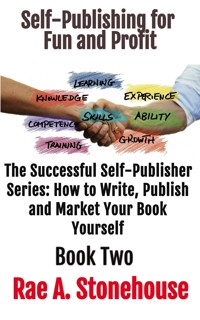
Book Two Self-Publishing for Fun and Profit in The Successful Self Publisher Series: How to Write, Publish and Market Your Book Yourself demonstrates the ins and outs of self-publishing and explores the following topics essential to publishing your manuscript:
- Self-Publishing vs Traditional Publishing
- Proofreading
- Editing Your Manuscript
- Copyrighting
- File format
- Digital Rights Management
- ISBNs
- Pricing
- Royalties
- Publishing
And much more…
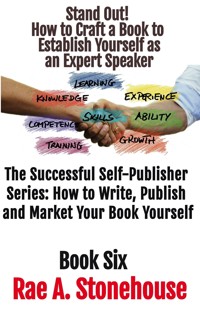
Other books in the series…
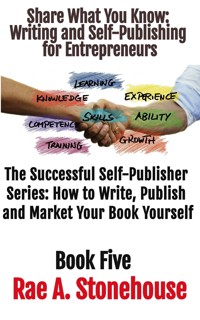
Book One Writing & Publishing as a Business in The Successful Self Publisher Series: How to Write, Publish and Market Your Book Yourself, addresses writing books and self-publishing based on business best-practices.
Book Three Content Marketing Strategies That Work in the series focuses on how to market your book, yourself.
Das E-Book können Sie in Legimi-Apps oder einer beliebigen App lesen, die das folgende Format unterstützen:
Seitenzahl: 204
Veröffentlichungsjahr: 2022
Ähnliche




SELF-PUBLISHING FOR FUN AND PROFIT
THE SUCCESSFUL SELF PUBLISHER SERIES: HOW TO WRITE, PUBLISH AND MARKET YOUR BOOK YOURSELF
BOOK II
RAE A. STONEHOUSE
CONTENTS
Copyright/Disclaimer:
Introduction
Chapter One: Introduction
Chapter Two: Self-Publishing vs Traditional Publishing
Chapter Three: Proofreading
Chapter Four: Editing Your Manuscript
Chapter Five: Copyright vs Copywrite
Chapter Six: Street Teams & ARCs
Chapter Seven: File Format
Chapter Eight: Digital Rights Management (DRM)
Chapter Nine: ISBNs
Chapter Ten: Registering with Library & Archives
Chapter Eleven: Metadata
Chapter Twelve: Categories
Chapter Thirteen: Choosing Keywords
Chapter Fourteen: Book Descriptions that Sell
Chapter Fifteen: Book Cover Design
Chapter Sixteen: Royalties & Advances
Chapter Seventeen: Exclusivity
Chapter Eighteen: Pricing
Chapter Nineteen: Printing Options: Print-on-Demand vs Short Run Printing or Offset Printing
Chapter Twenty: Formatting Your Manuscript for POD Using Word
Chapter Twenty-One: Vellum Publishing
Chapter Twenty-Two: Sample Publishing Agreement
Chapter Twenty-Three: Online Publisher/Distributor Options
Chapter Twenty-Four: Kindle Direct Publishing: Overview
Chapter Twenty-Five: Uploading Your Manuscript to Amazon
Chapter Twenty-Six: Amazon Author Page Setup
Chapter Twenty-Seven: Amazon Book Description Hack
Chapter Twenty-Eight: Draft2Digital
Chapter Twenty-Nine: Smashwords
Chapter Thirty: IngramSpark
Chapter Thirty-One: Lulu
Chapter Thirty-Two: IBooks Author
Chapter Thirty-Three: Kobo Writing Life
Conclusion
About the Author
Also by Rae A. Stonehouse
1. Appendix One: Book Publishing Services Offered
COPYRIGHT/DISCLAIMER:
SELF PUBLISHING FOR FUN AND PROFIT
BOOK TWO
THE SUCCESSFUL SELF-PUBLISHER SERIES: HOW TO WRITE, PUBLISH AND MARKET YOUR BOOK YOURSELF
RAE A. STONEHOUSE
Copyright 2022
No part of this book may be reproduced in any form or by any means, electronic or mechanical, including photocopying, recording, or by any information storage or retrieval system, without permission in writing from the author.
The information provided in this book is for informational purposes only and is not intended to be a source of advice. The information and/or documents contained in this book do not constitute legal or financial advice and should never be used without first consulting with a licensed financial professional in your state of residence to determine what may be best for your individual needs.
The publisher and the author do not make any guarantee or other promise as to any results that may be obtained from using the content of this book. You should never make any investment decision without first consulting with your own financial adviser and conducting your own research and due diligence. To the maximum extent permitted by law, the publisher and the author disclaim any and all liability in the event any information, commentary, analysis, opinions, advice and/or recommendations contained in this book prove to be inaccurate, incomplete or unreliable, or result in any investment or other losses.
Content contained or made available through this book is not intended to and does not constitute legal advice or investment advice and no attorney/ client relationship is formed. The publisher and the author are providing this book and its contents on an “as is” basis. Your use of the information in this book is at your own risk. It is the sole and exclusive responsibility of the reader and their related entities to engage the attorney of its choice to review all recommendations prior to approval or making any final legal or business decisions.
ISBN:
Electronic: 978-1-7782372-5–6
Paperback: 978-1-7782372-8–7
Large Print: 978-1-998813-01-8
INTRODUCTION
Welcome to TheSuccessful Self-Publisher Series: How to Write, Publish and Market your Book Yourself.
I wasn’t planning on writing a book on how to write a book and how to self-publish it. It hadn’t made it to my ever-increasing “To Do List.”
A few years back, through a professional connection, I was asked to deliver a presentation to a local writer’s guild on the subject of… well, you can probably guess. My connection was aware I had written and self-published several e-books and felt I had sage advice to share with his group.
As I was researching content for my presentation, I realized there was significantly more material available on the subject than I could possibly fit into my presentation time allotment and far more than I knew about.
At the time of starting to write this book I had written and self-published five non-fiction e-books. My genre is personal/professional development and self-help. I provide tips and techniques to solve problems.
When I say I self-published, what I’m really saying is I paid an online publishing business to publish my books for me. At that point in my author’s journey, I believed it was how you self-published.
My topics are varied. One of my earlier topics was how to survive and prevent personal violence while working in healthcare. I had been a long-time Registered Nurse working in psychiatry/mental health and have recently retired.
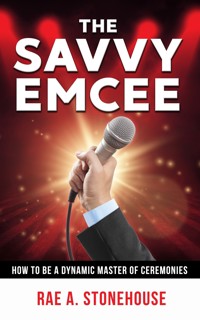
Another, how to be a dynamic master of ceremonies. I had a business called Mr. Emcee for a while. Technically, I still do. I just don’t have any active customers.
In yet another, I provided tips & techniques for shy people to level the playing field with the extroverts of the world and become power networkers.
With having written, self-published through an online self-publishing company and marketed five non-fiction, self-help e-books, my experience with writing and publishing continued to grow exponentially.
I started writing this book in June 2018. The completion of the book was put on hold for two years. I realized that by paying an online publishing business to publish my books, I wasn’t really self-publishing, in the truest sense of the word.
I recall thinking that I didn’t have any credibility in calling myself a self-publisher.
To solve that problem and hopefully increase my credibility, I put an action plan in place.
One of my first steps was to create my own publishing company, Live for Excellence Productions (LFEP). This was a business name I had used for other purposes over the years, starting life as an event planning business. The name resonated with me and still does.
The books I had published were in an electronic format i.e., e-books. I started with a complete rewrite and edit of my book You’re Hired! Job Search Strategies That Work.
I then self-published it on Amazon Kindle Direct and a couple other online self-publishing distribution companies. However, this time, besides the e-book version, I also created a print-on-demand paperback version of the book. The book had a fresh new cover and look. I then had it discontinued from the original online publishing company’s catalog.
The next step was to take the original You’re Hired! Job Search Strategies That Work book, subdivide it into three smaller books with added content to flesh them out. These are all published in their own names. Then these three smaller books were put together as a box set, then published.
An additional step taken was to convert the content of the main book, and the three spin-off books into online training programs.
Continuing with this strategy I rewrote, re-edited, changed the titles and created new book covers for two more of the books previously published with the online self-publishing business. As with the You’re Hired! book they were published in e-book and paperback under my LFEP business and removed from their catalog.
I retired in January 2020 from a 40+ year career in nursing. I’m not one to relax and quickly finished writing and publishing two more books. I had started writing them a few years back and they too had sat on the back burner for a while as I was working on other projects.
My next project was a book focusing on elder safety and providing their family caregivers with strategies in making their home safe. It has been published in electronic and paperback versions. There is also an accompanying workbook. The main points of the book have also been captured in an online training program.
It’s been a busy two years. In becoming a true-self-publisher my learning curve has been straight up in the air.
At the risk of stating the obvious, if you are reading this book, you probably have an interest in writing and self-publishing yourself.
In this series I share with you the steps you need to take and strategies you can use to become a successful author and self-publisher for your manuscript.
I share what worked for me, what didn’t and what the so-called “experts” of self-publishing tell us to do… or not to do.
Where other books may provide you an overview of how to publish your manuscript, I share a different perspective with you. And that is in taking a business approach to your writing and self-publishing.
I can’t guarantee it will provide you with the road to financial freedom, but I can say having a thorough understanding of the writing to publishing process can empower you in ways that traditional publishing would prohibit.
You will find my style of writing to be conversational, as if I am speaking directly to you. Except, of course, that you will be unable to respond to me.
I am a logistical and strategic thinker. I have laid out the book so you can easily follow a step-by-step process of developing your book and then I provide techniques on how to market it.
Some of you may already be comfortable or skilled in the content covered by a particular chapter. The book is laid out, so you don’t necessarily have to read it lineally i.e., from front to back. You can use it as a reference and go directly to the chapter and content you are interested in. You will note that some topics are covered more than once in different chapters from an additional perspective to add more depth to the chapter’s subject.
One of the basic formulas I use to determine if I should take action or not is… “could I?” vs “should I?”
It’s up to you to decide firstly, whether you have the skills, time, budget etc. to follow a particular strategy. And secondly, whether you should? Is it worthwhile doing? Will there be a positive return on your investment?
As with any skill-building process, you would be well-advised to self-monitor your progress. As you read through the chapters and enact the different strategies, keep a log of what worked and what didn’t work.
While I am striving to provide you with a comprehensive approach to writing, publishing, and marketing your book, the industry is constantly changing. The way things work today, may not be true tomorrow.
Feel free to contact me with updated information or content that you think I should include in further editions of this book.
Once you’re published, let me know how the process worked. I would love to be able to boast about assisting an upcoming best-selling author.
Have fun! Let’s see what we can create together.
Rae Stonehouse, Author.
October 2022
CHAPTER ONE: INTRODUCTION
Welcome to Book Two: Publishing Your Content for Fun & Profit.
In Book One: Writing & Publishing as a Business we explored reasons for wanting to write a nonfiction book and introduced a business model to develop your self-publishing business.
We also looked at elements integral to creating an effective nonfiction book.
Here in Book Two, we focus on the publishing aspect of your book. We look at different methods of publishing where you can start by having an online publishing business do all the work for you, for a cost of course.
As you become more comfortable or daring perhaps, we also look at online options where you can upload your book, in many cases, for free to an aggregator/distributor and gain greater control of your publication and distribution.
In Book Three, Content Marketing Strategies That Work, we dive deep into book marketing options, looking at it from many perspectives.
CHAPTER TWO: SELF-PUBLISHING VS TRADITIONAL PUBLISHING
Once upon a time, you only had two choices to publish your book.
The so-called “traditional” method was the norm. You wrote your book and then pitched it to a literary agent who in turn would pitch it to a book publishing company, for a commission of course. If they liked your work and felt there was commercial value i.e., that they could make money on it, they would do all the work of proofreading, editing, formatting, typesetting, printing and marketing.
You in return would receive a small royalty on the book sales. We’ve all heard stories of authors who have received huge cash advances on their book sales. Well, good for them! Unfortunately, it is no longer the norm.
This traditional method of publishing didn’t meet everyone’s needs. Authors needed an alternative to publishing their books when being turned down by the big boys. Many book publishing companies added pay-for-print options to their offered services. Some publishing companies went exclusive, resulting in the development of the ‘vanity’ press industry.
Original vanity-published authors were willing to pay to have their books published. Print runs of 2000 copies weren’t uncommon. Stories abound of authors who had garages full of boxes of unsold copies, often selling them at tag sales to free up room in their garage. Or even worse, dropping the unused copies off at the local landfill or recycling depot.
Over the years, vanity-published books have had a less than stellar reputation. The view being that if you had to pay to publish your book, obviously you weren’t good enough to have it published professionally. While the reader of the book may not realize they were reading a “vanity” publication, many of the big book-selling retail outlets wouldn’t carry the books for sale.
With the explosion of the digital age and an insatiable appetite for new content, the publishing industry has once again adapted and created POD (print-on-demand) services. Some companies may require a minimal order while others only print your book and ship it, when a customer orders it.
With the advent of e-books, the publishing industry has once again adapted to its customer’s needs.
If you do an online search on any browser for “self-publishing books” you will probably get page-after-page of listings for publishing companies that for “a small fee” can make your masterpiece a reality. They often provide you with free templates you can use to publish your book.
Nowadays, you have dozens of choices. You can either do some of the work or almost all of it yourself. Conversely, you can pay for a company to do all the work for you. And as they say… “it’ll cost ya!”
There are those publishing companies that will do all the work for you. You send them your manuscript and they do the rest. Just because you are publishing an e-book doesn’t necessarily mean that it is much cheaper to publish. However, as there is no printing with an e-book, there are no additional printing charges as there would be with a physical book. Unless you wanted to publish a hard copy of your e-book.
You will pay for every step of the way: proofreading, editing, formatting, typesetting and printing. Formatting includes converting your text into epub format, which is used by most e-book reading devices. Then there is MOBI format, that is readable by Kindle Readers.
They also offer distribution to major book retailers, where they in turn list it in their database.
As the saying goes, “time is money” and you would be paying somebody else to do work you yourself could do or pay somebody else a lot less to complete.
Notice that marketing wasn’t on the list of tasks traditional publishers will do for you. Marketing is expensive, so they leave it up to you. You don’t often see that fact promoted on their website though.
They may offer a listing for your book on their corporate website. As we mention later in Book Three of the series, the Marketing section, they may also offer you a free website hosted at their company. Marketing your book falls into your list of “must do” activities.
Publication and marketing expenses can easily add up to thousands of dollars.
Choosing a publisher to work with may turn out to create as much work and research for you as creating your book did.
Yet another approach to self-publishing your e-book is that of doing everything yourself. With some research and skill building, self-publishing is well within the reach of a beginning author.
We will explore this self-publishing option in greater detail in a few moments.
There are other considerations before you decide which publishing route to take.
However, before we publish, there are quite a few steps we need to take.
Let’s start off with proofreading our manuscript.
CHAPTER THREE: PROOFREADING
In Book One of this series, I introduced formatting your book. A big part of the formatting process that I left out, in favor of its own chapter, is that of proofreading.
As an author, you are the first line in proofreading your document. The problem arises where our minds having read the text so many times, doesn’t see all the errors. Our mind tends to fill in the gaps and correct them as to what it expects to see rather than what is actually written.
One technique to improve your document is to read it out loud. This can highlight awkward phrases or sentences. Correct them as you proceed.
Another technique many authors use for proofreading is to use a text-to-speech application. Word for Office 365 includes a text-to-speech feature. An online search will provide other applications that will suit your needs.
You can choose to have your document read by male or female voices with different tones and inflections. Listening to someone else’s voice can highlight mistakes or awkwardness in your sentence structure you weren’t aware of.
When you hear an error, stop the recording, and make corrections in your manuscript. Don’t forget to save your changes.
In Book One of this series, we mentioned grammar assessing programs such as ProWritingAid and Grammarly. This would be the time to utilize one of the programs. Reducing the number of errors, typos, etc. can save you money when you forward your document to a professional editor.
Many online publishing/distribution businesses offer two levels of proof reading. Or you can hire an independent proofreader.
Level 1 Proofreading: They may use Grammarly’s software to run your book through their algorithm and correct all the mistakes flagged as vital. These include but are not limited to over 150 critical grammar and spelling checks, which is roughly ten times more than the standard checks performed by leading word processing software. [This is from Grammarly’s promotional copy, not an endorsement by me.]
This service may cost $8 per 1000 words. There is often an optional service that can be ordered at any time prior to the conversion and distribution.
Depending on the length of your publication, it may be worthwhile investing in a paid version of Grammarly. They frequently have an annual rate special that can save you money. Looking at my own word count in this manuscript, I can easily see that I would save myself money by going for the annual rate.
Level 2 Proofreading: A professional editor will read through your book word for word and correct obvious errors with spelling, grammar and any technical errors. Suggestions will be made for word choice and style issues.
I’ve seen this service offered for $16 per 1000 words. This is an optional service that can be ordered at any time prior to your book’s conversion and distribution.
Something to remember is that the editor may make suggestions, but you still need to make the decision whether to incorporate those suggestions, or not.
If you choose the online, self-publishing company route, rather than doing it on your own, the price of proofreading may be a consideration in deciding which company to go with.
* * *
I mentioned Grammarly above as an option for proofreading your manuscript.
For my publishing business, I closely compared Grammarly with one of their competitors, ProWritingAid. I compared them feature to feature and settled upon ProWritingAid.
From ProWritingAid’s website’s promotional copy <<Your Personal Writing Coach: A grammar guru, style editor, and writing mentor in one package.
The most successful people in the world have coaches. Whatever your level of writing, ProWritingAid will help you achieve new heights. Exceptional writing depends on much more than just correct grammar. You need an editing tool that also highlights style issues and compares your writing to the best writers in your genre. ProWritingAid helps you find the best way to express your ideas.>>
While Grammarly would have worked for me, it didn’t easily integrate with Scrivener, and I am using Scrivener to write my books.
Grammarly and ProWritingAid, as well as other competitor’s grammar software platforms, can be beneficial however, the learning curve can be quite steep. You may decide your time could be better spent writing, rather than editing.
As I mentioned earlier, another option for proofreading your manuscript is to hire an independent proofreading freelance consultant. Their prices will vary. More expensive isn’t always better and you would be well-advised to obtain references before settling upon a service provider. There might even be one in your neighborhood or circle of connections.
* * *
In the next chapter, we explore the different levels of editing your manuscript.
CHAPTER FOUR: EDITING YOUR MANUSCRIPT
Once you finish writing and proofreading your book the next step is to have it edited by a professional editor.
Sending your book to a professional editor will get you an objective and professional review resulting in suggested changes for you to incorporate, or not. Whether you accept the suggestions is up to you.
Many new authors believe an editor’s job is to fix every problem in their book.
If you believe your book is ready to be edited, you need to assure you are sending it to the appropriate type of editor. There is a difference.
* * *
Developmental Editing:
A developmental edit is a thorough and in depth edit of your entire manuscript. It is an examination of all the elements of your writing, from single words and the phrasing of individual sentences to overall structure and style.
For fictional works it can address plot holes or gaps, problematic characterization, and all other existing material.
For nonfiction works it has been said developmental editing is a process of advocating for the reader. The editor needs to ask what the audience wants and needs from the material. The editor’s task becomes helping the author deliver through effective structure and content.
After a round of developmental editing — also called structural or substantive editing — a manuscript can change substantially.
For inexperienced writers, accepting direct and honest feedback can be a difficult experience. Much of what you have spent many weeks, months or even years writing can be cut, shaped, moved or heavily criticized.
Developing a thick skin seems to be part of the author’s journey to success.
* * *
Line Editing:
Line Editors ensure that the sentences in a book or article are as effective as they can be. They help improve readability by smoothing syntax and paragraph structure.
A Line Editor is attentive to the writer’s individual style. They’re not looking for mistakes. Instead, they focus on the language you use to tell your story, to make it flow, make it clear and pleasurable for your reader.
Line editing is often called stylistic editing.
* * *
Copy Editing:
Where Line Editors are concerned primary with questions of style, Copy Editors are concerned with the mechanics of the manuscript.
Copy Editor’s focus on the spelling, grammar, and sentence construction. They ensure your work is consistent for hyphenation, numbers, and capitalization.
* * *
Okay, your book has been through the editorial process, possibly several times. You’ve made the changes. Is publishing the next step? Not necessarily.
* * *
In the next chapter, we explain two terms many authors have difficulties understanding: copyrighting versus copywriting.
CHAPTER FIVE: COPYRIGHT VS COPYWRITE
I’m sure every writer and author is aware of the term ‘copyright’ when it comes to protecting their published work.
However, it is often confused with another word, that sounds the same, yet has a very different meaning.
Let’s get copywriting out of the way first. You have written your book and probably believe you are completed, almost. Copywriting is everything you write about your book, outside




