


Erhalten Sie Zugang zu diesem und mehr als 300000 Büchern ab EUR 5,99 monatlich.
- Herausgeber: Mercier Press
- Kategorie: Fachliteratur
- Sprache: Englisch
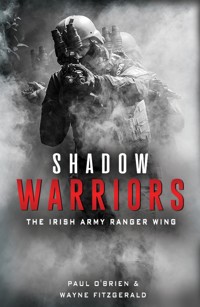
In the spring of 1980, the Irish Department of Defence sanctioned the establishment of a new unit within the Irish Defence Forces and the Irish Army Ranger Wing (ARW) came into being. In the decades that followed, its soldiers have been deployed on active service at home and abroad, generally without the knowledge of the wider public. The ARW is made up of seasoned men from across the island, who are selected through tough competition. Only the best of the best make it through and are trained in an extraordinary range of specialist skills. Being one of these elite operators takes more than simply being a skilled soldier – it means believing you are the best. Shadow Warriors tells the story behind the creation of the ARW, from its origins in specialist counter-terrorism training in the late 1960s and the preparation of small unconventional units in the 1970s to the formation of the ARW itself in 1980 and its subsequent history. The first and only authoritative account in the public domain of this specialist unit, authors Paul O'Brien and Sergeant Wayne Fitzgerald have been granted access to the closed and clandestine world of Ireland's Special Forces, who train hard, fight harder and face unconventional types of warfare, yet prefer to stay out of the limelight.
Sie lesen das E-Book in den Legimi-Apps auf:
Seitenzahl: 144
Veröffentlichungsjahr: 2020
Das E-Book (TTS) können Sie hören im Abo „Legimi Premium” in Legimi-Apps auf:
Ähnliche

















It is Army Ranger Wing policy to neither confirm nor deny the information contained within this book. Furthermore, for reasons of national security, and for the protection of ongoing operations and protection of persons, it is Army Ranger Wing policy not to discuss past or present operations.
MERCIER PRESS
3B Oak House, Bessboro Rd
Blackrock, Cork, Ireland.
www.mercierpress.ie
www.twitter.com/MercierBooks
www.facebook.com/mercier.press
© Paul O’Brien and Wayne Fitzgerald, 2020
Epub ISBN: 978 1 78117 763 1
This eBook is copyright material and must not be copied, reproduced, transferred, distributed, leased, licensed or publicly performed or used in any way except as specifically permitted in writing by the publishers, as allowed under the terms and conditions under which it was purchased or as strictly permitted by applicable copyright law. Any unauthorised distribution or use of this text may be a direct infringement of the author’s and publisher’s rights and those responsible may be liable in law accordingly.
Inhalt
Abbreviations
Introduction
1. Wars without Fronts
2. Inception
3. ‘We are Rangers’
4. The Special Assault Group
5. The Army Ranger Wing
6. Trial and Error
7. Aid to the Civil Power
8. The Long War
9. The ARW Overseas
10. Somalia
11. East Timor
12. Liberia
13. Chad
14. Mali
15. Making the Cut Today
16. In the Cross Hairs
17. By Neptune’s Beard
18. Drop Zone
19. Close Quarter Battle
20. Bí Úllamh1
Conclusion
Appendix
Bibliography
Recommended Reading
Acknowledgements
Endnotes
About the Authors
About Mercier Press
The ARW motto:
Glaine ár gCroí, Neart ár nGéag, Agus beart de réir ár mbriathar.
(The cleanliness of our hearts, the strength of our limbs, and our commitment to our promise.)
Dedicated to those who have served in the Army Ranger Wing, who are currently serving, and who will serve in the future.
abbreviations
AHQ Army Headquarters
AML Panard-type vehicle
AO Area of Operations
APC Armoured Personnel Carrier
ARW Army Ranger Wing
C2 group Command & Control
CAR Central African Republic
CEMO Combat Equipment Marching Order
Comms Communications
CP Close Protection
CPT Close Protection Team
CQB Close Quarter Battle
CRRC Combat Rubber Raiding Craft
CSDP Common Security and Defence Policy
CT Counter-terrorism
CTR Close Target Recce
DF Defence Forces
DS Directing Staff
ECOWAS Economic Community of West African States
EOD Explosive Ordnance Disposal
ERV Escape Rendezvous
EU European Union
FN Fabrique Nationale
FOB Forward Operating Base
FRV Forward Rendezvous
G8 Group of Eight (an inter-governmental
political forum, now G7)
GIGN Groupe d’intervention de la Gendarmerie nationale (elite tactical unit of the French National Police)
GOL Government of Liberia
GPMG General Purpose Machine Gun
GSG 9 Grenzschutzgruppe 9
HALO High Altitude Low Opening
HMG Heavy Machine Gun
HQ Headquarters
IEDs Improvised Explosive Devices
INLA Irish National Liberation Army
INTERFET International Force East Timor
IR Infra-red strobe lights
IRA Irish Republican Army
IWW Infantry Weapons Wing
LFTT Live Fire Tactical Training
Lt Lieutenant
LURD Liberians United for Reconciliation and Democracy
MINURCAT United Nations Mission in the Central African Republic and Chad
MINUSMA United Nations Multidimensional Integrated Stabilization Mission in Mali
MO Medical Officer
MODEL Movement for Democracy in Liberia
MOLLE Modular Lightweight Load-Carrying Equipment
MOUT Military Operations in Urban Terrain
NCO Non-commissioned Officer
NSV Russian-manufactured machine gun
NVE Night Vision Equipment
NVG Night Vision Goggles
O/C Officer Commanding
OP Observation Post
PCM An Para-Chumann Mileata
PDF Permanent Defence Forces
PT Physical Training
PTI Physical Training Instructor
QRF Quick Reaction Force
Recce Reconnaissance
Retd Retired
RIB Rigid Inflatable Boat
RPG Rocket-propelled Grenade
RSM Regimental Sergeant Major
RTA Reaction to Attack
RTU Returned To Unit
SAG Special Assault Group
SAS Special Air Service
Sec Section
SERE Survival Evasion Resistance Extraction
SFP Sustainable Function Programme
SIGINT Signals Intelligence
SO Senior Officer
SOF Special Operations Force
SOFQ Special Operations Force Qualification
SOPs Standard Operating Procedures
SOTG Special Operations Task Group
SRV Special Reconnaissance Vehicles
TACCOM Tactical Communications
TL Team Leader
TTPs Tactics, Techniques and Procedures
UN United Nations
UNAMET United Nations Mission in East Timor
UNIFIL United Nations Interim Force in Lebanon
UNITAF Unified Task Force
UNMIL United Nations Mission in Liberia
UNOSOM United Nations Operation in Somalia
Introduction
Special forces have played an important role throughout history, with specialist units operating covertly and overtly in a number of conflicts. The origin of such forces can be traced back as far as the likes of the Roman Praetorian Guard and the Anglo-Saxon Huscarls at the Battle of Hastings, and can also be seen in Cromwell’s Ironsides, Napoleon’s Old Guard, and the French Foreign Legion. As the centuries progressed and warfare developed, many of these groups were amalgamated into their country’s regular forces, but in times of war there is always a need for improvisation, meaning that today’s special forces will often work outside the purview of the regular forces.
Contrary to popular belief, a special forces operative is not the gung-ho, weapon-toting figure often portrayed on the silver screen, but a highly trained and very skilled soldier. Modern elite soldiers have a wide array of skills, both physical and intellectual. They have been trained in this manner due to the emergence of a new type of warfare in the mid-to-late twentieth century: the increase in national and international terrorism.
The Irish Army Ranger Wing (ARW) was formed by the Irish government and the Department of Defence during the spring of 1980 and is affectionately known as ‘The Wing’. Those who set out the initial ARW course back in 1980 had by then witnessed over a decade of this new type of warfare. In fact, it was in response to the ever-increasing terrorist attacks throughout the world in the late 1960s and early 1970s that many countries created their specialist units. The hijacking of planes, high-profile assassinations and the 1972 Munich massacre in Germany brought home the fact that, with terrorism, there were no defined battle fronts and civilians were often caught up in the fray. However, it was events in the North of Ireland in the late 1960s and 1970s in particular that found the Irish Defence Forces needing to adapt to a new and demanding period within its history.
Special forces, such as the ARW, exist to conduct special operations, irregular warfare, and counter-insurgency and counter-terrorism (CT) operations. The instructors who trained that first cadre of ARW operatives in 1980 had themselves, since the late 1960s, undergone a number of specialist courses, both at home and abroad, to ensure they could ably train and cultivate elite soldiers. This training, as well as their belief in the potential of the ARW, ensured that those in The Wing would be able to tackle some of the most difficult physical and mental challenges that a soldier could encounter while on specialist operations. As with similar special operations forces (SOFs) throughout the world, the ARW has undergone training to conduct counter-hijack operations, hostage rescue, airborne and seaborne interventions, search missions, pursuit, recapture of terrorist-held objectives, close protection, and contingency planning to counteract planned terrorist or subversive threats.
The first overseas course that members of the ARW attended was an anti-terrorism intervention course run by Groupe d’intervention de la Gendarmerie nationale (GIGN) in Paris in 1981. Since then, the ARW has fostered a number of relationships with SOF and specialist counter-terrorism police units around the world, conducting regular exchanges and training courses. This enables it to continue to operate at a high level of proficiency at home and abroad in the protection of the state and its people.
In writing the story of the ARW, we have respected the wishes of those serving and those who have served by not including details of covert operations, names of those involved on those missions, or any other sensitive intelligence. As the reader will appreciate, there is much which cannot and should not be published in terms of names, tactics and procedures lest it provide an advantage for a future terrorist. Moreover, many of the operations that involved the ARW are covered by the Official Secrets Act and it would, therefore, be illegal to disclose these to the public. Although, in recent years, many stories have circulated via social media about The Wing, on investigation it becomes clear that most are untrue or have been altered to such an extent that one cannot distinguish fact from fiction. None of these have been recounted in this book. What we have included is an account of the rigorous selection procedure, the intensive training involved in becoming an operational ranger, examples of national and international deployments, and some of the skills required to operate within this environment.
Along with regular Irish Defence Forces units, the ARW has conducted a number of operational deployments both at home and abroad since its inception, the first in December 1983. Today, The Wing is set to assume an increasing role both nationally and internationally, all the while ensuring that it will continue to be mission ready and adaptable to changing global circumstances.
GENESIS
1
Wars without Fronts
In the aftermath of the Second World War, colonies throughout the world that for centuries had yielded an abundance of materials and wealth to European empires began to grow restless. With many of these empires struggling to rebuild after the war, anti-colonialists began to question and oppose the occupation of their lands by these foreign powers. Peaceful protest soon gave way to violent uprisings and insurgencies in many countries, as nationalist forces fought the colonists. Throughout the 1950s and the early 1960s the world was ablaze with what were to become known as ‘Small Wars’. Burma, Indochina, Egypt, Palestine and Algeria were some of the many countries that erupted into violence. In the 1960s, inspired by these uprisings, as well as Mao’s Chinese revolution of 1949 and Castro’s Cuban revolution of 1953–59, other countries followed suit. In many instances, the fighting disintegrated into bitter guerrilla warfare, with the insurgencies and counter-insurgencies brutal in their extremes.
While the terrain and the customs of those fighting for their independence varied considerably, one factor that tended to unify each separate conflict was the support of Russia and China for one side and the United States and its allies for the other. The spread of communist doctrine and anti-imperialism enabled Eastern Bloc powers to gain a foothold in countries throughout the world struggling for independence. While the United States disliked colonial rule, their disdain stemming from their own fight for freedom against the British, they initially believed that propping up colonial empires was essential when it came to stemming the socialist tide. As a result, by the late 1960s the Cold War was being fought by proxy in the jungles of South-East Asia, on the plains of Africa and in the mountainous regions of South America.
Alongside this, the post-war generation in America and Western Europe was becoming radicalised, with many openly questioning and protesting their government’s involvement in these overseas conflicts. It was during this turbulent period that a number of violent left-wing revolutionary groups and right-wing extremists emerged. Terrorist acts soon followed.
In July 1968 three armed members of the Popular Front for the Liberation of Palestine hijacked El Al Flight 426 as it flew from Rome to Tel Aviv. The plane, with a crew of ten and thirty-eight passengers, was diverted to Algiers by the hijackers, who demanded the release of fellow Palestinians imprisoned in Israel. Forty days of tense negotiations between the hijackers and authorities followed, with the passengers eventually being released unharmed when sixteen Arab prisoners were released. The Palestinian Liberation Organisation’s United Nations observer, Zehdi Lahib Terzi, in relation to the seizure of flight 426, is quoted in TheNew Yorker as stating that this hijacking ‘awakened the media and public opinion much more … than 20 years of pleading’ by the Palestinians.1
This terrorist act received a lot of media attention and, as a result, was seen by many other extremist organisations as an effective tool for bringing attention to a cause that would otherwise be ignored by both the media and governments. Other groups quickly emerged, such as the Provisional Irish Republican Army (Ireland), the Weathermen (USA), the Black Panthers (USA), the Symbionese Liberation Army (USA) and the Baader-Meinhof gang (Germany). Within a short period of time, these organisations, and others, turned to violent tactics, from rioting and setting off bombs, to assassinations and hijackings. Weapons and explosives were easily accessible at the time, including modern, compact, rapid-fire sub-machine guns that were easily concealable. Automatic pistols, manufactured almost entirely of plastic, were easy to disassemble and conceal, enabling them to be brought through airport scanners with ease. Targets chosen were more often than not designated ‘soft’ (i.e. easy to attack), enabling terrorists to inflict maximum damage and casualties. Guerrilla warfare, long thought to be a rural phenomenon, became increasingly urbanised.
Governments throughout the world initially struggled to contain these actions, as many were unprepared for the onslaught of terrorist attacks that occurred from the late 1960s and into the 1970s. At this time, no dedicated counter-terrorist force existed in any European country. Then one terrorist act occurred that would change everything.
On 5 September 1972 Palestinian Black September terrorists broke into the quarters of the Israeli team at the Munich Olympic Village, taking eleven hostages, two of whom were subsequently murdered. The Germans were unprepared for such a situation and their handling of the incident was to have far-reaching repercussions.
Negotiations between the German authorities and the group commenced, with the terrorists demanding the release of a number of their Palestinian associates held in Israeli jails, along with two founders of the Red Army Faction, a far-left militant organisation. They also demanded a chartered flight to Cairo to secure their getaway. After repeated threats by the terrorists against the hostages, the German government informed them that their demands would be met. They would be flown from the Olympic Village to Fürstenfeld Airport, where they would board a Lufthansa flight to Cairo.
However, in reality the German police were planning to neutralise the terrorists at the airfield. Police officers took up positions there, some dressed as air and ground crew, with police marksmen taking up posts overlooking the plane on the runway. All were tasked with killing or capturing the terrorists as they boarded the plane.
As the helicopters carrying the terrorists and their hostages approached the field, some police officers decided that the mission was too risky and stood down, leaving only a five-man team of marksmen to take out the terrorists. Instead of the expected five terrorists accompanying the remaining hostages, the police discovered that there were in fact eight of them. As the terrorists and hostages left the helicopters and approached the plane, the order was given to open fire.
A gunfight commenced, which resulted in the deaths of all the hostages, one policeman and five of the eight terrorists. None of the police marksmen were trained snipers and so they mostly missed their moving targets. Two of the police officers were hit by so-called ‘friendly fire’. The operation from start to finish was an unmitigated disaster and a huge embarrassment for the German government. To add salt to the already smarting wounds of Germany, the government was forced to release the surviving terrorists the following month, after a Lufthansa airliner on a flight from Damascus to Frankfurt was hijacked.
In the aftermath of the debacle, the German government took steps to ensure that, in the future, its country would have an effective counter-terrorism response. This decision paved the way for the formation of the first dedicated intervention unit in Europe: the famous Grenzschutzgruppe 9, more commonly referred to as GSG 9.
The French soon followed suit with the formation of GIGN. The British, who had resurrected the Special Air Service (SAS) in the aftermath of the Second World War for the Malayan crisis, directed their 22 SAS (the name of the regular, active-duty regiment of the SAS) to develop a counter-terrorism capability.2
While some countries began to organise and counter the increasing terrorist threat, others attempted to appease such groups by succumbing to their demands, paying ransoms and releasing prisoners. This, more often than not, only exacerbated the problem. With terrorist organisations now receiving international recognition through the medium of television, their message was reaching a much larger audience and, for that reason, they were eager to continue with their actions.
Increasingly a new global war was emerging, where new strategies and tactics would have to be devised and deployed. Reconnaissance, counter-terrorism, counter-insurgency and intelligence gathering would be just some of the skills needed by these new units. This new war would be one without fronts, and those operating in this war would have to adapt and overcome numerous obstacles in order to triumph.
2
Inception
Since the formation of the Irish Defence Forces in 1924, the army had been run along conventional lines, similar to other armies throughout the world. Austerity had for decades affected the force, resulting in minimal investment in equipment. However, the Irish Defence Forces’ participation in the United Nations missions to Lebanon in 1958 and to the Congo from 1960 to 1964 opened up new horizons. Though overseas service highlighted many shortcomings, these missions enabled the force to work with other armies, use new equipment and recognise their need to adapt.




