


18,49 €
Mehr erfahren.
- Herausgeber: The Crowood Press
- Kategorie: Geisteswissenschaft
- Sprache: Englisch
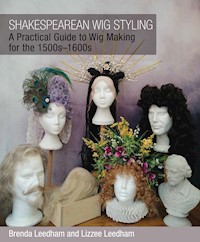
The poetry and plays of William Shakespeare continue to provide inspiration for designers in all aspect of media. Shakespearean Wig Styling offers detailed historical guidance on the styles and fashions of the day, and guides yo through twelve different wig designs covering a wide range of archetypal Shakespearian characters. Each example offers different techniques to meet the needs of the design, from material, knotting and curling to the final styling choices. Covering both the Tudor and Stuart periods, there are clear instructions within each example for making wigs from start to finish and adapting from the universal full-lace foundation to create alternative foundations, including added support for complicated styles such as the fontange. In addition, the book covers what to expect when working in the theatre or as a freelance wig-maker; fitting your client, measuring and taking a shell; methods for preparing the hair under a wig; knotting facial hair, hairpieces, hairlines, napes and partings; methods for breaking or dirtying down and finally, creating bald caps and receding hairline effects. This comprehensive book is an ideal companion for the newly qualified wig-maker and all professionals looking for a detailed reference guide to hairstyles from the Shakespearean era.
Das E-Book können Sie in Legimi-Apps oder einer beliebigen App lesen, die das folgende Format unterstützen:
Seitenzahl: 287
Veröffentlichungsjahr: 2021
Ähnliche




















SHAKESPEAREAN WIG STYLING
A Practical Guide to Wig Makingfor the 1500s–1600s
Photo manipulation by Rachel Bywater
SHAKESPEAREAN WIG STYLING
A Practical Guide to Wig Makingfor the 1500s–1600s
Brenda Leedham and Lizzee Leedham
First published in 2021 byThe Crowood Press LtdRamsbury, MarlboroughWiltshire SN8 2HR
www.crowood.com
This e-book first published in 2021
© Brenda Leedham and Lizzee Leedham 2021
All rights reserved. This e-book is copyright material and must not be copied, reproduced, transferred, distributed, leased, licensed or publicly performed or used in any way except as specifically permitted in writing by the publishers, as allowed under the terms and conditions under which it was purchased or as strictly permitted by applicable copyright law. Any unauthorised distribution or use of this text may be a direct infringement of the author’s and publisher’s rights, and those responsible may be liable in law accordingly.
British Library Cataloguing-in-Publication DataA catalogue record for this book is available from the British Library.
ISBN 978 1 78500 883 2
Front cover design by Maggie MellettPhotography by Lizzee LeedhamIllustrations by Will Peart and Sophie Wright
‘And this our life, exempt from public haunt, finds tongues in trees, books in the running brooks, sermons in stones, and good in everything. I would not change it.’
William Shakespeare, As You Like It
Contents
Acknowledgements
We would first like to thank The Crowood Press for giving us the opportunity to write this book.
Thanks to The Royal Shakespeare Company, whose productions have inspired us and without which we would not have joined the worldwide family of Wiggies.
The Shakespeare Birthplace Trust has been hugely supportive, encouraging us to give talks and demonstrations about Shakespearean wigs in theatre to groups from all over the world. The archives at the Shakespeare Birthplace Trust hold many historical items and manuscripts, paintings and photographs, their own records and those of the Royal Shakespeare Theatre.
Personal thanks from Brenda go to Felicite Gillham who welcomed her to her first wig room and Kenneth Lintott, the creative presiding genius, for the opportunities and the patient, thorough training they gave.
The Royal Shakespeare Theatre, 2011, attributed to David Dixon.
From Lizzee: Thanks go to my mother for her unflinching love and support, her dedication to the theatre, which has sustained our family, and far-reaching wisdom, which still astonishes me daily. Thanks to the RSC Wig Department for the memories, training, opportunities and love.
Thanks to my best friend, Bethany Jane Davies, vintage hair extraordinaire and Fatale Cosmetics CEO, for everything.
Thanks also to Will Peart for the brilliant illustrations and sense of humour. I wish we could have had far more of your illustrations.
Thanks to Scott Hazell, AKA Casta Hex, for their makeup, modelling and photography skills.
Thanks also to Dawn, Jonathan and Zoe, dear family friends and gracious models for the hair prep, wig cap and shell sections.
Thank you to the entertainers and writers who inspire us all, celebrating life and fantasy in all their wonder and diversity.
Thanks also go to you, the reader. You are continuing a craft almost as old as humanity itself. Your knowledge and experience will be added to ours as you read and create so please make use of the margins for your notes and ideas. Thank you for climbing the ever-higher Wiggy pyramid of knowledge, topping it with the flourish that only you can provide. You will be part of something greater than yourself which brings joy, education and entertainment to all; shares a sense of time and culture; and can shield us, if temporarily, from the world’s slings and arrows.
Preface
ABOUT THE AUTHORS
Brenda Leedham was head of the wigs and make-up department at the Royal Shakespeare Theatre from 1974 to 2007. Since ‘retiring’ she has continued to educate in demonstrations and is happily working with Leedham Wigs, now owned by her daughter, Lizzee Leedham.
As a freelance wig maker, she has worked for TV, opera and ballet companies, on musicals and films, made wigs for the National Trust, private individuals, dolls, ventriloquist dummies, costumed museum mannequins and dead heads (fake, of course).
Lizzee Leedham is co-author, co-editor and photographer for this book. Her earliest memories are of the wig room at the RSC and touring the country listening to the theatrical wigs and make-up talks given by Brenda. She was trained in each skill as soon as physically able, although she resisted the lure of the theatre. Instead, she completed her MA and taught GCSE and A level English for twelve years, becoming a teacher training specialist and creating teaching resources for a wide range of texts. After years of part-time wig making and taking on the role of model and co-presenter of our demonstrations, Lizzee took over Leedham Wigs full time in 2019, expanding the business online and into selling, not only renting out, our custom creations.
PERSONAL PROFILES
Brenda Leedham
After studying Theatre Craft and Design, I spent a year at Goldsmiths College, starting a degree in Speech and Drama in Education. I worked every weekend at the Royal Shakespeare Theatre in Stratford-upon-Avon and hoped that this was my future, not teaching and putting on the school play. The moment full-time work was offered, I left London for Stratford-upon-Avon. At Stratford-upon-Avon I assisted in the wig room, where staff worked as a team, sharing their skills in hairdressing, wig making, prosthetics and make-up, maintaining the current shows and preparing the new ones. It smelled of hairspray and Brilliantine.
Although I had visited the make-up room of a TV company in Birmingham and helped with costume and props backstage in several theatres, I had only noticed the costumes and scenery, I had no idea so many wigs, hairpieces, prosthetics and facial hair were in use. That, of course, is the idea.
Luckily, at that time, enthusiasm and availability were the only qualifications necessary for a general assistant, but a long and thorough training in all aspects of the work followed.
I was taught, coached and mentored by experts Kenneth Lintott, Felicite Gillham and Cathy Buchwald, and was able to put into practice the skills as I acquired them, building my confidence. I used my holidays and any spare time to make wigs. Ken gave me work making postiche and prosthetics for films and TV, Gillie and Cathy took me to theatres all over the country working on wigs, hair and make-up.
Brenda Leedham and Lizzee Leedham, backstage at The Talisman Theatre, Kennilworth, 2019.
As I gained the confidence of designers, they commissioned work directly and I made prosthetics and postiche for Scottish Opera, Payne’s Plough, ENO, the Northern College of Music and so many more organizations than there is room to list here.
I toured as wig mistress to Paris during the riots of 1968 and across Europe, even to Japan.
When I became wig mistress, I accepted visits to the department from schools, taught in colleges and promoted the opportunities for our work in TV and newspaper interviews.
I am still demonstrating and talking about wigs and make-up in theatre with my daughter at Shakespeare’s Birthplace and the RSC, long after my promised retirement. Why stop doing what you love?
Lizzee Leedham
Imposter Syndrome is a well-documented issue in creative industries. My mother and I both have it. No doubt, unless you are very confident, you will feel some sense of trepidation when meeting new clients and trying new projects, no matter what your prior experience; after all, the tools, techniques and people change and you will always be learning and pushing yourself – but that is in itself one of the great joys of this industry. You may love working with actors in person or work more remotely. You may find yourself in a bustling backstage theatre environment, a humid film trailer, a wet Welsh field and an extravagant wedding all in the same week.
Having grown up backstage at the Royal Shakespeare Theatre and taken on as many work experience opportunities there as possible, I knew the gruelling schedule came with, for me, anxiety-induced night-terrors even on low-risk productions. There are a whole host of far more personal and holistic duties which theatre Wiggies must be ready to perform. Due to the pressures of live performances, many theatre actors are simmering with adrenaline, making them a little unpredictable (and sweaty).
Lizzee Leedham and Bethany Jane Davies. Hair by Bethany Jane Davies.
After qualifying as an English teacher, I still returned home to work with Mum on productions during holidays, completing piece work remotely. My almost-sister, Bethany Jane Davies, came to speak at a student careers event. She explained how her hairdressing qualifications had led her to specialize in vintage hair and make-up. Her brand, The Vintage Beauty Parlour, had successfully opened a bricks and mortar premises on her doorstep, she had written a book (also published by Crowood – Vintage Hairstyles of the 1940s) and had an online following of thousands from around the world. She talked about the importance of finding a job for your lifestyle and your passions. She is now CEO of Fatale Cosmetics and continues to inspire. It occurred to me only at this point that the skills I already had could provide me with an income on a self-employed basis. How appealing that idea became over the years!
Mum had started up a wig rental business, providing wigs to local theatres after leaving the RSC and was doing well, but that meant she needed an extra pair of hands.
As a now ex-teacher, I had an empathetic soul and plentiful time in which to knot and watch my favourite shows with a wiser eye. For example, I had been watching RuPaul’s Drag Race for several years and just had to experiment with synthetic hair and frames. This appealed partly because it was a new set of techniques to learn and tools to work with and partly because I could see the empowering personal and political potential of the art burgeoning. Once I realized there was a gap in the market providing facial hair for kings, I took the helm, diversifying our clients and broadening our reach online. Leedham Wigs is now supporting a blossoming drag royalty scene as well as the private individuals alongside the production companies we supported before.
As with many careers now, we must be ready and willing to be flexible and adapt. Indeed, between the first and final drafts of this book, Covid-19 has forced massive changes including a period of lockdown. At the first draft, the theatres, tourist attractions, film and television production companies and even schools cancelled their rented wig bookings and our talks and demonstrations. The pubs and bars that showcased performers also closed, forcing independent entertainers online. Yet, with lockdown, came an increase in demand for these live performances and wider audiences necessitated a wider range of looks for performers. A growing drag scene with new performers needed somewhere to style, repair and customize the now cheap and readily available lace-front synthetic wigs available to buy online, so we were able to increase this side of the business.
National and international theatres are, at the time of writing, showing productions live outdoors to combat the risk of infection (much of this, as Shakespeare fans, feels very authentic) or showing the productions online either live or pre-recorded. Individual performers have slayed audiences from their windows in the streets, socially distanced in car parks and invited us into their homes as once entertainers would have arrived in market squares, village greens and the yards of public houses.
The more things change, the more they will seem the same. Unpredictability is a part of life. Whichever way your wig-making career takes you, I hope you will never tire of seeing your creations make a character, creature, or person come to life.
Feel free to take our advice along with that of others, disregard what doesn’t work for you, and enjoy the moment.
Introduction
This book aims to provide a stepping-stone as you emerge from training into professional work in the industry. An extra source of information as you set up your wig-making enterprise. We are here to refresh, in detail, the wig-making and wig-styling skills you have learned but are perhaps not yet confident enough to advertise.
As a jumping-off point, we shall look at some of Shakespeare’s plays and characters in the context of the history of the sixteenth and seventeenth centuries, specifically at several styles in each century for men and women, and follow the construction of each one through from design to finished look.
With each wig there will be details of the circumstances of performance given in NOTES.
Obstacles to overcome and challenges for the wig maker to solve include the costume’s interference, time limitations, changes and so on, followed by a choice of materials and techniques to tackle these. These challenges are the sort that will transfer to all your work in media.
Casta Hex as Elizabeth I in a sixteenth-century wig. Make up, model, photography by Scott Hazell (2020).
Chapters 4, 5, 7 and 8 will guide you through a range of construction and styling techniques which, while they may not cover every character explicitly, cover a range of archetypal characters with similar needs to many others. Wigs can last seasons or become working parts, being adapted and transformed into many wigs over many decades.
PRO TIP
There are professional hints and tips in the PRO TIP boxes. These will help you complete your work to the required standard.
NOTES
NOTE boxes like this.
TRAINING
Today, there are excellent courses in media skills all over the country.
A series of practical skills in hairdressing, wig-making and make-up are required by the industry, so the length of a course is often a good way to assess its value. The longer degree courses generally offer more opportunity to become adept and to produce a good portfolio of examples to show employers. Shorter courses transmit the knowledge, but do not allow the time for those skills to be practised and developed.
The larger colleges provide realistic experience alongside other trainee theatre and media students. Most will produce shows, displays and short films to showcase their students’ work. Some colleges offer contacts for professional work experience, but in all of them you are getting to know your fellow future media workers. This network may help you find work later.
The greatest advantage is that they will guide you through obtaining industry-recognized qualifications such as City and Guilds of London Institute, advanced wig making and hairdressing. The greatest difficulty is often financial, not just finding the course fees in advance, but during the course, buying wig-making tools, wig lace, hair, prosthetic materials, make-up supplies, and reference books.
Some choose to follow a series of short, intensive courses as the money becomes available and practise at home between courses. These short courses are designed and run by industry professionals. They can give the most up-to-date information on products and techniques. Smaller groups mean you will have more opportunity to impress these useful contacts with your skills, enthusiasm and diligence.
A newly qualified wig maker may have to find other types of work and part-time opportunities before beginning full-time work in their chosen career. However, nothing is wasted. Maturity and the experience of working professionally in almost any field will be an asset.
The Work of the Wig Maker
1
This chapter covers advertising your skills, developing your skills, the work of a wig maker in a wig-making business or in a theatre and a timeline to ensure you meet your many and varied deadlines.
ONGOING WORK
1. Advertise Your Skills and Contact Details
You are now a brand and must have a professional front to put on. Wig Maker, or Hair and Make-Up Artist, followed by name and contact details should be seen loud and clear. Your work portfolio should be easy for clients to find online. Keep your digital platform landing page brief. Make your contact details obvious, and accurate. A missing digit from your mobile number or a change of email address will lose you an offer.
The same applies to your CV, preferably just one page, kept concise and accurate. You will be one of many applicants for any position, so begin with your most relevant experience and qualifications. Then double-check for grammar, spelling and accuracy.
Knotting at a workstation in the corner of a wig room.
2. Update Your Online Sites and CV Regularly
Web pages and cards must be updated as you gain enough professional experience to call yourself Wig Designer or apply for work as Wig Supervisor. You will find daily social media presence will help too.
3. Practice
Set up a workspace and collect enough ‘tools of the trade’ to work with at home. There is much more detail on this in Chapter 3. Hone those skills in any way you can afford. For practical skills, you need to develop muscle memory and must begin to pick up speed if you hope to work commercially. Rather than fullsize wigs, make smaller items, partly to save money on materials, but also in order that each working step becomes clearly understood and automatic. There are lots of techniques mentioned in this book such as taking a shell, wrapping hair and gripping wig caps which can be practised easily at home on a wig and block or on volunteers.
4. Develop Extra Skills
Practise whatever skill is affordable and enjoyable in your spare time. Consider some of the following:
• Punching a bald cap or prosthetic ears, or implanting hair in wax.
• Buying cheaper fibre party wigs and adding lace fronts to them.
• Designing and making frames to style eye-catching fantasy wigs.
• Knot toupees and toppers.
Put only the best pictures and film of your work on social media. Take your samples to industry fairs, contact drama groups and networking websites, sell at cosplay and re-enactors fairs. If you find a good niche, you may have found a new income stream!
PRO TIP
• Business cards, headed compliment slips, supplied with each item you sell, will also be a handy advertisement.
• Always record and publicize your best work.
5. Make Over Your Friends
Doing the work on yourself is not the same as working on other people or enough to develop your skills. Knotting ability does not make you a wig maker; the wig is not complete until styled and ready to use. Practise your hairdressing on friends, family, the delivery person, as well as on wigs. Treat it as an opportunity to develop people skills and to learn to work quickly while chatting casually.
WIG-MAKING EMPLOYMENT ROLES
To begin, alongside starting your own business, apply for every vacancy in wig-related work. They are rare. Short-term, part-time vacancies are less likely to attract experienced professionals, so your competition will be newcomers like yourself.
1. In a Wig-Making Business
If you are accepted as a trainee or part-time assistant in an established wig-making business, you will primarily be knotting backs of wigs, freeing up the more experienced makers to do foundations, fronts and partings. You may also be blocking up, cleaning and combing out wigs.
This work will be on the stock wigs so your starting skill level can be assessed. You may be required to sign a form that you will not use the training they give you to work for a rival company or indeed yourself.
If all goes well, expect to be given more responsibility when they have busy periods and be first in line for full-time work when the opportunity presents itself.
You will work in-house so that your work can be supervised, and training given. If they are impressed with your work, and if there is a vacancy, you may become one of their senior wig makers, knotting the more delicate laces and making foundations. At this point, you may be able to choose to work from home, collecting and delivering work from their premises.
Finally, a position with responsibility for fitting and supervising the making and finishing of complete wigs for their clients may become available. Some wig-making businesses offer internships. Search them out! These are rare opportunities to work with your fellow professionals and although you may not be paid much, you will be building your skills and portfolio.
2. Out Knotter
Some organizations will take on out knotters. This work is usually short-term and offered first to people whose standard of work they are familiar with, such as an ex-member of the department or someone who has been recommended to them.
You will be given a foundation, already made and fitted. The hair is supplied with a design and detailed instructions and delivery date. You will be trusted to work at home, alone, to a professional standard and deliver the item on time. It should go without saying that you should not eat, drink or smoke near the workroom for fear of the hair being contaminated. You will not be expected to cut or style the wig.
The fee will vary with the work and as there is competition for this type of work, it is often not negotiable. However, for knotting a complete lace-fronted wig, expect to receive the equivalent of a week’s pay for an assistant wig and make-up artist in that organization. There is no extra pay to cover the expenses of working from home, including your insurance premiums, and you are responsible for your own health and safety.
3. Theatre Employee
If accepted as a trainee or wig-assistant in a wig department associated with a large theatre, perhaps producing classical drama, opera or musicals, you will become part of a team, monitored closely, mentored, trained and supported.
You may begin as a part-time knotter, working in-house, but will be expected to assist with the collection, cleaning, blocking and re-furbishing of wigs for shows, progressing into full-time work. After two years’ experience as a full-time assistant wig and make-up artist, you may become a wig and make-up artist, responsible for daily maintenance and running of a show.
It is rare to find full-time work only as a dedicated wig maker or in-house knotter. Theatres need efficiency; their staff must be multi-skilled, willing to work flexibly.
Wig makers are expected to have trained as hairdressers and make-up artists too, able to style the wig they have made and to work on performances. Staff stay during the show to help with changes of wigs or hair or make-up and at the end of the performance to remove and store items safely. This work may be done in the wig room, a dressing room or one of the quick-change areas near the stage.
A senior wig and make-up artist will deal directly with the designer or costume supervisor to assess the needs of a new production and be responsible for organizing staff and materials to provide them within the time and budget allotted.
They will deal with the stage manager of the show to arrange fittings for the cast and attend note sessions if required after the technical and dress rehearsals. Communication within the organization and with the members of the department is the key to success.
Unlike the wig company, the theatre will expect flexible working hours, including evenings and weekends. Even if the show does not travel the country, there are usually several auditoriums to be serviced in one organization.
When a show tours, the theatre will require staff to travel with the shows. The senior wig and make-up artist will become wig mistress/master for that run of performances, running the touring wig department, reverting to senior status on return.
Seniors may be regarded as deputy heads of department and are qualified to run departments in other venues when they leave.
The wig mistress/master/head of wig department is responsible to the production manager directly or the head of costume for administering the wig staff, and supervising their work rooms, possibly in several auditoriums or other spaces, indoors and out. This involves employing, training and mentoring staff, record keeping, monitoring health and safety, planning, and distributing workloads and responsibilities.
The role ensures the production and servicing of each show achieves, adheres to or exceeds the standards of expectation set by the director and designer. These standards are overseen at every performance by the stage and company managers.
Backstage, each department is part of one diverse team: the crew. Communication, mutual support and respect are vital to ensure you are all working to the same goals and vision.
4. Freelance Wig Supplier
Designers, producers, actors, production managers and costume supervisors who have worked with you, or those who have seen your advertising, will make contact to offer work to support them when they are employed elsewhere, including on films and television.
Films and television:
• Your skills are readily transferable. Be prepared to work in different locations for each job, travelling is as predictable as knowing that each job lasts only for a limited time.
• You may be contacted by the wardrobe department, the make-up department or by the key hair directly to supply wigs or pieces and may be required to stay to fit them on the actor.
A freelance career may have begun to finance your training, or started later, after a time employed in a theatre or a wig business. After developing the confidence to work alone, you have become a sole trader, advertising for work, supplying private clients with their personal needs and making wigs, pieces and facial or body hair for theatre, film and other media work.
The personal client market can be for fashion and style or it may be that the client has a health issue, specifically hair loss whether through alopecia or chemotherapy, for example. Your wigs can make a big difference to these clients. At one point, the NHS would source wigs, but often without fittings. Now a client may be given a grant for their wig, but it will only cover the cost of a pre-bought one, styled to the client. Wigs will be bought in and adapted, or custom made, cut and styled by you, supplied ready to wear on stage or on film, online or at home. Delivery by the agreed time is crucial, as is obtaining permission to use their photos of the hair in your future advertising. Agree these terms in advance.
As you will not be caring for each item after delivery, legally you must ensure they are robust and suited for purpose. If not, your clients have several public platforms to vent their criticisms and there will be no repeat bookings.
Take a deposit to cover the cost of materials and allow your client to pay securely online or with their card so they are reassured of their consumer rights.
Send photos as often as you/they like, but always after the final styling, before receiving final payment.
Recorded or tracked delivery is expensive but vital. Make sure your packaging is smart and shows the client’s address and the return address clearly.
When sending a styled wig to a client, it is good to keep supplies of tissue paper, bubble wrap and other padding for supporting the foundation inside the wig, as well as the exterior shape and style.
The variety of styles and materials requested of you is limited only by imagination, as are the methods to produce them.
PRO TIP
Huge wig with wide-holed foundation? Drive thin metal skewers through the whole piece until it is supported within the box like a sea urchin.
QUICK REMINDER OF THE BASICS
• BECTU is the Broadcasting, Entertainment, Communications and Theatre Union. Contact them online. They will give you the recommended day rates for your work and help with contracts and insurance.
• You must have at least third-party insurance in case a product you use causes an allergic reaction for the actor.
• Keep up to date on and comply with health and safety regulations.
• You may not need an accountant at first, but you must keep clear records of any freelance pay and all outgoing expenses. If you are working from home, a proportion of your home expenses can be set against your freelance income, as well as the materials and tools you use and some travelling costs. You must declare all these at the end of the tax year.
• HMRC themselves will help you with this, online, gov.uk or contact the Citizens Advice Bureau. Advice is free and friendly from both.
• There are handy apps to download. Use one to keep track of your expenses and income from the very beginning, photo each receipt, however small the sum. The cost of starting up your own business can be considerable, especially if you are investing in equipment, lace and hair supplies. Even the smallest outgoings will mount up over the year. If recorded, these can be offset against taxable profits.
WIG DESIGNER
You will develop working relationships with several designers, who will request your work, but usually it is the head of wardrobe or the costume supervisor who will be your direct contact – you may not meet the designer.
Occasionally you will be sent a script, cast list and cast photos before seeing the designs. At this first meeting, the head of costume will show you the existing costume designs so you can see the aesthetic of the show. These designs may have no heads, or just an outline to suggest the hair or wig requirements. You will discuss alternative styles and how to achieve them on time and in budget. Be familiar with a way of showing examples for quick reference of how the actor could look. Better to air these suggestions now, rather than in front of the actor. Usually at this point they have met the cast, but you have not. Costume fittings may have begun. The designer may have already picked up on any possible areas of difficulty with the production and prepare you for the wig fitting when you will be meeting the actor for the first time.
You will find a technical solution to ensure the actor’s wig is appropriate to the costume designs while allowing them to give their best performance for the director – all while keeping within the time and money available.
Make clear to the head of costume that you realize you are here to support them. A wig designer is not a diva; they are ready and willing to be an extra pair of hands. Your supervisor may have already allocated some work to other people, perhaps a resident wig person who will be able to cover most appearances out of their stock, or another freelance wig person known to an actor personally, who will be making their wig. Contact them and discuss your own input to make it clear that you are all working to the same ends and standards.
DEADLINES
A clear deadline is essential. Usually all wig work will be required for wear on stage by the technical rehearsal date, when a show is worked through slowly and in detail, before the dress rehearsal the following day. Often the deadline is much sooner because the wig is needed for publicity photographs. Or it might be an integral part of the action of the play and needed for rehearsal.
• If someone else is making a headdress or hat to be worn with the wig, they will need the wig from you earlier for fitting.
• If there are other wig staff, they will need it several days before the technical rehearsal to style it and prepare their own pre-show appointments list.
Once you have your timescale, schedule a final fitting with the actor and designer, at an appointment you will have made with the stage manager. Find that final deadline, then make your personal deadline before then to allow time for the unforeseen – accidents, illness, late delivery of supplies, alterations to the design. You should always aim to come in before the final deadline and under budget. This means you will have the time and resources to make tweaks if necessary.
This might happen because an actor has changed the colour or length of their own hair, put in or removed extensions, or occasionally the actor may have made considerable changes to their performance during rehearsal and a rethink has been necessary regarding style, structure, length, colour or method of fitting and removing.
Sometimes it is the costume that has changed, and this impacts the wig design.
You may sense as you make the wig that changes should be made to its design or construction. It is your responsibility to share these thoughts but do bear in mind that any diversion from the original design should be double-checked with the designer beforehand.
Taking such things into consideration, you will work backwards from the earliest deadline to discover how much time remains to make the wig and deliver it. Now you will be pleased that you spent time at home building up speed!
All work should be recorded. Keep detailed notes about preparing the actor’s hair, the wig design, dressing and styling methods. Copy this to the wig or wardrobe staff along with the wig itself.
Useful questions to ask:
• Is the wig hair permed?
• Is the colour temporary or permanent?
• How long was the actor’s hair at fitting?
• Which adhesive is best for this wig?
• Is the hair human, animal or fibre?
The fitting, making and styling of wigs begin in Chapter 4.
PRO TIP
Keep communicating with your co-workers as you go. This will allow everyone to meet their deadlines too.
EXAMPLE THEATRICAL PRODUCTION TIMELINE
• First contact with someone from the production company.
• Meet designer/director and establish aesthetic and other details.
• Meet actor – fit for hair/make-up. Record from every angle. Add the names of the actor, the character(s) and play. Take measurements and shells.
• During making, you may have another fitting to ensure the design conforms to requirements and is comfortable.
• Final fitting with actor and designer to ensure they are happy with the outcome.
• Publicity photos.
• Rehearsals (from this point until opening night, the director may also make changes to styling or structure).
• Technical rehearsal. From now on, the wig will need maintenance, and you may be required to work the show.
• Dress rehearsal.
• Preview performances.
•




