


7,00 €
Mehr erfahren.
- Herausgeber: PASSWORD
- Kategorie: Geisteswissenschaft
- Sprache: Spanisch
The origins of school failure are not only in poor teaching, but in other factors such as the extension of compulsory education, another cause of school failure is the abandonment of the "value of effort." Some measures that have little to do with those suggested by experts such as "the promotion of social volunteering as an instrument to acquire social skills and abilities" or the "participation of young people in the management of school institutions", studies show that there is an impact of students' socioeconomic background on academic results. Low interest, boredom and lack of understanding by teachers are the main causes of school failure, according to young Spanish dropouts.
This is a book created for entertainment, with no other pretensions than the reader having a good time reading it.
Das E-Book können Sie in Legimi-Apps oder einer beliebigen App lesen, die das folgende Format unterstützen:
Veröffentlichungsjahr: 2023
Ähnliche




















jjk
Libro fracaso escolar inglés1
Table of contents
What can mothers and fathers do?
1. School success. How can the families of the students contribute?
2. In search of educational success: realities and solutions
3. Learning in childhood and adolescence
Issues
teach by example
The family style with reciprocal authority
2. Guess the character
4. Practice origami
6. Games with water
Robinson method: EPL2R
DRTA method
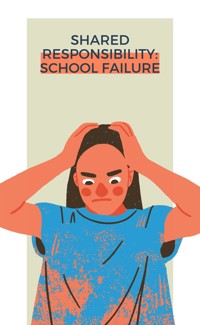
Shared Responsibility: School Failure
What can mothers and fathers do?
Finding the source of the problem, the first step to overcome it
The common work of parents and educators is a basic element to face a growing and worrying reality. Parents must follow a series of guidelines to react in time to the first symptoms of school failure of their children, the role they play in the process of educating their sons and daughters is "fundamental", since teachers are not in the homes and they are the ones who must pay attention so that the son studies enough hours - "and that he studies focused on the children, because it is useless to do it with the television or the video game console on" - and so that he has a schedule, after school whoever can play, but not before, "usually" the parents of the children who are doing badly "not only don't help but they confront the teachers and blame them." But that paternal attitude is not the most indicated. “Fathers and mothers must assume that there has been a very negative result, in which the student is involved first, the family second and the school third. You have to review all the factors that depend on each of these instances, in order to correct the errors”. teamwork must be carried out between the tutor, the student and the family, and she is opposed to what she recognizes that parents usually do: go to private teachers. “Solutions must be found in the center itself and family-school dialogue is basic. If a mother or father sees that the minor does not keep up with the class or that he is unmotivated, the appropriate thing to do is to meet with the teacher and see how he can be motivated. There must be educational coherence between the center and the family, ”she says. It is useless to punish children What is in no way useful to help the son or daughter to overcome school failure is to punish him. "This only serves to sink them even more, but it is the parents who have to put their batteries together, look for the causes and help the children to pass, in case they fail", the families have changed "a lot" and now they are negotiators, so they must negotiate with the son "how he is going to get ahead". "It's a team spirit but without ceasing to be parents, we can never be friends with our children because if we were, we couldn't set limits, and that's also important." look for the causes and help the children to pass, in case they fail”, the families have changed “a lot” and now they are negotiators, so they must negotiate with the son “how he is going to get ahead”. "It's a team spirit but without ceasing to be parents, we can never be friends with our children because if we were, we couldn't set limits, and that's also important." look for the causes and help the children to pass, in case they fail”, the families have changed “a lot” and now they are negotiators, so they must negotiate with the son “how he is going to get ahead”. "It's a team spirit but without ceasing to be parents, we can never be friends with our children because if we were, we couldn't set limits, and that's also important."
Heschool failureIt is one of the main concerns of parents, students and institutions. Its causes are analyzed to avoid it and its consequences to face it. A new report explains the key points of school failure and tries to find the formula that combats it: preventing, intervening in time and introducing mechanisms that facilitate the return of students to the educational system are three basic aspects. A fundamental factor is ensuring that students do not abandon the classroom. Therefore, it must be givenorigin of school failureto combat it. In the first place, school failure can have its origin in various causes. It is a progressive process, in which the student gradually loses the link with the school environment until they drop out.
This separation begins in primary education. It is estimated that at the age of ten one in ten children does not attend the level of education that corresponds to them by age, although the decision to drop out of school is taken in adolescence. For this reason, it is committed to a preventive system "effective and coordinated between the family and the school", a comprehensive prevention that addresses risk situations. Families must feel that they are an active part of their children's education, to help them overcome the difficulties that arise.
Once students who are likely to drop out of the classroom have been detected, work should begin with them "to tackle problems early>>. The economic crisis has increased the number of students whose families lack sufficient resources to guarantee adequate education. Sometimes, students lack school supplies or the necessary attention to motivate them to study. Early intervention allows adolescents with learning disabilities to reach adolescence with sufficient motivation to overcome these obstacles.
The intervention plans must be applied in all training cycles and must include personalized attention through tutorials and school reinforcement. But also the attention and motivation on the part of the parents is essential. Children must feel supported at home and, along these lines, a notable aspect is the parents' reaction to failure. In the article 'My son has had many failures', some very frequent behaviors among parents in the face of negative grades are 'ineffective and even harmful'. It is the case ofpunishmentsand shouting or certain expressions that can humiliate children ("you're lazy"). Faced with this, he recommends listening to children, teaching them study techniques or giving them responsibilities from an early age.
A second chance. This can often be the way for students to return to the formal education system and complete the learning process. We think of specific curricular adaptations for these young people, taking into account their particularities, creating enough places for all students who fail ESO or facilitating the passage of theFormative Cicle of medium gradeto the Higher Level Training Cycle.
School failure is worrying, among other reasons, because of its relationship with poverty. "It is one of the factors that contributes to reproducing the vicious circle of poverty among young people in a more decisive way." At present, different services set themselves the objective of fighting against school failure. They intend to help the youngest so that they do not abandon the classroom and at least finish compulsory education, an aspect that they consider key for their future. Among the services provided to combat school failure, the following stand out: Shared Schooling Units (UECs),Initial professional qualification programs, Workshop Classrooms, Study Classrooms and Environment Plans.
Among the factors that are considered determinants of school failure, the socio-educational level of the parents, the ethnic origin and the sex of the students stand out, which is why they serve as a basis for special monitoring of these students. Othersrisk factor'soutside the social and family context are visual and hearing problems, as well aslearning disorders. On the other hand, dyslexia and Attention Deficit Hyperactivity Disorder (ADHD) represent an obstacle to carry out activities in the same way as the rest of the students.
Learning disorders in the classroom are more common than estimated, although they take years to diagnose and even go unnoticed. A report prepared by Spanish neurologists and educators has revealed the importance of early detection of these problems, which can lead to school failure and hinder the future of those affected. For this, it is necessary to build bridges between experts in neuroscience, the educational world and families, among other social sectors. The proposal for them to finish their studies is to make the teaching methodologies used in schools more flexible. A child is constantly distracted, is unable to pay attention, is very restless in the classroom and forgets to do homework: he has attention deficit hyperactivity disorder (ADHD). Another classmate has trouble learning to read fluently: he reads with pauses, reverses syllables, and even makes up words and misspells a lot. He suffers from dyslexia.
There is no doubt that there is a genetic or neurobiological basis for these disorders. The first cognitive studies to find out if a child suffers from any of these problems could begin to be carried out in first grade, reports López. However, although the first difficulties of the students are detected at this age, it is not until after a few years that the diagnosis of a learning disorder is confirmed. Moreover, there are cases in which this confirmation is not obtained until the child turns 15 or until adulthood.
“ The diagnosis can take years and can even be detected in adults in people who suffered from them as children and who were not diagnosed. Almost all of these disorders are hereditary. This is the case with ADHD and dyslexia. Adults who are diagnosed suffer from whether their children will suffer from them or not”, now these disorders are not more frequent than before, but are diagnosed more, because education is compulsory until the age of 16.
But underdiagnosis is still high and there are more undiagnosed learning disorders than known cases. When this happens, those affected have a high risk of school failure and, in the case of ADHD, of falling into addictive behaviors, as well as suffering from family and work instability. Current scientific knowledge has revealed that these children cannot be labeled "lazy", but rather must look for the causes of why they do not make an effort and why they are not motivated. Today it is known that in most cases these causes are genetic and neurobiological, ADHD is related to a dysfunction in the frontal lobe, while dyslexia corresponds to one in the left hemisphere in its posterior part, the disorder specific tolanguage developmentwith problems in the left hemisphere -in the perisylvian areas-, dyscalculia is based on the bilateral parietal lobe and, in the case of TANV, although it is not so clear, two hypotheses are being considered: on the one hand, that its origin is in the right hemisphere, and on the other, in the bilateral posterior areas.
Children with ADHD, dyslexia, or another learning disorder deserve different attention. The school must adapt to be able to make curricular designs more flexible, to attend to the diversity of students who attend their classrooms. Affected schoolchildren need to adapt theeducational procedures-and not the contents- to be able to with the studies and not fall into school failure. The prevailing system up to now, based on a classroom of 25 students, where everyone attends to the same subject, with the same methodology and at the same time, is obsolete and must be overcome to allow these children to complete their studies. Students with ADHD often fail because they can't finish a long exam with many questions, they miss a paper due date, or they take home a different book than the one they needed to prepare for that exam.
They propose carrying out the exams on these children in installments or making sure that they have correctly written down the homework assigned to them, these children should sit in the front rows, so that they pay more attention, reinforcement works better for them than the penalty. In general, they require closer supervision.
Instead, those affected by dyslexia need compensatory strategies to be able to learn the same content as their peers. The neurologists propose that they not be made to read in public, to avoid feeling ridiculous, that the syllabus be reduced for them, that they be given more time for exams, since it is more difficult for them to read than the rest, that they be given the possibility of being examined orally instead of in writing, since they must make a great effort to write, as well as apply a different scale to evaluate their spelling. "We must adapt the classrooms to get happy children, who have a reference group, motivated to learn and so that their learning disorder is not an obstacle to their professional future."
Students from a less advantaged socioeconomic background or from broken homes tend to obtain worse school results, risk factors are "a series of individual characteristics or characteristics related to the student's environment that increase the possibility of the failure situation occurring school". Some of these variables, despite having an impact on student performance, are not modifiable from the educational intervention. This is the case of unfavorable family or social situations. Statistics indicate that schoolchildren from a less favored socioeconomic background or from broken homes tend to obtain worse school results than their peers. Although these factors cannot be prevented,
Risk factor's
Outside the social and family context, different variables and individual aspects of students can have a decisive influence on their academic performance.
Visual and hearing problems
A defective vision in the school stage will inevitably result in poor academic performance
learning disorders
Thedyslexiaand theAttention deficit hyperactivity disorder(ADHD) in children are one of the main predictors of future school failure. Students who suffer from these learning problems generally have a normal intellectual level, but cannot carry out the appropriate academic activities for their age in the same way as their peers.
The main difficulty of dyslexic children is reading and writing
In the case of dyslexic children, they find their main difficulty in the reading and writing process, essential to carry out most of the school tasks. Not all students who suffer from it present the same characteristics or intensity, but common symptoms are attributed that allow early detection, such as family history, the following among preschool and primary school children stand out:
Confusion in the pronunciation of words that are phonetically similar.
Alternating good and bad days in school work for no apparent reason.
Difficulties with sequences (numbers, months of the year, days of the week).
Difficulty for gross motor skills (ball games, staying on one leg).
They do not wait for the turns of the games.
It is difficult for them to learn the time and situate themselves in time, that is, to know concepts such as "today" or "tomorrow".
Incorrect pencil position and unusual writing postures.
When the process of initiation to reading begins, they alter, omit or substitute words or letters.
When learning to write: they do mirror writing, word unions, incorrect letter separations.
A timely diagnosis by a specialist provides the child with the possibility of receiving specific attention, "If they do not receive the appropriate help, the risk that these children will not finish Secondary Education is very high." The diagnosis of a specialist in time provides the child with the possibility of receiving specific attention from their families and teachers, which helps them acquire skills to regulate attention and improve their skills. To learn about the main symptoms of ADHD and to find out about the steps to follow in detecting it, families can find help atvarious local and regional associationsof parents with children with ADHD.
Finding the source of the problem, the first step to overcome it
School failure is one of the most serious problems currently suffered by educational systems. The importance of its consequences, which go beyond the school environment, and its extension, to a greater or lesser degree throughout all developed countries, justify the interest of institutions and associations of teachers and parents in mitigating its effects. Videogames can be part of children's education and contribute to the fight against school failure, it is necessary to highlight the role ofvideo gamenot only as a new educational instrument, but as an incipient methodology that can contribute to the reduction of school failure. According to this professor, students should use the same means in the classroom that they use outside of them, including social networks, which would make learning much more attractive to them.
Studies highlight the great educational power of video games together with other media such as social networks, students by accepting the rules of social networks begin to develop their civic sense. In addition, video games and social networks play a prominent role in promoting communication and the exchange of opinions among students.




