


8,49 €
Mehr erfahren.
- Herausgeber: Valley Publishing Ltd.
- Kategorie: Abenteuer, Thriller, Horror
- Sprache: Englisch
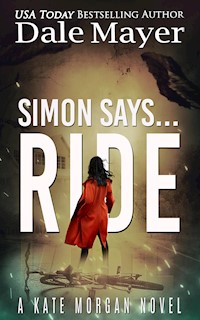
Simon Says... Ride, book 3 in a brand new thriller series by USA Today bestseller author Dale Mayer.
Detective Kate Morgan is hot on a new confusing case. A cyclist is killed at the main intersection to the University of British Columbia. At first glance it looks like a hit-and-run, but, as details emerge, it gets much more complicated.
From one day to the next, Simon is blinded by an overload of senses and noises. It’s impacting his regular business day, and he seems unable to control when and how these moments occur. Angry and frustrated, he tells Kate but knows she’s unable to help. How can she, when he can’t help himself?
As Kate struggles to work her way through a gang of arrogant university students, reluctant parents, a defensive dean, and way too many unobservant witnesses, she finds a disturbing pattern of more “accidents” and more victims …
Then finally Simon understands why his senses are on overload … and flips the investigation around.
Das E-Book können Sie in Legimi-Apps oder einer beliebigen App lesen, die das folgende Format unterstützen:
Veröffentlichungsjahr: 2021
Ähnliche


















Table of Contents
Cover
Title Page
Books in This Series
About This Book
Chapter 1
Chapter 2
Chapter 3
Chapter 4
Chapter 5
Chapter 6
Chapter 7
Chapter 8
Chapter 9
Chapter 10
Chapter 11
Chapter 12
Chapter 13
Chapter 14
Chapter 15
Chapter 16
Chapter 17
Chapter 18
Chapter 19
Chapter 20
Chapter 21
Chapter 22
Excerpt from Simon Says… Scream
Author’s Note
Complimentary Download
About the Author
Copyright Page
Books in This Series
The Kate Morgan Series
Simon Says… Hide, Book 1
Simon Says… Jump, Book 2
Simon Says… Ride, Book 3
Simon Says… Scream, Book 4
About This Book
Introducing a new thriller series that keeps you guessing and on your toes through every twist and unexpected turn….
USA Today Best-Selling Author Dale Mayer does it again in this mind-blowing thriller series.
The unlikely team of Detective Kate Morgan and Simon St. Laurant, an unwilling psychic, marries all the unpredictable and passionate elements of Mayer’s work that readers have come to love and crave.
Detective Kate Morgan is hot on a new confusing case. A cyclist is killed at the main intersection to the University of British Columbia. At first glance it looks like a hit-and-run, but, as details emerge, it gets much more complicated.
From one day to the next, Simon is blinded by an overload of senses and noises. It’s impacting his regular business day, and he seems unable to control when and how these moments occur. Angry and frustrated, he tells Kate but knows she’s unable to help. How can she, when he can’t help himself?
As Kate struggles to work her way through a gang of arrogant university students, reluctant parents, a defensive dean, and way too many unobservant witnesses, she finds a disturbing pattern of more “accidents” and more victims …
Then finally Simon understands why his senses are on overload … and flips the investigation around.
Sign up to be notified of all Dale’s releaseshere!
Chapter 1
Mid-August in Vancouver
Two weeks ago Kate Morgan had had a couple days off, and those two days she’d spent with Simon St. Laurant now seemed like a hell of a long time ago. She groaned.
Rodney looked up at her. “What’s the matter now?”
“This stupid case. I’m still tracking down more of the suicides.”
“I know.” He nodded. “All we really can do is give the families closure at this point in time.”
“At least that asshole pedophile in our other case is dead and gone.”
“Exactly. And nobody will mourn Ken’s death.”
She sighed. “Somebody like that, I just assume we toss his file and carry on.” She looked around. “Where is everybody?”
“Lilliana’s running late, as she’s been at the dentist all morning. Andy’s off for the day. Owen’s here somewhere.”
Just then, Dispatch called her. “We’ve got a DB at the entrance to UBC. Female.”
“On the walkway?”
“Sounds like it’s just outside university grounds—at the intersection on one of the bike paths,” the dispatcher said. “I’m sending you the exact location.”
“Crap.” Kate hopped to her feet. “Hey, Rodney, we’ve got a woman down on the bike path at the university.”
“Out by UBC? Shouldn’t RCMP have that?”
“This one is a homicide at the intersection leading to University Boulevard, so it’s ours either way.” At his look of surprise, she added, “Vehicular homicide. She’s been run over. Time to rock and roll.”
Rodney stood and grabbed his jacket. “Another woman was struck by a vehicle up in that area about a year ago.”
She stopped and stared at him. “What do you mean?”
“Well”—he shrugged—“it’s not like it’s unusual, since that’s a high-traffic spot.”
“Isn’t that also where they do bike-racing training?”
“They do some of it there. I mean, the UBC campus is full of trails and tracks, so it’s perfect for a lot of this stuff. Plus, with all the jogging runs up there, it’s great for fitness training.”
“Hmm,” she said. “So you’re thinking it was a full year ago since the last one?”
“Yeah. Why?”
“I just want to make sure that we don’t have like three in a row.” She frowned. “Nothing like a serial killer coming back to mark time.”
He looked at her with added respect. “I’ll look it up.”
“Do that. The last thing we need is another ugly story to mar the beauty of this place.”
“You know that there will always be another ugly story.” Rodney and Kate walked to her car, heading to the location in minutes, as he dug into his coffee and his cell, while she drove.
“I know,” she said. “One of these days I keep thinking we’ll have paradise here.”
“Paradise is what you make it.” He laughed.
By the time they drove up to the outskirts of the university campus, it was much later than she would have liked. The place was awash with law enforcement, traffic, and the always-present curious crowd. She parked near all the cruisers. The coroner was already on-site. “Looks like we’re last to arrive. How did that happen?”
He looked up from his phone and frowned. “We did hit a spot of traffic on the way over. All because of that fender bender snarling things up.”
“I guess.” She nodded at his phone and the records he was pulling. “Did you find anything?”
“Hmm.” He bent his head again, while she hopped out.
She came around, leaned in through his window, and asked, “What did you find, Rodney?”
“Nothing good.” His tone was grim.
She shook her head. “What do you mean?”
“You were asking about a third?”
“Yeah …” Her heart was already sinking.
“How about a fourth and a fifth?”
“What the hell? Where?” she asked.
He replied, “All within a couple blocks of here. And … all of them on this same weekend. One a year for the last five years.”
She stared at him. “Shit.” Just then her phone rang. She looked down at a text from Simon, just saying, Call me, her stomach dive-bombing at the timing, yet calling him. “Hey, what’s up?” she asked. “I’ve just arrived at a crime scene.”
“I know, and all I’m seeing are bikes, bikes, bikes, and more bikes.”
“Yeah, how many of them?”
“Right now, I’d say five.”
She swore. “Great.” She sighed heavily. “Apparently I’m at a crime scene in an area where crimes of the same kind occurred every year for the last five years, on this very weekend.”
Dead silence came first on the other end, and then she heard Simon’s weary voice. “You’ll track this one down, I presume?”
“I won’t have a choice,” she said.
He whispered, “Neither do I.”
“Any help you can give me?” she asked.
“No,” he murmured, “not yet. But it’ll come. Don’t worry. It’ll come.”
At that, she hung up, nodding, a grim expression on her face..
Chapter 2
Kate wasn’t sure what to think of Simon’s message. Even Rodney didn’t know what to make of it, even though he’d heard part of it. She looked down at him, still seated in her car. “Can you send that search to me, please?”
He nodded. As soon as he was done, he hopped from the vehicle, and they both stared at the people everywhere, on both sides of the street, in the street, and generally getting in the way. Cops were moving everyone back, but it took some work.
“Of course we’ve got a massive crowd.” She pushed her hair off her forehead. “I’ll start with the body.” She headed to the coroner, who already leaned over the dead woman’s body. He had pulled back a sheet, covering her to her waist. “Well, Dr. Smidge?”
He looked up at her and glared. She glared right back. He sighed and sat back on his heels. “You know that I’m not quite adjusted to seeing your face at all these scenes yet.”
“I’m in homicide now.” She shrugged. “I’ll be on most of them, so get used to it.”
“It’s like you’re a harbinger of bad news. You and the other members of the team—and I see a lot of them around too,” he snapped, “but somehow they don’t give me that same ugly feeling.”
Her eyebrows shot up. “Thanks, Doc. You don’t really think I’ve got anything to do with this, do you?”
“No, of course not.” He shook his head. “That would be stupid. But it seems like you have a nose for trouble. The kind of trouble that doesn’t solve easily.”
“I’m not so sure. This one could be easier. Although—” She stopped and shook her head. “No, we, … we don’t know that.”
“No, you don’t, and the minute you start getting cocky about it—”
“I’m not cocky,” she interrupted, speaking quietly, wondering why all the doctors in the coroner’s office were so cranky. “But according to a search that Rodney just did, several other vehicular homicides have occurred annually in this area over the last few years.”
“I wouldn’t put more into that than it will carry. University students ride bikes, a lot of them, faculty too. So there is bound to be a higher occurrence of accidents than in other areas. Plus, many ride their bikes while under the influence.”
At that, she winced. “That’s not a smart idea.”
“No, it’s not,” he snapped. “I’ve seen way-too-many kids do stupid shit. I can’t even count the number of times I’ve thought about wringing their necks. But I’d like to do it before they end up on my slab.”
“That would be nice, but it never seems to work that way.”
“No, it doesn’t. They do what they think is a great idea at the time, and then, when they wake up—or don’t wake up—the family is left pondering the choices they made. And so many times it was either while under the influence or otherwise having fun with their friends on a dare. Then it’s left to the rest of us to clean up the mess they made.” A tone of belligerence filled his words.
She wondered how many that he’d had to deal with lately. Her job was tough sometimes, and she hadn’t been on the job all that long. She’d been a cop for a long time, but she had only been a homicide detective for about five months now. She looked down at the body. She found it easier than looking at the doctor’s face and seeing all the lines and creases this job had put there. He was a good man, and he worked damn hard, but, at some point in time, the job got to you. She studied the dead young woman and understood his mood. “What is she, eighteen?”
“The older I get, the more I can’t tell age, but, as we ID her, we’ll nail that down. Probably a student here at the university.”
“And what? Just riding her bike and not looking?”
“That would make it an accident, and you and your partner wouldn’t be here.”
“That depends.” She stared at the coroner, waiting for more information.
“Hey, I’m not here to argue about what the charges will end up being, if any even are, but I’m telling you that just because other people died from bike wrecks around here doesn’t mean there is some great mystery.”
“Meaning that I shouldn’t make too much of the five-year annual repeat within these few blocks?”
“Exactly. All kinds of problems, all kinds of things can go wrong, and it’s got nothing to do with murder.”
“We got called in for some reason,” she noted. “We don’t generally catch traffic cases, even the bad ones.”
“Well now, young lady, that could be because of this.” He tilted the young woman’s head ever-so-slightly.
Kate leaned over so she could see it better, and she stared, shocked. “Is that a bullet hole?”
He nodded grimly. “Yes. She was shot first. And I bet the other cases don’t match that.”
“I have no idea. I have yet to look at them, but this is definitely not what I expected.”
“No one ever does. This is definitely your case now,” he muttered. “God help you.”
“Why? Do you think it’ll be ugly?”
“Anything to do with a young person is tough,” he explained, “and the university is pretty protective of their people, and you’ll have to deal with that bureaucracy as well. Although this isn’t on campus grounds, so you won’t have to bring the RCMP into it.”
“Can’t say I’m too worried about that aspect. I’ll get answers no matter who’s in my way.”
He let out a short bark. “That’s always your attitude, isn’t it?”
“I don’t mean it to be, but I do tend to get in trouble for being on the short-tempered side.”
“Yeah, well, maybe you’ll get some answers, and that is what we need right now. Good luck with it.” He sat back on his heels and glared down at the young woman.
Kate knew Dr. Smidge wasn’t seeing the actual body in front of him. He was viewing the devastation and the wastefulness caused by whoever had chosen to take this young woman’s life. Kate reached down, gently pulled the soft red hair off the victim’s face, and whispered, “Such a waste.”
“Indeed,” he said, with regret. “I’m taking her now. I’ll look after her.” And, with that, he stood and went over to talk to his team.
She stepped back, looked around at the crowd, and found Rodney, talking with a group of young women. Kate joined them to hear him asking about anything they might have seen. And, of course, they hadn’t seen anything. She moved through the crowd herself, asking questions, taking names and contact information, getting explanations as to why people were here.
More often than not, they were just gawkers, interested in something different that had happened, something that added a bit of dash and verve to their monotonous lives, even though it was terrible news for somebody else. Like always, as long as it wasn’t bad news for them, everybody was fascinated. Murder had a way of doing that to people. Something was horrifically mesmerizing about it.
As Kate moved through the throng, she hoped the crowd would dissipate—but not before she took photographs of the bystanders and potential witnesses. She had noted street cameras here, but there was also construction going on which could complicate things. What she really needed was to find out if anybody had heard or seen the shooter—without mentioning the shooter first. She had to be careful with her questioning of witnesses, so as not to influence their recollection.
The bullet hole already made this case something very unusual. The question now was, did the vehicle kill her, or had she died from the gunshot and then swerved off into the oncoming traffic? Had she been hit because she was already down on the ground?
Kate knew the coroner would have to help them sort some of that out. The roads were freshly rained on, and she saw no tire tracks, although she took several photographs of the roadway for her own use as well. As she stood here, turning in a slow circle, studying the remnants of the crowd definitely shifting away, Rodney joined her.
“Nobody saw nothing,” he said in disgust.
“Was she alone?”
“Nobody’s stepping up to say they were with her.”
“No, of course not.”
“You okay?” he asked.
“Yeah, I am. Listen. What you need to know is that she was shot.”
He stared at her, shocked. She pointed to the back of her own head, where the bullet had gone in. “It’s tiny, so probably a .22. Or”—thinking about it—“it could even be one of those new BB guns. You know? The air guns or whatever they are.”
“Whatever it was, it certainly changes things, doesn’t it?”
“Maybe,” she murmured. “Though it cements our role. Somebody targeted her, and, whether the vehicle was a part of it or not, I don’t know.”
“I wonder if the other cases have anything to do with this?”
“I have no idea.” She turned to look at him. “We’re a little short on information. Yet we can’t ask anybody about hearing gunfire, without giving that tidbit away.” She paused. “Unless the killer used a silencer.”
He nodded. “Yeah, but what we aren’t short on is bodies.” He looked down at his witness notes. “One of the women said that a group of young men and women—five or six, she thought—were here, and they had all been there before her death and headed over to the pizza parlor for lunch.”
Kate stared at him. “So, you watch somebody die, hang around to look at the body, and you get hungry?”
“Hey, absolutely no way you’ll bring me into that discussion. You know it takes all kinds of people.”
“That it does. That it does. We’ll have to hit them when we’re finished with all these people here.”
“It’s just amazing,” he muttered, “how observant some people are. Somebody said that they came upon her, saw her on the ground, and called it in.”
“We had four different 9-1-1 calls, I think,” she muttered, “if I remember that right. I’ll run it, so we can make sure we catch everybody.”
“And, of course, so many people don’t like to give any information at all.”
“I’ve never understood that,” she said.
“They don’t want to get involved. It’s easy enough to understand, I guess. All these questions. It’s … an unfamiliar experience for most everybody, so nobody wants to bother.”
“Maybe. If we don’t go over to the pizza parlor pretty quickly, they’ll be gone too,” she said. “I think I’ll go there first, if only I knew which one.”
“Probably the one everybody talks about. It’s been popular for a long time.”
Something about his tone got her attention, and her eyebrows raised. “Don’t even tell me that you attended UBC.”
“Sure did,” he said, with a big grin. “The go-to pizza place is just across the street and on the corner over there.”
She looked where he pointed and nodded. With that, she bolted across the road, holding up her badge as she darted through traffic. As she approached the pizza parlor, she saw a group of five or six young people, stepping outside, laughing and joking. She immediately intercepted them, stopping their progress.
One of the men said, “Hey, what’s with the pushy attitude?”
“I presume you’re the group I’m looking for.” Kate held up her badge.
They frowned, looked at each other, then shifted uneasily. “We don’t even know what you’re talking about.”
“Are you sure about that?” she asked. “I understand from other witnesses that you were one of the first on the scene to see that poor young woman on the pavement over there.”
“We don’t know anything about it,” one of the two women protested.
Kate turned to her. “I’ll be the judge of that, and I’m really hoping you didn’t have anything to do with it.”
“Everybody else got there, so no reason for us to stay,” the woman argued, sticking out her chin.
“Interesting,” Kate said. “You didn’t stop to answer any questions though, did you?”
“No,” the first man said. “We knew it would take forever, and we didn’t want to get stuck over there.”
“No, of course not, you’d rather eat.” Kate shook her head.
“It was our lunch hour,” the same woman protested. “It’s not like we could do anything to help her, so why shouldn’t we enjoy our life?”
“Absolutely,” she murmured. “What did you see?”
At that, the men stopped, glanced at each other, and looked at the first woman who had spoken. Still, one male and one female had not said anything.
Kate turned and asked the silent female directly, “What is your name? What are you studying at the university? When did you arrive at the scene, and what did you do when you got there?”
The woman’s jaw dropped, and she looked frantically from one to the other of her group.
“Hey, she’s really shy. Don’t. … You’ll kick her over the edge and make her all stressed,” the other woman said crossly.
“I have questions. I need answers. You can either answer them now,” Kate said patiently, “or you can all come down to the station and talk to our team of detectives down there.”
“Are they any different than talking to you now?” asked one of the men.
She shook her head. “No, not at all. So, what will it be?”
“We could just walk away,” said the first, more belligerent male. “It’s not like you can stop all of us.”
“No, absolutely I can’t, but the cameras here have caught you already, so we will have somebody at your house, your dorm, your family’s home, your classroom, or anywhere else we need to go, depending on what we find out. We’ll find you one way or another. So, is that really how you want to play this?”
The young woman who had been silent said, “No, no, no. We weren’t doing anything. Why are you being like this?”
“I asked you some very basic questions. Why are you being like this?” Kate asked in a hard tone, looking straight at her. “A young woman is dead, and we need to find out what happened and who saw what.”
“I didn’t see anything,” she said quietly. “We had just arrived. We were all talking, laughing, and joking. We were coming down University Boulevard. It’s quite a walk. We were planning on making a fast trip for pizza, then turn around and go back again.”
“How fast will it be when it’s quite a walk?” Kate asked, her head tilted, eyeing the nervous woman.
She flushed. “Okay, so we weren’t planning on going back,” she murmured.
“So, already the lot of you have been uncooperative. And now you’ve lied.”
“She didn’t lie,” one of the men said quickly. “We weren’t really sure what we would do, and she got quite upset when we came upon the scene. We called 9-1-1.”
“Who did?” Kate interrupted. “I need the name and the number, so I can verify it.”
He hesitated. “Well, it was my phone.”
“Your phone but not you calling?”
“No. Yes.” He shook his head. “I phoned.”
“Interesting phrase.” She stared at him with a narrowed gaze.
“You make me feel like I did something wrong,” he protested. “It’s making me nervous.”
“Did you do something wrong?” she asked him flatly.
“No.”
“Then just answer the questions and give me the information I need, so we all can move on.”
After that, with the thought that maybe they could walk away from this quicker if they gave her what she was looking for, they settled down. She was only after their contact information, the reasons why they were where they were, and exactly what they saw. It ended up being not a whole lot.
As she stepped back, she asked, “Was this really that hard? Just being reasonable and cooperating makes a whole lot of difference in our world.”
“Sure, but you were harassing us,” one of the men said.
She snorted. “Really? We are trying to gather information on a death, before everybody scattered and disappeared, especially the ones who didn’t want to talk to us because they seem guilty right from the get-go. The first groups that arrive at a scene and call it in are really important. And, by the way, you’re not allowed to leave the scene of a crime, particularly after you have called 9-1-1, and here you guys not only left the scene but you’re off having pizza.”
“You make it sound worse than it is,” one of the women said.
“Maybe so. I wonder how the dead woman’s family would think of it though. What if it was your body lying there, and your friends treated you that way?”
“We don’t even know her though,” one of the men said.
She nodded. “No, you didn’t. At least you’re telling me that you didn’t. Easily one hundred thousand students are on this campus, but she was a student there. So it’ll be interesting to cross-reference your classes with hers.”
“Why would you do that?” The first woman reared back slightly.
“I have to,” Kate said flatly. “The woman is dead. We’ll conduct a full investigation to find out how and why that is.”
“She was hit by a car,” the first guy roared. “How hard is that to understand, even for you?”
She looked at him, raised an eyebrow. “Watch it.”
He snorted. “What? So you’re allowed to insult us, but we’re not allowed to insult you?”
“Pretty much.” She nodded. “Yeah, I’d say so.” She looked at each of them. “Are you all living on campus or do any of you live at home?”
“We already told you. You asked for our addresses, and we gave them to you.”
“Yes, you did.” She smirked. “But, according to what you’ve given me, which appear to be family addresses, none of you live on campus. Is that correct?”
One of the women hesitated.
Kate looked at her. “But you do?”
“I do, yes.”
“And what address did you give me?”
She hesitated again. “I gave you my family address.”
“And why did you do that?”
“Because that is my permanent address.”
In a way that made sense, but it also made it much harder to contact her immediately. “So, where are you staying on campus?” And. with that, she had to go back through all six of them again and write down their student housing addresses.
“We don’t want you coming up to our rooms,” one of the guys grumbled.
“I don’t want to, and, if your information checks out, then it’s not a problem, is it?”
“I still don’t understand what you’ll check out,” said the first woman, puzzled.
“Just to make sure your stories line up.”
“But we didn’t kill her.”
“Yeah, you say that, and yet somebody did. And it’s my job to find out who did. However inconvenient that may be.” With that, she gave them a cheerful smile. “Have a nice day.” As she took off, she heard them muttering behind her. She walked across the street again to talk to Rodney.
He asked, “Did you piss them off?”
“What a bunch of smart-asses. They didn’t figure they had to answer any questions and don’t understand what they could possibly have done wrong.”
“They could have stayed at the damn scene of the crime and told us about what they’d seen,” he muttered.
“They could have, but, you know, they were busy, with pizza on their minds, and they didn’t want to waste any of their time on something so minor.” He shook his head at that. She sighed. “And honestly, I don’t know if it was anything more than that. People handle stress very differently, and they were further proof.”
“Did you get any vibes off them?”
“You mean, ugly vibes? Yeah, a couple. One of the females had been pretty aggressive, and one of the males—Brandon—was definitely somebody I’d like to knock down a peg or two.”
Rodney snorted at that. “Remember. You’re not supposed to be fighting or getting in trouble.”
“So you say.” She smiled. “That doesn’t mean they didn’t need it.”
“No, it probably doesn’t. That doesn’t change the fact that it doesn’t progress our case though.”
“And that part pisses me off,” she muttered.
“Of course nobody saw anything. And, if it happened fast, and a silencer or whatever was used, you can understand it.”
“I can.” She studied the building across the street. “I’ll head back over there and check to see if anybody has security cameras. I can’t see anything specifically, but I’m hoping maybe somebody does.”
“You go do that. I’ll stick around and see who’s still hanging around, watching the proceedings.”
“Which is another reason I wanted to get names of everybody who was here,” she said.
“And we probably didn’t get everybody.”
“No, I’m sure we didn’t. And, if anybody here was watching the results of his handiwork, he’s probably long gone, but you never know,” she muttered. She had seen it happen time and time again. And still, only so much one could do about it.
*
Meanwhile Simon St. Laurant had started his day early, as usual, and knocked on the door. He was down in one of the alleys he knew well. Although he’d been here several times, knocking on this door made him feel odd. When it opened, just barely a crack, he smiled and handed over a roll of bills. A smile lit up the face on the other side.
“Simon, thank you,” she said quietly.
He shrugged. “Maybe it will keep somebody safe for a little bit longer.”
“It will,” she said. “It seems, right now, donations are hard come by.”
He nodded. “It’s not an easy time for anybody these days.”
“And yet Vancouver is so wealthy.” She shook her head.
“Wealthy in many ways, yet profoundly destitute in others. Take it and use it.” With that, he turned to walk away.
“You never seem to want anything in return,” she said.
He looked at her in surprise. “No, of course not. Why would I?”
She laughed. “A lot of people would.”
“I’m not a lot of people.” He turned and walked away from the very private entrance to the women’s shelter. A shelter where women, who had escaped from an abusive situation, were in hiding.
The trouble was, like she had said, donations were hard to come by, and it was run by the charity and the goodwill of others. He did what he could, when he could. Too often he had forgotten to drop by and had felt terrible. But, when he remembered, he would walk down here and give them something. The few thousand he had given her today would go a long way to help, but it certainly wouldn’t solve all the problems. Some things would just never get solved.
As he walked forward, he smiled, sniffing the fresh air. A coffee was what he would like. A nice fresh Americano perhaps. He stopped by a small food cart and waited his turn, then ordered. As he paid, he left them a generous tip and kept on walking. A small park was up ahead, a favorite spot, so he walked over and sat down. He lived in the False Creek area, one of the nicer areas of town, as far as he was concerned. He liked being close to the harbor and to the markets, and the whole atmosphere there made him feel at peace. But it was also close to some of the hardest, poorest, darkest areas of town—talking just about Vancouver proper, at least.
With his pockets still full of cash, he headed to the home of a woman he knew, who kept taking in street kids. She had everything from fifteen-year-olds, trying to get out of the cycle of prostitution they had found themself in, to a couple newborn babies and everything in between. He tried not to ask too many questions, as long as she was helping them and wasn’t doing anything illegal. When he stepped onto her front porch, the door opened, and one of the fifteen-year-olds leaned against the doorjamb.
Her arms were wrapped over her chest, as she eyed him suspiciously. “What do you want?”
“Is Sybil here?” She just shrugged. “In that case, tell her that I’d like to see her,” he said, his tone mild. From the doorway he saw the chaos of all the children’s toys and heard the noises from gaming systems and televisions. When a harried and frustrated Sybil came toward the front door, Simon was almost sorry he had stopped in. She carried a young child in her arms. Stepping outside, she took one look at him, and her face lit up.
He grinned. “Well, it’s nice to be welcomed.”
“Absolutely. It’s just chaos here, as usual.”
“Good chaos or bad?”
“Good. In addition to the regulars, I have two kids going home to their families—runaways. And I’ve been fostering this little guy, after he was picked up not far from here.”
“Lost?”
“More like deserted,” she said quietly.
“As in abandoned? Has the government stepped in yet?”
“Since he’s happy here at the moment, we’re keeping him for now, but, yes, they know he’s here.”
He nodded. “You know I can’t support anything that isn’t legal.”
“I do, and you know the finer points of legality can be somewhat capricious at times.”
He burst out laughing. “Always, and, of course, ultimately it’s all about the children.” With that, he handed her a roll of bills, which she accepted gratefully.
“Thank you. Sometimes it’s tough.”
“I can imagine,” he said. “You’ve got a full house here.”
“It’s quite something.” She nodded. “I can’t handle any more right now.”
“Until somebody calls, and then you find a way.”
“And I hate it,” she murmured, “but I can’t say no.”
“Got it. That’s what life is.”
“I know. … Sometimes it’s rough. Sometimes, in the middle of the night, I wonder how I’ll even get up in the morning. I get so tired.”
“Can anybody help you?”
“Not really,” she said.
“What about the older kids?”
“Well, you get some, who really want to help because they’re grateful to be here, and then others think the world owes them a favor—so to be asked to do anything is too much for them.”
He winced at that. “I guess it’s the age, isn’t it?”
She laughed. “It absolutely is”—she gave Simon a big grin—“and I don’t blame them one bit.”
“No, but this isn’t where you expected to be right now, correct?”
“No, not at all.”
“Hopefully it will ease up soon.”
As he turned and walked away, she called out, “Thank you again.”
He nodded and kept on going. If it wasn’t for the fact that some of those kids looked like they would take the money and run, he would have left it in the mailbox. But he’d also learned that it was that extra step of stopping by and visiting for a few minutes that added humanity to the money and put that much more of a smile on Sybil’s face. These impromptu visits also gave Simon a chance to take a closer look at what was going on in there. With that behind him, he headed to a couple more spots that needed help.
One was a small community church, surviving on donations, which were pretty darn thin. As he dropped the money into the donation box, the priest lifted a hand in thanks. They didn’t talk today since the priest was surrounded by various others now, but Simon and the priest had met many a time before. Simon turned and kept on walking.
At the food center, he found Johan in the back, muttering over bills. Simon dropped a big thick roll on the stack. “Maybe that’ll help.”
When Simon walked away, Johan called out, “God bless you.”
Simon laughed. “He already has.” As he headed out, he smiled because he meant it.
He was alive, and, after a really shitty start to his life, he was doing just fine. And, even though the last few months had given him some awakenings that he’d hoped to never have—and nightmares he’d never thought could be so bad—he was finally starting to recover from both. He headed toward one of his rehabilitation building projects, calling out to his project manager, who stood there, muttering over a clipboard. “A good day or a bad day?”
The project manager looked at him and glared. “Are there any good days?”
But it was hard to keep Simon’s good humor down. “Today is definitely a good day.”
Johnny shook his head. “I don’t know what the hell you’re sipping from that cup, but I sure as hell wish you’d give me some.”
“Got it. I should have remembered to bring you a coffee. Next time.”
“Don’t bother,” he said. “With my luck, on the day you bring coffee, it would be the one day I’m not here.”
At that, the two men smiled at each other.
“Sorry.” Johnny chuckled. “It’s been a shit day.”
“Ah,” Simon said.
“It’s the usual problems, nothing major, nothing new, just a continuation of all of the above.”
“Which, in itself, gets to be very worrying.”
“It does, but it is what it is.” He looked at Simon. “How come you’re in such a good mood?”
“I’m not exactly sure, but you know what? It—well, it is what it is, and, if you don’t need me here, I’ll go home early.”
“What’s the matter? Gotta hot date?”
“I’d like to think so, but she caught a new case, so that’s out.”
“You’re dating a cop?” Johnny looked at him in surprise. “Really?”
“Why not?” Simon asked. “It’s an experience.”
“Yeah, I’m not exactly sure it’s a good one though.”
“The jury’s out. I haven’t found any reason to stop, but there are many compelling reasons to continue.”
“Well, that’s interesting. In that case, see where it goes.”
“That’s the plan.” And, with that, Simon waved his hand, turned, and headed in the direction of home. On the way, he stopped, picked up a newspaper, and then popped into his favorite little Italian restaurant for lunch. Then his sense of smell overrode his desire to eat. So he stopped eating and brought his leftovers home, before he continued the rest of his day. Thankfully his overactive sense of smell retreated on the way. As he returned to his apartment building, the doorman met him with an open door. “Hey, Harry, how you doing today?”
“Good. Sorry I didn’t see you this morning, sir.”
“I was up and out early, not an issue.”
“Glad to hear that.” Harry looked at the bag and smiled. “Had a good lunch, I see. The finest Italian in town.”
“It is, indeed, and my favorite.” And, with that, he headed to the elevator and upstairs.
As he dropped the newspaper on the dining table, along with the lunchtime leftovers, a headline caught his attention. “Another Hit-and-Run at UBC.” When was it time to change the road rules and protect these young people from the actions of poor drivers? He wondered if that was the case that Kate had just picked up, though it didn’t seem a traditional homicide case. As he stared at the headline, his fingers retraced some of the letters of the first couple words.
“Traffic,” he muttered.
He stared out the huge expanse of windows in his living room that overlooked the beautiful city of Vancouver. Somehow, from the back of his head, came a scream, from a long distance away; it was faint and indiscriminate. He couldn’t even tell if it was a scream of joy or one of horror. Then came a thud, as somebody was hit.
He couldn’t see anything, yet he felt the blow. He bowed at his midsection and slammed down onto the kitchen chair, his breath gusting out in shock. He shook his head, turned, and looked around. “What in the hell was that?”
But, of course, nobody answered at all.
Chapter 3
Kate walked several blocks of the neighboring area, her phone in hand. She mentally noted where the other accidents had happened, as she reached each one, even though—according to the coroner—the cases had no connection. True enough, no apparent relation had emerged, but it was early days yet. The crime scenes were all within a span of probably four or five blocks, and, given that a lot of heavy traffic was here—from the students and the rest of the traffic coming out of the university—this intersection itself had a bad history. Plenty of small pizza places, sandwich shops, little delis—all to tempt the college crowd—also contributed to quite a traffic jam in itself.
With that being mapped out, Kate walked back to the scene of the current death to find that everything had been cleaned up, except for the smear of blood on the road. The fire truck had just arrived to do something with that. She always wondered what that substance was that they put all over the pavement. She walked down the long boulevard, heading toward the main part of the campus, golf courses on both sides. Beautiful, stunning, peaceful, elegant, and yet such a killer.
She shook her head as she walked a good hundred yards, wondering if anybody could have been over here watching. Obviously, if they had been playing golf or walking through any of the grounds, they could have. So far, she hadn’t spoken to anybody but those who had been walking on the streets and who had seen the accident from that vantage point. She pondered the location, and, when Rodney texted her and asked where she was, she answered by calling him. “I just walked around the five crime scene areas along the boulevard.”
“It’s quite something, isn’t it?”
“The grounds are gorgeous and amazingly open for people to walk and to take advantage of the countryside. Where are you?”
“I just finished with another group who arrived. Sounds like they’d been here earlier and came back. I’m on my way to you.”
When he met up with her, she guessed, “So, as usual, nobody really saw anything.”
“One thought he saw her riding on a bike—or saw someone riding a bike. He did describe the red hoodie though.”
“So beforehand.”
“Yes.”
“Did they have anything to say that was helpful?”
He shook his head. “Not really. They crossed there.” Rodney pointed, facing the intersection and using his left hand. “They were walking from here over to the other side. One guy glanced this way and saw the cyclist coming, so he was past the viewing point when she was hit.”
“Yes, but,” Kate said thoughtfully, “that means she was riding the bike then.”
He stopped, frowned, and nodded.
“So we know that the bullet hit somewhere after she cut out of his view, right? Could he explain how close?”
“He said it was down a way. Close enough that he could see she had on a red jacket, but too far away to determine that she was a she.”
“Okay, so what are we talking about then? Thirty or forty meters?” Kate asked.
He nodded. “Walk backward.”
She immediately stepped backward until she got closer to the point of impact with the car. “What about here?” she yelled.
“I can see your jacket, but I can’t see any details.”
As she walked closer, he stopped her. “You know what? Right about there is maybe one hundred feet out. I can see that your jacket is black. I can see that you’ve got the hood up, and surely I could see that you’re on a bike at that point, right? At a quick glance that’s probably as close as I get with these parameters.”
She nodded and continued to walk forward. She looked around. “This area has no cameras of course. Absolutely nothing here for any security. It’s wide-open grounds. Other people could have been walking here, but that didn’t mean they paid any attention either.” Kate shook her head. “Not only didn’t they pay any attention but they might not have had any clue that something was wrong with her. And the car wouldn’t have hit her necessarily until the intersection.”
“That’s what we’re trying to figure out. Was she shot before and went down, then got hit by a car? What does the driver say?”
“Right.” She rolled her eyes. “No driver because he took off.”
“Well, he’s probably afraid that he killed her.”
“He might have, but, if he’d stayed in place, it would have gone much better for him, and we would have had a hell of a lot more information,” she snapped. She ran her fingers through her hair. “It’s just so frustrating that people can’t do what they’re supposed to do.”
“If they’ll get in trouble, nobody will do it,” Rodney said, with a weary smile.
“I know. I know.” She waved her hand dismissively. “It’s still just pissy.”
“Pissy it is.” He nodded. “A good word for it.”
She sighed. “I get it. Nothing really to fuss about.”
“It is frustrating, particularly in this case, because we might have found out that she was already dead before she made contact with the vehicle. So right now, our driver is probably hiding at home, terrified to be sent up for vehicular manslaughter.”
“Or worse.” She nodded, with a roll of her head to loosen her tightening neck and shoulder muscles. “Reese can check city cameras here, to see if we have anything that gives us a clear view.”
“Yeah, should be waiting on us, as soon as we arrive at the station. I’ve already put in a request.”
“Okay. I guess it’s back to the office then, huh?” Kate stopped, looked around, and swore. “Still seems like such a waste.”
“It’s always a waste,” he said. “No other way to describe it.”
“I know.” She looked back at him and smiled. “You driving?”
“I can if you like,” he said. “You drove here.”
“I did, but I’m feeling a little on the tired side.”
“It’s all good,” Rodney said. “Let’s go.”
*
He watched the vehicle pull out and away. He didn’t know who they were, but he had taken several photographs of their vehicle and the two people wandering around who had gotten out of that vehicle. They had been flashing badges early enough, but he didn’t think they realized they were being observed. Or, if they did, they didn’t care. That always fascinated him. Everybody always thought that they were in charge, that somebody out there was beneath them.
In this case, the woman fascinated him. Tall, sparse, and lean, she walked with a clip to her step and strode around with a no-nonsense demeanor. The guy was slower, more comfortable, not as young, and walked with an easier gait. That guy was okay if it took him an extra couple minutes to get somewhere. His stride was more of a shuffle, although he covered a lot of ground at the same time, but he didn’t have that same tension that the woman had.
He’d watched her as soon as she had arrived. It was fascinating. The whole thing was fascinating. It was always the best part; he knew that. He’d certainly been told that, and, right now, it was … sheer fun. But the fun was beginning to wane. He felt the adrenaline—that had been so high and had spiked earlier—now dissipating, and he missed it.
He missed that high. He missed that sense of being in control, that feeling of living on the edge. Somewhat like crossing a wire with no safety rope or net to catch you. That sense of danger, that sense of purpose, that goal that you needed to accomplish before everything blew up in your face.
When he reached that goal, this euphoric moment washed over him, this sense of Oh my God, I did it, along with the panic, the fear, and the complete chaos running through his mind. But he was here. He was done with his earlier deed. He was good, and the investigators had no freaking clue. He smiled, took a sip of his coffee, and watched as the rest of the details played out.
All of the action was long gone, and he thought that was interesting too. He figured it would take hours and hours for sure, but it didn’t. They had been beyond efficient. But, to them, there was absolutely nothing to this. And here he was, already looking at a completely normal traffic pattern.
That was a disappointment.
And even now the two investigators pulled away in the small Jeep that she had driven in, yet he had driven out. He wondered if they were partners in life as well or if there even was such a thing. They were dressed in plain clothes, so they couldn’t be street cops. Had been plenty of uniforms on the scene earlier; still were a couple. But any motor vehicle accident involving a fatality would bring more than the average patrolman, since an investigation would have to be done.
And that was very true. It was all good and definitely something he wanted to keep feeling. But he also didn’t want to lose his focus—or his reason for doing this. With a smile he turned and poured himself another cup of coffee.




