


15,99 €
Mehr erfahren.
- Herausgeber: John Wiley & Sons
- Kategorie: Fachliteratur
- Sprache: Englisch
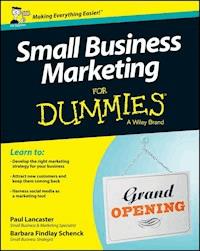
Small Business Marketing For Dummies helps you promote your business. It is designed specifically for the busy small business owner, giving you simple but powerful ways to spread your message - all at little or no cost. It shows you how to build your company’s profile, attract new customers and keep them coming back for more.
Inside you will learn how to:
- Create an achievable marketing plan
- Use social media and the web to attract and keep customers
- Communicate with your customers through winning emails, newsletters, blogs and more
- Make use of affordable advertising solutions in print and other media
- Get great PR for your business
Sie lesen das E-Book in den Legimi-Apps auf:
Seitenzahl: 562
Veröffentlichungsjahr: 2013
Ähnliche



















Small Business Marketing For Dummies®
Published by: John Wiley & Sons, Ltd., The Atrium, Southern Gate, Chichester, www.wiley.com
This edition first published 2014
© 2014 John Wiley & Sons, Ltd, Chichester, West Sussex.
Registered office
John Wiley & Sons Ltd, The Atrium, Southern Gate, Chichester, West Sussex, PO19 8SQ, United Kingdom
For details of our global editorial offices, for customer services and for information about how to apply for permission to reuse the copyright material in this book please see our website at www.wiley.com.
The right of the author to be identified as the author of this work has been asserted in accordance with the Copyright, Designs and Patents Act 1988.
All rights reserved. No part of this publication may be reproduced, stored in a retrieval system, or transmitted, in any form or by any means, electronic, mechanical, photocopying, recording or otherwise, except as permitted by the UK Copyright, Designs and Patents Act 1988, without the prior permission of the publisher.
Wiley publishes in a variety of print and electronic formats and by print-on-demand. Some material included with standard print versions of this book may not be included in e-books or in print-on-demand. If this book refers to media such as a CD or DVD that is not included in the version you purchased, you may download this material at http://booksupport.wiley.com. For more information about Wiley products, visit www.wiley.com.
Designations used by companies to distinguish their products are often claimed as trademarks. All brand names and product names used in this book are trade names, service marks, trademarks or registered trademarks of their respective owners. The publisher is not associated with any product or vendor mentioned in this book.
Limit of Liability/Disclaimer of Warranty: While the publisher and author have used their best efforts in preparing this book, they make no representations or warranties with the respect to the accuracy or completeness of the contents of this book and specifically disclaim any implied warranties of merchantability or fitness for a particular purpose. It is sold on the understanding that the publisher is not engaged in rendering professional services and neither the publisher nor the author shall be liable for damages arising herefrom. If professional advice or other expert assistance is required, the services of a competent professional should be sought.
For general information on our other products and services, please contact our Customer Care Department within the U.S. at 877-762-2974, outside the U.S. at (001) 317-572-3993, or fax 317-572-4002. For technical support, please visit www.wiley.com/techsupport.
For technical support, please visit www.wiley.com/techsupport.
A catalogue record for this book is available from the British Library.
ISBN 978-1-118-73077-5 (hardback/paperback); ISBN 978-1-118-73075-1 (ebk); ISBN 978-1-118-73080-5 (ebk)
Printed in Great Britain by TJ International, Padstow, Cornwall.
10 9 8 7 6 5 4 3 2 1
Small Business Marketing For Dummies®
Visit www.dummies.com/cheatsheet/sbmarketinguk to view this book's cheat sheet.
Table of Contents
Introduction
About This Book
Foolish Assumptions
Icons Used in This Book
Beyond the Book
Where to Go from Here
Part I: Getting Started with Small Business Marketing
Chapter 1: Framing the Marketing Process
Seeing the Big Picture
Following the marketing wheel of fortune
Understanding the relationship between marketing and sales
Jump-Starting Your Marketing Programme
Marketing a start-up business
Growing your business
Scaling your marketing to meet your goal
How Small Business Marketing Is Different
Budget differences
Staffing differences
Creative differences
Strategic differences
The small business marketing advantage
Making Marketing Your Key to Success
Chapter 2: All about Customers
Anatomy of a Customer
Collecting customer information
Geographics: Locating your market areas
Demographics: Collecting customer data
Psychographics: Customer buying behaviour
Determining Which Customers Buy What
Viewing your sales by market segment
Matching customers with distribution channels
Catering to screen-connected customers
Chapter 3: Seeing Your Product through Your Customers’ Eyes
Getting to Know Your Product
When service is your product
Your product is what Google says it is
Illogical, Irrational and Real Reasons Why People Buy What You Sell
Buying Decisions: Rarely about Price, Always about Value
Calculating the value formula
Riding the price/value teeter-totter
Evaluating your pricing
Raising prices
Presenting prices
The Care and Feeding of a Product Line
Enhancing the appeal of existing products
Raising a healthy product
Developing new products
Managing your product offerings
Chapter 4: Sizing Up Competitors and Staking Out Market Share
Playing the Competitive Field
Speaking the language of competition
Knowing what you’re up against
Understanding how to compete
Winning Your Share of the Market
Defining your direct competition
Moving up the competitive ladder
Calculating Your Market Share
Sizing up your target market
Doing the sums
Increasing Your Market Share
Chapter 5: Setting Your Goals, Objectives, Strategies and Budgets
Where Are You Going, Anyway?
The ‘vision’ thing
Your statement of purpose
Success stories
Defining Goals and Objectives Simply
Setting goals and objectives
Planning strategies
Putting goals, objectives and strategies into action
Following the fail-safe planning sequence
Budgeting to Reach Your Goals
Realistic talk about small business marketing budgets
How much should you be spending?
Part II: Laying the Foundation for Marketing Success
Chapter 6: Taking Stock of Your Business Image
Making First Impressions
Encountering your business through online searches
Arriving at your website
Managing email impressions
Arriving by telephone
Approaching your business in person
Auditing the Impressions Your Business Makes
Surveying your marketing materials and communications
Creating an impression inventory
Improving the impressions you’re making
Chapter 7: Forging Your Brand
What Brands Are and Do
Unlocking the power and value of a brand
Tipping the balance online
Building a Powerful Brand
Being consistent to power your brand
Taking six brand-management steps
Your Market Position: The Birthplace of Your Brand
Seeing how positioning happens
Determining your positioning strategy
Conveying Your Position and Brand through Taglines
Balancing Personal and Business Brands
Maintaining and Protecting Your Brand
Staying consistent with your brand message and creative strategy
Controlling your brand presentation
Chapter 8: Creating Marketing Communications That Work
Starting with Good Objectives
Defining what you want to accomplish
Putting creative directions in writing
Developing Effective Marketing Communications
Steering the creative process toward a ‘big idea’
Brainstorming
Following simple advertising rules
Making Media Selections
Selecting from the media menu
Deciding which media vehicles to use and when
The Making of a Mass Media Schedule
Balancing reach and frequency
Timing your ads
Evaluating Your Efforts
Chapter 9: Hiring Help When You Need It
Reaching Out to Marketing Pros
When to bring in marketing experts
Who to call for help
What kind of expertise to hire
Choosing and Working with an Agency
Requesting agency proposals
Interviewing agencies
Preparing the client-agency agreement
Understanding agency fees
Working with your agency
Hiring Help for Website Creation
Looking for help
Getting clear about your needs
Interviewing website designers
Finalising your choice
Handing off the content
Part III: Marketing in a Screen-Connected World
Chapter 10: Establishing an Online Presence
Pulling People to Your Business Online
Setting Your Goals for Online Visibility
Claiming Your Online Identity
Registering for a domain name
Reserving your social media user name
Establishing Your Online Home Base
Website basics
Contact sites
Brochure sites
Support sites
Lead-generating sites
Mobile websites
E-commerce sites
Building Your Site
Cracking the site-building code
Incorporating attributes of a good site
Optimising your site for search engines
Evaluating the strength of your site
Promoting your site
Advertising Online
Banner ads
Pay-per-click (PPC) ads
Chapter 11: Getting Interactive with Social Media
Benefiting from Social Media Activity
Getting Started in Four Necessary Steps
1. Define your objectives
2. Choose the name that you want to use across all social media networks
3. Develop your social media Bio
4. Set up an online home base
Diving into Social Media
Google+
Location-based and check-in sites
Rating and review sites
Announcing Your Social Media Debut
Keeping Your Social Media Efforts Active and Engaging
Sharing content
Becoming a content conduit
Getting conversational
Keeping an Eye on How You’re Doing
Monitoring your social media mentions
Measuring your social media effectiveness
Chapter 12: Packaging Your Message for Blogs and Other Online Channels
Joining the 200-Million Blog Contingent
Who blogs?
Why blog?
Launching a Blog
Getting started
Committing to a blog
Crafting your blog-post approach
Using blog posts as the backbone of your online content-distribution strategy
Adding video to blog posts
Cross-Promoting Off-line and Online Content
Turning news into content
Giving long life to presentations
Part IV: Getting the Word Out with Ads, Mailers, Promotions and Publicity
Chapter 13: Creating and Placing Print and Outdoor Ads
Writing and Designing Your Ads
Packing power into headlines
Writing convincing copy
Making design decisions
Translating ad production terminology
Making Sense of Print Media Rates
Placing Newspaper Ads
Scheduling your placements
Using small-budget, small-size ads
Requesting your ad placement
Finding value in the classified section
Placing Magazine Ads
Selecting magazines
Scheduling placements
Considering Yellow Pages, Directories and Their Digital Alternatives
Creating and placing print directory ads
Getting found in online directories
Using Billboards and Out-of-Home Ads
Chapter 14: Broadcasting Your Message on Radio, TV and Online
A Guide to Buying Airtime
Knowing some station and ad-buying terminology
Achieving broadcast reach, frequency and rating points
Bartering for airtime
Broadcast Ad Guidelines
Establishing your own broadcast identity
Writing your ad
Turning your script over to the producers
Producing Radio Ads
Producing TV Ads
Hiring professionals
Airing pre-produced manufacturer ads
Considering Infomercials
Logging In to Webinars
Chapter 15: Snail-Mailing and Emailing Your Customers Directly
Using One-to-One Marketing
Direct Sales: Do-It-Yourself Distribution
Marketing with Direct Mailers
Setting up for success with direct mail
Deciding between email and ‘going postal’
Making your offer
Personalising your mailer
Putting Surface Direct Mail to Work
Developing a great list
Creating your mailer
Sending your mailer
Following up
Keeping your list current
Knowing the difference between direct mail and junk mail
Email Marketing
Keeping your email legal and welcome
Rating your email marketing
Sending email that gets read and gets results
Chapter 16: Brochures, Promotions, Trade Shows and More
Publishing Brochures
Differentiating types of brochures
Copywriting
Designing and printing brochures
Getting brochures into the marketplace
Making the Most of Newsletters
Planning your newsletters
Packing newsletters with useful content
Producing and circulating e-newsletters
Finding Marketing Opportunities throughout Your Business
Turning your packages into ad vehicles
Building business with gift certificates
Getting good use out of business cards
Making the most of advertising specialties
Choosing and Using Trade Shows
Building Sales through Promotions
Chapter 17: Public Relations and Publicity
The Relationship between Public Relations and Publicity
Taking a wide-angle view of public relations
Focusing on publicity
Becoming a News Source
Creating a media kit and online media centre
Establishing and maintaining an all-important list of media contacts
Getting real with publicity expectations
Spreading Your News
Preparing news releases
Managing media interviews
Staging news conferences – or not
Crisis Communications: Dealing with Bad News
Part V: Winning and Keeping Customers
Chapter 18: Making Impressions through Networking and Presentations
Building a Far-Reaching Network
Making Introductions
Introducing yourself
Introducing your business
Polishing Your Presentation
Stepping up to the microphone
Presenting your proposal or product
Chapter 19: Making the Sale
Turning Prospects into Customers
Navigating the Sale Process
Selling redefined
Getting off to a good start
Negotiating mutually agreeable solutions
Watching for buying signals
Asking for the order
Making buying easy
Chapter 20: Enhancing Customer Service and Developing Loyalty
What Customers Want
The Fundamentals of Customer Service
Mastering the service cycle
Evaluating and improving service levels
Cultivating ‘best customers’
Creating a customer service environment
Dealing with Concerns and Complaints
Understanding why customers don’t complain
Encouraging complaints
Reading customer clues to dissatisfaction
Turning complaints into loyalty springboards
Making Loyal Customers for Life
Valuing your customers
Benchmarking satisfaction levels and cultivating loyalty
Closing the quality gap
Building loyalty through service
Launching loyalty programmes
Part VI: The Part of Tens
Chapter 21: Ten Questions to Answer before Choosing a Business Name
What Kind of Name Do You Want?
Is the Name You Want Available?
Is It Easy to Spell?
Is It Easy to Say?
Is It Original in Your Market Area?
Is It Unconventional?
Does It Work in Markets Far and Wide?
Is It Memorable?
Can You Live and Grow with This Name?
Are You Ready to Commit to the Name?
Chapter 22: Ten Ways to Attract People to Your Business Online
Commit to Becoming Findable Online
Set a Goal for Your Online Activity
Decide on Your Online Identity
Establish Your Online Introduction
Stake an Online Home Base
Build an Online Media Centre
Get Active Across Social Media
Develop a Content-Sharing Programme
Monitor Your Online Reputation
Get and Stay Active Online
Chapter 23: Ten Steps to a Great Marketing Plan
Step 1: State Your Business Purpose
Step 2: Analyse Your Market Situation
Step 3: Set Goals and Objectives
Step 4: Define Your Market
Step 5: Advance Your Position, Brand and Creative Strategy
Step 6: Set Your Marketing Strategies
Step 7: Outline Your Tactics
Step 8: Establish Your Budget
Step 9: Blueprint Your Action Plan
Step 10: Think Long Term
One Final Step: Use Your Plan
About the Author
Cheat Sheet
Connect with Dummies
Introduction
Marketing is the process through which you win and keep customers. But while the definition of marketing is cast in concrete, everything about how businesses market has changed.
A growing number of customers now meet businesses online long before they venture through their doors. Increasingly, they form opinions based not on marketer-produced messages but on what others – or what Google – tell them about a product or business. They read online reviews more carefully than they read business brochures. And they’re not hesitant to share their love or lack thereof for the companies and products they encounter, passing on their opinions not just to those within earshot but to any of the 2 billion-plus Internet users worldwide who come across their posts.
Welcome to marketing in today’s screen-connected, customer-empowered world.
And welcome to Small Business Marketing For Dummies, written to prepare your small business to succeed in the exciting, fast-changing marketing world around you. From updated techniques for using traditional advertising and communication approaches to all-new advice for shifting marketing emphasis toward digital communications, count on the upcoming 350-plus pages to prepare you for better marketing in the following ways:
New coverage of how to use the Internet and social media networks as your most-essential guerrilla-marketing tools.
Revamped instructions for generating publicity in today’s wired, linked and blogged world.
Step-by-step advice for shifting from one-way to two-way marketing communications that inspire customer interactions and loyalty in today’s connected and competitive marketplace.
Updated advice and examples throughout, including the newest tips for generating product innovations, marketing communications, consumer trials, sales and loyalty.
Expanded advice on business branding and personal branding, and how to balance the two for the health and value of your business.
Whether you’re marketing on the high street or online, whether your company is a growing enterprise or a one-person shop, whether your business is starting up, making a U-turn or growing beyond your wildest expectations, this book aims to serve as your marketing partner as you plan and implement a marketing programme to reach out to the customers who will help you write your success story.
About This Book
Small Business Marketing For Dummies is especially for businesses that operate without the benefit – or the expense – of a high-powered Chief Marketing Officer (CMO), an award-winning ad agency or even a member of staff dedicated full-time to the task of managing your marketing activities.
Every example in this book is directed at the businessperson who wears all the hats and markets in whatever time remains. If that person sounds a lot like you, keep reading!
You have a business to run, customers to serve, product issues to address and a lineup of deadlines and decisions looming. You also have questions about how and how much you should be marketing, whether you need to be active online and how to best invest your time and money to draw customers to your cash register. If you fit the small business mould, you’re strapped for time and need quick answers, rapid-fire advice and street-smart solutions that you can put to work immediately. This book gives you all that and more.
Foolish Assumptions
We never introduce a For Dummies book without reminding readers that anyone smart enough to turn to one of these yellow-and-black books is no fool. Here are a few other assumptions we make about you:
You market a small business or organisation, probably with a tight budget and with a marketing staff made up of just you, or you and only a few others.
You’re baffled by the new marketing options you hear about every day and aren’t sure how to proceed and which approaches – from traditional advertising to online and social media communications – to use.
You’re aiming for greater business success and aren’t sure what marketing path to follow.
Icons Used in This Book
Marketing is full of logos, seals of approval and official stamps. In keeping with tradition, throughout the margins of this book you’ll find symbols that spotlight important points, shortcuts and warnings. Watch for these icons:
This icon highlights the golden rules for small business marketing. Write them down, memorise them and use them to guide your marketing decisions and actions.
Remember the line, ‘Don’t tell me, show me’? This icon pops up alongside examples that show you how an idea applies in real-life marketing practices.
Not every idea is a good idea. This icon alerts you to situations that deserve your cautious evaluation. Consider it a flashing yellow light.
The bullseye marks text that helps you stretch budgets, shortcut processes, make confusing steps easy and seize low-cost, low-effort marketing opportunities.
It’s not all Greek, but marketing certainly has its own jargon. When things get a little technical, this icon appears to help you through the translation.
This icon lets you know that there's a form, checklist, worksheet or resource you can find through www.dummies.com/extras/smallbusmarketing that will help you complete a step in the marketing process.
Beyond the Book
In addition to the material in the print or e-book you're reading right now, this product also comes with some access-anywhere goodies on the Web. Check out the free Cheat Sheet at www.dummies.com/cheatsheet/smallbusmarketinguk for some key tips and tricks for getting your business noticed.
You can also find loads of other useful resources at www.dummies.com/extras/smallbusinessmarketing, including a link to a sheaf of forms to help you in your marketing activities. This table gives you the full run-down on what's available.
Form Number
Form Title
Description
Chapter 2: All about Customers
Form 2-1
Customer Profile Template
A template for creating a description of customers of your business
Form 2-2
Market Segmentation Analysis
A worksheet for listing and studying revenues by geographic market area
Form 2-3
Channel Distribution Analysis
A worksheet for listing and studying revenues by distribution channel
Chapter 3: Seeing Your Product through Your Customers’ Eyes
Form 3-1
Product Line Analysis
A worksheet for listing and studying revenues by product line
Chapter 4: Sizing Up Competitors and Staking Out Market Share
Form 4-1
Competitive Intelligence Worksheet
A form for compiling competitive information, analyses and opportunities
Chapter 5: Setting Your Goals, Objectives, Strategies, and Budgets
Form 5-1
Statement of Purpose Worksheet
A form that lists questions to address and a template to follow when you produce the statement of purpose for your business
Form 5-2
Goals and Objectives Worksheet
A form that lists questions to address and templates to follow when you set goals and objectives for your marketing efforts
Form 5-3
Strategy-Setting Worksheet
A form that lists questions to address when you set pricing, product, promotion and place or distribution strategies
Chapter 6: Taking Stock of Your Business Image
Form 6-1
Impression Inventory and Audit
A form for listing and rating the quality of every impression your business makes in its marketplace
Chapter 7: Forging Your Brand
Form 7-1
Do You Have the Makings for a Powerful Brand?
A worksheet for plotting a strategy to add horsepower to your brand, from Liz Goodgold
Form 7-2
Six Brand-Management Steps
A worksheet to guide the steps necessary for building a brand for yourself or your business
Form 7-3
Test Your Tagline I.Q.
Grade your tagline by taking the Tagline Test from Eric Swartz, The Tagline Guru
Chapter 8: Creating Marketing Communications That Work
Form 8-1
Creative Brief
Seven questions to answer before developing marketing communications
Chapter 9: Hiring Help When You Need It
Form 9-1
Agency Selection Checklist
Questions to answer as you evaluate each agency under consideration
Form 9-2
Website Designer Selection Checklist
Questions to answer as you evaluate each website designer under consideration
Form 9-3
Planning Your Website Worksheet
A checklist provided by Janine Warner, author of Websites DIY For Dummies
Chapter 10: Establishing an Online Presence
Form 10-1
Support Site Considerations
A questionnaire to complete before investing in a support site and moving some or all customer support functions online
Form 10-2
Planning Your Mobile Website
Information and a checklist of considerations to weigh when deciding on a mobile website
Form 10-3
Is E-Commerce Right for Your Business?
Questions to weigh when deciding whether to invest in an e-commerce site
Chapter 11: Getting Interactive with Social Media
Form 11-1
20 Tips for Becoming Successful on LinkedIn
A checklist of advice from Viveka von Rosen, CEO of Linked Into Business
Form 11-2
Checklist of Content-Generating Approaches
A list of content categories you can turn to when developing shareable content for social media interaction
Form 11-3
Social Media Tracker
A form you can use to track social media participation and effectiveness levels
Form 11-4
Social Media Programme Planning Checklist
A form listing the steps to take and issues to consider as you plan, implement and monitor your social media programme
Chapter 12: Packaging Your Message for Blogs and Other Online Channels
Form 12-1
Blog Editorial Calendar and Post Planner
A chart for planning a month of blog posts
Chapter 14: Broadcasting Your Message on Radio, TV, and Online
Form 14-1
Talent Release Form
A sample form for requesting talent permission agreements from those featured in your ads
Form 14-2
Radio Advertising Checklist
A checklist to help you evaluate your radio ads
Form 14-3
TV Advertising Checklist
A checklist to help you evaluate your TV ads
Form 14-4
Planning a Webinar Checklist
A checklist detailing the steps involved in planning, announcing and hosting webinars
Chapter 15: Snail-Mailing and E-Mailing Your Customers Directly
Form 15-1
Writing Direct Mail Letters
A checklist to use when composing the letter that accompanies traditional direct mailers
Form 15-2
Writing and Sending Effective Marketing Email
A checklist of actions to take and advice to follow when creating and sending email to your opt-in list
Form 15-3
Creating an Effective Landing Page
A list of attributes good landing pages have in common
Chapter 16: Brochures, Promotions, Trade Shows, and More
Form 16-1
Brochure Production and Distribution Guidelines
Advice to consider when writing, designing and circulating sales literature
Form 16-2
Newsletter Production Guidelines
Advice to consider when writing, designing and circulating printed and e-newsletters
Form 16-3
Promotion Planning Guidelines
A list of promotion planning steps and considerations
Chapter 17: Public Relations and Publicity
Form 17-1
Printed News Release Checklist
Advice to follow when writing and producing hard-copy news releases
Form 17-2
Media Interview Preparation Checklist
Help for planning for and participating in media interviews
Form 17-3
News Conference and Event Checklist
A list to follow when you’re considering or planning a news event
Chapter 18: Making Impressions through Networking and Presentations
Form 18-1
Writing Your Elevator Pitch
A formula to follow when preparing an introduction for your business
Form 18-2
Introducing Your Business by Phone
A checklist for making introductory phone calls
Form 18-3
Writing Letters or Emails to Introduce Your Business
A checklist for writing letters or email messages that introduce your business
Chapter 20: Enhancing Customer Service and Developing Loyalty
Form 20-1
Evaluating Your Customer Service
Questions to ask and answer as you assess the quality of customer service in your business
Form 20-2
Improving Your Customer Service
A form for benchmarking and improving customer service levels
Form 20-3
Customer Satisfaction Analysis
A checklist of approaches for winning increased business and turning customers into customers for life
Where to Go from Here
The role of marketing is to win and keep enough highly satisfied customers to keep your business not just in business but on an upward curve – and that’s what this book is all about.
Hit the table of contents or index and you can dart straight to the pages that hold the advice you need right now.
Or become the marketing genius for your business by reading this book from cover to cover. It walks you through the full marketing process and helps you tailor your marketing programme, create your marketing messages and produce marketing communications that work.
For the price of this book, you can get what big businesses pay big money for: a bespoke marketing ‘consultation.’ Every chapter includes the latest facts and advice, and most also include how-to information from a lineup of amazing and successful experts who were generous enough to share their best tips in the pages of this book. We all wish you marketing success!
Part I
Getting Started with Small Business Marketing
For Dummies can help you get started with a huge range of subjects. Visit www.dummies.com/extras/smallbusinessmarketing for free bonus content, including forms designed to help your marketing efforts.
In this part . . .
Get the big marketing picture for the small business.
Rev up your business and jump-start your marketing programme.
Analyse and define your customers, your product and your competitors.
Set your marketing goals, objectives, strategies and budgets.
Shape your business’s future.
Chapter 1
Framing the Marketing Process
In This Chapter
Taking the necessary marketing steps that lead to sales
Lesen Sie weiter in der vollständigen Ausgabe!
Lesen Sie weiter in der vollständigen Ausgabe!
Lesen Sie weiter in der vollständigen Ausgabe!
Lesen Sie weiter in der vollständigen Ausgabe!
Lesen Sie weiter in der vollständigen Ausgabe!
Lesen Sie weiter in der vollständigen Ausgabe!
Lesen Sie weiter in der vollständigen Ausgabe!
Lesen Sie weiter in der vollständigen Ausgabe!
Lesen Sie weiter in der vollständigen Ausgabe!
Lesen Sie weiter in der vollständigen Ausgabe!
Lesen Sie weiter in der vollständigen Ausgabe!
Lesen Sie weiter in der vollständigen Ausgabe!
Lesen Sie weiter in der vollständigen Ausgabe!
Lesen Sie weiter in der vollständigen Ausgabe!
Lesen Sie weiter in der vollständigen Ausgabe!
Lesen Sie weiter in der vollständigen Ausgabe!
Lesen Sie weiter in der vollständigen Ausgabe!
Lesen Sie weiter in der vollständigen Ausgabe!
Lesen Sie weiter in der vollständigen Ausgabe!
Lesen Sie weiter in der vollständigen Ausgabe!
Lesen Sie weiter in der vollständigen Ausgabe!
Lesen Sie weiter in der vollständigen Ausgabe!
Lesen Sie weiter in der vollständigen Ausgabe!
Lesen Sie weiter in der vollständigen Ausgabe!
Lesen Sie weiter in der vollständigen Ausgabe!
Lesen Sie weiter in der vollständigen Ausgabe!
Lesen Sie weiter in der vollständigen Ausgabe!
Lesen Sie weiter in der vollständigen Ausgabe!
Lesen Sie weiter in der vollständigen Ausgabe!
Lesen Sie weiter in der vollständigen Ausgabe!




