


11,49 €
Mehr erfahren.
- Herausgeber: Atlantic Books
- Kategorie: Fachliteratur
- Sprache: Englisch
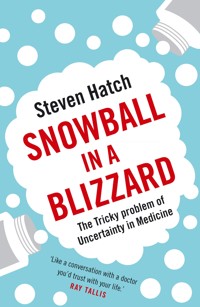
LONGLISTED FOR THE THE BMA MEDICAL BOOK AWARDS According to a wry saying among radiologists, finding a tumour in a mammogram is like finding a snowball in a blizzard. Up to thirty percent of breast-cancer diagnoses are given to those who have no cancer at all. Medicine is subject to far more uncertainty than we commonly acknowledge. While it is portrayed a science, it can sometimes be scarily close to educated guesswork. Covering everything from the efficacy of Prozac to the regular barrage of health advice by the media, Snowball in a Blizzard is a profound meditation on why it's essential that doctors and their patients know what we don't know. The world is more complicated than we like to believe. Informed by years of frontline medical experience and filled with personal reflections, this important book is filled with counter-intuitive revelations about flawed reasoning, helpful guidance and hard-earned insight. It will change the way you view the health of yourself, your loved ones or your patients.
Das E-Book können Sie in Legimi-Apps oder einer beliebigen App lesen, die das folgende Format unterstützen:
Veröffentlichungsjahr: 2016
Ähnliche



















FOR MY MOTHER AND FATHER
sorry, Pops, wish I coulda got it done sooner
Contents
Author’s Note
Foreword
Introduction
1Primum Non Nocere: The Motivations and Hazards of Overdiagnosis
2 Vignette: The Perils of Predictive Value
3 Snowball in a Blizzard
4 The Pressures of Managing Pressure
5 Lyme’s False Prophets: Chronic Fatigue, Tick-Borne Illness, and the Overselling of Certainty
6 The Origins of Knowledge and the Seeds of Uncertainty
7 The Correlation/Causation Problem, or Why Dark Chocolate May Not Lower Your Risk of Heart Failure
8 “Health Watch”: Hype, Hysteria, and the Media’s Overconfident March of Progress
9 Conclusion: The Conversation
Acknowledgments
Appendix: A Very Nonmathematical Description of Statistical Significance
Bibliography
Index
*Answers may require years of studying (real studying, not humanities studying) to be understood and will be expressed in terms of probability rather than absolute certainty.
—C. G. P. GREY
The diagnostic enterprise hinges on an optimistic notion that disease is part of a natural world that only awaits our understanding. But even if this is true, nature gives up its secrets grudgingly, and our finite senses are in some ways ill-suited to extracting them.
—GARY GREENBERG
Author’s Note to the International Edition
THIS BOOK IS A SURVEY OF THE LANDSCAPE OF UNCERTAINTY IN MODERN medicine. My goal is to give the reader a sense of the challenges that can be found in all areas of medicine, which means that I cover a broad swath of topics ranging from cancer to women’s health to cardiovascular disease to infectious disease and others besides. It is a wide overview, although I do not try to sacrifice depth in the process.
Because I practice medicine in the States, my preoccupations naturally involve the culture and philosophy of American medicine. The financing of medicine in the UK allows for a more rational allocation of resources, which minimizes or eliminates altogether some of the more perverse incentives that make US per capita spending on health nearly double that of almost every other highly industrialized country (even though the outcomes are no better, and are probably worse). That said, overdiagnosis and overtreatment are very real phenomena not just in the US but throughout the developed world, including the UK. They result from the collision between ever-advancing technologies and the uncertainties inherent in any automated system that purports to inform us about the world. We also tend to have a collective, partially misplaced faith that such technologies tidily solve all diagnostic and treatment dilemmas.
Indeed, it is the British medical establishment that has been in the vanguard of identifying and discussing the problems unleashed by uncertainty in medicine. Dr. Iona Heath, a London physician who recently retired from the NHS, has over the past several years written a series of eloquent essays focused on overdiagnosis and overtreatment, and the British Medical Journal has been one of the most receptive forums in the profession for considering the consequences of too much medicine.
In terms of wider medicine, disease is disease, and the physiology of a heart attack is no different in Leeds as it is in Las Vegas. However, Lyme disease, which I discuss in chapter five, remains mostly an American pathology—“pathology” both in the sense of what the odd little bacterium Borrelia does to its human host, as well as the profound anxiety that the condition produces, along with the consequent misunderstandings between patients and doctors. But ticks live everywhere in the world, and the diseases they transmit to humans with their bites are beginning to be appreciated in the UK and Europe just as in the US. Moreover, the kind of organized anti-rationalism that the believers in so-called chronic Lyme practice in the US has parallels in the UK. Previously it came mainly in the form of opposition to vaccination, but we are seeing the Lyme controversy surface in the UK as well, with the group Lyme Disease Action UK serving as a possible analogue to the Stateside pseudoscience-based organization ILADS that I discuss in that chapter.
The health system in the UK brings some of its own problems, given the top-down management of the National Health Service as well as its tight budgetary constraints. Communication is a topic I take up at the conclusion of the book and is at the heart of broaching uncertainty in medicine. It is also the number one issue that results in complaints to the UK Parliamentary and Health Service Ombudsman. The notion of “ICU rounds,” which I explain in detail, may come as something of a surprise to British readers, but the practice has caught on here in the US, in no small part because of the huge benefits to be had with improved communication between the medical staff and patients and their families. There is much to suggest that what thoughts I have on redefining the role between doctor and patient may be even more important in the UK than the US.
As noted in the Acknowledgements, I am grateful to many colleagues who have provided their insights in areas beyond any clinical expertise I possess. If I have made any penetrating or illuminating observations in this book, the entirety of credit should go to them. But any inaccuracies, misrepresentations of fact, or failures of communication are due to me and me alone.
Newton, Massachusetts, andMonrovia, Liberia, February 2016
Foreword
IT IS COLD AND RAINING OUTSIDE THE HOSPITAL—TYPICAL FOR THIS TIME of year. Rounds are about to start in the Intensive Care Unit. It’s going to be a long day, as the unit is full. There are many tests that will need to be ordered and reviewed, many treatment options to consider, and many conversations with patients and family members that will need to take place. The charge nurse calls for the team to gather: the lead attending physician, the nurses, the pharmacist, the social worker, a medical resident. The difficult business of tending to patients on the edge of life is beginning its daily cycle.
The first stop is the room of a seventy-year-old woman who came to the emergency room with abdominal pain. Her symptoms began a little more than a day before she called the ambulance and got progressively worse during that time. By the time she came to the ER the night before, she was pale, and her skin was cool and clammy. Her blood pressure was low, which is why she was sent to the ICU.
Now, twelve hours later, her pressure continues to remain low, and she has been given special medications called “pressors” to boost it. She is awake but drowsy, and she doesn’t respond much to questions. The team sweeps in and gathers around the bedside, looking over the paper chart, logging in to the portable laptop computer to review the labs, shuffling around to accommodate the group in the small space.
The patient’s daughter and husband sit nearby. They are not asked to leave.
The medical resident summarizes the case for the team. Since coming in to the hospital, the patient has been given fluids and antibiotics. The resident explains that the on-call radiologist performed an abdominal ultrasound the previous evening.
“Why didn’t we get a CAT scan?” the attending physician asks.
“Her creatinine was 1.4,” the resident responds. “They wouldn’t give her the contrast.”
“So what did it show?”
“Normal bowel gas pattern, liver looked okay, not much else.”
“Do we know why her kidney function is so low?”
“No, we don’t,” says the resident, who then offers a few thoughts as to what might be the cause and how it might be worked up. “I think if she doesn’t improve, then we should call radiology and push for the CAT scan.”
“We could throw her into ATN,” the patient’s nurse observes. “And it may not help us with the diagnosis.”
None of this technical language is translated for the family, and the team doesn’t stop to unpack the subtleties of the diagnostic dilemma. This is rounding as it’s been done for generations in medicine: a highly specialized, fast-paced discussion to consider what is going on and what more needs to be done to restore a patient to health. What makes these rounds unusual is that this discussion is taking place directly in front of the family. There is no attempt to make it anything other than what it is, so the family has a direct window on how the team “really” functions. And although they have understood little of the jargon being bandied about, they heard the phrase “no, we don’t” quite clearly and understood exactly what that meant.
The discussion continues for several more minutes. They examine the patient, itemize the various issues involved in her care, and formulate a detailed plan for the day. At the end, as the team readies itself for the next patient, the attending physician turns to the husband and daughter and explains, this time in the language of laypeople, the plan, which mainly revolves around finding the cause of the pain and the low blood pressure. Finally, he asks if they have any questions.
“So, you don’t know why she’s sick?” the daughter asks.
“Right now, I’m not sure.”
“And you think it’s a good idea to get this CAT scan, or not?”
“At the moment, I’m not sure. I want some more tests to return before I decide on that. Normally the CAT scan in this case is the best test we could order, but with her that carries some real risk, mainly because of the fact that the contrast we use can damage the kidneys, sometimes irreversibly.”
“Do you think she needs antibiotics?”
“Yes. Of that, I’m pretty sure, at least until we have some other explanation that would clearly indicate we can safely stop them.”
And with that, the team leaves.
What this family just witnessed was a discussion in which they heard the phrases “we don’t know” and “I’m not sure” more than once. To some laypeople, that may smack of clinical incompetence or cluelessness, but actually such phrases are common currency in medical rounds. Nothing about this example is particularly unusual. Patients with unknown conditions and diagnostic dilemmas like hers are medicine’s daily bread. Yet, far from creating anxiety and distress, the husband and the daughter are satisfied with the care she is receiving, and the frank admissions of uncertainty leave them more confident in the team than they would be if they had not been allowed to observe rounds in its unadorned state.
The example is fictitious.
But this ICU, where doctors and nurses and other health professionals openly confess to uncertainty, in plain sight of patients and families, is real.
INTRODUCTION
There are known knowns; there are things we know that we know. There are known unknowns, that is to say, there are things that we know we don’t know. But there are also unknown unknowns; there are things we do not know we don’t know.
—SECRETARY OF STATE DONALD RUMSFELD, 2002
How do we know that medicines work? How do we know that a blood test can unlock the mysteries of the body or that eating a particular diet may allow us to live longer? For instance, everyone knows with the kind of certainty that the earth revolves around the sun that smoking causes lung cancer, even though many of us have witnessed firsthand smokers who lived to old age as well as nonsmokers cut down by the disease. So why are we so confident of the harms of smoking? What allows public health officials to take to the airwaves and make that pronouncement with such certainty? Certainty brings a sense of comfort, but we do not often consider how we arrived at it.
Many of us take for granted that we live in an age of medicine where, to put it quite simply, we know what we are doing. We can read about common treatments for ailments that afflicted people in previous centuries and think to ourselves I’m sure glad I didn’t live in that time. We look back at the confidence that doctors had in bloodletting, purgatives, and poultices of dung with horror; we see the faith of healers around the world in herbal remedies that we know are no match for our knowledge of biochemical molecular mechanics, which forms the basis of what we now call rational drug design.
If you had to ask someone who knew a little of the history of medicine about when it became modern, they’d say the transformation took place over about fifty years spanning the late nineteenth and early twentieth centuries. They would cite early precedents that indicated change was soon to come, like the creation of that ubiquitous tool of medicine, the stethoscope (1816), the dawn of modern anesthesia at Massachusetts General Hospital (1846), John Snow’s detective work on cholera in London that basically founded modern epidemiology (1854), and so on. But the development of biochemistry by the 1880s, with its increasingly sophisticated ability to identify, purify, and even synthesize physiologically active compounds, really marked the turning point for medicine as a scientific discipline. This was followed in quick succession by the discovery of X-rays in 1895 and the development of the EKG in the early 1900s, which we still use today almost exactly as we did then. Everything that came before these advances was largely quackery, and everything after, largely rational.
This is, of course, an imagined generalization, as well as an oversimplification, but I don’t think it stretches credulity to suggest that many people harbor some kind of notion like this about medicine. During the twentieth century, they would say, medicine could finally stand alongside its “harder” brethren of physics and chemistry and claim to be modern without a trace of irony. The reason we would allow ourselves to be subject to the ravages of some phenomenally toxic treatments for, say, pancreatic or bone marrow cancer, and regard equally toxic treatments doled out in 1750 for dropsy as something just short of manslaughter, is because we know that the cancer treatments can prolong life. We have science to shed light on the situation, and science not only separates the wheat from the chaff, but it invents new treatments by its intimate knowledge of the body at the molecular level, and not by running off into the forest gathering nuts and leaves helter-skelter, administering them to patients in an equally random manner.
Make no mistake, this depiction of medicine has much truth behind it. The advent of biochemistry really did allow for much more highly effective treatments, and early radiology set the stage for a quantum leap in the quality of diagnoses over the next several decades. Moreover, this period saw the rise of regulatory agencies that forced drug manufacturers to market their products based only on narrow indications for the diseases they could prove to treat, and state laws gave physicians and apothecaries rigorously trained in the sciences an almost complete monopoly on the business of healing. In the eighteenth century, pretty much anyone, anywhere in the West, no matter their level of education and scientific training, could hang up a shingle, call themselves “doctor,” and treat patients in whatever way they saw fit. Yet in the age of modern medicine, about the past hundred years, if one did this without possessing the proper credentials, one would likely face jail time.
Lesen Sie weiter in der vollständigen Ausgabe!
Lesen Sie weiter in der vollständigen Ausgabe!
Lesen Sie weiter in der vollständigen Ausgabe!
Lesen Sie weiter in der vollständigen Ausgabe!
Lesen Sie weiter in der vollständigen Ausgabe!
Lesen Sie weiter in der vollständigen Ausgabe!
Lesen Sie weiter in der vollständigen Ausgabe!
Lesen Sie weiter in der vollständigen Ausgabe!
Lesen Sie weiter in der vollständigen Ausgabe!
Lesen Sie weiter in der vollständigen Ausgabe!
Lesen Sie weiter in der vollständigen Ausgabe!
Lesen Sie weiter in der vollständigen Ausgabe!
Lesen Sie weiter in der vollständigen Ausgabe!
Lesen Sie weiter in der vollständigen Ausgabe!
Lesen Sie weiter in der vollständigen Ausgabe!




