


49,99 €
Mehr erfahren.
- Herausgeber: John Wiley & Sons
- Kategorie: Geisteswissenschaft
- Sprache: Englisch
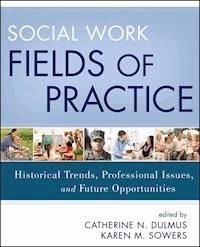
A contemporary look at social work practice and the many career possibilitieswith detailed coverage of important new and emerging trends
As the practice of social work continues to diversify, students need a clear picture of the current state of the field and an up-to-date source of information and guidance on emerging career opportunities. Social Work Fields of Practice provides both.
Written by a team of experts in their respective specialties, this book features a comprehensive overview of contemporary social work practice, discussing historical trends and demographics, professional issues, ethics, and diversity for each practice area. Both traditional areas and new fields are considered from a variety of perspectives, including the clinical, ethical, cultural, legal, theoretical, and technological.
Addressing the Council on Social Work Education's required competencies for accreditation (EPAS), Social Work Fields of Practice contains pedagogical features such as Key Terms, Review Questions for Critical Thinking, and Online Resources. It is the most timely, all-encompassing resource of its kind, covering:
- Child welfare
- Family-centered practice
- School social work
- Substance abuse
- Mental health
- Social work disability practice
- Gerontological social work
- Forensic social work
- Veterinary social work
- Military social work
- International social work
- Social work practice with immigrant and indigenous populations
With expert, in-depth discussions of the most important specialties and practice environments for today's social worker, Social Work Fields of Practice is an invaluable resource for undergraduate and graduate students preparing to enter this noble profession, as well as social workers seeking to expand their professional horizons.
Sie lesen das E-Book in den Legimi-Apps auf:
Seitenzahl: 868
Veröffentlichungsjahr: 2012
Ähnliche


















Table of Contents
Title Page
Copyright
Dedication
Preface
About the Editors
Contributors
Chapter 1: Child Welfare and Social Work Practice
History of Social Work and the Child Welfare Partnership
Current Status of Child Welfare: Issues, Practice, and Controversies
Toward Reprofessionalization in Child Welfare: Recruitment, Retention, and Agency/University Title IV-E Partnerships
Professionalizing and Improving Child Welfare
Conclusion
Notes
Key Terms
Review Questions for Critical Thinking
Online Resources
References
Chapter 2: Family-Centered Practice
Family-Centered Practice
Eight Core Principles Organize Family-Centered Practice
Theoretical Framework for Family-Centered Practice
Family-Centered Programs
Conclusions
Key Terms
Review Questions for Critical Thinking
Online Resources
References
Chapter 3: School Social Work
Importance of School Social Work Practice
Definition of School Social Work Practice
History of School Social Work
Professional Organizations, Credentials, and Standards for School Social Workers
Current Statistics About Numbers of School Social Workers
Research on Tasks and Roles of School Social Workers
School-Based Practices and Program Innovations Impacting School Social Work
Multiple Responsibilities and Professional Ethics in School Social Work Practice
Current Social Work Settings in Public Schools
Administrative and Funding Configurations of School Social Work Service Delivery
Current Practice Models and Interventions in Use
Interventions With the School
Current Assessment Models
Trends and Issues in Practice
Future Issues
Conclusion
Key Terms
Review Questions for Critical Thinking
Online Resources
References
Chapter 4: Substance Abuse
Holistic View
Overview of Substance Abuse Problems
Assessment Instruments
Intervention: The Transtheoretical Model and Motivational Interviewing
Social Support Systems
Social Workers as Preventionists
Cultural Considerations: Ethnicity
Broader Cultural Considerations
Conclusions
Key Terms
Review Questions for Critical Thinking
Online Resources
References
Chapter 5: The Mental Health Field of Practice
Narrative
Linking Social Welfare/Public Policy to Clinical Practice
The Civil Rights of Institutionalized Persons Act of 1980 (CRIPA)
Conclusion
Key Terms
Review Questions for Critical Thinking
Online Resources
References
Chapter 6: Social Work Disability Practice
Intersection of Human Categorization and Diversity
Multiculturalism, Category Identity, and Diversity
Explanatory Legitimacy
Embodied and Constructed Explanations
Disjuncture
Social Work Practice: Healing the Disjuncture Between Bodies and Environments
Conclusion
Key Terms
Review Questions for Critical Thinking
Online Resources
References
Chapter 7: Geriatric Social Work
Practice Challenges
Social Workers for the Geriatic Community
Current and Future Directions
Assessment and Intervention
Intervention
Family or Informal Case Management
Formal Case Management: Community-Based Care
Key Terms
Review Questions for Critical Thinking
Online Resources
References
Chapter 8: Forensic Social Work
What the Statistics Show
History of Social Work and Corrections
A Rich Tradition in the Social Work Correctional Literature
Promising Trends in Education
Evidence-Based Research
A Strengths Perspective
Current Status of Forensic Social Work
Contrasting Values: Criminal Justice and Social Work
Restorative Justice: A Bridge Between Criminal Justice and Social Work
Challenges for the Future
Conclusion
Key Terms
Review Questions for Critical Thinking
Online Resources
References
Chapter 9: Veterinary Social Work Practice
The Development of Veterinary Social Work
The Human–Animal Relationship
The Link Between Human and Animal Violence
Animal-Assisted Interactions
Grief and Bereavement
Compassion Fatigue Management
Veterinary Social Work and the Ethics of Practice
Current and Future Directions
Conclusion
Key Terms
Review Questions for Critical Thinking
Online Resources
References
Chapter 10: Social Work Practice With the Military
History of Military Social Work
Importance of Social Work Practice With the Military
Definition of Military Social Work
Military Culture
Roles of Military Social Workers
Military Structures and Services Systems in the United States
The Future of Military Social Work
Key Terms
Review Questions for Critical Thinking
Online Resources
References
Chapter 11: International Social Work Practice
Definitions
History
The Search for Global Standards for Social Work Education and a Global Definition of Social Work: Universalism Versus Indigenization?
The Rationale for International Social Work
Barriers to Success in International Social Work
International Social Welfare Organizations
2011: The Global Dimension in Local Practice: Local Is Global and Global Is Local
Theoretical Frameworks and International Social Work Research
Conclusion
Notes
Key Terms
Review Questions for Critical Thinking
Online Resources
References
Chapter 12: Immigrant and Indigenous Populations
Special Populations: Roots of Diversity and Tension
Family System as a Superorganic Structure
Collectivity and Culture
Research on Special Populations
Emergent Methodologies
Diverse Identities in Special Populations
Developing Theories: Resilience and Relational Well-Being
Conclusions
Key Terms
Review Questions for Critical Thinking
Online Resources
References
Chapter 13: Diversity
Diversity and Social Work Paternalism
Diversity and Social Work Pioneers
Diversity and Contemporary Social Work Organizations
Diversity of Theoretical Frameworks
Case Study
Conclusion
Key Terms
Review Questions for Critical Thinking
Online Resources
References
Author Index
Subject Index
Cover image: iStockphoto
This book is printed on acid-free paper.
Copyright © 2012 by John Wiley & Sons, Inc. All rights reserved.
Published by John Wiley & Sons, Inc., Hoboken, New Jersey.
Published simultaneously in Canada.
No part of this publication may be reproduced, stored in a retrieval system, or transmitted in any form or by any means, electronic, mechanical, photocopying, recording, scanning, or otherwise, except as permitted under Section 107 or 108 of the 1976 United States Copyright Act, without either the prior written permission of the Publisher, or authorization through payment of the appropriate per-copy fee to the Copyright Clearance Center, Inc., 222 Rosewood Drive, Danvers, MA 01923, (978) 750-8400, fax (978) 646-8600, or on the web at www.copyright.com. Requests to the Publisher for permission should be addressed to the Permissions Department, John Wiley & Sons, Inc., 111 River Street, Hoboken, NJ 07030, (201) 748-6011, fax (201) 748-6008.
Limit of Liability/Disclaimer of Warranty: While the publisher and author have used their best efforts in preparing this book, they make no representations or warranties with respect to the accuracy or completeness of the contents of this book and specifically disclaim any implied warranties of merchantability or fitness for a particular purpose. No warranty may be created or extended by sales representatives or written sales materials. The advice and strategies contained herein may not be suitable for your situation. You should consult with a professional where appropriate. Neither the publisher nor author shall be liable for any loss of profit or any other commercial damages, including but not limited to special, incidental, consequential, or other damages.
This publication is designed to provide accurate and authoritative information in regard to the subject matter covered. It is sold with the understanding that the publisher is not engaged in rendering professional services. If legal, accounting, medical, psychological or any other expert assistance is required, the services of a competent professional person should be sought.
Designations used by companies to distinguish their products are often claimed as trademarks. In all instances where John Wiley & Sons, Inc. is aware of a claim, the product names appear in initial capital or all capital letters. Readers, however, should contact the appropriate companies for more complete information regarding trademarks and registration.
For general information on our other products and services please contact our Customer Care Department within the United States at (800) 762-2974, outside the United States at (317) 572-3993, or via fax (317) 572-4002.
Wiley publishes in a variety of print and electronic formats and by print-on-demand. Some material included with standard print versions of this book may not be included in e-books or in print-on-demand. If this book refers to media such as a CD or DVD that is not included in the version you purchased, you may download this material at http://booksupport.wiley.com. For more information about Wiley products, visit www.wiley.com.
Library of Congress Cataloging-in-Publication Data:
Social work fields of practice : historical trends, professional issues, and future opportunities / [edited by] Catherine N. Dulmus, Karen M. Sowers.
p. cm.
Includes bibliographical references and index.
ISBN 978-1-118-17692-4 (pbk.)
ISBN 978-1-118-26487-4 (ebk)
ISBN 978-1-118-24026-7 (ebk)
ISBN 978-1-118-22724-4 (ebk)
1. Social servic—Practice—United States. 2. Social workers—United States. I. Dulmus, Catherine N. II. Sowers, Karen M. (Karen Marlaine)
HV40.8.U6S63 2012
361.3′20973—dc23
We proudly and lovingly dedicate this book to each of our sons
Joshua Benjamin Dulmus
Son, brother, husband, father of precious Rachael, trusted friend, social worker, avid Buffalo Bills and Yankees fan
Michael Wilken Hoag
Preface
The profession of social work is more than 100 years old. As with any dynamic profession, the fields of social work practice have changed in scope and depth to reflect the changing demographics, social problems, and socioeconomic patterns. Despite the varied functions and methods of our profession, it has always been committed to social justice and the promotion of well-being for all. The profession has made great strides and is experiencing a resurgence of energy, commitment, and advancement as we shape our profession to address current and anticipated realities. This book is designed as a beginning introductory text on the fields of practice in social work for undergraduate and graduate students in social work programs. The text provides a broad overview of the traditional and emerging fields in the profession. This book addresses the Council on Social Work Education (CSWE) required competencies for accreditation. Specifically, the book addresses the following required accreditation competencies:
Educational Policy 2.1.4: Engage diversity and difference in practice
Educational Policy 2.1.5: Advance human rights and social and economic justice
Educational Policy 2.1.7: Apply knowledge of human behavior and the social environment
Educational Policy 2.1.9: Respond to the contexts that shape practice
The 13 chapters that comprise this edited text represent the core fields of practice in social work. Whether at the undergraduate or graduate level, the materials in this text provide students with a broad, yet comprehensive overview of the breadth of practice, highlighting the critical importance of specific practice areas while also introducing new and emerging fields of practice in social work such as military social work, veterinary social work, and international social work practice. Chapter offerings also include the growing fields of gerontology, substance abuse counseling, and mental health practice with additional chapters focusing on fields of practice that are deeply rooted in our profession, such as child welfare, school social work, and family-centered practice. Chapters on diversity and immigrant and indigenous populations recognize the commitment of our profession to working with culturally diverse people in effective, relevant, and meaningful ways.
This edited work is written by leading social work scholars in their own fields of practice. Each chapter provides an overarching question for reflection at the beginning of each chapter to spur students' critical thinking while reading the material. At the end of each chapter, a list of key terms, review/discussion questions, and relevant web resources are provided.
As our world has become ever more complex, so have our social problems. The social work profession has made great strides in developing new fields of practice and new knowledge and technologies to advance our efficacy in addressing the multilevel and complex social issues facing us today. Given our rapidly changing world, it seems imperative to provide a current perspective on the fields of practice in social work. The content in this book is contemporaneous and reflects our current state of practice as well as creative solutions to both old and emerging trends in practice.
As editors, we have endeavored to create a contemporary work grounded in the values, ethics, and ideals of our profession. We are particularly grateful to our esteemed chapter authors who contributed to this book. Their expertise and thoughtfulness have made this book a text that is substantial and relevant. Their excitement and commitment to our profession and to their specific fields of practice are evident in each of their chapters. As social workers, we invite you to consider the great breadth and versatility of this great profession. No matter what area of social work practice may intrigue you the most, you can be assured that your work will make a difference in profound ways!
Catherine N. DulmusKaren M. Sowers
About the Editors
Catherine N. Dulmus, PhD, is Professor, Associate Dean for Research, and Director of the Buffalo Center for Social Research at the University at Buffalo, and Research Director at Hillside Family of Agencies in Rochester, NY. She received her baccalaureate degree in Social Work from Buffalo State College in 1989, her master's degree in Social Work from the University at Buffalo in 1991, and a doctoral degree in Social Welfare from the University at Buffalo in 1999. Dr. Dulmus is a researcher with interests that include community-based research, child and adolescent mental health, evidence-based practice, and university-community partnerships, and has made recent contributions that focus on fostering interdependent collaborations among practitioners, researchers, schools, and agencies critical in the advancement and dissemination of new and meaningful knowledge. She has authored or coauthored several journal articles and books and has presented her research nationally and internationally. Prior to being awarded a PhD, her social work practice background encompassed almost a decade of experience in the fields of mental health and school social work.
Karen M. Sowers, PhD, is Professor and Dean of the College of Social Work at the University of Tennessee, Knoxville. She is the University of Tennessee, Knoxville Beaman Professor for Outstanding Research and Service. Dr. Sowers received her baccalaureate degree in Sociology from the University of Central Florida, and her master's degree and PhD degree in social work from Florida State University. Dr. Sowers serves on several local, national, and international boards. Dr. Sowers is nationally known for her research and scholarship in the areas of international practice, juvenile justice, child welfare, cultural diversity, and culturally effective intervention strategies for social work practice, evidence-based social work practice, and social work education.
Contributors
Chapter 1
Child Welfare and Social Work Practice
Robin E. Perry and Alberta J. Ellett
Child welfare, as it is generally recognized and discussed in this chapter, includes child protective services, foster care, adoption services for children and their families, and, increasingly, prevention of child maltreatment. As a specialization, child welfare has a long and rich history within the profession of social work. The work in child welfare is perhaps more complex than any social work practice area due to the risk of serious injury to children in multiproblem families, federal mandates, public scrutiny, court and multiple oversight mechanisms, underfunding, and high employee turnover. This important work needs the attention of professional social workers with the knowledge, skills, abilities, and values to work with clients affected by parental conditions such as substance abuse, mental illness, limitations, and involvement with the legal system. Unlike in most areas of social work, child welfare workers regularly make home visits to work with their clients and to transport children and parents (typically using their own vehicles). They are expected to make expert decisions about child safety, and spend considerable time in court with their cases. In addition, child welfare work is situated within a complex external sociopolitical environment that influences the size, minimum qualifications, and direction of the workforce, funding for employees and services to clients, continuously changing legal mandates and attendant practice issues, and ongoing public scrutiny. Thus, recruiting and retaining professional social workers to do this important work while remaining committed to child welfare is an ongoing challenge.
Pecora, Whitaker, Maluccio, Bart, and Plotnick (2000) cite the American Humane Association when reporting an estimated increase in reports of maltreatment from 669,000 in 1976 to 2,178,000 in 1987. By the 1990s, the rate of maltreatment in the United States was being referred to as an epidemic (U.S. Advisory Board on Child Abuse and Neglect, 1990). Four National Incidence Studies provide the best incidence data on maltreatment
to date. Although there have been some modifications in procedures used, debate regarding the significance and meaning of findings and recommended modifications to future studies (Children's Bureau, 2000; King, Trocmé, & Thatte, 2003; Rogers, Gray, & Aitken, 1992; Sedlak, 2001), the National Incidence Studies conducted in 1979 to 1980 (NIS-1), 1986 to 1987 (NIS-2), and 1993 to 1995 (NIS-3) suggest an increase in the rate of maltreatment incidence (as a rate per 1,000) from 9.8 to 23.1 or from 625,000 to 1,553,800 incidents (Sedlak, 1988, 1991; Sedlak & Broadhurst, 1996). Reports of maltreatment by state officials may not capture the true incidence rates of maltreatment.
In 1995, data collected via the National Child Abuse and Neglect Data System (NCANDS) reported that approximately 1.1 million children were victims of abuse and neglect (a figure significantly less than NIS-3 estimates in 1993 to 1995) and a victimization rate of approximately 15 children per 1,000 (U.S. Department of Health and Human Services, 1997). This rate of victimization resulted from nearly two million reports of maltreatment related to three million estimated children. These same reports suggest a decrease in the victimization rate between 2001 and 2009 (U.S. Department of Health and Human Services, 2003, 2004, 2005, 2006, 2010) from 12.5 children per 1,000 to 10.1 children per 1,000. Regardless, the estimated 762,940 victims that came to the attention of child welfare agencies in 2009 is a significant number. The observed decrease in victimization rate, however, is not realized in the rate of report of maltreatment. Between 2001 and 2009, the rate (and number) investigated from maltreatment has increased from 43.2 children per thousand children (3,136,000 children) to 48.1 children per thousand (3,635,686 children). The most recent NIS-4 study (on data collected between 2005–2006) corroborates some of these observed trends, reporting a decrease in the child maltreatment rate between 1993 and 2005–2006 from 23.1 children per thousand to 17.1 children per thousand. There was also a slight decrease in the national incidence of endangerment standard from 41.9 to 39.5 children per thousand across the two studies (Sedlak et al., 2010). Although noteworthy gains have been made in reducing the rate of maltreatment in the United States over the past decade, child maltreatment is still an issue of concern for society.
Lesen Sie weiter in der vollständigen Ausgabe!
Lesen Sie weiter in der vollständigen Ausgabe!
Lesen Sie weiter in der vollständigen Ausgabe!
Lesen Sie weiter in der vollständigen Ausgabe!
Lesen Sie weiter in der vollständigen Ausgabe!
Lesen Sie weiter in der vollständigen Ausgabe!
Lesen Sie weiter in der vollständigen Ausgabe!
Lesen Sie weiter in der vollständigen Ausgabe!
Lesen Sie weiter in der vollständigen Ausgabe!
Lesen Sie weiter in der vollständigen Ausgabe!
Lesen Sie weiter in der vollständigen Ausgabe!
Lesen Sie weiter in der vollständigen Ausgabe!
Lesen Sie weiter in der vollständigen Ausgabe!
Lesen Sie weiter in der vollständigen Ausgabe!




