


22,99 €
Mehr erfahren.
- Herausgeber: John Wiley & Sons
- Kategorie: Fachliteratur
- Sprache: Englisch
Soft Skills for the Professional Services Industry Auditors, accountants, lawyers, consultants, and other highly educated and trained professionals frequently hold impressive credentials and offer clients specialized expertise in complex areas. At the same time, these professionals understandably focus on the analytical and technical components of their jobs, sometimes to the point of excluding or ignoring important soft skills critical to the success of their careers and practices. In Soft Skills for the Professional Services Industry: Principles, Tasks, and Tools for Success, veteran auditor and entrepreneur Andreas Creutzmann delivers an essential discussion of often overlooked professional competencies that can mean the difference between career, engagement, and business success or failure. In the book, you'll find accessible guidance on critical soft skills that can make a difference between fulfilment and success and failure on a professional and personal level. You'll learn to handle the blending of home and the home office, how to effectively manage staff, how to market yourself and your firm, practical strategies for client and colleague communication, and how to find happiness in your day-to-day work. Each chapter stands alone and can be read in any order. They provide professionals with invaluable skills for navigating the modern--and digital--reality of work, showing you how to combine your professional education with the latest research and common sense on everything from client management to firm marketing. Soft Skills for the Professional Services Industry uses the field of auditing as a template and guide, but it is highly relevant to all skilled professionals - including lawyers, consultants, medical professionals, and others. The book is a must-read for any knowledge worker trying to add to their toolbox of practical skills. Critical guidance for practicing professionals on how to build often overlooked soft skills Most highly educated and trained professionals aren't lacking in analytical or technical skills. Lawyers know the law, accountants understand double entry bookkeeping, and doctors know anatomy. However, many of us are less familiar with often overlooked--and equally essential--soft skills: client management, communication, staff and employee management, and others. In Soft Skills for the Professional Services Industry, accomplished auditor, entrepreneur, and consultant Andreas Creutzmann walks you through how to build critical competencies, from self-marketing to balancing work and life when your office is in your house. The book is made up of numerous, self-contained chapters that can be read in any order, and it demonstrates how to navigate increasingly digital and insistent professional demands on your time, effectively manage client and colleague relationships, and sell new clients on the services your firm offers. An essential roadmap to achieving personal and career success, Soft Skills for the Professional Services Industry is an indispensable resource for lawyers, doctors, accountants, auditors, and any other extensively skilled professional. It offers practical tools in functional areas that are frequently neglected in formal professional training.
Sie lesen das E-Book in den Legimi-Apps auf:
Seitenzahl: 421
Veröffentlichungsjahr: 2022
Ähnliche



















Table of Contents
Cover
Additional Praise for
Soft Skills for the Professional Services Industry
Title Page
Copyright
Dedication
Foreword
Preface
Acknowledgments
Introduction: Professionals in a Digital World
PART I: Principles of Successful Professionals
CHAPTER 1: Self‐Responsibility
LAW OF CAUSE AND EFFECT
LAW OF FAITH
LAW OF EXPECTATIONS
LAW OF ATTRACTION
LAW OF CORRESPONDENCE
CHAPTER 2: Result Orientation
SIMILARITIES BETWEEN TOP ATHLETES AND PROFESSIONALS
CHARACTER TRAITS AND TRAITS OF SUCCESSFUL TOP ATHLETES
SUCCESS FACTORS OF ACCOMPLISHED TOP ATHLETES AND PROFESSIONALS
GOAL CLARITY AND WILLPOWER
TRAINING
STRONG TEAM
MENTAL STRENGTH
PHYSICAL STRENGTH (FITNESS)
REGENERATION PHASES
CONCLUSION ON THE PRINCIPLE OF RESULTS ORIENTATION
CHAPTER 3: Focus
THE FOCUSING QUESTION
THE SUCCESS HABIT
THE PATH TO GREAT ANSWERS
CHAPTER 4: Leverage Strengths
CHAPTER 5: Think Positively
CHAPTER 6: Action Orientation
PART II: Tasks
CHAPTER 7: Marketing
MARKETING STRATEGY
BRAND STRATEGY
SERVICE STRATEGY
PRICE STRATEGY
MARKETING ACTIVITIES
MARKETING ACTIVITIES FOR PROFESSIONALS
NETWORKING SKILLS OF RAINMAKERS
MARKETING ACTIVITIES FOR EXPERT POSITIONING
MARKETING ACTIVITIES FOR COMPANIES
CHAPTER 8: Setting Goals
SETTING PERSONAL GOALS
FIND YOUR PURPOSE IN LIFE
CORPORATE GOALS
CHAPTER 9: Planning and Organizing
CHAPTER 10: Decision Making
CHAPTER 11: Developing and Promoting People
AD 1: NEW HIRES
AD 2: ALREADY EXISTING EMPLOYEES
CHAPTER 12: Control
PART III: Tools
CHAPTER 13: Self‐Management
EFFECTIVE AND SUCCESSFUL SELF‐MANAGEMENT
TIME BLOCKS FOR DOWNTIME
TIME BLOCKS FOR THE ONE THING
TIME BLOCKS FOR SCHEDULING
FIGHT THE FOUR THIEVES OF PRODUCTIVITY
THE INABILITY TO SAY “NO”
THE FEAR OF CHAOS IN YOUR LIFE IF YOU FUNDAMENTALLY CHANGE IT
UNHEALTHY HABITS
YOUR IMMEDIATE ENVIRONMENT DOES NOT SUPPORT YOU IN YOUR GOALS
THE THREE SELF‐COMMITMENTS
START THE JOURNEY
CHAPTER 14: Mental Training
ACTIVE MEDITATION
AUTOSUGGESTION
VISUALIZATION TECHNIQUES
CHAPTER 15: Rhetoric
VOICE TRAINING
TRAINING TO IMPROVE THE CONDUCT OF CONVERSATIONS
SPEECH AND PRESENTATION TRAINING
CHAPTER 16: Effective Communication Tools
AD 1: MEETINGS
AD 2: PHONE OR VIDEO CONFERENCES
AD 3: PRESENTATIONS OR SPEECHES
CHAPTER 17: Work‐Life‐Balanced‐Scorecard
BALANCED SCORECARD AS A MODEL FOR THE WORK‐LIFE‐BALANCED‐SCORECARD
TRANSFERRING THE CONCEPT OF THE BSC TO PRIVATE LIFE
WORK AND PERFORMANCE
BODY AND HEALTH
FAMILY AND FRIENDS
MEANING AND VALUES
HOW DOES BALANCE COME ABOUT?
Conclusion: Outlook into the Future
About the Author
Bibliography
Index
End User License Agreement
List of Tables
Introduction: Professionals in a Digital World
TABLE I.1
—PRINCIPLES, TASKS, AND TOOLS
Chapter 4
TABLE 4.1 Basic Intelligences According to Howard Gardner
Chapter 6
TABLE 6.1 The 16 life motives according to Steven Reiss
Chapter 15
TABLE 15.1 Orientation guide for the use of PowerPoint
List of Illustrations
Chapter 2
FIGURE 2.1 Processes in elite sports and key activities
FIGURE 2.2 Success factors of successful top athletes and professionals
Chapter 3
FIGURE 3.1 Pareto Principle
FIGURE 3.2 Extreme Pareto Principle
FIGURE 3.3 Focus question for the individual areas of life according to Kell...
FIGURE 3.4 The path to great answers
Chapter 5
FIGURE 5.1 Consciousness – subconsciousness – primal knowledge
FIGURE 5.2 Brain waves and states of consciousness
Chapter 7
FIGURE 7.1 Marketing at the level of the company and at the level of the pro...
FIGURE 7.2 Marketing strategy
FIGURE 7.3 Own brand and corporate brand
FIGURE 7.4 Professional as expert or generalist
FIGURE 7.5 Sales pyramid
FIGURE 7.6 Multiplication marketing
FIGURE 7.7 Subject‐matter expert and industry expert
Chapter 8
FIGURE 8.1 Relationship between meaning of life, priorities, and productivit...
FIGURE 8.2 From vision to action according to Keller and Papasan
FIGURE 8.3 Life roles
FIGURE 8.4 Setting goals SMARTly
Chapter 9
FIGURE 9.1 Project management
FIGURE 9.2 Effectiveness and efficiency
Chapter 11
FIGURE 11.1 Characteristics of people according to the DISC personality mode...
FIGURE 11.2 How teamwork succeeds according to Lothar Seiwert and Friedbert ...
Chapter 13
FIGURE 13.1 Relationship between self‐management and tasks and principles
FIGURE 13.2 Six misconceptions of success according to Keller and Papasan
FIGURE 13.3 Six steps to extraordinary success according to Keller and Papas...
FIGURE 13.4 Three keys to personal productivity according to Keller and Papa...
FIGURE 13.5 Exemplary structure of a weekly planning
FIGURE 13.6 The 4 thieves of productivity according to Keller and Papasan
FIGURE 13.7 Energy sources based on Keller and Papasan
FIGURE 13.8 Three self‐commitments according to Keller and Papasan
Chapter 14
FIGURE 14.1 Relationship between mental training and principles and goals
FIGURE 14.2 Levels of mental training
Chapter 15
FIGURE 15.1 Rhetoric training
FIGURE 15.2 Content or subject level and relationship level in communication...
FIGURE 15.3 Five steps to effective communication
FIGURE 15.4 Selected techniques of repartee by Matthias Pöhm
FIGURE 15.5 Seven steps to an effective presentation
Chapter 17
FIGURE 17.1 Life balance based on Seiwert and Peseschkian
FIGURE 17.2 Balanced Scorecard
FIGURE 17.3 From business plan to life plan
FIGURE 17.4 Work‐Life‐Balanced‐Scorecard
Guide
Cover
Table of Contents
Title Page
Copyright
Dedication
Foreword
Preface
Acknowledgments
Introduction: Professionals in a Digital World
Begin Reading
Conclusion: Outlook into the Future
About the Author
Bibliography
Index
End User License Agreement
Pages
i
v
vi
vii
xi
xiii
xiv
xv
xvii
xviii
1
2
3
4
5
6
7
9
10
11
12
13
14
15
16
17
18
19
21
22
23
24
25
26
27
28
29
30
31
32
33
34
35
36
37
38
39
40
41
42
43
44
45
46
47
48
49
50
51
53
54
55
56
57
58
59
60
61
62
63
64
65
67
68
69
70
71
72
73
74
75
76
77
78
79
80
81
82
83
84
85
86
87
88
89
90
91
92
93
94
95
96
97
98
99
100
101
102
103
104
105
106
107
108
109
110
111
112
113
114
115
116
117
118
119
120
121
123
124
125
126
127
128
129
130
131
132
133
134
135
136
137
139
140
141
142
143
144
145
146
147
148
149
150
151
152
153
154
155
156
157
158
159
160
161
162
163
164
165
166
167
168
169
170
171
172
173
175
176
177
178
179
180
181
182
183
184
185
186
187
188
189
190
191
193
194
195
196
197
198
199
200
201
202
203
204
205
206
207
208
209
210
211
212
213
214
215
217
218
219
220
221
222
223
224
225
227
228
229
230
231
232
233
234
235
236
237
238
239
240
241
243
244
245
246
247
248
249
250
251
252
253
254
255
Additional Praise for Soft Skills for the Professional Services Industry
“As we increasingly enter a world of big data, where analytical skills and modeling ability are viewed as the only characteristics that matter, Soft Skills for the Professional Services Industry provides a timely and healthy reminder that without personal skills and emotional stability, modeling and numbers will not get you far.”
—Aswath Damodaran, Professor of Finance, New York University
“Success in the professional services industry requires more than simply being a subject matter expert. I highly recommend Soft Skills for the Professional Services Industry as it is well written and an insightful guide to assist the reader in reaching their full potential.”
—Roger Grabowski, FASA, Managing Director, Valuation Advisory Services, Kroll, LLC
“Andreas Creutzmann's analysis and guide to soft skills is a must‐read for any professional wishing to improve and succeed in their work and indeed broader life!”
—Nicholas Talbot, IVSC Chief Executive
“Andreas Creutzmann's Soft Skills for the Professional Services Industry is a very useful and practical guide to assist consultants in achieving professional success through the development of well‐rounded skills, beyond simply their area of expertise. Anyone providing professional services will benefit from Creutzmann's research‐based advice and tips, particularly in these volatile, uncertain, complex, and ambiguous (VUCA) times!”
—Mark L. Zyla, CPA/ABV, CFA, ASA Managing Director, Zyla Valuation Advisors LLC
Soft Skills for the Professional Services Industry
Principles, Tasks, and Tools for Success
ANDREAS CREUTZMANN
Original edition © IDW Verlag GmbH Düsseldorf, Germany 2019.
This translation © 2022 John Wiley & Sons, Inc., published under license from IDW Verlag GmbH. All rights reserved.
Translated by Anja Blocksdorf‐Cheatham.
Published by John Wiley & Sons, Inc., Hoboken, New Jersey.
Published simultaneously in Canada.
No part of this publication may be reproduced, stored in a retrieval system, or transmitted in any form or by any means, electronic, mechanical, photocopying, recording, scanning, or otherwise, except as permitted under Section 107 or 108 of the 1976 United States Copyright Act, without either the prior written permission of the Publisher, or authorization through payment of the appropriate per‐copy fee to the Copyright Clearance Center, Inc., 222 Rosewood Drive, Danvers, MA 01923, (978) 750‐8400, fax (978) 750‐4470, or on the web at www.copyright.com. Requests to the Publisher for permission should be addressed to the Permissions Department, John Wiley & Sons, Inc., 111 River Street, Hoboken, NJ 07030, (201) 748‐6011, fax (201) 748‐6008, or online at http://www.wiley.com/go/permission.
Limit of Liability/Disclaimer of Warranty: While the publisher and author have used their best efforts in preparing this book, they make no representations or warranties with respect to the accuracy or completeness of the contents of this book and specifically disclaim any implied warranties of merchantability or fitness for a particular purpose. No warranty may be created or extended by sales representatives or written sales materials. The advice and strategies contained herein may not be suitable for your situation. You should consult with a professional where appropriate. Neither the publisher nor author shall be liable for any loss of profit or any other commercial damages, including but not limited to special, incidental, consequential, or other damages. Further, readers should be aware that websites listed in this work may have changed or disappeared between when this work was written and when it is read. Neither the publisher nor authors shall be liable for any loss of profit or any other commercial damages, including but not limited to special, incidental, consequential, or other damages.
For general information on our other products and services or for technical support, please contact our Customer Care Department within the United States at (800) 762‐2974, outside the United States at (317) 572‐3993 or fax (317) 572‐4002.
Wiley also publishes its books in a variety of electronic formats. Some content that appears in print may not be available in electronic formats. For more information about Wiley products, visit our web site at www.wiley.com.
Library of Congress Cataloging-in-Publication Data is Available:
ISBN 9781119875536 (hardback)
ISBN 9781119875550 (ePDF)
ISBN 9781119875543 (ePub)
Cover Design: Wiley
Cover Image: © Donovan van Staden/Shutterstock
For Nicole
and
Alisa, Julian, Nicolas, and Shannon
for a happy and successful life
Foreword
FOR 30 YEARS I have been preaching to our membership the importance of mastering the soft skills (everything non‐technical) required for building and managing a successful professional services practice. Unfortunately, it is this side of building a practice that is most difficult for a “master of numbers” to master. NACVA's members are highly intelligent technicians but given a choice to get training on, say, cost of capital or practice development, nine out of ten will choose cost of capital. Learning “soft skills” for many professionals is akin to learning a new language. The challenge from a teaching standpoint is not that soft skills is a difficult topic, it is just a challenging subject to layout in a way that is ingested in an organized, practical, and logical manner such that the student can easily absorb this new knowledge and soon‐to‐be‐skills into their everyday activities. In other words, I have not seen anyone present or write on this topic in a way that had a long‐lasting impact on the receivers of this information. Until now. Finally.
Andreas Creutzmann has written a masterful book that represents a significant contribution to the limited literature on the subject of soft skills for the professional services provider. This is easy reading that puts every aspect of building and managing a practice in perfect perspective. What I appreciated most, however, is that Andreas covers everything that constitutes soft skills, and by that I mean everything including the most often overlooked aspect of work‐life balance, because it can't always be about business, right? If you have struggled to build your practice or feel like you're on a treadmill headed to nowhere, or you've been successful but feel like you could do more, then this book is a must read. In my humble opinion, this book just might be the missing link to a better and more fulfilling career.
Parnell Black, MBA, CPA, CVA, Chief Executive Officer NACVA | National Association of Certified Valuators and Analysts | www.NACVA.comGACVA | Global Association of Certified Valuators and Analysts | www.GlobalCVA.comCTI | Consultants' Training Institute | www.theCTI.com
Preface
EXPERTISE IS A COMMONLY required prerequisite for professionals. The high requirements for passing the professional examinations document the formal qualification of a lawyer, Certified Public Accountant (CPA), or a Certified Valuation Analyst (CVA). On the way to becoming a lawyer, a CPA, or CVA (and) in their further professional lives, those with specialist knowledge dominate. Inherent in the profession is the willingness for lifelong learning. Qualification and competence are important prerequisites for a successful professional life. This is true not only for auditors and valuation professionals, but also for lawyers, doctors, and other professionals. At the very beginning of my studies, I asked myself a question that still accompanies me today: “Why are some people successful and others not?” I have always been interested in people who are successful through their own efforts instead of building on the success of previous generations through their heritage.
In my search for what distinguishes successful from less successful people, I began to read a variety of relevant books and to attend seminars. These books and seminars dealt with the topics of success, personality development, marketing and sales, rhetoric, psychology, and management as well as self‐management, and personal productivity. To date, I have read several hundred books on these topics and attended an extensive number of seminars.
Most people think of the word success primarily in terms of professional and ultimately financial success. I consider this view of success too one‐sided. A successful life is characterized by both a successful professional life and a successful private life. In a networked world in which everyone can be reached at almost any time from almost any place in the world via smartphone, the boundaries between professional and private life have become blurred. The two areas of life are intricately linked. People who do not have an intact private life will rarely be successful in their careers. If you only seek professional success, you shouldn't be surprised if your private life shows deficits. Through continuously reading books and attending seminars, it quickly became clear to me that the so‐called soft skills of a person are crucial for personal success.
This book summarizes my theoretical and, above all, practical findings on the subject of soft skills from more than 30 years of personal experience. A strict separation between experience drawn from professional or from private life does not seem meaningful to me. The following soft skills apply for the most part to both professional and private life. I wrote this book as an auditor and certified valuation analyst for my professional colleagues. For this reason, the examples and practical advice refer to the profession of auditors and CVAs. In most cases, however, the transfer to other professions is remarkably simple. In this respect, the book is not singularly aimed at auditors, CVAs, and their employees. Even though auditors and valuation professionals are often individualists and tend to see themselves as something quite special precisely because of their high professional qualifications, the following soft skills are predominantly success factors that apply universally.
The individual chapters under the headings Principles of Successful Professionals, Tasks, and Tools can basically be read independently of one another. This means that the individual chapters are self‐contained and, for the most part, do not build on each other. The Introduction, however, “Professionals in a Digital World,” sets the framework and provides valuable information on how to use the book, which is why it should be read prior to all the other chapters.
“Does a successful life also lead to a happy life?” It might seem obvious that a successful life also leads to a happy life. If you read the individual chapters of the book and do not read the Conclusion at the beginning, this final chapter will also provide the answer.
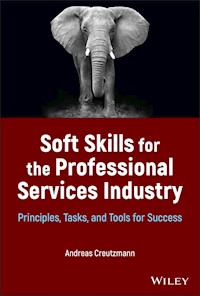
The elephant on the cover impresses with its size and in many cultures also represents the symbol of wisdom, knowledge, and tranquility. This majestic animal is a popular symbol of power and intelligence. In Africa, the elephant is revered as a symbol of happiness and a long life. In China, the elephant embodies ingenuity, energy, and sovereignty. These are the three key words that best symbolize the wholesomeness of the elephant.
Wisdom
Steadfastness
Tradition
In many ways, humans and elephants are similar. The elephant teaches us to give these positive commonalities more space in our own lives. It points us to compassion, sensitivity, and patience, which must be either awakened or preserved in the current phase of our lives. With its help we can more easily absorb knowledge, understand wisdom, and remember the past. The elephant does not only represent wisdom, power, and strength, but also responsibility. Great power is known to bring great responsibility, which is why you can learn leadership from the elephant's qualities – while at the same time being a natural part of the community that respects us. The majestic elephant also stands for happiness, prosperity, and stability.
I hope you enjoy reading the book, and I look forward to your feedback.
Acknowledgments
FIRST, I WOULD LIKE to thank all the endorsers. Most especially, I want to thank Parnell Black, CEO of NACVA, who told me when EACVA was formed in 2005 that a Certified Valuation Analyst will only be successful if they can market themselves. NACVA has always supported its professionals with marketing. Parnell Black has inspired me to spread these thoughts in Europe as well.
Second, I would like to thank Anja. Anja is my partner's best friend. They have known each other since childhood. Anja's assistance with the English translation was a blessing for me. I knew that the publisher would make sure that the English translation would be grammatically perfect and that the book would not contain spelling mistakes and comma errors. However, it was much more important to me that the content be understandable to professionals in the United States and around the world. Anja is a German native speaker and has lived in the United States for 18 years. She made sure that the content and the translation are suitable for US professionals. Thank you, Anja.
I would also like to thank Elke. She has been my personal assistant for 15 years and has managed the format and scope of this translation, ensuring that this book meets the highest standards of accuracy and integrity. She usually does this with our appraisal reports. It is often incredible how meticulous she is in spotting and correcting errors. She is the rock in our office. Always dependable and conscientious. Thank you, Elke, for your support over the years. I appreciate it very much.
And most of all, my thanks go to my partner, Nicole. I have known Nicole since I was in school. I first fell in love with her after I graduated from high school. Nicole did not consider me as a partner at that time. We only fell in love after our failed marriages many decades later. Time for us was not yet meant for each other in the first half of our lives. In Germany, there is a saying that your partner is your “better half.” I couldn't do anything with this phrase for a long time. It wasn't until I fell in love with Nicole that I understood what was meant by it. Ideally, couples complement each other. The strengths of one partner and the strengths of the other partner make a couple really strong together. In this book, you will learn which four prerequisites must be fulfilled for a partnership to last. Perhaps for a lifetime.
Nicole's curiosity to just try things is inspiring to me. For example, when it comes to food, Nicole will try almost anything if there is an opportunity to eat something new. But Nicole is also interested in new things in many other areas of life. She has kept her childlike curiosity. A characteristic that many adults have lost in everyday life. But even more than things, Nicole is interested in people, and origin, education, and social status play no role in this. She is genuinely interested in others and gives them full attention during conversations. She is empathic, which is a quality that everyone should have.
If Nicole can help, she helps. So, it can happen that a supermarket shopping trip takes much longer than planned, because she helps an elderly and needy person find all their food.
She grasps life with all her senses. This especially includes her unique sense of smell and taste. She smells and tastes things and describes them in her unique way, which fascinates me every time. Qualities that I am sadly lacking. Unfortunately, I often don't smell or taste these subtle differences.
And finally, she has a creativity that is unique. When it came to the cover for this book, I asked her to help me. In less than an hour, she had this great idea with the elephant. And she found the right image for it right away, too. She also had the idea with the elephant because there are qualities that both Nicole and elephants have. They are intelligent and do not forget anything. It is known that elephants remember past things better than humans. This is true for both the elephant's sense of hearing and their sense of smell. For scientists, this is a clear sign that these animals are highly intelligent. However, elephants perceive the world much differently than we do, and their world also requires vastly different skills than ours. The soft skills that humans need to be happy and successful are presented in this book. That's why the elephant is the perfect symbol for the content of the book. Thank you, Nicole, for this great idea with the elephant.
But most of all, thank you for your unique way of loving me and thank you for every minute we spend together. You enrich my life every day with many small and important things. Thank you for helping me author this book. I love you and am grateful to be with you.
Introduction: Professionals in a Digital World
DIGITALIZATION AS WELL AS the pandemic are transforming our clients' businesses and the professional services industry. Disruption may mean that in the future, our clients' business models will no longer work in the future. But our own business models are also put to the test. In the future, how can we support our clients with our services? Are we paving the way and driving a successful future for our clients, or are we blocking important change processes with our consulting services? What are we doing in the professional services industry to successfully master digitalization? We need to find the right answers to these and many other questions.
Artificial intelligence, cryptocurrencies, social media, virtual and hybrid worlds, smartphones, Zoom, and MS Teams meetings have led to a complexity that is a particular challenge for every professional. To this we add the associated possibilities that we are able to call up information and communicate almost anywhere in the world while making decisions at every turn creates additional complexity. Professional private lives are often inextricably linked. Professional information can be transported almost anywhere in the world via smartphone. On the other hand, professionals receive information about their children's school grades, their life partner's problems, or other private matters at almost every location where they work. In work‐life blending, the professional world merges with private life and the worlds become inseparable. In addition to a wealth of professional information, there are plenty of distractions in a professional's daily life.
Complexity has increased at all levels, and it has to be mastered. We live in a world of volatility, uncertainty, complexity, and ambiguity – a VUCA working world. Volatility refers to conditions that are unstable, unpredictable, and therefore hard to foresee. Nobody knows when a particular status will change and move into a different direction and what events will follow. Uncertainty refers to a state that is subject to unknown risks. We have less and less certainty about what will happen next. Known, earlier paradigms no longer apply, and it is unclear what actually still does. Predictions and forecasts are increasingly unreliable. Ambiguity means double or even multiple meanings of a fact.
Professionals have always had a particularly trusted and responsible role with their clients. To live up to this trust, the profession's service portfolio is under scrutiny in a changing world. Professional services providers are also in a state of upheaval due to digitalization. What impact does this have on the management of the firm and on self‐management? Does the ever‐increasing complexity of everyday life in a VUCA world and the digital age require new principles, tasks, and tools from professionals in order to be successful?
Professional services are occupations in the service industry that require specialized education and training in the arts or sciences. Some freelance services, such as those provided by architects, accountants, engineers, doctors, lawyers, and teachers, require a professional degree, or licensure and unique skills. I am a professional in the accounting and consulting industry with certifications as a German certified public accountant (Wirtschaftsprüfer) and Certified Valuation Analyst (CVA). I have professional experience in these industries. Therefore, most of the practical examples I provide throughout the book relate to the accounting and consulting industry. However, transfer to other industries is easily possible.
Soft Skills for the Professional Services Industry presents the principles, tasks, and tools of professionals that are necessary to master the increasing complexity of everyday life and the VUCA world. Effective self‐management and the effective management of teams are more important today than ever before.
This book uses the profession of auditors as an example to demonstrate which soft skills are necessary to be successful. The principles, tasks, and tools also apply to a large extent to other professional groups, managers, and entrepreneurs. Successful professionals are characterized by excellent technical knowledge in their field of activity. In addition, they have a certain mindset and soft skills. Effective self‐management as well as effective management of teams are indispensable for entrepreneurial success. Only those who can manage themselves effectively and efficiently have fulfilled an essential prerequisite for managing employees and teams successfully themselves.
NOTE
The principles, tasks, and tools outlined below are the basis for mastering complexity in a digitalized professional and private life and in a VUCA world.
TABLE I.1—PRINCIPLES, TASKS, AND TOOLS
Principles
Tasks
Tools
Principles that should be followed by performing tasks and using tools
Key‐tasks related to self‐management and the management of staff
Tools used to perform the task
Those who apply the Principles, Tasks, and Tools shown in Table I.1 will be more successful both professionally and personally.
Principles in this context should be adhered to when performing tasks and using tools. Adherence to the principles requires a certain degree of discipline. The principles can be learned more, or less easily. Since their application involves changes in behavior, it is essential that an individual understands that the principles are important for successful business transactions. If this insight is lacking, the tasks are usually performed unsatisfactorily. At the same time, they form the framework for the tasks and serve as an orientation for the use of the tools. The principles are not only valid for a CPA or valuation expert’s successful professional life, but also for lawyers and other expert groups as well as managers and entrepreneurs. Accordingly, they have a universal character. These principles are the most important and valuable soft skills of a successful personality. Those who adhere to them distinguish themselves significantly from others. They also apply to a significant extent to private life and therefore, serve as a basis for functioning relationships.
Tasks characterize a professional's work. Professional standards in particular often regulate certain duties. In the following, duties do not stand for the specialized duties of an auditor or lawyer, which are sufficiently well known. Therefore, it does not refer to a professional's given skill set. Where applicable, these are specified in detail in professional standards, laws, decrees, and so forth, to their specific field of expertise. They are special tasks predominately related to the auditor's own management and the management of employees. In this sense, they are the key tasks that are especially critical success factors. Those who perform these tasks poorly will not be as successful as professionals. At its core, the book deals with the professional tasks for successful self‐management and management of employees. Transfer to personal life is possible for some tasks. For example, the “setting goals” task applies to both professional and personal life. Successful professionals can distinguish the essential from the non‐essential. They know their key tasks and perform them in an above average manner.
Tools are the third element and are used to perform the tasks. Professionals are more likely to expect technical tools in this Part of the book when reading the term tool. Closely related to the term tools are apps. To prevent gaps in expectations at this point, Part III, Tools is not essentially about technical aids. Technical aids can make it easier to perform the tasks described above. In the age of digitalization, there are a large number of apps that represent technical tools, and in the tools presented here, technical aids are mentioned only in passing. Rather, Part III is about tools that have already been used in part by professionals long before the advent of digitalization. These are tools that successful professionals, managers, and entrepreneurs have also used in their daily work both skillfully and correctly. Since the tools I have presented are a selection of valuable soft skills, they were never a formal curriculum in training, in college, or in a professional exam. The tools presented here are the key to a successful professional life and happy private life.
However, mastering these tools requires a willingness to learn. Surely most people know that life consists of a lifelong learning process. Professionals in particular are accustomed to learning through regular continuing education. By contrast, soft skills are not trained and assessed in preparation for the professional exams as lawyers, tax consultants and auditors. Here, learning may be like learning a new language.
The tools will help you perform the tasks and adhere to the principles of successful professionals.
NOTE
Incidentally, professionals should ask themselves whether the following principles, tasks, and tools are useful. Before rejecting an idea, every professional should consider whether it could help in achieving professional and personal goals. Whenever an internal resistance to a statement arises, it could be a moment in your life that moves you forward. Analyze exactly why you are rejecting the thought. Anything that leads to a positive change in your life, that contributes to your personal development, is useful. And only the criterion of usefulness should be the yardstick for determining whether you reject the soft skills presented in this book or make them part of your life.
The following principles, tasks, and tools are partly based on management thinkers such as Peter F. Drucker and Fredmund Malik. Particularly in the case of the tools, but also in the case of individual principles and tasks, however, these have been supplemented, expanded, and adapted on the basis of my experience with the professional group.
This book is written in recognition of the fact that professionals in particular have excellent specialized training. This also applies to lawyers, doctors, and architects. These professions work in a very structured and analytical way. From training to the professional exam, or admission to the bar, it is always about expertise. The expertise and the hard facts are evaluated in the studies and in the exams. Personality does not play a decisive role. Those who are intelligent and diligent have a greater chance of passing the professional exams. However, anyone who has worked as an auditor or lawyer for several years knows that other factors are decisive for professional (and private) success. Soft skills regularly determine between success and failure.
The term “soft skills” has been used internationally in numerous languages for many years. It refers to the people skills that are generally necessary for professional and private success. We can learn or improve these skills through training. Anyone who enters the term “soft skills” in Google receives more than 784,000,000 references. On the one hand, this makes it clear that this term is of significant importance worldwide. On the other hand, the search results also show how important it is to have the “right” soft skills in order to be successful. This book is limited to the essential valuable soft skills that professionals should have if they want to be successful professionally and privately.
The term soft skills should be distinguished from the terms talent and aptitude, which are used synonymously below. In my understanding, talents and gifts are innate. Soft skills and the associated knowledge, however, can be learned. Accordingly, talents and gifts stand for innate potential and cannot be learned. Soft skills, however, are known behavior patterns or activities. A professional's technical and factual knowledge is acquired, and the high level of professional competence is documented by the examinations passed. However, a professional's outstanding performance only comes about when talent is combined with knowledge and soft skills in such a way that exceptional performance is achieved. This also requires appropriate professional experience, which young professionals can only acquire in the course of their professional lives. No matter how high the technical and factual knowledge of young professionals may be, the trust that clients place in a more experienced professional colleague because of their seniority is often related to their soft skills. Skills and insights they have acquired during their long professional lives. For this reason, it may well be that a client follows the recommendations of a seasoned professional colleague, even though the factual arguments of the young professional might be more convincing for those with expert knowledge.
On the one hand, the book points out those soft skills that are crucial and essential for professionals, and on the other hand, how these soft skills can be learned and trained. This is because knowing which soft skills are particularly relevant does not automatically mean that they can also be successfully applied in practice after reading the book once. Those professionals who practice a sport or have done so at some time know very well that only regular training brings the desired success. An athlete achieves proficiency only through training. That is why this book endeavors to encourage you to apply the knowledge you have acquired in your everyday life.
Closely related to soft skills is knowledge from psychology. This is certainly a subject area that professionals in particular do not usually deal with because technical and factual knowledge is omnipresent. The book likewise mentions the psychology of success in several places. Psychological knowledge is important if you want to be successful. But the psychological knowledge presented here has nothing to do with esotericism. It should help to understand why people are successful and why others fail. Those who learn and apply the soft skills presented in the chapters that follow will be successful in their professional and private lives.
This book is about success. Success is the achievement of personal goals, which can be professional as well as private goals. In both professional and personal life, soft skills are the key to success and personal happiness. In part, the soft skills associated with your private life are the basis for professional success. However, there are professional soft skills whose application will help you to be happy and successful in your private life. Professional and private soft skills sometimes merge. There is no razor‐sharp distinction between a professional and private soft skill in that case. For this reason, there are chapters in this book that first describe a soft skill from the private perspective, for example, the task of “Setting goals.” The transfer from private goals to professional or business goals is readily apparent. In this sense, the soft skills covered in this book are particularly valuable.
PART IPrinciples of Successful Professionals
CHAPTER 1Self‐Responsibility
THE PRINCIPLE OF SELF‐RESPONSIBILITY is becoming increasingly important in a time when others are to blame. In both professional and personal life, there are situations where others are to blame for mistakes.
EXAMPLE
Auditors in particular are accustomed by profession to seeking and finding fault with others. After all, the central question in assessing an internal control system is, “What could go wrong and who controls what?” Even if there is no four‐eyes principle, but only machine controls, there are people who are responsible for the programming. There is usually a “culprit“ when something goes wrong with a client's internal control system (ICS). Chances are it's not the auditor and their staff. Since the company's accounting and ICS are the subject of the audit, it appears that it is always the “others“ who are to blame for errors. The client's employees are then held responsible. Nevertheless, unless the auditor and his staff recognize that a control system is ineffective, they quickly get lost in excuses. Who likes to admit failures to a client?
In every company, one person, or a few people are in charge. It should go without saying for business owners that they are responsible for every project outcome. The larger the company, the more likely it is that unsuccessful projects will end up being just a matter of saving one's neck. The partner of a company blames his managers, or even customers (?) for the failure without realizing that perhaps they put together the wrong team, the tasks were not distributed properly, or the project control did not work.
Much worse, however, is often the complaining at all levels in the company and in private life and the proclamation of one's own helplessness.
NOTE
If you say, “I can't,“ you don't want to. Because, in reality, you can do everything. But everything has consequences. You can choose every day! And not to decide is also a choice. The point at which you stand today is based on earlier decisions and rejected alternatives. Everything that happens in the moment is the consequence of decisions in the past. And everything you do, you do voluntarily. However, everything has a price, and not everyone is willing to “pay“ the price for a particular decision.
An employee who rebels against their superior must expect the possibility of not being considered in the next career round. A partner who wins all engagements by competing on low prices should not be surprised about negative contribution margins and possibly lower partner compensation. A person who does not spend time with their life partner and their children must not be surprised if these people distance themselves.
NOTE
N o time“ means: Other things are more important to me. Everything in life is a question of priority: What you really want, you do! The exciting question, however, is: Why are you doing what you are doing right now?
This applies to both professional and personal life. The answers to these questions are important at every stage of life.
As an entry‐level professional, most of the time we receive directions from others. As we advance in our career, we move from being the recipient of instructions to being the person who gives instructions. Those who are at the top of the company only give instructions and usually no longer receive instructions from colleagues. Many times, people do not go through these career phases with an awareness that would be necessary to successfully lead themselves and others. Too often, behavioral patterns and role models are unconsciously adopted by superiors, and the professional does not realize that at the top of their career they are often only a reflection of their former superiors.
Therefore, the psychological knowledge of the following regularities is particularly important.
LAW OF CAUSE AND EFFECT
Everything has a reason, and every effect has its specific cause. Aristotle believed that we live in a world governed by laws and not by chance. He explained that there is a reason for everything, whether it is known to us, or not. There are one, or more causes for every effect. Every cause, or action has some effect. We do not always recognize the cause.
Based on this premise, success is no coincidence! Success has nothing to do with luck. Everything has a reason. However, this reason is not always apparent to everyone. “You reap what you sow” is a well‐known saying from the Bible. Newton's third law, also known as the principle of interaction, the principle of counteraction, or the principle of reaction (“actio equals reactio”), states that for every action there is an equal and an opposite reaction.
Thoughts are causes and circumstances are effects. By changing the way you think, you change your life. All it takes is making a decision. You become what you think most of the time. What you feel and how you react is not determined by what happens, but by how you think about it. It is your inner world that is responsible for the conditions of your life. You yourself determine your feelings and behaviors by the way you view your environment and how you think about the things that happen to you.
NOTE
No event has any power over me except that which I give it in my thoughts!
For professionals, the law of cause and effect is relevant. If an ICS does not work, there is a risk that things will go wrong in the company and be incorrectly reflected in accounting. Lawyers know that missed deadlines lead to the rejection of requests at court. The law of cause and effect does not only apply to these easily understandable facts but to one's own management as well as to the management of others that finds its way into our private lives.
TIP
Pay attention to your thoughts! You become what you think most of the time. Thoughts are causes and effects are circumstances. If you control your thoughts, you can change your life. This applies to your professional life as well as your personal life. You cannot always influence the events in your life. In particular, strokes of fate, or things that you did not cause can have a significant negative impact on your life. You cannot change these things. The only thing you can influence is how you think about the things that happen to you. Your interpretation of events has a direct impact on how you feel. Consider the Serenity Prayer by U.S. theologian Reinhold Niebuhr:
“God, grant me the serenity to accept the things I cannot change, the courage to change the things I can, and the wisdom to distinguish one from the other.“
Develop the habit of analyzing certain events to see if you or others were the cause. Be honest with yourself and take responsibility only where you were actually the cause of the event. This will be the case in many but not all instances. You are exactly where you are in your life now because of decisions you did or did not make in the past. Not deciding is also a decision. You are the cause of your life. Take responsibility for the choices you made in the past and make better choices in the future. Your thoughts are the key to a happy and successful future.
LAW OF FAITH
What we believe deep in our hearts becomes reality. We believe not what we see, but what we already believe. We reject information that contradicts our already established opinions, regardless of whether our beliefs – or even prejudices – are based on fact or fantasy.
Henry Ford once said, “Whether you think you can, or think you can't – you are right.”
Each of us has certain beliefs, or belief systems that are linked closely to our personal values. These belief systems make up several sets of beliefs. It's what we think about ourselves, reality, or the world. They determine our expectations. They indicate what we believe to be true and what we believe we can achieve. They are our inner beliefs.
Many of the thoughts we think are beliefs. Soliloquies are often based on beliefs, although we might not be aware of it. What we tend to think about ourselves and believe about life comes from our habitual thought patterns. However, we are not born with these beliefs and thought patterns. They are often formed in childhood and remain with us throughout our lives unless we replace them with others, be they positive, or negative. Negative beliefs often limit us, make us doubt ourselves, and prevent success. Positive beliefs, on the other hand, can give us energy and motivation. They can help in overcoming challenges and in achieving our goals. Beliefs are formed through upbringing as well as through our observations and experiences.
EXAMPLE
If a CPA deals exclusively with embezzlement audits, or is essentially involved with cybercrime, they will likely rarely see the good in people. If a lawyer deals exclusively with clients accused of crimes, their view of people, their thought patterns, and their beliefs are shaped by this. Professionals who are confronted predominantly with negative events will rarely be able to develop positive beliefs. This is obvious. It becomes particularly critical when this group of people then transfers their professional life to their private life.
The effect of beliefs was discovered by the French pharmacist Emile Coué at the beginning of the 20th century. He told his patients that they would surely get well very quickly with a particular medicine. His patients were also told to recite the following sentence 25 times a day, morning, noon, and night: “Every day, in every way, I am getting better and better.”
From this, Coué developed the doctrine of autosuggestion. Nikolaus B. Enkelmann developed 14 basic laws of life development. In these basic laws, faith and positive thoughts are at the center of personality development. Enkelmann perfected the teaching of autosuggestion and expanded it to include mental training. The fourth basic law of life development is: “The subconscious mind – the construction site of life and the working space of the soul – has the tendency to realize every thought.”
Every thought has the tendency to become a reality. Beliefs govern our daily lives because they reflect our beliefs, attitudes, and faith. We think countless thoughts every day. Of these, as a rule, only a few thoughts are positive and uplifting. Far more negative thoughts pass through our brains, often given additional weight via negative media coverage. In addition, we have a multitude of insignificant, neutral, and fleeting thoughts. When we memorize thoughts, it can have far‐reaching consequences. First, a recurring thought becomes familiar to us until it becomes an inner conviction. Positive and negative actions can arise from this.
EXAMPLE
The following list shows examples of some negative beliefs:
I never succeed
I cannot do this
I have always done it this way
I always do everything wrong
I am unimportant
Others are always preferred
I am too fat, too thin, too long, …
I am not intelligent
I am always late
I am helpless
I do not deserve attention
My siblings are always preferred
…




